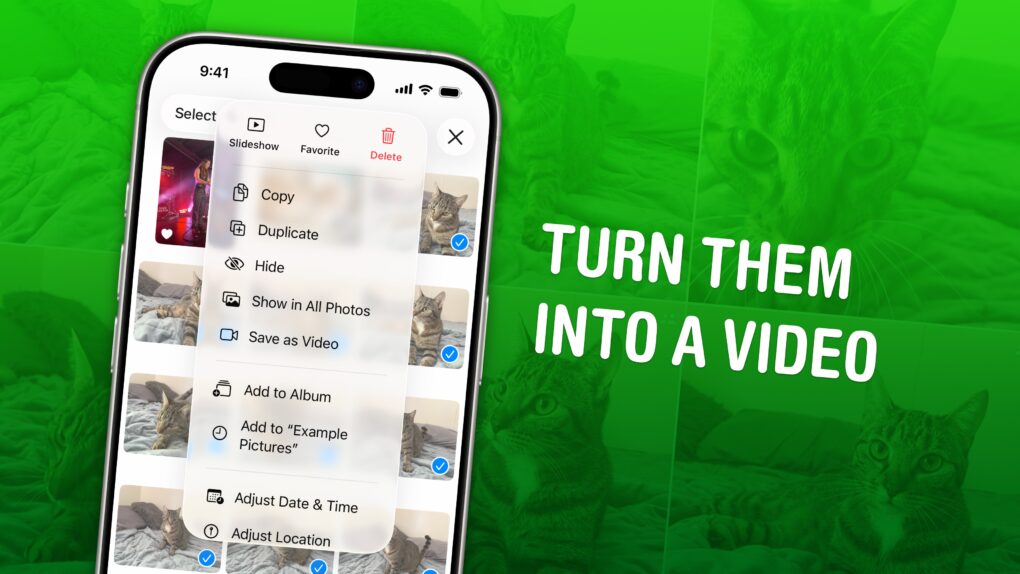
Turn your many, many cat photos into a few great videos. Image: D. Griffin Jones/Cult of Mac
You can turn multiple Live Photos shot on your iPhone into a video. Simply select a group of Live Photos taken in a burst, and you can create a single, stitched-together video that you can save to your library and share on social media. It’s a much more accessible way to enjoy those little snippets of video.
Loads of new features come in Apple’s upcoming software update. Image: Apple/D. Griffin Jones/Cult of Mac
The new Photos app in iOS 27 clearly did not get the memo that this was a small year of bug fixes and performance improvements. While it is faster and more stable, there are tons of excellent new features top to bottom. Sorting through the largest photo libraries will be easier than ever in iOS 27.
Here are all the new features you can look forward to — or, if you’re daring, try out now.
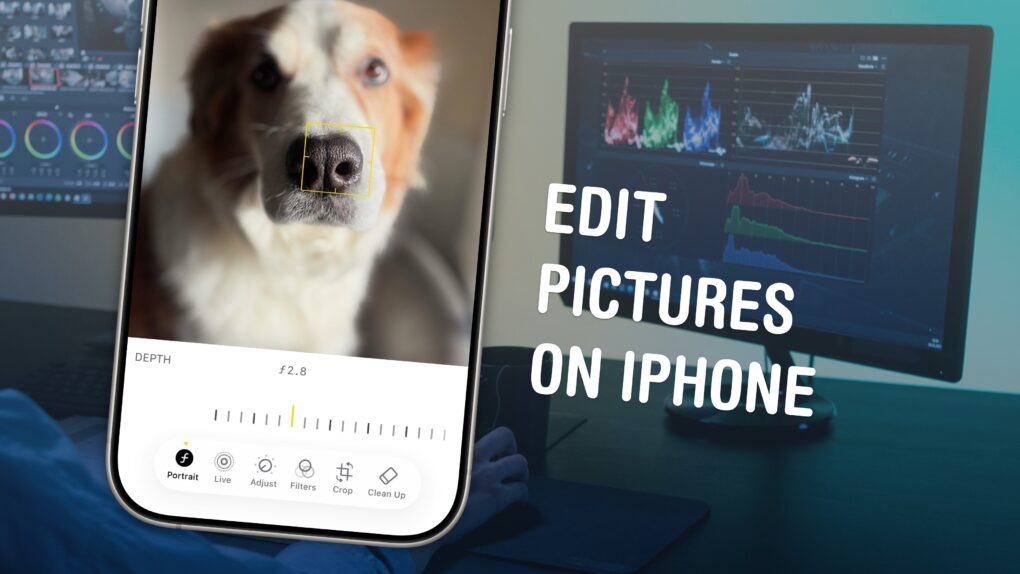
Master your photos. No computer nor equipment required. Image: D. Griffin Jones/Cult of Mac
Who needs a computer or expensive photo editing software like Adobe Lightroom? You can edit pictures right on your iPhone with Apple’s free, built-in tools.
The Photos app comes with a ton of professional editing tools baked into it. If you didn’t line your shot up quite right, you can fix the crop and perspective. If you took it a split second too late, you can use Live Photo functionality to replace the shot. You can add a Portrait mode blur after the fact, and even change which part of the image is in focus.
Here are the eight great editing tools built right into your iPhone.
Apple is hard at work creating the new Siri. AI image: Apple/ChatGPT/Cult of Mac
As Apple prepares what could be its most consequential software release in years with iOS 27 at WWDC26, we get our first real glimpse at what an overhauled Siri and other Apple Intelligence features may look like, courtesy of Bloomberg. It mocked up a bunch of illustrations in a new report Thursday.
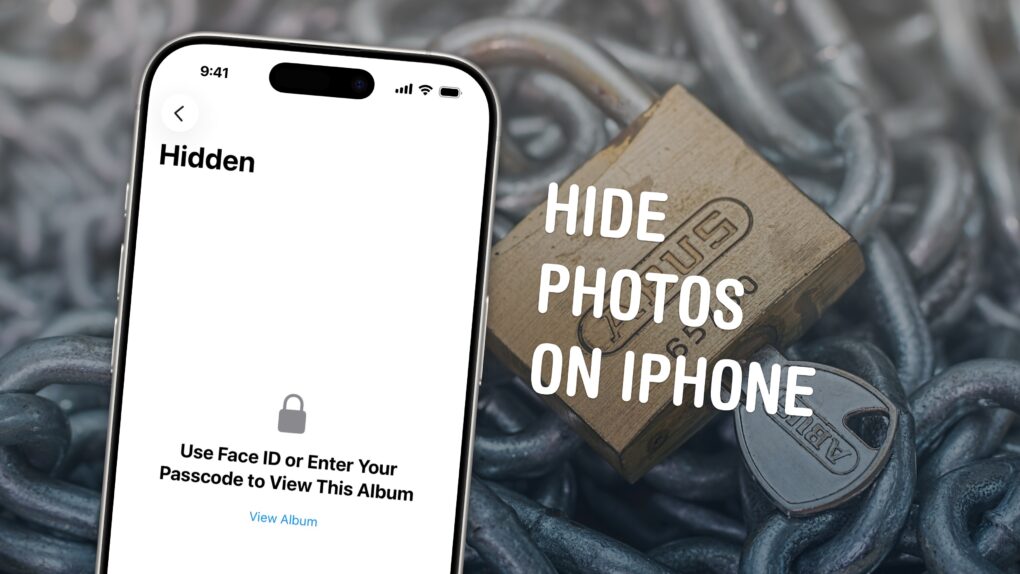
Keep your photos locked up like Fort Knox. Image: D. Griffin Jones/Cult of Mac
You can easily hide photos and videos on your iPhone to keep secret and/or illicit images out of your main Photos library. Hiding items from the camera roll makes sure nobody except you can see your embarrassing pictures, salacious nudes or old selfies with your ex.
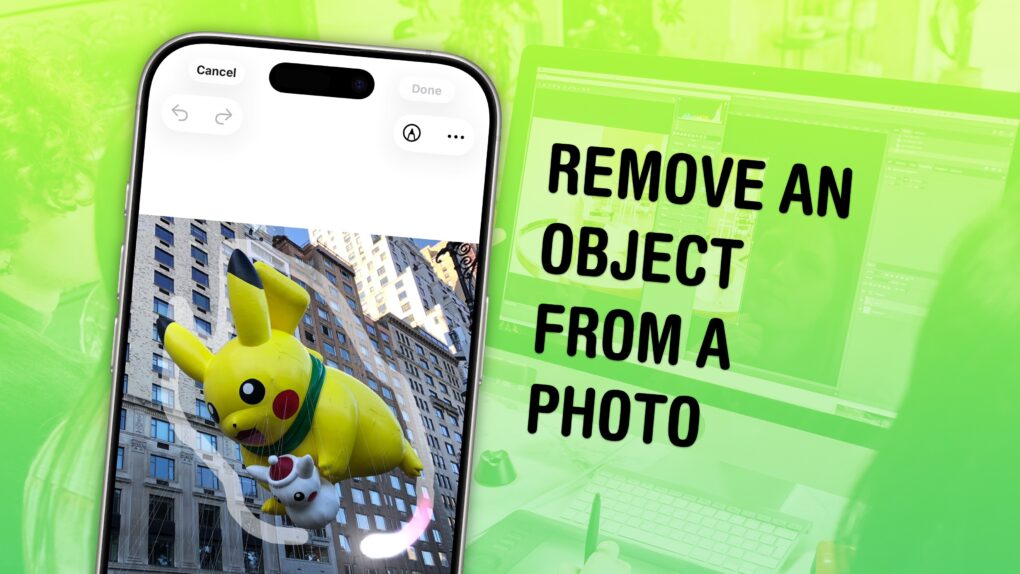
You don’t have to be a Photoshop master to edit things out of your photos. Image: D. Griffin Jones/Cult of Mac
You can easily remove any object from a photo using Apple Intelligence’s free Clean Up tool on your iPhone, Mac or iPad. It works fairly well — but it’s good to know its limitations.
As the only graphic designer among my friends, I’ve frequently been asked over the years to Photoshop unwanted elements out of pictures. Take, for example, a romantic shot of a couple in a gazebo, with a phone sitting on the handrail in an obvious spot. The image might look a lot better if you delete that stray device.
Or imagine a group photo from a fun night out, with someone’s dumpy tote bag sitting by their feet, or a picture from a big conference that shows an ugly lanyard around someone’s neck. With Apple Intelligence’s free Clean Up feature, anyone can make the tote bag and the lanyard disappear, right from their iPhone.
Now, you have the power to clean up your own photos — a chance to make your almost-perfect shots perfect in an instant.
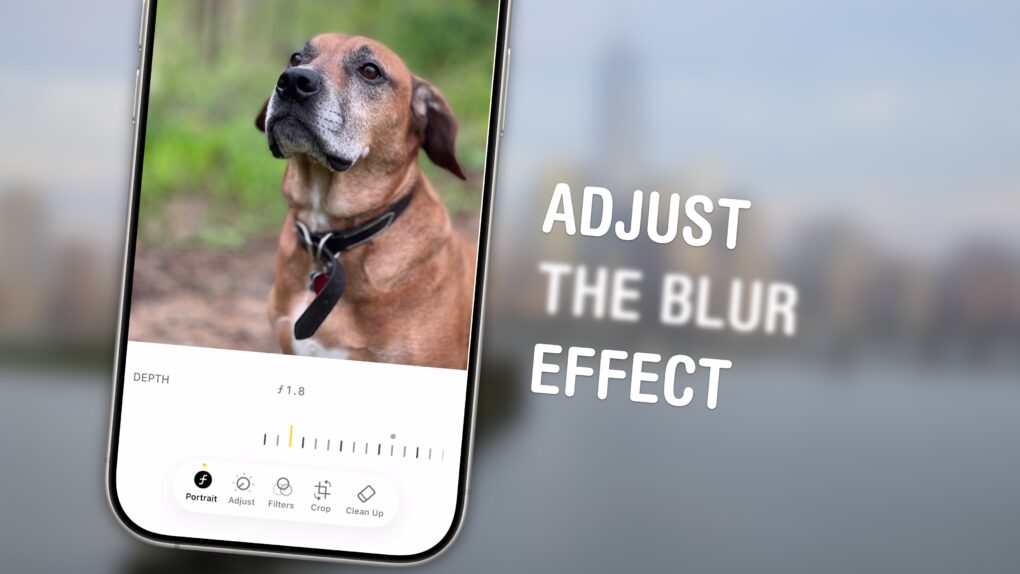
Add more blur to the background or bring it into focus. Image: King of Hearts/Wikimedia Commons/D. Griffin Jones/Cult of Mac
You can adjust the background blur of a Portrait mode photo on iPhone and Mac — even after you’ve taken the picture.
Because the iPhone stores the depth data that it uses to create the blur effect along with the image itself, you can adjust how blurry or clear the background looks. It’s super-easy to get just the right amount of aesthetically pleasing background blur, aka bokeh, to make your images look perfect.
Why would you want to tweak the background blur on your iPhone photo? A blurrier background, under the right conditions, can make for a very dramatic picture. It can effectively emphasize the subject of your shot. Or, you might want to turn up the blur to intentionally hide details behind you. On the other hand, if you’re in a photogenic location, you might want to decrease the blur so you can see more of the gorgeous background scenery.
Either way, I’ll show you how to edit Portrait mode’s background blur in photos on iPhone and Mac.
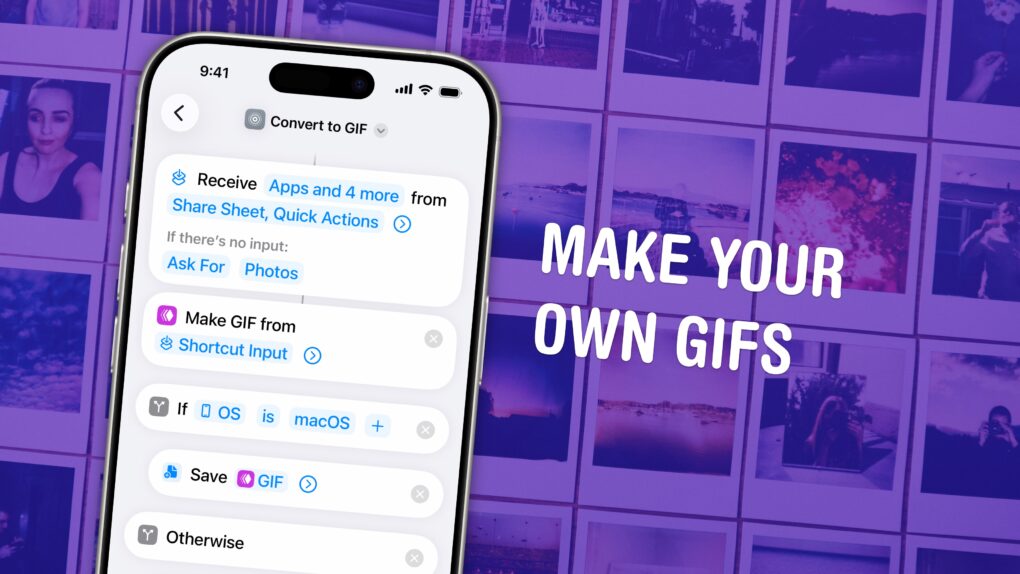
Turn any Live Photo or video on your phone into a short GIF. Image: D. Griffin Jones/Cult of Mac
You can make an animated GIF on your iPhone or Mac out of any Live Photo or video in your photo library or saved on your computer. You don’t need to download any apps — simply add a shortcut, and you can make a GIF directly from the share sheet.
If you need an actual GIF file, there’s still a pretty easy way to make them on your phone or Mac. I’ll show you how.
Straighten out images that were taken slightly askew. Image: D. Griffin Jones/Cult of Mac
If you’re traveling this summer, there’s a neat editing trick to get spectacular shots of landmarks or murals. On the iPhone, you can crop, skew and rotate a photo using the Photos app’s advanced editing tools to make adjustments you might not have thought were possible.
You can quickly fix the perspective or angle a picture was taken from, correct the fisheye distortion on an ultra-wide photo and more. You can also precisely rotate and skew the perspective, for those times when you don’t realize until it’s too late that your shot is slightly to the side or slightly off-center.
The best part is you can can fix it all directly in the Photos app. Here’s how.
The revamped Photos app in iOS 18 is a big change. Learn how to use it now. Image: D. Griffin Jones/Cult of Mac
Apple’s redesigned Photos app in iOS 18 brings the biggest changes ever to how you browse your pictures, videos and memories on your iPhone. Gone are the separate tabs across the bottom. Now the Photos app delivers a single, scrollable view. Scroll up to see your library; scroll down to sort through albums, people and memories.
It takes some getting used to — and the big changes are driving some people absolutely insane. To get a grip on all the changes, you need to learn where to find your recently saved images, deleted photos and your album of hidden photos.
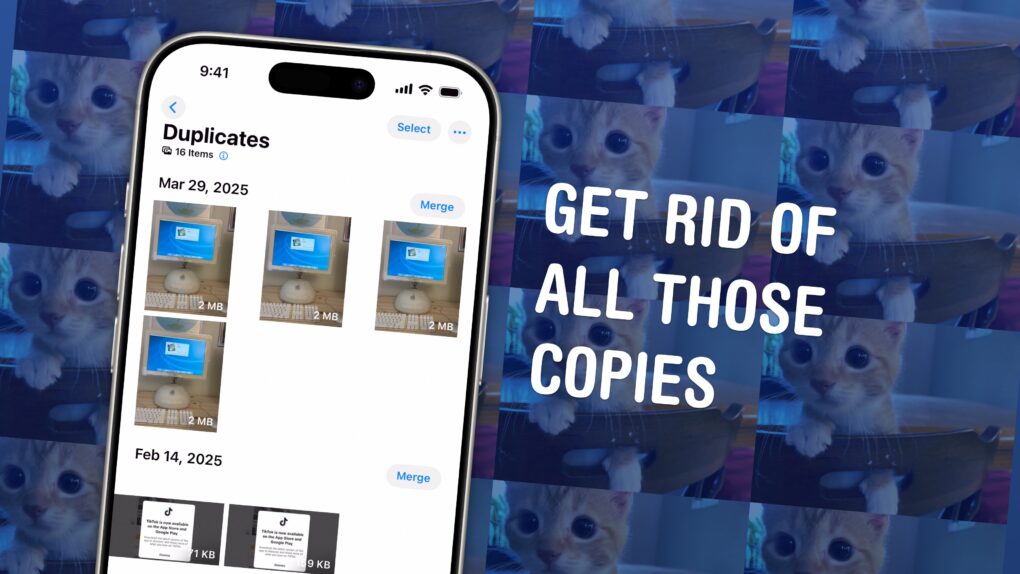
Find and delete copies of your photos on your iPhone. Image: D. Griffin Jones/Cult of Mac
You could have dozens of copies of the same images in your Photos library, taking up space on your phone and in your iCloud account. Luckily, Apple offers an easy-to-use little tool that lets you find duplicate photos and delete the copies, all right from the Photos app.
These types of duplicate images can accumulate more quickly than you might expect. They arise if you make a copy of a photo to edit, if you screenshot a photo to bump it to the top of your Camera Roll, or if you and your partner both upload the same picture to your Shared iCloud Photo Library. In fact, I found hundreds of duplicates in my own carefully curated library.
It’s a surprisingly sophisticated feature that took Apple engineers a fair amount of smarts to cook up (more on that later). Here’s how to use Apple’s duplicate image remover and get rid of all those unnecessary files. Keep reading or watch our video instructions.
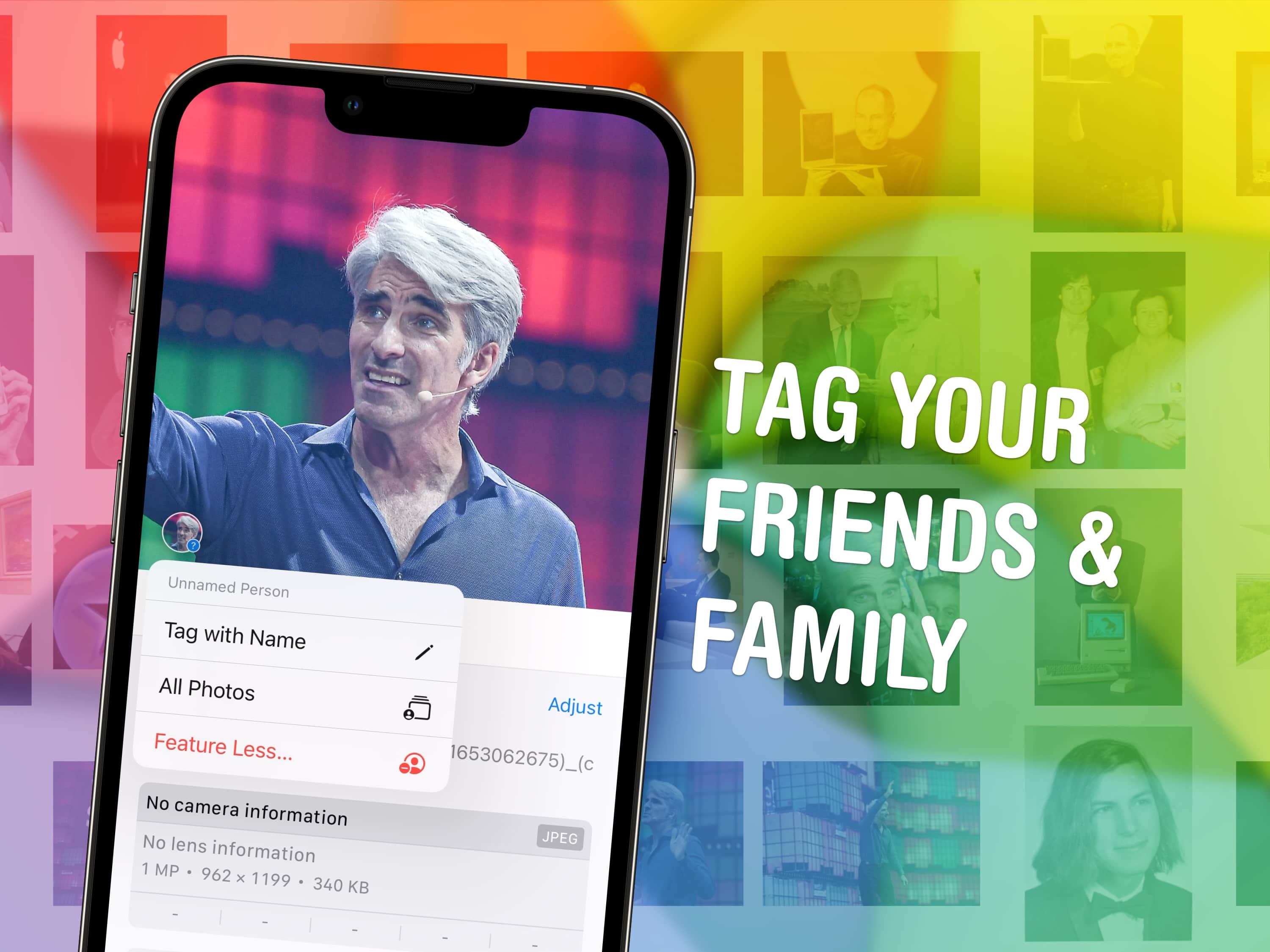
Despite what my hairline would imply, Craig Federighi is not family. Just friend. Image: D. Griffin Jones/Cult of Mac
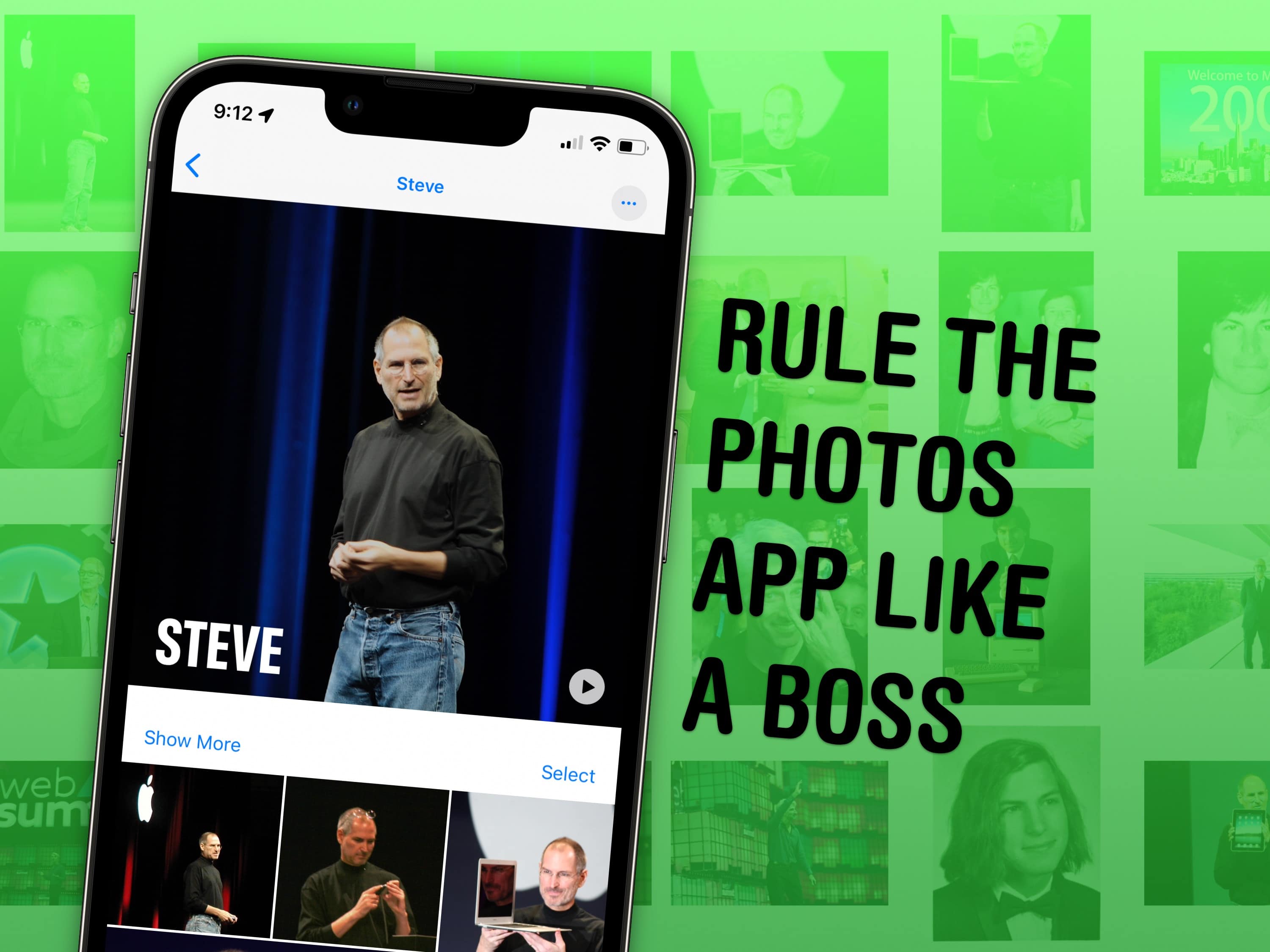
You can quickly tag photos on your iPhone with the names of your friends, family members and pets so you can easily find pictures of them later on. The Photos app will detect pictures of people automatically — you just need to give them a name. I’ll show you how to fine-tune the results as well.
I’ll show you how to find this long-standing feature in the new Photos app and make the most of it. Keep reading or watch our video guide.
Here’s what to do without Advanced Data Protection. Image: Apple/D. Griffin Jones/Cult of Mac
If you want to keep your iCloud data completely private and secure, but you live in the United Kingdom — where Apple is rolling back Advanced Data Protection to comply with government demands — you’ll need an alternative to iCloud sync and backup features.
That’s because the only option is to not use iCloud. There’s no getting around it: without Advanced Data Protection, your iCloud backups can potentially be snooped on.
Turning off iCloud will have many negative ramifications. iCloud manages syncing services across all your devices. If you own an iPhone, Mac and/or iPad, iCloud makes sure all your messages, photos, app data, notes, passwords, bookmarks, etc., appear everywhere.
Without Advanced Data Protection, there are still a few of these backup services that are end-to-end encrypted. But a few critical services, like device backups, are not — and if you don’t disable them, you’ll have a big hole in your data security. Keep reading or watch our video.
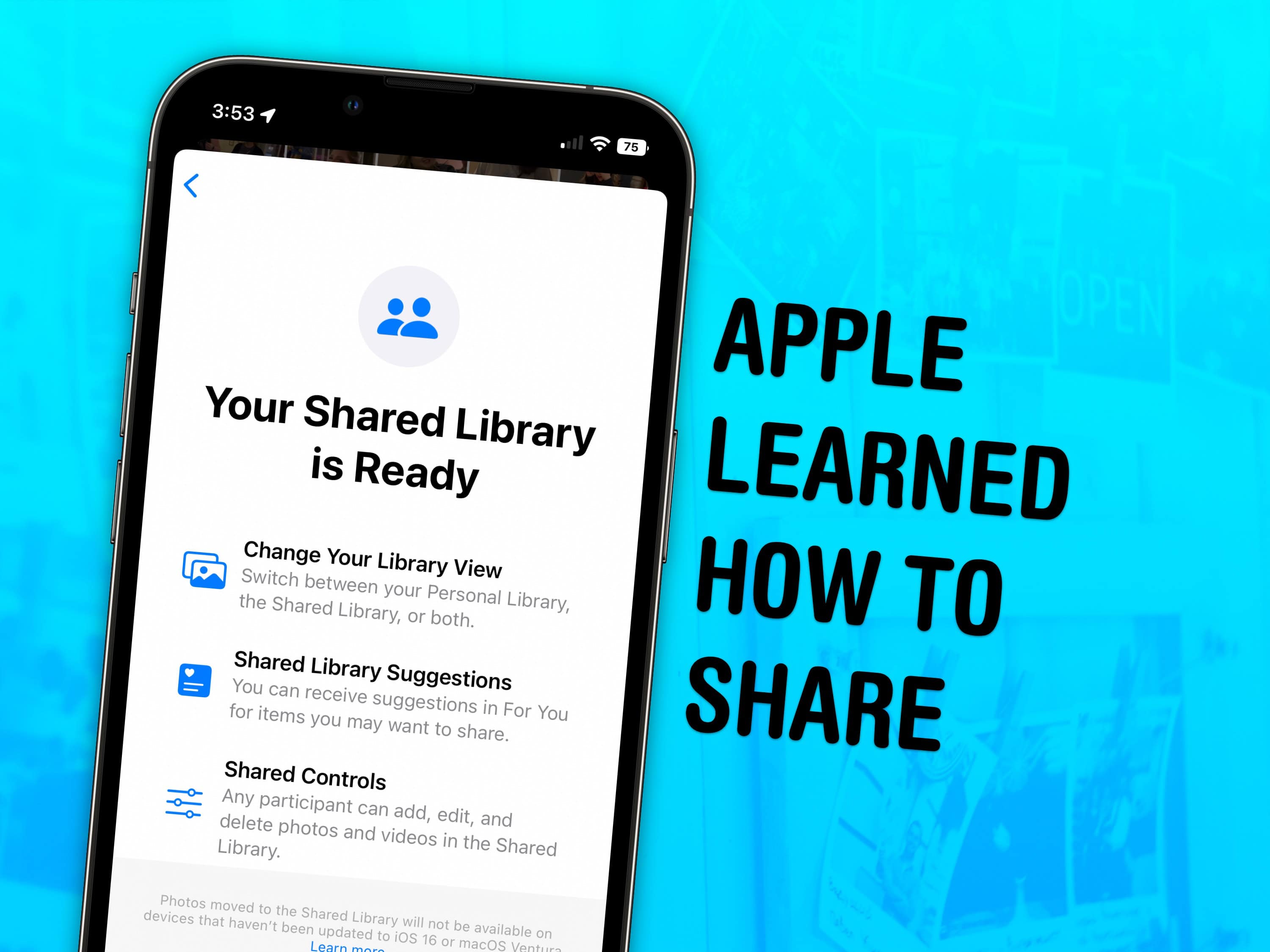
Sharing a photo library with your family is super easy. Image: D. Griffin Jones/Cult of Mac
Skip the hassle of manually sending your family all the vacation photos — enable a shared iCloud Photo library instead. Everyone in your family automatically gets all the family photos as if the images were in their own camera roll — in full quality.
Your iPhone will identify faces in photos (securely and privately), and any pictures of people who are in the family will be added to the shared library. If all of your phones are in the same place while you’re taking a lot of pictures, even if you aren’t in them (like at an aquarium or a museum), those pictures will be added automatically, too. As you’re shooting in the camera, you can easily toggle between the shared library for everyone and the private photo library on your own devices.
Starting a Shared Photo Library with your family is the best way to organize family photos. Continue reading to see how to turn it on.
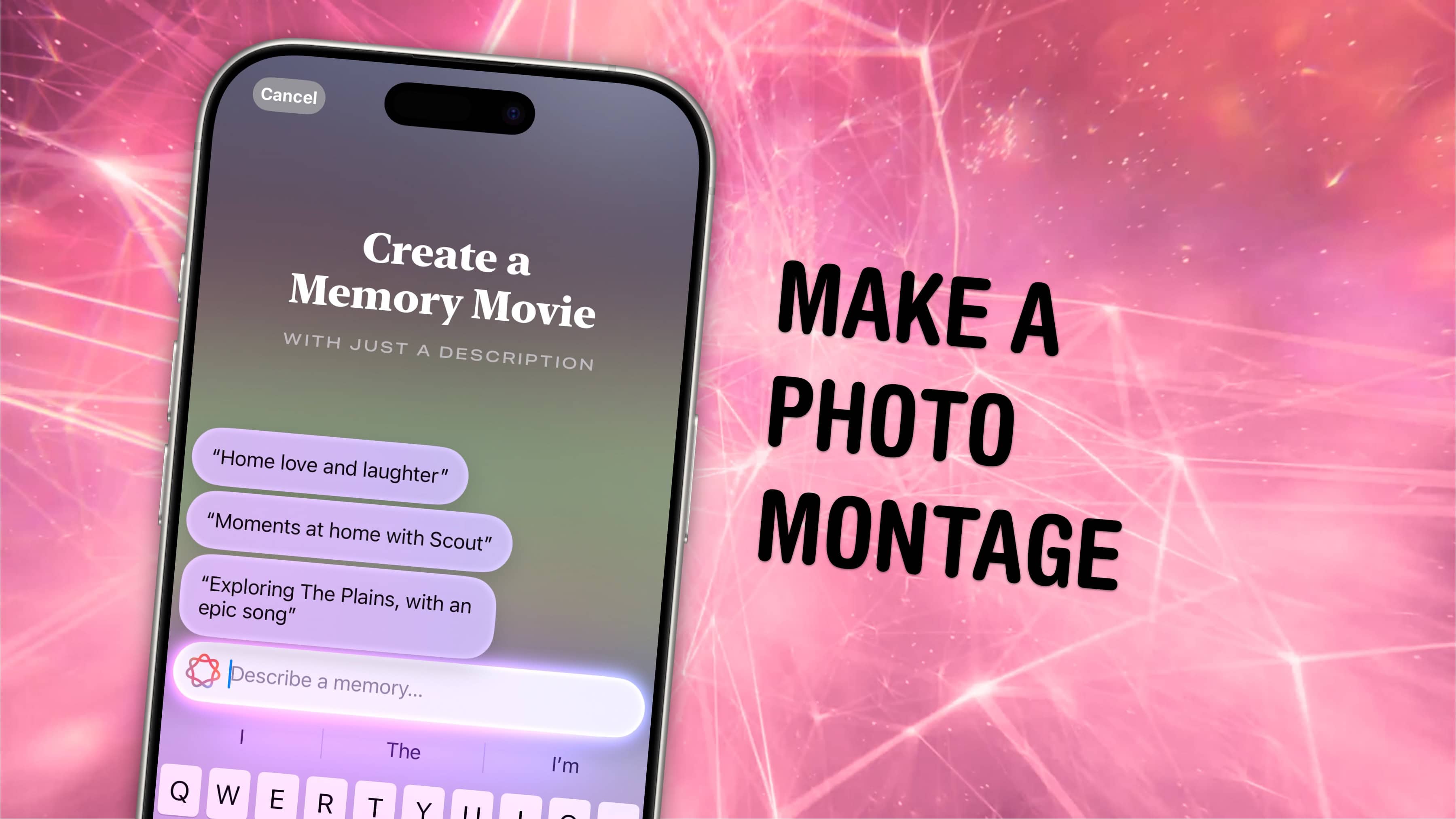
Type in a prompt to make a photo montage in the Photos app. Image: D. Griffin Jones/Cult of Mac
You can create a photo memories movie using the Apple Photos app, powered by Apple Intelligence. Just type in a prompt, it’ll browse through your collection, and create a bespoke video set to music of your choosing. It’s a fun way to put together a memory movie. And you can be very specific with the kinds of prompts you give it.
The new Photos app powered by Apple Intelligence also has a more powerful search feature. Here’s how it all works together.
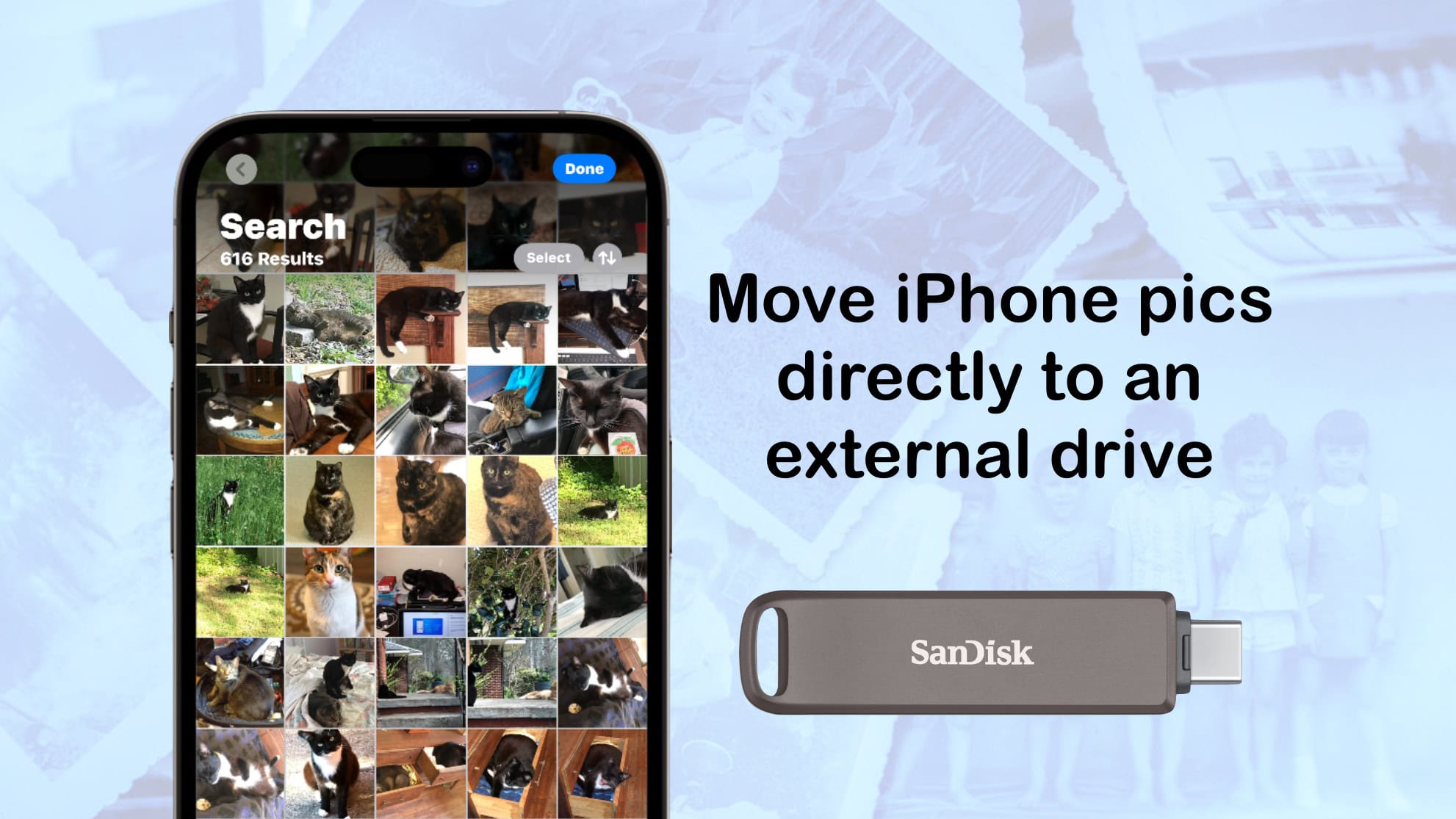
Here's how to move images from your iPhone directly to an external drive. Photo: Ed Hardy/Cult of Mac
Most of us store thousands of pictures and videos on our iPhones. If you want to create a bulletproof backup, you need to know how to transfer photos from iPhone to an external hard drive, SSD or flash drive. It’s easy, assuming you have the right software and (and possibly an adapter).
Fix the worst sins of the Photos app. Image: D. Griffin Jones/Cult of Mac
If you’re one of the many people frustrated by the Photos app redesign in iOS 18, you can fix it to make it easier to use again. Apple’s updated design replaces the Photos app’s tab bar for navigation with a single, scrollable list view.
You scroll up for your photo library, and scroll down to browse your collections, people and albums. But its default layout makes it hard to find a few useful features, like Hidden and Recently Deleted. There’s only one library view now, but it’s sorted by Date Captured by default — a lot of people prefer to sort by Recents.
It’s possible to revert some these changes to “fix” the Photos app in iOS 18 and make it easier — or at least more comfortable — to navigate. However, the changes aren’t obvious. Here’s how to restore your sanity.
The new Photos app is divisive. Image: Apple/D. Griffin Jones/Cult of Mac
With the major Photos app redesign coming in iOS 18, Apple aims for simplicity. However, the version of the Photos app in iOS 18 developer beta 3 is a hodge-podge of design that will confuse users. I think that if Apple doesn’t revise its approach, the company will face significant backlash when it releases the updated app to the public this fall.
Yes, iOS 18 is still in beta. And Apple very well could change the Photos app before its anticipated release in September. I certainly hope Apple tweaks things — I’m writing this as more of a wish list than a design critique. In fact, I already filed my suggestions through the official channel of Apple’s Feedback system (submitted as FB14289280).
As of iOS 18 developer beta 3, Apple has already made a few little tweaks to the Photos app redesign. But unfortunately, there’s been no movement on any of my major criticisms from beta 1. For that reason, I feel obligated to outline the goals of the new Photos app, applaud what it gets right, point out where the design fails, and explain what aspects prove confusing.
I don’t think Photos needs to be reverted entirely to the way it worked before. But these key features need changing ASAP. Keep reading or watch my video.
Hands-on with iOS 18’s top new features. Image: Apple
After spending a few days trying out all the new features in iOS 18, I think it really is one of the biggest updates in a long time. However, hands-on testing shows there’s a lot that needs cleaned up before September, when it’s expected to ship.
The new customizable iPhone Home Screen opens a wide world of possibilities — but you’ll have to wait for third-party apps to update their icons to really make it sing. I’m impressed with the level of customization in Control Center, too, though it’s understandably pretty buggy in this first developer beta. The new Photos app is proving controversial, and I think there are some obvious areas it could be improved, but I like where it’s going overall.
I think there’s a lot to look forward to in iOS 18.
Create a custom emoji tailored to the conversation. Image: Apple
In iOS 18, you’ll be able to use the power of Apple Intelligence to generate fun, relevant images in your Messages conversations. You can create brand new emoji and personalized artwork.
Apple calls the features Genmoji and Image Playground. “The Image Playground is going to make everyday conversations a whole lot more fun,” said Cyrus Irani, Apple’s Director of Human Interface.
With the Photos app, you can more easily search through the content of your photos and videos, and build custom memory videos without pilfering through your library by hand.
Make your own stickers from your own photos. Image: Watty62/Wikimedia Commons/D. Griffin Jones/Cult of Mac
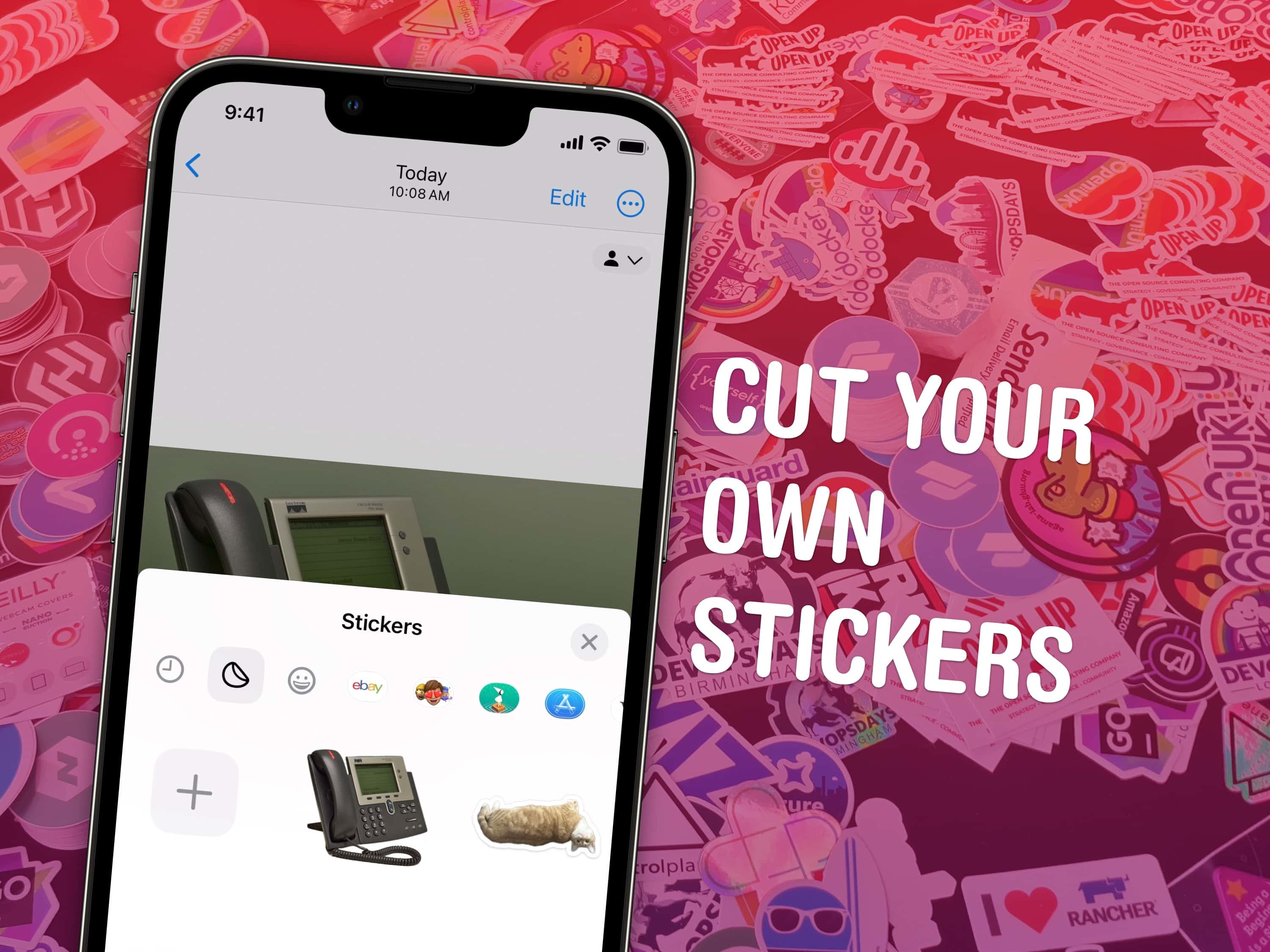
You can make custom stickers from photos on your iPhone and send them in iMessage, Snapchat and WhatsApp. Stickers made from your own pictures are a lot of fun to send in group chats. They’re great for sending highly personal reactions using photos of people or pets that everyone knows. You can even add fun sticker effects.
Making these custom stickers from photos stems from an iOS 16 featured that brought the ability to copy and paste the subject from a picture. Now, in iOS 17, it’s easy to collect your personalized cutouts int a set of digital stickers you can use anywhere. I’ll show you how it all works.
Face it: You could probably use some pointers if you have a lot of photos. Image: D. Griffin Jones/Cult of Mac
It might not be apparent at first, but Apple’s Photos app gives you plenty of ways to manage your photo library and tweak the images in it.
If you have tens of thousands of photos like I do, your photo library is probably a big mess. You could spend hundreds of hours meticulously sorting images into albums, and tweaking settings to get everything just right. Or you can use some of the features Apple offers to make things easy.
I’ve already covered my top tips for taking photos. Here are my top five tips for managing and manipulating the great photos you took, using tools in Apple’s Photos app.
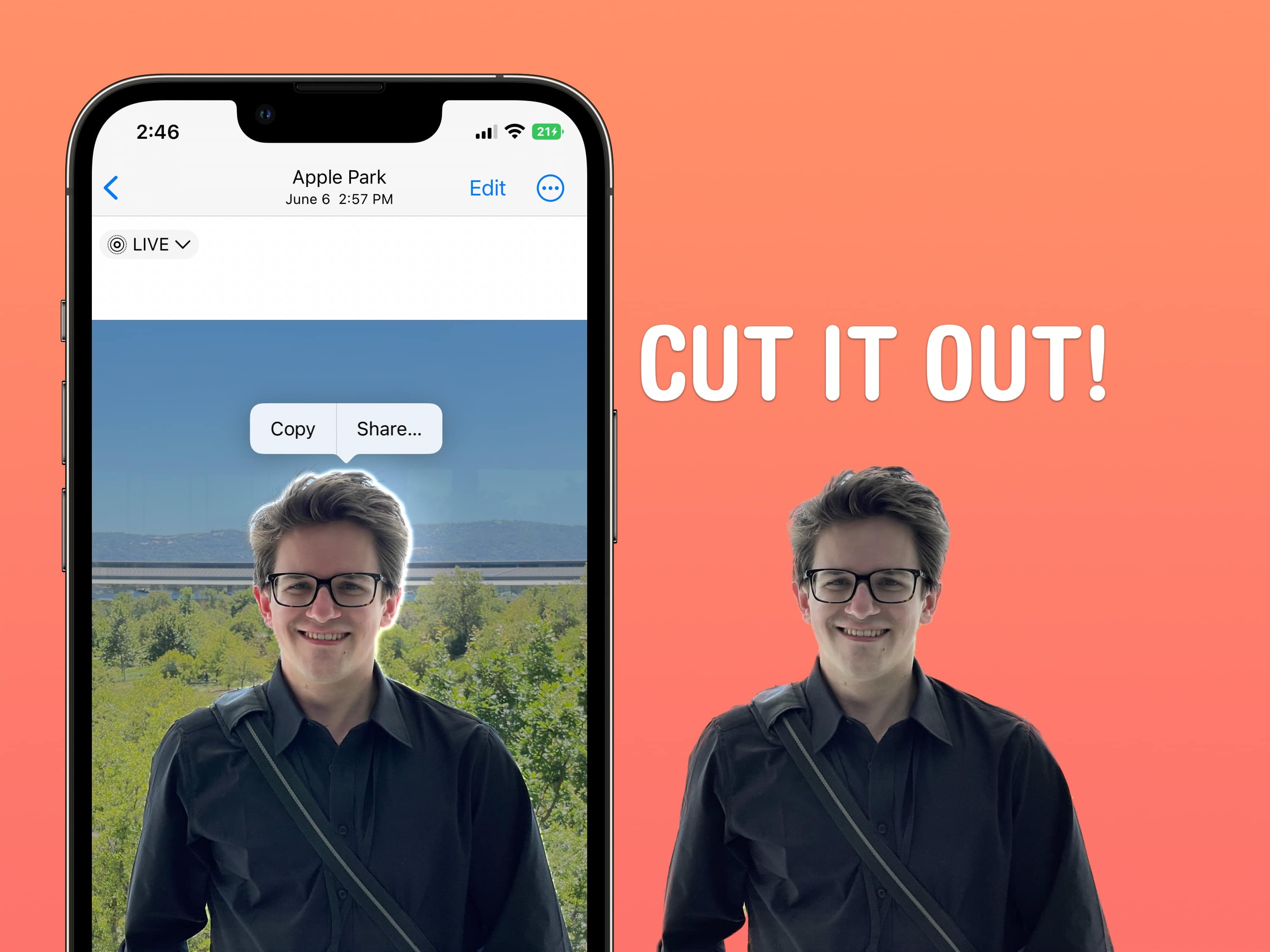
In iOS 16, you can instantly copy the subject out of your pictures. Image: D. Griffin Jones/Cult of Mac
One of the more surprising features in iOS 16 is the ability to cut out people from a picture (or a dog, a car, whatever’s in focus) and copy it into another app. You can send it in iMessage, paste it in a photo editing app, or use Universal Clipboard to paste it on a nearby iPad or Mac.
What’s it for? Well, it’s great for making stickers for WhatsApp and Snapchat, plus it’s a hell of a lot of fun. If you’re putting together a YouTube thumbnail or making memes, it can significantly cut down the time you spend precisely cutting out edges, but it’s by no means precise enough to use professionally.
The emoji in this picture are accurate representations of every picture of me until I was about 8. I didn't know how to smile for pictures and I did not care to learn. Image: D. Griffin Jones/Cult of Mac
There are lots of times when you might want to cover up faces before posting pictures: Teachers often want to censor the faces of their students. Boudoir photographers (Google it) can censor explicit portions of their photography for social media. Foster parents who are legally prohibited from posting identifying pictures of children in their home can quickly cover them up. Forget trying to blur faces — there’s an app that makes covering up faces dead easy: MaskerAid.
If you’ve ever wanted to hide a face before posting a picture, MaskerAid (a pun on “masquerade”) will quickly censor faces with emoji. Unlike apps like Snapchat, MaskerAid will preserve the full quality and resolution of your pictures.
MaskerAid is the latest app by independent podcaster and developer Casey Liss. You can download MaskerAid here on the App Store for iPhone (there is no Android version). The app is free to try out with your own pictures, but to use the full set of emoji, you must pay a one-time purchase of $2.99.