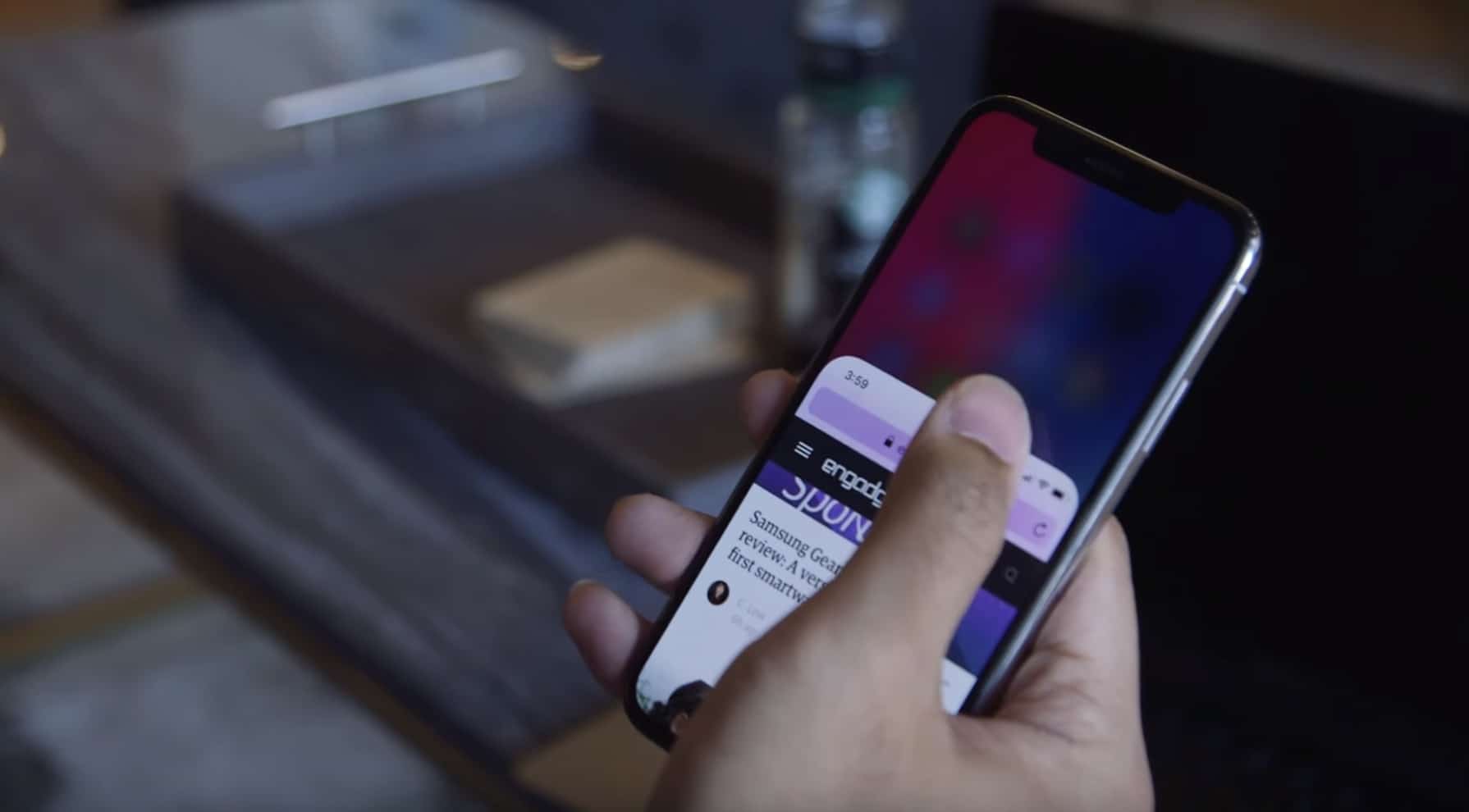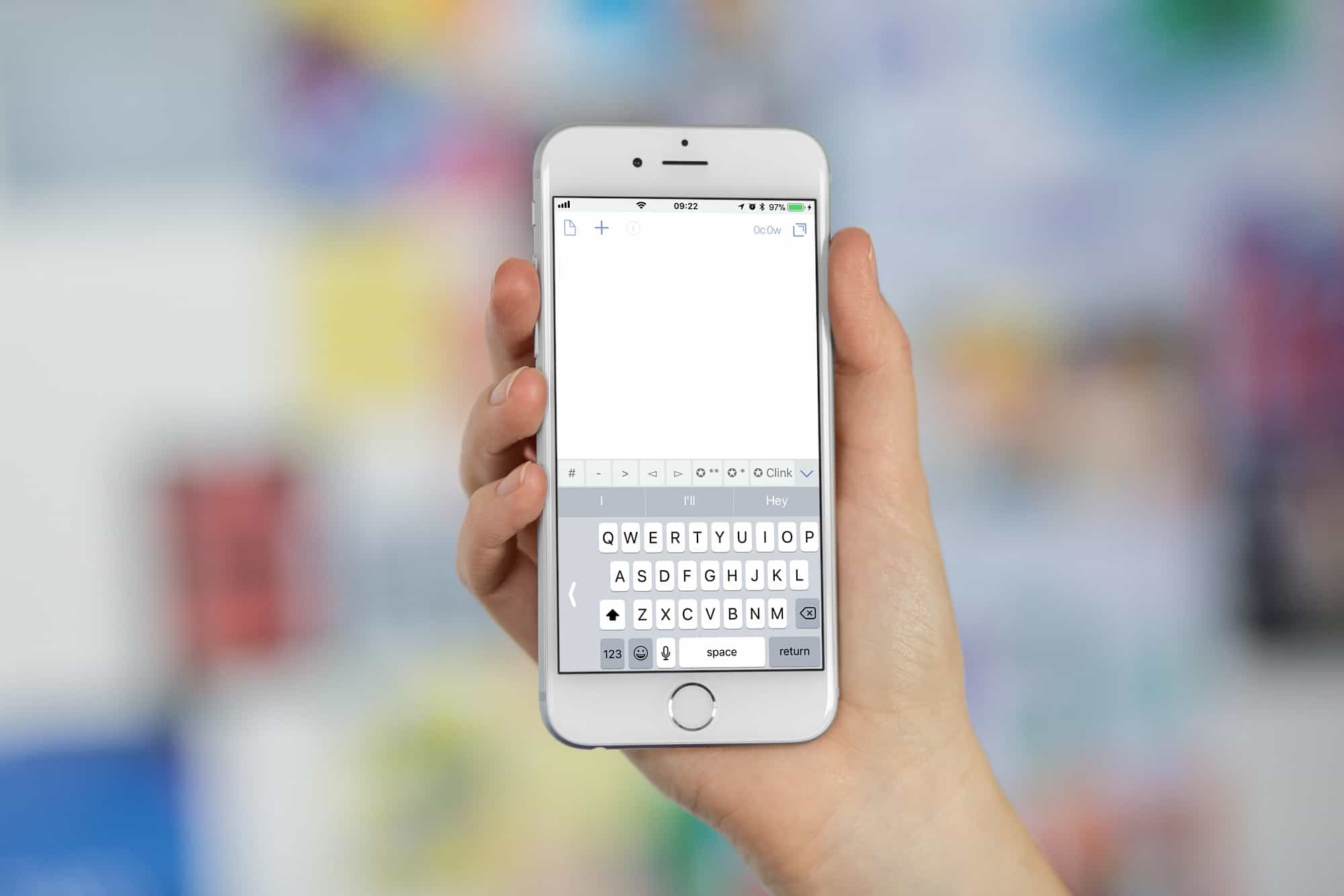
iMessage gets a bunch of new space-saving features in iOS 11 beta. Photo: Cult of Mac
Maybe, if you opt for one of the new 512GB iPads, you won’t have to worry about storage space. But for everyone else, iOS 11 has you covered. Now, under a new section in settings, you can whittle down the storage used by the iMessage app, weeding out old conversations, revealing oversized attachments, and even check to see which conversations are taking up the most space.
Drawing on pictures is easier in iOS 11 Notes. Photo: Cult of Mac/Leonardo Da Vinci
The new iOS 11 Notes app is already far better than the previous version, but this one new feature might tip you over the edge. Now you can draw on pictures with your Apple Pencil, just by tapping on them.
Previously, images and sketches lived side by side, but could never meet. Now, with the power to scrawl directly onto images, you can do all kinds of things. Example: I keep a blank sheet of guitar tab notation paper in the Files app, then drag it to a note and start writing on top of my template. That’s just one use. Another might be to draw mustaches on pictures of your workmates.
The more you use it, the more you realize just how great drag-and-drop is on the iPad. Photo: Cult of Mac
Drag and drop is the headline feature of iOS 11 on the iPad, and rightly so — it changes the whole iOS paradigm, integrating a decades-old desktop feature in a way that makes it feel like drag and drop was just waiting for touchscreens to come along.
It seems like all of Apple’s own apps have gotten a dose of drag and drop in iOS 11, including Maps. Let’s take a look at it.
You can use a free app, or you can just change a setting on your iPhone. Photo: iMazing
iMazing, the folks behind the iMazing iPhone management app for the Mac, has come up with a new tool to convert HEIC images to JPGs. Most people will not need this, but in case you do, iMazing HEIC Converter is both free, and handy to have around.
iOS 11 lets you narrow down your target notes by search whenever you save a new snippet. Photo: Cult of Mac
Apple’s Notes app got a few headline updates in the iOS 11 section of the 2017 WWDC Keynote — in-line sketches and handwriting recognition for example — but there’s another tiny tweak that might be an even bigger deal than those two. Now, when you use the Share arrow to send a URL, snippet of text, or anything else, to the Notes app, you can search your existing notes, and choose which one you want to add it to.
This is huge, and takes Notes from being a higgledy-piggledy junk drawer to being a real replacement for things like Evernote and Microsoft’s One Note. Now you can keep a note for, say, planning an upcoming vacation, and easily add new places and plans to it as you find them, or quickly add links to a book reading list.
Screenshots have moved from a semi-secret, mostly-hidden feature to a proper tool. Photo: Cult of Mac
iOS 11 has added some great new features to the humble screenshot tool. You can quickly view a new screenshot without a trip to the Photos app first, and you can edit and mark it up before saving it. By adding some powerful pro-level features to screenshot markup, Apple has –somewhat ironically — made them way more useful and accessible for everyone.
At last, you can customize the Control Center in iOS 11. Photo: Cult of Mac
In iOS 11, you can customize the Control Center, removing some of the shortcuts you don’t use, and adding in some new ones. This, combined with Control Center’s new in-depth, 3D Touch controls, makes it a lot easier to quickly access functions you don’t necessarily want to open an app to use.
For instance, you can get quickly access an Apple TV remote, add widgets for alarms and timers, change text size, and even start screen recordings.
Instant Markup and Instant Notes are designed with a touchscreen in mind. Photo: Cult of Mac
The Apple Pencil is way more useful in iOS 11 than it ever was before. That’s down to three new features. One is inline drawing in the Notes app, which lets you just start drawing anywhere in the middle of a text note. The other two, which we’ll cover today, are Instant Notes and Instant Markup, only one of which is actually instant.
Instant Notes lets you tap the lock screen of your iPad Pro, and have the iPad launch into a note, ready to draw or jot. It makes the iPad almost as convenient as a piece of paper in terms of just writing. Instant Markup, which is the least “instant” of the two, is a persistent, system-wide way to turn the screen into a PDF and mark it up.
Files is like the Finder for iOS 11. Photo: Cult of Mac
Files is the new Finder app for iOS 11, and it’s already about a million times better than the basic file-picker it replaces — iCloud Drive. Files is a central place from which to access all the files on your iDevice, and in iCloud. You can find, organize, open, and delete all the files on your device, in iCloud, and on 3rd-party storage services like Dropbox. And because this is iOS 11, Files supports all the fancy new multitasking features like drag-and-drop.
The new Dock is essential to iOS 11's drag-and-drop, but there's a lot more packed there. Photo: Cult of Mac
iOS 11 introduces a new Dock. It is conceptually related to the Mac Dock introduced in OS X, and is surprisingly similar. In fact, the biggest difference may be that so far people seem to love the new iOS 11 Dock, whereas there are still beardos who hate the Mac Dock.
Like its Mac counterpart, the iOS 11 Dock packs in a surprising number of features. Lets take a look at them.
Snap your Live Photos on your iPhone, edit on your iPad. Photo: Cult of Mac
iOS 11 brings some neat new editing features to Live Photos, but the good news is that you can edit those same Live Photos, with the same new filters and effect, on an iPad. Let’s take a look.
Apple probably won't admit to it, but iOS 11 now has windows, and lots of them. Photo: Cult of Mac
Slide Over and Split View have been overhauled in iOS 11, making them more powerful but also more complex. Both have been available since iOS 9, but — without drag-and-drop — they were little more than a convenient way to view two apps at once. Now, Slide Over and Split View are essential, allowing you to drag pictures, documents, text, and URLs between apps, as well as work with up to three apps on screen at once, along with a video playing picture-in-picture.
Get your iPhone or iPad ready for the new iOS 11 update. Photo: Cult of Mac
iOS 11 is available on Tuesday September 19th, and if your device is compatible, you can go ahead and update, by just tapping the button in Settings>General>Software Update. If all goes well (and it should), then you will wait for a while as the update downloads and installs, then your iPhone or iPad will restart into the new version of iOS, with all the cool goodies it brings.
But things sometimes can go wrong, so it pays to take a few precautions. You might also like to take the opportunity to clean up your device a little. Here’s how to prepare your iDevice for iOS 11.
Is your iPad or iPhone compatible with the latest version of iOS? Photo: Ste Smith/Cult of Mac
iOS 11 launches in Tuesday September 19th, 2017, and will be an amazing update for both iPhone and iPad. It brings Do Not Disturb While Driving, a much-improved Siri, a brand-new space-saving photo format, a whole new interface and multitasking system on the iPad, and a zillion little tweaks that improve almost everything. But is your iDevice compatible?
Pick up any iPhone (or iPad), press the sleep/wake button and the home button together, and you’ll snap a screenshot. That screenshot will be saved to your camera roll. That’s not possible with the iPhone X, because it has no home button. Fear not, though, because there is an alternative. Better still, Apple has added yet another button-finagling shortcut to the iPhone X — one to disable Face ID.
Favicons make your tabs easier to spot. Photo: Cult of Mac
One of Google Chrome’s best features is its use of favicons in tabs. Take a look at a crowded Chrome window and you’ll see each tiny tab has a colorful, easy-to-identify icon in it. Look at the same window in Safari and you get a mess of tabs with a few letters of the page title peeking out at you. It’s almost impossible to tell one site from another. That’s where Daniel Alm’s Faviconographer comes in. It’s an app with one purpose: to draw favicon onto Safari tabs.
This is a screenshot of the original iTunes, on an iPad. Photo: Cult of Mac
The latest version of iTunes — 12.7 — removes the App Store. That’s bad news for folks who like to keep backups of old iOS apps around, but good news for people who have bloat and clutter. But the update also removes all your custom ringtones, so you can’t manage them from your Mac.
Don’t despair. You can still download purchased ringtones, and copy your own tones across from the Mac. It’s just not obvious how to do it any more.
iPhone X finally hits Apple's refurbished section. Photo: Apple
iPhone X is Apple’s most expensive smartphone to date, with the cheapest 64GB model priced at $999, and the 256GB model priced at $1,149.
That’s $50 more than a 21-inch iMac. However, you don’t have to go hungry for the next few months to afford one. Here’s how to save money and get your hands on iPhone X without breaking the bank.
The iPhone's keyboard is smart enough to learn the words you type. Photo: Cult of Mac
Since iOS 8, the QuickType predictive text has been a tentpole feature of the iPhone’s keyboard. It analyzes the text you’ve typed so far and remembers new words that you type so it can suggest them later. However, if you tend to misspell a word, it automatically learns that word and offers it in the suggestions. If this happens a lot, it might even attempt to autocorrect the correctly spelled word to the misspelled “learned” word.
The iOS keyboard might also offer suggestions for embarrassing words it has learned. Having such words pop up in the suggestions can be really annoying. If you’re experiencing this, you may want toreset keyboard dictionary to remove unwanted words and start fresh.
Holding down the right key when you start up your Mac can fix all kinds of problems. Photo: Charlie Sorrel/Cult of Mac
If your Mac is sick, the first step is to restart it. But did you know that there are several tricks you can perform while your Mac is starting up?
Many of these are advanced Mac diagnostic tools, which shouldn’t be used unless you really know what you’re doing. But some not-so-secret startup keyboard combos will remove a stuck disk (if your Mac is old enough to even have a disk inside), let you boot your Mac from a USB drive, or to turn your entire computer into one big storage disk to connect to another computer.
Here's how to fix the Home button delay on your iPhone! Photo: Sam Mills/Cult of Mac
The Home button on your iPhone has multiple purposes — unlocking your iPhone, bringing up the multitasking menu, returning to the home screen, invoking Siri, etc. Such frequent use can take a toll on the Home button’s responsiveness. Although it is designed to last, it can become laggy or less responsive over time. Surprisingly enough, a large number of Home button issues have more to do with the software rather than the actual hardware.
If you notice that your iPhone’s Home button isn’t as responsive as it used to be, here are a few tips you can use to fix the Home button lag.
Ditch the trackpad and use the keyboard instead. Photo: Charlie Sorrel/Cult of Mac
You probably spend a lot of time in the macOS Finder. Much of it is likely spent pointing and clicking, using the trackpad pointer to duplicate files, or to click back to the folder you were in a moment ago.
But, like most Mac apps, the Finder offers a ton of useful keyboard shortcuts — to create new folders, navigate files and change what you see in the Finder window. If you learn a couple of them, you can spend a lot less time dithering with your mouse. You will also look like a cool TV or movie hacker if you click on the keyboard instead.
Today, we’ll look at the most useful day-to-day Finder keyboard shortcuts.
In 2017, you still have to copy-and-paste Javascript to save a bookmarklet on iOS. Photo: Cult of Mac
Bookmarklets are those little bookmarks you click to run mini “apps” in your web browser. You might have one that saves the current page to your Instapaper account, or one that launches a Google search focused only on the current site. Bookmarklets can translate highlighted text on a page, send something to your to-do list, or pretty much anything. On the Mac, installing a bookmarklet is easy. You just drag it to the bookmarks bar in Safari and you’re done. On iOS, though, it’s still a real pain.
So, bookmark this how-to (in the usual way), and have it handy for those times you need to install a bookmarklet on an iPhone or iPad.
You might be surprised by how much the macOS Finder's renaming tools can do. Photo: Cult of Mac
Renaming a single file in the Finder isn’t too bad. You can click on its name and type in a new one. But what if you want to rename a whole bunch of files at once? Maybe you want to add the same text to the beginning of every file, or add a number to the end of a folder full of MP3 recording to keep them in the right order. Do you have a folder full of photos named IMG_00xx.JPG that need to be called dads_wedding_00x.jpg instead? Or perhaps that intern spelled the company name wrong on every single one of a hundred files, and you need to correct that word on every file?
In the olden days, you would have to either a) research, download, buy, and learn to use a new bulk-renaming app or b), punish your intern by making them correct everything by hand, before finally resorting to a) anyway because the intern screwed it up again. Now, the Finder has powerful bulk-renaming tools built in, so you can just take care of it all in a couple of minutes, and have your intern make you a coffee instead. If they can be trusted to do it, that is.
Auto Brightness has been hidden in iOS 11, but it can still be found. Photo: Charlie Sorrel/Cult of Mac
You’ve all been there. You’re sitting near a window or a lamp, reading an excellent article on your iPad — perhaps a well-written How-To from Cult of Mac — and your iPad’s screen Auto Brightness is going haywire. You slide open Control Center, and set it back where you want it, and continue reading. Then, you turn the iPad a little too far towards the light, and the screen brightness creeps up again.
In iOS 10 and prior, you’d just open the Settings app, tap Display & Brightness, and hit the switch for Auto Brightness. In iOS 11, that option has disappeared. The good news is that it hasn’t gone — the Auto Brightness switch has just moved.