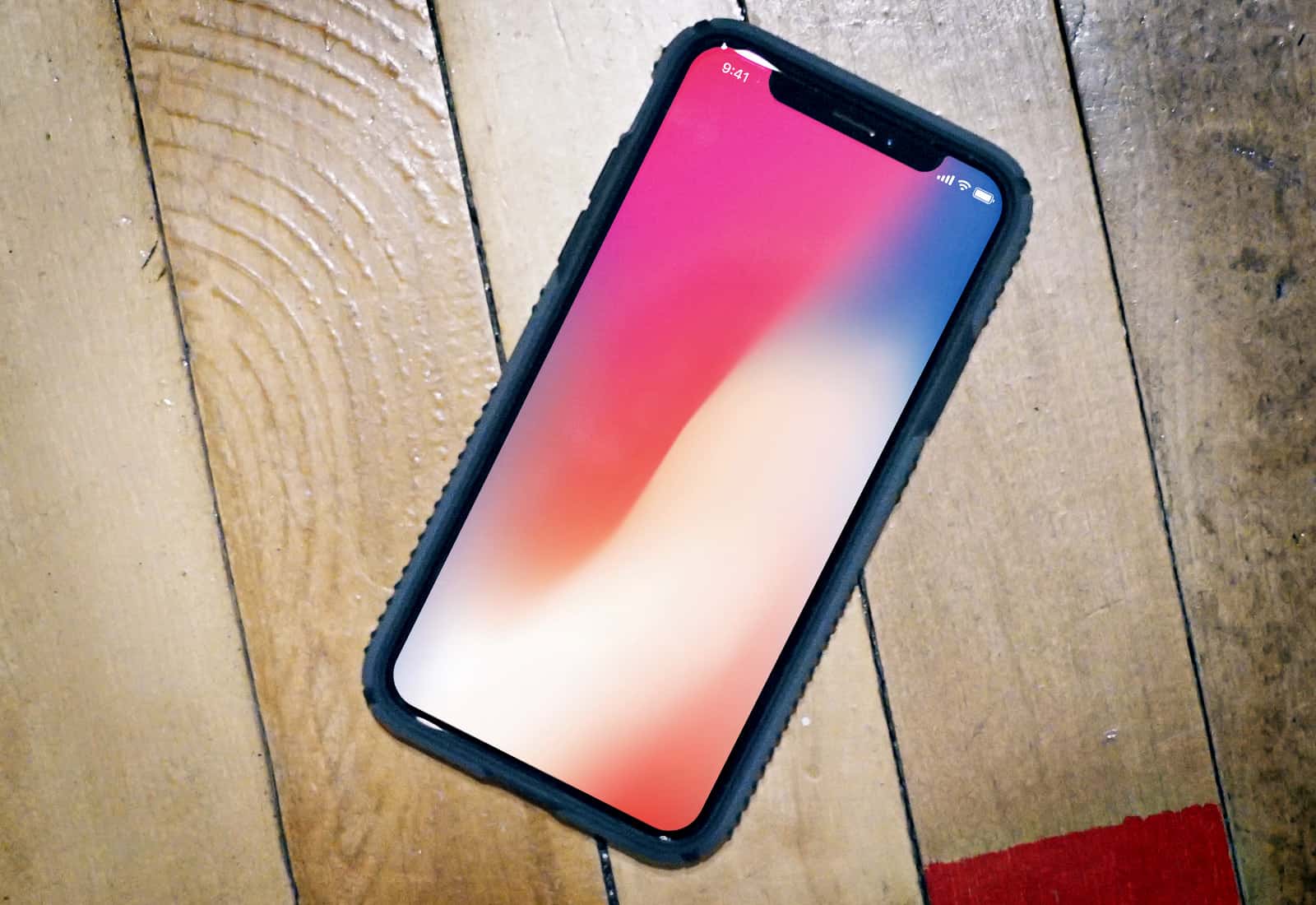
With the launch of Apple’s most expensive iPhone ever right around the corner, Apple fans are bracing their wallets for impact.
Even the most basic iPhone X will cost you at least $999, but thanks to a bevy of carrier and trade-in deals, you can come away with the 256GB model without spending over a grand.
Stop hating words containing Q, A, and Z, with the iPhone's new one-handed keyboard. Photo: Cult of Mac
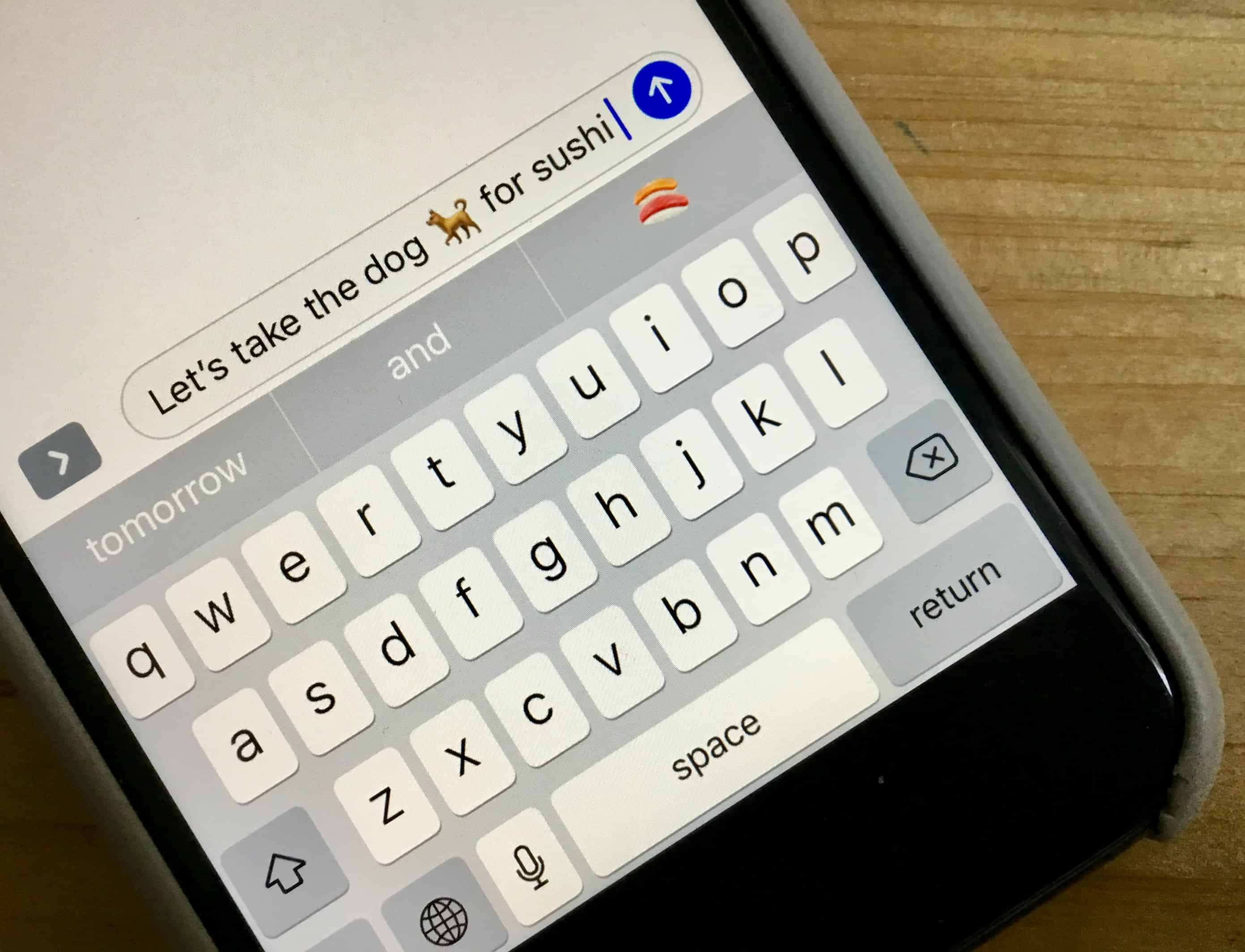
If you have small hands, or a big-screen iPhone, or both, then you may love the new one-handed keyboard in iOS 11. It’s a simple software tweak that squishes the on-screen keyboard horizontally, and slides it to the left or right, so you can more easily reach all the keys with a thumb.
This is great news for folks who like to walk along the street sipping coffee and texting, instead of looking where they’re going. It’s also neat for people trying to get a baby to sleep, so they can tweet about it as they bob the baby into slumber on their hip.
The Mac's venerable summarize service is more relevant than ever. Photo: Cult of Mac
The Mac has a great built-in tool named Summarize, which does just that. If you have a chunk of text that is too long, then you can shorten it using the Mac’s very own TL;DR generator, a system service which will take any text and shrink it, keeping only the important bits.
Perhaps you want to skim-read a too-long text? Maybe you want to reduce a full article to a 140-character Twitter post? Or maybe you want to email this article to a friend of yours who is too lazy to read it, but could totally use the advice.
Your music is so hard to get into the iPhone's Music app, it may as well be on CD Photo: Lost Places/Flickr CC
It’s 2017, and yet you still can’t add music to the Music app on your iPhone. If you have an MP3 file that somebody sent you, that you downloaded, or that you created with one of the zillions of powerful apps on iOS, you can’t just add it to your library. Instead, you must add it to iTunes on your Mac or PC, and then manually sync it to your iPhone, either over Wi-Fi or with a cable.
It’s absurd, and today we’re going to fix it. You’ll still need a Mac to be running, but at least you don’t have to actually touch it.
With iOS 11, you don't need to go to a recording studio to collaborate on a song. Photo: Iñaki de Bilbao/Flickr CC
One of the great new features in iOS 11 and macOS High Sierra is shared documents. You can create almost any kind of file, and collaborate on it with other people. This can be a simple Pages document, or a complex song in GarageBand. In theory, the file will be updated with everybody’s changes, so you can work on the same project without emailing a zillion copies back and forth.
Currently, this feature ranges from a little shaky, to rock solid, depending on what apps you are using. Here’s how to share and collaborate using GarageBand in iOS 11.
Siri will teach you how to teach her. Photo: Cult of Mac
Siri is great for setting reminders and timers, but in recent times Apple’s AI assistant has gotten a lot better at other things, too. For instance, sending iMessages to folks via your EarPods or AirPods, with your iPhone still in your pocket, works well enough that you can use it reliably all the time.
However, if Siri can’t pronounce the names of your contacts, then it’ll drive you crazy. Luckily, you can teach Siri to say these names correctly.
Editing your video clips will make them way less boring. Photo: Charlie Sorrel/Cult of Mac
The secret of a good movie is in the editing. Well, the script, the lightning, the directing, the photography and the acting are all important, but for home movies, you have little control over those.
So it’s down to the edit. And the most basic of edits is to lop the ends off a clip, to trim video and make it shorter. Watching excessively long clips is the equivalent of a conversation with someone who can’t ever get to the point. “Let me tell you about that time I fell out of the plane. It was a Tuesday. No, I think it was Wednesday. Wait, it must have been a Tuesday because …”
It’s painful. So, do yourself a favor and trim your video clips. Even if you’re not planning on combining your edits into a short movie, you should at least remove the cruft from anything you’re going to show. The good news is that it’s dead easy to trim video on Mac and iOS.
Adding shortcuts for your favorite Emoji is easy. Photo: Cult of Mac
If you use emojis, the iOS keyboard is fantastic. It suggests emojis for you as you type words, and you can insert them into your messages with a tap. But what about the Mac? How can you add emojis with the keyboard on the desktop? And how can you force iOS to remember shortcuts for your favorite emoji on the iPhone and iPad? The answer to both is Text Replacement, which is built into both macOS and iOS.
You can even browse wireless SD cards from Files app. Photo: Charlie Sorrel/Cult of Mac
Did you ever hold your iPhone in one hand, and a USB hard drive in the other, and look back and forth between them, muttering “Why, oh why?” Well, today we have good news for you. You still can’t hook them together with a wire, but with one app you can browse all kinds of external storage devices right from iOS’s Files app.
Hard drive hooked up to your Time Capsule? Check. USB storage connected to your fancy router? Check. Home network storage devices that work great but have really hideous iOS apps to access them? Check. With this tip, you can put any of these in your Files app’s sidebar using the excellent FileBrowser app. You might not be able to plug a USB-C drive into your 2018 iPad Pro, but until Apple relents on that score, this is the next best thing.
If your car has a Bluetooth stereo, then you can set your iPhone to remember exactly where you parked, and mark the spot in your iPhone’s Maps app. Once enabled, you’ll never lose your car again. The process is automatic: Whenever you leave your car, the marker is placed. Let’s see how it works.
Windowed is a free app that fakes out Instagram so you can post from a computer. Photo: David Pierini/Cult of Mac
Instagram doesn’t make it easy for photographers to post pictures from a computer. However, a new computer app can fool the popular photo-sharing platform by mimicking a mobile browser.
Windowed is free and makes posting photos directly from a Mac or MacBook as easy as it is from your iPhone.
Apple’s own Mail app is pretty amazing in iOS 11 and macOS High Sierra, and is more than good enough for most people. But Cult of Mac readers aren’t “most people,” and that’s where Readdle’s Spark comes in. If you’re looking for more features, like scheduled sending, automatic follow-ups, and integrations with third-party apps and services, then Spark is the place to look. Today we’ll look at how to use these great new features.
Today’s tip is a simple one which might help some of you from going nuts trying to find hidden pricing options on your Mac. Did you ever try to print a PDF in Safari? Usually when you click on a PDF link in the browser, Safari opens it up right there. This seems great if you want to quickly print the PDF, but you should stop right there. Safari’s printing sheet, the one that opens up when you hit Command-P to print, is a cut down version of the regular one.
Even worse, the missing features are exactly the ones you’ll want to use if printing a PDF — especially if you’re printing tickets, or boarding passes.
The iPad is insanely flexible in iOS 11. Photo: Ste Smith/Cult of Mac
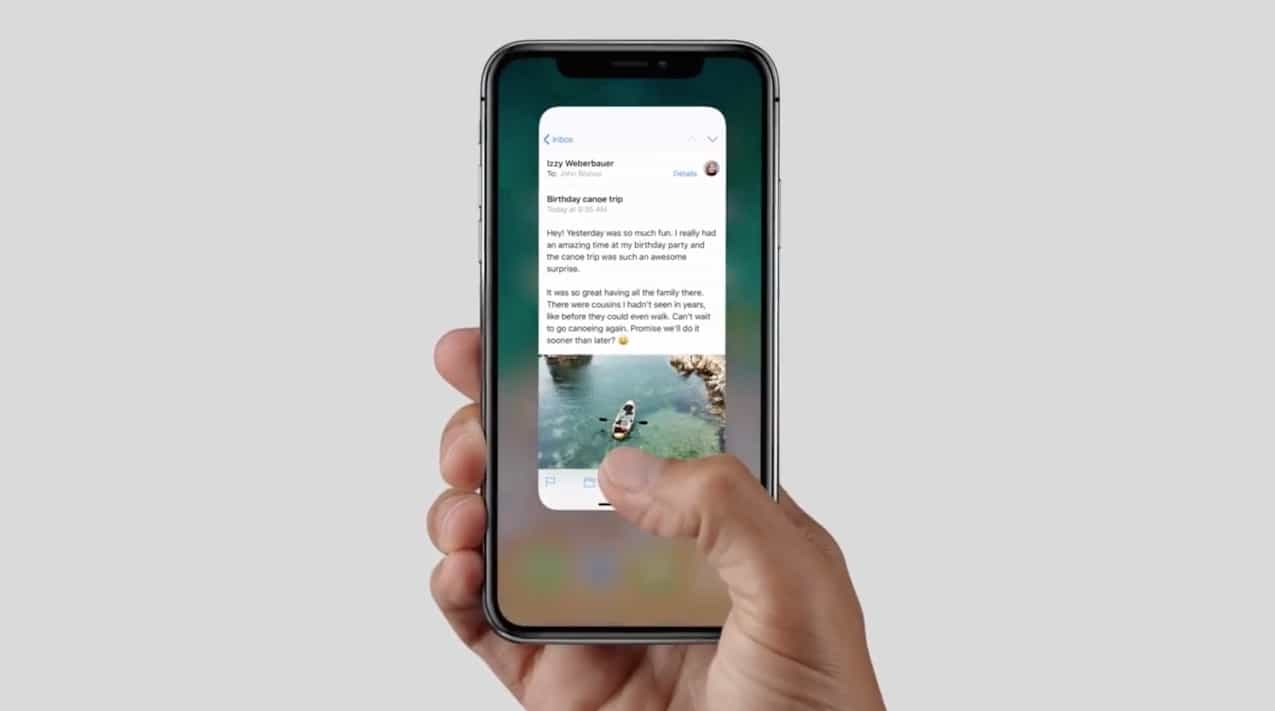
In iOS 11, there are four ways to switch apps on the iPad. Five, if you count the old-school way: hitting the home button to return to the home screen, and tapping an icon to launch a different app. Some of these methods have been around a while, and have changed drastically in iOS 11. Others are brand new, and exclusive to the iPad. Today, we’re going to look at them all.
you no longer need a password to share your Wi-Fi in iOS 11 Photo: Alan Levine/Flickr
iOS 11 brings yet another convenient feature — password-free Wi-Fi sharing. It works like this: If a friend or other visitor needs to use your Wi-Fi, then instead of digging in the dust and yanking on the already-taut cables of your router to read the password label on the back, you can just hold your iPhones close to each other, and grant the guest access to your network. It’s super easy, and requires nothing more than that you both be running iOS 11, and have Bluetooth switched on. If you want to learn more about how to share WiFi password iPhone, check out this guide here.
Printing is so easy now that you don't even need paper any more. Photo: Cult of Mac
One of the neatest tricks built into the Mac, and now into iOS, is to print to PDF. In short, anything that can be printed can also be saved as a PDF. But doing so on the Mac means using the mouse to click a little drop-down picker in the print dialog. Wouldn’t it be nice if you could just tap Command-P — the keyboard shortcut for printing — twice instead?
You're no longer required to use iCloud Drive as your default. Photo: Cult of Mac
You probably know by now that iOS 11’s Files app can integrate services like Dropbox, and Google Drive, so that they appear and act like regular folders on your iPhone or iPad. But did you know that you can choose these third-party services at the default storage option for your apps? Take Apple’s own Pages, for instance. In the olden days, it would store files in your iCloud Drive, or locally on your iPad. Now, you can pick anything, including Dropbox, as the default location for saving.
Apple removed the App Store wish list in iOS 11. Maybe it'll be back, but if not, there are options. Photo: Cult of Mac
In iOS 11, the App Store Wish List disappeared. Maybe it’ll come back in future updates, and maybe it won’t, but for now there’s no built-in way to save an interesting app to go back to later. You may bookmark an app for several reasons. You might be researching several similar apps. You might want to do some more research on an app later, before buying it. You may want to save an app that someone you know would be interested in. Or maybe you’re just holding off until the price drops, or until you’re on Wi-Fi to download a big app.
Whatever your reasons, there are third-party options. Today we’ll look at a dedicated app for making an app wish list, as well as a Workflow to do the same, and a third option you may not have considered. Best off all, they all have gone big advantage over the old wish list — they can save free apps as well as paid.
Delicious, juicy stickers. Mmmm. Photo: Cult of Mac
iMessage apps aren’t all about stickers. They’re also a neat and handy way to share information from your favorite regular apps. And in iOS 11, they’ve become a lot easier to use. In iOS 10, iMessage apps required several taps just to get to a list to choose what you wanted. In iOS 11, there’s a brand-new dock at the bottom of the app which lets you quickly swipe and tap to the exact app you want, even if you have a lot of them active.
Getting your notes out of Apple Notes is easy. Photo: Cult of Mac
Apple’s Notes app has gotten great in iOS 11 and macOS High Sierra. It’s fast, it’s easy to clip content to new and existing notes, search is instant, and you can collect pretty much anything into a note. You can even share individual notes, mark up PDFs, draw on pictures, and scan paper documents.
It really is a powerhouse. But one thing Notes doesn’t have is a sensible way to get your notes out of the app. Notes export is limited to PDF. If you decide Notes isn’t for you, you’re stuck. Fortunately, some third-party apps will export your Notes into universally compatible plain text files. Even better, one is free, and the other costs just 99 cents.
Measuring distances in Google maps is now easier than doing it on paper. Photo: Georgie Pauwels/Flickr
Remember how, if you wanted to measure distance between two places, you’d have to either a) spend the next half hour searching the App Store for a non-hideous free app that wouldn’t be too frustrating to use, or b) contrive to force Apple or Google Maps to give you more-or-less direct directions between two points?
Those dark days are over, because now Google Maps on iOS has distance measuring built in. Now you can finally see how far it it from here to there. And back again, if you like.
Drag-and-drop is a great. way to get things done, but not the only way. Photo: Cult of Mac
iOS 11’s biggest new feature, for iPad users at least, is drag-and-drop support, which goes way beyond just letting you drag a file or snippet of text between apps. I’ve been using iOS 11 since the first beta last summer, and while drag-and-drop was neat, it didn’t really come into its own until third-party apps started supporting it.
Two things have surprised me. One: How useful drag-and-drop is inside a single app (which works on iPhone, too). And two: How bad drag-and-drop is for certain tasks.
FaceTime can capture LivePhotos and save them to your camera roll. Photo: Cult of Mac
You know how when you’re on a FaceTime call with your parents, and your father holds his favorite recipe up to the camera, and you use the screenshot to capture a photo of it? Well, now there’s a proper, official way to capture images from FaceTime calls. Even better, they’re not just stills. The captures are Live Photos, so you can relive that goofy smile from your grandparent long after they’re gone.
Zipped works on iPhone too, only without the drag-and-drop. Photo: Cult of Mac
Zipping files just got a whole lot easier on the iPad thanks to iOS 11’s new Files app. Now, instead of having to fire up a third party app and somehow get your files in there, you can use drag-and-drop, or other methods, from right inside Files, and then save the results back to Files. Today we’ll take a look at two zipping apps which work with Files to zip files in iOS 11, both with different approaches: Kpressor, and Zipped.
In iOS 11, AirPods (and other Apple accessories) remain connected, even when you hit the Bluetooth "off" switch. Photo: Cult of Mac
It used to be so simple: If you swiped open the iOS Control Center and tapped the Bluetooth icon, then Bluetooth would be toggled on or off. That was it, and the same went for Wi-Fi.
In iOS 11, tapping the same Bluetooth button doesn’t do that. Instead, the Control Center Bluetooth button disconnects your iPhone or iPad from connected Bluetooth accessories, leaving the actual Bluetooth radio on. What’s more, not all accessories get disconnected. Just what in the blazes is going on here?