Mobile menu toggle

News

The latest Apple news, opinion and analysis posts from Cult of Mac writers.

Read Cult of Mac’s latest posts on News:

Redesigned M7 MacBook Pro could be out amazingly soon

By

Expect a new Design for the entry-level M7 MacBook Pro
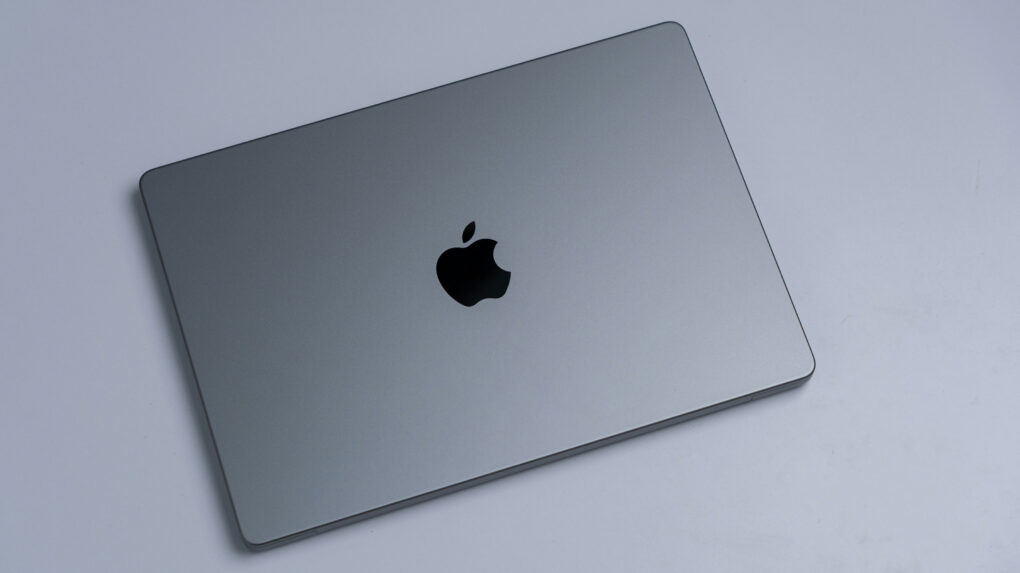
Apple could have a revamped entry-level M7 MacBook Pro on the market quicker than most people thought.
Photo: Apple/ChatGPT/Cult of Mac

A year from today, people across the world will be using a redesigned entry-level MacBook Pro powered by an unannounced M7 processor, according to an unconfirmed report on Wednesday.

This new model will supposedly launch in the first half of 2027, and it’ll apparently be out surprisingly soon after the current basic MacBook Pro gets the M6 chip.

Apple’s Hide My Email has been leaking real addresses for a year

By

A photo of Apple's Hide My Email feature used in a story about a security exploit affecting the service for almost more than a year.
Hide My Email is supposed to keep your real address off signup forms — but a year-old bug means it may not be doing that.
Photo: Apple

Apple’s Hide My Email has one job — to keep your real inbox out of other people’s hands. But it isn’t doing that job, and Apple reportedly knew this for more than a year.

If you’ve ever used Hide My Email to sign up for a sketchy app or website, you’ll want to pay attention. A security researcher says he managed to unmask the real email address behind virtually every Hide My Email alias. And Apple hasn’t fixed it yet.

Apple’s App Store fight with Epic just got a lot more serious

By

An AI generated image of the Apple v Epic case used in a story about the two companies now heading to the Supreme Court.
Apple and Epic Games' App Store fee battle now heads to the Supreme Court.
Photo: Google Gemini/ Cult of Mac

Apple’s years-long App Store fight with Fortnite maker Epic Games is now headed to the Supreme Court. The justices agreed on Tuesday to hear Apple’s appeal of a contempt ruling that has already forced it to change how it handles payments outside the App Store. And the stakes just got a lot higher.

If you’ve purchased anything through an iPhone app recently, this affects you more than you’d think. At stake is whether Apple can keep charging app developers a commission on payments made outside the App Store, and that fee trickles down to what you pay for subscriptions and in-app purchases.

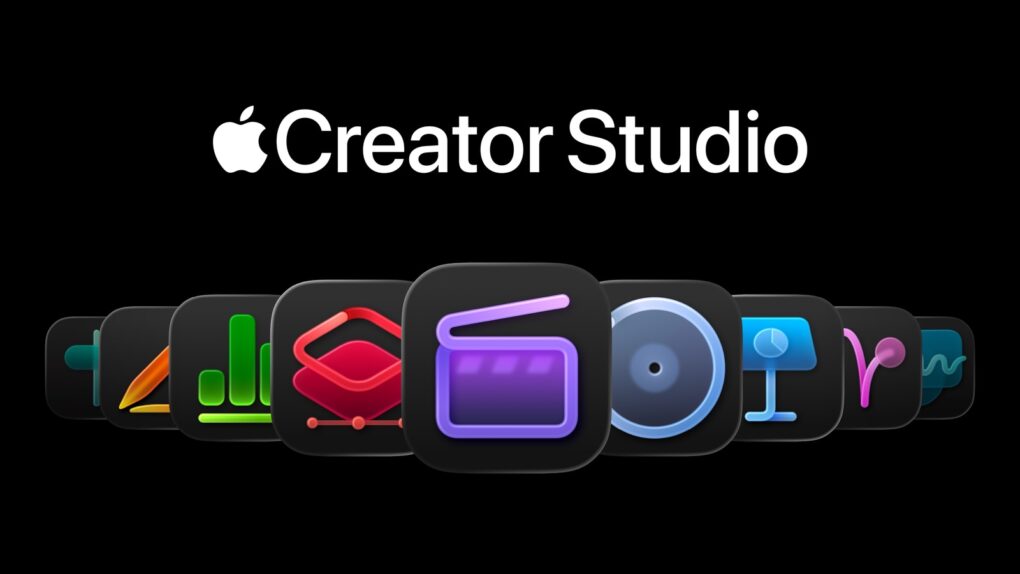
Apple Creator Studio updates sharpen editing tools and tighten app integration

By

Apple Creator Studio updates
The Apple Creator Studio app bundle got a series of updates.
Photo: Apple

Apple rolled out a fresh batch of updates to Apple Creator Studio Tuesday, sharpening AI features inside its flagship video and music apps while weaving Pixelmator Pro’s editing tools directly into Final Cut Pro, Keynote, Pages and Numbers.

The updates expand on the role Mac, iPad and iPhone already play for creative work. They layer in new AI capabilities across editing, photo and music workflows.

AirDrop vulnerability lets anyone nearby knock it offline, no tap required

By

An image of Apple's AirDrop feature used in a story about recently discovered exploits.
AirDrop's convenience comes from processes that respond before you even see a prompt, which is exactly the problem.
Photo: Apple

A newly discovered AirDrop vulnerability means someone sitting in the same café as you can silently break AirDrop on your iPhone or Mac, no tap or pairing required. They just send a stream of junk data to your iPhone and AirDrop — alongside AirPlay, Handoff, Universal Clipboard, and Continuity Camera — all go dark for as long as they keep it up.

That’s the core finding from new security research into Apple’s AirDrop protocol. The exploit does not steal any data, but instead lets an attacker shut down AirDrop and Continuity features. For Apple users who use AirDrop regularly, that could be a real annoyance hiding in a real-life vulnerability.

Supreme Court says police can’t access iPhone location data without warrant

By

An AI generated photo of the US Supreme Court with a person using an iPhone.
The Supreme Court ruled 6-3 that accessing someone's phone location history is a Fourth Amendment search, regardless of which company stores the data.
Photo: Google Gemini/ Cult of Mac

Because it’s connected to a wireless carrier, your iPhone can be used to locate you. Until this week, police could access this data on little more than a hunch — no Supreme Court location data ruling stood in their way. That changed on Monday.

The Supreme Court ruled that pulling your phone’s location history now counts as a Fourth Amendment search — no matter how short the window or whose server it sits on. Cops now need a real, individualized warrant before being able to dig through where your iPhone has been.

The Supreme Court location data ruling, explained

A warrant is supposed to only be used when there’s probable cause, meaning police have a reasonable basis to believe that evidence of illegal activity will be found. But Geofence warrants work like a digital dragnet. Instead of naming suspects, police ask tech companies for every phone that was present in a given area during a specific time window, knowing that the vast majority of people included are innocent.

The Chatrie v. United States case, which reached the Supreme Court, is the clearest test of whether that’s constitutional.

It all started in 2019 with a bank robbery outside Richmond, Virginia, which left police with almost $200,000 missing and zero suspects. They reached for a geofence warrant, asking Google for every account within a 150-meter radius of the credit union during the hour of the robbery.

Investigators then widened the window to two hours and narrowed the list of suspects down to three account holders. One of them was Okello Chatrie, whose phone led police straight to a stash of cash, a gun and robbery notes.

While Chatrie pleaded guilty, he kept on fighting against the warrant itself. He argued the police went through his data — and everyone else’s in the radius — without probable cause tied to any actual suspects.

In 2022, a federal court called the warrant unconstitutionally broad because it also covered homes, businesses and a church. The court did allow the evidence to stand under a “good faith” exception, with a divided Fourth Circuit upholding it in 2025 — which is how the case reached the Supreme Court.

This matters even if you have never touched an Android

Google was named in the case because its old Location History tool made it possible to pull user location data at scale. Since then, the company has redesigned its way out, with mass geofence requests not possible since mid-2025.

But the real question wasn’t about Google; it was whether your phone’s location data deserves to be protected by the Fourth Amendment no matter who stored it.

To this, the justices said yes 6-3, with three liberals and three conservatives forming the majority — something you rarely see at the Court these days. Justice Elena Kagan wrote for the majority that it doesn’t matter “if the time period scrutinized was only two hours.”

Apple has spent more than a decade building its privacy pitch exactly around keeping this kind of data out of reach. It encrypts Significant Locations, for example. Monday’s ruling essentially makes this architecture unnecessary, as the underlying principle is now the law of the land, regardless of which company has your data.

What the ruling doesn’t do

That said, this isn’t a blanket ban on geofence warrants. The police can still get one if it’s tied to a real probable cause, like tracking known associates of already identified suspects. And a subpoena for someone’s location data backed by evidence remains entirely legal.

What’s off the table is the dragnet version, which involves asking a company for everyone’s location data in an area and seeing who’s guilty afterward.

The Court did not decide if Chatrie’s case survives under the “good faith” exception, which means the question heads back to the Fourth Circuit.

The ruling also did not address the data broker industry, which buys and sells location data collected from apps without requiring a warrant. Nor does it address the “cell tower dump” requests, which pull everyone’s data from a tower.

Location privacy isn’t airtight yet, but this Supreme Court location data ruling is the biggest since 2018’s Carpenter v. United States. It’s a lot harder now for police to treat your iPhone like evidence before they’ve even named you a suspect.

Tons of new features in Photos help sort your massive library in iOS 27

By

Photos app graphic
Loads of new features come in Apple’s upcoming software update.
Image: Apple/D. Griffin Jones/Cult of Mac

The new Photos app in iOS 27 clearly did not get the memo that this was a small year of bug fixes and performance improvements. While it is faster and more stable, there are tons of excellent new features top to bottom. Sorting through the largest photo libraries will be easier than ever in iOS 27.

Here are all the new features you can look forward to — or, if you’re daring, try out now.

New iPhone and Mac updates offer dozens of security fixes

By

iOS 26.5.2 is packed with security patches.
There are just so, so many security patches in iOS 26.5.2.
Image: Cult of Mac

Apple released iOS 26.5.2, macOS Tahoe 26.5.2 and iPadOS 26.5.2 on Monday with no additional features but lots of security fixes. There are no fewer than 29 of them listed in Apple’s documentation.

Clearly, even though they lack fun new features, you should install these updates ASAP.

Apple acquires Play, award-winning SwiftUI prototyping tool

By

Apple acquires maker of Play SwiftUI app
Apple snapped up the maker of the SwiftUI app Play.
Photo: Apple

Apple just acquired assets from Rabbit 3 Times, the New York-based company behind Play, an iOS and macOS app that let developers design, prototype and generate SwiftUI code in real time. The deal surfaced this week when the European Commission published the filing on its Digital Markets Act acquisitions page. Play won an Apple Design Award for innovation in 2025.

Apple’s Vision Pro VP could jump ship to OpenAI’s hardware team

By

A photo of the Vision Pro, launched under Paul Meade by Apple in 2024.
Apple Vision Pro launched in early 2024 under Paul Meade's hardware leadership. He's now bringing that product expertise to OpenAI.
Photo: Apple

Apple doesn’t often lose vice presidents, but something unexpected happened this week: Paul Meade, who spent about seven years building the Vision Pro and shaping Apple’s smart glasses plan, is reportedly leaving for OpenAI.

If you own a Vision Pro or are waiting for Apple’s smart glasses, this is the executive exit that should concern you. Meade doesn’t just hold a title — he shipped the headset and was also planning what comes next.

Paul Meade spent years shipping the Apple Vision Pro

Meade’s resume reads like a hardware lifer. He joined Apple in 2010, working on the iPad before eventually moving into the iPhone team in 2012. Fast forward to 2017, and he crossed over to the Vision Products Group.

Two years later, he was handling all of Vision Pro’s hardware engineering and kept that job for almost a decade. Now, Meade is heading over to OpenAI’s hardware division, where he’ll work on the company’s upcoming AI devices.

Apple is yet to publicly confirm any of this. Bloomberg’s Mark Gurman broke the story, but neither Apple nor OpenAI has commented yet.

With Meade leaving Apple, his longtime deputy — Fletcher Rothkopf — who already leads the design team for the Vision Pro and the much-rumored smart glasses, is taking his place. That’s a serious step for someone who’s never run the show solo and a sign of how much pressure Apple is under.

OpenAI now has Apple’s old hardware bench

If this were the first Apple exec to leave the company for OpenAI, it wouldn’t be that big a deal. Apple has seen its watch designers drift towards Jony Ive’s orbit for a while, as well as some execs join the likes of Meta.

But losing a VP from its engineering department to a rival company is new. At OpenAI, Meade will rejoin Apple’s former hardware and design lead Jony Ive, Tang Tan, and Evans Hankey. This is the same team OpenAI bought for $6.5 billion last year.

Sam Altman has previously hinted that OpenAI’s first device would be something less intrusive than an iPhone. But rumors have it that the project has struggled to get past the concept stage.

This is exactly where Meade comes in. His entire career has revolved around shipping products, not just sketching them.

The Ternus reorganization may have pushed Meade out

The timing isn’t as random as you may think. Meade’s exit follows the hardware reorganization Apple did, with John Ternus stepping up as the CEO. This was followed by Apple’s chip chief, Johny Srouji, being put in charge of Apple’s hardware engineering team.

It pushed several VPs, including Meade, answerable to a new layer under Ternus. That’s a demotion in spirit for some, even if no one called it that. For an executive who spent years effectively owning a product, that’s exactly the type of change that makes often someone look for a new job.

What Meade could take with him when he leaves

More than the drama at Apple, here’s the thing that should sting more: the Vision Pro didn’t sell in volume. Unsurprisingly, Apple has reportedly toned down its headset efforts, with a redesign not expected before 2028 or 2029.

Instead, Apple could be focusing on a pair of lighter, display-free smart glasses intended to compete against Ray-Ban Meta. That program was Meade’s, and so were the long-range AR glasses planned for later this decade. Meade’s departure is more than a job change — he could be taking a map of where Apple’s wearables could go next.

It isn’t all bad news on Apple’s side. The company is still reportedly working on camera-equipped AirPods and a tabletop robot. A wearable pendant is also somewhere in the pipeline. Despite modest sales figures, Rothkopf has a team that’s already shipped a headset. But OpenAI has just hired the person who knows what it takes to get the next one out the door.

Apple will now most likely need to prove with its much-rumored smart glasses that losing Meade didn’t cost it anything.


Why Apple’s Preview is no longer enough for modern PDF workflows

By

Graphic showing the all-new Wondershare PDFelement.
Wondershare PDFelement is an all-new PDF editor powered by AI. It's an affordable alternative to Adobe's PDF tools..
Photo: Wondershare.

For basic PDF viewing, annotations, and document signing, Apple’s Preview remains one of the most convenient tools available on macOS.

However, modern PDF workflows often require more advanced capabilities, including PDF editing, OCR, file conversion, document organization, security controls, and AI-powered productivity tools. Wondershare PDFelement provides these features within a single platform, making it a practical choice for users who regularly work with PDFs beyond simple viewing and markup.

Apple could buy banned Chinese memory chips to keep your iPhone’s price down

By

An AI generated photo depicting the White House and Chinese RAM maker CXMT used in a story about Apple.
Apple just raised prices on MacBooks and iPads by as much as 20%, and now its reportedly lobbying for a controversial fix.
Photo: Google Gemini/Cult of Mac

RAM has gotten so expensive that Apple is reportedly willing to stir up a political storm just to secure its supply. The solution may involve buying RAM from a Chinese chipmaker that the Pentagon says has ties to the Chinese military.

It wouldn’t be illegal. But that doesn’t mean there wouldn’t be consequences for the Mac maker.

Why you should expect much richer Apple OLED display colors soon

By

Apple OLED panels target wider color gamut
If you think Apple displays are amazing now, just wait a few years. Color will really pop.
AI image: ChatGPT/Cult of Mac

Future MacBook Pro, iPad Pro and iMac models look set to gain OLED displays with dramatically richer color, according to a new report Monday. That’s because upcoming Apple OLED panels target a wider color gamut, a new industry standard that makes today’s screens look narrow by comparison.

Here’s when Apple could unveil its first foldable iPhone

By

Apple's new iPhones could be unveiled on these dates.
AI image: ChatGPT

Apple could unveil the iPhone 18 Pro and foldable iPhone on September 8 or September 9, 2026. That’s what Bloomberg’s Mark Gurman estimates based on Apple’s previous release timeline.

If accurate, the new iPhones could go up for preorder later in the week and hit retail stores on September 18.

Why Apple silicon Macs aren’t immune to RAM price hikes

By

Image of an Apple M-series processor, used to illustrate a story on Mac price hikes result from rising memory costs
Every Mac's Apple silicon processor includes RAM and storage outsourced from memory chipmakers.
Photo: iFixit

Can’t understand why the rising cost of memory chips forces a hike in Mac prices? Apple silicon processors include Unified Memory, so Apple has no need to buy RAM chips, right?

No, that is not how it works. Mac processors include RAM that Apple must purchase from outside suppliers.

Still confused? Here’s what’s going on.

Your iPhone could soon be spotted by license plate cameras

By

A photo of Leonardo's SignalTrace used in a story about how it affects iPhone users.
Leonardo's iPhone license plate camera tech can read Bluetooth, Wi-Fi, and RFID signals from devices passing by.
Photo: Leonardo US Cyber and Security Solutions

The camera mounted on the streetlight has done one job for years: photograph your license plate. That could soon change. A new sensor upgrade is reportedly underway to detect Bluetooth signals coming from your iPhone, Apple Watch, and AirPods — turning routine plate scans into a record of which devices, and which person, just drove by.

If you’ve always treated your iPhone’s Bluetooth signal as harmless background noise, it’s time to rethink that. Every time you pass these cameras, they could pull a wireless fingerprint of your devices and link it to your license plate. This builds a trail far richer than a single photo ever could. It also stitches your phone into a database that has nothing to do with Apple.

Still using an Intel Mac? Here are 6 reasons it’s time to upgrade.

By

Time to ditch your Intel Mac?
AI image: ChatGPT

macOS 27 Golden Gate marks the end of the road for Intel Macs. If you’re still using one, this is the strongest reason yet to consider upgrading to an Apple silicon Mac.

While your Intel Mac will continue receiving security updates for a while, it has effectively reached the end of its journey. And that’s not a disaster, considering the newer Apple silicon Macs are not only faster and more efficient, but they’re also the ones getting access to all the new AI features. Here are eight reasons it’s finally time to upgrade.

WhatsApp finally lets iPhone users search Channel posts

By

A WhatsApp logo used in a story about WhatsApp bringing search feature to Channels on the iPhone.
WhatsApp's latest iPhone update adds keyword search for Channels, making old posts much easier to find.
Photo: WhatsApp/Cult of Mac

WhatsApp is fixing one of its most annoying iPhone quirks: endless scrolling through channels just to find a post. WhatsApp is now rolling out in-channel search to iPhone, which means you can type a keyword and jump straight to the update instead of hunting for it manually.

If you follow a channel that posts often, you already know the pain. Updates pile up fast, and until now, finding an old one on your iPhone meant scrolling back post by post. Now, your iPhone can search channels just the way it goes through your regular chats.

Why first touchscreen MacBook won’t use Apple M6 Pro or M6 Max chips

By

Touchscreen MacBook Ultra won't pack Apple M6 processors
There's apparently a very good reason why the touchscreen MacBook Ultra won't pack high-end Apple M6 processors.
AI image: ChatGPT/Cult of Mac

The touchscreen MacBook rumored for the fall won’t launch with Apple’s high-end M6 processors, according to a reliable source. The notebook — possibly dubbed the MacBook Ultra — will reportedly use the same M5 chips in the current MacBook Pro variants.

This surprise move will apparently be part of the shakeup in Apple’s processor plans that made news earlier this week. The M6 chips that might have gone into the MacBook Ultra have supposedly been nixed.

Apple raises Mac, iPad prices — over a shortage it may have caused

By

Micron exec hints Apple helped create the chip shortage
There's a global shortage of memory chips. But whose fault is that?
AI image: ChatGPT/Cult of Mac

Macs and iPads just got a lot more expensive overnight, with prices jumping 15% to 20%. Apple says a global memory chip shortage forced its hand, but a top executive at one of its own memory chip suppliers hinted Apple may have helped create that shortage in the first place.

What makes this interesting is the timing: a Micron executive’s pushback on memory prices lands right as Apple blames the memory shortage for its price hikes. So who is really to blame? Here’s what’s going on.