Mobile menu toggle

Mac - page 8

Today in Apple history: OS X Snow Leopard roars for the first time

By

Photo of a Mac OS X Snow Leopard box. Apple released the software on August 28, 2009.
Remember this character?
Photo: Apple

June 8: Today in Apple history: Apple introduces OS X Snow Leopard June 8, 2009: Apple introduces OS X Snow Leopard, a version of its Mac operating system that ranks among the company’s finest desktop updates.

Showcased at Apple’s Worldwide Developers Conference in San Francisco, Snow Leopard doesn’t seem as flashy as some other Mac operating system upgrades. In fact, Apple famously includes a slide in its WWDC presentation touting “0 new features.” However, OS X Snow Leopard more than delivers on Apple’s core values, paving a path to a bright future for the Mac.

No new Macs coming at WWDC25

By

WWDC Macs: Nope
Bad news for anyone hoping for an M4 Ultra Mac Pro.
Photo: Apple/Cult of mac

Apple won’t show off any new hardware at its developers conference this week, according to a reliable source. There are apparently no Macs or other products ready to launch.

Instead, WWDC25 will focus entirely on operating system upgrades and other software.

Today in Apple history: The first great color PowerBook arrives

By

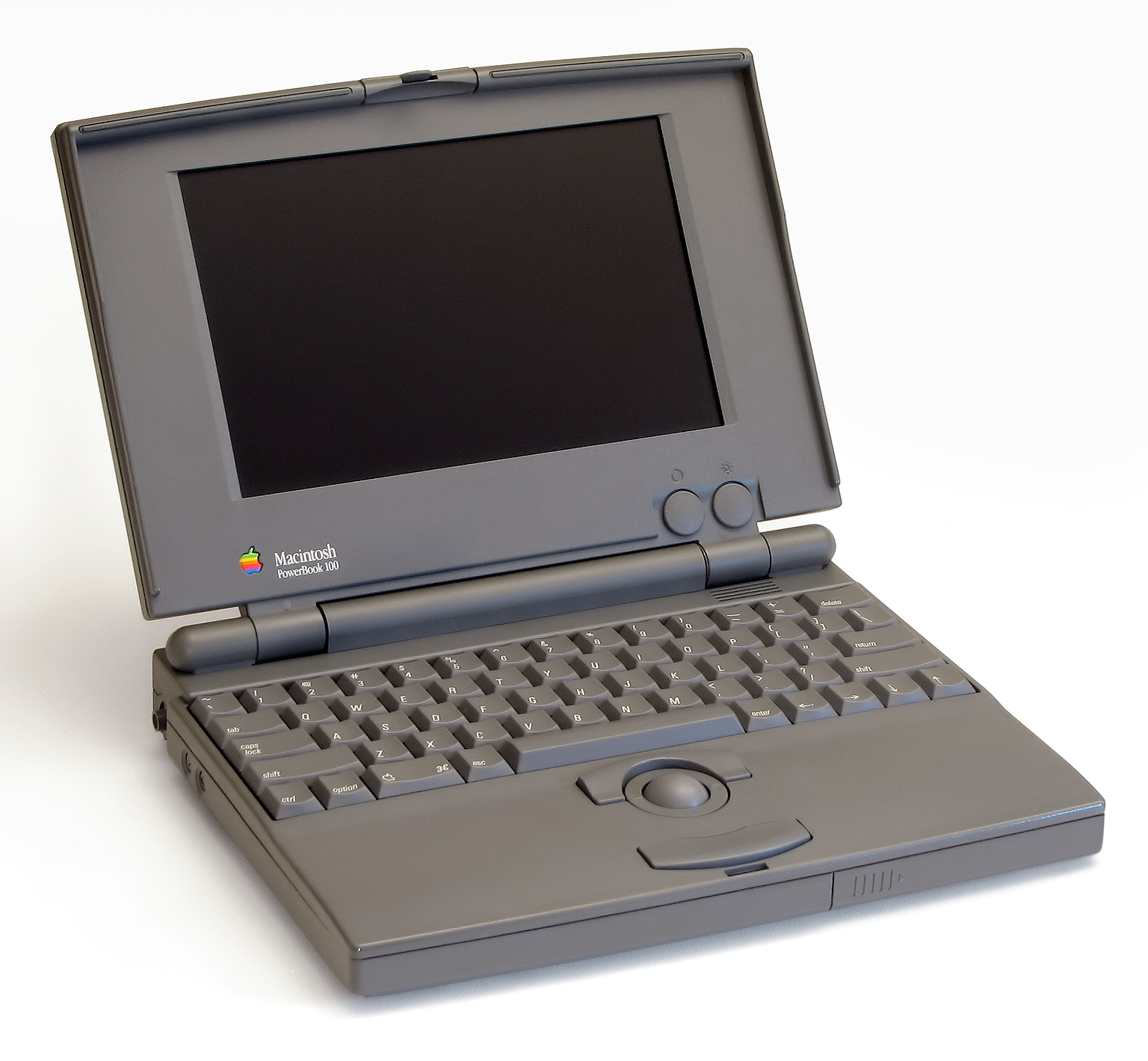
Inside its beefy chassis, the PowerBook 180c packed a beautiful color screen.
Photo: Wikipedia CC

June 7: Today in Apple history: Apple debuts the PowerBook 180c laptop June 7, 1993: Apple debuts the PowerBook 180c, a solid upgrade that brings a world of dazzling colors to the company’s laptop line.

The 180c’s big improvement over the grayscale PowerBook 180, which launched the previous October, is its active-matrix, 256-color screen. Such a screen is something of a novelty for laptops in the early 1990s.

Today in Apple history: Apple chooses Intel over PowerPC

By

intel
The transition to Intel was a big achievement for Steve Jobs.
Photo: Thomas Hawk/Flickr CC

June 6: Today in Apple history: Apple switches Mac to Intel chips from PowerPC June 6, 2005: Steve Jobs reveals that Apple will switch the Mac from PowerPC processors to Intel.

Speaking at Apple’s Worldwide Developers Conference, Jobs’ revelation reminds the tech world that he is a leader who can get things done. Given Intel’s focus on mobile computing, the move also offers a hint at what Apple’s CEO has planned for the second half of his reign.

macOS 16 rumors: What to expect at WWDC25

By

Image of the Apple logo with
The next major macOS release could pack bigger changes than anticipated.
Illustration: ChatGPT

WWDC25 is nearly here, with iOS 19 and iPadOS 19 possibly set to steal the spotlight. However, the latest rumors indicate you shouldn’t count macOS 16 out just yet, as it might bring more upgrades than expected. It might not even be called macOS 16, if Apple’s rumored switch to year-based release names happens. (We’ll refer to it as macOS 16 until the big switch happens.)

With June 9 fast approaching, here’s a breakdown of what macOS 16 could bring to the table.

Today in Apple history: Yosemite brings a visual overhaul to OS X

By

Craig Federighi, Apple’s senior vice president of software engineering, previews Mac OS X Yosemite at WWDC in 2014.
OS X Yosemite more strongly resembled iOS than previous versions of the Mac software.
Photo: Apple

Jun2 June 2, 2014: Apple shows off Mac OS X 10.10 Yosemite for the first time at its Worldwide Developers Conference in San Francisco. Following the Jony Ive-redesigned iOS 7, Yosemite boasts an aesthetic change that brings Apple’s desktop computers closer than ever to the look of the company’s mobile software.

Named after Yosemite National Park, the update follows the previous year’s Mavericks as the second Mac operating system named after a California landmark.

How to use Freeform, Apple’s collaborative digital whiteboard app

By

You Should Check Out Freeform
Freeform is a weird and very underrated Apple app.
Image: D. Griffin Jones/Cult of Mac

Apple’s Freeform app for iPhone, iPad, Mac and Vision Pro is a digital whiteboard you can use to brainstorm or gather ideas in one infinitely scrolling canvas.

You can use Freeform to throw together ideas with a colleague. You could build a presentation using Freeform’s scenes, kind of like using Prezi. Or, you can use Freeform as a drawing app with your iPad and Apple Pencil.

Freeform comes with all kinds of features for adding text boxes, rich links, drawings, clip art, sticky notes, files, photos, videos and more. It’s a great way to build a mood board or connect big ideas.

Keep reading below or watch our video guide to find out how to use Freeform.

Make battery-hogging apps like Spotify better with DIY web apps

By

Web apps that don’t suck
Suck away battery life, that is.
Image: D. Griffin Jones/Cult of Mac

There are a bunch of not-great apps like Spotify and Slack that suck battery life, because they basically run a full copy of Google Chrome inside each window. Chrome is a notorious energy hog, and running multiple copies of its Blink engine inside four different apps can take unnecessary memory and resources.

But you can create your own, much better versions using web apps based on Safari. Web apps are easily made in Safari and live in your Mac’s Dock.

For apps that you use every day, like Spotify, Discord and Slack, it’s easier to launch them from the Dock and move them around separately from your browser tabs. Let me show you how they work.

Get an M2 Mac mini for just $359.99

By

Mac Mini M2
Get 27% off the price tag of this Mac Mini M2 refurb!
Photo: Cult of Mac Deals

The Mac mini is already a great deal, but this grade-A refurbished model drops the price of a 2023 model to just $359.99 with free shipping. Apple’s M2 chip powers the small desktop computer, delivering excellent performance in a sleek, compact design.

This deal offers exceptional value for both professionals and casual home users. But if you want one, act fast — stock is limited.

How to upgrade your Mac’s storage the smart (and cheap) way

By

Image of a Mac mini with the words
Here are all the ways you can boost your Mac's storage.
Image: Cult of Mac

Apple charges a ton for storage upgrades on Macs. Worse, you cannot extend the built-in storage after buying the Mac. Thankfully, smarter solutions exist, as long as you don’t mind plugging an external disk into your Mac.

Here’s a breakdown of the best ways to expand your Mac’s storage, along with ideal solutions based on particular needs.

Schedule an email to send in the future in Apple Mail

By

Never Forget to Send It
Let your computer handle sending emails. It’s what they’re good at.
Image: D. Griffin Jones/Cult of Mac

You can save time — and make sure your messages always go out when they’re supposed to — when you schedule email from the Apple Mail app. You can set your mail to deliver at any date or time in the future, whether it’s next Monday at 9 a.m. sharp, in two weeks’ time or even years from now.

If you work with someone in a different time zone, you can schedule messages to arrive just when they start their workday, which is especially helpful if the allotted time is in the middle of the night for you. You can schedule a series of reminders for that one irritatingly forgetful client of yours. Or, if you work remotely, you can try (and risk) prewriting messages to your boss to maintain the illusion of regular work. You can even schedule emails to remind you of an important anniversary, years down the line.

It’s easy to set up. Keep reading or watch our short video.

Let Apple Mail organize your emails for you

By

Sorting So You Don’t Have To
And with Writing Tools, it can reply to your emails for you, too.
Image: D. Griffin Jones/Cult of Mac

With the new automatic mail categorization in Apple Mail, you can organize your emails and keep your personal inbox less cluttered. It’ll intelligently put all your newsletters, receipts and promotions into separate folders.

If you struggle keeping up with your inbox, this feature is a great way to make your email easier to understand at a glance.

Keep reading below or watch our quick video.

3 ways to stop your Mac from sleeping

By

Keep Your Mac Awake
I certainly can’t stay up all night, but my Mac can.
Image: D. Griffin Jones/Cult of Mac

You can stop your Mac from sleeping if you want it to stay on indefinitely. This might prove handy if you find it locking when you don’t want it to, like during a class or meeting. You don’t need to wiggle the mouse every few minutes to keep the screen on.

There are a few different ways to set this up. The simplest and most permanent way is to disable sleep entirely in your Mac’s System Settings. However, if you just want a quick way to disable sleep temporarily, there’s a simple command you can enter in the Terminal. Or, if you want something more user-friendly and customizable, there’s a free app you can download that you can toggle on and off from your Mac’s menu bar.

Here are the three best solutions if you want to stop your Mac from sleeping.

Tariff relief for iPhone and Mac doesn’t last long

By

AI painting of an iPhone, with the words
iPhones and Macs will eventually be slapped with reciprocal tariffs.
AI image: Midjourney/Cult of Mac

After the U.S. government seemed to exempt iPhones, Macs and other electronics from hefty tariffs Friday, a clarification issued Sunday by President Donald Trump revealed that’s not the case.

Trump said on Truth Social that his administration did not announce a tariff exemption Friday. Instead, the “existing 20% Fentanyl Tariffs” will still apply to electronics — with higher tariffs possibly coming soon.

Whew! Trump tariffs won’t hit iPhone, Mac and other electronics. [Updated]

By

The iPhone is free from Trump tariffs
The iPhone is free from Trump tariffs.
Photo: Google Gemini/Cult of Mac

In a tremendous turnaround, President Donald Trump removed the hefty tariffs he’d imposed on phone, computers and many other electronics being imported into the United States. The change, which came late Friday, should prevent price hikes that Apple, HP, Dell, etc. would likely have had to charge customers to pay for the import taxes.

There will reportedly also be no tariffs on processors, TVs, solar panels, flash drives and removable memory cards — no matter what country they are made in.

Update: The Trump administration said Sunday that it only provided electronics with temporary tariff relief.

How to run DeepSeek and other LLMs locally on your Mac

By

Run LLM locally on your Mac
Run DeepSeek or Meta's Llama locally on your Mac!
Graphics: Rajesh Pandey/CultOfMac

ChatGPT, Google’s Gemini and Apple Intelligence are powerful, but they all share one major drawback — they need constant access to the internet to work. If you value privacy and want better performance, running a large language model like DeepSeek, Google’s Gemma or Meta’s Llama locally on your Mac is a great alternative.

Think it sounds complicated? It’s easier than you think. With the right tools, you can run DeepSeek or any other popular LLM locally on your Mac with minimal effort.

Mac shipments grow faster than any PC maker can match

By

A 13-inch MacBook Air with the lid closed.
Demand causes Mac shipments to keep going up and up.
Photo: Lyle Kahney/Cult of Mac

Mac shipments continue a steady upward trend, increasing 14.1% year over year during the first quarter of 2025, according to a market research firm. While three PC makers sell more units than Apple, none can match Cupertino’s annual growth rate.

But the analysts note that tariffs imposed by President Donald Trump on computers brought into the United States will have “a direct inflationary impact” later in the year, potentially cooling demand for computers of all types.

How to remove duplicate photos on iPhone, iPad and Mac

By

Get Rid of All Those Copies
Find and delete copies of your photos on your iPhone.
Image: D. Griffin Jones/Cult of Mac

You could have dozens of copies of the same images in your Photos library, taking up space on your phone and in your iCloud account. Luckily, Apple offers an easy-to-use little tool that lets you find duplicate photos and delete the copies, all right from the Photos app.

These types of duplicate images can accumulate more quickly than you might expect. They arise if you make a copy of a photo to edit, if you screenshot a photo to bump it to the top of your Camera Roll, or if you and your partner both upload the same picture to your Shared iCloud Photo Library. In fact, I found hundreds of duplicates in my own carefully curated library.

It’s a surprisingly sophisticated feature that took Apple engineers a fair amount of smarts to cook up (more on that later). Here’s how to use Apple’s duplicate image remover and get rid of all those unnecessary files. Keep reading or watch our video instructions.

macOS Sequoia 15.4 brings AI email categorization and Apple Intelligence in new languages

By

macOS 15.4
The wait is over for macOS Sequoia 15.4.
Photo: Apple/Cult of Mac

Apple released macOS Sequoia 15.4 for Mac users around the world Monday. The upgrade brings AI-powered automatic categorization of emails in Apple’s Mail app, among other things. Plus, it makes Apple Intelligence available in many more languages and regions.

The launch came earlier than expected — Apple previously said the next macOS version would debut in April.

iPadOS 18.4 also launched Monday with the same mail categorization. Plus, iOS 18.4 reached iPhone users, and visionOS 2.4 arrived as well.

Final Cut Pro adds Image Playground for Mac, portrait mode for iPad and more

By

Final Cut Pro adds Image Playground
Final Cut Pro now works with Image Playground.
Photo: Apple

Big updates across Apple’s Final Cut Pro video-editing software lineup introduce AI-driven Image Playground integration, plus improved workflows and enhanced recording options.

Apple released Final Cut Pro updates Thursday that add Image Playground for Mac and iPad users. Plus, iPad users can use the software in portrait orientation for the first time.

How Apple accidentally made the best AI computer

By

2025 Mac Studio
Mac Studio now tops out at 96GB of RAM.
Photo: Ed Hardy/Cult of Mac

Apple is perceived as a laggard in the AI race — despite that, Apple has developed the single best computer for AI research. The new Mac Studio with an M3 Ultra chip, which supports up to 512GB of unified memory, is the easiest and cheapest way to run powerful, cutting-edge LLMs on your own hardware.

The latest DeepSeek v3 model, which sent shockwaves through the AI space for its comparable performance to ChatGPT, can run entirely on a single Mac, Apple AI researchers revealed Monday.

It’s a machine that fits comfortably on your desk, rather than a server farm; it costs the same as a used Honda Civic, not a new Lamborghini.

How did this happen? Most remarkably of all — by sheer coincidence. Here’s why the Apple silicon architecture makes for the best AI hardware, a use case Apple didn’t mean to design it for.

How to use window snapping and tiling on the Mac

By

Window Snapping on the Mac
Another year, another window management feature on the Mac.
Image: Apple/D. Griffin Jones/Cult of Mac

Window snapping and tiling is a new way to quickly organize your Mac desktop. It lets you throw the two apps you’re working on side by side so you can focus on them.

Window snapping proves more versatile than fullscreen mode, which the Mac has had ever since OS X Lion. Using fullscreen mode comes with a few compromises. For one, fullscreen mode only supports two windows side by side. And while you’re in fullscreen mode, you can’t have any other apps visible — fullscreen apps exist in a separate space from everything else.

With window snapping, you can have your Mac windows tiled in halves, quarters or a mix — you pick the orderly layout that works best for the task at hand. You can use gestures or keyboard shortcuts for quick tiling. Or you can control the tiling from your Mac’s menu bar. Keep reading or watch our video to learn how this cool Mac productivity feature works.

Assassin’s Creed Shadows hits Mac on the same day as PC and consoles

By

Assassin’s Creed Shadows action RPG slashes onto Mac
“Assassin’s Creed Shadows” just launched on Mac -- no PC or console needed.
Image: Ubisoft

Assassin’s Creed Shadows finally launched on Thursday, and Mac gamers can play the action-packed, role-playing game from Ubisoft at the same time as players on PCs and consoles. Mac owners won’t face the usual wait of months or years. There’s even a version for iPads with M-series processors in development.

The adventure is set in medieval Japan, and players can choose either a samurai or a shinobi (aka ninja) for very different gaming experiences.

Run every version of Classic Mac OS in your browser

By

Infinite Mac running Macintosh System 1.0 in Safari on macOS Ventura
Experience 1984 from the comfort of 2023.
Screenshot: D. Griffin Jones/Cult of Mac

You don’t need to buy an old Macintosh to experience classic Mac OS anymore. In fact, you don’t even need to fiddle around installing an emulator and downloading ROMs. Thanks to Infinite Mac, you can boot up every major release of Mac OS from the 1980s and ’90s right in your web browser.

With more than 25 Apple computers and devices in my collection, I’m something of a vintage Mac collector. It’s an expensive hobby that few can indulge in, but the Infinite Mac website lets you experience one of the joys of collecting vintage gear: Taking ancient software for a spin on a vintage Mac.

M4 MacBook Air: Perfect for practically everybody [Review] ★★★★★

By

M4 MacBook Air sitting on a pine table, with a window reflecting on its display★★★★★
Thin, light and powerful as ever.
Photo: D. Griffin Jones/Cult of Mac

The 2025 MacBook Air with Apple’s M4 processor comes as close as you can get to a perfect computer for just about everyone. As I found during testing for this review, Apple crammed tons of power into a svelte, lightweight design. And this combination has never been more affordable.

This latest MacBook Air might look familiar on the outside. But when you get to work, you’ll quickly discover that the M4 is a totally different beast. M3 to M4 is the biggest leap in performance since Apple’s original switch from Intel processors to Apple silicon.

I put the latest MacBook Air through its paces for this hands-on review — read what I learned below or watch our video.