Mobile menu toggle

iPhone - page 466

Cult of Mac says: Bring back Marble Madness!

By

post-11147-image-f4d8a391456cc9fd13fd35d493dafe78-jpg

What it was: A trackball-controlled arcade classic, released by Atari in 1984. You had to guide your marble through six perilous courses. Think Super Monkey Ball’s granddad, with a penchant for Escher and isometric projection, minus the monkeys.

What we’d like to see: Although there were, at the last count, 46 billion iPhone ‘marble rolling’ games, most of them suck, and none hold a candle to Mark Cerny’s Atari classic. Since other Atari games have made it to iPhone relatively intact, there’s no reason why Marble Madness couldn’t make an appearance, perhaps with the choice of of tilt-based controls or a virtual trackball, as per our mock-up above. How about it, Atari?

UPDATE: iPhone gaming website Slide to Play reports that a tilt-controlled Marble Madnessis due on the App Store “in the next couple of weeks” and will include bonus tracks, content and modes. No trackball, alas.

iPhone, iPod Space Supersized at CES

By

post-6926-image-b023414707c2c078d0eb499224f78ae2-jpg

Consumer Electronics Show (CES) organizers have supersized the iPod and iPhone showcase at the January 2010 event. The next iLounge Pavilion will offer over six times the floorspace dedicated to Apple accessories and software sellers, from 4,000 square feet to 25,000 square feet.

In a press release, Jeremy Horwitz, Editor-in-Chief of iLounge.com and co-sponsor of the iLounge Pavilion said the 525% space increase is due to the surge in iPhone and iPod touch popularity from the App store. It also probably has to do with Apple’s decision to pull out of Macworld and Macworld’s move to February.

Signed up companies so far include Griffin Technology, Scosche, Incase Designs, iSkin, Incipio Technologies, Jaybird Gear, MusicSkins and AAMP of America.

Via MacWorld

Will iPhone be the Death of Mobile Search?

By

post-11135-image-ec5be735416a467a240fdd4b04169bd9-jpg

iPhone applications and the increasing popularity of smartphones, driven especially by growth in the developing world, pose the greatest threats to the long-term relevance of mobile search engines such as Google and Yahoo, according to a report Monday at TechRepublic.

Jason Hiner, Editor in Chief of the widely read technology web portal, argues that a personal experiment he’s undertaken using his Apple iPhone leads to the inescapable conclusion that “trends [in mobile computing] add up to bad news for Google in mobile search because it translates into fewer people needing its search engine,” offering several pertinent examples of his own behavior in addition to statistics about the growth in smartphone use over the past year that bolster his thesis.

There’s little argument that iPhone changed the mobile phone game entirely with its arrival on the scene two years ago, as all the major mobile handset makers have since come to market with their versions of touchscreen smartphones to compete with Apple.

In addition, Apple revolutionized the environment for mobile software development by creating the App Store, which both provided a brand-new arena for software developers to work in and suggested a model for distribution that had previously been limited to the distribution of entertainment titles through the iTunes music store. Apple’s competitors Blackberry, Google (Android) and Microsoft (Windows Mobile) launched App Store-like marketplaces in response.

But does all of this development, do all of these trends in mobile computing spell the eventual end for search as a relevant tool on mobile platforms?

Certainly Google’s voice search functionality adds to its relevance and appeal on a mobile device, but as Hiner argues convincingly, limitations of mobile device screen sizes and challenges related to typing on small handsets do make traditional desktop search functionality far less appealing in the mobile environment.

What do you think? Do you use Google less on your iPhone? Should Google be worried about the trends in mobile computing as a great threat to its core search product? Let us know in comments below.

iPhone Makes The New Yorker Cover

By

post-11132-image-b684fad6018f5f6e11e2f3312a790619-jpg

The cover of the June 1, 2009 edition of the New Yorker magazine will feature art composed completely on an iPhone for the 1st time, according to multiple reports Monday.

Artist Jorge Columbo used the iPhone app Brushes to “fingerpaint” a street scene of people gathered by one of the city’s iconic hot dog & pretzel carts, elevating art on the iPhone to yet one more level of acceptance few could have imagined when Apple’s mobile device first came to market less than two years ago.

Hit the jump for a video made with the Brushes companion app Brushes Viewer showing just how Columbo used Brushes to create his work.

Apple Does Right Thing: Kama Sutra eBook Reader Welcomed to App Store

By

post-11033-image-ff5e24a877dc5c55f33e5e67831b1889-jpg

Who says Apple doesn’t listen to customers? Thanks to a public outcry, Apple has reversed course and accepted the Eucalyptus eBook reader into the iPhone App Store.

The web erupted in outrage last week when developer Jamie Montgomerie’s eBook reader was rejected by Apple because it allowed readers to download the Kama Sutra from Project Gutenberg — which Apple deemed “inappropriate sexual content.”

But on Sunday Montgomerie received a call from Apple. The Apple representative chatted with the developer about his app and invited him to resubmit it.

“We talked about the confusion surrounding its App Store rejections, which I am happy to say is now fully resolved,” Montgomerie wrote on his blog.

The application is now available for purchase from the App Store for $10. A small victory for common sense.

Via Macworld.

Gallery: NYC Painted Impressionist Style On The iPhone

By

post-11091-image-3ac3d0c1549f14af5c9ed0a7b63e5fdf-jpg

David Leibowitz is a veteran fine art photographer who’s lately been making some pretty amazing art using his iPhone.

Based in NYC, Leibowitz’s pictures of the city look like a French Impressionist painted the scenes (hit the jump for more pictures). There’s nothing to indicate they were made using his iPhone and about $40 worth of apps from the App Store.

Leibowitz has a long history of using digital tools to make art. He started in the ’80s with a Polaroid camera. He’d hand manipulate the emulsion to create photographs that look also look like Imrpessionist paintings. But now he’s discovered the iPhone, and the results are not your typical iPhone art.

Hit the jump for some of Leibowitz’s latest pictures and an interview explaining how he makes iPhone art.

New iPhone to Get a Snappy Performance Upgrade

By

post-11068-image-ee2062832eb0709f56d0930fecfc3b78-jpg

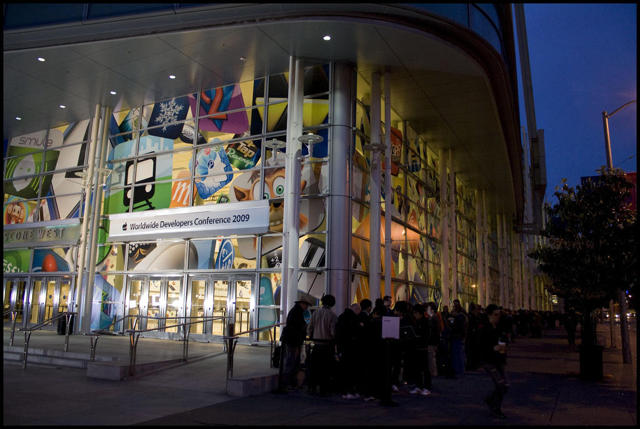
With WWDC09 now just weeks away, rumors and predictions regarding what Apple may reveal at the highly-anticipated, sold-out developers conference in San Francisco are sure to spread like a California wildfire.

Anyone interested in being on the right side of such talk would do well to consider the logic and analysis out Thursday from John Gruber, the well-placed author of the blog Daring Fireball, who isn’t prone to talking about things he doesn’t know a little something about.

Citing “information from informed sources,” Gruber believes the processor in the next-generation iPhone is going to be the kind of upgrade to make people crowd around and go, “ooooh!” He looks for Apple’s processing secret-sauce to better the speed of current iPhones by 1.5 times, similar to the bump in performance experienced when Mac users got hands on machines with the first batch of PowerPCs, or PC users moved from 486 to Pentium machines.

Follow after the jump for more of what Gruber expects and how likely his expectations are to be met.

More App Store Stupidity – iPhone eBook App Rejected For Including Kama Sutra

By

post-11033-image-ff5e24a877dc5c55f33e5e67831b1889-jpg

Gnh! That’s pretty much the sound we made, surprisingly loudly, on reading Gruber’s ‘Regarding Eucalyptus’ post. The gist? App Store idiocy strikes again! The specifics…

It seems Apple, not content with plumbing the depths by rejecting Tweetie for a rude word being in the day’s Twitter trends, has now rejected an e-book reader, because you can potentially read ‘objectionable’ content on it. Gruber sums things up nicely, calling this the “shittiest and most outrageous App Store rejection to date, and that’s saying something”, and we agree wholeheartedly.

As Gruber notes, Apple’s got a bug up its ass regarding the fact that you can read Kama Sutra of Vatsyayana on Eucalyptus. (Won’t somebody think of the children?) However, you can read this on a few other apps, too—you know, apps like Kindle and Stanza and, er, Safari. So Apple had best get ready to kick those off the iPhone for warping our fragile little minds.

But there’s more! What makes matters even worse is on reading the developer’s blog, it’s pretty clear the approvals process is even more broken than we all thought. Had Apple made a mistake and rectified it (see: Tweetie), fine… Dumb, but fine. Here, though, it’s pretty clear Apple keeps rejecting the app again and again for precisely the same utterly asinine reason. When the developer argues his case, it’s like shouting at a brick wall— a particularly dumb brick wall.

Far be it for us to say that perhaps ‘reversals’ for Tweetie and the NIN app actually came from Apple caving to dreadful publicity. But, hell, if the way to get a perfectly good app into the App Store is for a whole bunch of blogs to kick up a fuss and show, yet again, how the App Store approvals people seemingly have the combined intellect of a drunk, lobotimized woodlouse, we’re happy to do our bit.

Developer’s Strategy for Dealing with App Pirates Suggests Appeasement Could Work

By

post-11024-image-cc68bc1b9d75636c17e34bcef4823f59-jpg

iPhone game developers must contend with an arguably small but extremely dedicated and fast-moving population of app pirates on the voyage to the Land of iPhone App riches, according to iCombat developer Miguel Sanchez-Grice, who suggests giving away free “lite” versions of an app could be the most effective strategy for the smaller developer.

Sanchez-Grice ‘s shooting tank game was immediately popular on the App Store thanks to coverage in gaming and gadgetry venues, which came about because of its resemblance to Combat for Atari and Wii Tanks games. The developer said he considered the nature of the pirate challenge prior to launching his 99¢ app. and while he chose a path very civilly inviting pirates to support his work by buying a legit copy of the app after reaching level 5 of the 20 level game, he understood he could only hope to “maybe convert a tiny fraction of those users into sales.”

His experience with the pirate community showed hacked versions of his game in use at an astounding ratio of more than 5:1 over paid apps in the first week of release, with cracked apps being posted to Twitter within 30 minutes of the official game going live on the App Store.

“The goal behind launching an app isn’t thwarting pirates, it is getting users and generating sales,” Sanchez-Grice  wrote, suggesting game developers “leave the ‘making a point’ anti-piracy measures to the big guys.” With competition so fierce for getting noticed in the App store, he concluded “any attention is good attention.”

In the end, the first-time developer concluded the best strategy for dealing with pirates may be creating a free “Lite” version to give away alongside a more fully functional and fulfilling paid version.

“I think the best solution is to create a version akin to a lite version of the app for pirates. It is no good to shut off access to your app completely, but it also doesn’t get you very far to give away the core value you are offering to the paying user.”

Glimpse Of Future: Unbelievaby Cool 3D Map of NYC For iPhone

By

cult_logo_featured_image_missing_default1920x1080

UpNext 3D NYC iPhone App from Danny Moon on Vimeo.

The 3D NYC iPhone App from UpNext is unbelievably cool. It renders Manhattan in 3D, allowing you to zoom up and down the city streets, in-between buildings, finding places to eat and things to do. The rendering is amazing — see the video above.

It overlays the subway map and crowdsources popular destinations. All this for only $2.99 from the iTunes App Store. Worth buying even if you don’t live in NYC.

Report: Blackberry LBS Apps Cost 4X More than iPhone’s

By

post-10991-image-98807b39d0f0b1b2134ad3d1be92ad45-jpg

Location based software applications in Blackberry’s new App World store are four times more expensive than similar titles in Apple’s App Store, according to a Skyhook Wireless report released Wednesday.

The company’s Location Aware App Report (PDF), a monthly survey of titles available in the online stores of mobile handset manufacturers Apple, Blackberry and Android, found the App Store offers a greater percentage of paid to free apps across a wider variety of title categories than either Blackberry or Android.

With over 35,000 apps in the App Store at the time of the survey (around 10,000 having been added since), and 2,300 of them location aware, Apple’s average price for a paid location aware app was $3.60. In contrast, the average price for a location aware app from Blackberry’s App World store was $13.60, while bargain-basment titles could be had from Android’s Market at an average price of just 84¢

The survey results are skewed in that Apple’s App Store has been open nearly a year, while Blackberry’s App World is only in its second month of operation. On the other hand, in its first six months of operation, the App Store saw more than 800 location aware apps released, while Android’s Marketplace produced fewer than 200 in its first two quarters.

For now, location aware software developers have shown a clear preference for Apple’s iPhone platform, even if some seem to believe the Blackberry platform might support quite a bit more revenue per title.

Thanks To iPhone, The Future Is Touchscreens, Report Says

By

post-10986-image-3fa7c82e47d069dd6f29a8f0c3227a23-jpg

Source: DisplaySearch 2009 Touch Panel Market Analysis

Thanks to the success of the iPhone, touchscreen technology will see explosive growth in the next few years.

The touchsreen market will nearly triple in the next few years, growing from $3.6 billion now to $9 billion in 2015, predicts a new report by market research firm DisplaySearch.

“With the success of the iPhone, the touch panel market has entered a dramatic new growth phase.,” the DisplaySearch report said.

The report predicted big growth in projected capacitive touchscreens — the technology used in the iPhone and iPod touch.

“Projected capacitive touch screens have increased substantially and become the second biggest touch technology following closely behind resistive touch,” the report said. “About 27 touch screen suppliers manufacture it. Not only have more resistive touch screen manufacturers moved to produce projected capacitive, but projected capacitive technology has evolved to single layer or film type, and can serve sizes larger than 100-inches.”

Whoa  — a 100-inch iPhone in 2015.

Mobile phones and smartphones will be the most popular application of touchscreens, but they will also be the primary interface for media players, navigation devices, and games. More than 40 percent of mobile phones will have touchscreen interfaces by 2015, the report predicts, up from 16 percent now.

Touchscreens will also become popular in applications like retail, ticketing, information kiosks, and education and training terminals, the report said.

New iPhone To Include Glowing Apple Logo? The Russians Have Already Done It

By

post-10969-image-c80f073ae65caf57096ed5b7b71c7d81-jpg

Rumors that the new iPhone will feature a glowing Apple logo on the back of the handset have generally been met with derision. The idea that Apple’s designer’s would waste precious battery life with a glowing logo is so abhorrent, many have used it to dismiss the rumors altogether.

But a group of Russian hackers in August last year hacked an iPhone to make the logo glow. The hack — as seen in the video below — involved a Dremel tool and about $300 in parts, according to reports.

And it had no effect on the battery life whatsoever, the Ruskies said.

But why would Apple add a frivolous glowing logo?

To make the Apple logo more visible, of course. Just like glowing lighthouse on the lid of a MacBook, or the iPod’s white headphones, Apple is not shy of using us to advertise its wares.

Vatican to Launch iPhone App

By

634955994_294fda6579.jpg?v=1232791454

CC-licensed photo by David Paul Ohmer.

In an effort to reach out to young, tech-savvy Catholics, the Holy See will launch an iPhone app to coincide with its World Communications Day, celebrated May 24.

The Vatican app was created by Father Paolo Padrini, the priest who developed iBrevary, an app that puts morning prayer, evening prayer and night prayers on the iPhone and a Facebook application called Praybook.

“The pope is inviting us to promote a culture of dialogue, of respect and friendship, especially among young people,” Archbishop Claudio Celli told Catholic News.

The initiative to put the Pope in your pocket comes after  the Vatican youtube channel and will launch from a website (not yet live) called www.pope2you.net. So far the app lets people send and receive “virtual postcards” of Pope Benedict along with inspiring excerpts from the pope’s various speeches.  No word on whether its gratis or, like the iBreviary, will cost $.99.

Would you download the Vatican app?

Via Catholic News

New iPhone Specs, Launch Date Leaked?

By

post-10921-image-0d42f02479b025576a926927e1e84d9f-jpg
CC-licensed mockup by Victor Anselme. Note: this image did not appear on the iPhone Apps blog.

The new iPhone will be available July 17 and will have a bunch of new features, including video recording and editing, a digital compass, turn-by-turn directions, and a better battery, according to an obscure blog called iPhone Apps.

The blog, who no one has ever heard of before, claims to have been contacted by a “reputable source,” who is “closely connected to Apple’s hardware development team.”

Whatever. I’m dubious, but the rumor somewhat gels with previous rumors and the site’s detail and specificity lend the claims are certain credence. Kinda.

Full specs after the jump.

Developers Sneaking Porn, Profanity Onto iPhone Via Easter Eggs

By

post-10912-image-d6bdd1cd64a9fc80ec0a86a4503bc0f5-jpg

CC-licensed iPhone homescreen screenshot by Blake Patterson.

Developers are sneaking Easter Eggs into their iPhone apps to get around onerous App Store restrictions, Brian Chen at Wired.com reports.

Programmer Jelle Prins’ song lyrics app Lyrics, for example, was initially rejected by the App store because it included songs with naughty words. Apple bans profanity, pornography and basically anything adult and fun.

But the Lyrics app will include swear words if you go to the About page and swipe downward three times. Up pops an option to turn off a swear word filter.

“Lyrics has slipped in a quiet ‘Screw you’ to Apple’s App Store gatekeepers albeit one mumbled behind their backs,” Chen writes.

Has anyone else discovered undocumented features in iPhone apps? If so, leave them in the comments. A prize for the best one.

Palm Pre To Launch 2 Days Before iPhone Announcement, Cost $200

By

post-10905-image-ec26c3cb28b53d4f3ddbdfb5cbffc7f3-jpg

Palm’s long-awaited rival to the iPhone, the Pre, will go on sale on June 6, Palm said on Tuesday, and will cost $200 and up with a two-year contract, depending on the plan.

The Pre goes just two days before Apple’s WWDC keynote, where he company is expected to announce the third-generation iPhone.

The Pre looks like a genuine rival to the iPhone. The software looks very slick, powerful and easy to use, and the hardware includes a built-in keyboard, an important distinguishing feature.

But Palm already seems to be pulling consumer-unfriendly stunts with pricing. The $200 price tag is dependent on a $100 mail-in rebate, which is never popular. And the data plans appear to cost between $70 and $90 a month (it’s not clear on Sprint’s page which plan the Pre needs). Plus, Palm is charging an extra $70 for the innovative Touchstone charger, and $30 for a car charger.

Apple of course charges extra for an iPhone docking cradle, but Palm seems to be nickle-and-diming consumers already.

iPhone Music Goes Viral at Volt Festival Sweden June 6

By

cult_logo_featured_image_missing_default1920x1080

At first blush, something called Bacterial Orchestra – Public Epidemic No.1 might seem cause for a call to the Centers for Disease Control.

In fact, however, it’s a music art project slated for the Volt Festival June 6th in Uppsala, Sweden, where organizers hope hundreds of iPhones will communicate through audio – creating a musical organism. The result, according to Olle Cornéer and Martin Lübcke, will be a self-organizing system they describe as intelligent neural music.

The idea builds on an installation, called Bacterial Orchestra, the pair took in 2006 to Brazil, Germany, Norway and elsewhere. This year, the new generation, called Public Epidemic No.1 is spreading beyond the microphones and loudspeakers of the original installation.

Cornéer said the current project could be hosted on any mobile phone but they chose the iPhone “because it’s popular and the centralized App Store makes it easy for the epidemic to spread.”

Check out the clip from the first test of the project above and follow after the jump for more detail on how it works.

Email ‘N Go Is Perfect For Emailing ‘N Driving

By

post-10789-image-d232fa41ab273a67472622f394e247c3-jpg

When I’m barrelling down the freeway in my four-ton Land Rover, I like to check Google Maps on my iPhone and email my friends. Trouble is, I can’t see where I’m going.

Email ‘N Walk, a new super-clever iPhone app, offers the perfect solution.

It uses the iPhone’s camera to display on screen what’s up ahead. It’s designed for pedestrians  — to stop them walking into lampposts as they read or send email — but it’d work in automotive settings too.

Shame it doesn’t work for text , Web browsing, maps, or video, but it’s a start.

Available for free — for a limited time — from Phase2 Media.

iTunes link for Email ‘N Walk.

Cult of Mac favorite: Saucelifter (iPhone game)

By

post-10781-image-e18ca346c8e928596f2bd67ab7ac7013-jpg

What it is: It’s Dan Gorlin’s Choplifter. With aliens! And a flying saucer!

Why it’s good: It’s Dan Gorlin’s Choplifter. With aliens! And a flying saucer!

Oh, all right, then—if that’s not enough for you, here’s why Saucelifter is great. It takes a fab classic arcade game (rescue groups of hostages from the enemy, avoiding your adversary’s vehicles and projectiles), subverts videogame conventions by having you piloting a UFO and saving alien buddies from nasty humans, and dresses the entire thing in beautiful vector-style graphics. Add a dollop of humor (“squishing of captives will desist immediately!” barks the tutorial if you land on hapless aliens) and beautifully calibrated tilt/multitouch controls and you have a minor iPhone classic, updating a 27-year-old gameplay concept that still appeals today.

Where to get it: Saucelifter’s available via the App Store, and there’s more information at the Saucelifter website. At the time of writing, the game’s on sale for just 99 cents—a bargain unless brilliantly updated Apple II classics make you cry.

iPhone Becoming Experimental Music Instrument of Choice

By

cult_logo_featured_image_missing_default1920x1080

It could be a while before Ge Wang and the Stanford Laptop Orchestra (SLOrk) starts to feel the heat, but the The London Geek Community iPhone OSCestra served notice last week at the City’s Open Hack London that experimental iPhone music performance is alive and well.

Wang, of course, founded Smule, developer of the internationally popular Ocarina app, as well as the recently released Leaf Trombone (App Store link), and conducts SLOrk, the renowned ensemble of student computer scientists and musicians using 20 MacBooks to compose and perform new music.

The London-based iPhone OSCestra is a crew of eight musicians, conducted by a chap using a Wii controller, who opened their lone performance so far with an impressive (and authentically geeky) performance of the “Doctor Who” theme.

Jim Purbrick apparently conjured the idea for the venture just a few hours before the Open Hack event, a one-day symposium sponsored by Yahoo! on May 8 that brought together tech-savvy hackers for a day of coding and communicating.

Purbrick and his music mates downloaded the free app mrmr (App Store link), an app that supports customizable audio controllers and sends data wirelessly to other devices using OSC (Open Sound Control). A controller could be a piano-style keyboard, a bank of faders, or an array of knobs and buttons — essentially interactive widgets that allow users to control sound and music.

The free desktop application OSCulator caught all the data, and sent it to Ableton Live, a powerful performance and production platform.

In this instance, the orchestra performed using a bank of synthesizers running within Live. If you’re interested in going beyond Garage Band and making music on your Mac, it’s worth checking out the Live demo.

[GigaOM]

Barron’s: Apple Take From App Store is ‘Not Much’

By

post-10743-image-f8b57a8cfc8c572017e2cdd3b96a513a-jpg

Image credit: MobileGuerilla

It must be a measure of how divorced from reality the US financial establishment has become when one of its most venerable voices discounts $20 – $45 million as ‘not a lot of revenue.’

That’s the figure range Jeremy Liew, an analyst at Lightspeed Venture Partners, estimates would be Apple’s take from sales on the first 1 billion iPhone and iPod Touch applications downloaded through the iTunes App Store.

Leaving aside for a moment the 15:1 – 40:1 ratio range of free to paid apps Liew pulled out of thin air to arrive at his estimates, it should be noted that the Barron’s writer reporting on Liew’s analysis allowed that the App Store “is significantly changing the way way people think about mobile devices, and has triggered a response from Research In Motion (RIMM), Google (GOOG), Microsoft (MSFT), Nokia (NOK) and Palm (PALM).

If true, Liew’s figures would mean Apple is seeing a revenue boost of roughly 0.1% from the App Store, but the mere numbers do not account for the intangible benefits to Apple’s public awareness or the number of hardware sales being driven by the venture. The company, and Steve Jobs in particular, always said the App Store was never intended to be a big profit generator, that it was rather a vehicle for helping the iPhone change the way people think about mobile computing.

By that measure, Apple’s take from the App Store is incalculable.

iPhone Controlled R2D2 Will Make Your Head Spin

By

cult_logo_featured_image_missing_default1920x1080

For now, it’s only the head in a custom-made R2-D2, but soon the whole astromech will obey the orders of an iPhone, including the possibility of firing sounds and sending text to its head displays.

The controls use either the iPhone’s accelerometer or the multitouch screen, and if rumors of a magnetrometer in the next gen iPhones are true, we could be looking at some very interesting robot applications both in the App Store and in the jailbroken universe soon.

[Thanks Lance]

SF Giants and iPhones Serve Up the Digital Game at AT&T Park

By

post-10697-image-5ce1cae7d09369e4212783a99d7d900a-jpg

It’s fitting, one might say, that the San Francisco Giants provide home fans at AT&T Park the most sophisticated digital amenities in all of professional sports. After all, San Francisco is the nominal home of Silcon Valley (with apologies to San Jose) and the headquarters of many of the cutting-edge internet and social media companies in the world today.

Free Wi-Fi has been a staple of the game experience at AT&T (formerly Pac Bell) Park for years, with the Giants having been one of the first professional sports teams to offer the service to fans and working journalists alike.

Things really began to change at the ballpark in the past two years, however, after the introduction of Apple’s iPhone and iPod touch, Bill Schlough, the team’s CIO, said in an interview with technology journalists this week.

Since the iPhone’s introduction around the same time the Giants hosted 2007’s All Star Game, usage of the park’s Wi-Fi network has gone up 537 percent. Users of the Wi-Fi network at the park are now able to use an innovative and exclusive system called the Giants Digital Dugout, which offers fans two unique benefits.

The first is a “food finder,” which can direct fans to the closest concession location for the exact kind of food or beverage they want, and the second is a collection of video replay highlights that includes, within three minutes after it happens, any controversial call by an umpire. Replays of such calls are banned from being shown on the ballpark’s in-house video systems, so that feature in itself could be worth bringing your iPhone to the game – even if it’s not ever likely to get the upms to reverse a bad call.

[ZDNet]

More App Store Approval Madness – Religious Imagery is ‘Objectionable’

By

cult_logo_featured_image_missing_default1920x1080

An App Store gatekeeper, whose name may or may not be Peter, officially positioned Apple as a ‘Holier Than Thou’ company recently, by rejecting the whimsical photobooth application Me So Holy.

The app would have allowed users to place photographs of themselves or others inside pre-set figure avatars that could let cousin Jim appear to be the face of Jesus, or Joe Bob to be Mohammed, or Mary Jane to be a bodhisattva, or, you get the picture.

Apple rejected the app, saying it “contains objectionable material,” according to Me So Holy developer Benjamin Kahle.

Someone at Apple must have not gotten the Jesus phone memo.