Here’s a neat little iPhone app for all you typography nerds: Typography Manual is a pocket reference book for everything you could wish to remember about fonts and typefaces.
Better still, it’s more than a reference book. It’s a toolbox as well, with a font size calculator, em calculator, conversion tables for switching inches and millimetres into points and picas, and a list of HTML character codes. If none of those things mean a thing to you, don’t buy Typography Manual. But if they do, you might find it hard to resist. It’s only five bucks.
My favorite review is the last one on the testimonials page: “One of only a handful of programs I’ve seen on the iPhone that hyphenate properly.” (And yes, I know I’m using straight quote marks there. I know, I know.)
Apple has disabled AT&T tethering in the latest iPhone beta released to developers on Tuesday.
The iPhone OS 3.1 beta 2 disables a popular tethering hack for the AT&T network. The hack works on iPhone 3.0, even though AT&T does yet officially support it.
The hack enables data tethering (and sometimes MMS) by altering the iPhone’s IPCC carrier files. It’s easily enabled by visiting sites like BenM.at using mobile Safari on the iPhone.
AT&T has promised tethering later this year, but has yet to release details. The company is expected to be enabled in late summer and cost about $15 extra.
If you’re looking for an interesting portal into the iTunes App Store’s 65,000+ titles with as little risk as possible, www.appgiveaway.com may be a resource worth checking out.
The website, which launched this spring and is gaining traffic steadily, posts descriptions of 5 – 8 apps per day in different categories (games, entertainment, utilities, business, etc.) and gives promo codes away randomly to users who register and indicate their interest in particular apps.
The site was originally conceived as a marketing vehicle for app developers, with the enticement for iPhone and iPod Touch users who like the idea of possibly getting a paid app for free.
“We seek out developers and they also find us,” said Al Lijee, an AppGiveAway spokesman, adding, “Developers have been kind and posted us in forums and are linking back to us from their websites.”
Posted apps currently get between 40 – 70 people registering for promo giveaways, Lijee told Cult of Mac, and the site gives away around 30 codes for each app it features.
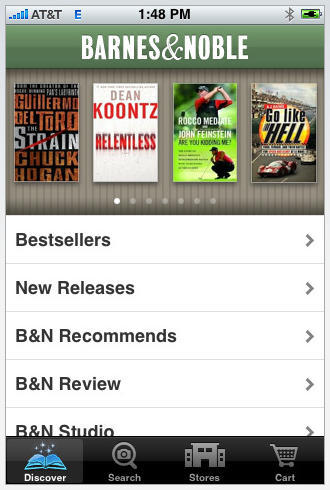
Download the free Barnes and Noble App (iTunes link) for iPhone or iPod Touch and for a limited time you can get a free Tall iced or hot coffee at any Barnes and Noble cafe, just by showing your device running the app to a cafe server.
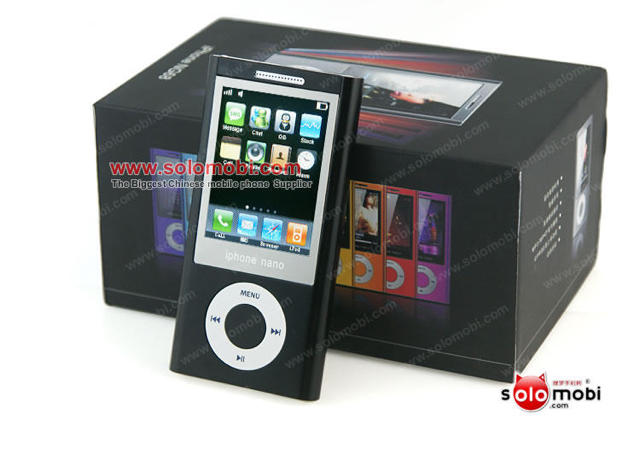
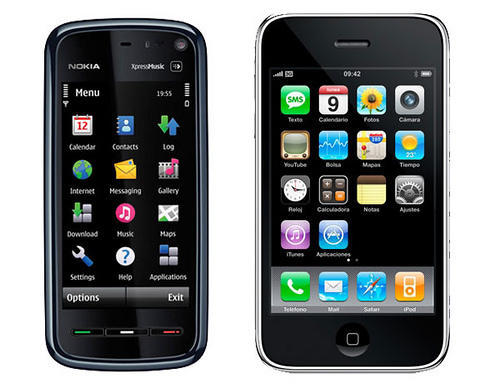
The iphone nano: Like throwing your two favorite things in a blender. Via Solomobi
There’s been a lot of concern of late about just how sophisticated Chinese bootleggers have become at creating counterfeit Apple products. Leander got snookered by near-perfect iPod earbuds, the head of Apple Switzerland was furious to receive a gift of a bootleg iPod shuffle, and we’ve all seen an increasing number of knock-offs popping up all over the place, potentially undermining Apple’s value.
But for all our concern, there are also magical gifts like the above “iphone nano,” which looks as elegant and beautiful as if Conan O’Brien had done a “What If They Mated?” segment on his show for the iPod nano and the iPhone. Simply stunning. I know I’m jealous.
Ocado is one of the UK’s classier supermarkets. It’s online-only (although closely linked to meatspace retailer Waitrose) and most people would probably say it appeals to the better-off kind of shopper.
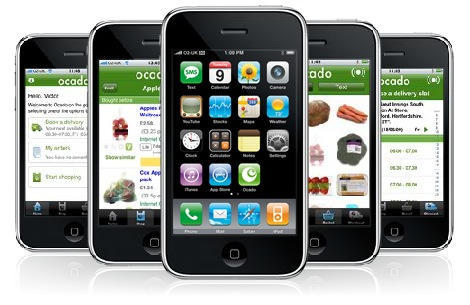
It’s also, as of this week, a pioneer of iPhone shopping. The free Ocado app does a few clever things that the other big retailers might want to keep a close eye on when they finally get round to building apps of their own.
Make easy photo collages & slideshows with Pix Remix
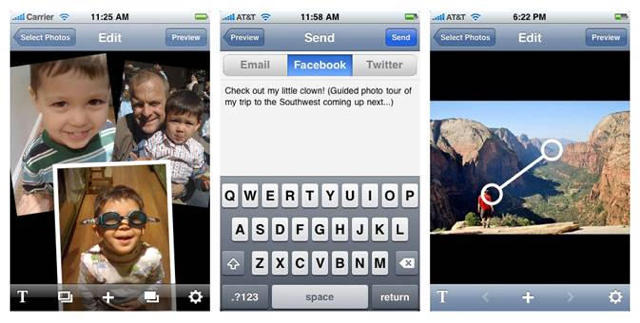
What it is:Pix Remix is a new iPhone app from Bay Area-based Jump Associates and Originate Labs that lets you turn photos – taken with or stored on your iPhone – into slideshows, collages, and interesting pan & zoom presentations — and makes it incredibly easy and intuitive to share them in email or post them to Twitter and Facebook from right within the app.
Why it’s cool: Impressive for an initial release, Pix Remix is loaded with effective tools for personalizing your photo shows, with built-in transitions including fade/dissolve, push, drop and spin out; and the collage function makes it easy to drag, resize and bring photos to the front or back. The pan and zoom function lets you become an instant documentarian, guiding your viewers’ eyes from one spot to another on individual pictures, zooming in to a special detail area. Text can be added to give photos captions or tell a story about your show.
Once you’ve got your photo show together, Pix Remix makes it easy to share in email or to post to your Twitter page or your Facebook profile. Email recipients have the option of viewing your work on a web page or within the Pix Remix app on their iPhone; updates to your Twitter status automatically append a bit.ly url that sends viewers to the Pix Remix web page for your show; shows can be posted directly to your Facebook profile, where your contacts can view your creations right within Facebook, without ever having to leave the site.
Pix Remix is so intuitive and easy to use, I made my first collage and sent it to myself in email while I sat on the porcelain throne in my office during my morning constitutional today!
Where to get it: Pix Remix is available now on the iTunes App Store; it sells for $2.99.
Important Disclosure: Cult of Mac contributor Pete Mortensen is the communications lead at Jump Associates and works in the firm’s growth strategy consulting business. He was involved in the original brainstorming sessions that led to the development of Pix Remix but was in no way affiliated with the writing of this product review, nor did his association with Cult of Mac influence the author’s use of the application or his conclusions regarding its quality or value.
Word Flipper is an addictive, fast-paced word search game for iPhone and iPod Touch that just hit the iTunes App Store with update 1.1 and is bound to generate new buzz with some excellent feature updates.
One user describes it as “Sort of Boggle meets Dance Dance Revolution with a carnival twist!” but it really must be played to be appreciated.
Jamie Grove, Word Flipper’s developer, said, “I wanted to make a game that combined my love of word games with the fast-moving action available on the iPhone/iPod Touch,” which he’s done by incorporating innovative use of the iPhone OS accelerometer.
The new version also incorporates social media functionality, with achievement awards, global leaderboards, and integration with Facebook and Twitter.
Word Flipper (iTunes link) is available now on the App Store and sells for 99¢.
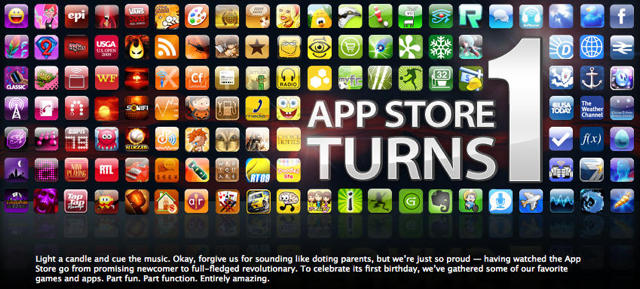
Exactly one year ago, Apple brought forth the iPhone App Store, which has gone on to become the greatest gift to Twitter’s growth imaginable. Among other things.
Let’s hope they have it really perfected by next year.
By all accounts, the iPhone 3GS launch has been a tremendous success for Apple. Despite launching in a down economy, the new model managed to sell as many units in its first weekend as its predecessor with little sign of slowdown. It’s also been an incredibly smooth launch. Though the iPhone 3G launch was marred by product shortages and buggy software, Apple’s kept a steady supply of hardware in the channel, and iPhone OS 3.0 is quite stable for such a new release.
But as effective as Apple has become in managing all of the aspects of the iPhone that it controls (hardware and first-party software), the launch also reveals the challenges the company faces in its efforts to take advantage of a larger network. AT&T’s signal strength continues to be a subject of much heated debate, and more crucially, Apple’s position as minder of a large software platform with thousands of developers looks increasingly untenable.
I don’t need to go into detail about the numerous cracks in the App Store facade of the last year: the baby shaking app, the unapproved porn, the copyright infringement, the excellent apps inexplicably rejected for arbitrary reasons and the apps that never made it out of the approval process one way or another. What I can say is this: the release of the 3GS has inspired a burst of app submissions the likes of which Apple has never seen before. When the App Store first opened a year ago, it had a flurry of submissions, but a smaller pool of developers. This is the first real “event” period since the iPhone dev community has grown, and the submission pool is not unlike the giant hyperwall of apps that dominated the conversation at this year’s WWDC.
A developer friend tells me that a pre-release version of his app was checked off and approved in a week in the period immediately before the 3GS announcement. The final release, submitted the day of the WWDC keynote on June 8, took nearly four weeks to get through the system, and I’m told that Apple has even notified its developer community that all apps are taking between three and four weeks to vet. That means it takes four times as long to get new products to consumers, four times as long to fix bugs, and four times as long to go from finished work to money-making.
If Apple wants to maintain the dominance of the iPhone and the success of the App Store, it needs to find a more effective way to manage the sheer volume of submissions it’s tackling. Too much crud is making it through, and too much brilliant code is sitting on the shelf. The iPhone is by far the best mobile platform today. Unless Apple learns to treat its developers better on the front end (I hear payment works brilliantly), they won’t be loyal when the next Next Big Thing comes around.
The United States Department of Justice has taken the first baby steps that could eventually lead to an official investigation of the Telecom industry and the effects its exclusive carrier agreements have on consumer prices and choices, according to a Wall Street Journal report Monday.
The initial review looks to determine whether large U.S. telecom companies such as AT&T Inc. and Verizon Communications Inc. have abused the market power they’ve amassed in recent years, according to people familiar with the matter.
Largely moribund and hamstrung by internal politics and inefficiency during the Bush administration, DOJ under President Barack Obama has seen renewed relevance as an arm of the Federal government and has lately signaled business as usual could soon be ending for an industry left to its own devices during the past decade or more.
Many people have long decried exclusive carrier agreements that make popular gadgets such as Apple’s iPhone available only to consumers willing to sign multi-year service agreements with AT&T and likewise Blackberry’s Storm to those who’d sign with Verizon.
The Wall Street Journal quoted the Justice Department’s antitrust chief, Christine Varney, saying she wants to “reassert the government’s role in policing monopolistic and anti-competitive practices by powerful companies.”
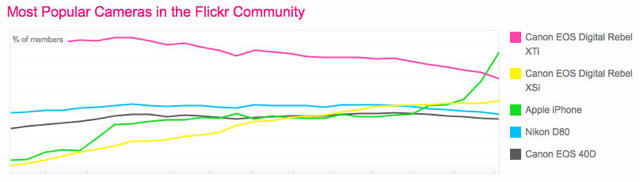
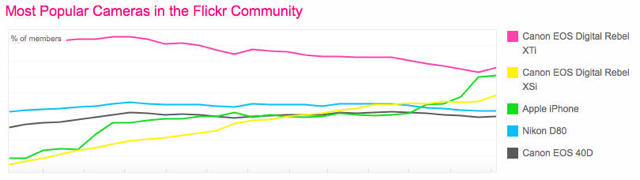
Apple’s iPhone has recently become the most popular camera on Flickr, one of the Internet’s most well-regarded photo sharing social media sites.
Expressed in “percent of members” terms, the iPhone has lately bested two models of Canon’s EOS Digital Rebel, of which the XTi had long been the clear favorite choice of Flickr members.
UPDATE: Since this post was originally published, the Flickr site’s graph has been changed, and now shows the iPhone is the #2 camera among Flickr members, resting just behind the Canon EOS Digital Rebel XTi, which has apparently enjoyed a bump in popularity for which the previously published graph did not account.
[Thanks Rafael, for the heads-up on the graph change!]
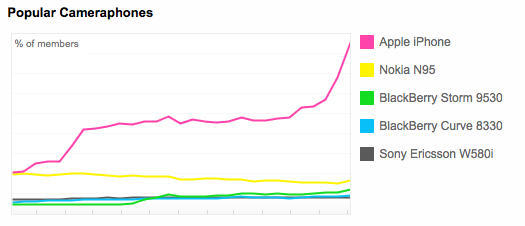
Among popular camera phones, the iPhone has outdistanced its rivals since its release two years ago and recently widened the gap between its nearest competitor, the Nokia N95, by a huge margin.
The data is to be taken with a grain of salt as anecdotal and largely unscientific, but it is interesting to note such graphic evidence of popularity for a phone camera that had been denigrated by many as one of the most pitiable features of Apple’s popular smartphone.
Apple recently upgraded the specs on the iPhone camera, giving it a boost in pixel capacity and adding both variable focus and video capabilities, which should only increase its attractiveness going forward.
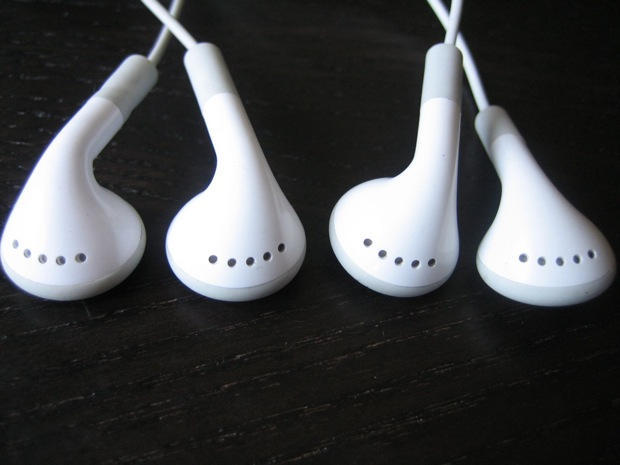
One of these iPhone headsets is from Apple; the other is a knockoff.
Spot the difference? One of these is a $30 iPhone Stereo Headset from Apple. The other is a $14 knockoff from the Philippines.
Thing is, the $14 copycat is as almost good as the original. It’s nearly physically indistinguishable. The sound is exceptionally good. And the microphone/remote works the same as it does on the genuine article.
Even the packaging is remarkably realistic.
Except there’s a few things that are off — a few minor details that give them away as fakes. Plus, they broke down after a week.
As the issue of overheating iPhones heats up, Apple might be preparing to point the finger at iPhone owners who fail to keep their iPhones within acceptable temperatures.
Apple recently updated its knowledge base advising iPhone owners how to keep their devices within acceptable operating temperatures.
For many, this was not the answer they were hoping for because Apple’s solution to an apparent defect appears to be to place the burden on the user to ensure their iPhone’s temperature remains within an acceptable range.
What’s troubling about Apple’s position is that it sets the stage for Apple to adjust its iPhone service policy based on the argument that damage caused by overheating the iPhone is the fault of the iPhone’s owner — not Apple.
That’s right, if you bought an iPhone with a defective moisture sensor that subsequently gets tripped by sweat or humidity you have to pay Apple $199 for a replacement under the theory that Apple cannot confirm that your iPhone was not exposed to water.
Up for sale is on eBay is a sketchy-looking, non-functioning white iPhone described as a prototype demo unit of the brand new GS model.
The auction has attracted two bids and is currently running at $305, even though the iPhone doesn’t work.
The seller says there’s a problem with restoring the software: “This device is not eligible for the requested build,” iTunes says when he tries to restore it.
The seller, vofffka, of Ocean City, New Jersey, says an Apple genius at his local retail store verified the iPhone as an Apple product, but can’t service it, “because it’s never been sold.”
WTF that means, who knows?
The seller has a very high rating. He is currently selling several unlocked iPhones.
Where did he get this prototype? Get this. In the QA section, a potential buyer asks the same question, and gets this reply:
“Hi! It is currently NOT WORKING, I got it on ebay a month ago and the guy I got it from told me he found it in the airport. Thanks!”
Yeah, that makes me feel real keen to bid on this item.
In a move to bring the gospel to the mobile masses, Honolulu-based New Hope Christian Fellowship is claiming to be the first church to broadcast its weekend services live via iPhone.
“We are always looking for ways that we can leverage technology to reach people where they are at,” said New Hope’s Interactive Developer Peter Thourson in a press release. “Through live streaming video on iPhone and iPod touch, users across the globe will be able to continue to attend church regardless of where they are.”
Over 12,000 people regularly attend the five weekend services held in six locations in Hawaii, the church says.
This is not your analog, snooze-inducing service coming from a place of fire and brimstone — check out the goofy “money rap” video and the cheerful-looking celebrants who wear leis.
iPhone hosts nearly half the ads served on mobile platforms.
Apple now has overall market share leadership in the worldwide smartphone segment, having overtaken former frontrunner Nokia based on browser calls for mobile ads. A recent report at BNet Technology cites AdMob statistics that show Apple with 49 percent of mobile ad traffic in the first quarter of 2009, compared to 32 percent for Nokia.
The market shift may have less to do with customer preferences for Apple’s hardware, however, as a recent smartphone industry analysis from Gartner notes; services and applications have become the primary drivers of smartphone success.
The stats appear to vindicate Apple’s approach to application distribution via the iTunes App Store. William Volk, CEO of entertainment and business apps vendor PlayScreen, said on a professional forum posting that “other stores simply aren’t matching the ARPUs [average revenue per user] of the Apple App store.”
The iPhone OS also enjoys a comfortable lead over every other mobile operating system, including Symbian, Research in Motion (RIM), Palm and Windows, with May numbers showing iPhones had 68% of the browser requests in the survey.
Apple has a support document called “Keeping iPhone 3G and iPhone 3GS within acceptable operating temperatures” to which the company has directed those with concerns about alleged overheating problems with 3G and 3GS models of the device.
In addition to offering practical advice such as “Don’t leave the device in your car” (as car interiors can exceed the recommended operating range of -20º to 45º C [-4º to 113º F]), the document also warns that CPU-intensive applications, such playing music or using the GPS while in direct sunlight may also overheat the iPhone.
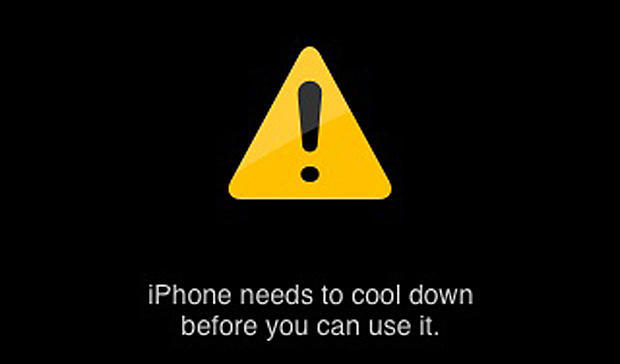
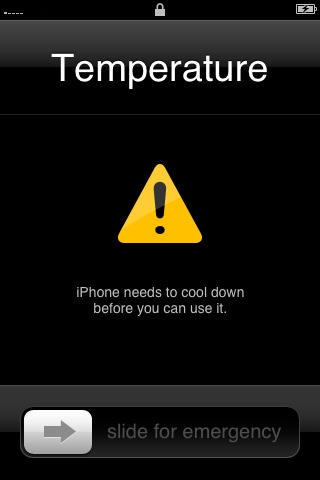
The OS has a temperature warning screen built in, that appears to indicate when the phone could be running into problems and may not work properly.
Using the iPhone in temperatures over 95 degrees can trigger the temperature warning, according to at least one report. “Low- or high-temperature conditions might temporarily shorten battery life or cause the device to temporarily stop working properly,” Apple warns in the support document, though it says when the temperature warning appears, the phone “may still be able to make emergency calls.”
Recent anecdotal reports of 3GS iPhones overheating, with some white models turning pink as a result, have led to speculation that Apple may have a recall situation on its hands, but the company so far is relying on the fact that “iPhone 3G and iPhone 3GS comply with the safety standard for Safety of Information Technology Equipment, IEC 60950-1,” and has had no further comment on the overheating issue.
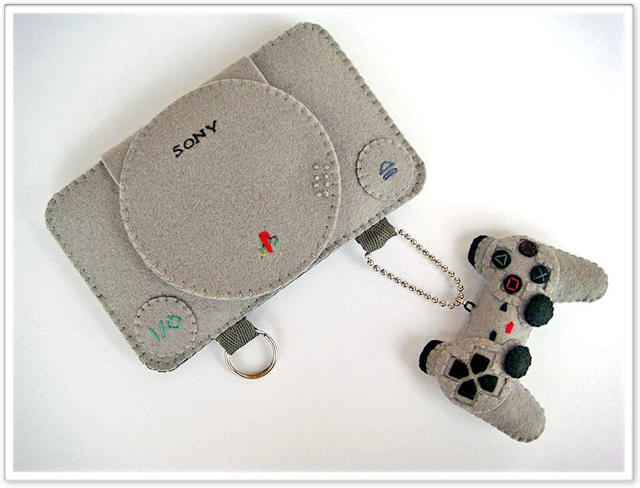
World's cutest iPhone case, from Etsy's Rabbit Rampage
I don’t know why, but a felt representation of a beloved gaming platform designed as a case for my current most-beloved gaming platform? Just makes me sigh. Isn’t it dreamy?
Halitosis and letting them see you sweat are so old school: the social paranoia du jour is gadgetiquette, especially the use of smartphones at work.
A survey of 2,000 UK 18-24 year olds found that at over half know an iBore, reports techradar, though less than 30% will admit to plaguing the rest of the populace with their Apple devices, iPhones in particular.
Annoying, apparently, is not in the hand of the beholder.
The NYT also recently ran a story on smartphone etiquette, opening with an anecdote about a client fiddling with his iPhone for the first half hour of a meeting:
Someone peeked over his shoulder. “He was playing a racing game,” Mr. Hobbs said. “He did ask questions, though, peering occasionally over his iPhone.”
But, Mr. Hobbs added, “We didn’t say anything. We still wanted the business.”
Having been on both sides of the boardroom/boredroom, it’s a tough call: there’s no point in competing with someone who’s thumbing away while you speak, but during the occasional stultifying soliloquy it’s nice to be able to firm up later plans for reinvigorating drinks.
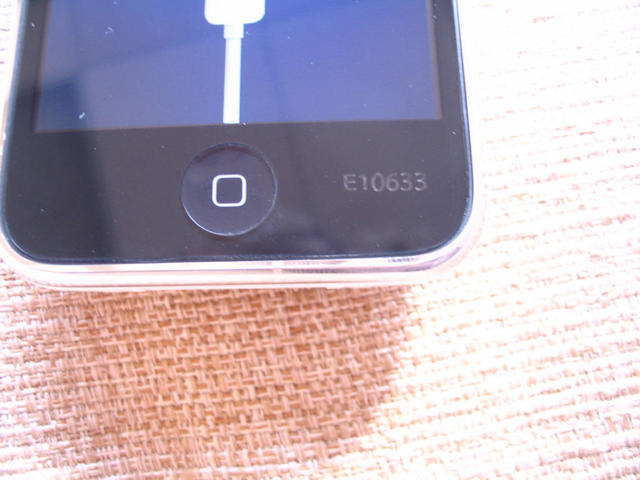
Fake iPhones are getting much better. This iPhoney is almost identical to the genuine article, until it's booted up. It was bought by Steven Fernandeez of Toronto. CC-licensed picture by Steven Fernandez.
Counterfeit iPhones have come a long way. They’re now almost identical to original iPhones, fooling bargain hunters on sites like eBay.
Look at the video below from Dana Stibolt, founder of MacMedics, who was given a fake iPhone bought on the auction site.
At first glance, it’s almost identical to current models, from the touchscreen to the volume switches on the side and the dock connector on the bottom.
“It looks EXACTLY like an iPhone,” says Stibolt. “But it does not work very well, and when it does work, it is very slow.”
Last year, knockoff iPhones were easy to spot. They were thicker, bulkier and often had extra buttons or keyboards.
What it is: Archon Classic is an iPhone app that brings my favorite-ever Mac game to the iPhone — perfectly. It’s basically like extraordinarily Manichean version of chess — the battle between not just white and black pieces, but light and dark forces. And instead of merely taking other pieces as you do in chess or checkers, you must battle for each square you try to claim, with action and heated attacks. Whether you’re a phoenix, a shapeshifter, a golem, or a troll, you need quick reflexes to win.
Why it’s cool: Way back when my family got its first Mac Plus, one of the very first games we installed on it was Battle Chess, a title that had chess pieces actually fight each other instead of claiming their squares. Here’s the problem. It was actually completely lame. It was exactly like chess, except that it had slow-loading and highly repetitive animation sequences. I wanted real battle chess. I wanted to fight for each inch of precious territory. Needless to say, I stopped playing.
My frustrations were quickly remedied when my cousin introduced me to Archon for the NES. It was exactly what I had been looking for but better. We had a fierce, almost bitter rivalry. He was inevitably Light forces, I was Dark. And we would play again and again for hours. Eventually, I found Archon for Mac, and enjoyed it in its keyboard-driven black-and-white glory. Every once in a while when we get together, we still play it.
All of which is why I’m so geeked to play Archon Classic for iPhone. The $4 game has updated graphics sharper than any previous version, an intuitive touch interface, and the smoothest emulated D-Pad I have ever experienced on the platform. I played one game, and it was just like old times. Anyone who has ever enjoyed the original Archon will love this. I haven’t tried the multiplayer over WIFI yet, but I’m looking for challengers, if you’re interested.
Where to get it: You can find the App Store link here.
Remember when Lonnie told you about an easy, fool-proof way to turn on iPhone tethering in the US? Well, there’s a way, way easier method, and it’s much, much more foolproof.
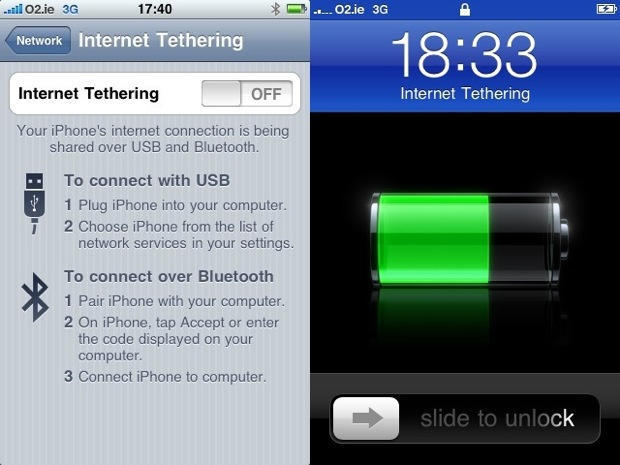
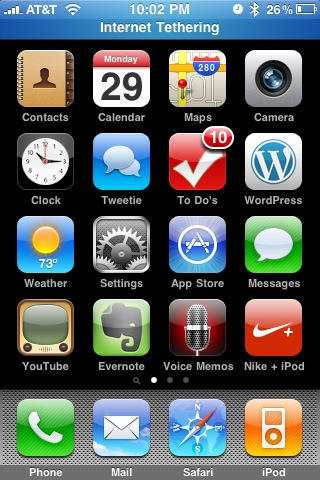
Simply point Mobile Safari to https://help.benm.at, select your country, download the profile for your carrier, and install. The settings menu will add an Internet Tethering toggle in the Network section. Then just pair with your computer over Bluetooth or plug in via USB and go. No restart required. It’s really that easy.
Performance has been rock-solid in my experience, both for tethering Mac and Windows machines. Performance is terrible on EDGE and very nice on 3G, with battery life not noticeably worse than just browsing on Safari. And maybe a little bitter once the display goes to sleep. But I’m not running BitTorrent through the thing, either.
AT&T should have a killer offering on their hands once this actually ships. It would also be nice if AT&T tweaks the interface so you can turn on tethering without pulling your phone out of your pocket. Honestly, the only complaint I have. Anyone tried it outside the US? Really seems like something that should fly under the radar so long as you’re not downloading the whole Internet over it…
And, it goes without saying, this is use at your own risk and Apple will laugh at you if you brick your phone.
(And yes, I know we’re late, but I never recommend running something risky on your hardware if I haven’t done it myself. This is as close to safe as it gets.)