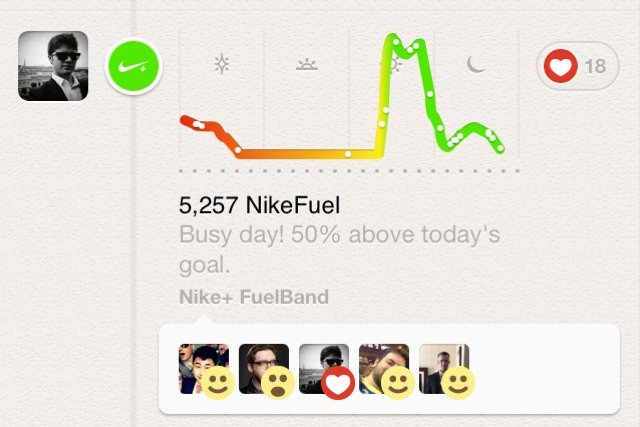
You can now brag about your latest FuelBand scores on Path.
There’s no point in exercising if you can’t tell your friends all about it afterwards, right? Well, if you’re a Nike+ FuelBand user, you now have yet another outlet through which to broadcast your latest jog. Version 1.2 of Nike+ FuelBand for iPhone introduces Path integration, background syncing, offline browsing, and more.
This changed everything. Where were you when it was announced five years ago?
Today is the fifth anniversary of the release of the original iPhone, and for Cult of Mac’s writers, it’s a particularly important birthday: not only does June 29th mark the anniversary of one of our most all-time beloved gadgets, but it’s also a day so momentous that it has rippled through every aspect of our professional lives as both Apple fans and writers.
To mark the occasion, Cult of Mac’s writers got together to talk about where we were when the first iPhone came out, what it meant for us then and what it means for us now. Check out our stories, then please feel free to hop in and leave a comment telling us where you were when the iPhone was born.
The iPhone just got a lot cheaper thanks to Virgin Mobile.
Following the iPhone’s prepaid debut on Cricket Wireless just a week ago, Apple’s hugely popular smartphone is now available on Virgin Mobile. Like Cricket, Virgin is offering the handset on a prepaid basis, with prices starting at as little as $31 per month on the company’s Beyond Talk plan — which includes unlimited data, and unlimited texts.
Take advantage of the company’s offer and you could save yourself around $800 a year.
BrowserChoose is a free tweak that makes Chrome your default browser.
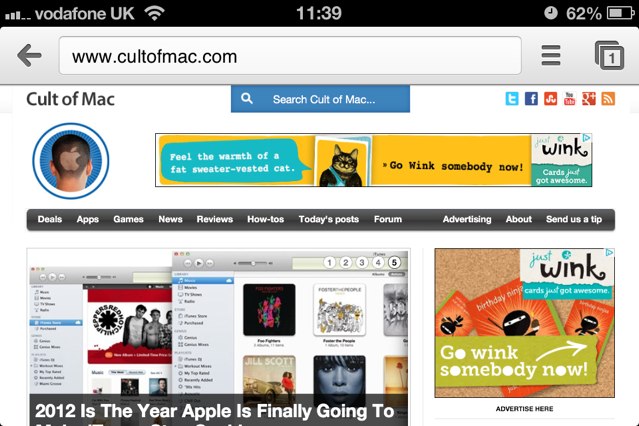
Google finally released its hugely popular Chrome web browser for iOS yesterday, and just as we had expected, it’s the best third-party browser so far. In fact, in many ways, it’s also better than Apple’s built-in mobile Safari browser. And you can now use Chrome as your default browser on your jailbroken iPhones, iPads, and iPod touches, thanks to the BrowserChooser tweak.
Instead of saving money, most IT directors expect BYOD will significantly increase IT expenses
Despite the fact that BYOD is often perceived as a way to reduce technology expenses, nearly three-quarters (73%) of IT managers expect that BYOD will have the opposite effect. The big fear is that BYOD will cause IT spending to spiral out of control.
That’s the news from enterprise technology vendor Damovo UK. The company recently surveyed100 IT directors from organizations with more than 1,000 users about their feelings on BYOD and how it is being implemented in their organization.
One major reason for potentially uncontrolled expenses boils down companies losing bargaining power with carriers as employees begin purchasing their own iPhones or Android handsets. While the cost of the device isn’t likely to be passed on to an employer, monthly costs for voice and data service may be a different story. With unlimited data plans slowly going the way of the dodo, many workers may not want to shoulder data bills associated with their jobs, which may lead to a shared expense model.
If you live overseas, you can now download Google Chrome for the iPhone and iPad at the link below. It’s on the Danish store only right now, but it’s obviously in the process of rolling out, so keep on refreshing, and watch for our early look and video tour of Chrome shortly after it hits the US App Store.
Update: It’s now available in the U.S. Store! Get downloading!
It’s hard not to love Louis C.K. Behind his pale ginger flab and profanity-laced stand-up comedy is a guy with a heart of gold: a comic who knows how to temper his masturbation jokes with compassionate commentary on the family and American values. He’s an amazing guy. But he doesn’t have an iPhone.
On a recent appearance on Jimmy Kimmel Live, Louis C.K. explained why, saying that he got rid of his iPhone because he was too immersed in it. “It’s like having a pencil you can $@%!,” Louis C.K. told Kimmel, going on to jokingly express his concerns about geo-location and the Cloud, which he ultimately sees giving us all wafer thin devices that, apparently, will allow you to smear Tom Cruise all over your face.
Hilarious, but Louis C.K. always is. This is a comic at the top of his game. If you haven’t already, buy some tickets to see him on his next tour: he’s cutting out all the middlemen and selling them directly to fans, effectively doing his best to cut out the scalpers and the extortionists like Ticketmaster. This is a guy who deserves your money.
If Apple is planning a major iTunes update, IT pros have a few things on their iTunes/iOS wish list
Various reports indicate that Apple is working on a major overhaul of iTunes that it plans to launch later this year. Those reports indicate that the update will be focused on consumer-oriented features like improved app/content discovery, music and media sharing, and greater iCloud integration. There’s also the possibility that Apple might split out some iTunes features into separate apps much like the company has done in iOS – the most recent example being the Podcasts app that it launched earlier this week.
Splitting iTunes into discrete parts is an attractive prospect, particularly for businesses and IT professionals. iTunes has become a bloated hodgepodge of functionality over the years. As a result, IT departments typically face a conundrum about whether to support or even allow employees with iOS devices to use iTunes on workplace computers.
Tech journalists make bad calls all the time, but few tech writers have made such a blisteringly bad call as seasoned columnist John C. Dvorak, who famously predicted back in 2007 that “Apple should pull the plug on the iPhone… [because it is just] going to be another phone in a crowded market.”
D’oh. $150 billion in revenue later, the iPhone is the biggest success Apple has ever had, and revolutionized pretty much every single aspect of the smartphone and even telecom business. That’s quite the missed prediction, even by tech journalist standards.
So what does Dvorak have to say to explain himself? Was it just a brain fart, or what? Five years later, Dvorak has explained why he said the iPhone would be a dud, and his excuse is fascinating: he claims he got it wrong because of a conspiracy against tech journalists like him who were too honest about Apple for their own good.
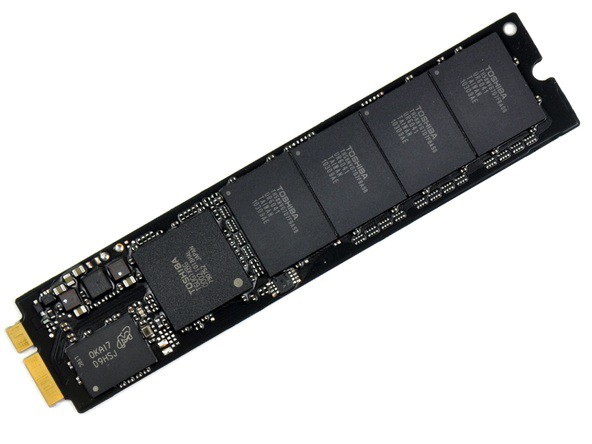
SSDs are great! They make your computer run as if they were filled with greased lightning. That spinning beach ball stops spinning quite so much, and those apps struggling to load quit doing so much bouncing. Your computer gains instant-on functionality, better battery life, and ridiculously quick boot times. Win-win!
There’s only one problems: SSDs (like those found in the Retina MacBook Pro, MacBook Air, iPhone or iPad) don’t have the same high capacity as physical spinning drives. That’s a problem if you’re the kind of user who carries around a terrabyte of media with him at all times. Luckily, it looks like SSDs limitations when it comes to capacity sizes is about to change.
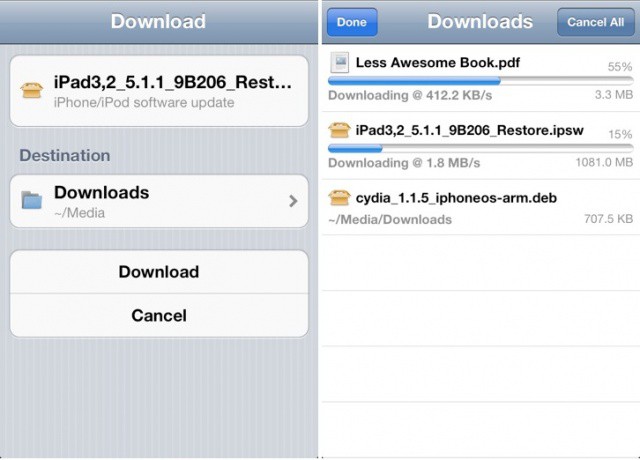
It took a while, but Safari Download Manager finally supports iOS 5.
One of the first tweaks I used to install after jailbreaking previous iPhones was Safari Download Manager, a terrific little package that does exactly as its name suggests: allows you to download files right within mobile Safari. The downside to this tweak, however, has long been its lack of support for iOS 5. That is, until it got updated today.
We got all excited about The Amazing Spider-Man earlier this month when developers Gameloft released the title’s first teaser trailer. And today the official game of the 2012 blockbuster has hit the App Store. As you’d expect from Gameloft, the 3D visuals look terrific, and they promise to “make Spider-Man more realistic than ever before!”
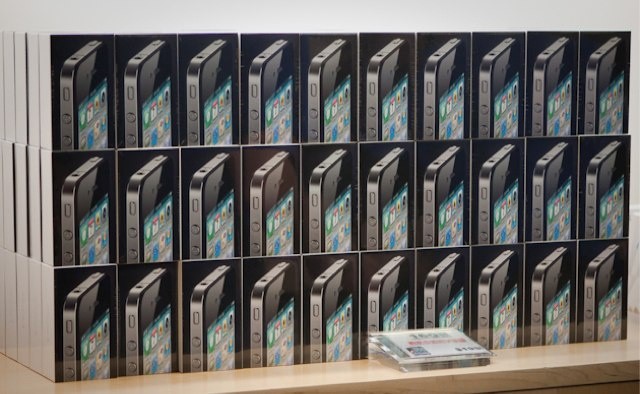
With a new iPhone just months away, Apple doesn't want to be stuck with too many old models.
In what has to be one of the most ridiculous scams in recent memory, a crook in the UK is selling unsuspecting buyers boxes of potatoes and bottled water, claiming that they are receiving an iPhone.
No matter how careful you think you are, there’s always a chance that when you send an e-mail, text message, or make a call on your iPhone, someone could intercept it. For those who are concerned about security on their phones, a new suite of applications called Silent Circle will provide just the peace of mind you need to use your iPhone without worry.
Many businesses still feel that the App Store doesn't truly address their needs
As more and more companies move forward with BYOD programs and/or mobile strategies centered around streamlining workflows for mobile professionals, the idea of the enterprise app store has gone from being a nice add-on feature to being seen as necessity for businesses, schools, and government agencies.
Developing a strategy around mobile apps is seen as a core need by a solid majority of companies – 66% of organization are considering or implementing internal app stores according to a Sourcebits survey of over 6,000 enterprises. That doesn’t mean that actually pursuing an enterprise app store strategy is an easy prospect.
Despite some advances in volume purchasing by Apple, many companies feel that mobile app options are still sub-par for their needs, particularly when it comes to the purchasing process and volume licensing.
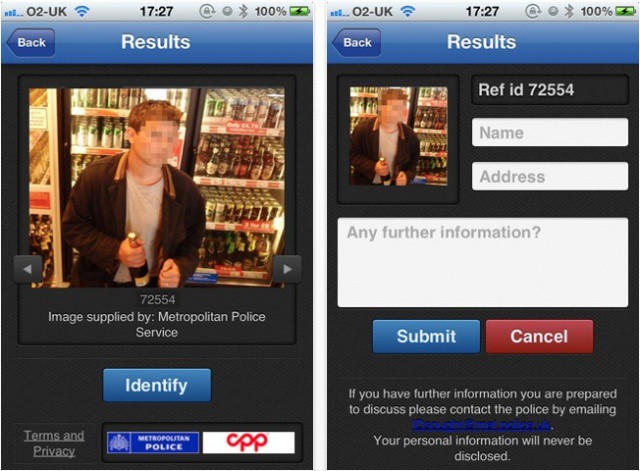
With Facewatch id, you can help the Metropolitan Police identify suspected criminals.
The Metropolitan Police have released a new smartphone app for Android, iOS and BlackBerry devices that allows Londoners to identify suspected criminals. Called Facewatch id, the free app allows you to enter a post code and then presents a collection of CCTV images of people wanted for questioning by the police, including over 3,000 people involved in last year’s London riots.
Mobile companies without strong customer appeal could lose big time as more and more businesses adopt BYOD.
Most discussions around BYOD and costs focus on one of two areas. The first is the cost reduction that a company might see if employees provide their own iPhones (or other devices) and pay for their own mobile plans. The second is the cost for mobile management solutions to secure and manage those personally-owned devices along with the apps and data stored on them.
Those are major concerns, but research company ARCchart recently identified a completely different cost of the BYOD trend – the revenues that device manufacturers and carriers are likely to lose as BYOD becomes a standard practice across the business world. According to ARCchart, the worldwide mobile industry could take a hit as big as $40 billion over the next four years as a result of BYOD.
Our iPhones and iPads are fast little beasts, but it can still take a long time to load up an app you need in a pinch. A new team of engineers, however, have figured out a way to allow iOS to read your mind and start launching the next app you need before you even tap its icon.
Bad back? Of course you do, because you spend the day slouched in front of a computer monitor, and then you slouch over the machines at your gym whilst listening to the excellent CultCast on your iPhone, before heading home to a slouched dinner in front of the TV.
In fact, you’re so indifferent to your posture and the health of your back that you probably don’t deserve to know about the LumoBack Smart Posture Sensor, but I’ll tell you anyway. You’re welcome.
The LumoBack is a small sensor on a belt that you strap around your lumbar region, and when you flop into a bad position it administers a short, sharp buzz to remind you to sit up. But of course there’s a lot more to it than that.
Universal shows how to do a mobile ad campaign the right way.
Over the past few months we’ve learned a lot about the mobile ad market from a variety of studies. We know that iOS users are more likely to respond to ads than Android users, and that there’s often a big return on ads designed specifically for the iPad and other tablets. We’ve also learned that many ad agencies haven’t yet realized the value in either of those data points.
One company that sees the value of mobile ads is Universal Pictures. Universal has created an interactive mobile campaign for its upcoming “Savages” – an Oliver Stone thriller that opens a week from Friday (July 6) – that ticks all the right boxes for mobile ad success.
There’s nothing more played out than amateur music videos about iPhones featuring the chorus line “There’s an app for that,” but in iMan by Luke Escombe in the corporation, it all somehow works.
That the music video is about an anthropomorphic iPhone in love with its owner who teams up with a radioactive cockroach and become her murderous stalker after accidentally being fried in the microwave doesn’t hurt, of course… it’s hard to be clichéd when that is your central premise.
A really fantastic song and really funny music video by Luke Escombe.
JuiceBuddy claims to be the world's smallest iPhone charger.
Apple’s iPhone chargers certainly aren’t the biggest accessories in the world, but accompanied with their wires, they can be a pain to travel with — especially when they get tangled up in your make up (not that I’d know about that). But with the JuiceBuddy from Pacific Productions, there is no need for wires.
This little box attaches to your keychain and provides you with an iPhone charger wherever and whenever you need it most. Simply plug it directly into the wall and then dock your iPhone in the top.
Why hasn't Apple introduced Quick Reply to iOS yet?
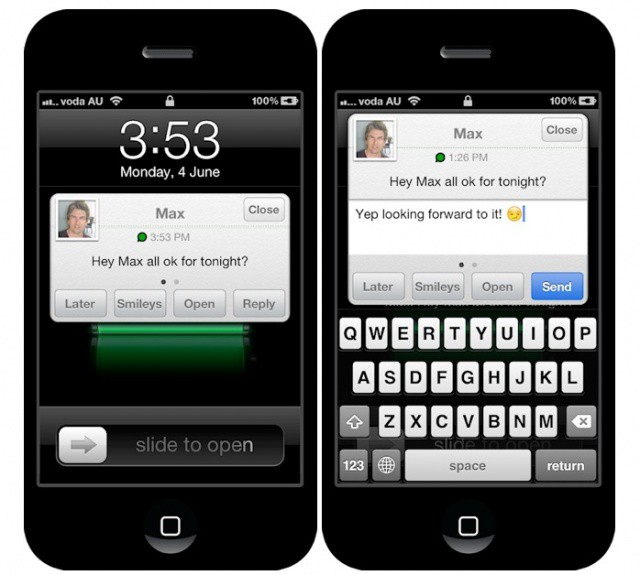
If you’ve ever jailbroken an iPhone, you should be familiar with BiteSMS, the built-in Messages replacement that delivers almost every feature you could ever want in a messages app. One of its highlights is a feature called Quick Reply, which allows you to respond to incoming messages from the home screen, the lock screen, or from within other apps using a handy popup window.
The developer behind this awesome app has now brought Quick Reply to the hugely popular WhatsApp messenger, using a new tweak that’s available now from Cydia.
You know those apps which turn you photos into pencil drawings or watercolors or oil paintings? Let’s face it — almost every single one of them is junk (iPhoto’s paint effect is a rare exception). Which is why Popsicolor is going to blow your socks off.
How’s this for an almost spectacularly misguided idea. It’s the HighLine, and it’s a kind of springy phone cord which locks into the dock connector of your iPhone or iPad. Sure, it’ll keep the phone safe if you drop it, but it will also cause you to swear the moment the cable gets caught up and rips itself out of the delicate 30-pin dock connector port.