Another sunny day at the Foxconn factory. Photo Ged Carroll (CC BY 2.0)
Bleeding hearts the world over are very happy with the news that Apple and Foxconn are working together to make employee working conditions better in their Chinese factories. But there is a group of people who aren’t so pleased about the reductions in working hours: the workers themselves.
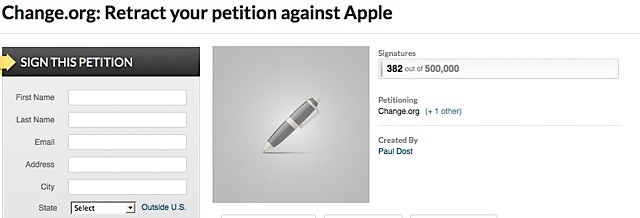
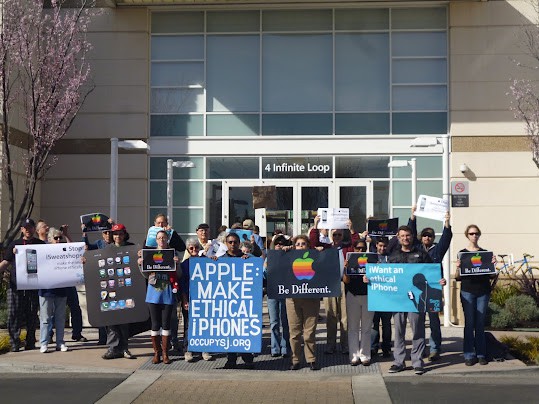
Mark Shields’ petition on Change.org sparked by Mike Daisey’s This American Life story earned over 250,000 online signatures and led to protests outside Apple stores across the country.
That doesn’t sit well with Paul Dost, who launched a counter petition after the TAL story was debunked. Cult of Mac reached out to Dost via email for the story behind the anti-petition petition.
Apple CEO Tim Cook this week talked about a “post-PC world.” Many people treated his comments as controversial, exaggerated or outright marketing lies.
In fact, everything Cook said about it was literally true and perfectly accurate. He said the post-PC revolution “is happening all around us at an amazing pace and Apple is at the forefront and leading this revolution.”
He didn’t say we currently live in a post-PC world, or that in the future PCs would not exist. He specifically said “we’re talking about a world where the PC is no longer the center of your digital world.”
What he didn’t say — so I will — was that the transition from the PC world to the post-PC world involves a transition from a Microsoft world to an Apple world.
For the past few decades, Windows has been the dominant platform and Mac OS has been a minority operating system. Here’s why their positions will be reversed in the years to come.
Like trying to demonstrate a stereo through the speaker of a mono TV, or showing an ad for a color TV on a black-and-white set, it’s almost impossible to show off the new iPad’s Retina display on your sucky old low-res screen. Almost, but not quite. As you can see from the picture above, Apple has added a clever interactive loupe to the iPad’s Features page.
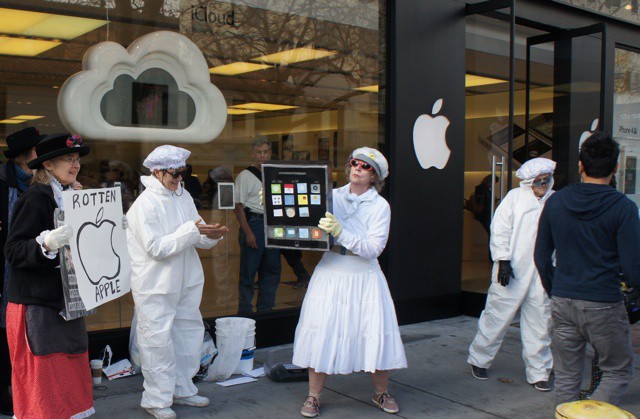
Raging Grannies protest outside the Palo Alto store Feb. 13
If you happen by the Palo Alto Apple Store Monday afternoon, that group of elderly women dressed in white dancing the robot to techno music on the sidewalk aren’t some funky flashmob.
They’re Raging Grannies, and they’re are mad as hell about worker conditions in China where Apple products are made.
Galvanized by a recent Mike Daisey story on NPR about Foxconn, they’re staging monthly protests outside the Palo Alto Apple store. They’ll be on the sidewalk grooving to bring more attention to Apple’s labor policies in China at 3 p.m. on March 12.
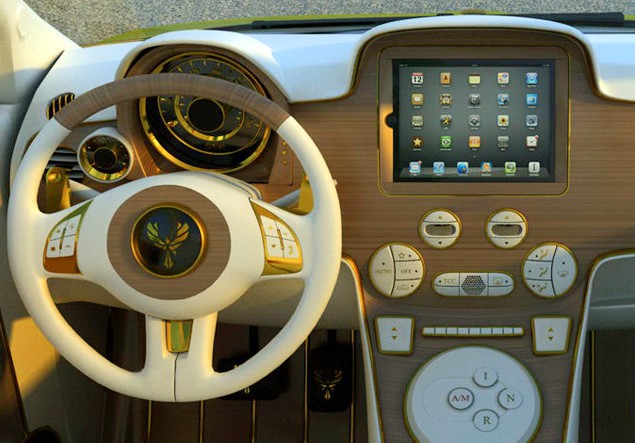
Is Apple getting into the car business? No, Apple isn’t building a car. But it makes perfect sense that Apple would be working on an in-dash system.
The car blog Jalopnik said this week that a Chinese head-hunting firm is apparently helping Apple hire someone expert in the manufacturing of car parts. The recruiter apparently placed the position in the automotive section of LinkedIn. The listing said:
“Apple(China) Looking for SQE/NPI with over 4 years Mechanical engineering background familiar with CNC/die casting/stamping/plastic injection, can use APQP/ PPAP/SPC to control product quality.”
PatentlyApple.com has reported over the years multiple patents held by Apple for in-car user interfaces.
The circumstantial evidence suggests that Apple is at least thinking about getting serious about the automotive dashboard business.
And getting into the car business just makes sense for Apple. Here’s why.
Cathy Edwards was the CTO and cofounder of Chomp, an innovative app search engine acquired by Apple. She is now a senior iTunes engineer. She'll be working on one of the thorniest problems faced by the iOS users -- how to find the best apps.
Apple announced this week the acquisition of Chomp, an app-search startup.
Chomp CEO Ben Keighran is reportedly working already in Apple’s marketing department, and CTO Cathy Edwards is already employed as a senior iTunes engineer.
Chomp crawls the data associated with all the apps in an app store and uses a sophisticated algorithm-based search function to enable people to search and actually find the apps they really want. Less appreciated by the public (but not Apple) is what appear to be incredible analytics tools, enabling a deep understanding of what people are searching for, how successful they are at finding it and detecting meaningful trends in app demand.
Sound familiar? Search algorithms and analytics are Google’s core competency.
Protesters at Apple headquarters in Cupertino. Image credit: Ted Smith.
A small but determined group of protesters from consumer watchdog group SumOfUs gathered at Apple headquarters in Cupertino and headed inside the shareholder’s meeting to ask questions about working conditions at Foxconn.
ABC aired an episode of Nightline last night showing exclusive video from inside “Apple’s Chinese factories.” In the video, presenter Bob Weir explores the production lines at Foxconn. Two things really stand out. First, the place is clean. And I mean really clean. Second, the iPhone is essentially hand made, with 141 human steps needed to assemble it.
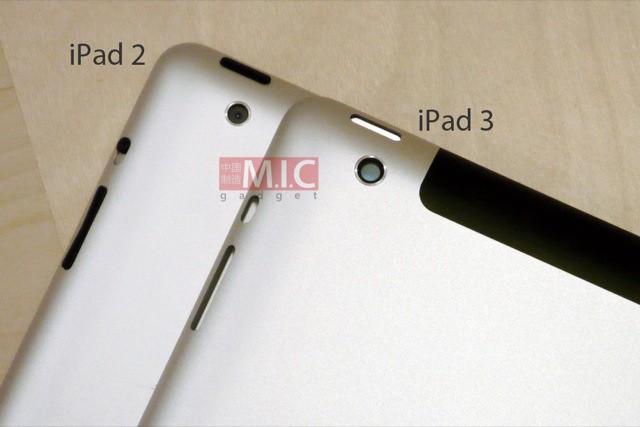
The iPad 3 is a little fatter than the iPad 2, but hides it well. Photo MIC Gadget/Flickr
With just weeks to go before the iPad 3 launch, the drip of hardware leaks is turning into a torrent. The latest — and probably best — photos of the new iPad’s case come from MIC Gadget, and show the new tablet to be a little thicker, and sporting a larger camera lens.
Another Apple announcement, another de-emphasis on the Mac brand. It seems that every time Apple opens its corporate pie-hole, the venerable Macintosh brand drops down a notch in importance, and the Mac’s future demise seems more likely.
Four years ago, I wrote a column about the incompatibility between Apple and China . And four years later, that observation is proving to be truer than ever.
What do I mean by “incompatible”? Countries have cultures. And companies have cultures, too. And the cultures of China and Apple are diametrically opposed to each other.
As recent events have demonstrated, Apple is incompatible with China’s business culture, legal system and worker culture.
Life is too short to date PCs. That’s the belief of dating site Cupidtino, which since its 2010 launch has amassed 32,000 Apple aficionados.
Whether you believe that affinity for a consumer electronics brand can spark romance or not, narrowing down the dating pool by trying to find some commonality can’t hurt. And Apple’s insanely great devices are as good a place to start as any. With Cupidtino, you can use the website and recently-released iPhone app for free; for $4.99 a month you get unlimited access to messages and a chat feature.
Cult of Mac got these Mac-loving dating tips from co-founder and CTO Amol Kelkar. Kelkar, once a PC by day and a Mac at night (he worked for nearly a decade as a software engineer at Microsoft), tells us what kind of opposites attract on a Mac-centric dating site, a place dripping with single Macs in the real world and whether a PC-version is in the works.
Your iPhone and iPad are great paper replacements, but they couldn’t actively stop it. Until now: PaperKarma is an iPhone app which lets you stop paper junk mail, just by snapping a photo of it.
Apple’s recent quarterly earnings demonstrated insane success. As a result, failing companies like Sony and JC Penney have suddenly reorganized their missions to copy Apple.
Unfortunately, they will fail, because they don’t understand why Apple succeeds.
Every major tech company offers training and certification programs for their solutions, including Apple. For years, it’s been common advice to pursue certifications if you’re looking to get a job in IT for the first time or to if you want to move up the IT ladder. Certifications can sometimes make up for lack of on the job experience since they provide a way of measuring knowledge. If you expend the effort to pursue certifications for technologies that you use (or have used) on the job, it’s common wisdom that they’ll give you a leg up not just in getting a job but in negotiating your salary and benefits package.
Based on that wisdom it isn’t surprising that tech training programs with a goal of getting you certified are a big business. It doesn’t hurt that some US education loan programs, including those for returning veterans, can be used to finance training classes as an alternative to college. Yet a recent study shows that some IT certifications no longer equal success and higher pay. Does this mean certifications are worthless? Yes and no. The truth is that it often depends on the certification(s) in question. With iOS devices and Macs becoming business staples, the an obvious question is… are Apple’s certifications worth pursuing?
Apple is on the brink of becoming the poster child for worker abuse. Journalists and rights organizations are starting to draw attention to the enormous contrast between Apple’s quarterly billions in profits, and the desperate plight of abused workers in China.
And the closer you look, the uglier this issue gets. And it threatens to damage Apple’s long-term prospects for continued growth and success.
Here’s the problem, and also what Apple can do about it.
Psychotherapist Marcos Quinones has got streamlining a one-man office down to a science.
Quinones, a former software developer, is a New York City-based cognitive behavioral therapist and licensed clinical social worker who runs his entire office on Apple gear.
He credits the iPad with making a big impact in the smooth running of his sole practice.
As part of our continuing series about businesses using the iPad, he shares a few key apps that help him process payments and help with patient records, saving time and money.
Comparing uprisings in the Middle East to what happens when a manager brings his or her own iPhone to work seems like a bit of a stretch, but IT executives say the effect has provoked a similar shake-up.
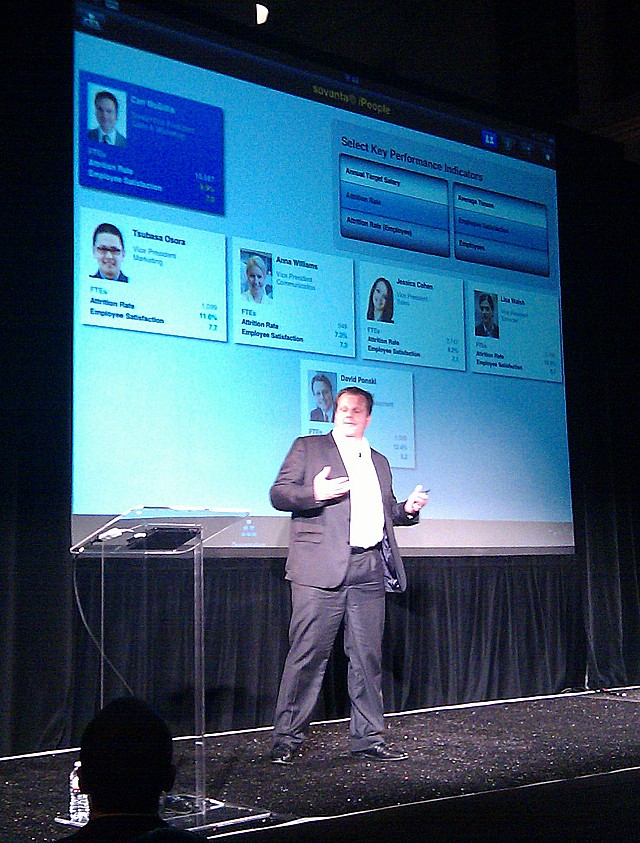
The people (read: employees) have brought about a groundswell of change in the corporate world by opting to bring-your-own-device (BYOD) and choosing their own apps. This has upended the “regime” of IT departments, who used to be able to control what devices employees used and what ran on them.
Apple’s most direct competitor in the future won’t be Microsoft or Google, but Amazon.com.
With the release of the Amazon Kindle Fire, Amazon.com declared war directly on Apple’s core business model, which is to sell integrated solutions for the consumption and creation of digital content.
SAP's Bussman and his iPad at Appnation Enterprise. @Cultofmac.
Oliver Bussmann, CIO of SAP, makes an unlikely cheerleader for Apple’s iPad — but one who is bound to get noticed. (If you’re now picturing him in a varsity sweater shaking pom-poms, sorry).
But Bussmann is unabashedly enthusiastic about Apple’s magical tablet computer. SAP deployed some 14,000 iPads to employees last year, making the stodgy German business management software colossal the second largest corporate iPad user worldwide. (Korea Telecom handed over 30,000 to its workers).
“It’s an exciting time. The line between consumer and corporate is fading and we’ve been aggressive in regards to the iPad,” he said. “There’s a huge opportunity to be in driver’s seat.”
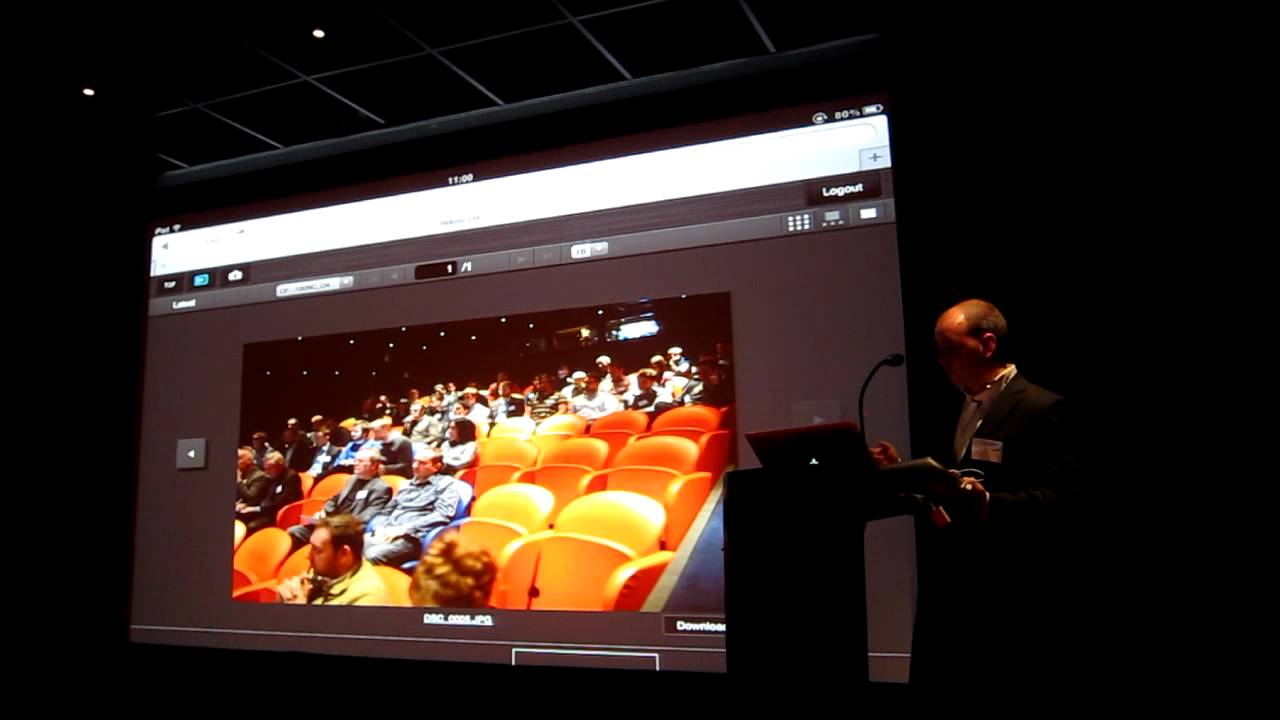
So by now you may have heard that Nikon’s flagship pro D-SLR, the D4, is real and will be on the floors of CES. The new features of this new drool-worthy machine are numerous, but one that immediately caught my eye was its ability to be controlled remotely by an iPhone or iPad — wow! I don’t think anyone saw that coming.
A famous Apple campaign goes: “Here’s to the crazy ones.” Of course the crazy ones usually get institutionalized. And that’s exactly what has happened to Apple. It seems that in recent weeks, Apple has been or announced plans to be, institutionalized.
Apple, which represents the newest of the new, both aesthetically and technologically, is embracing the old. Here’s what I’m talking about.