This is neither a new idea, nor one acceptable to the Apple fan base. But since people briefly talked about it last year, it’s become an increasingly good idea — maybe a necessary one for Apple’s continued growth and success — and I’m going to tell you why.
A curious download hit Apple’s App Store this week: a messaging app called FireChat.
It’s a new kind of app because it uses an iOS feature unavailable until version 7: the Multipeer Connectivity Framework. The app was developed by the crowdsourced connectivity provider Open Garden and this is their first iOS app.
The Multipeer Connectivity Framework enables users to flexibly use WiFi and Bluetooth peer-to-peer connections to chat and share photos even without an Internet connection. Big deal, right?
But here’s the really big deal — it can enable two users to chat not only without an Internet connection, but also when they are far beyond WiFi and Bluetooth range from each other — connected with a chain of peer-to-peer users between one user and a far-away Internet connection.
It’s called wireless mesh networking. And Apple has mainstreamed it in iOS 7. It’s going to change everything. Here’s why.
The new iOS 7.1, which Apple launched this week, contained massively improved iBeacon functionality.
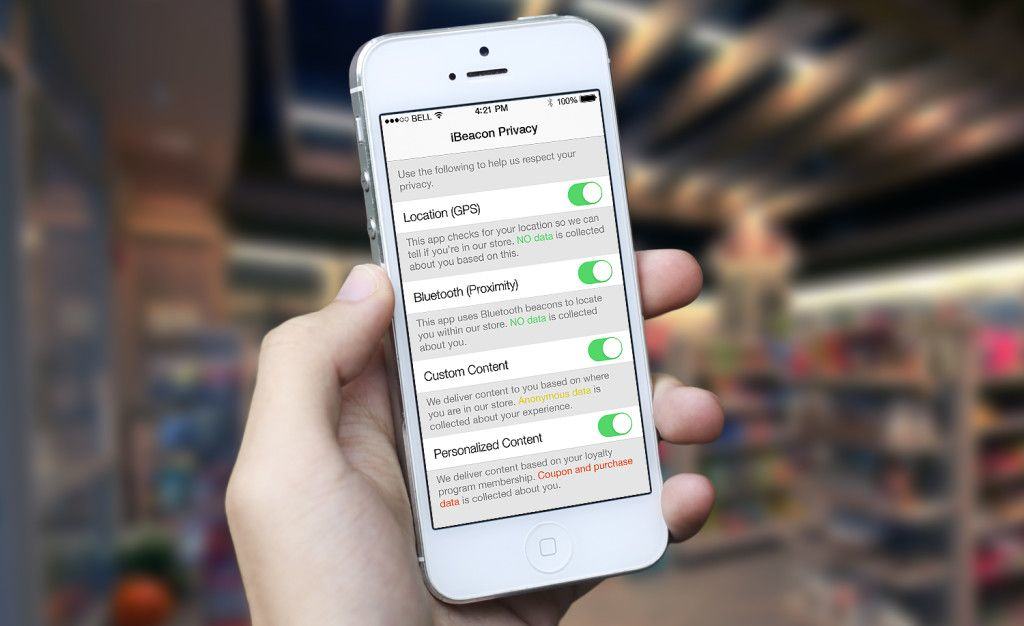
Among these improvements is that Apple has cancelled an element of user permission. Once you’ve installed a store’s app — say, for example, Apple’s own Apple store app — that store can put messages on your lock screen even if the app isn’t running!
I think it’s a real improvement. But I’m surprised privacy fans aren’t freaking out.
It's the rumor pretty much every Apple analysts and blogger in the world predicted for the last 8 months and everyone got it wrong.
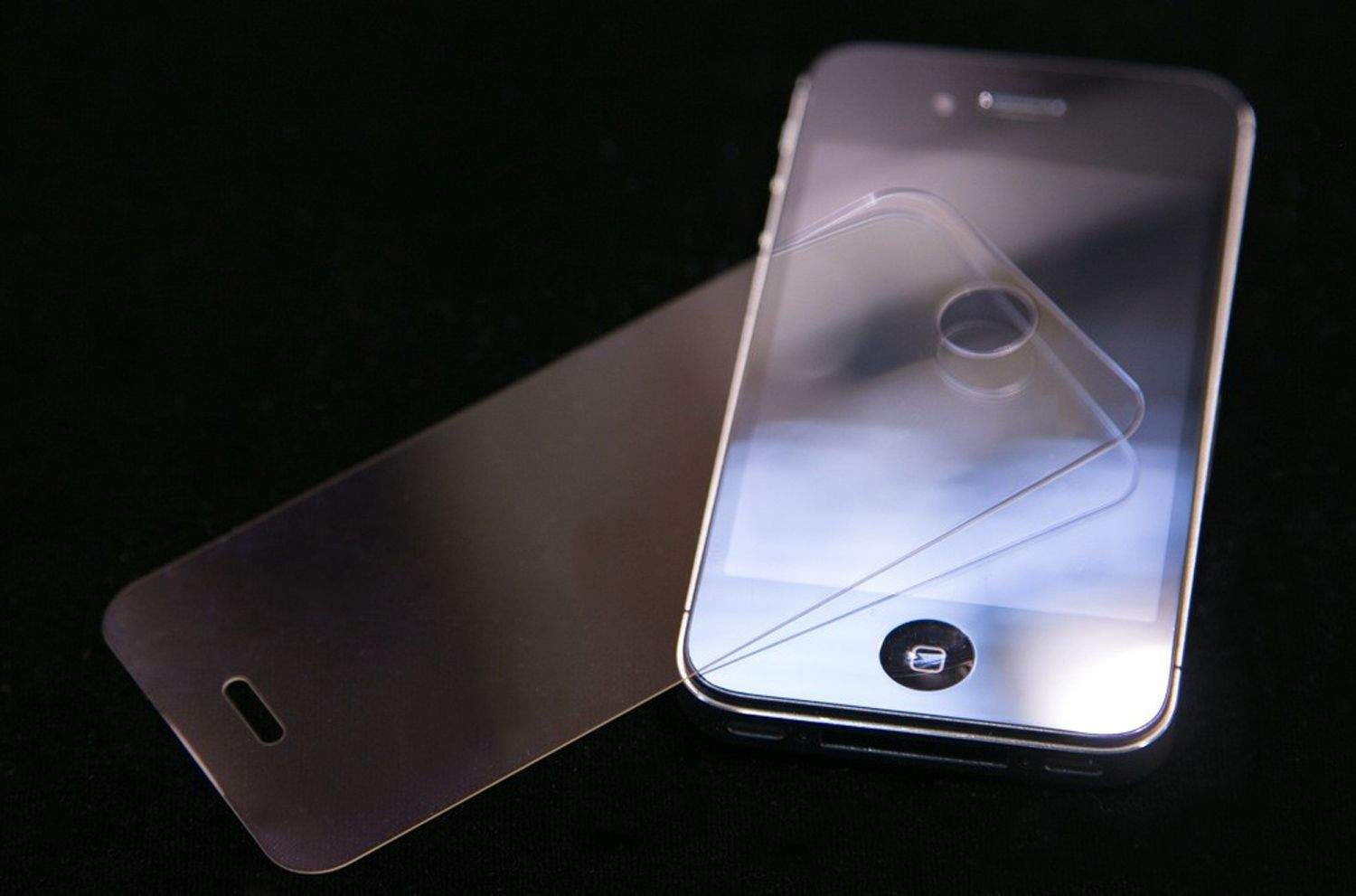
Corning — or at least a representative executive of said company — did its best this week to shatter excitement around Apple’s Sapphire embrace — or, at least, make the benefits of Apple’s glass strategy less clear.
Corning Glass senior vice president Tony Tripeny laid on the FUD (fear, uncertainty and doubt) pretty thick during a Morgan Stanley conference this week.
Here’s what Corning doesn’t want you to know about sapphire iPhones.
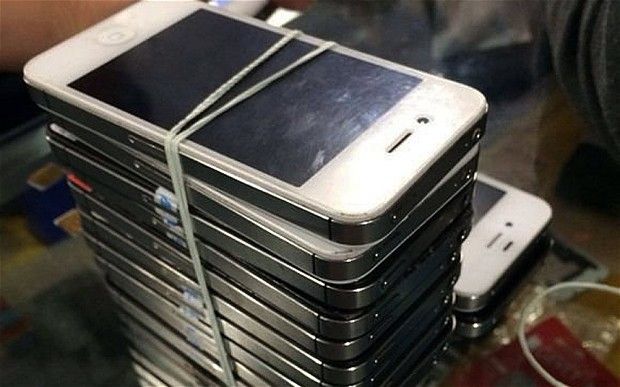
The Telegraph newspaper brought to light this week an apparently widespread practice in China in which broken old iPhones are stripped for parts, and functioning iPhones are built with those parts.
The newspaper called it a “scam,” because the sellers of such phones often lie and say they’re new. And in fact that is a scam.
Our own Buster Heine calls them “Frankenstein iPhones,” and that’s a monstrously good name for it.
But I call the general idea of a large-scale refurb effort one of the best ways to improve the environmental impact of a dangerously irresponsible industry.
The reason TV sucks is that the companies who control it make it suck on purpose because they believe that’s more profitable.
It’s technically possible for viewers to watch any TV show, movie or online video ever made at any time at either low or no cost.
This possibility is only theoretical. In reality, certain companies artificially prevent viewers from getting what they want. They create artificial scarcity in order to make more money.
A movie comes out in the theaters. But it’s not available for download. This non-availability has nothing to do with technical reasons. The studios are withholding it from you to make you go to the theater and pay for a ticket.
After it’s gone from theaters, there’s often some amount of time before its available online. And when it is available, you often can’t “rent” it. You can only “buy” it. It’s another form of artificial scarcity designed to trick people who are impatient, designed to exploit fandom, designed to manipulate the public into paying more for something.
And then there’s TV. Ugh! What a cesspool of customer-hating manipulation and exploitation.
There are two kinds of companies in existence. There are companies trying to make money enabling you to watch what you want when you want to watch it. And there are companies trying to make money by preventing you from watching what you want when you want to watch it.
It's the rumor pretty much every Apple analysts and blogger in the world predicted for the last 8 months and everyone got it wrong.
Evidence that Apple is going big with sapphire is overwhelming. But the reasons for Apple’s sapphire obsession range from scratch-resistant screens to solar-charging screens.
I have another theory: Apple wants to eliminate both the need and the desire for an iPhone case, cover or sleeve. There’s a lot more to this idea than simple scratch resistance.
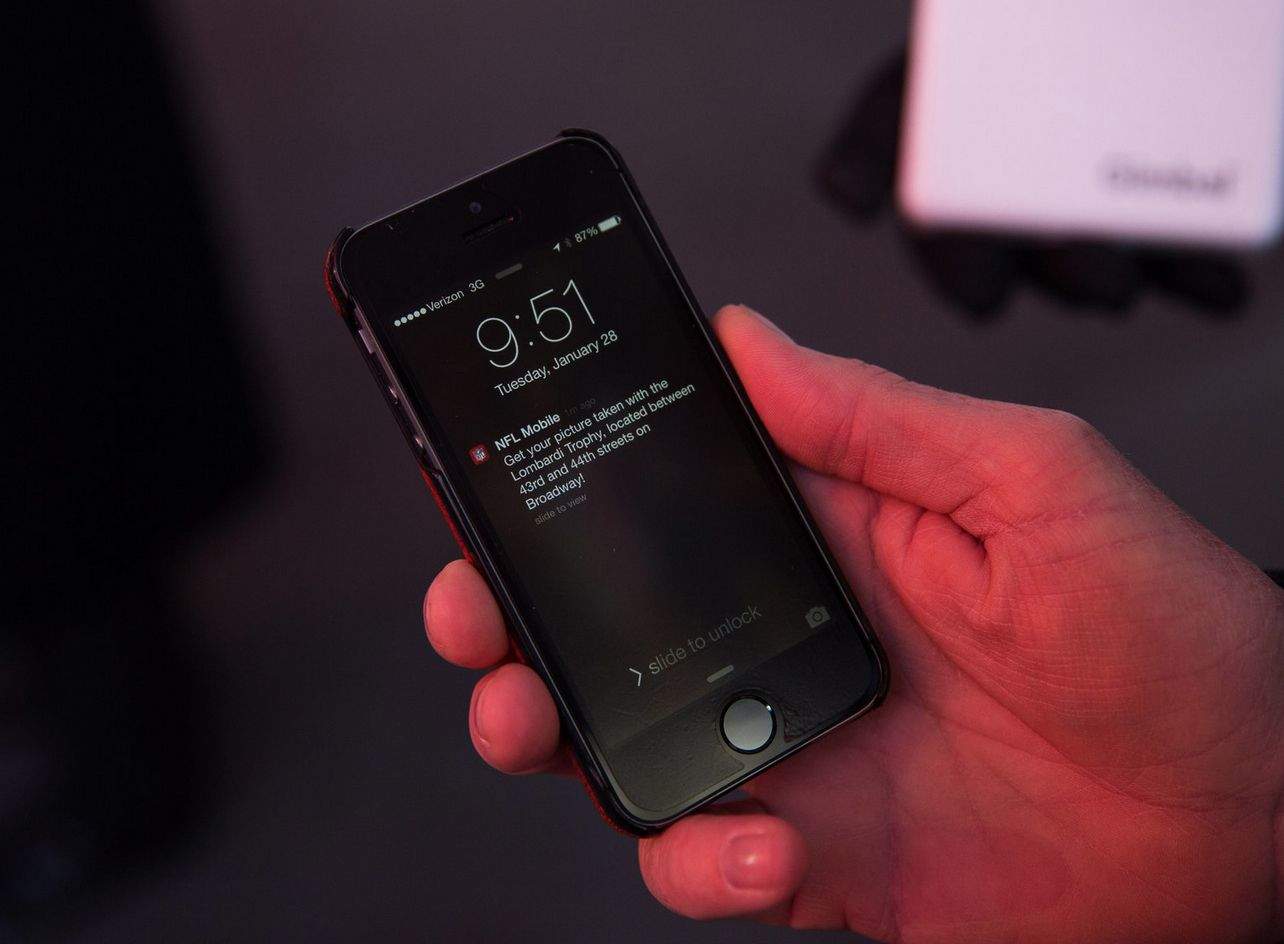
The Super Bowl is tomorrow, and Apple’s iBeacon will be there. The New York Times reported this week that iPhone owners in East Rutherford, New Jersey (where MetLife Stadium where the Super Bowl is) — and also in some areas of New York City — will be part of an iBeacon-based advertising gimmick. The NFL Mobile app has been iBeacon enabled, and users will get pop up messages with advertising, offers to buy merchandise and information about NFL exhibits. Here’s the best part. When iBeacon detects that you’re in a long line at the game, you’ll get an alert telling you where in the stadium you can buy the same junk food but with shorter lines.
The use of iBeacon creates a high-visibility showcase for Apple’s new indoor location technology. But the Super Bowl is just one of many splashy applications.
Pundits (including me) have been predicting Apple’s entry into the mobile payment space — using a smartphone instead of a credit card to buy stuff in the real world — for years.
It hasn’t been a hard prediction to make. The financial rewards are enormous, and Apple has filed multiple patents around mobile payments over the years.
Now, it’s finally happening. And although Apple hasn’t really started yet, they’re already way, way ahead of just about every other player.
While everyone obsessed yesterday over Apple finally launching on the world’s largest carrier, China Mobile — and the Chinese market in general — smart companies are starting to focus on the smartphone market of the future: India.
The country’s 1.2 plus billion people are kinda hard to ignore. Also: India is so much more than the “other China” when you dig into the details of that smartphone market. Everything about India is an opportunity for smartphone companies and providers of mobile anything. And the major companies are each taking radically different approaches.
I think Apple’s strategy is the best one, and I’ll tell you why.
Apple acquired today a one-man startup called SnappyLabs for an undisclosed amount.
The startup makes just one product: A 99-cent iPhone app called SnappyCam.
Apple hasn’t said why they acquired SnappyLabs, and probably won’t say. But such an acquisition would make sense as both an aqui-hire of founder and sole employee John Papandriopoulos (pictured), who has a PhD in electrical engineering, and also an IP purchase of the amazing thing that Papandriopoulos built.
Here’s what Apple bought and why it makes perfect sense that they bought it.
Siri will take you one step closer to the world of The Jetsons. Photo: Hanna-Barbera
Apple, Google and Microsoft all want to be your phone company. But with both competitors’ communication offerings in disarray, Apple has an opportunity to offer the best, most elegant and integrated communication platform.
All they have to do is keep moving in their current direction, make a couple of key rumors come true and keep Steve Jobs’ promise about FaceTime.
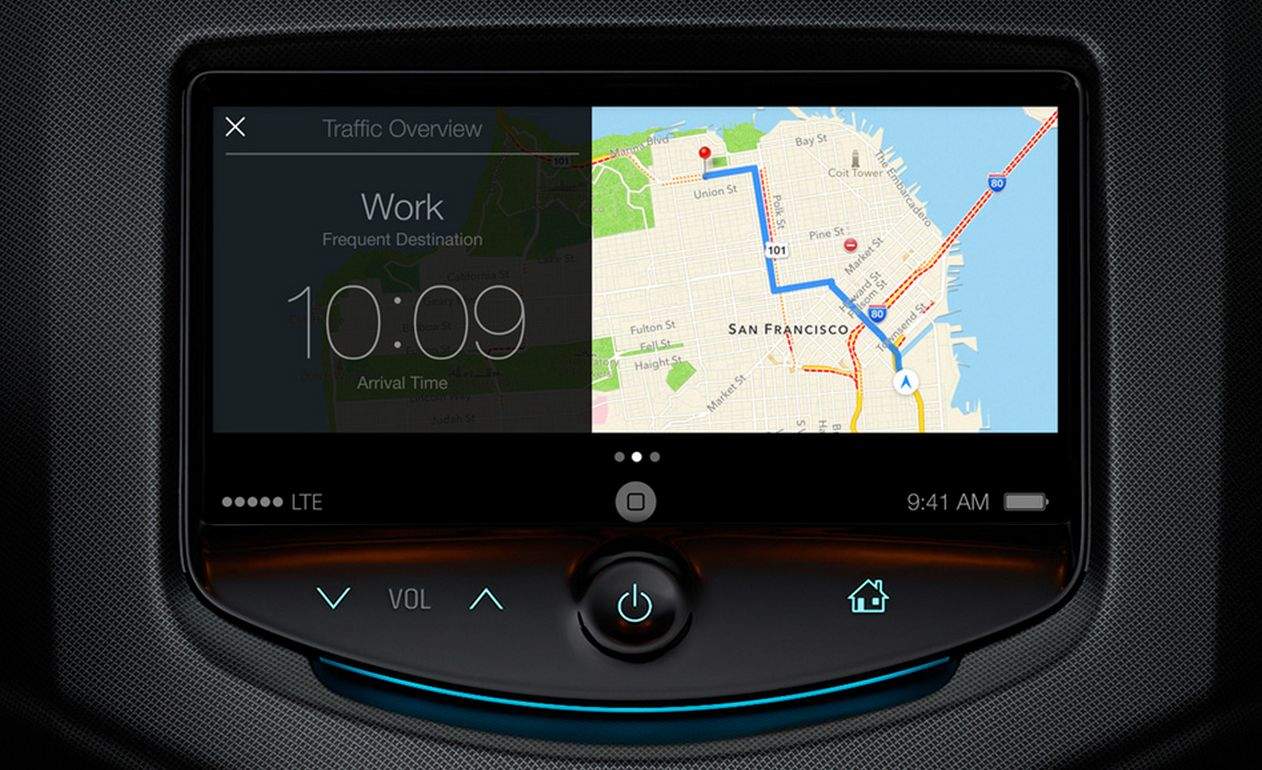
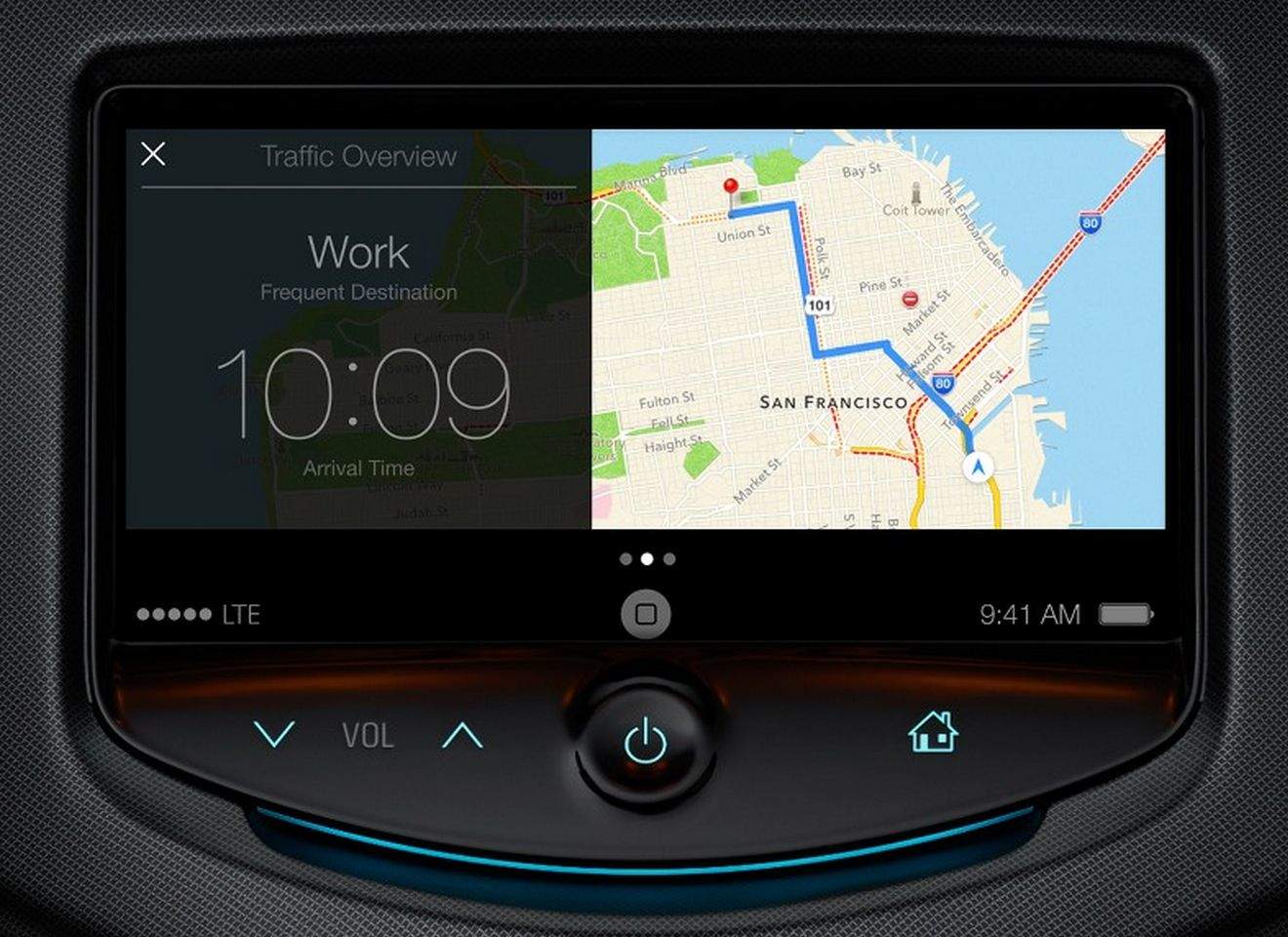
Car makers next year will begin selling vehicles that support Apple’s new system for connecting iPhones to the in-car entertainment systems built into the dash.
Nice, but it doesn’t go far enough. Here’s why Apple should start building the in-car entertainment systems themselves.
Apple flipped a switch this week and enabled customers at 254 U.S. Apple Stores to get spammed with micro-location based promotional nagging.
The new system, called iBeacon, is a low cost, low-energy way to achieve actionable “indoor GPS” in which “beacons” use Bluetooth Low Energy (BLE) signals to figure out exactly where you are and send messages relevant to that specific location.
But Apple Stores are probably the least-compelling iBeacon scenario I can think of.
Your typical Apple store is a glass box, a single room with a door in the front, a Genius Bar in the back and tables and shelves in the middle. It’s impossible to get lost in a regular Apple Store and trivially easy for customers to find any of the tiny number of products for sale. Also: Apple doesn’t do in-store promotional discounts except for one day a year (Black Friday).
Right now, you participate in the Apple Store iBeacon system by launching the Apple Store app (which I imagine most iPhone owners don’t know exists) and changing your iPhone’s settings to use iBeacon (which most iPhone owners don’t know how to do) and granting permission to get in-store promotions (which most iPhone owners probably have no interest in).
Once all that happens, iBeacon interrupts you to nag you about trading in your old iPhone, and offers help like Microsoft’s Clippy when you’re looking at a specific section of the store: “I see you are looking at iPads? Would you like to know more about the iPad?” (I made up the wording, but the intent of some iBeacon messages is identical to that.)
As a result, iBeacon in Apple Stores mostly annoys. I can think of a hundred scenarios where iBeacon could be incredibly great. But the greatest of these: My house.
The smartphone industry is dominated by two companies: Apple and Samsung. Absurdly, Canaccord Genuity recently reported that Apple and Samsung earn 109% of mobile industry profits.
(That impossible percentage results when the losses of competitors are factored in.)
Specifically, the research firm estimates that Apple earns 56% of industry profits and Samsung 53%. (Apple is actually further ahead of Samsung in profits than these numbers show, because some companies count tablet profits and others don’t.)
BlackBerry makes -4% of the profits (that’s negative four percent), Motorola -3%, and Nokia, LG and HTC each had -1%.
They’re weird numbers that don’t add up. But the point is that once again we learn that Apple and Samsung are making nearly all the money, some companies are making zero money and other companies are losing money.
But one of the dominant companies — Samsung — has a creepy approach to business, which is that they steal, cheat and lie apparently because the penalties of being unethical are far less than the rewards.
In the past three years, Apple has dared to be dull.
During Apple’s best years, between 2007 and 2010, Apple introduced the first iPhone and the first iPad, two world-changing products that now define the company (and bring in most of its revenue). These products, along with their touch interfaces and apps stores, were a shock to the industry.
That’s great, Apple. But what have you done for me lately?
Here’s one theory about how Apple works: The company finds a horrible content consumption experience. They figure out how the experience can be made wonderful. They work on the products until they’re ready, both from product quality and price perspectives. Then they ship it and spend the next few years refining and perfecting the original vision.
If that oversimplification about how Apple works is accurate, then Apple isn’t really in full control of when its groundbreaking new products ship. They have to wait for technology, such as Bluetooth Low Energy (BLE), or for various industries to come around to making a critical mass of content deals.
In the past three years, every Apple announcement has been preceded by speculation and rumor that Apple would at long last announce an iWatch, an iTV set and other products that would signal a radical new product category for Apple. And every announcement ended in disappointment. Every announcement was about refinement of old products, rather than bold launches of new products.
Will Apple ever enter new markets again, including the ones perennially rumored?
I say they will. The fact that they haven’t shipped the long-rumored iWatch or iTV, for example, makes perfect sense from a readiness perspective.
In fact, I think the next three years will be twice as awesome as the iPhone-iPad years, in the sense that Apple will break into four new businesses. Why? Because the technology and content deals will fall into place during this time.
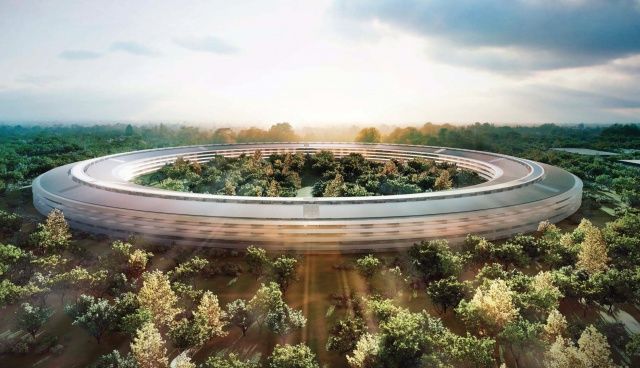
Concept drawing of Apple's breathtaking new circular headquarters in Cupertino, California.
Apple is still moving forward to build its $5 billion, 176-acre “spaceship” Campus 2 headquarters, expected to open in three years in Cupertino, California..
Critics have been attacking it since Apple CEO Steve Jobs first proposed it to the Cupertino City Council. And since that poignant moment, which was Jobs’s last public appearance, the campus project has evolved and changed. As I write this, the old HP buildings on the property are being demolished.
Here’s what we know about the spaceship campus so far, and also what the critics have been saying.
Hacking the iPhone 5c probably cost the FBI more than $1 million. Photo: Apple
Don’t look now, but kids want iPhones for Christmas. Well, a third of them do, anyway.
A survey of 12- to 17-year-olds conducted by Ebates found that an iPhone tops the wishlist. One third — specifically 32% — of those surveyed want an iPhone. (Some 12% want a Samsung Galaxy phone.)
Ho, ho, hold on a second. Is this a good idea? Should children “own” wireless gadgets?
Updates on the French and German versions of Amazon.com suggest a new, replacement Apple TV coming the day after this week’s Apple announcement — just in time for Christmas.
The prospect of a shiny new Apple TV product makes everyone think of a radical new Apple TV box with crazy new user interface options, or an actual Apple TV set, both of which people have been predicting for years.
And then that Scrooge MG Siegler comes along to say he’s hearing that the Big Apple TV Update has been delayed, and that maybe there will be a minor update to the existing product.
Whether something grander has been delayed or not, I think TV will be the most interesting product at the Tuesday announcement — not because of hardware, but because of a new software interface and new deals I think Apple will announce.