Apple treats podcasting like an unwanted stepchild.
I think this is a huge missed opportunity for Apple — and for audio and video content creators.
Here’s what Apple is doing wrong, and how they could do it right.

Apple treats podcasting like an unwanted stepchild.
I think this is a huge missed opportunity for Apple — and for audio and video content creators.
Here’s what Apple is doing wrong, and how they could do it right.

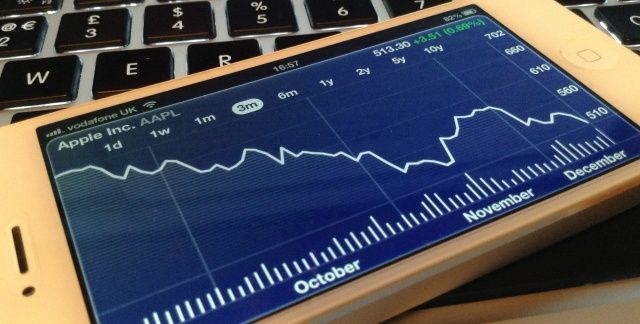
According to a newly-posted shareholder document, Apple now requires executive officers to own three times their annual salary. The CEO is still required to hold ten times his own annual salary in stock, as well.
This current move, as reported by the Wall Street Journal, comes a month after Apple’s board actually opposed a similar measure proposed by a shareholder.
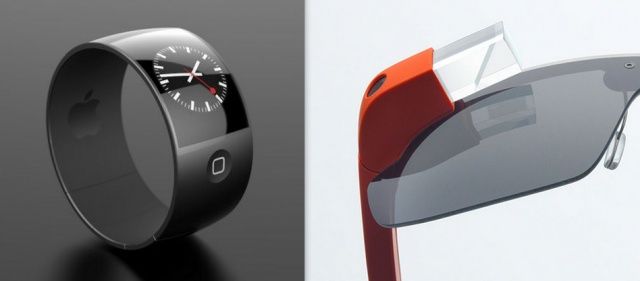
The Apple iWatch and Google Glass are both coming soon, apparently.
We don’t have all the details on either product. And we can’t even be 100% sure that the Apple wristwatch is going to happen at all. But most knowledgeable tech fans are expecting both and looking forward to seeing, buying and using them.
Excitement is warranted. No, I mean serious, pure geek joy is definitely called for. But not because of the iWatch and Google Glass products themselves.
There’s a much, MUCH bigger reason to be excited.
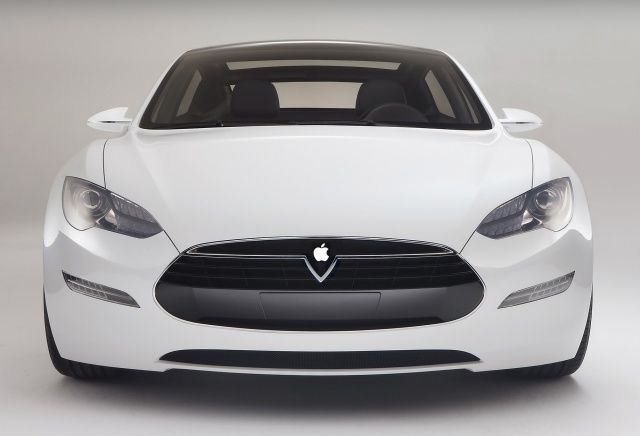
The New York Times‘ Nick Bilton reminded everyone recently what we previously learned from longtime Apple board member Mickey Drexler: Steve Jobs wanted to build an Apple iCar.
People tend to dismiss the idea as a goofy pipe dream. In fact, not only is an Apple iCar a great idea, it’s perfectly aligned with Apple’s history and mission.
Here’s how they should do it.

Apple made a “dent in the universe” with its 1984 Super Bowl ad for the upcoming Macintosh.
At least that was Steve Jobs’ intention, according to the opening scene of The Pirates of Silicon Valley.
Whether all this universe denting was just Jobs’ reality distortion field or an actual change in human culture depends on your corporate loyalties, or lack thereof.
Any debate over the cultural impact of the Macintosh really boils down to how much of the graphical user interface revolution was determined or influenced by Apple, and how much of it would have happened regardless.
Because there’s no question that the shift from command-line computing to WIMP computing (windows, icons, menus and pointing-devices) radically changed the world, leading, for example, to the web, which is the dominant WIMP interface to the formerly command-line Internet.
WIMP computing also enabled powerful new tools for software programming, design (of everything), animation and a bazillion other things.
WIMP computing, and to some extent the Macintosh itself, really did make a dent in the universe, but not in the way most people imagine.
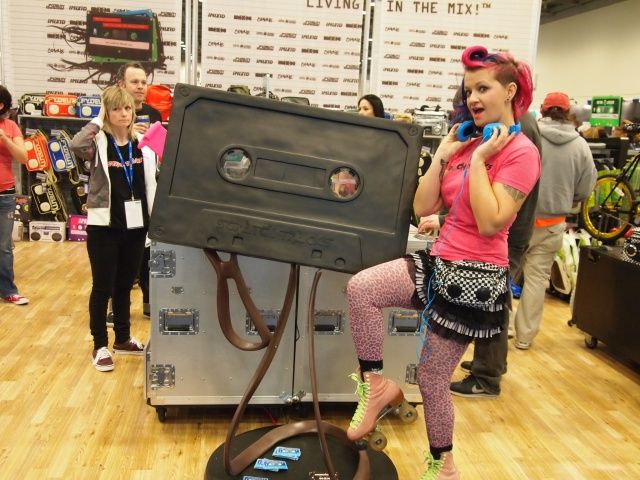
 SAN FRANCISCO, MACWORLD/iWORLD 2013 – Like any other trade show, there are a lot of weird and cool things to see at Macworld. Even though there aren’t as many booths here as there are at CES, but there’s tons to look at.
We wandered the corridors of Macworld this afternoon to find the most fun and freaky booths at Macworld. Here’s what we found.

Everything is amazing and nobody is happy.
When comedian Louis C.K. famously expressed that notion on Conan, he was making a commentary on the public’s instantly acquired sense of entitlement when confronted with new technology.
His observations are also applicable to the assumptions underlying nearly all the stuff you read about consumer electronics by bloggers, journalists and financial analysts.
The gnashing of teeth and ripping of hair over with everything Apple these days is a perfect example.
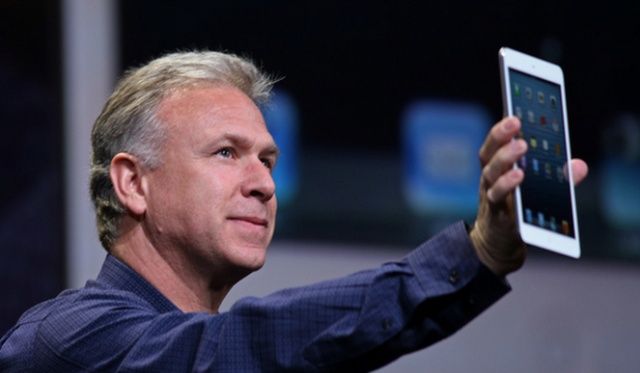
Apple has “stumbled lately.” That’s the overwhelming consensus coming from the press, blogosphere and Wall Street recently.
Demand for the iPad and iPhone is dropping, we’re told, and Apple isn’t doing interesting or exciting things anymore.
Here’s what’s going on.

My name is Mike and I’m a digital nomad. “Hi, Mike!”
A digital nomad is simply a person whose work is location-independent because of mobile technology and the Internet.
Location independence doesn’t mean travel. If you choose to work from home, but could travel if you wanted to, you’re still a digital nomad taking advantage of your ability to choose.
I’ve been a digital nomad for about a decade, and during that time I’ve lived abroad briefly while working.
Before I converted to all-Apple, all the time — and before Apple launched the App Store, the iPad and had Apple Stores all over the place — the experience of living abroad while working was hard, limited and isolating.
But since Apple became the “New Apple,’ and since I switched to Apple products — and also since a host of great online services came online — digital nomad living abroad has become easy, empowering and highly connected.
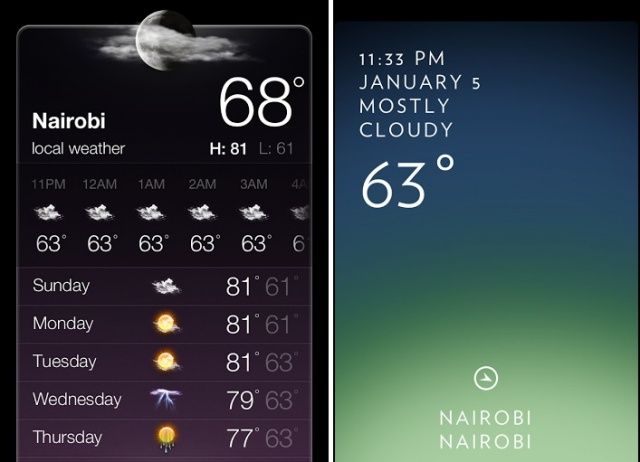
When you open a new iPhone and boot it up for the first time, you’ll notice that Apple has already installed a bunch of apps for you.
It’s a great idea, because it lets you use apps right out of the box. Even the newest, most confused user can tap on an app icon and start trying various things.
Here’s the problem: Most users don’t replace the default apps with third-party alternatives. They mostly use the apps that came with the phone.
And this is why Apple should stop making apps: The default Apple-made apps are giving iPhone users a second-rate experience.

There’s a good chance you can think of someone who plans on giving an Apple product this holiday season. Apple has rolled out its own Holiday Gift Guide and has its own gifting information page, which details the basics about gifting Apple products. If you’re looking for a little more assistance when shopping for Apple products then this guide is for you. Here we offer some simple tips to help the average holiday shopper save time and money when gifting Apple products.
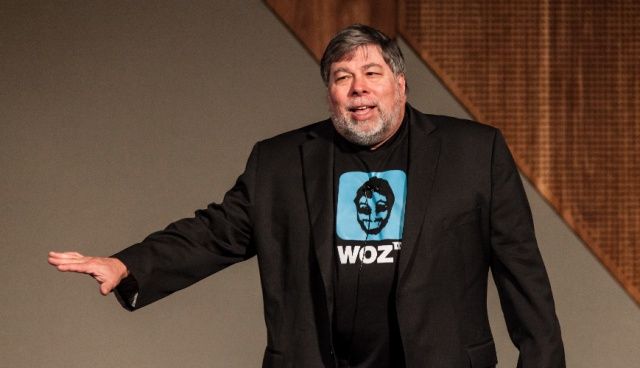
Everybody loves the Woz.
And what’s not to love? Steve Wozniak is a one-of-a-kind genius who invented the personal computer. He’s a millionaire who spends his money having fun, rather than trying to control the world. He’s a practical joker. He’s an iconoclast. And he’s a nerd’s nerd and a geek’s geek who believes in technology and the power of change.
But even the biggest Woz fan has to admit: The man loves the spotlight.
And the main way he grabs it is by saying what nobody expects him to say.

Apple’s current “hobby” — also known as Apple TV — doesn’t tell us much about Apple’s future plans for the living room.
It’s a good product under the right circumstances. But five years from now, living rooms are going to be transformed by all-encompassing systems that turn TVs into video phones, gaming systems, home automation control centers and artificial intelligence assistants.
Does Apple have what it takes to compete in the living room?

The Apple iPhone has become the poster child for the problems of Chinese and American labor.
One strain of conventional wisdom goes that while rich, entitled Western elites whine and complain over trivial issues like maps and purple haze on screens, abused, exploited Chinese factory workers slave away to make those iPhones in unsafe factories and under exploitative conditions.
The iPhone represents the shafting of the Chinese worker.
Another strain of conventional wisdom goes that greedy Apple (and other companies) ships factory jobs overseas to China, where Chinese factory workers get all the jobs, and American workers are left in the unemployment line.
The iPhone represents the shafting of the American worker.
Here’s an idea. Let’s stop accepting these brain-dead caricatures, and insist on the truth about iPhones, factories and workers.

This is a guest post by Ken Segall, a Silicon Valley advertising executive who worked closely with Steve Jobs. Among other things, Segall put that little “i” in front of the iMac and helped develop Apple’s famous Think Different ad campaign. Segall is author of Insanely Simple, a very readable insightful account of what makes Apple tick.
Last time Apple went heavy on advertising in a sporting event, it didn’t exactly end well.
But let us not speak of the Genius anymore. All traces of that campaign have been hidden from our sight.
Now the baseball playoffs are here. And once again, Apple has made a very expensive media buy. This time, it’s blanketing the games with the new iPhone 5 ads.
But look. Someone else has moved into the neighborhood. Samsung showed up for the playoffs with equal force, in the form of its Galaxy S III ads. You know — the ones that make fun of the lost souls who line up to buy an iPhone, when they could just as easily have a much cooler Samsung phone.
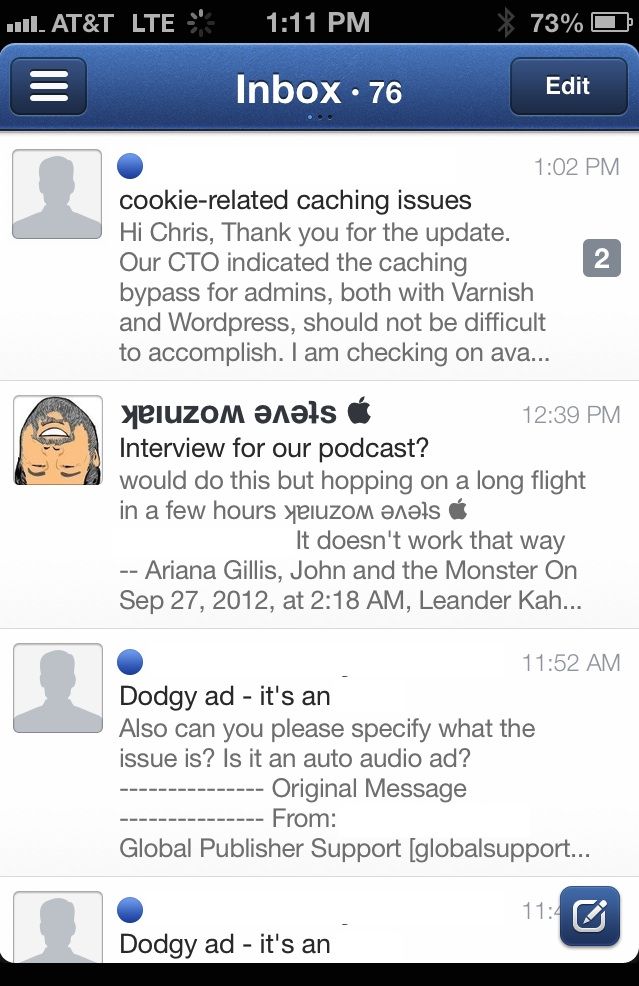
Following reports that Apple co-founder Steve Wozniak is planning to move to Australia — a county which, as everybody knows, is located on the underbelly of the Earth and consequently has had its gravity reversed, resulting in a native race which walks around upside down — we’ve discovered that he’s already fitting in by using a topsy turvy icon and name text in his emails.
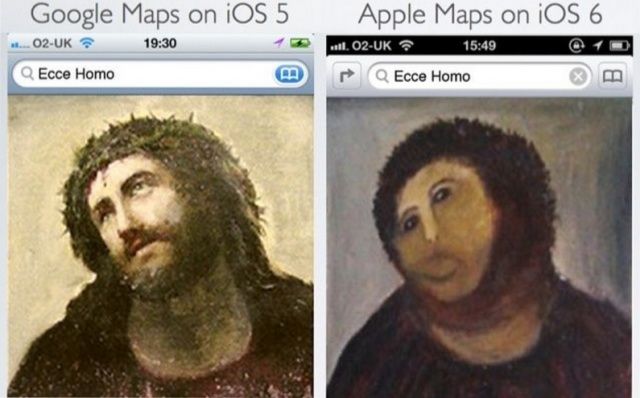
Every once in a while, a company becomes so obsessed with a competitor that it loses focus on its own customers. They start designing and positioning their products more to hurt rivals than thrill users.
And I fear that now it’s happening to Apple.
Again.

We get nearly all our official information about Apple and its products through occasional announcements or developers conferences, such as the big announcement this week in San Francisco.
As we approach each event, there are things we know, things we don’t know.
During the event, there’s a reshuffling. Some questions are answered during the announcement. And some questions emerge from the announcement itself that remain unanswered.
Here are the 6 biggest questions that were either unanswered in the event, or which emerged from the event.

Here’s the scenario: You invite a date over to impress them with your cooking skills. The house is tidy and you look sharp. You’re slaving away in the kitchen when your date innocently asks to check their email and you absentmindedly oblige. Then it hits you… You left your download folder open! Yeah, that dreadfully unorganized file that looks more like your trash bin. You run to try and save your dignity, but it’s too late; you have been exposed and the date is a solid block away in a dead sprint.
Don’t worry, we’ve all been there before. Lucky for you we have a download manager that is here to put your worries at rest so you can move on with your life once and for all. Folx Pro packs a ton of nifty features to get you on the fast track literally and figuratively. Here is what you can get for 3 bucks:

Last chance for this great freebie for all you Cult of Mac fans. We have a slick looking WordPress theme designed to show off your new iOS app idea. Simple as that. A premium theme usually $37 now FREE for you for just a short time. So, go check out the theme for yourself and then come back and download it. Why? Because it’s free and I’m sure there is always a project that you can find a great theme for.
Speaking of free, you should definitely enter our iPhone 5 Giveaway. The rumors are heating up for the highly anticipated Apple phone and it sounds like it’s shaping up to be amazing! We’ll drop the cash and wait in line; you, simply make a couple clicks and keep your fingers crossed.

Trip Chowdhry, the Managing Director of Equity Research at Global Equities Research, told a financial writer a few months ago that Apple’s biggest challenge without founder Steve Jobs is that Apple lacks a “unified force.” In order to become unified again, Apple would need a “supernatural person” overseeing things.
But according to Thai Buddhists, they may have exactly that — the reincarnated spirit of Steve Jobs himself, who they say is living in a “mystical glass palace hovering above his old office at Apple’s Cupertino, California headquarters,” according to The Wall Street Journal.
I’ll tell you in this post more about Jobs’ so-called reincarnation, and also about several ghosts caught haunting various Apple products. (And I’m not talking about problems with the MacBook Pro Retina screens.)
Here’s all the spooky stuff that’s going on.
Apple’s critics generously assign a variety of motives to Apple for filing lawsuits.
Apple sues because it wants to control the market, overcharge for its products, exclude competitors from the market or punish competitors for daring to not think different. It’s all part of Apple’s “quest for global tech domination.
But these aren’t actual motives. These are appeals to emotion. They’re legitimate perspectives, but expressed to negatively encapsulate spectacularly complex technical, legal and ethical issues into sound bites that make you want to agree with the author that Apple is bad and wrong.
Apple has only one motive for patent lawsuits, and I’m going to tell you what that motive is.
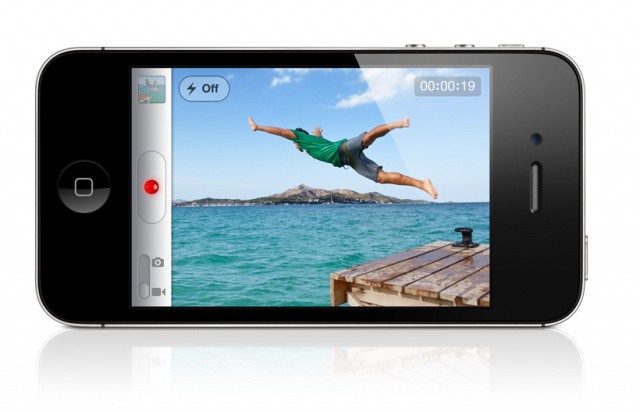
I wrote a column last week saying that the “smoking gun” document Apple submitted into evidence in the Samsung patent infringement lawsuit does not constitute proof of infringement by itself.
Still, it’s a remarkable document that does prove something: Samsung is very impressed with Apple. In fact, it’s clear that Samsung is a huge Apple fanboy.
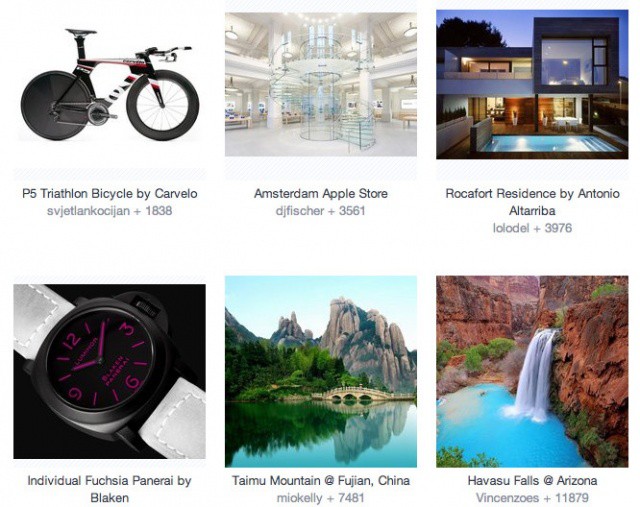
Apple is talking to the people behind social e-commerce site The Fancy, according to a report by Business Insider.
The Fancy is viewed by some as a rival to Pinterest, albeit a much smaller one. However, if Apple buys and promotes it among the gazillions of people who have their credit cards on file with Apple’s iTunes Store, the site could become a major hit overnight.
Business Insider also reported in July that in mid-June, Apple CEO Tim Cook had created an account on The Fancy and “fancied” seven items. Here’s Cook’s account.
Apple is a riddle, wrapped in a mystery, inside an enigma. No, wait. That was Stalinist Russia.
Whatever. The two are nearly identical in their abilities to keep secrets.
As an Apple observer myself, I’m keenly aware of the iron curtain of secrecy that prevents anyone from knowing what Apple is working on, what they’re planning and what their processes are for developing new technologies.
Rumors and speculation are always so easy to come by; unannounced facts are rare — even facts about the past.
That’s one of the great things about Walter Isaacson’s biography of Steve Jobs. It gave rare insight into the inner workings of Apple, to some degree.
And that’s what’s so great about the current jury trial in Silicon Valley, where Apple is suing Samsung and Samsung is suing Apple. It’s forcing Apple to reveal countless facts and events that it doesn’t want to reveal.
The lawsuit appears to be far from over. But already, it’s clear that Samsung is “winning.” Why? Because it’s a contest between a company that cares deeply about its secrets — even small ones — and a company that doesn’t care as much. So the discovery and revelation is punishing Apple.
Here are the 8 secrets Apple has been forced to reveal in court in the past couple of weeks.