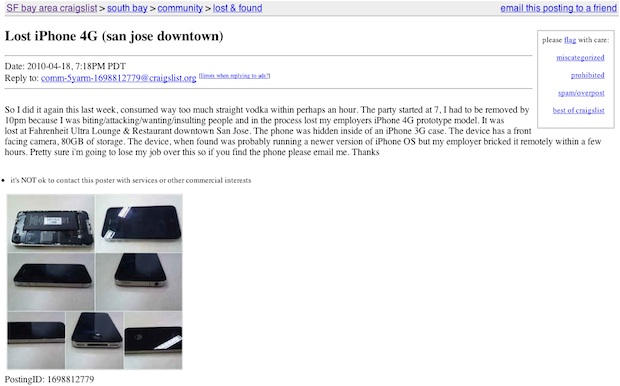
So I did it again this last week, consumed way too much straight vodka within perhaps an hour. The party started at 7, I had to be removed by 10pm because I was biting/attacking/wanting/insulting people and in the process lost my employers iPhone 4G prototype model. It was lost at Fahrenheit Ultra Lounge & Restaurant downtown San Jose. The phone was hidden inside of an iPhone 3G case. The device has a front facing camera, 80GB of storage. The device, when found was probably running a newer version of iPhone OS but my employer bricked it remotely within a few hours. Pretty sure i’m going to lose my job over this so if you find the phone please email me. Thanks
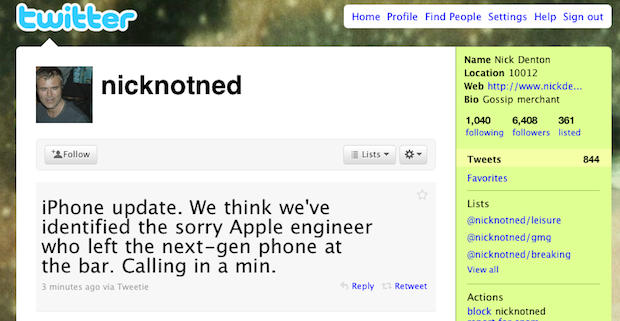
Gizmodo publisher Nick Denton says the “sorry Apple engineer” who left the 4G iPhone at a bar may have been identified. He says he’s calling the poor bastard, and the story is likely to follow.
Earlier in the day Denton promised to reveal the full story of how Gizmodo acquired the next-gen iPhone. The story will is a “corker” (a good story), Denton tweeted earlier.
iPhone update. We think we’ve identified the sorry Apple engineer who left the next-gen phone at the bar. Calling in a min.
Earlier Denton tweeted that Gizmodo had paid for the pre-production iPhone, raising the likelihood that Gizmodo is in possession of stolen goods. According to California law, the iPhone is stolen even it was accidentally left at a bar. The finder is legally obliged to return it to Apple. Instead, they sold it to Gizmodo, who at the time of purchase fully knew it was Apple’s property (how could they not?).
Techcrunch and a couple of other sites are saying the price was $10,000 – but no one is offering any evidence.
Apple still hasn’t officially responded to the story.
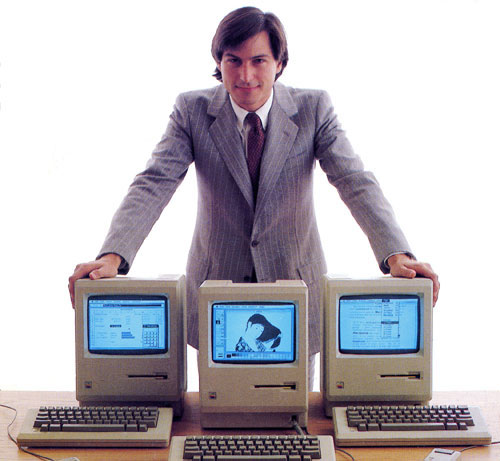
For the next three weeks we’re going to be publishing a series of posts called “My Close Encounters with Steve Jobs.” Written by David Bunnell, the founder of Macworld magazine, it’s a bunch of great stories about Jobs and the launch of the Mac. It’s a excellent, insightful read with a ton of previously unpublished stories and details. Starting Tuesday — Part 1: Meeting Steve.
Note: This is a guest column by David Yoken, founder of Macuity, a Boston Apple consultancy, who discusses the joys of providing IT and repair services to machines that “just work.”
Just got off a call with an architectural firm for whom we set up a brand new server last week. The typical conversation I have with clients is amusingly formulaic, and this one was much of the same:
Me: How’s everything going with your new server?
Customer: It’s really wonderful. We haven’t had any problems, and the transition has been nearly seamless.
Me: Super! I’m glad things are working out. I suppose now would be a good time to talk about a service and maintenance contract and schedule for your new equipment.
Customer: Well, we probably can handle most everything on our own. Apple makes it so easy, so we’ll be fine!
Me: Oh, umm…, absolutely! How about remote monitoring or help desk services?
Customer: Yeah, sure, but you probably won’t hear from us much on that end either. I think we can take it from here, but thanks!
Above: Mark Fiore’s “Learn to Speak Teabag” cartoon, which Apple considers too objectionable for the App Store.
Thanks to a stink in the press, Apple has called Pultizer Prize-winning cartoonist Mark Fiore and asked him to resubmit his rejected app, the Wall Street Journal reports.
Apple initially rejected Fiore’s political satire app because it ridiculed public figures, which is against the App Store rules.
It’s part of the Congressional record: the head of the NSA says the iPad is “wonderful.”
During hearings to determine whether he will take charge of U.S. Cyber Command, the head of the National Security Agency, Lieutenant General Keith Alexander, said:
“I am a technologist. I love computers. I have a new iPad,” Alexander told the committee of Senators. A few minutes later, Democratic Senator Mark Udall of Colorado couldn’t help but bring it up again. From the Congressional Quarterly transcript:
Udall: I’m tempted to get a critical review of the iPad, but perhaps we can do that–
Alexander: Wonderful.
Udall: Wonderful. I will put that on — for the record.
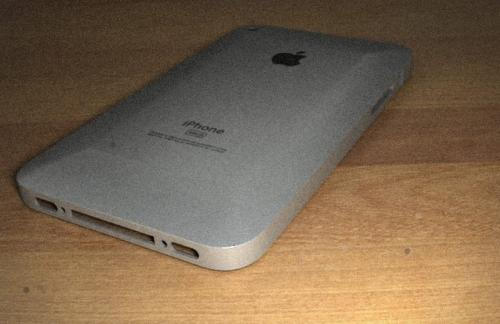
These fuzzy snaps from IntoMobile are supposedly spy shots of the upcoming 4G Verizon iPhone that Apple is launching in June. Hit the jump and you’ll see it looks like the next-gen iPhone has a unibody aluminum construction — just like the iPad.
We say fake. The pictures look fake grainy, and the tabletop setting screams staged. It just doesn’t look like a pic of a prototype. Plus, IntoMobile says the pix have been passed through Photoshop, according to the metadata. What do you guys think?
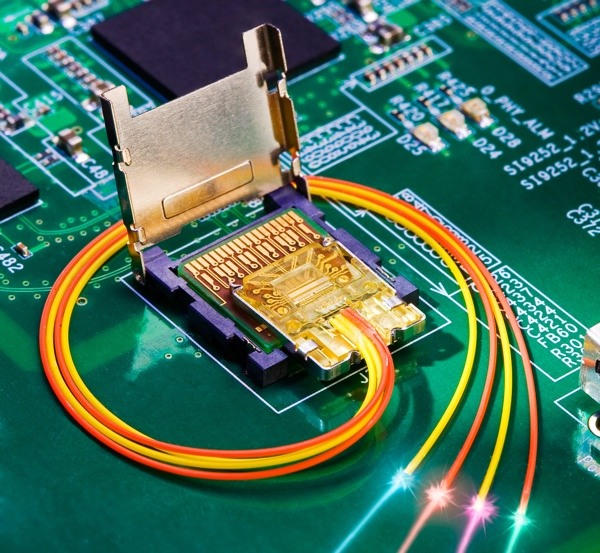
This week’s MacBook Pros were pretty much cutting-edge all over, but they were missing one major upgrade: USB 3.0 ports. After all, the transition is already under way, and the newest version of USB can move over 5GBps, over ten times faster than USB 2.0 and about six and a half times faster than Firewire 800.
Still, maybe Cupertino’s waiting to see how USB 3.0 now that Intel’s Light Peak standard (which is rumored to be Apple-inspired) is making its way to market. Intel Light Peak pundit Kevin Kahn has gone on record saying that he believes that the standard will be available in computers and laptops by 2011, and totally replace USB 3.0 over the course of the next few years.
“We view this as a logical future successor to USB 3.0,” Kahn said. “In some sense[s] we’d… like to build the last cable you’ll ever need.”
A noble goal. Considering USB 3.0 has barely been adopted yet, and given that Light Peak is twice as fast, it may very well behoove Apple to wait until 2011… then start shipping Light Peak capable machines that sync even the largest iTunes libraries in mere seconds.
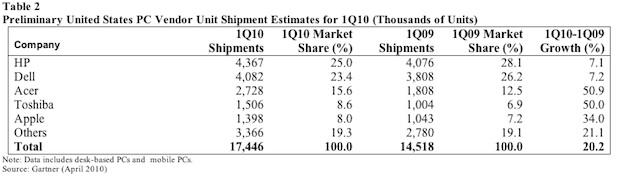
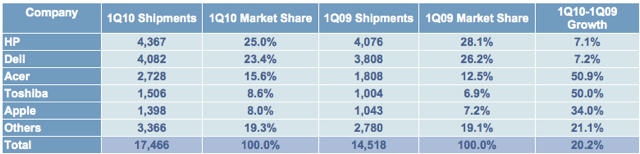
Apple sold an impressive 1.4 million Macs in the first quarter of 2010, says research firm Gartner, recording very healthy 34% year-on-year growth. The PC market as a whole grew about 25% — the biggest first quarter volume ever, Gartner says. Apple is the fifth-largest PC maker in the U.S. with an 8% share of the PC market. Gartner attributes the massive Mac sales to “hype” around the iPad, but it’s more likely the ever-popular MacBooks and new iMacs, which were refreshed before the holidays.
“Apple created major attention with its media tablet, the iPad, which launched in April. The hype around the iPad certainly added positive sentiment to the company as PC shipments. Early estimates showed that Apple grew 34 percent in the U.S. market.”
Meanwhile, rival research firm IDC released significantly different estimates. According to IDC, Mac shipments were 1.13 million units, earning Apple a 6.4% market share. IDC also pegs Apple as the fifth-largest U.S. PC maker, but estimates Apple’s year-over-year growth is just 8.3 percent, and market share is 7.2%. Both Gartner and IDC warn that their numbers are preliminary and final numbers will be “available soon to clients.”
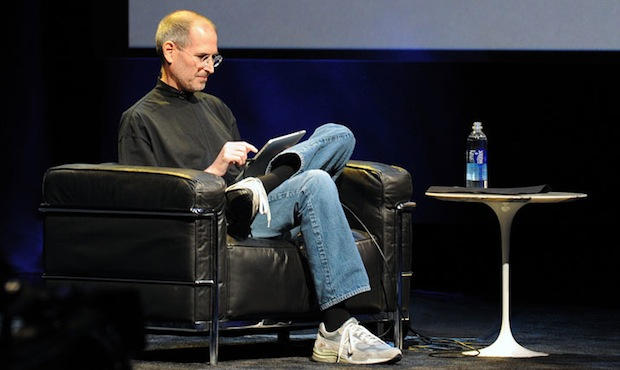
Steve Jobs’ busy fingers might be needing a rest right now. He has just responded to concerns that Mac OS X in on the backburner to the iPhone OS, which will get a major 4.0 upgrade later this year.
Steve Jobs has sent another of his off-the-cuff customer emails, this time about the not-so-fast chip in the new 13-inch MacBook Pro.
Some observers are complaining that the 13-inch MacBook still sports a rather lowly Core 2 Duo chip, which also powered the previous generation machine. Meanwhile, the 15-inch and 17-inch MacBooks got speedy Intel Core i5 and i7 processors.
One MacRumors reader sent Steve Jobs a note about it, who responded that Apple chose to offer better graphics and battery life rather than an increase in CPU performance.
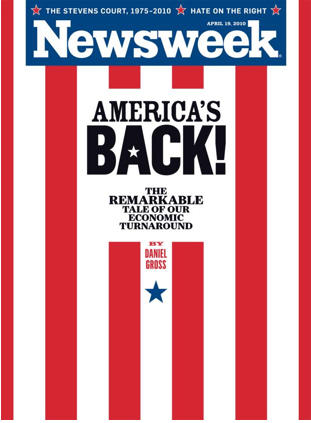
Newsweek has its pom-poms out, leading a cheer for team U.S.A. This week’s cover story about how business is bouncing back for the “comeback country” cites Apple as a company whose innovation turned profits, despite the downturn, comparing the iTunes model to the efforts of Thomas Edison.
But more important is the rise of systems innovation, like Thomas Edison and George Westinghouse building electrical systems. “That leads to new models of infrastructure and new kinds of consumption.”
Apple launched the iTunes Music Store in April 2003 with a single product: songs selling for 99 cents. Seven years later, iTunes is a much larger business: hardware like the iPhone, iPod Touch, and iPad; audiobooks, movies, ringtones, apps, and e-books.
It’s a boon for retailers, movie studios, independent coders, analytics firms, and accessories makers—the market for cases, sleeves, and headphones for i-devices is north of $1.5 billion annually. In late March, the venture-capital firm Kleiner Perkins Caufield & Byers doubled the size of its two-year-old iFund, which backs app makers, to $200 million.
Summing up the 2,561-word pep talk — where Google and Apple are hailed as the new iconic American brands, taking the place of Chevrolet and McDonald’s (you pick which is which), the journalists conclude:
“If the U.S. continues to adapt as it has, and if it produces a few more game changers like Google and Apple, there’s no reason that the expansion that started in July 2009, against all the odds and predictions, can’t last just as long.”
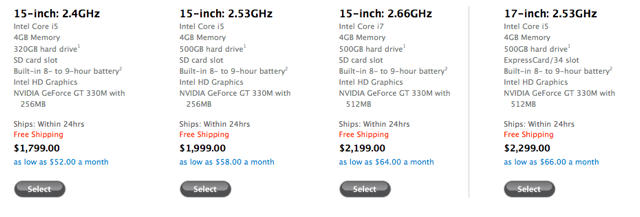
As we reported eariler the Apple Store was closed this morning when I went for my ‘O-Dark-Thirty’ run, and as anticipated, we’ve got new i5 and i7 Macbook Pros to enjoy. I will be picking one up today if possible and will give a full rundown later in the week for an in-depth hands on.
Pricing looks great too, with $200 off the 17″ model. The 17″ configured as I’d buy it with an i7, is just $200 more (or in other words back to the original pricing).
No updates today for Macbook Air, or Macbook Pro… Which is good ’cause I don’t think I could justify to even my generious and understanding wife, upgrading two three thousand dollar machines at once!
Beautiful. Thanks Steve.
Check back here this weekend for a deep-dive hands on.
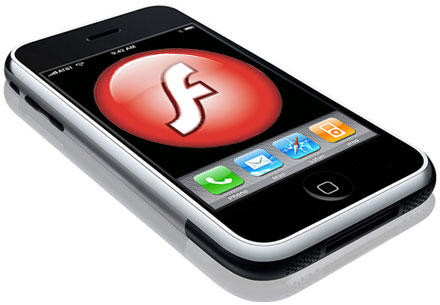
What is clear is that Apple has timed this purposely to hurt sales of CS5. This has nothing to do whatsoever with bringing the Flash player to Apple’s devices. That is a separate discussion entirely. What they are saying is that they won’t allow applications onto their marketplace solely because of what language was originally used to create them. This is a frightening move that has no rational defense other than wanting tyrannical control over developers and more importantly, wanting to use developers as pawns in their crusade against Adobe. This does not just affect Adobe but also other technologies like Unity3D. […] Now let me put aside my role as an official representative of Adobe for a moment as I would look to make it clear what is going through my mind at the moment. Go screw yourself Apple.
Note: this is an earlier version of the post copied by Via 9to5Mac.com before someone at Adobe ordered edits.
Let's hope they work out these bugs before the summer!
iPhone OS 4.0 has been out for less than a day, but let’s dig a little deeper into the beta preview.
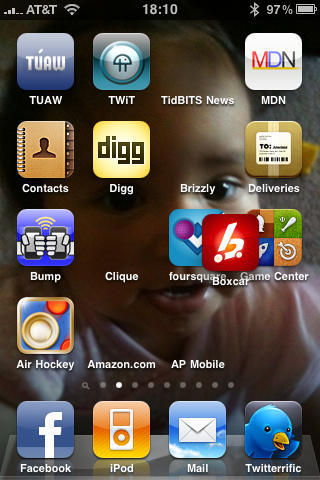
The home screen shot above captures what happened when I was trying to rearrange apps. The UI is still quite buggy and all hell can break loose when you least expect it. Moving apps around is even trickier now that folders are an option. Great way to organize apps, still the same horrible system for moving them around!
It seems there’s a glitch with Apple’s new iPhone 4.0 OS beta.
Several developers are having trouble installing the iPhone 4.0 beta on the 3G iPod touch, according to a tip from an iPhone developer.
The developer says there are several posts on Apple’s Developer Forums complaining that the new operating system will not run on third-generation iPod touches. It appears the problem is limited to 32GB models, the developer says.
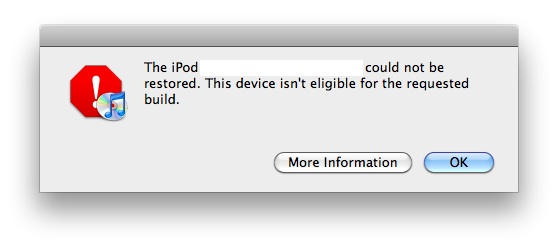
After loading the OS, programmers are getting the following error message: “The iPod could not be restored. This device isn’t eligible for the requested build.”
The error message is displayed after developers restore the device to firmware bundle 4.0 and try to verify it with Apple.
With typical modesty and restraint, Steve Jobs today downplayed the iPad hype. Pouring cold water on some of the hyperbole pundits have lavished on the device, he said:
“We think this is a profound gamechanger. We think when people look back some number of years from now, they’ll see this as a major event in personal computation devices.”
He was responding to a question about being surprised by the initial reaction. Here’s what he said in full:
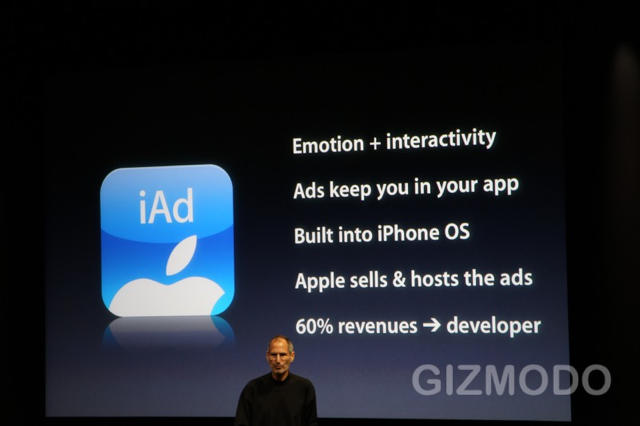
OPINION: Steve Jobs saved the most important part of his iPhone 4.0 announcement today till last — the new in-app advertising system, called iAds.
The iAds system is important because it allows the App Store to create a completely self-sustaining app economy that is sealed off from the wider Web.
Tech guru Tim O’Reilly says the App Store is already becoming a rival to the web itself. The App Store, he says, is “the first real rival to the Web as today’s dominant consumer application platform.” Consumers will have no need to visit the web on their iPhones and iPads if they get everything they need from apps, which is bad news for companies like Google.
“This is a new phenomenon,” Jobs said about apps at today’s presentation. This is the first time this kind of thing has ever existed. We never had that on the desktop, so search was the only way to find a lot of things.”
The App Store economy is already pretty well developed. There is the app purchase mechanism itself through iTunes, and in-app purchases, which allow consumers to buy stuff from inside apps themselves. But there was a big hole: advertising. Ads are already a big part of the app economy, but clicking on them typically takes consumers out of the app and into the browser, an experience Steve Jobs describes as jolting.
But now Apple has built a sophisticated ad-serving mechaninsm right into the iPhone (and iPad, natch), which will make the App ecosystem like AOL in the early days — a walled garden. And one that has it’s own economy: in-app purchases, and now in-app advertising. There will be no need to go to the wider web anymore — and that cuts out Google.
“What’s happening is that people are spending a lot of time in apps,” Jobs said today. “They’re using apps to get to data on the internet, rather than a generalized search.”
No wonder Apple and Google are at war. Google swooped in a bought AdMob just to keep it out of Apple’s hands (so Apple snapped up Quattro instead). Of course, Google isn’t on the ropes yet. Android is Google’s attempt to keep it relevant in mobile, and so far it’s holding its own against the iPhone.
But if early numbers are any indication, the iPad is going to be an iPhone-sized hit. Combine the iPad, iPhone and iPod touch, and that’s a lot of mobile devices in Apple’s walled garden.
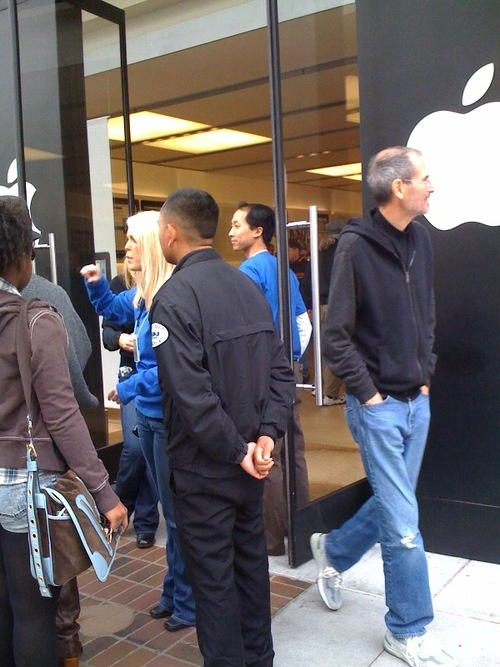
UPDATED: Steve Jobs personally demoed the iPad for his daughter at his local Palo Alto store on Saturday, and not, as this post originally reported, “for one lucky customer.” Confusion in the initial post stemmed from typos in a Tweet communicated to Cult of Mac by Twitter user Cédric Lignier, who wrote today to clarify his communication, which should have read:
“Met Steve Job @ Palo Alto today! I gave up my iPad spot 4 let him demoed the iPad 2 his daughter. Unbelievable!”
Jobs was at his local Apple Store on University Avenue in Palo Alto, which did brisk business in iPads Saturday, attracting big crowds. It looks like Jobs walked to the store (he lives nearby and is often spotted walking around Palo Alto). No one seems to have paid him much attention. The staff in the picture above, taken by Lignier, seem more concerned with crowd control.
Meanwhile, the iPad’s top designer, Jonathan Ive, quietly watched the mobs at his local Apple store in San Francisco.
Ive, who is famously shy and self-effacing, attended the iPad launch event at the flagship Stockton Street store, which was a mob and media frenzy. It seems few noticed him either, despite being the most famous designer in the world. The one person who did, Matt Galligan, scored this nice picture with him.
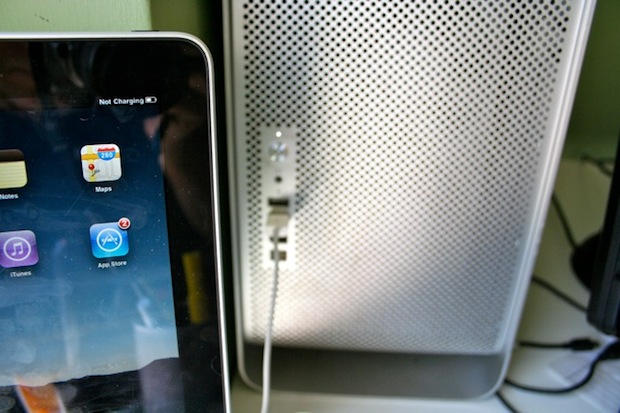
The iPad won't charge using the USB 2.0 ports of some older machines, like my $2,500 Mac Pro from 2006.
Lots of people are complaining that their iPads aren’t charging when plugged into their computer’s USB port. The battery indicator in the upper right corner says “Not Charging.” The iPad still syncs, however.
Don’t worry, it’s not a glitch. The iPad needs a high-power USB 2.0 port to charge, which are less common on older computers. Many USB hubs and keyboards with USB ports won’t work either.
The complaints seem to be coming from users of older Macs and some Windows laptop users. The front-facing USB ports on a 2006 Mac Pro, for example, don’t put out enough power to charge the iPad, but the ports on a 2009 MacBook Pro (13-inch) do.
Apple has published a support document that advises charging the iPad using the included power brick.
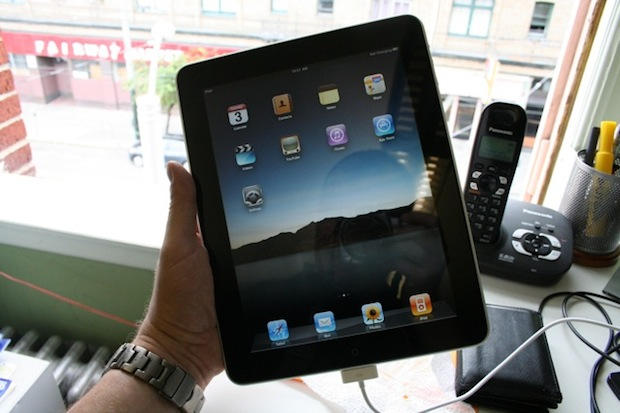
Although the kids have already monopolized CoM’s brand new iPad, here are some initial impressions. My colleague Jose Gutierrez also chipped in.
* It’s seriously WOW. A huge grin broke on my face the first time I swiped the lock screen. It’s so much better than just a big iPod touch. The size of the screen makes it a very different experience. I can already tell, using a mouse and keyboard is going to get old fast.
* It’s got great heft and feel. It feels tough and substantial, but the 1.5 lbs weight is going to take some getting used to. In fact, it’s heavy. Definitely need an armrest. Next model will likely be plastic backed. The glass screen makes it top heavy, especially when typing it portrait mode.
* At first I thought the screen was scratched — but there are shooting time lapse images of stars on the Home screen wallpaper. Hard to believe Steve Jobs didn’t spot this.
* The screen is bright and very sharp. HD video looks astonishing.
* It picks up greasy fingerprints super fast — in spite of the oleophobic coating.
* Out of the box it won’t turn on until you set it up through iTunes.
* Set up is super simple. Connect to iTunes (you need version 9.1) and there’s two choices: start from scratch or back up from iPhone.
* The UI is very fast. Apps launch instantly.
* Being able to put six apps in the dock is awesome. Many features like this and the custom wallpaper need to make it to the iPhone. Bookmarks bar in Safari is very nice.
* Keyboard needs work. Very difficult to type in portrait mode. In landscape, the keyboard dominates the screen. Might be a deal breaker for some.
* iPhone apps look horrible, especially Facebook.
* Some apps have bugs, due to lack of hardware availability to developers. Simulators can only do so much. Expect firmware upgrade soon as well as many app updates.
* The iPad’s speaker is pretty loud and perfectly adequate for watching TV or movies, even with background noise.
Overall a good product but will become an awesome product when people’s favorite apps are optimized for the iPad. A firmware update is needed to work out some bugs. Perfect for relaxing at home or on a plane. Not ready for the working world. iWork just not quite good enough due to file management constraints.
Please chip in your impressions in the comments. What do you guys think?
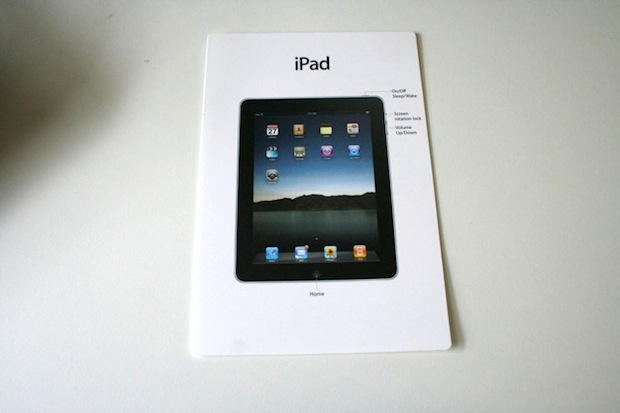
Here’s the user manual for the iPad. It’s a single sheet that shows the layout of the three buttons. That’s it.
There’s some info about syncing on the back, and I know there’s a bunch of guided tour videos on Apple’s website, but this is a stark illustration of the radical simplicity of the device. And it is radical. You need no introduction. You pick it up and use it: no RTFM necessary.
(The backside picture is after the jump. It says download the latest version of iTunes and plug in your iPad to sync.)