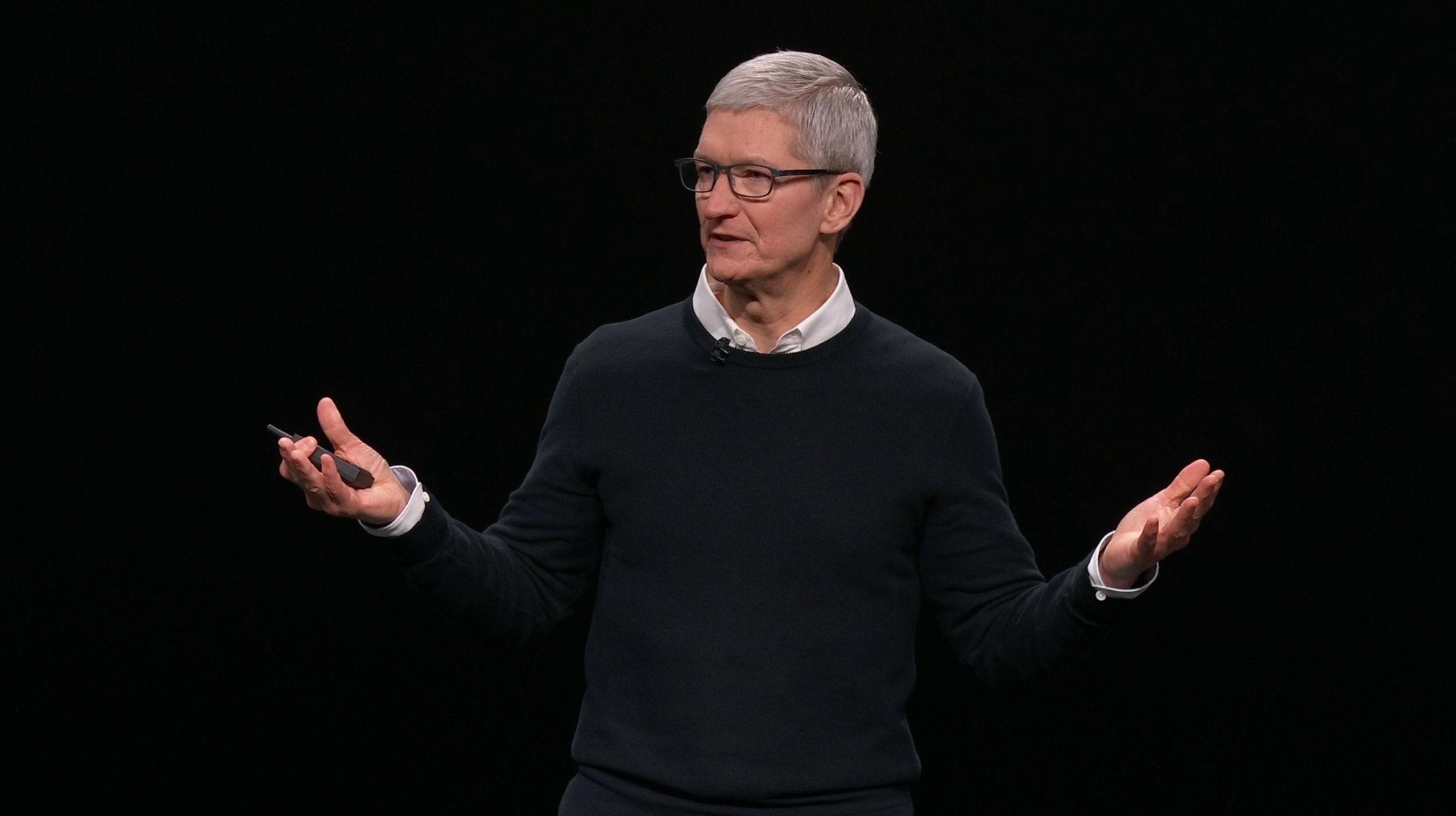
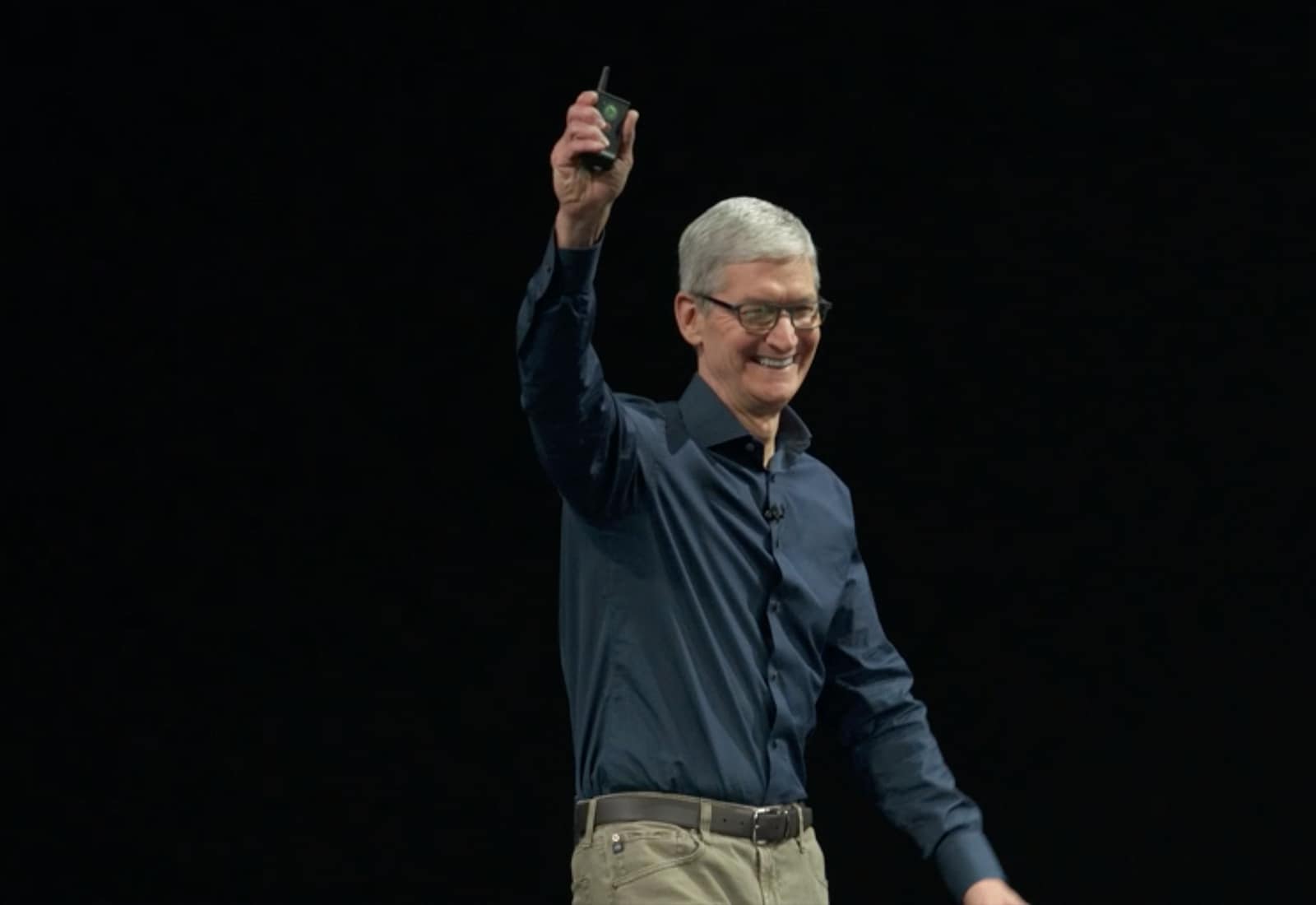
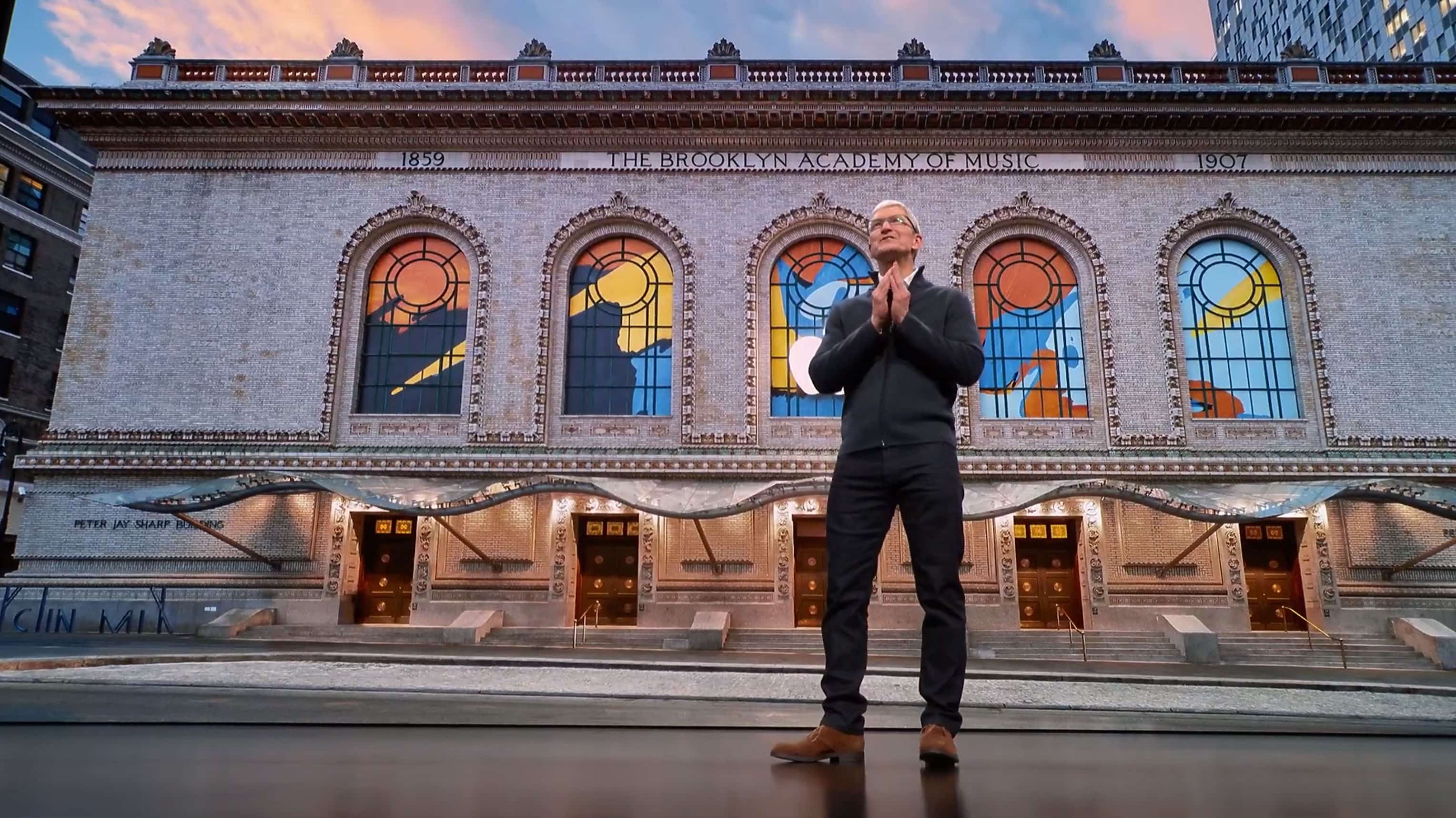
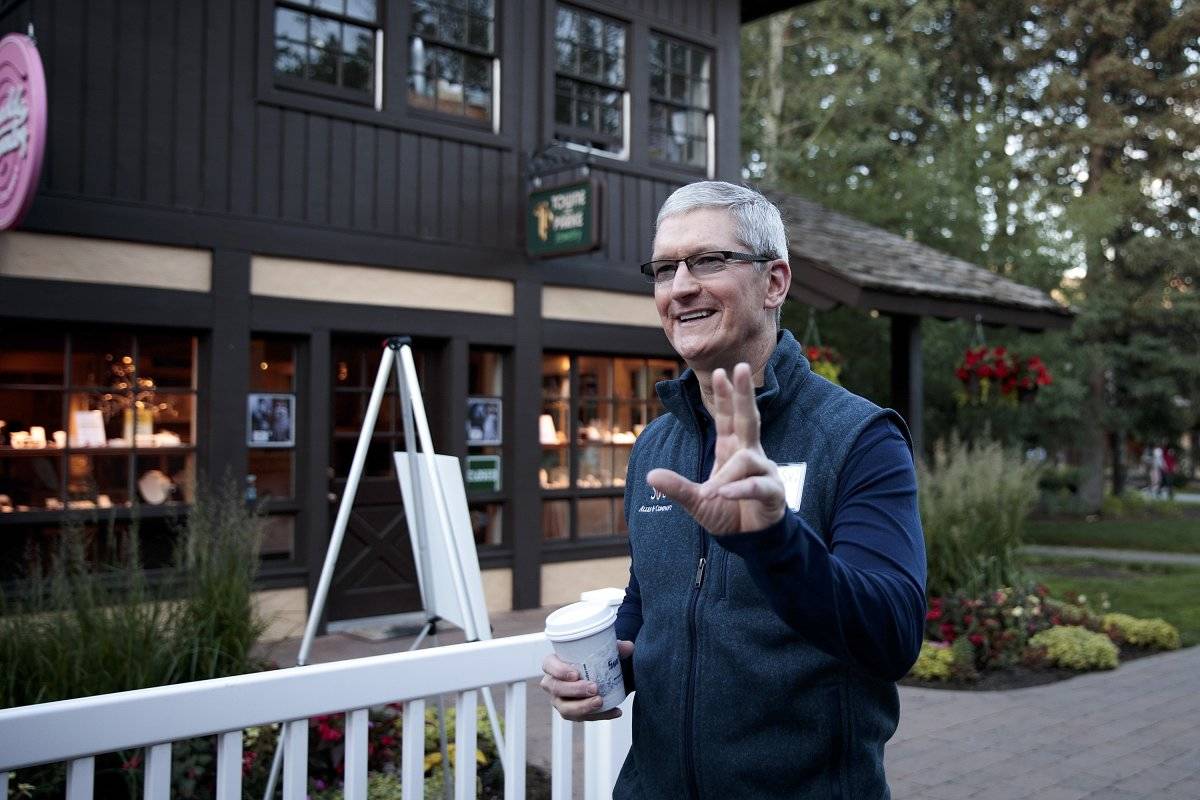
Remember that tired old adage about a job you love not being work? Tim Cook just threw it out the window. Photo: Apple
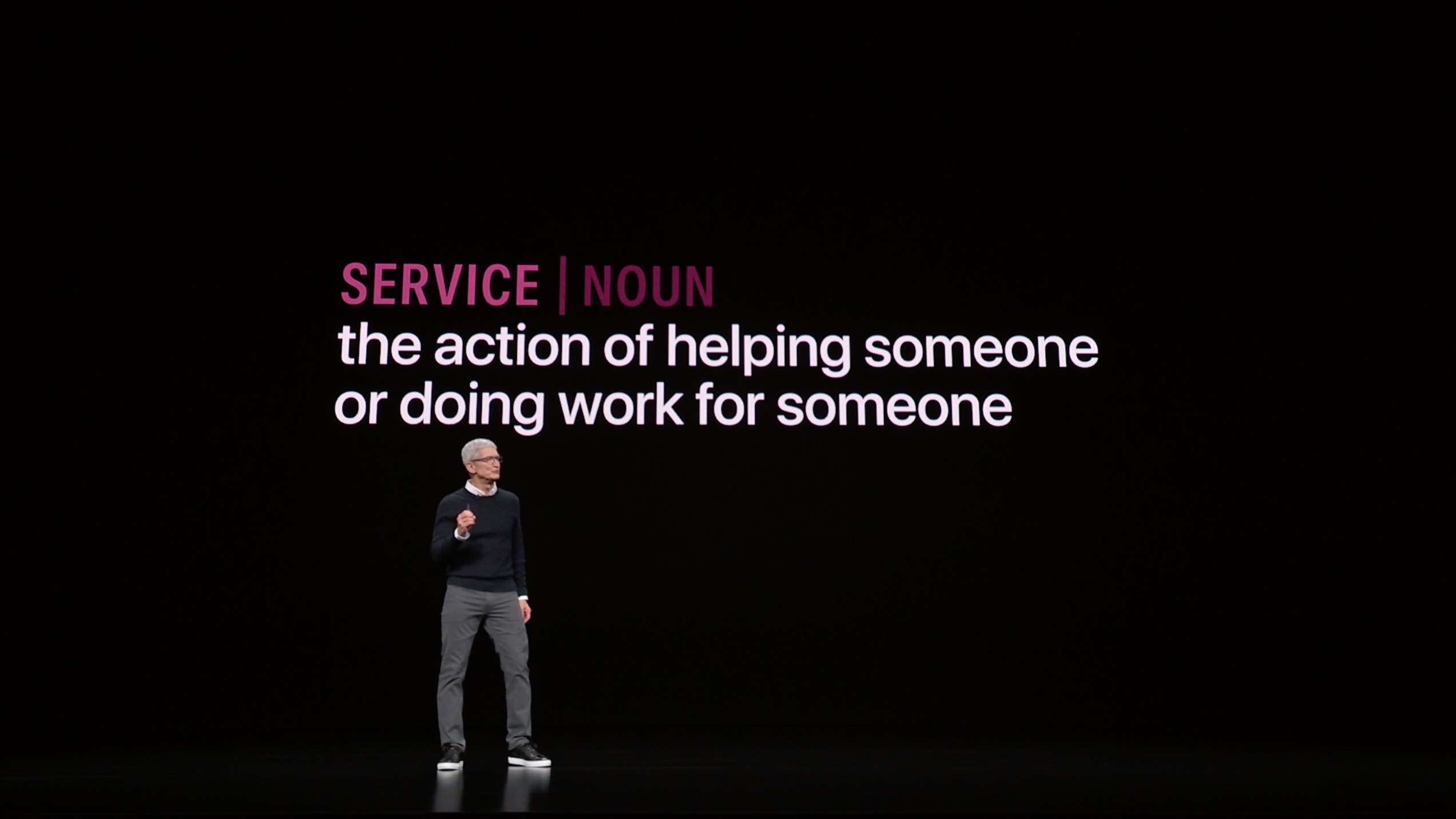
During a commencement speech at Tulane this morning, Apple CEO Tim Cook gave graduates a new twist on the old adage about finding a job you love. He also talked about Apple’s vision to “move humanity forward.”
Cook took time out of his busy day to meet with a possible future coding superstar. Photo: Apple
Considering that a cup of coffee with Tim Cook goes for hundreds of thousands of dollars, you’ve got to be pretty lucky as an up-and-coming coder to get some quality time with Apple’s CEO.
That’s exactly the situation that 16-year-old Liam Rosenfeld found himself in this week, however. One of the 350 U.S. student recipients of a WWDC 2019 scholarship, Ronsenfeld had the rare opportunity to meet and talk with Apple’s honcho.
Apple CEO Tim Cook sounded absolutely ecstatic to count Warren Buffett as one of his company’s investors during an interview at Berkshire Hathaway’s shareholders meeting this morning.
Cook made a cameo in the company’s opening video — that also introduced Apple’s new Buffett-themed game — and sat down with CNBC to talk about his relationship with Warren, Apple’s culture, privacy and more.
Get ready to sling papers till your fingers hurt. Photo: Apple
Apple finally came out with its first new video game for iPhone since the App Store debuted in 2008, and it’s dedicated to the iPhone-maker’s largest shareholder, Warren Buffett. It’s called Warren Buffett’s Paper Wizard, and it sounded like a joke at first.
Apple CEO Tim Cook made a cameo appearance at Berkshire Hathaway’s shareholder meeting this morning to reveal the new game. In Paper Wizard, players cruise around tossing newspapers at houses as an homage to Buffett, who worked a paper route as a kid to make money. Now he’s one of the richest men in the world (and with his own paper boi video game to boot).
Apple’s new store at the 116-year old Carnegie Library in Washington D.C. is the “most historic, ambitious restoration” project the company has undertaken, per CEO Tim Cook.
Doors of the Carnegie Library store will open to customers on May 11. Apple spent around $30 million on the restoration project, but Tim Cook insists the goal of the store isn’t to sell more iPhones, iPads and Macs to people. In fact, he doesn’t even really like calling it a store.
European Commission could get even tougher on tech in 2020 Image: Ste Smith/Cult of Mac
Wall Street received surprisingly better-than-expected news from Apple’s Q2 2019 earnings report today — and the stock is soaring in after-hours trading.
iPhone sales remain down, but pretty much every other facet of the company’s business is firing on all cylinders. Customers are falling in love with the iPad all over again. Services are booming. And Apple’s wearables business is now the size of a Fortune 200 company.
Despite plenty of doom and gloom from analysts over the last 12 months, Apple’s future is looking bright again.
Apple’s business in China is finally turning around, according to execs who say Cupertino’s troubles in the country might be a thing of the past.
“We feel positive about our trajectory,” Apple CEO Tim Cook said during Tuesday’s earnings call, noting that the company’s “year-over-year revenue performance in Greater China improved relative to the December quarter.”
Then Cook laid out four reasons why Apple’s “China problem” is going away.
It's "Get a bag Tuesday" and Tim Cook is cashing in. Photo: Cult of Mac
Apple revealed its Q2 2019 earnings report and despite some pessimism from analysts, the company managed to beat Wall Street’s expectations.
Revenue for the quarter came in at $58 billion, slightly above Apple’s own guidance to investors. Most of Wall Street analysts were predicting the company would only bring in between $54 billion to $57 billion for the quarter. Better yet, the company’s guidance for next quarter is stronger than expected, signifying that the doom-and-gloom may have been severely overstated.
Cook sat down with Time managing editor Nancy Gibbs who asked about everything from education to privacy policy. Of course, politics came up as well. While Cook refrained from talking about his conversations with Donald Trump, he did warn the crowd that some issues like global warming are too big for us to rely on the government to fix.
Have you read the new Tim Cook book yet? Photo: Kristal Chan/Cult of Mac
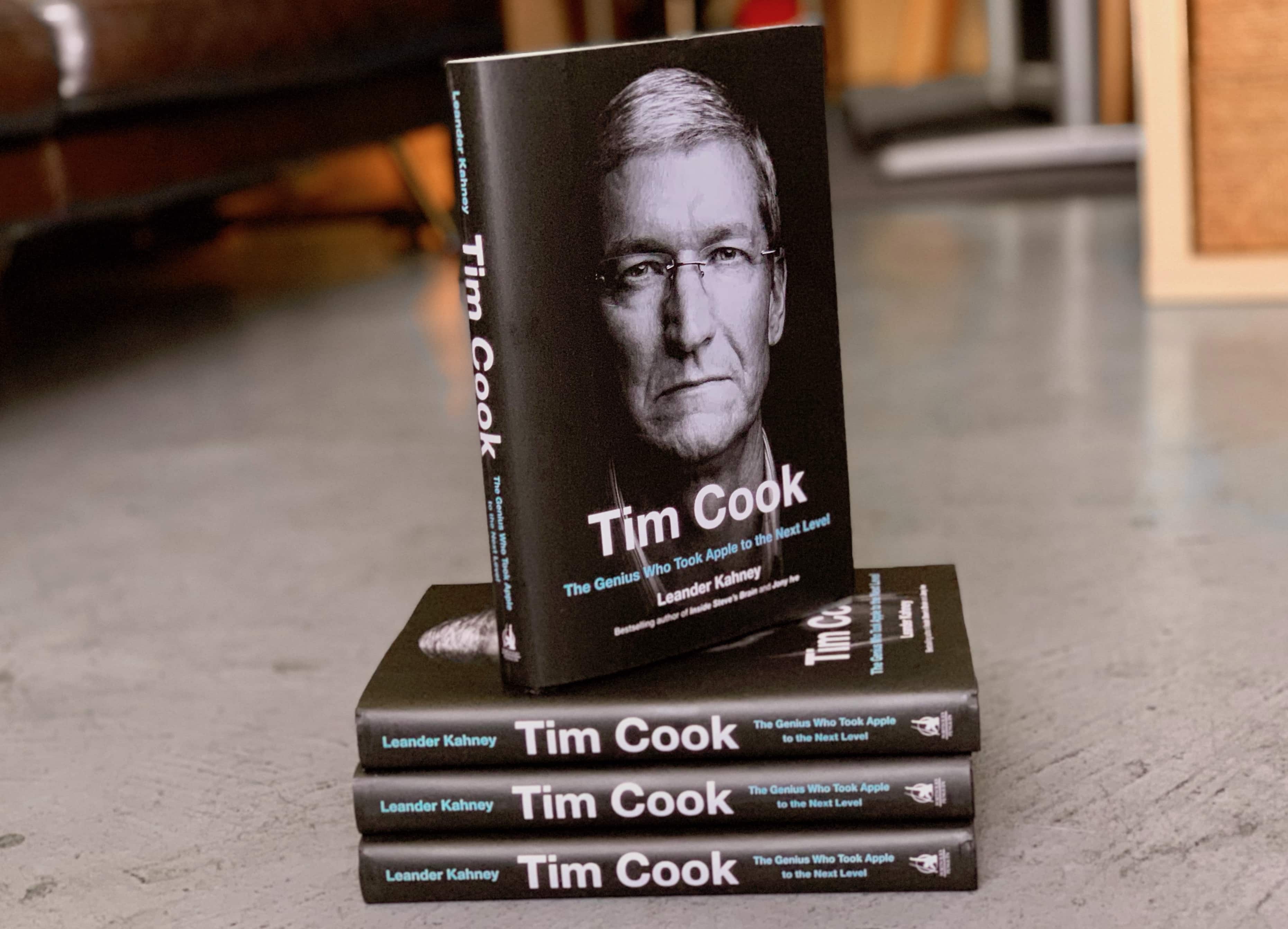
The first-ever biography of Apple CEO Tim Cook hits bookstores today, and it’s written by none other than Cult of Mac founder, Leander Kahney.
I haven’t heard from Leander in god knows how long while he’s been writing this book. But based on the early reviews, it appears like it was all worth it. No one has written a full book about Cook until now. Leander’s book, Tim Cook: The Genius Who Took Apple to the Next Level, details how Cook took on Steve Jobs’ mantle. While nearly any other human would have crumbled under that pressure, Cook thrived.
Early reviews for the book have been coming in all week, and so far they’re pretty positive. Here are some of the highlights.
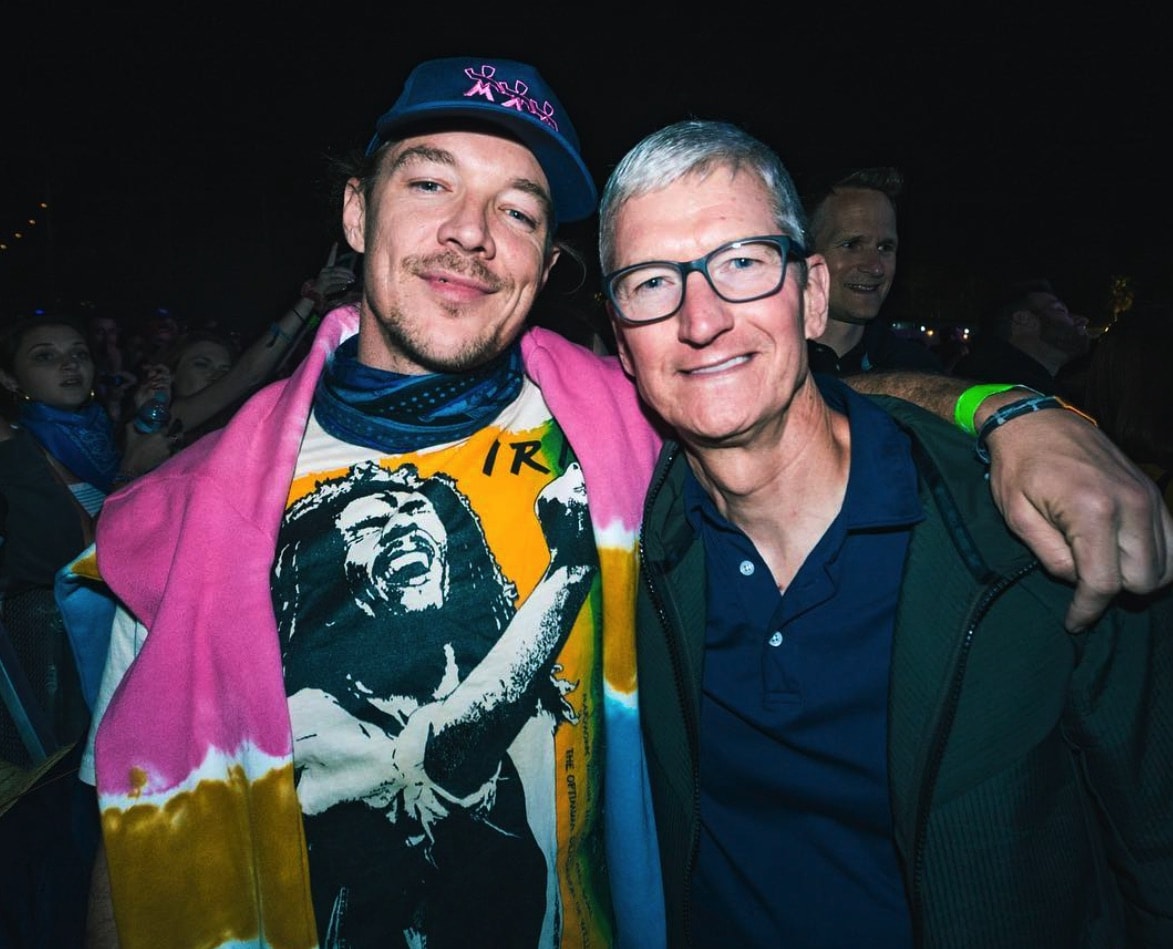
Tim Cook was photographed at Coachella this weekend! Photo: Diplo/Instagram
This weekend was Coachella — and one person who apparently needed no reminding of this fact was Tim Cook.
Apple’s CEO was snapped at the event, posing for a picture with DJ and music producer Diplo. “Some random guy came up to me and asked for a picture but I look good so here it is,” Diplo humorously captioned the photo.
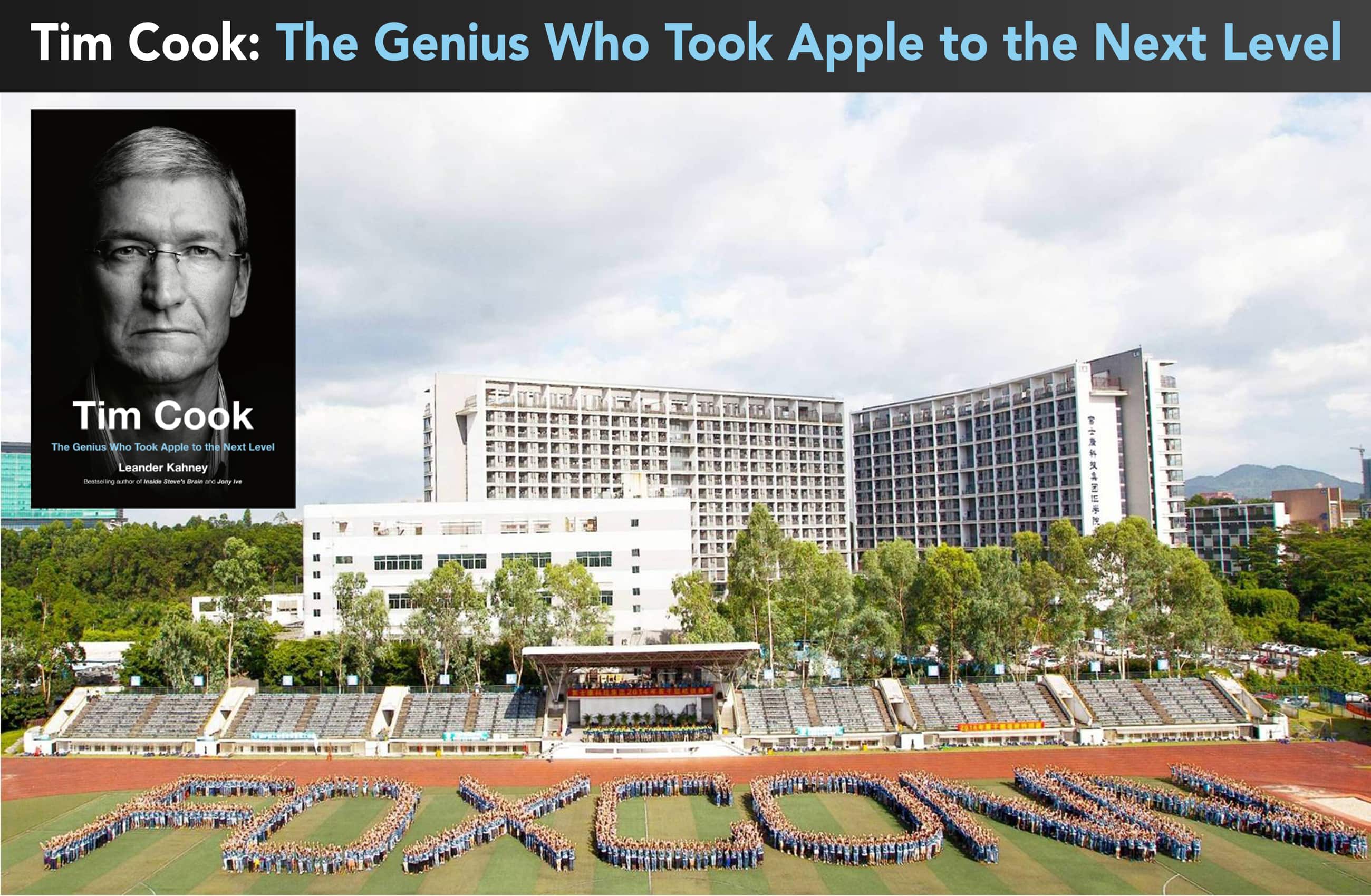
Workers spell out the company's name at one of Foxconn's giant plants. Photo: Foxconn
This post was going to be part of my new book, Tim Cook: The Genius Who Took Apple to the Next Level, but was cut for length or continuity. Over the next week or so, we will be publishing several more sections that were cut, focusing mostly on geeky details of Apple’s manufacturing operations.
Foxconn was founded around the same time as Apple, although 6,000 miles away on the other side of the world. In 1974, when 19-year-old Steve Jobs was working at Atari, 24-year-old Terry Gou borrowed $7,500 ($37,000 in today’s money) from his mother to start up a business.
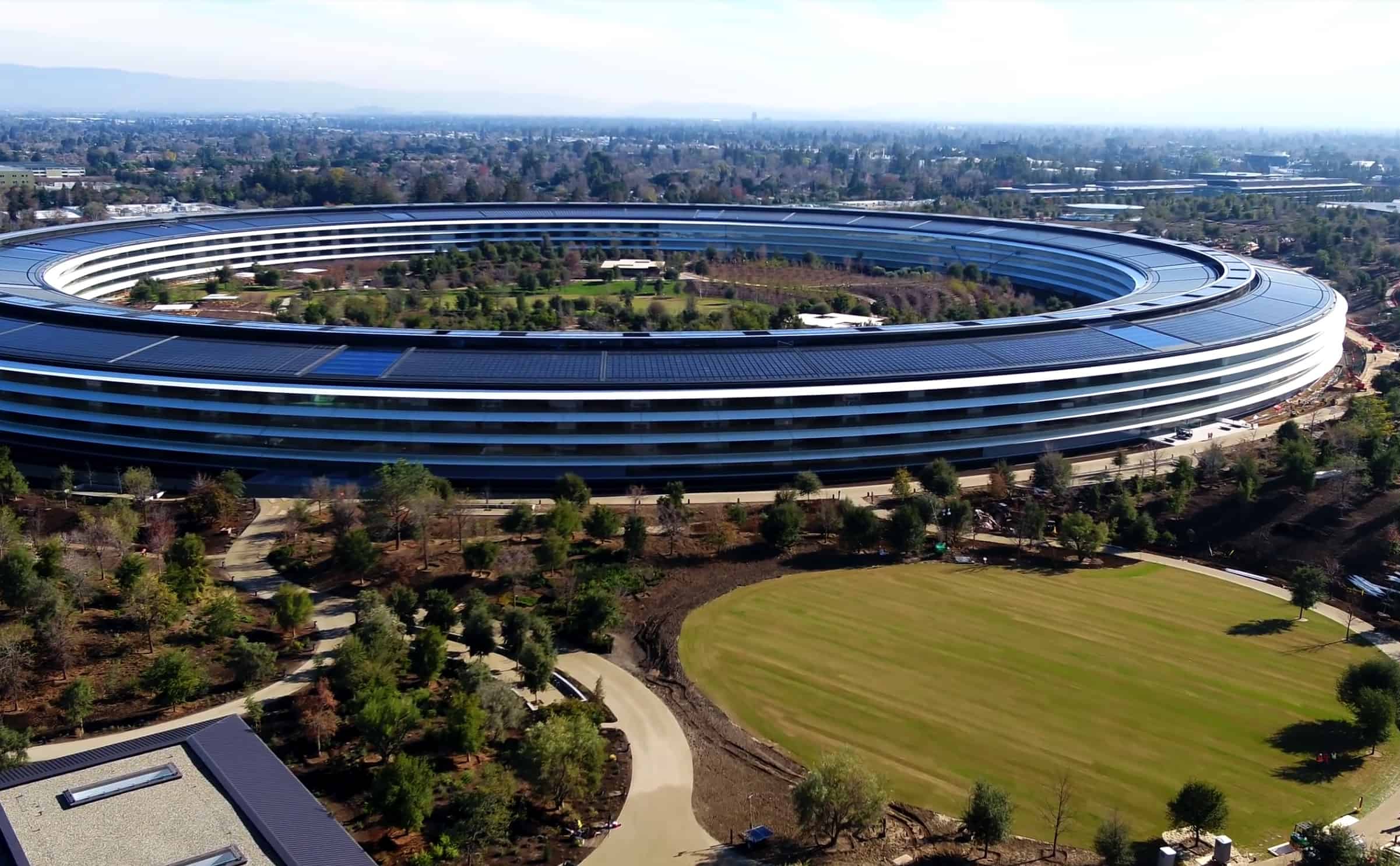
Apple leases new offices near to Apple Park Photo: Duncan Sinfield
This post was going to be part of my new book, Tim Cook: The Genius Who Took Apple to the Next Level, but was cut for length or continuity. Over the next week or so, we will be publishing several more sections that were cut, focusing mostly on geeky details of Apple’s manufacturing operations.
As iPhone growth exploded, Apple struggled to keep up with demand. Every year, the number of iPhones sold would double, which meant that Apple kept adding new suppliers and assembly operations to keep up. It was a monumental struggle.
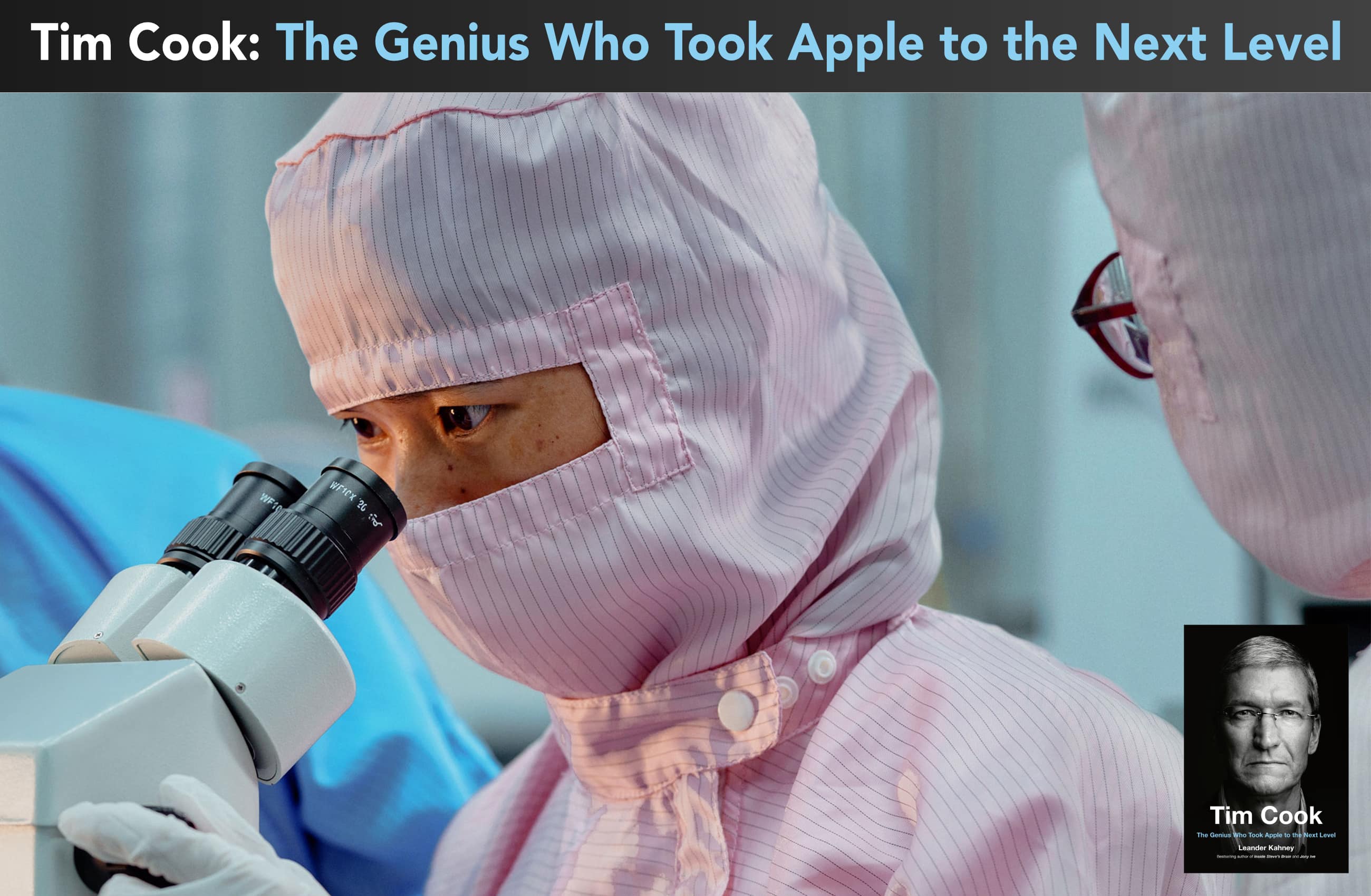
Workers examine a camera module in one of Apple's factories in China. Photo: Apple
This post was going to be part of my new book, Tim Cook: The Genius Who Took Apple to the Next Level, but was cut for length or continuity. Over the next week or so, we will be publishing several more sections that were cut, focusing mostly on geeky details of Apple’s manufacturing operations.
A good measure of the size of Apple’s manufacturing operations is its capital expenditure, the amount of money spends on things like buildings and equipment.
Apple’s capital expenditure, or CapEx, is mindboggling. To get an idea of how big it is, take Apple’s new spaceship campus in Cupertino – which is the fourth most expensive building in the world. It cost the company an estimated $5 billion to construct.
Apple spends a similar amount every six months on manufacturing equipment.
Apple's operations, which Tim Cook headed up, is one of the company's secret weapons. Photo: Apple
This post was going to be part of my new book, Tim Cook: The Genius Who Took Apple to the Next Level, but was cut for length or continuity. Over the next week or so, we will be publishing several more sections that were cut, focusing mostly on geeky details of Apple’s manufacturing operations.
Apple is famous for design and marketing, but a large part of the company’s success is due to the incredibly complex and efficient manufacturing organization Tim Cook masterminded with Steve Jobs.
No matter how beautiful its products are, the company would go nowhere without a world-class manufacturing and distribution operation that can make millions of devices in the utmost secrecy, to the highest possible standards, and deliver them efficiently all over the globe.
It’s an operation unprecedented in the history of industry. When Jobs and Cook started in 1998, Apple was doing $6 billion in business annually. It now does that every 10 days.
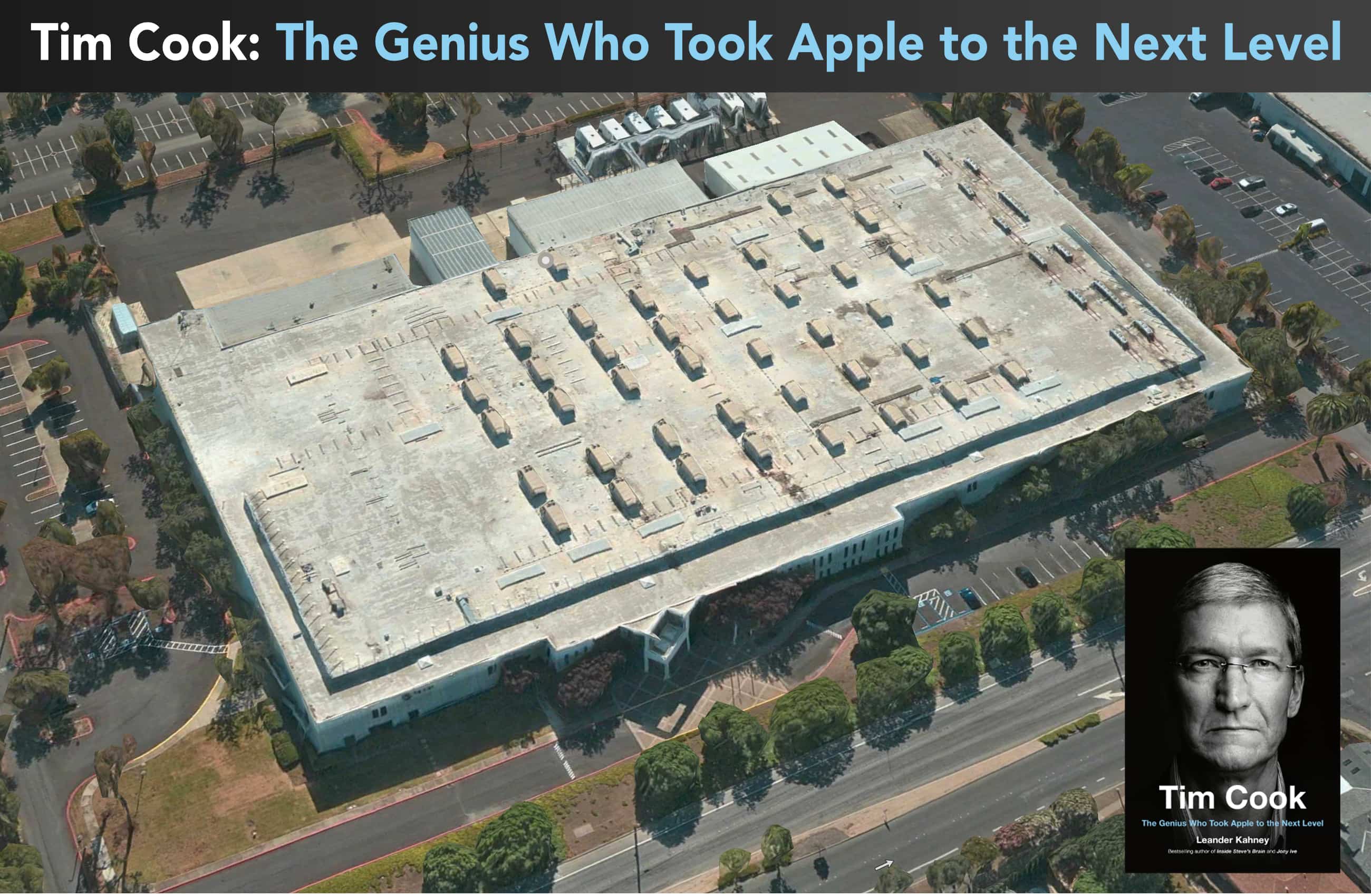
Steve Jobs built a highly automated Macintosh plant grandly called the "factory of the future." Photo: Apple Maps
This post was going to be part of my new book, Tim Cook: The Genius Who Took Apple to the Next Level, but was cut for length. Over the next week or so, we will be publishing several more sections that were cut, focusing mostly on Apple’s manufacturing operations.
Steve Jobs always had a deep fascination with automated factories. He was first exposed to them during a trip to Japan in 1983. At the time, Apple had just created a new floppy disk drive called Twiggy. During a visit to Apple’s factory in San Jose, however, Jobs became irate when he discovered the high failure rate of Twiggy drives Apple was producing. More than half of them were rejected. Jobs threatened to fire everyone who worked at the factory
Cook is a big-time Auburn sports fan. Photo: Apple
Tim Cook has made no secret of the fact that he’s a sport fan — with a particular love of the teams at his alma mater, Auburn University.
With the Auburn Tigers basketball team entering the Final Four against Virginia this weekend, Cook called the Paul Finebaum Show on ESPN to geek out about sport.
We doubt that Tim Cook will look quite so happy on the day. Safari: Apple
Tim Cook will offer testimony as part of Apple’s legal battle with Qualcomm. Cook will discuss Apple’s business practices, strategy, agreements with cellular network carriers, and more.
He’s not the only senior Apple executive ready to talk, either. Former hardware boss Bob Mansfield, current COO Jeff Williams, SVP of Worldwide Marketing Phil Schiller and others will chime in as part of the case.
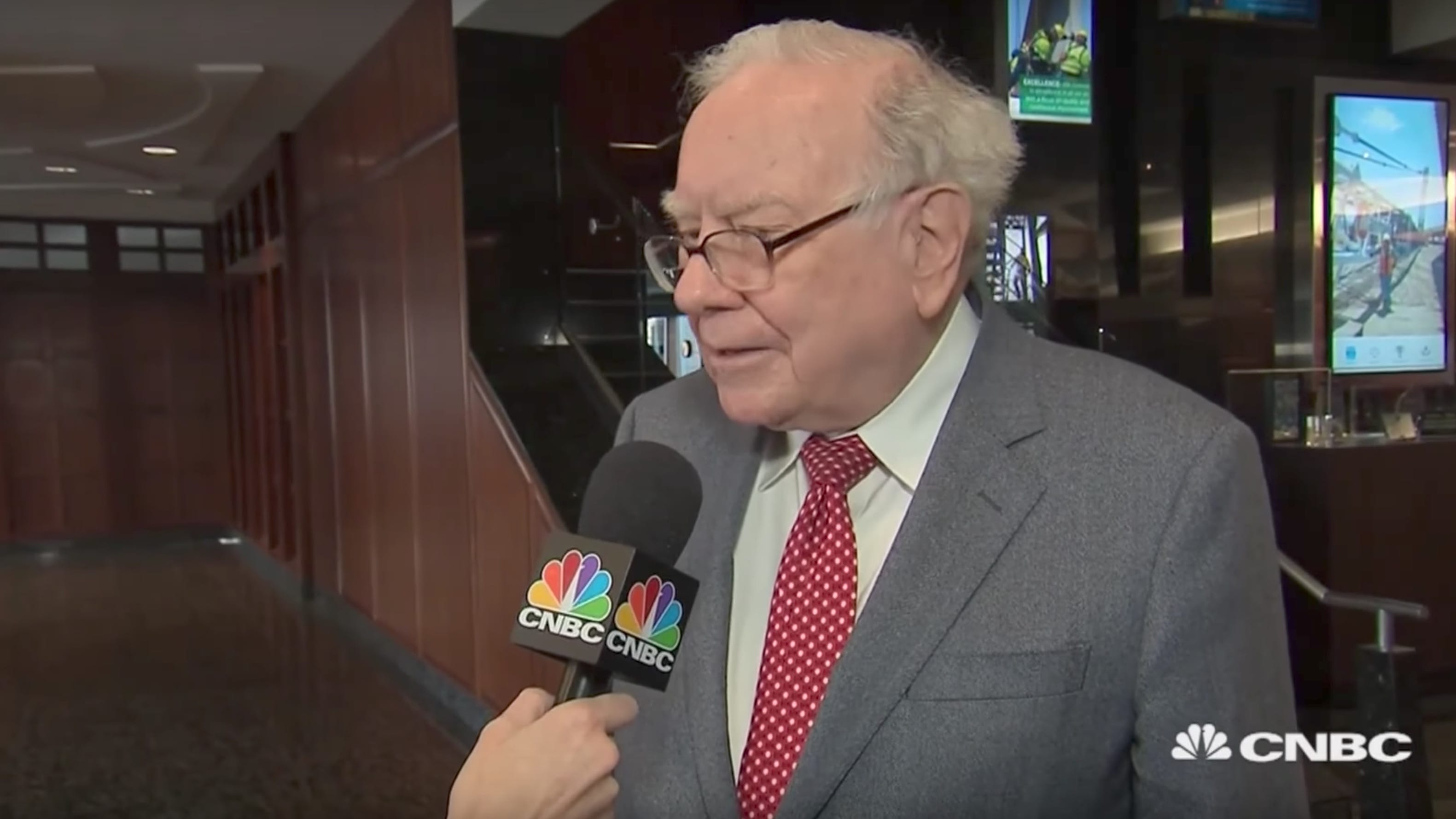
Warren Buffet is Apple's biggest investor. Photo: CNBC
Mega-investor Warren Buffett doesn’t sound too confident in Apple’s ability to dominate the entertainment industry.
The Oracle of Omaha said in a recent interview that there are so many big players trying to grab eyeballs in the streaming industry that he wouldn’t want to play that game himself. Even though he’s not gung ho on Apple’s TV service, he also doesn’t sound worried if Apple doesn’t knock it out of the park.
Apple TV+ could have 26 million paying subs by 2025; 2.6 million currently Photo: Apple
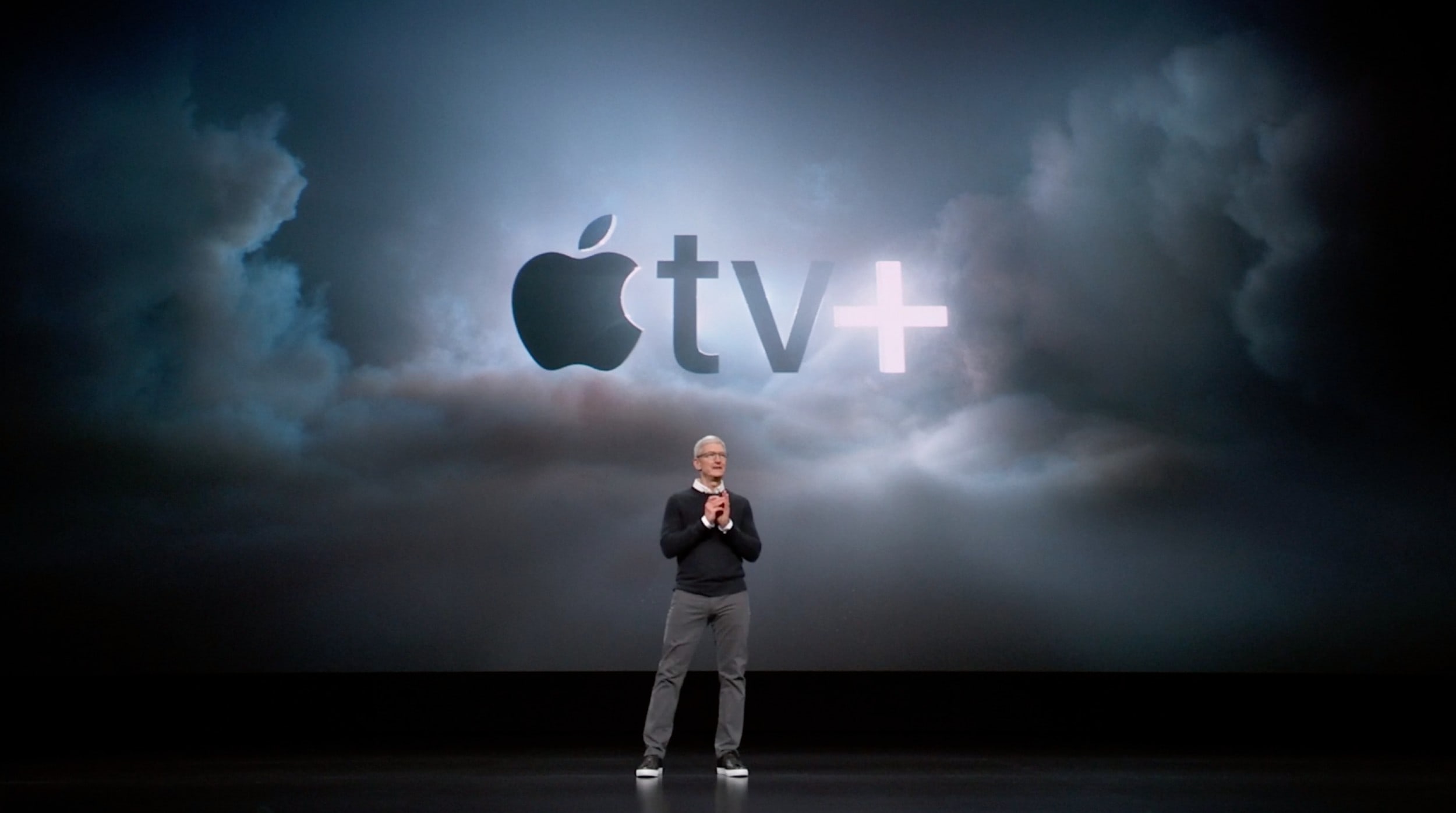
At a time when critically acclaimed TV shows serve up a steady stream of sex and violence, the upcoming Apple TV+ service proffers an unusual prescription for success: optimism, inclusion, creativity and inspiration.
Touting its upcoming streaming video service as “the new home for the world’s most creative storytellers,” Apple is carefully framing its upcoming Apple TV+ day as a healthy antidote to Hollywood’s toxic hellstew of nudity and mindless gore. The company even suggested its original shows could act as a tonic to heal a nation divided by the bitter partisan politics of the Trump era.
Learn all about Apple's current CEO. Photo: Leander Kahney/Cult of Mac
Tim Cook is seriously underrated. Seven years after taking over as CEO from Steve Jobs, the narrative that he’s riding his predecessor’s coattails needs to change. It’s just not true.
Cook is his own man, transforming Apple in his own way. See Monday’s Apple credit card and subscription News+ app as examples, which are centered on customer privacy, a big Tim Cook mandate.
The company today is a better corporate citizen than it was in the past. And as a business, it’s firing on all cylinders. Cook is doing almost everything right. Some pundits are beginning to argue he’s Apple’s best CEO yet.
These are the things Cook has been pushing internally since taking over from Steve Jobs in 2011. These are the priorities of his leadership, reflecting the things he wants to get done and the internal values that guide what Apple employees do and how they do it.
Monday’s keynote was a chance to witness these values in action, to see the kinds of products and services his priorities are helping to create.
Apple’s going full Hollywood at the event. Photo: Cult of Mac
The first Apple event of 2019 is finally upon us and it promises to be unlike any other Apple keynote we’ve seen.
Services are set to be the star of the show as Apple busts out a new TV streaming app, news subscriptions and maybe even an Apple Pay credit card. Rumors have been ramping up leading to today’s “It’s show time” event, but there are still plenty of surprises waiting for fans. As always, Cult of Mac is live-blogging the whole dang thing with up-to-the-minute analysis on all the new stuff. Apple CEO Tim Cook takes the stage at 10 a.m. Pacific — most likely with a ton of Hollywood A-listers in tow — but we’re gonna get the party started a little before that.
The star-studded Apple TV+ lineup is starting to look like it could become a legitimate contender to Netflix and HBO. After going on a Hollywood spending spree in the last eight months, Apple appears poised to make a huge push into original content.
Thanks to its new worldwide video executive team, many of the Apple TV series in development actually look really promising and diverse. From Steven Spielberg’s Amazing Stories to mysterious new sci-fi series See, Apple’s working on some shows everyone could enjoy.
Check out the full list of Apple TV+ series and movies currently in the pipeline.
Update: We’ve added all the shows we know about heading into Apple’s big March 25 event, where the company expected to finally unveil its TV streaming service.