Apple has shot three new TV ads for the iPhone: Dine in Dine Out, Pass Test Pass Time, and Nature Lovers.
Above is the Nature ad, the other two ads are after the jump.

Apple has shot three new TV ads for the iPhone: Dine in Dine Out, Pass Test Pass Time, and Nature Lovers.
Above is the Nature ad, the other two ads are after the jump.

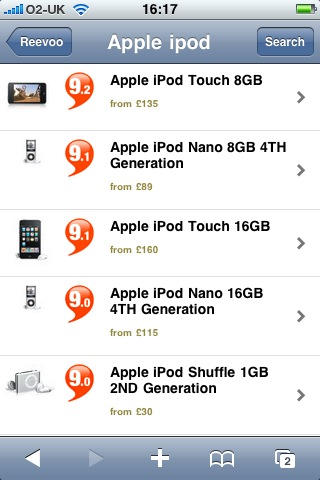
If you haven’t encountered Reevoo before, go and take a poke around it now. It’s a UK-oriented customer reviews site that’s managed to aggregate an impressively large database of real comments from real people about real products.
And the iPhone version of the site is incredibly useful when you’re out at the shops trying to track down the best product at the best price.
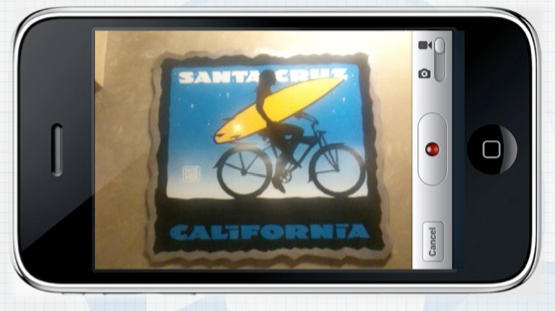
What it is: Developed by the creators of the excellent photo/slideshow sharing app 12 Seconds, which was among the first iPhone apps to support shared audiovisual messaging, 12mail is the first app to fully support streaming video messaging.
Why it’s cool: 12mail features full integration with Facebook and Twitter, allowing users to instantly populate the app with contact information for their friends on the the two most popular social media platforms in use today. The app breaks contacts into Everyone and Favorites groups, making it easy to find those in heaviest rotation, and has an option allowing public posts to a user’s Twitter page or Facebook wall.
Compiling videos stored on a user’s phone or recording new video is dead easy, and most brilliant of all, the app only uses the first 12 seconds of any video users choose, keeping messages small enough to send and receive painlessly even over a slow Edge connection. The app uses push notification and features the ability to annotate with text titles and geotags.
All video streams from servers at 12seconds.tv, which avoids use of limited storage on a user’s device and allows people without the app to receive and even initiate 12mail video messages of their own.
Where to get it: 12mail is free and went live in the iTunes App Store today.
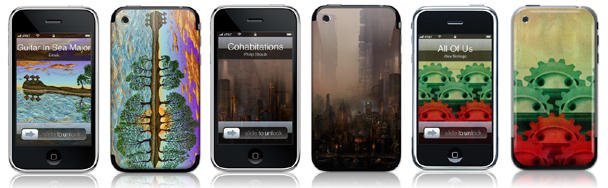
Among the many dozens (hundreds?) of companies in the cottage industry that makes cases and other protective doo dads for your iPhone, Totonto-based Gelaskins probably produces the most arresting and beautiful of them all.
Actually, just saying they produce protective devices for the iPhone is selling the company way short since they adapt fine art from a deep roster of global artists working in a broad range of styles, putting photo quality prints on thin, but tough, scratch-resistant polymer with a patented 3M adhesive, allowing you to personalize and protect everything from iPhone to the full range of Apple iPods and laptops.
The iPhone covers go for about $15, while iPod protection runs a little less and laptop protective art will set you back about $30. Not that Apple’s industrial design isn’t beautiful itself, but all the Gelaskins art is distinctive – and any of it is guaranteed to make your device stand out from the crowd.
Hit the jump for a gallery of 10 of the newest designs that we think are among the coolest.

As a result of this Cult of Mac interview, Trichotomy Media attributed our coverage of the iPhone app promo code refusal as instrumental in their reinstatement. In celebration, we posted a weekend giveaway contest where the winner gets a single download code of the controversial app.
On second though, naughty dice are more fun for two, so let’s give away two codes!
Freebies go to Freddys Garcia and CG for their randomly chosen comments.
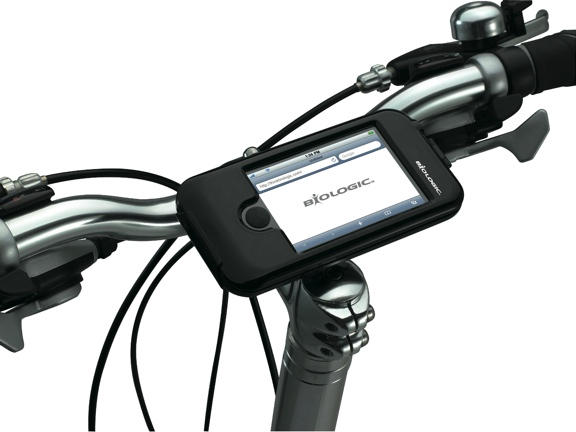
Okay, at first the idea of using your iPhone while biking makes about as much sense as gabbing away on your phone while behind an auto’s steering wheel. But if risk is your middle name and you need your touch-screen on your handlebars, Dahon has just the ticket. The company’s BioLogic iPhone bike case is both waterproof (includes touch-sensitive membrane) and shock-proof. The case also pivots 360-degrees, permitting an on-bike experience in either landscape or portrait mode.
The BioLogic iPhone case ($60, January) can be teamed with Dahon’s ReeCharge system that provides juice for your gadget via the bike’s generator.
[Via Bikehugger and Gadget Lab]
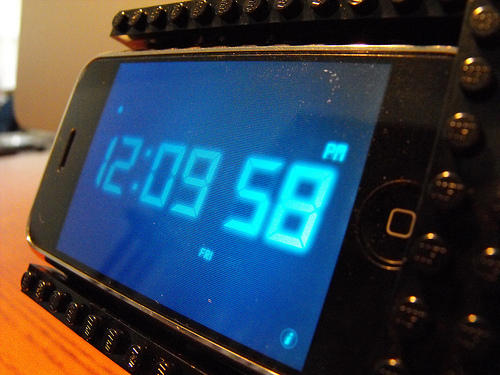
This fantastic rotating iPhone dock is made entirely of Lego. It’s the work of Steven Combs, a long time Lego and Mac enthusiast who runs web sites for adult fans of Lego and fans of technology generally.
Here’s a video showing the rotating mechanism in action:
I wanted to know a little more about hacking Macs with Lego add-ons, so I bombarded Steven with a few questions. And here’s what he said.
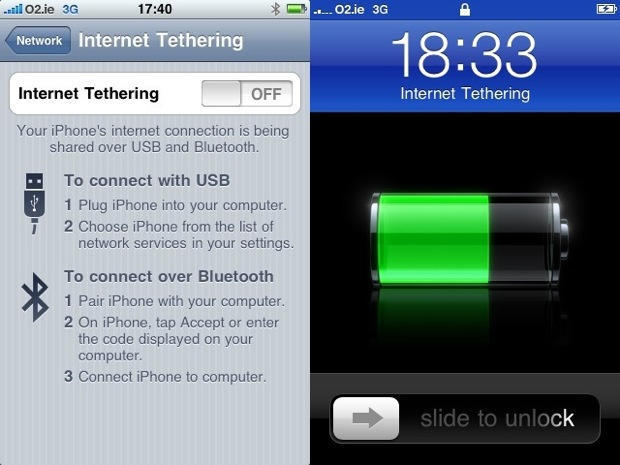
I’ll admit to it — I used and loved Internet Tethering on my iPhone with the help of the ridiculously simple hack found at Benm.at. But I also love to keep current, so I updated to iPhone OS 3.1 on day one (though I’m now wondering why, a topic for another day). Unlike some reports, my tethering menu survived the transition, but my Visual Voicemail went down in the process.
And after two weeks of living with this situation, I ultimately decided I was happier with the VVM than I was with tethering. In the same boat? It’s really easy to get things back to normal. Just go into your iPhone’s Settings, then General, Network, Profile, and remove the AT&T profile that enabled tethering. Voila! You’ll have any missing visual voicemail back on your phone in a second.
The one downside — and it is a big downside — is that tethering is a goner as soon as you sync your phone. Sure would be nice if AT&T would go ahead and release an official solution, huh?

Brit pop man-of-the moment Gary Go calls his iPhone the “fifth member of his band” and was the first musician to rock out on the device in front of 70,000 fans.
Go was on our radar last spring, when it was announced that he’d be using his iPhone to accompany his opening act, along with a four member human band, for boy band veterans Take That at London’s Wembley Stadium.
More on facing fans armed with an iPhone and the video after the jump.

News of Apple’s refusal to allow 17+ app promo codes broke with this Cult of Mac interview with James Miller, Director of Marketing for Trichotomy Media. Naughty LOADED Dice, a foreplay game with a secret menu to dictate dice rolls, snuck past the Apple censors and made its way onto our iPhones and into our bedrooms.
In a recent email to Cult of Mac, Trichotomy Media attributed our coverage of the promo code refusal as instrumental in their reinstatement. To celebrate free love and free iPhone apps, we’re giving away a Naughty LOADED Dice promo code.
Just comment on this post with your favorite dictator, fascist, suppressor of freedom, book burner or other comment and you’ll be entered to win. Contest ends midnight, September 20th.

One year after disgruntled iPhone App developer Mike Ash wrote about his frustrations trying to get his software approved by Apple, he says nothing has changed. The App approval process is so bad, in fact, he’s giving up altogether.
“I have abandoned the platform,” he writes. “Apple’s nonsense is just too much for me. There’s no joy in iPhone development, and an enormous amount of frustration.”
Last year, Ash wrote a high-profile blog post about his experience working with Apple. Detailing all the hoops he had to jump through, and several rejections of his software, Ash’s post drew a lot of attention from blogs and a lots of comments from developers who’d had similar experiences.
Apple’s approval process has long been the subject of criticism and frustration. The process is secretive and opaque, and developers often complain apps are often rejected or held up without good reason. Google’s Voice App, for example, is still undergoing approval — a roundabout way of rejecting an app from a big and important partner without actually rejecting it.
Apple’s head of marketing, Phil Schiller, has tried to smooth ruffled feathers by reaching out to unhappy developers. The biggest problem with Apple’s process is the sheer volume of apps submitted for approval. Apple’s 40 full-time testers must scrutinize about 8,500 apps a week, according to information from Apple in response to an FCC inquiry. Each app is reviewed by two testers, so that’s about 80 apps a day, per reviewer — every day.
In his latest post, Ash says the consumer’s experience of the App Store has marginally improved, but behind the scenes, nothing has changed for developers.
“Apple VP Phil Schiller has been making noises about trying to improve things, but so far this is just talk,” Ash writes. “Apple’s improvements, virtually insignificant already, have mostly gone to improving the store, not the development process.”
It’s so bad, he’s given up completely. Ash says he’ll write software for the Mac instead, which requires no approval process.
This video of a slowly rotating iPhone through an X-Ray is surprisingly cool. There’s no word on where the video came from, or why it was made. Strange.
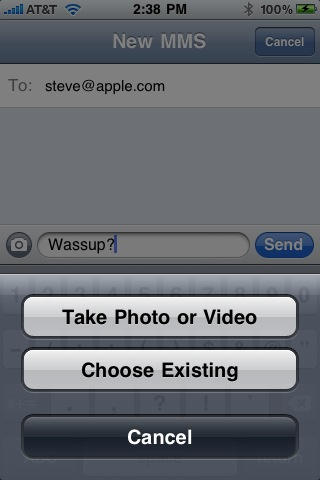
AT&T is bringing Multimedia Messaging to the iPhone on September 25. But if you can’t wait ten days or so, here’s how to get it now.

Kirikae, a free jailbreak app switcher/launcher for the iPhone, is yet another forbidden app that shows exactly how simple power features can drastically improve the iPhone user experience. With two clicks of the home button you can switch between apps while automatically backgrounding the app you leave. Kirikae was initially released on September 7, and the recent update (version svn.r49) adds more great features to an already killer app switcher.
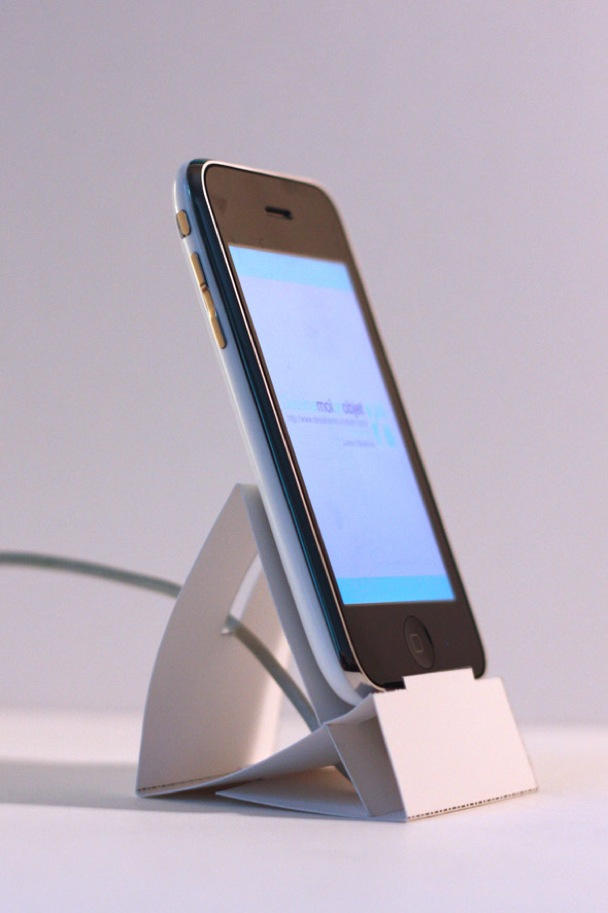
This print and fold iPhone stand looks like something from Muji: chic, simple and functional.
It’s the handiwork of French industrial designer Julien Madérou, who kindly provided a downloadable template.
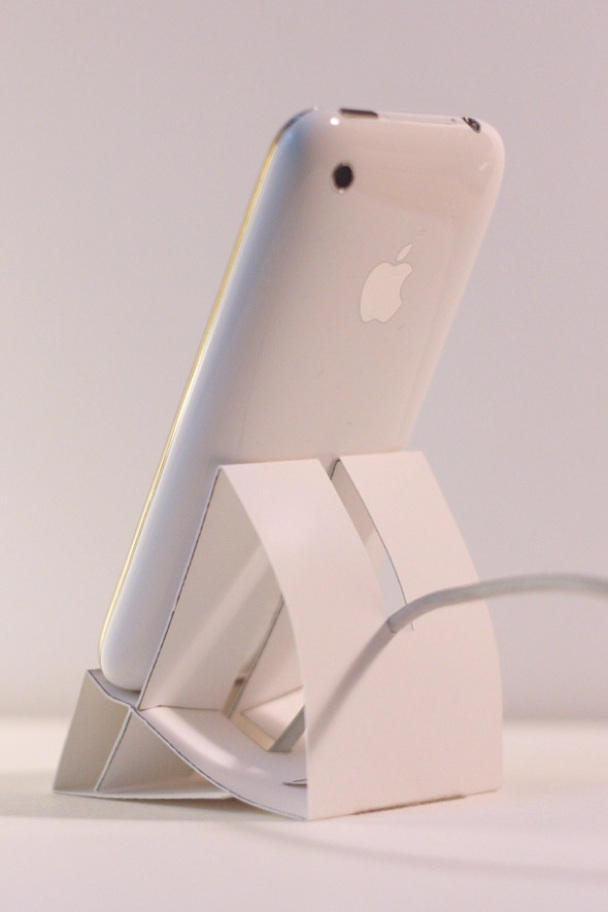
If you’ve got dexterous hands (or just the patience to watch the instructional video) and some heavy paper (270 gsm or 100 lb. cover), you can do it yourself.
Via Make
In the mid-1990s, gaming on the Mac was an incredibly sad affair. Very few titles were available outside of Myst and the various Sim titles, and the performance was quite poor. Games were regularly, and correctly, cited as a legit reason to prefer PCs.
But there was one exception that made the whole thing work: Snood, a tiny puzzle game from a geology professor at a liberal arts college in North Carolina. You shot little colored creatures (Snoods) from a cannon, attempting to match colors and clear the board. Yes, it was a whole lot like Bust-a-Move. That’s not the point. It had the ability to make shots through tiny cracks and suddenly clear the whole board with one click. It was fun, exciting, and, most of all, addictive as hell.
And it was a phenomenon. Basically, if you were college-age or younger and owned a Mac, you owned Snood, and you played it all the time. I still remember trying it for the first time in the Fall of 1996 when my older brother returned from his first semester at the University of Michigan and introduced me to my new gaming crack. I later became Johnny Snood-Seed, installing it on Macs at my high school that weren’t locked down (I disguised them as Internet settings panels so administrators wouldn’t delete them) and had my entire high school paper staff blowing deadlines because of it.
The game eventually got ported to pretty much everything, including Windows and TI-84 calculators, but its real roots are with Apple. And that’s why it’s such good news to learn that the iPhone version (App Store link) is out now. I’ve only spent a little time with it, but the developers have captured some of the feel of the Mac original. Now I’ll be able to procrastinate my professional work the way I once did my homework — in the palm of my hand! It’s even got Facebook connectivity so you can play against my high school friends, too. Quite a set-up. Nostalgia is a powerful marketing tool, isn’t it?
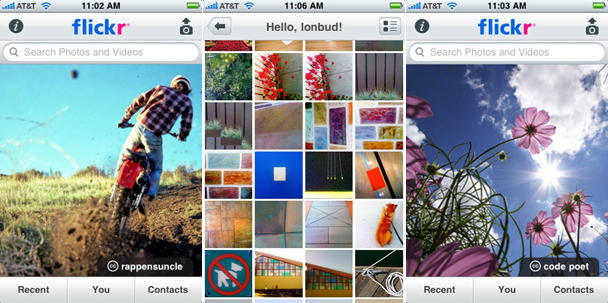
What it is: Yahoo has released a native app for iPhone that seamlessly integrates Apple’s mobile device with Yahoo’s popular photo and video sharing platform, Flickr.
Why it’s cool: With the iPhone having recently become the most popular camera among users of the Flickr service, it should be no surprise Yahoo has produced a nifty native app that makes uploading photos and videos from the iPhone to Flickr dead easy.
The first time users launch the app they are prompted to verify a Flickr account through a Safari browser, after which uploading pics and videos to Flickr servers on-the-fly become easy and intuitive. Uploads can be geotagged, tagged with keywords, and placed into sets – and a user’s entire Flickr stream can be viewed in series or by set and tag.
Maybe you don’t want to upload pics but just want to chill with some eye candy from your own stream, the streams of your Flickr contacts, or from other Flickr users worldwide. Just open the app and it will serve up a handful of images from random users as well as from your contacts and display them in a lovely little “Ken Burns”-style slide show. You can also search your contacts, view recent activity, comment and mark images as favorites.
All in all, the app brings very tight integration between the iPhone and the web service and should make the iPhone even more popular as a Flickr upload device in the coming months.
Where to get it: Flickr for iPhone is a free application, available now on the iTunes App Store.
It’s Friday and it’s time for our weekly digest of tiny iPhone reviews, courtesy of iPhoneTiny.com, with some extra commentary exclusive to Cult of Mac. Except this article didn’t show up last week, due to me ending up in Belgium, so this time it’s a one-off, extra-special iPhone Fortnightly Digest!
APPS OF THE WEEK
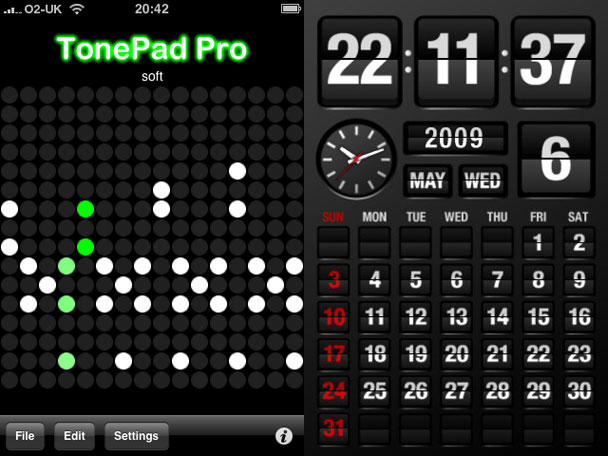
TonePad Pro: Addictive grid-based musical toy. Many editing/sharing options. Ringtone exports a tad distorted. 5/5 $0.99 https://is.gd/36AZt
FlipTime: Cute clock/calendar akin to old-style airport/train station boards. Lsc. & portrait modes. No alarm. 4/5 $0.99 https://is.gd/2NJnC
Terminator: Death Valley 1: So-so ‘humanoid killer robots’ vs contemporary ‘human cannon fodder’ comic. Nice UI. 2/5 Free https://is.gd/2JTvQ
Remix David Bowie – Space Oddity: Simple but limited multitrack ‘mixing’ of a famous Bowie track. 3/5 $1.99 https://is.gd/2LtRo
Adrenaline: 32 basic, quickfire ‘blitz’ games. Sometimes fun but would benefit from much shorter level times. 3/5 $0.99 https://is.gd/2Qryw
Leaves: Tranquil leaves-based toy. Slightly iffy 3D and physics, but calming, and fun for a short time. 2/5 $0.99 https://is.gd/30cmL
Score-Em: Virtual scorecard app with varied graphics and relevant audio. Works fine, but throwaway in nature. 2/5 $0.99 https://is.gd/32bBx
Gem Ninja: Mindless prod-based tile-match game. OK for a free time-waster, but not worth paying for. 2/5 Free https://is.gd/32cQy
Looptastic Electro Edition Lite: Loop remix tool. Fantastic UI, varied audio stems, and ten loops to play with. 4/5 Free https://is.gd/34Hp2
StarTime: Vibrant, bold Star Trek-like clock. Optional random sounds & can run iPod music in background. 3/5 $0.99 https://is.gd/39xOi
Since this column didn’t happen last week, it’s only fair to highlight FlipTime, which would have been ‘app of the week’ last week. It’s one of those apps that shows you don’t need something that’s all-singing and all-dancing to make an impression. Instead, charm sometimes goes a long way. All FlipTime does is show the time and date, sporting a visual appearance like those old-fashioned flip boards you’d see at railway stations and airports. Sounds are optional and the numerals are bold enough to see at a distance. Aesthetically, it’s also the nicest iPhone clock I’ve seen.
TonePad Pro is this week’s favourite. It’s been described as iPhone musical crack elsewhere, and it does have a certain addictive quality about it. Again, it’s a simple app—this time, you toggle grid spaces to play notes in an ever-repeating loop. However, this time it’s the attention to detail that wins through, the developer having provided plenty of options for editing, saving and sharing your creations. The Pro version is ad-free and enables you to email ringtones that can then be dropped into iTunes and synchronised with your iPhone. But if you don’t care about ringtones and ads, the free version of TonePad is just as good.
Follow iPhoneTiny on Twitter, or visit iPhoneTiny.com
A popular tethering hack that allows your computer to access the internet via your iPhone’s cell connection is broken with the iPhone 3.1 update. The update also disables MMS messaging enabled by the same hack.
The hack is enabled by changing iPhone’s AT&T carrier file. It’s easily enabled by visiting sites like BenM.at using mobile Safari on the iPhone, and appears under the Network settings. The option is removed under 3.1.
AT&T will roll out multimedia messaging for the iPhone on Sept. 25, but hasn’t given a release date for tethering, saying only it will be available “in the future.”
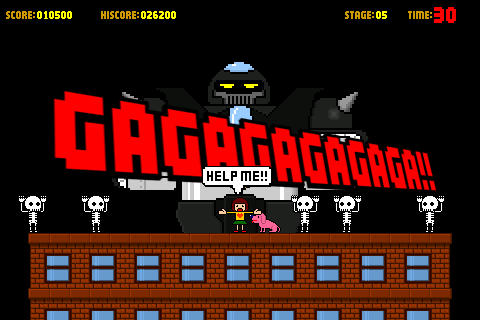
I’ve been a gamer since the very early 1980s, and have owned more systems than you can shake a stick at. A year ago, I happily penned an article for this very site, suggesting iPod gaming was a crock of shit. And you know what? I was dead wrong… absolutely, painfully, utterly, astonishingly wrong. The fact is, iPod is the most exciting platform for gaming we’ve seen in years.

Cult reader Gary Gale recently blogged about his positive experience of using an iPhone as an electronic boarding pass during a flight from Amsterdam to London.
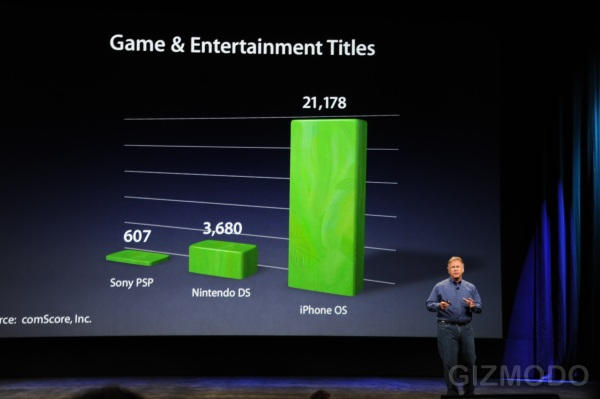
Earlier today Steve Jobs told the New York Times that the iPod touch is first and foremost a gaming device, and that’s why it doesn’t have a camera. We’re not entirely convinced, but look at this chart Apple trotted out this morning’s “Rock & Roll” event.
It shows the number of game and entertainment titles for the iPhone/iPod platform. Apple has almost five times the number of titles as the Sony PSP and Nintendo DS combined.
That’s a huge number. Yes, a lot of those titles are fart apps or simple throwaway games. But that’s still a lot of titles. My kids haven’t touched their GameBoys since we got an iPod touch.
This is why the iPod touch was upgraded with beefier CPU and graphics — to make it a better gaming machine. And no wonder every game company under the sun is rushing out apps — the iPhone/iPod platform is taking over. Add another industry to Steve Jobs’ quiver: PCs, digital music, computer animation, mobile internet and now games.
Here’s a short screencast showing the basic function of iTunes 9’s new app management tool for iPhone and iPod touch.
It’s interesting to compare and contrast this with this app manager concept that we featured here on the Cult back in February.
Most iPhone owners I know have never bothered to sort their apps into any sort of meaningful screen-by-screen arrangement, simply because doing so was too much hassle. This tool will change that, I think, and encourage people to create screenfuls of apps sorted by category.
Have you tried re-arranging your apps yet? What do you make of it?
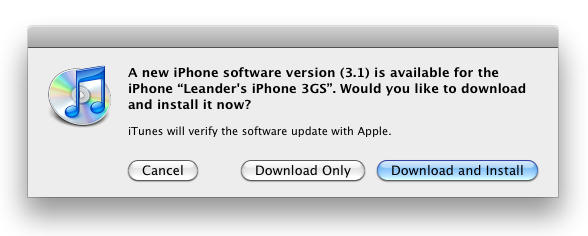
The OS 3.1.1 update for iPhone and iPod touch is available now from Apple’s servers. Plug in your device, go to iTunes and hit “Update.”
Details after the jump.
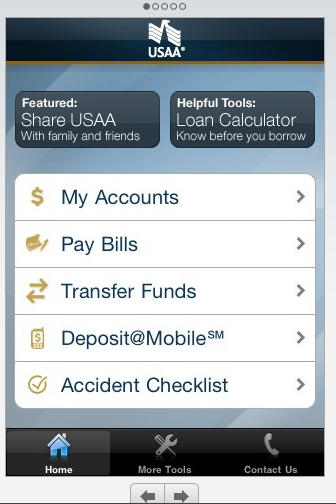
When it comes to mobile banking, iPhone users are way ahead of the curve.
While half of iPhone users already check in with their bank from their smart phone, it’ll take another five years until other kinds of cell phone owners do the same, a study said.
The 2009 Mobile-Banking and Smartphone Forecast by San Francisco-based Javelin Strategy & Research found that although half of all current cell phone owners have access to some form of mobile banking, it’s only caught on with iPhone owners. (No doubt the app plays a big part in the revolution — one US bank recently developed one to allow customers to photograph their checks and deposit them via iPhone.)
The firm expects it’ll take until 2014 for 45% of non-iPhone owners to connect with the bank via phone.
iPhones gave AT&T the highest number of mobile bankers, while Verizon Wireless has the lowest penetration for banking on-the-go among major U.S. carriers.
“Just as the iPod changed the music industry and their business models, our data shows that iPhone users are changing the banking industry by leading the way in monitoring and managing finances through mobile devices,” said Mark Schwanhausser, a Javelin analyst.