Conventional wisdom has held that the next iPhone won’t ship until September, at Apple’s annual iPod event. That’s three months later than Apple’s historic iPhone release cycles would suggest.
If the idea of waiting an extra three months for your next phone gets your blood boiling, though, it might get even worse: one report is now suggesting that the next iPhone won’t ship until November 21st.
A growing number of iTunes customers are reporting that they are unable to make purchases or upgrade apps, and Apple’s new method of validating addresses might be to blame. Here’s what went wrong, and how to fix it.
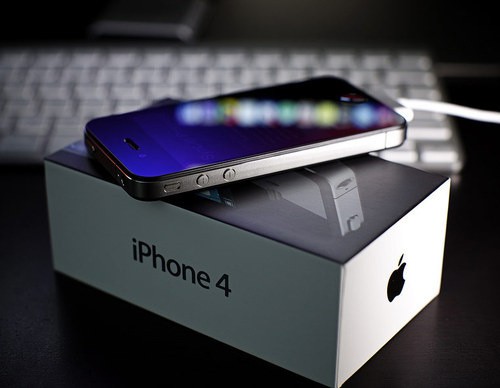
What will the next iPhone be called? Rumors have recently pegged it as being christened the iPhone 4S when it debuts in September, but would Apple really signify that the next iPhone is really just a slight revision over the current model… right in the brand name?
Apple now shares at least one honor with The World’s Tallest Man, The World’s Longest Bearded Lady and that creepy shut-in with twisting, twenty foot long fingernails: they’ve all won Guinness World Records.
Patent troll Lodsys — the company who threatened to sue multiple iOS indie devs on Friday for using Apple’s own in-app purchasing mechanism — has responded to the widespread furor over their actions in a series of Q&A posts. And guess what? It turns out we were all wrong about them being dicks. In fact, they’re the real victims here! Boo hoo!
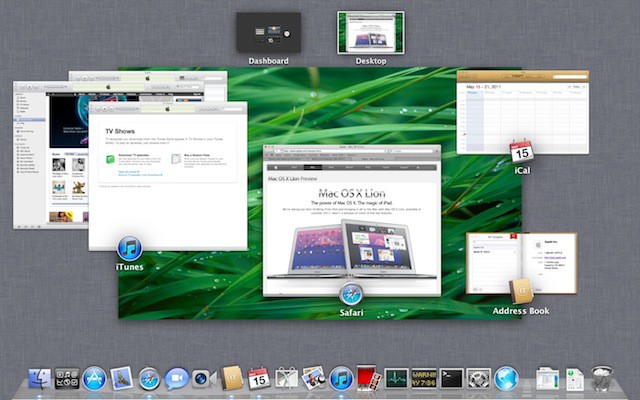
Apple is reinventing the way we think about accessing application windows, organization of those windows, and the way we access running applications. A new feature called Mission Control in Mac OS X 10.7 lion makes it all easy.
We’ve been speculating on Apple’s partnership with Nuance for some weeks now, and confirmation the two companies are working together comes with the new speech technology discovered in the Mac OS X Lion beta.
Apple Store in Japan. Used under CC license from Flickr user: .HEI Photo: HEI/Flickr CC
Apple is offering free repairs to those with Macs and iOS devices who had their equipment damaged in the earthquake and tsunami that struck Japan back in March.
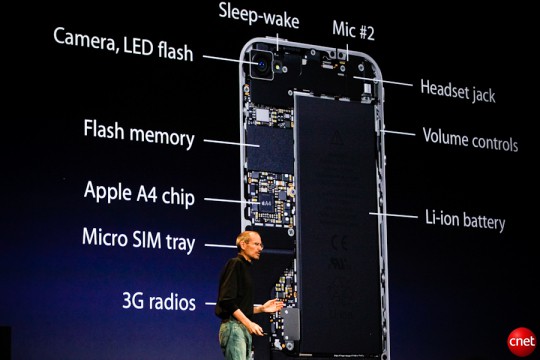
Components purported to be for the fifth-generation iPhone have sparked new rumors that the device’s camera and LED flash will be separated, and will no longer sit snuggled up to one another in the corner. Strengthening these rumors is a case discovered on trade site Alibaba for an ‘iPhone 5G’, which features a mysterious new hole in its rear.
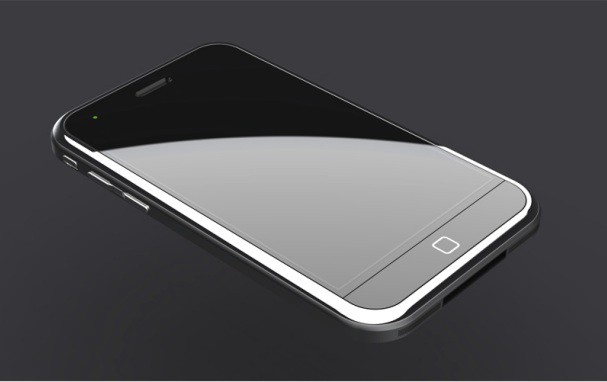
Rumors are circulating about a new design feature in the upcoming iPhone 5: An edge-to-edge screen.
The scuttlebutt originated a couple of months ago with a post on iDealsChina, and has been re-enforced by the appearance of a case for such a design on AliBaba, a disreputable online clearinghouse for buying cheap crap from China.
It all sounds pretty shady, but these kinds of sources predicted other Apple products in the past. Even more compelling is that the Wall Street Journal claims a source that has seen a prototype of such a design.
The rumor is either true or false. Who knows? Regardless, an edge-to-edge screen makes sense. If it’s possible to engineer, it’s likely to be built.
Here’s why: There is a fundamental tension in mobile design between minimum case size and maximum screen real estate. For the overall size of the phone or tablet: the smaller, the better. For the size of the screen: the bigger, the better.
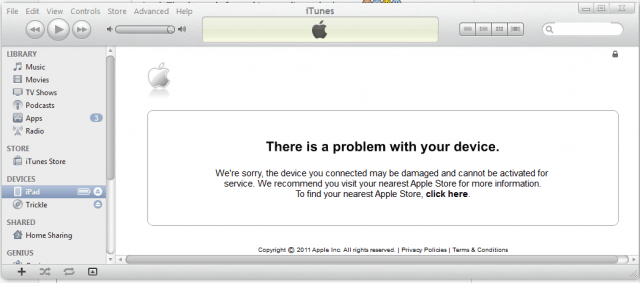
(Update: Many — but not all — of the users in the Apple Support Communities are now reporting that the activation servers are back online, and their devices working again.)
Looks like the Lion Beta 3 Preview might not be the only problem Apple’s dealing with this morning.
As of last night, an ongoing problem with Apple’s activation servers seems to be leaving many iDevices recently updated or restored to iOS 4.3.3 bricked around the world.
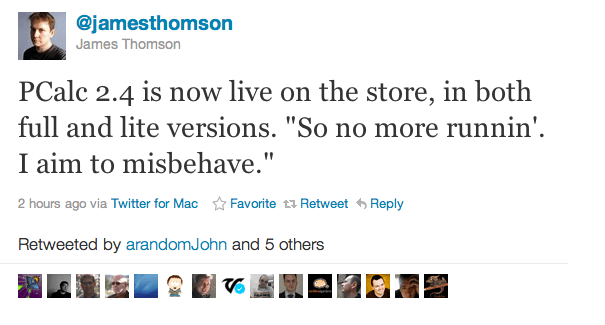
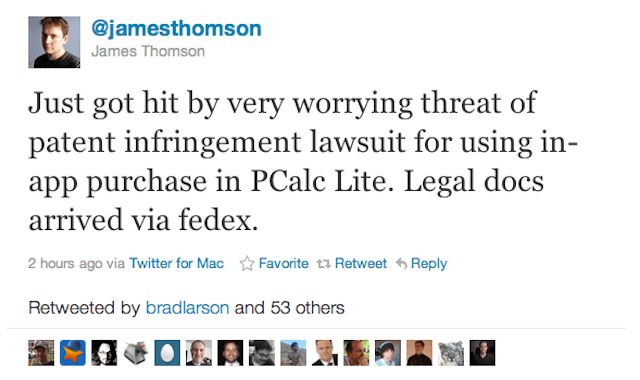
After indie dev James Thomson was threatened with a lawsuit earlier today by a patent troll called Lodsys for using Apple’s in-app purchase mechanism in his pCalc iOS app, his first instinct was to play things cautious and not release the update scheduled for today.
Several hours later, though, and Thomson is feeling bolder: he’s decided to release the update to pCalc anyway. But will the other devs hit with shakedowns today be so plucky and defiant?
Jefferies analyst Peter Misek has just coughed up a crusty old bezoar of regurgitated iPhone 5 rumors. You know pretty much all of them: that the next iPhone will be called the iPhone 4S (debatable, doubtful), that it’ll boast an A5 dual-core SoC (a certainty) and that it’ll be coming to Sprint and T-Mobile (maybe).
He does make one interesting new claim, though: the next iPhone will boast HSPA+ mobile broadband speeds. Depending on which carrier you believe, that might make it a 4G phone.
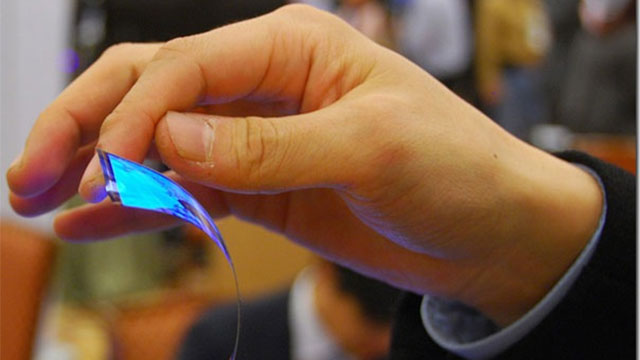
In addition to unveiling a display today that could give the iPad 3 a Retina Display, Samsung has just debuted a new foldable AMOLED display that could be used to make your next iPad fit into your pocket, your next iPhone an iFlipPhone.
I guess Lodsys couldn't find an appropriate Benjamin Franklin quote endorsing extortion of indie developers for falling afoul of vaguely worded patents.
Wondering who the mysterious patent troll suing indie devs for using Apple’s own in-app purchasing system is? We still don’t know, but we can add another company to the list of patent houses suing iOS devs… this time not for in-app purchases, but for upgrade links.
“A club to make them do what we want.” That’s the way one Google executive described the gauntlet device makers must pass to get Android certification. So much for being “open.”
The lead developer behind the popular Mac dock replacement DragThing and the fantastic iOS scientific calculator app pCalc is about to be sued for patent infringement because his software uses Apple’s own in-app purchasing mechanism. And he’s not alone.
Not only will the lawsuit delay the latest update to the free version of pCalc, pCalc Lite, it may just be the opening shot in an IP war, not just against Apple, but against the devs who dare to sell their software on the App Store.
Microsoft, HTC, Nokia and Sony Ericsson have teamed up in Europe to send Apple a message: no one can own the term “App Store,” and they’re willing to join forces to prove it in court.
“iPhone 5 — First Exposure!” “Apple iPhone 5G Exposed!” These might be the barker cries popping up on your Facebook feed this morning, promising an exclusive look at the new iPhone. But just as you shouldn’t necessarily trust the man outside the local rundown gentleman’s club shouting “The most beautiful girls, girls, girls in the world, world, world are inside!”, don’t expect an early glimpse at the iPhone 5 if you click one of these links. It’s a big scam.
Samsung is preparing to launch a new 10.1-inch display next week which will boast a resolution of 2560 by 1600, making it the first ‘Retina’ display to be announced for tablets. But will it be making its way into the iPad 3?
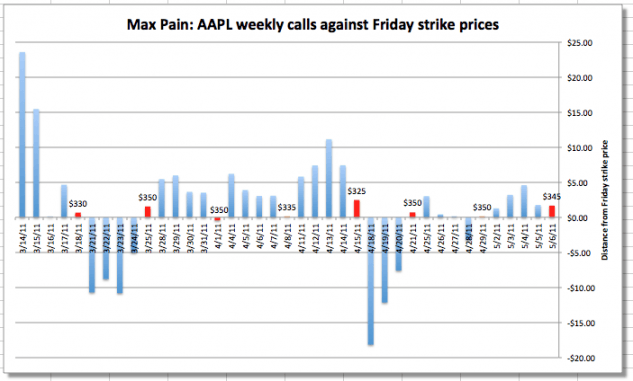
Apple’s stock is as good as gold, right? Perhaps, but that doesn’t mean that it’s value can’t be manipulated. Writing for Fortune, Philip Elmer-DeWitt makes a shocking accusation: Apple’s share price is being manipulated by a mysterious cabal who are “pinning” the stock below its strike price and no one seems to be doing anything about it.
If you can imagine an iPad the size of Apple’s largest iMac, with the iOS multi-touch interface plus the power of OS X, then you can imagine the next generation of computing.
You’ll use it tilted at an angle on your desk like a drafting table. Or, you’ll tilt it up for TV or presentations, or flat for using it as a table. Or you’ll use it as a coffee table or a kitchen counter top. The point is: You’ll use it.
Apple has a gazillion patents for their version of this technology. Microsoft has already promised a consumer version of Surface. The third generation of desktop computing (after command line and GUI generations) is coming.
But Google has already announced the operating system for their giant desktop multi-touch PC of the future.
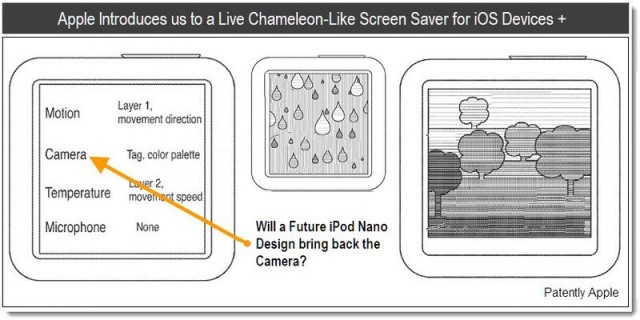
Now it looks like we know: it’s so the Nano can look out into the world and see just where it’s being used, then adapt itself like a chamelon accordingly.