A handful of components said to come from the guts of the next iPhone have hit the web. Or they might just be a piece of junk taken from some tinker’s pockets. If they’re for real, though, consider at least a couple of the juicier rumors about the hardware of the iPhone 5 debunked.
A new patent published by the U.S. Patent and Trademark Office reveals that Apple is working on a ‘smart’ keyboard that provides users with tactile feedback using proximity sensors and air vents on individual keys. It could radically change the way we do everything with our keyboard, from sensing a letter being pressed before it’s typed to allowing us to ‘feel’ a video game through our finger tips.
Image used under Creative Commons license, from Flickr user: hddod
Sources in Apple’s supply chain have revealed that Foxconn Electronics is currently facing supply and labor shortages that could delay shipments of both the iPhone 4 and the iPad 2 during the second quarter.
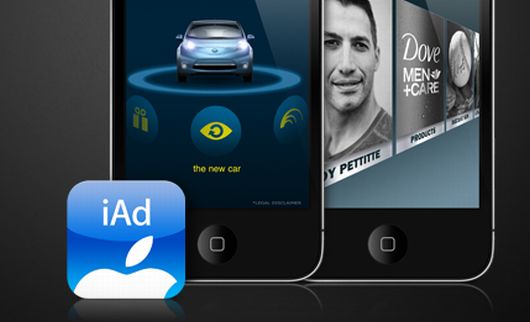
When Apple first launched iAds back in April 2010, it was widely criticized by developers and advertisers due to Apple’s strict design requirements and a huge $1 million buy-in rate. iAds has finally gained momentum, though, and Apple just announced its 100th iAd campaign. How’d Apple turn things around?
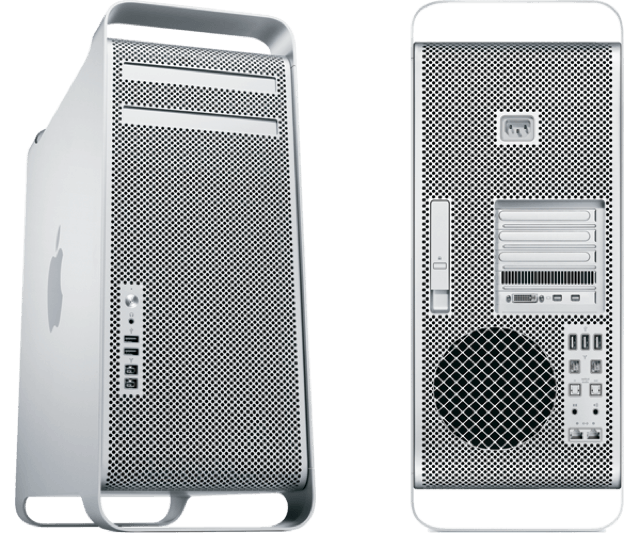
Mac Pros released in early 2009 can now support six-core Xeon CPUs and faster 1,333MHz RAM thanks to a new firmware hack. By installing an EFI firmware update, users can convert their machine into a mid 2010 model Mac Pro.
When Google and Amazon launched their cloud music services, they did so without signing deals with the four major music labels. Apple will not be following suit, and according to music industry insiders, having all the contracts signed is what’s going to let Cupertino kick the competition’s teeth in.
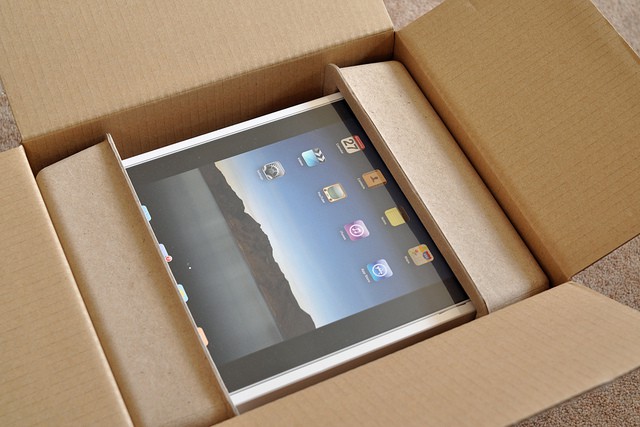
Would it surprise you to know that the iPad 2 suffers from a bug that causes universal color gamma issues during video playback, resulting in low contrast and washed out blacks?
When it comes to the iPad, you’re either a cheapskate or a sheik. That’s the message coming out of new data published by Context, which says that most people either buy the cheapest iPad or the most expensive one.
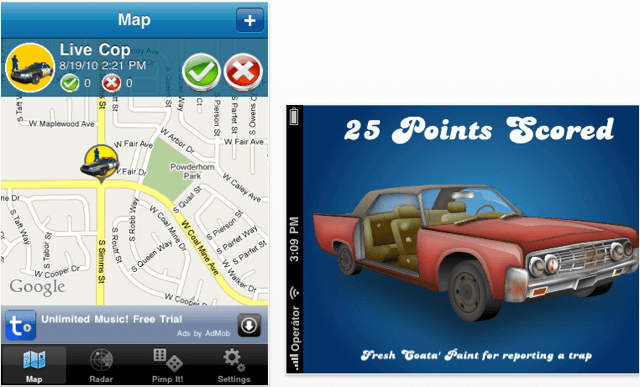
iOS applications that alert drivers to DUI checkpoints and speed traps could soon be pulled from the App Store following a review by Apple that will determine whether or not these applications are illegal.
Guy Tribble, Apple’s Vice President of Software Technology, told senators during a U.S. Senate subcommittee yesterday that the company is currently looking into the legality of these applications, and will pull them if they are breaking the law.
Now that several reports show the iPad eating into sales of traditional low-cost PCs, the blame game has begun – starting with Acer. You may recall Apple sales in the U.S. recently surpassed Acer, which fell 42 percent. The computer maker’s former CEO now blames the company’s slowness in responding to the iPad threat.
“I already saw if we want to become a major player in this new world, we needed to do certain investments, mainly on software and on smartphones and tablets, on touch,” ex-CEO Gianfranco Lanci told a blog earlier this week. Lanci resigned in late March amid reports he was blamed for the iPad cannibalizing Acer’s market.
iAd slots in iOS applications designed for children will no longer be filled with adverts, according to an email one developer has received from Apple.
Mike Zornek, the developer of the Dex a Pokemon browser application for iPhone and iPod touch, noticed that his iAd fill rates had dropped and emailed Apple’s iAd Support Team for an explanation:
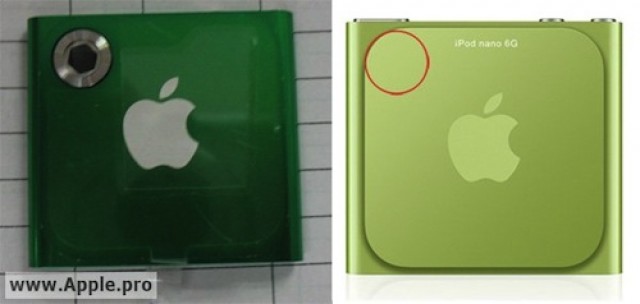
Supposedly, what you see on the left here is the new iPod Nano, complete with 1.3 megapixel camera and with the clip removed. Consider us skeptical that Apple would ditch the Nano’s sports cred for anything as utterly superfluous as camming yet another camera into people’s pockets.
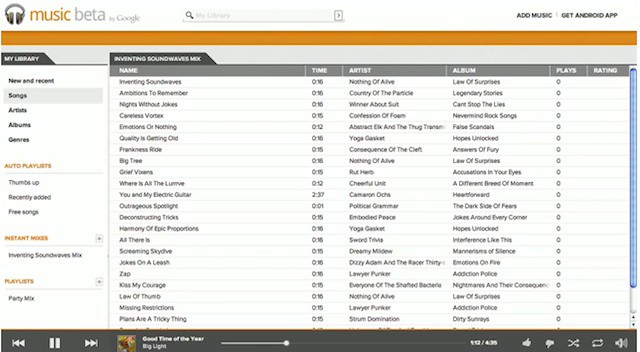
Ably beating Apple for a change, Google has just joined Amazon in unveiling their cloud-based music service at this year’s Google I/O conference… but it’s still hard to believe that Cupertino won’t be able to clobber Google Music once iTunes joins the cloud, especially given the new service’s reliance upon Adobe Flash.
Adobe first announced its first three Photoshop Touch applications at Photoshop World back in March, and they’re now available to download from the App Store. Color Lava, Eazel and Nav are all designed for the iPad and aim to enhance your desktop Photoshop experience with the help of a touch-based device.
Here’s a little bit about each of the applications:
I think of Steve Jobs as more of an expert businessman, management genius and incubator of innovation and ingenuity than an engineer, but 900 engineering undergraduates in the UK surveyed by General Electric are ready to claim him as one of their own: the Apple CEO has ranked third in a list of Engineering Heroes behind Isambard Kingdom Brunel (creator of the first major British railway) and James Dyson (who makes the world’s best vacuum cleaners bathroom hand dryers).
Jobs beat out Bill Gates, who came in at the number four spot. He also ranked higher than Nikola Tesla, Isaac Newton, Albert Einstein, Charles Rolls, Henry Royce and Thomas Edison.
The Sun, that last bastion of journalistic excellence, reports that Queen Elizabeth II has shuttled off one of her liveried manservants to the Regent Street Apple Store to buy her an iPad 2. Explanation, please!
Although Apple’s own Game Center once threatened to topple it from its perch as iOS’s most popular gaming social network, OpenFeint is still going strong, largely thanks to an open, cross-platform approach that allows iOS and Android devices to play with one another on equal social footing.
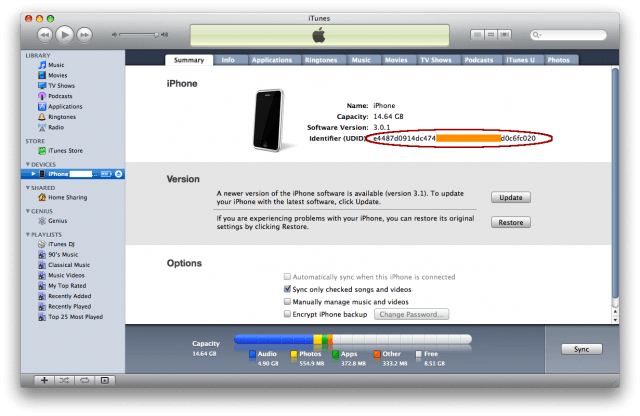
But that’s not to say that OpenFeint hasn’t had its missteps. Last month, a security researcher discovered that OpenFeint commonly linked iOS devices’ unique device identifiers (or UDIDs) to the phone owner’s Facebook profile. The result? A list of names for 75 million registered OpenFeint users, linked to their iOS devices and Facebook accounts.
OpenFeint has since closed the security hole in their system, but as security researcher Aldo Cortesi tells Wired, if a network as big as OpenFeint managed to link UDIDs with specific user accounts across games as popular as TinyWings, Pocket God, Robot Unicorn Attack and Fruit Ninja, there are probably a lot more apps out there flying under the App Store Approval Team’s radar. And those app developers could, even now, be selling your information to advertisers.
Apple has invested a considerable amount of time and money on iOS, the mobile version of Mac OS X, that powers the iPhone, iPod touch, iPad, and Apple TV. So it just makes sense that Apple would re-invest iOS technology into the Mac version of OS X. Steve Jobs has pretty much said so himself and we’ll start to see this happen with the release of Mac OS X 10.7 bearing the code name Lion.
First of all it is no secret that Apple plans on bringing a number of features to the Mac from iOS. These features include the following:
Resuming Applications
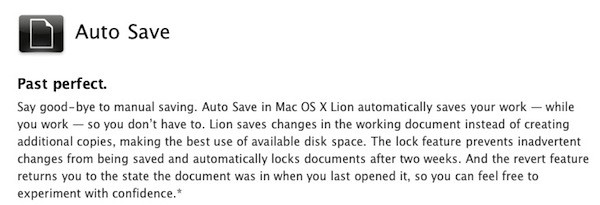
Mac OS X will allow applications to remember open windows, etc. similar to resuming apps when launched on iOS. Automatically saving application documents will also be an integrated feature similar to what happens on iOS when you suspend or quit an app.
In the history of technology, most successful formats go from a nascent birth phase to market popularity with the assistance of a Killer App. A major program, activity or use for a new technology that drives rapid adoption of the medium.
The Apple II had VisiCalc. The IBM PC had Lotus 1-2-3. With the Macintosh came PageMaker and desktop publishing. Arcade Games had Space Invaders. Xbox had Halo. VHS had porn.
Many technologies have benefited from porn, actually. It’s a pre-internet fad.
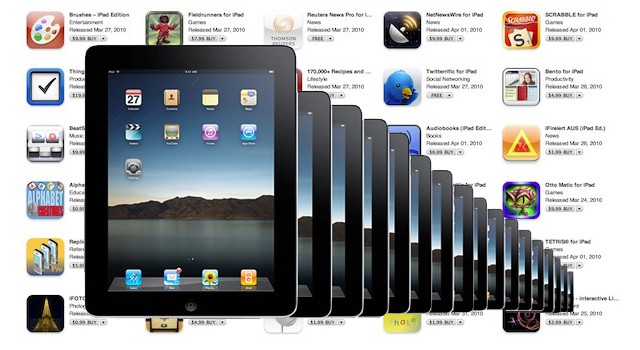
But there is no one Killer App for the iPad. There are dozens of categories of uses, thousands of apps. The iPad started out popular, then became a phenomenon. But nobody can agree on what it’s best used for.
Cloud Player, the recently launched online storage service from Amazon, now works on iOS devices through the Safari web browser. When it first went live, the service – which offers 5GB of storage for free – was only accessible from Flash-supported browsers and Android devices.
When you first navigate to Cloud Player on your iOS device, you are greeted by a warning that tells you your browser isn’t supported. You can just ignore that and proceed into your music collection. Once there, you can use Cloud Player flawlessly: it will pause when you receive push notifications and incoming calls, you’ll get the blue “playing” icon in your device’s status bar, and you can control playback from the buttons in the multitasking tray.
Rovio’s Angry Birds is one of most successful iOS games of all time and it seems like everyone who’s ever used an iOS device has played it. But it’s not just humans who enjoy catapulting birds into pigs: OptoFidelity has created a robot with the sole purpose of playing Angry Birds.
The Finnish company uses its robots for touch panel testing and performance testing for mobile devices using video and optical measuring systems, so they already had the components required, and say it wasn’t hard to build a system for “this particular need.” The difficulty was getting the robot to play through every level of the game and achieve a three-star rating for each one.
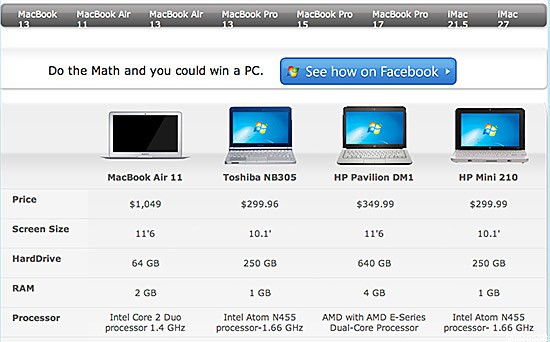
Microsoft’s latest attempt at persuading customers to buy a Windows PC rather than a Mac is an advertising campaign that compares the price of Apple machines with computers from Asus, Dell, HP, Sony, and others; and then asks buyers to “do the math” and look at the money they could save – which they could then spend on a trip to Hawaii.
For example, compare Apple’s MacBook Air with a selection of Windows netbooks and straight away you’ll notice the difference in price – with the MacBook Air listed at $1,049 compared to netbooks for as little as $299. We’ll ignore the fact that Microsoft has classed the MacBook Air as a netbook and move on to specifications.
My wife and I sat down at a nice restaurant last week. Our table was right next to a larger party of four adults and two young children — both girls under the age of 7 years old or so.
Each of the girls had her own iPad, and each iPad had some high-end noise-cancellation headphones plugged in. One girl was engrossed in a children’s movie, and the other was enjoying a series of apps designed for kids.
Granted, this scene took place in Silicon Valley, where there’s no such thing as an inappropriate social context for consumer technology and, in fact, in the very town where Steve Wozniak lives (Los Gatos). Still, it was a remarkable scene, and one that will be repeated across the nation as the iPad phenomenon spreads.
Letting kids use or own iPads is controversial. Parents, teachers and others aren’t so sure about letting kids get sucked into yet another electronic diversion. Pilot programs at a few schools around the country to experiment with iPad-based learning tools are often met with criticism by parents and teachers alike.
Everybody’s asking: Are iPads healthy for children?
As WWDC and the unveiling of iOS 5 approaches, we’re all wondering what Apple may or may not bring to its devices with the next major iOS release. One thing that could be introduced is speech recognition, courtesy of Nuance Communications – the company behind the Dragon Dictation applications for the iPhone and iPad.
According to a TechCrunchreport that cites “multiple sources,” Apple has been negotiating a deal with Nuance which could see them integrate the company’s speech recognition technology into the iOS platform. While negotiations could have potentially been about an Apple takeover of Nuance, TechCrunch believes that at this point that’s unlikely.