Mobile menu toggle

Top stories - page 1026

Why Apple Needs to Deliver New Macs Next Tuesday

By

post-2914-image-eb92234d4ecc697d0a8b7b16ffe27ec0-jpg

Erroneous MacBook Pro Mock-Up Courtesy Ars Technica
This has been a gangbuster summer for Apple. First came the iPhone 3G announcement in June, alongside OS X iPhone 2.0 with the AppStore, Mobile Me, and HD video in iTunes, then came a new round of incremental but strong new iPods, and amazing news about a major uptick in Mac sales during a down economy. In spite of some software issues, Apple is coming out with huge new gains in multiple markets and is healthier than just about any other tech company.

And yet, unless Apple rolls out rumored new Macs next Tuesday, all of that will start to look suspect. To find out why, click through!

Microsoft’s New Ad Is Actually Pretty Good

By

cult_logo_featured_image_missing_default1920x1080
Microsoft's New Ad Is Actually Pretty Good

The more I watch Microsoft's new ad for Windows, the more I like it.


The more I watch Microsoft’s new ad for Windows, the more I like it.

The ad, which debuted on Thursday night, successfully counters the idea promoted by Apple that PCs are bumbling buffoons personified by prematurely middle-aged businessmen.

Instead, the ad convincingly portrays the PC as part of global culture, unpretentious and down-to-earth.

The ad starts with a John Hodgman-alike Microsoft engineer, who proudly declares: “I’m a PC, and I am not alone.” It then swings through Europe, Africa, America and back again, showing people of all nations declaring simply one after the other: “I’m a PC.”

It ends with author Deepak Chopra, who says: “We are all a PC, inseparably one.”

Watch it carefully. The people and locations of the ad clearly reflect Bill Gates’ concerns about the world: disease, poverty, education and opportunity. Bill Gates makes a appearance (a welcome one. I admire him giving away his money), and there’s quite a few people from developing countries in this ad: something I’ve never seen in Apple’s marketing.

They’re real people, with accents and bad teeth (like me). I find it a refreshing antidote to the fake youthfulness of Apple’s iPod silhouettes and the insufferable, elitist hipster who personifies the Mac on TV.

I like Microsoft’s new ad because it portrays the PC through the very ordinary people that use these machines every day — and some extraordinary ones. It’s the opposite of Apple’s phony lifestyle advertising. It’s refreshingly egalitarian. It’s like “The Wire” versus “Law and Order.” Plus, there’s no sign of Jerry Seinfeld.

UPDATE: Two more new ads after the jump.

Why iPod touch will never be a major gaming platform

By

post-2767-image-a420f1edb41e4fc1fd40294d6a31f095-jpg

UPDATE: One year on, and my view of the platform for gaming has changed somewhat—read Why Apple is Right to Pitch iPod touch as a Games Console to Beat the DSi and PSP Go.


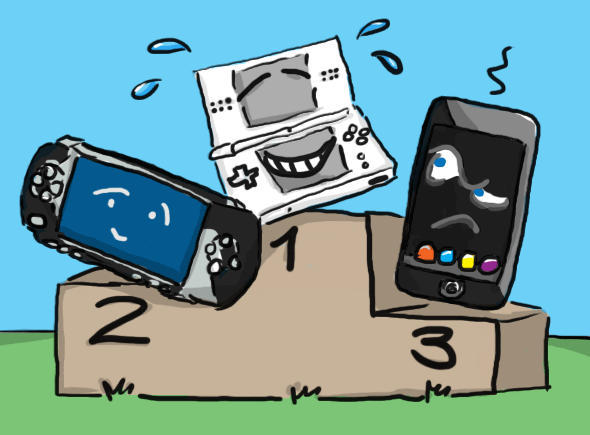
The iPod touch segment of Let’s Rock was particularly notable for Apple’s attempts to position the device as a major gaming platform. “It’s the best portable device for playing games,” claimed Jobs. Apple’s website now calls iPod touch the ‘funnest iPod ever’, and talks about its ‘hundreds of games’. This emphasis on gaming, along with the demonstrations we’ve seen from various developers, appears to be positioning iPod touch alongside Sony’s PSP and Nintendo’s DS, rather than talking about mobile gaming as though iPod touch has any relationship whatsoever to a certain smartphone and cell-phone gaming in general.

There are arguments in favor of this belief. Games have proved phenomenally popular on the App Store. They’re also cheap, relatively plentiful, and simple to get on to your iPhone or iPod touch. Also, crucially, Apple’s solution betters Sony’s and Nintendo’s by allowing updates to games—something owners of the abhorrent DS port of The Settlers no doubt wish were true of their platform.

The problem is, iPod touch is only ever going to be a niche concern in the gaming space. Find out why after the break…

‘Let’s Rock’ Paints Picture of iPod Family as Afterthought

By

post-2728-image-54bf6e7b536f5c5aa3ee29a078898df0-jpg

In the week since Apple announced its “Let’s Rock” event, the organization’s spokespeople have assured all observers that this would be a really critical launch, with bigger news than just a refresh of the iPod product family.

Well, apparently Apple and I have very different definitions of “big news.” Because all the organization delivered was more of the same:

  • An iPod touch that looks more like the iPhone 3G, but loses the black aluminum border that gave the device its own distinctive personality. But hey, price cuts and built-in Nike+ support! (no word on iPhone support, however)
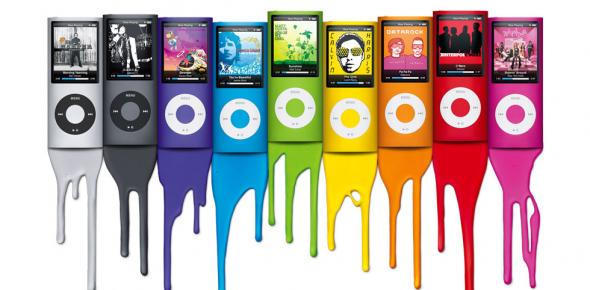
  • An iPod nano that looks more like the nano 2G than its predecessor, adds a few new colors and awkwardly tries to implement the UI from the touch and iPhone. Oh, and you can shake it to shuffle.
  • An iPod classic that literally makes no changes other than bumping the hard drive capacity and cutting the high-end model. It now costs exactly the same as the high-end Zune, and has the same hard drive capacity.
  • A new revision of iTunes with smarter automatic playlist generation, HD TV show downloads, and the return of NBC/Universal programs
  • Bug fixes for the iPhone.
  • And two lame songs from Jack Johnson. That’s it.

The business sense side of me is saying that Apple has another winner. The designer side of my brain really likes the subtle changes that Apple’s design team has brought to the the product line (except for the ugly iPod classic — hate the use of aluminum there). But the Apple fanatic in me can’t help but me incredibly disappointed by this morning’s activity.

Just how perfunctory was this round of updates? Consider this: The event has been done for 30 minutes, all the new models are available for purchase on the Apple Store, and Apple still hasn’t updated its own website to announce the product launches (EDIT: It went up as I finished typing. STILL). Apple has never gone this long without getting its main site up-to-date.

Now, none of us should be surprised by any of this; after the launch of iPhone 3G, AppStore, and the fiasco called MobileMe, it’s little surprise that Apple hasn’t been able to devote many resources to doing more than making slightly curvier cases for the iPod line. But Apple has trained us to expect the best, particularly when they say it’s really time to pay attention. Today, it completely missed the mark. I can’t recall an Apple launch event this underwhelming since the launch of the iPod HiFi and iPod socks. It’s this year’s model, and nothing more. It’s the entire iPod product line as afterthought to the iPhone.

And that’s not good. The iPod family is Apple’s highest-revenue business, and any indication that the company is bored with the media player business or unable to innovate beyond bringing iPhone features to iPods is going to mean a rough time in the market. It’s certainly not impossible to do so, Apple’s just in an unfortunate liminal space between the launch of a new business and the adaptation of another. The new nanos, in particular, felt oddly anacronistic. Why go to all that trouble to design such a wildly different case for this revision and then still use the same old clickwheel? Why, in the name of all that is holy, would you copy the horizontal interface on the right, screen on the left interaction found on the flash-based Zune? Why launch nine, count them, nine new colors in a single day when this is a clear incremental upgrade while the company works on a touchscreen nano for the near future?

Honestly, the biggest news today is that the iPod touch has dropped in price by $70 and has external volume controls.  It’s the future of the product line, and Apple needs to drive its adoption rapidly while the pre-2007 iPod outlook gradually ramps down.

In the mean time, I sincerely hope that we’ll see new Mac announcements on a not-too-distant Tuesday. The entire product line is just begging for processor upgrades, and they’ve been suffering while Apple has put so much attention on the iPhone this year. Not to mention which, it’s high time that Apple brought out a true Home Theater Mac for the living room — AppleTV and Mac mini aren’t cutting it.

Hulger Handset Caption Contest – Discount Offer Makes Everyone a Winner

By

post-2571-image-95241ec3e2124763aa955f8f8cef7a19-jpg

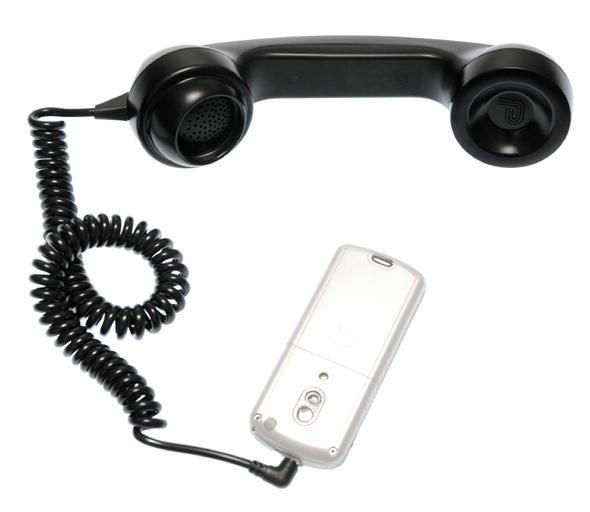
Hulger’s P*Phone handset comes in Black, Red, Pink & White, with iPhone adapter.

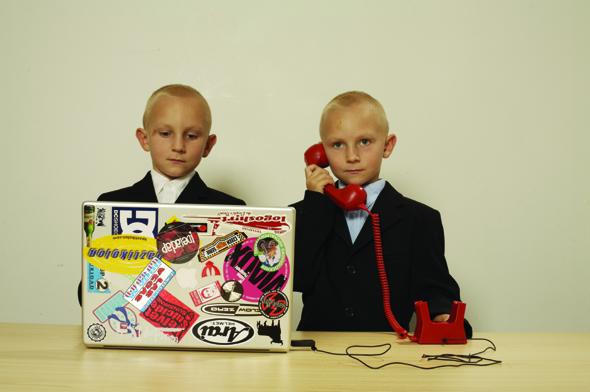
We held a caption contest last week in which we asked readers to play photo editor and come up with an appropriate caption for the image below, with the winner to receive a Hulger P*Phone handset, with iPhone adapter, in the color of their choice.

hulger_twins.jpg

The response was so great, we picked four winners! Read their excellent captions after the jump and click through to Hulger’s 20% discount URL that lets every Cult of Mac reader win this one.

Can Apple and the Mac mini learn from Dell’s Studio Hybrid?

By

post-2425-image-007610c085afdfad4dbbc74185c3107d-jpg

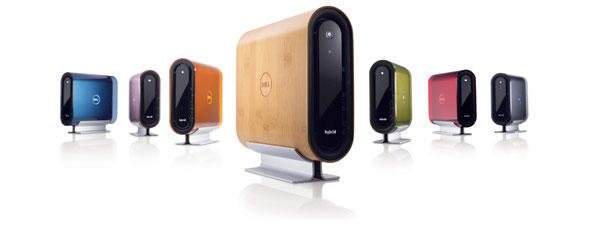
Although once famously proud of annihilating its R&D budget, it appears Dell is now in some cases reading from the Book of Apple, in taking existing ideas and–at least in some ways–improving them. In recent weeks, we’ve seen the Dell Dock, taking the UI device from OS X that’s loved and loathed in equal measure and adding handy auto-categorization. (And, yes, I’m well aware Apple didn’t invent docks, but if you’ve been paying attention, that’s kind of my point.)

However, while the Dell Dock is an interesting curiosity, the Studio Hybrid (depicted) is a rather more ballsy production, not only taking on the Mac mini and AppleTV, but exposing some of the shortcomings in Apple’s range of highly consumer-oriented desktop machines.

In terms of hardware, the Studio Hybrid is nothing new: Dell has shoe-horned a laptop’s guts into a small and fairly contemporary form factor. But when it comes to options, Apple’s machine is trumped in some key areas. Dell offers Blu-ray as an option (albeit with a $250 price-tag), HDMI video out, a card reader, and also pushes adding a TV tuner. (Amusingly, you can also add a bamboo shell for $130, which almost makes Apple’s black MacBook price-tag look sensible.)

Sure, there are compromises, not least the Dell lacking Mac OS X, the bizarre omission of wireless in the stock model, and the fact that on Dell’s online store, you have to click ‘Go to Next Component’ about 56 billion times to configure your unit (versus the streamlined and efficient approach taken on the Apple Store). But, to some extent, it does highlight the manner in which Apple is almost dropping the ball when it comes to living-room computing.

AppleTV shows promise, and the future of media is undoubtedly going to be centered around downloads. However, we’re not there yet, and people have too much investment in optical media. Therefore, AppleTV becomes an additional unit to homes already suffering from clutter under their televisions. And the mini, despite offering loads of potential, seems to have been practically shunned by Apple, banished to the corner like an unloved and unwanted child.

Rumors always abound regarding future Apple kit, with pie-in-the-sky wishes dashed by the brutal hand of reality upon an Expo or WWDC keynote. My wishes are rather simpler, though: a Mac mini that genuniely makes a play for the living room. Take a leaf out of Dell’s book, Apple, and bundle in that card reader, so people can more easily bung photos on their TV screen. Add that Blu-ray option for people who want to own media rather than rent downloads. And add HDMI video out by default, so people can connect their mini to a new TV without faffing about with additional leads.

Don’t worry about the bamboo option, though.
Is it Time for Steve to Step Down?

By

post-2369-image-252ce1f13009df0c4b5cec953f6c39d4-jpg

Recent questions regarding Steve’s health have renewed calls for a succession plan at Apple. While I hardly give two shakes over the “Industry Concerns” cited in the recent New York Post article, I would go a little further and suggest that what Apple needs is not a ‘Succession Plan‘, but a new CEO.

As startling a statement to make as that is, hold the flames for just a few more moments, follow me after the jump to find out why.

To Prevent Upskirts, Japanese iPhone 3G Always Alerts When Taking Photos

By

post-2356-image-8b39dda046ad6fc0ff6eb8a7697a90e5-jpg

An upskirt warning poster in a subway station outside Tokyo. Photo by Jeff Epp.

The iPhone 3G in Japan has a special feature unique to that country: The camera always makes a conspicuous “shutter” sound when a picture is taken, even when the phone is set to “silent” mode.

The loud shutter sound is supposed to deter voyeurs from taking sneaky pictures up women’s’ skirts — or down their tops.

In Japan, upskirt and downblouse shots have become increasingly popular with the advent of high-resolution camera phones.

As a result, all cell phones sold in Japan make a conspicuous shutter sound, or say the word “cheese” when a snap is taken, according to Nobuyuki Hayashi, a tech reporter based in Tokyo.

On almost all new cell phones, the camera shutter sound can not be muted, Hayashi says.

“Some manufacturers have even put louder shutter sound,” he reports.

The shutter on the first iPhone sold in Japan could be muted in silent mode; an anomaly that many wondered whether Apple would correct in the iPhone 3G, Hayashi says.

Apple did: The shutter sound cannot be turned off, even in silent mode, Hayashi says.

Microsoft’s Windows 95 Architect Is a Happy Mac Convert

By

post-2342-image-ffcd39aa8f3893709fcf1132a83e028c-jpg

Software engineer Satoshi Nakajima, the lead architect of Microsoft’s Windows 95, picked up a Mac for the first time two years ago.

He was so impressed, he says he’ll never touch a PC again.

Satoshi loves Apple products so much, he started a company in April, Big Canvas, to develop for Apple’s iPhone platform full-time.

“We have chosen iPhone as the platform to release our first product (for) several reasons,” explains his company’s website. “We love Apple products… You need love to be creative.”

Based in Bellevue, WA — right next to Microsoft’s home turf of Redmond — Satoshi spent nearly 14 years at Microsoft, serving as the software architect of Windows 95 and 98. He also oversaw the development of Internet Explorer 3.0 and 4.0. While at Microsoft, he developed the third largest portfolio of intellectual property of any employee at the company, according to his bio.

Last week, Satoshi released his company’s first iPhone application, Photoshare, a free, social networking app for sharing pictures with the iPhone.

Photoshare is like Flickr for iPhone photographers. The downloadable Photoshare app allows users to upload pictures to Photoshare’s website, and then share those pictures publicly or privately — without any required registration or the need for a computer.

We spoke with Satoshi about the pleasures of writing software for the iPhone SDK and got some of his thoughts about Apple’s UI, its distribution model for iPhone apps and the future of handheld communications.

The interview continues after the jump.

PhotoShare_IconPhotoShare_PublicPhotoShare_WebSitePhotoShare_home

iPhone gaming: a lack of controls?

By

post-2280-image-b0d153246e7f3c6c98a4ddb5a017acdd-jpg

I’ve been a gamer for a very long time. I distinctly remember my dad helping me to play one of the earliest Space Invader units by lifting me up (what with a diminutive version of your correspondent not being able to see the screen properly) and then pretty much instantly regretting it (what with me being rather heavier than he realized). I’ve devoured games on ZX Spectrums, Commodore 64s, BBC Micros, Amigas, PCs, Macs, and consoles from Atari, Nintendo, Sega, Microsoft and Sony. And although today’s gaming landscape is clearly significantly more conservative and homogenized than that of the 1980s or early 1990s, there are still many gems lurking amongst the dross.

It’s curious to see Apple again taking interest in games. Few will remember the disaster that was the Pippin, a joint production with Bandai that rightfully made #22 on a top 25 worst tech products of all-time list by PC World, and Macs have never really been at the forefront of gaming, with users typically forced to pick up two-year-old PC games at current PC-game prices.

With iPhone, there’s a feeling things might be different this time. Right from the start, Sega was extolling the virtues of the device, demoing a highly competent version of Super Monkey Ball, and reports suggest spec-wise that Apple’s hardware rivals Sony’s PSP and Nintendo’s DS, which are the only two mobile gaming platforms worth a damn. Also, Jobs claims a third of the first wave of applications on the AppStore will be games.

My concern is that the genius of Apple’s lack of physical controls for most applications (thereby enabling context-sensitive controls and keyboards) might be its undoing in the games world. Jailbroken iPhones offer emulators of classic consoles, but the lack of tactile controls renders them borderline unplayable, and although the iPhone’s accelerometer and touch-screen will force (some) developers to create unique and innovative products, there’s a real risk iPhone as a gaming platform will remain a seriously niche concern, by virtue of lacking a D-pad and other ‘standard’ controls.

Some might argue that iPhone’s unique controls can only be a good thing, using Nintendo’s Wii and DS consoles as ‘proof’. But while both of those devices have proved staggeringly popular, they offer alternatives to developers. Yes, you can wave the Wii remote around like a loony, or draw on the DS touchscreen, but more typical control methods are also catered for. And it’s pretty obvious that some developers try to shoehorn unwieldy control systems into games (a shocking number of DS games require hateful microphone-based controls at some point) on such consoles because they can. But with the iPhone, they will sometimes have to.

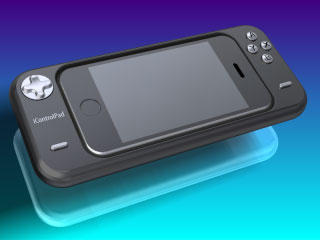
Looking at iPhone gaming demos to date, there’s already a split between games such as Super Monkey Ball using iPhone to fashion highly intuitive controls via tilting, and more traditional games being hamstrung, leading to having to ‘jolt’ your iPhone upwards to make a character jump. A quick glance around the web suggests I’m not alone in wishing iPhone catered for all, rather than those with an ‘accelerometer and tilting’ fetish. One Mac user created a mock-up of a PSX-style controller for iPhone, and the people over at icontrolpad.com (pictured right) have prototyped a device that almost turns iPhone into a PSP-style handheld console.

Unfortunately, any devices along these lines are likely to be limited to jailbroken iPhones—at least for the foreseeable. But here’s hoping Apple takes these ideas on board. For while I’m all for innovation and playing something new, it’d be a shame to restrict iPhone to certain types of games, simply by not giving developers access to a full range of controls, tactile or otherwise.

Goliath, Meet Dav… Goliath?

By

post-2276-image-1f79e95229749d006e5bf27986e694c8-jpg

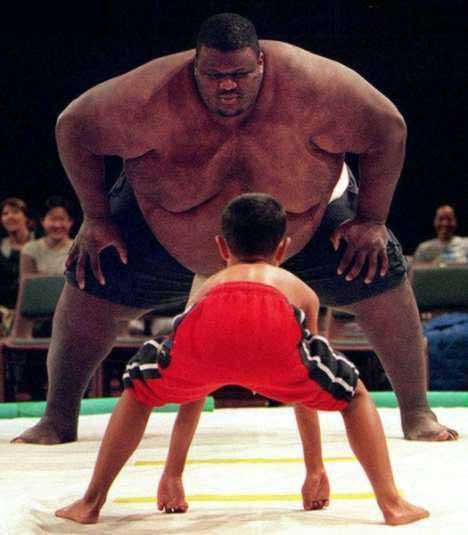
It’s been Apple against the world for so long that we’re kind’a just used it being that way. However, when we compare Apple against her chief rivals, as well as against some entire industries, a different picture emerges.

Looking at our favorite company in this light maybe helps us understand parts of Apple’s strategy that seem confusing if not just downright bizarre. Follow us after the jump and we’ll discuss why, when we talk about Apple vs Microsoft, Dell or the entertainment industry at large, this ain’t a David versus Goliath matchup anymore.

A Dozen iPhone Apps to Watch

By

cult_logo_featured_image_missing_default1920x1080
iPhone app

Of the more than 25,000 developers who applied to Apple's iPhone developers program, 4,000 were admitted, according to a story in Fortune. We bring you now 12 interesting Apps to look for. Descriptions and screenshots after the jump.


Of the more than 25,000 developers  who applied to Apple’s iPhone developers program, 4,000 were admitted, according to a story in Fortune. Apple set a July 7 deadline for those accepted developers to submit their applications for inclusion in the inaugural launch of the iPhone AppStore, expected to coincide with the worldwide debut of the iPhone 3G in two days.

We bring you now 12 interesting Apps to look for. Descriptions and screenshots after the jump.

Hello: Macs Are About to Get Interesting Again

By

post-2221-image-dce82bec4f7ef3e765bfe10ec775cb2a-jpg

Update: For a well-reasoned rebuttal to at least my views on design, check out Leigh’s counter-post once you’re done reading here.

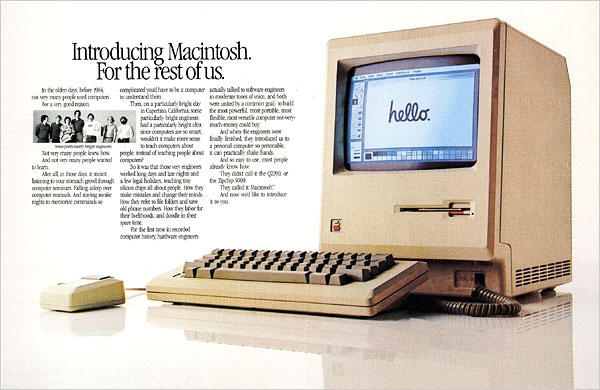
I’ve been alluding to this for a few months now, but let me repeat: The Mac is poised for innovation over the next few years on a scale that we haven’t experienced since the initial move to OS X in the previous decade. After five years of focusing on new categories like the iPod and the iPhone while gradually improving its Mac product line, the company has now freed up the resources to strengthen its core and highest-revenue business: Macs. And at the same time, new technologies are emerging to take the Mac to the next level. To read why, click through.

Apple’s Retail Wave Hits Down Under

By

post-2135-image-04c5e4f0968511667cde8abb74d97f73-jpg

Photo by Christopher Chan

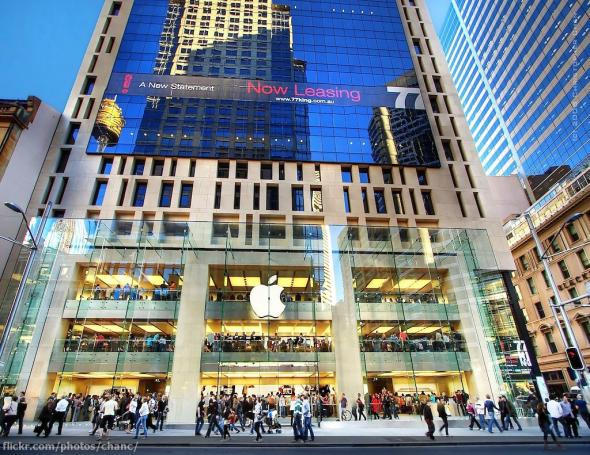
Proving themselves every bit as susceptible to consumer hype as their American counterparts, thousands of Apple fans attended the grand opening of Apple’s first retail store in Sydney last week, with several hundred having queued up as long as 31 hours prior to the opening hour.

Accommodated by agreeable weather, the large crowd helped continue Apple’s success in rolling out its innovative retail concept, which makes the stores themselves almost as much of a draw as the products inside.

More pics after the jump.

Where is my Multi-Touch BMW?

By

post-2132-image-9cbb0f768a1abd1816a52b999c397511-jpg

Ford & Lincoln / Mercury cars are now shipping with a voice activated technology they call “SYNC”, which proudly proclaims “Powered by Microsoft” on all the adds they’re running. My first thought was: ‘Now what the heck would anyone willingly admit that?

My second thought was: ‘Why isn’t Apple just OWNING this space?‘ Click through, and we’ll chat about this after the jump.

First Look: Firefox 3

By

post-2098-image-ff5403945fc061f410f5b03e0f78f243-jpg


I’m a fan of both Firefox and Safari and regularly use both on my Macs. I like Firefox because it lacks some of Safari’s “Squirrely-ness” with some websites –particularly those using scripting, and I like Safari for private browsing, and because it is so fast. So after a day of use, am I prepared to drop Safari forever for the Fox? Click through, and lets discuss.

BusinessWeek Feels Verizon and RIM’s Pain

By

post-2091-image-d480d214f082fd547452ddc92849b8de-jpg

BusinessWeek has an interesting but slightly over-the-top story about the misery the iPhone 3G will inflict on the rest of the wireless industry. It’s quite maudlin in its focus on the needs of the establishment wireless service providers. It even seems to mourn threats to the dominance of the existing wireless carriers. Perhaps the only news to glean in between the forecasts of doom is that Palm, once the dominant player in Smart Phones is now too niche to merit a mention in a round-up story like this. Apparently, the hole Palm needs to climb out of is so deep that the iPhone 3G’s coming ubiquity doesn’t even make things worse.

Mobile Me Shows Apple Still Dislikes Being a Team Player

By

post-2088-image-c885638ab983d4ae29e58dfc705e5b72-jpg

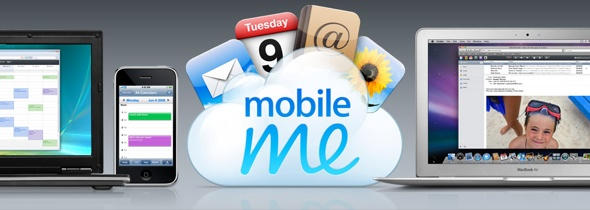
For a Steve Jobs Keynote, the kick-off to last week’s Worldwide Developer Conference was surprisingly, well, surprise-free. Apple rumor-mongers nailed the specs on the iPhone 3G, the pricing, the slipping ship date, and even the launch of Mobile Me, a major redesign of Apple’s .Mac service that focuses on Push technology for the rest of us. For subscribers of Mobile Me, all you have to do is make a change to your calendar on one platform, whether Mac, PC or iPhone, and the change instantly occurs on your other machines. Apple was going to become the Push company.

Phil Schiller demoed the applications involved, from photos to e-mail to address book for almost a half-hour, repeating the phrase “desktop-quality applications” roughly 900 times. As promised, the apps instantly updated across platforms. The Push technology really works, as well as, or, Apple hopes, even better than Microsoft Exchange for corporations. In every respect, it looked like a winning platform. For $99, anyone can have world-leading syncing of their entire digital lives. There’s just one problem: you have to use Apple’s Web applications to do that. No GMail, no Flickr, no GCal, no Facebook. Rather than delivering on the promise of automating the process of keeping every aspect of your life up to date, Apple requires you to leave behind your existing digital life to build a new one. Unless you’re an existing .Mac user, you need a new e-mail address, a new online photo gallery, a new calendar, a new form of online storage. And I, like a lot of people, am not going to make that change. I love Google Apps, Flickr, and Facebook. They’re where I keep my stuff. And that isn’t going to change any time soon. Rather than Mobile Me, Apple seems to have created Mobile Steve. To see the implications of this decision, click through.

How to hide an iPhone Purchase From My Wife?

By

post-2075-image-139233a66f1426029156e483672069f9-jpg

Update: Reader imajoebob has got a really funny response in the comments. Worth a read.

Trying to write this post on a Blackberry has taught me something, this thing’s web browser stinks. Now that the 3G iPhones will be on-sale in July, I’m gonna hafta break-down and get one. That said, only one-question remains: How to hide the purchase from my wife?

After the break, we’ll talk through my strategy, in the hopes that a fellow husband in a similar pickle might benefit from my experience, or maybe even able to help me devise a better strategy.

America’s Best Independent Mac Store

By

post-1741-image-1f00cf5e0a2be9031981684ff9061ad0-jpg

Greatest of all time.
I just got back from visiting a friend in San Luis Obispo, California, and he pointed me towards the Mac Superstore. I’d never heard of the place, and Apple has so thoroughly eradicated all unofficial Mac retailers that I didn’t think there were many left (sadly). But I decided to give the place a close look from the inside. What follows, here and on the jump, is a photo-tour to the coolest Apple store that the company doesn’t own – and maybe ever.
macstore8.jpg
Best Doorstops Ever.
The experience at the MacSuperstore, founded in 1998 by Shane Williams, a graduate of Cal-Poly San Luis Obispo, begins before you even walk in the door. Since the weather is almost always sunny and calm in SLO, Williams and staff use vintage all-in-one Macs to hold the doors open to the faithful. I checked closely, and one door is propped by a Mac Plus while the others are SE/30s. The effect is inviting – and a bit disturbing. I last used an SE/30 in mid-1999, and it seemed pretty far from a doorstop then.

All the most interesting stuff is inside, however, so please read on.

DIY iMac Made From Mac Mini

By

post-1723-image-802942d17c4392341dc48890d4325ed3-jpg

The iMac is a beautiful all-in-one desktop solution capable of handling most every need. But it’s also a bit pricey, especially compared to the dirt cheap Mac mini. Jon Doty decided to do something, fusing a Mac mini with a commodity LCD monitor to create a homemade iMac that I can only describe as…elegantly janky.

Make sure to check out the gallery – the whole process is detailed to a charming degree.

Via Digg.

Tougher Than an 18-Wheeler’s Treads

By

post-1720-image-1eee66283f94a5501749a036e990289c-jpg

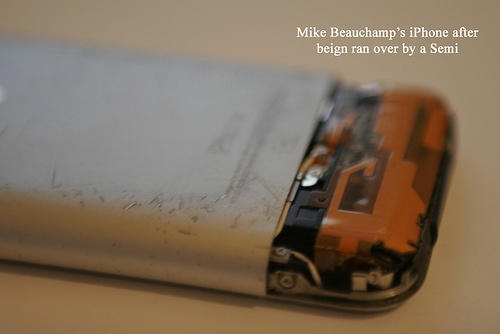
Mike Beauchamp’s iPhone has been through hell and back – and it’s still working. He tells the story in graphic detail at Flickr.

As the last pair of headlights approached, the semi got over to the far outside lane because he saw me standing on the side of the road. I knew this was trouble. As I watched helplessly from the shoulder, the semi plowed my phone at full speed, throwing it to the ditch on the other side of the highway. At this point, I figured I’d retrieve it just for the purpose of seeing the crushed iPhone in disarray, mangled and crunched lifeless in the grass.

Much to my surprise, as I approached, I heard the familiar sound of my ringtone — the iPhone was alive and ringing! As I picked it up and cradled it gently in my hands, I saw the screen displaying my caller ID — the screen still worked! I slid my finger gently over the answer slide and paused as I held the tattered and torn device to my ear — my heart must have skipped a beat when I heard my mom’s voice at the other end of the phone — the phone still worked!

Glorious. Apple should hire him.

Via Daring Fireball

Report: iPods Don’t Cause Heart Attacks

By

post-1717-image-b318af979d84b44282413b60ff753776-jpg

Nine months after initial reports emerged suggested that iPods and other portable media players might have the potential to disrupt life-saving pacemakers, a further study from the FDA suggests that the risk of harm has been over-stated.

“Based on the observations of our in-vitro study we conclude that no interference effects can occur in pacemakers exposed to the iPods we tested,” they concluded.

Previous studies focused on the risks to pacemakers associated with keeping an iPod two inches from your chest. All that makes me think is that the people conducting the study aren’t too clear on how to use an iPod. Why would you strap one over your heart? And how?

Reuters Via Gizmodo.
iPod Heart Attack image from Global House Price Crash