Mobile menu toggle

Top stories - page 1020

$30 Snow Leopard Disc Can Upgrade Tiger

By

500x_Walt_Snow_Lep_Review

With Uncle Walt’s confirmation, the cat’s officially out of the bag: That $30 Snow Leopard disc Apple’s making available starting Friday? It works with more than just full Leopard installs — it can upgrade any Intel Mac, including those running Tiger. In other words, unless you want to pick up iLife and iWork in the process, the only reason to buy the $169 Mac Box is if you want to live by the spirit of Apple’s marketing.

What do you think, Tiger users? Will you abide by formal ethics or just buy the cheapest upgrade path ever? And will your Leopard-buying friends hate you for it?

All Things D via Gizmodo

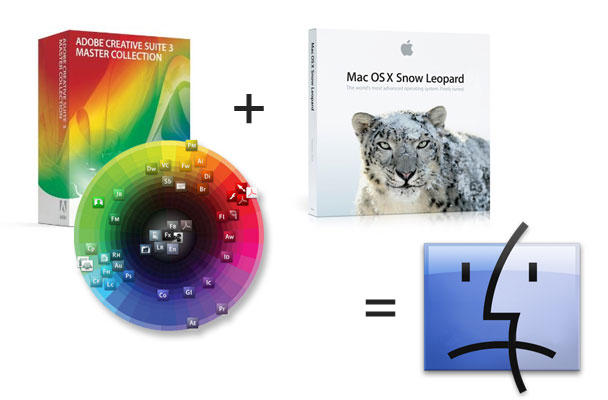
Adobe CS3 ‘Not Tested’ on Snow Leopard; Many Industry Pros Could Halt Snow Leopard Upgrades

By

Adobe CS3 + Snow Leopard = many sad Mac users

UPDATE: Nack provides further insight, backtracks, stating “It turns out that the Photoshop team has tested Photoshop CS3 on Snow Leopard, and to the best of our knowledge, PS CS3 works fine on Snow Leopard.” Hmm. This flatly contradicts what I’ve heard from jobbing designers who’ve worked with CS3 on very late Snow Leopard builds. I guess we’ll discover the real truth over the coming week or so.

Adobe’s rolling out its Snow Leopard FAQ, and John Nack’s post offers a doozy:

Apple and Adobe have worked closely together (as always with new OS releases) to test compatibility. As for CS4, everything is good with the exception of auto-updates to Flash panels (which I guarantee you’re not using*) and Adobe Drive/Version Cue (which doesn’t work at the moment on 10.6). CS3 & earlier haven’t been tested. Please see the FAQ for additional info.

(My emphasis.)

Back in the day, I used to love Adobe software. Hell, I still want to love Adobe software and I use Photoshop almost every day, but the company’s making it real hard. It seems that CS has become more about sticking to turnaround schedules than innovation, and there’s a horrible tendency to use the next release to fix major problems, rather than fix them here and now.

From what I’ve heard, both on forums and directly from professionals running 10.6 betas, there are some major problems with CS3 and Snow Leopard, such that Apple’s update simply isn’t safe in Adobe-reliant mission-critical environments. This means a whole lot of industry professionals won’t be flinging 30 bucks in Apple’s direction and won’t be upgrading their Macs to the new OS. But surely this is only temporary? Presumably, Adobe won’t leave everyone high and dry?

Nack again:

No one said anything about CS3 being “not supported” on Snow Leopard. The plan, however, is not to take resources away from other efforts (e.g. porting Photoshop to Cocoa) in order to modify 2.5-year-old software in response to changes Apple makes in the OS foundation.

Nice. A 2.5-year-old piece of shareware being mothballed to concentrate on the current version, fine. But a hugely expensive suite that people use in a pro capacity, that cost hundreds (or thousands, depending on the option you picked) of bucks in the first place?

And you’ve got to love the dangled carrot—CS3 probably won’t be fixed, due to Photoshop being ported to Cocoa. (Out of curiosity, Adobe, are you going to get rid of your broken and proprietary windowing system, or will that stay in place?) I know the world’s finances are screwed, but surely looking after your existing customers is important? I guess it doesn’t matter if you have a near-monopoly on creative apps.

Gah.

Like I said, I used to love Adobe, and I really want that feeling of excitement and passion regarding its apps to return, but this kind of thing just pisses me right off. Nack’s comments come across like people are asking for something insanely stupid—support for antiquated wares. But it’s not like people are getting all angry because some ancient piece of software has been killed—they’re annoyed because a massively expensive suite that was still on sale recently and replaced well under a year ago is going to have major problems on Apple’s new system.

Is this entirely Adobe’s fault? No. (In fact, if Nack’s “in response to changes Apple makes in the OS foundation” comment is indicative of Adobe’s attitude in general, ‘not at all’ is presumably the company’s thinking.) But could Adobe be doing more to help this situation, other than telling us to stop whining, open our wallets once again, cause our credit cards to cry out in pain, and eat baked beans for the coming months? You tell me.

10 Reasons Why Snow Leopard is an Essential Upgrade

By

overview_hero_20090824

It’s easy to take for granted how rapidly Apple upgrades Mac OS X with meaningful new features. After all, with Friday’s Snow Leopard release, the world’s best desktop OS will have seen its fifth major leap forward in the same time it’s taken Microsoft to add only Vista and the promise of Windows 7 (I know it’s coming soon, I’m just impressed Apple’s beaten Microsoft again).

Three days from the next great version of the best great thing, here are 10 reasons why you should upgrade to Snow Leopard.

10. It’s Leopard Done Right
The release of Mac OS X Leopard was fraught with peril. It was late, it ran a bit slow, and it offered amazing new features — some of which weren’t fully ready for prime time. Snow Leopard is all about performance, optimizing features to deliver a great experience. It takes what you know today and makes it perfect.

How To Take Great Action Photos With Your iPhone 3GS

By

jared-20090821jpg.JPG
By Jared Souney

OK, so we’ve already established that the iPhone camera is capable of some pretty amazing photography, even if you don’t use one of the many fantastic photography-related apps available on the Store.

One thing I’ve not seen it used for to date has been action shots; but Oregon-based photographer Jared Souney has been putting his 3GS to good use for just that.

I wanted to find out how he did it, so I asked him. Here’s what he said.

UPDATED: Is The iPhone’s Push System Vulnerable To Spam, Malware Popups?

By

iphone_push_spam

UPDATE: This now looks like a  Javascript alert buried on a webpage, not a push notification. See below.

The iPhone’s Push notification system may be vulnerable to spam and malware popups.

CoM reader NyxoLyno Cangemi was using NetNewsWire RSS reader on his iPhone when what appears to be a push notification for anti-virus software popped up. See the screenshot above.

The popup message says his computer has “vulnerabilities and threats” and needs an immediate virus scan.

The popup is a notorious “rogue anti-virus” message, designed to trick naive websurfers into surrendering credit card details to fake anti-virus vendors. The unsuspecting websurfer see the message, follows the link and buys fake anti-virus software that steals their credit card number and installs malware.

The website URL in the iPhone popup points to a known rogue site, safeonlinescanv4.com, according to security firm MacAfee’s SiteAdvisor service.

The iPhone 3.0’s push notifications allow messages or alerts to be pushed to the user — incoming IM messages or new e-mails, for example. Apple billed the system as an alternative to battery-draining background processes. NetNewsWire for the iPhone does not offer push notifications. I’ve contacted the developer, NewsGator Technologies, for comment.

Have spammers and spyware frauds found a way to spam iPhones using push notifications? Anyone else seen this?

UPDATE: I asked CoM reader Cangemi what he was doing when the message popped up. Cangemi says he was browsing a folder of links, not any particular site, which was showing a list of headlines from his Sirius radio RSS folder. “I was scrolling through the list at the time it happened, which leads me to believe it was a push notification and could have occurred no matter what I was doing,” he says. In the comments, reader Matt J. reports he got a similar popup while using Safari, which again suggests push.

NewsGator Technologies forwarded an email from NetNewsWire’s lead developer, who also says it looks like a push notification.

He says: “I haven’t seen this before. NetNewsWire doesn’t use the push notification system. But other apps do, and a notification can appear in front of any other app. So I have no way of knowing where this notification came from. Another possibility is that he’d gone to a web page in NetNewsWire that has a JavaScript alert that put up that popup. It would be great to know exactly what pages he’d visited, but I realize it’s hard to find out after-the-fact.”

As Cangemi says, he wasn’t visiting a particular page, but browsing a folder of links. So it looks like push notification is the culprit.

UPDATE 2: In the comments readers Michael Weisman and DerekS say it’s more likely a Javascript alert dialog. “The default buttons on a push notification are ‘Cancel’ and ‘View’ where ‘View’ would launch the pushed-app,” notes DerekS.

“NetNewsWire has an integrated browser for reading stories,” notes Weisman. “This probably was designed to come up when the user navigates away from a page, so it popped up after the user went back to the story list. Also, the push notification system has a ton of security. The whole thing is encrypted, and the user needs to approve an app before it will even send them. There is no way for an app to send malicious notifications without your approval.”

Leaked iTunes 9 Screenshots: Fake or For Real?

By

post-14875-image-3e05a8a07fa093199844c4aeb93b8ef5-jpg
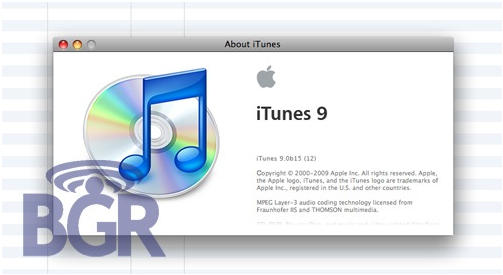
Purported screenshot of unreleased iTunes 9

Boy Genius Report published Wednesday what the blog reports as screenshots of iTunes 9 sent in by a “tipster”. The screenshots, whose “authenticity cannot be confirmed”, purport to show Facebook integration as well as sync capability extended to a Samsumg mp3 player.

For what it’s worth, a source intimately knowledgeable with the production of Apple help and support documentation told Cult of Mac during a recent conversation not to expect social media integration with the release of iTunes 9, which our source described only as “coming soon”. The most interesting and useful upgrade confirmed for the next version of iTunes is going to be the ability to order and organize iPhone and iPod Touch app screens from the iTunes desktop.

With nearly three weeks until the still-rumored, not-yet-officially-announced Apple Media Event thought to be taking place in San Francisco on September 9, the Apple rumor mill will in all likelihood continue to spit and pop all kinds of interesting ideas. And in all likelihood no one will really know what’s coming until the John Mayer music (or whoever…) fades…

Hit the jump for more screeenshots

Interview: How Apple Wins By Coming Second

By

secondomics+book+jacket

Apple’s been getting a lot of flak lately for its heavy-handed App Store policies – a direct consequence of its new-found status as a market leader, says author Graham Bower.

For years, Apple capitalized on its underdog status, able to skirt the rules because it was always coming in second.

But now that it dominates with products like the iPod and iPhone, it’s getting the same kind of grief that dogged Microsoft for years.

Bower, who lives in London, has just published a fascinating new book called Secondonomics: How Coming Second Can Be a Winning Strategy, which is about the advantages of coming second. Contrary to popular belief, winner doesn’t take all. Take for example what happens to the first penguin into the water versus the second. Which one gets eaten?

Apple figures large in Secondonomics. Bower argues that Apple has gotten a lot of passes because of its underdog status.

“The Mac has a big advantage over Windows because it’s the second most popular desktop OS,” says Bower. “It’s not targeted for viruses as much, and it’s not targeted for anti-trust cases. Can you imagine Microsoft getting away with hooking something like MobileMe so tightly into their OS?”

Hit the jump for a fascinating IM interview with Bower, who’s a smart cookie. Bower has a lot of insight into Apple, coming second, the challenges Apple faces as it becomes bigger, and Steve Jobs’s psychological need to be an underdog.

Review: Fashionable Loopbags Are Tough Enough For NYC

By

loop_messenger_bag
Ibint's Messenger Loopbag is a good, sturdy laptop tote for NYC.

Because we’re all geeks these days and need bags for our laptops, the market for fashionable computer bags has mercifully grown. Gone are the days when the only laptop bag you could buy was black and rectangular.

A particularly stylish entry onto the fashion laptote market is Ibint, a company that sells a range of good-looking laptop bags called Loopbag. The Loopbags have distinctive zippers that loop around the front and back of the bags — hence the name.

We’ve been testing a pair of Loopbags in New York for the last couple of weeks, and they’ve held up exceptionally well, especially because this summer has been exceptionally wet.

Hit the jump for the rest of the review.

UPDATED: Apple’s Design Genius is What Gets Left Out

By

8252-bigthumbnail
Image via Desktop Nexus

The Internet has lately played host to a near-infinite amount of fol-de-rol regarding a rather silly post from Weblogs, Inc. and Mahalo founder Jason Calacanis in which he railed against Apple’s recent paranoia. There’s plenty wrong with the gist of his argument (as Leander points out in this rather nice post), as well as a few things that are right on.

But I’m not here to dwell on that. I just want to make one thing very clear: what makes Apple great is not what it puts into its products. It’s what gets left out. As exciting as visions of flying iPhones with 8 sim slots, a Zip disk slot, and dual head-mounted displays might seem, the original iPhone (and iPod, for that matter) became iconic because of its limitations — not in spite of them. Innovation, contrary to Calacanis, is often more about editing than possibility. Apple, more than most companies, is defined by its unwillingness to do too much. The greatest design impact is in what we can’t see.

“PC” School District Sends Macs to the Scrap Heap

By

Photo used with a CC-license. Thanks to Chris Corwin on Flickr.

An elementary school in Sarasota, Florida is sending several hundred working Macs to the trash heap — in keeping with the school district’s “PC-only” policy.

Piled up in the cafeteria of the Emma Booker school, 140 G3 and G4 laptops and over 50 iMac and eMac machines await the scrap heap.

An account in the local paper takes on dramatic overtones:

Sarasota County Public School system employees who alerted the Pelican Press to the salvage effort asked not to be identified because they feared retribution. “All of the machines are still working,” said one. “The teachers asked if they could buy them or give them to the kids. We were told, ‘No.’”

Putting the Macs out to pasture is the result of a decision by Superintendent Gary Norris, who headed the school system from 2004-2008, who declared the school system would be PC-only, the paper said.

Even the county school district’s program that donates computers to needy kids, called Texcellence, is a Mac-free zone.

“We’ve never used Macs,”  foundation spokeswoman Laura Breeze told Pelican Press. The group recently received 1,100 used PC computers and is refurbishing them and adding software before giving them out.

At a time when budgets are tight, you have to wonder why a school district would send working computers to the scrap heap.

Mobile WiFi + iPod Touch = Better/Cheaper Than iPhone

By

post-14227-image-b5582fb28d5c43f5fc0f7e9bd0308058-jpg

An iPod Touch plus a mobile WiFi router is better and cheaper than an iPhone, says Wired.com’s Charlie Sorrell.

Sorrell just got the MiFi — a mobile, battery-powered WiFi hotspot that can share a high-speed cell connection with several devices via WiFi. It’s sold in the U.S. by Verizon for $100. (Requires a two-year contract and a monthly plan costing $40 or $60 — 250MB or 5GB of data, respectively.)

The MiFi is fast and reliable, he says, and can be used with an iPod Touch to make Skype calls and play music streaming from Spotify’s fantastic music library.

“The real point is that if you have a mobile Wi-Fi hotspot in your pocket, it is going to be cheaper than an iPhone contract pretty much anywhere, and can not only enable your iPod Touch to have an always on connection, but let you make Skype calls and stream music without having to worry about the usual iPhone size limits, as you’re on Wi-Fi. You can also share the connection with five machines in total, including a netbook, for true on the go video calls and (gasp) Spotify.”

Setup was a little tricky and he’s not been using the setup long, but Sorrel thinks the combo could be all he needs. He’ll be testing his new setup in coming weeks and promises to report back.

Windows 7 Upgrades Chart Makes Brain Hurt; We Offer the Mac Equivalent

By

post-14186-image-7714f307f0302e587a4852afa584b755-jpg

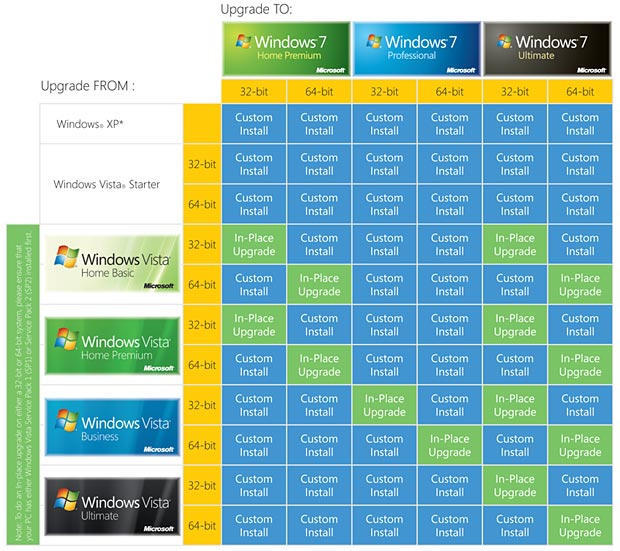
Walt Mossberg yesterday revealed Microsoft’s official chart that explains how you can upgrade your version of Windows. And I use the word ‘explains’ in its loosest possible sense, since Microsoft’s chart looks like this:

Clearly, this is a great example of how extra choice doesn’t always benefit the consumer. And for what it’s worth, all those blue boxes are boxes of doom—‘in-place upgrades’ (green) means the install will keep your files, settings and programs intact, but the more common custom install (blue) refers to a clean install, which will force a user to move their files, install the OS, replace their files and reinstall their apps. (And then, presumably, curl up into a ball in the corner of the room and weep uncontrollably.)

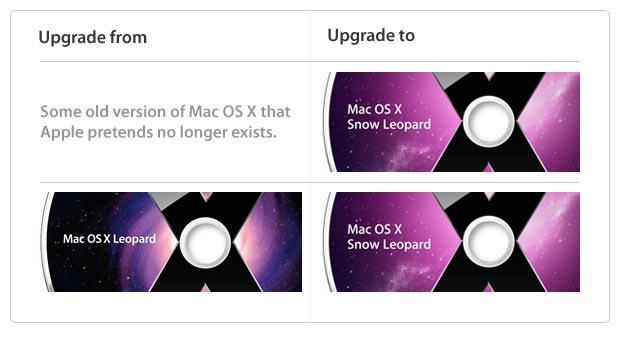
I thought it’d be useful to create a Mac equivalent for Snow Leopard. If you’ve got an Intel Mac, the upgrade path regarding installation is certainly a lot simpler:

win-upgrade-2

And this is simplified even further if you’ve got a PowerPC Mac:

win-upgrade-3

Interview: Brent Simmons On Ads And Google Reader Sync In NetNewsWire

By

post-14143-image-3b8121768ae723f2089459dbd836b347-jpg

NetNewsWire

What, you may be wondering, is going on over at Newsgator?

In a recent statement, the company (which owns NetNewsWire, the desktop RSS reader that pretty much defined the category on OS X) announced a fundamental change to its service: from August 31st, it will switch off the web-based RSS reader known as Newsgator Online for consumer users.

Newsgator’s existing desktop apps, including NetNewsWire, will continue to work. But if you want them to sync with other RSS readers, you’ll have to have a Google Account and do it via Google Reader, which will become your web-based viewer, replacing Newsgator Online.

And all this, of course, has consequences for users of NetNewsWire. A new public beta is out now, which supports the Google-based sync.

It also includes ads, distributed via The Deck. This last change has not been trumpeted with quite as much enthusiasm by Newsgator – advertising is not mentioned at all in the blog post that announced the changes.

Cult of Mac got in touch with NetNewsWire’s developer and mastermind, Brent Simmons, to ask him: what’s going on? And why the ads?

Here’s what he said.

Products, Platforms, and Networks — The Endless Tango Between Apple, Verizon and AT&T

By

post-13882-image-734510545e584fc636098f44c62b21a4-jpg

Picture via Aurum3

The comically wrong-headed announcement that Verizon would be launching VCast Apps, its response to Apple’s App Store, made me realize that pretty much everyone, including, major cell phone carriers, are confused about how and why the iPhone has been such a success. I could spend awhile talking about why an all-Verizon app store is a stupid idea (when you create apps for dozens of phones, all running different OSes and using different interfaces, you get the lowest common denominator; Verizon already has a pan-network app store; people love iPhone App Store because the software is good, not because of the basic concept), but instead I’ll devote a little while to analyzing the success of the iPhone and provide some basic definitions that are going to be critical to understanding the new mobile landscape in years to come.

Those terms? Products, Platforms, and Networks. To have a truly great experience, you need to excel in all three. Unfortunately, no one in the U.S. is doing that. Read on for more.

Microsoft’s Folly: The Blue Store of Death

By

post-13800-image-b80c9126031bb92e6f278484352fd99b-jpg
"Zombies in a Mall" by Steve Rhodes

I tried to write this article seriously. After all I’m an executive management consultant and an analyst; this is what I do for a living.

Even Leander chimed in, “Leigh, you’re becoming a parody of yourself, a crank only hauled out to rant about stuff and then tucked back in the closet.”

I want you all to know I tried, I really did. But this notion of Microsoft opening up stores is so Dog-Damned Stupid, it makes my fricken head want to explode.

Follow me after the jump to find out why.

Why’s Apple Messing with Google? (App Store rejections)

By

post-13712-image-fee46c9107ffccdeb4f5f8d0b97c453b-jpg

For the second time in less than a week, news has leaked that Apple has rejected a Google app for the iPhone. First was the location-awareness tool Google Latitude (which is fun but just as good in a browser), and today came word that the official app for Google Voice has been turned down. Worse, two prior client apps for Google Voice, GV Mobile and Voice Central, have both been withdrawn from the App Store (though it appears Apple hasn’t deleted them from users’ phones; yet).

All of this is incredibly puzzling. Nothing has happened suddenly today that suggests in any way that Apple suddenly discovered new information that disqualified GV Mobile (which was approved personally by Phil Schiller) and Voice Central from sale. And this antagonism toward Google in general is deeply troubling. Yes, the official Google Voice app includes a dialer, as do the other apps, which technically replicates functionality on the iPhone. But so does Skype, and it’s still on sale. Apple also cited duplicate functionality as reason to reject Latitude, but no one sophisticated enough to use Latitude could possibly confuse it with the built-in Maps program.

And it’s all fairly pointless, anyway, because all of the functionality Apple might be obstructing by holding these apps back is available through Mobile Safari right now. Latitude is currently functional through a custom web app, and the Google Voice website can place calls and send free texts from the iPhone. It could use a new interface, but the full capability of the technology is there — I called my wife with it, and it works perfectly. Screenshot’s from my phone.

No, something else is going on here. And as I see it, it’s one of two possibilities. The first is that Apple is finally starting to feel some heat from Android (I know it’s ridiculous, but hear me out) and wants to prevent Google from dominating two mobile platforms. Actually, I’ll just reject this one. If Apple wants to stay ahead of Android, there’s no better tactic than to get great Google apps on the iPhone.

So that leaves the other alternative, spelled AT&T. We know, with some certainly that Ma Bell is the reason that SlingPlayer only works over WiFi on the iPhone, and we know that it, not Apple, wanted Skype kept off of 3G. Worse, we know that AT&T’s battered 3G network is struggling to keep up with the incredible data traffic generated by iPhones. Now, Google Voice isn’t data intensive, but it does allow you to send free text messages (AT&T charges 20 cents a pop) and insanely cheap international calling (India is 7 cents a minute, a full two cents cheaper than Skype). When your network is in trouble, you might as well make sure people don’t find ways to get around your punitive fees, right?

Now, if this were AT&T’s app store, I wouldn’t have a problem with the carrier dictating which apps were approved and which weren’t. But this is supposed to be Apple’s show. Worse, other phones on the AT&T network are allowed to get Google Voice, full SlingPlayer and other functionality that is being held off the iPhone for fear of the traffic burden. If AT&T is behind this, I understand it, but I’m incredibly frustrated. If Apple’s hand is on the switch, I have serious doubts about the company’s ability to hold onto a developer community much longer.

TechCrunch: Apple is Growing Rotten to the Core

TUAW: GV Mobile and Voice Control Pulled from App Store

Apple Screws Google Over ‘Latitude’ iPhone App

Microsoft Shamelessly Rips Off Apple For Upcoming Stores

By

post-13622-image-faf0a3a7dc222fdb1b7b286400cd6cb0-jpg

Steve Jobs is fond of the saying “good artists copy, great artists steal,” which would put Microsoft in the great artist category.

Apple’s rival is planning to open retail stores this fall that are a direct ripoff of Apple’s super successful shops.

In a presentation leaked to Gizmodo, Microsoft is planning stores that are “light and airy,” divided into solution areas, and feature a “guru bar.” Sound familiar?

  • Different areas for Windows Mobile, Windows Media Center, Windows 7, and netbook
  • A Guru Bar where customers can get answers from Windows experts
  • Regular demos and events
  • A special Microsoft shopping bag

But here’s one idea that’s not ripped off from Apple.

The Microsoft Store will host birthday parties!

Exclusive: New Features of iPod Touch, Nano Revealed in Dozens of Cases

By

post-13222-image-29e5c3383db73a1a39ef0dd34058b6b3-jpg
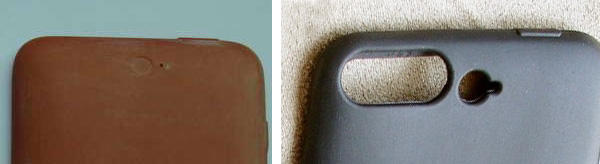
The next iPod Touch and iPod Nano are about to get cameras, according to intelligence coming from Chinese case makers.

What’s the worst kept secret in China?

The features and dimensions of Apple’s new iPod Touch and iPod Nano, which are hush-hush here in the U.S. ahead of their expected September unveiling, but are well-known in China.

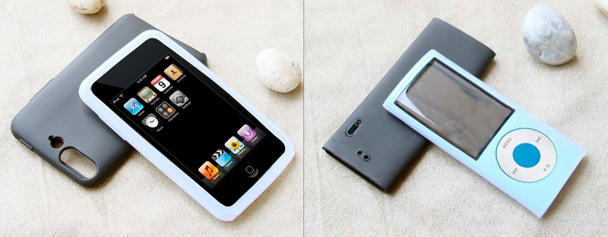
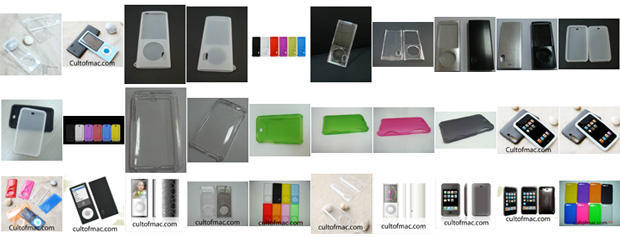
According to more than a dozen pictures of new cases acquired by CoM, the new iPod Touch and iPod Nano will both get cameras.

The big surprise is that the iPod Touch’s camera is in the center of the device, not offset like the camera in the iPhone.

The Nano’s new camera is placed in the bottom left corner, which becomes top left when the iPod is held horizontally to take a picture, with fingers on each corner.

The outside dimensions remain largely the same as previous models, but the Nano gets a widescreen display, the better to take photos with the camera on the back.

This has all been widely rumored, of course. iLounge detailed the new Nano back in May.

But the dozen pictures of new cases below all but confirm the rumors. Chinese case manufacturers are so certain of the features and dimensions, they are already sending out samples of the cases. They wouldn’t do this unless they were pretty confident.

“My company had got full information and dimension,” wrote a Chinese distributor in an email to a U.S. reseller. “Enclosed some image and instruction for your reference. Most of the sample available now. If you need some sample check quality please freely let me know.”

Hit the jump for dozens of new cases exclusively unearthed by CoM.

ipod_cases

UPDATED: Cult of Fact Check: Gladwell on App Store Revenue

By

post-13505-image-73d3b61f0922d2061d7e442f5bc1f9e2-jpg

Malcolm Gladwell is a very sharp guy, on a whole lot of topics (heck, he liked my book!). One of the most enjoyable reads of the past month is his point-by-point thrashing of Chris Anderson’s book Free in the New Yorker, which basically established that, all protests to the contrary, charging money is a better business than giving things away for free.

But in the course of this deconstruction, Malcolm made a pretty big arithmetic error that made it sound like Apple was on the verge of making the content it sells for its devices more important than the hardware itself:

“And there’s plenty of other information out there that has chosen to run in the opposite direction from Free. The Times gives away its content on its Web site. But the Wall Street Journal has found that more than a million subscribers are quite happy to pay for the privilege of reading online. Broadcast television—the original practitioner of Free—is struggling. But premium cable, with its stiff monthly charges for specialty content, is doing just fine. Apple may soon make more money selling iPhone downloads (ideas) than it does from the iPhone itself (stuff). The company could one day give away the iPhone to boost downloads; it could give away the downloads to boost iPhone sales; or it could continue to do what it does now, and charge for both.”

Actually, Apple is really, really far away from making more money selling iPhone downloads than from the iPhone itself. Let’s take the most recent data we have.

Virtual Apollo Computer Puts Eagle’s Controls In Your Hands

By

post-13345-image-a82e49975d74fd56bacc698794945e69-jpg
No Dock or Menu Bar was available on early versions of Mac OS for spacecraft

All this Moon landing nostalgia is wonderful and I’m enjoying every minute of it, especially We Choose The Moon and the CAPCOM and EAGLE Twitter accounts — anyway.

If you’ve ever wondered whether you could make it as an astronaut, here’s the ultimate test: Virtual AGC for Mac.

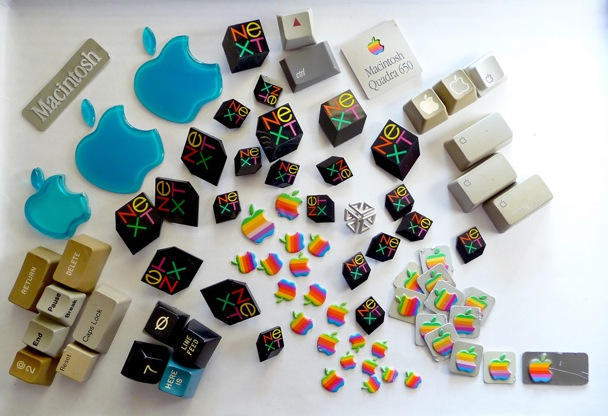
Marvel at More Apple Logos Rescued from Dead Computers

By

post-13328-image-81336c1ed9e5359202cf4df1ec71b7bd-jpg
Apple symbols, saved from the dumpster.

A CoM reader wrote in after our story on the Apple symbols pried from dead computers and transformed into jewelry to say that he’s been doing the same for years.

The reader, who goes by the handle univac, set up a gallery of what he calls “liberated logos” on Flickr –  there’s something wonderful about seeing the evolution of them side by side.

His collection includes a ton of iconic rainbow Apple symbols (including one possibly from a 512 “Fat Mac,”) plus larger ones from laserwriters, G3s and Quadras.

More pics after the jump.

Cult of Mac favorite: Drop7 (insanely addictive iPhone game)

By

cult_logo_featured_image_missing_default1920x1080
Drop7: a bit like drugs, only more addictive.

What it is: Yet another puzzle game. This time, you drop numbered discs into a grid. If the number matches the amount of discs in its row or column, the disc vanishes. If it’s next to gray blocks, it smashes them. Clear chains for bonuses.

Why it’s good: The evil people behind Drop7 describe it as “Tetris meets Sudoku”, which is kind of right. However, we’d prefer to describe it as “hardcore drugs meets videogaming”, since Drop7 just won’t let go. We find ourselves sneaking quick goes on ‘hardcore’ mode, because they only take a few minutes each, but then an hour flies by and deadlines are standing in front of us, with a concerned, slightly angry expression.

We fully believe that Area/Code actually plans to get everyone hooked on Drop7, shortly before taking over the world and going “mwahahahahahaha!” a lot. Put it this way: we’re now playing this more than Flight Control.

Where to get it: Drop7’s available via the App Store, and there’s more information at the Drop7 website. At the time of writing, the game cost three bucks. Don’t leave home without it—or you’ll get the shakes.

Kensington Launches World’s Biggest USB Thumb Drive

By

cult_logo_featured_image_missing_default1920x1080
Kingston's 256GB DataTraveler

The days when you plugged your tiny thumb drive into your Mac may be over; memory maker Kingston Monday unveiled the 256GB DataTraveler 300 — more hard drive space than many desktop or laptop computers.

This thumb drive isn’t meant to transfer a few MP3s or an occasional Word or Excel file. No, the European branch of Kingston reports the DataTraveler has bigger tasks in mind, like 51,000 images or 365 CDs.

“This demonstrates how far flash technology has developed,” Antoine Harb, business development manager for Kingston Technology in the Middle East is quoted. Could this signal Apple a flash memory iMac or MacBook is possible?