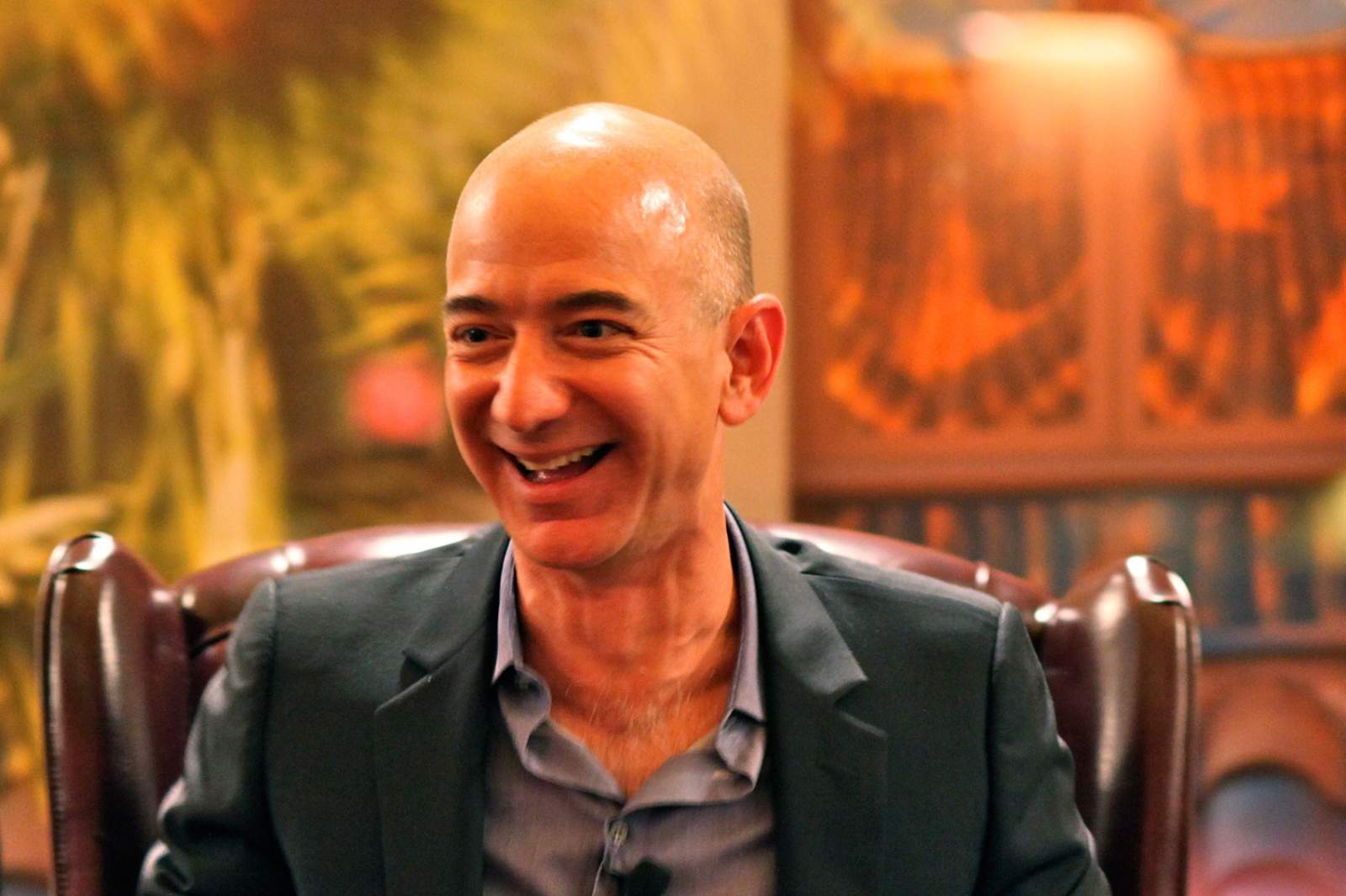
Amazon CEO Jeff Bezos wouldn’t want to toil in the dehumanizing hellhole described in a recent report about work conditions at his company. In a memo to employees responding to the allegations, Bezos painted a picture of caring Amazonians who are “fun” and “brilliant” and “helping to invent the future, and laughing along the way.”
He also said anybody who gets treated badly by Amazon should snitch to HR — or email him directly to air their grievances.
















 But which will be the first to take a tumble?