Personal clouds can cause professional headaches in the workplace
One of the challenges that the BYOD and consumerization trends are creating for IT departments is employee use of public and/or personal cloud services. We’ve covered some of the big challenges this presents in terms of data security and ownership as well as the potential business continuity problems stemming from multiple versions of documents stored across different cloud services by multiple employees.
IT concerns may be more common and well-known, but there are cloud-related issues that employees need to consider as well – particularly if they use a work email address to register for a service, access a service from work, or use a service to store or transfer work-related files.
Singer will.i.am at the TRANS4M Boyle Heights launch.
This post is brought to you by Chase — a strong supporter of TRANS4M Boyle Heights, a program that provides multiple social services that address Boyle Heights’ particular needs. Learn more here.
Summer school has never been this cool: kids in a Los Angeles neighborhood will spend four weeks using iPads and MacBook Airs in a digital storytelling class.
The class is part of a three-subject curriculum — they’ll be boning up on English and math skills, too — to boost the chances of 65 ninth graders to get into college.
It’s the first offering of the Trans4m Boyle Heights Initiative, backed by a $7 million, three-year commitment from Chase and lead by will.i.am, who grew up in the neighborhood. His charity, i.am angel foundation, and College Track, co-founded by Laurene Powell Jobs, are teaming up for the project.
Problem: Your iPhone takes amazing pictures, but when the sun is shining, you can’t see the damn screen. Solution: a giant eyepiece that sucks onto the iPhone’s screen and offers you a viewfinder shielded from the light of the sun. It’s called the Daylight Viewfinder, and it is coming to you via Kickstarter.
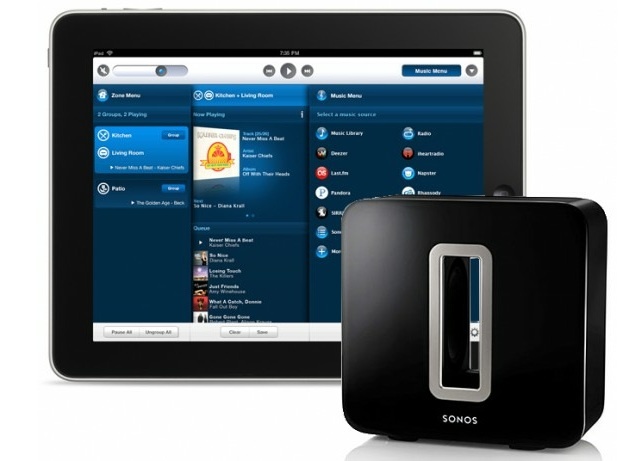
Sonos has updated their Controller app on Android and iOS in preparation for the June 19th launch of the Sonos SUB. The Sonos SUB is the latest addition to their top-notch wireless audio system and adds that ground shaking bass you’ve been looking for. The SUB works with all amplified components: CONNECT:AMP/ZP120/ZP100; PLAY:5/ZonePlayer S:5; PLAY:3 and features:
Roambi packages your personal or business information as easy-to-use interactive reports
As technology and always-connected devices become more pervasive in our daily lives, companies, think-tanks, government agencies, non-profits, and other organizations have access tremendous new pools of information about virtually anything on the planet. The challenge of such a “big data” world is how to aggregate that information, analyse it, make substantive conclusions, and then package in a useful form.
Making sense of data and communicating the results in a concise and effective manner is such a big challenge that many organizations will pay research firms and think-tanks to analyse and package data form them – often as static snapshots with pages of text and charts and accompanying PowerPoint files.
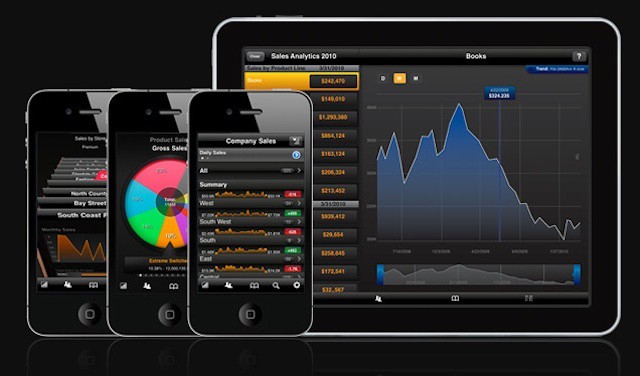
The ability to access real-time data in a useful way is one of the things that makes MeLLmo’s iPad app Roambi a great business intelligence tool. Today, however, the company announced that it’s taking Roambi a step further and allowing companies to turn the Roambi’s dynamic and interactive data dashboards into full-fledged iOS apps in their own right and market them in the App Store.
This time last week we had very little idea of what the new iPhone may look like. Sure, we had rumors and claims that gave us something to go on, but none of them were supported by any evidence. But in the space of just a few days, we’ve seen several front and back panels from a number of different sources, which have today been backed up by what is purported to be a leaked blueprint for the next-generation iPhone.
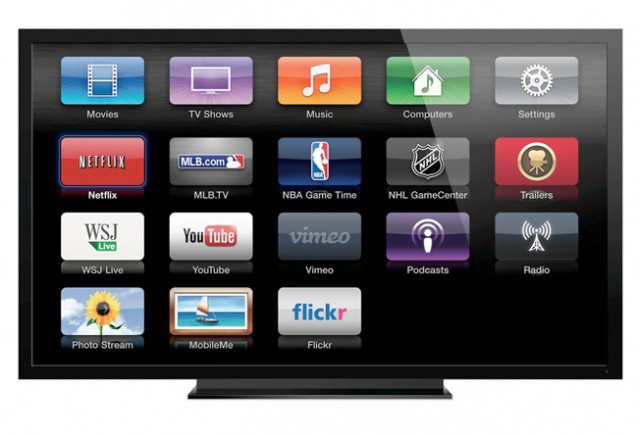
Apple isn’t going to debut their new rumored HDTV set at WWDC 2012, but according to a new report, they will unveil the version of iOS that it will run on, and which will be coming to the Apple TV set-top box later this year. Even more interesting? Your Apple TV might soon become the hub through which the rest of your living room connects.
Good news! Your iPad 2,4 can now be jailbroken with Absinthe & Rocky Racoon.
There weren’t many iOS 5.1.1 devices that the Absinthe 2.0 and Rocky Racoon jailbreaks didn’t support from day one, but one of them was the iPad 2,4 — the latest Wi-Fi iPad 2 that Apple released alongside the third-generation iPad earlier this year. Thanks to their latest updates, however, that’s all changed.
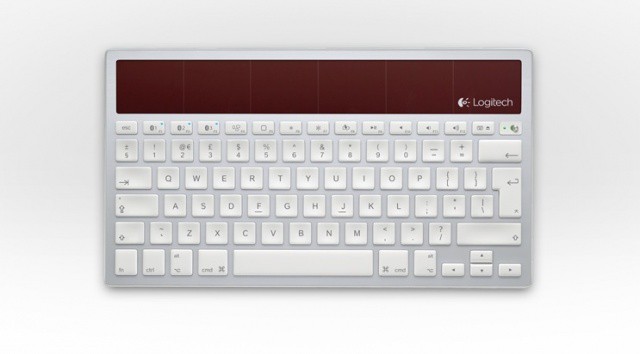
I love my Apple Wireless Keyboard, but I don’t love changing its darn batteries every couple of weeks. But the Logitech K760 Wireless Solar Keyboard could soon be taking its place on my desk. Powered entirely by ambient light (it doesn’t even need batteries as a backup), the K760 will run for three months on a full charge with eight hours of use a day.
It’s ideal for those with Mac and iOS devices, because it allows you to connect to three devices simultaneously and quickly switch between them using the function keys.
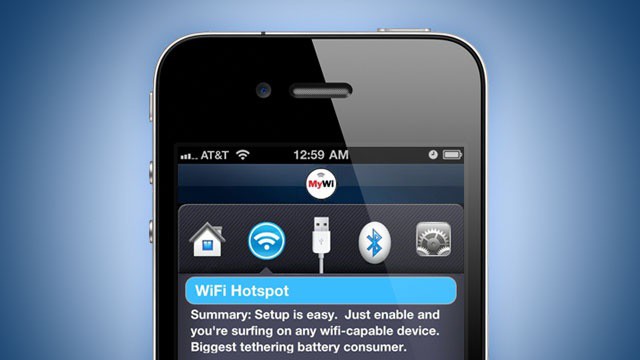
MyWi allows you to share your iPhone's data connection with other devices over Wi-Fi.
If you love tethering your iPhone to other devices to share its 3G (or fake “4G”) data connection, but you hate paying the additional fees demanded by your carrier, then you’re likely to be a MyWi user. MyWi is an incredibly popular utility for jailbroken iOS devices that allows you to turn your iPhone or iPad into a personal Wi-Fi hotspot without activation from your carrier.
Those who recently upgraded to iOS 5.1.1 to take advantage of the Absinthe 2.0 untethered jailbreak will be pleased to know that MyWi has now been updated to support this release.
The Apple online store went down for just under seven hours this morning, and many of us were hoping that it would reappear with new the MacBook Pro in tow. Unfortunately, that wasn’t the case, but there was one new product: the Nest Learning Thermostat that was invented by former Apple engineer and the “father of the iPod” Tony Fadell.
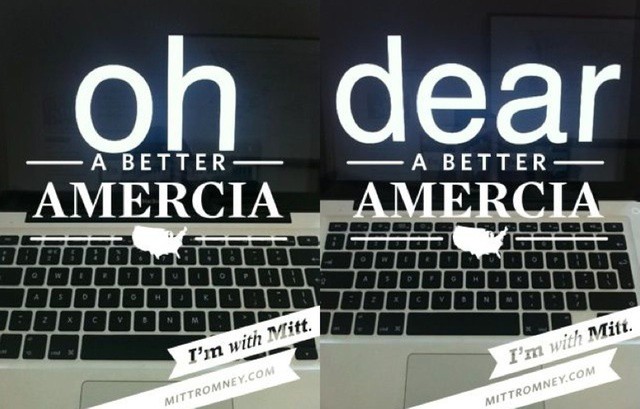
Matt Rimney’s campaign has released an official photo app with a text template that reads “A Better Amercia.” Ooops.
The app comes with a bunch of text overlays (the others, you’ll be pleased to hear, with correct spellings throughout) that you can add to photos of – well, anything you consider suitably Republican and Presidential. I’m sure you’ll come up with something.
It’s not even a very good app. The image you line up in your viewfinder gets shifted down considerably when the overlay is applied, so don’t bother with careful composition.
Oh, and take note of the terms of use: “By using this application, you may be placed on Romney for President Inc’s contact list.”
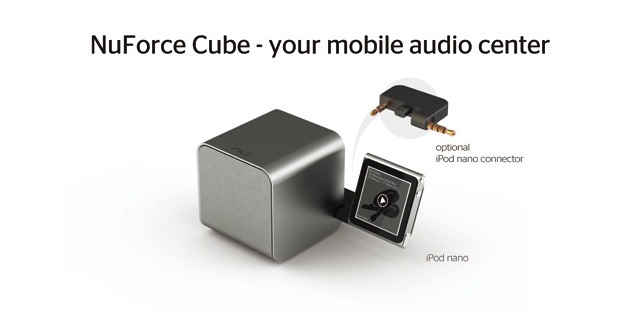
Imagine a JawBone JamBox, complete with its cute combination packaging/display case. Now imagine that it has been shrunken down into a two-inch cube. Further, try to picture a box that has had the Bluetooth radio extracted and replaced by a high-end DAC (digital analog converter) and a quality headphone amp. Now, keep this picture on your head as you reach around and pat yourself on the back and hear the theme from Rocky in your head.
Congratulations — you have successfully imagined the NuForce Cube, whilst simultaneously engaging all three of your main sensory systems.
Cook believes Walt Mossberg and Kara Swisher were too soft on Tim Cook during the D10 interview this week.
During the Q&A session at D10 today Apple CEO Tim Cook was asked an interesting question about how his company names its products. While many have speculated as to why Apple called the fifth-generation iPhone the “4S” back in October, Cook confirmed that the smartphone was named after its flagship feature, Siri.
Apple names its products each generation by either a flagship feature or design change. When a certain product establishes itself, naming conventions are usually dropped altogether, like the iMac and iPod Shuffle.
Speaking at an interview at D: All Things Digital today with Walt Mossberg and Kara Swisher, Apple CEO Tim Cook hinted at some new directions for Siri.
“I think you’re going to be pleased with where we’re taking Siri.” Cook alluded to more breadth from the voice-enabled assistant, as well as admitting that there is more the technology could do.
Apple and Facebook have had a rocky relationship since the two failed to reach an agreement on Ping integration and implementing Facebook in iOS 5 last summer. Things are starting to look up for the two Silicon Valley giants under the new direction of Apple CEO Tim Cook.
At the D10 conference today Cook hinted that his company is working with Facebook to provide direct integration with iOS devices in the near future.
During his interview at the D10 conference today, Apple CEO Tim Cook was asked point blank by Kara Swisher about how Apple plans to change television.
He replied by praising the current set-top box Apple sells for $100. The Apple TV sold 2.8 million units last year and 2.7 million this year. “It’s an area of intense interest for us,” said Cook, “It’s not a fifth leg of the stool. It’s not the same size as the phone or Mac or tablet business.”
Walt Mossberg, co-interviewer, asked directly if Apple could just make a box and continue leaving the panel to others. Cook replied, “Can we control the key technology? Can we make a significant contribution far beyond what others have done in this area?” That’s the question Apple asks, and Cook seemed to be very interested in what the future may hold for his company’s future contributions.
At the D10 conference today Apple CEO Tim Cook talked about the many patent wars his company is involved in. Declaring that patents are a “pain in the ass,” Cook echoed Steve Jobs when he said, “We just want people to develop their own stuff and not rip us off.”
Cook compared patents to an artist drawing a painting. “We can’t take all of our energy, and all of our care, and finish the painting and have someone else put their name on it.” Apple doesn’t want to be the “developer for the world.”
Tim Cook took a moment at the D10 conference today to defend Apple’s reliance on supply chains and its willingness to micromanage them when they fall short of expectations.
Cook said that no one else is measuring working hours in China, nor reporting on it. “We took a position to say we want to bring this down,” he said. “We’re measuring working hours for 700,000 people.”
Apple CEO Tim Cook shared some thoughts on the late Steve Jobs and his influence on Apple tonight at the D10 conference. When asked how the loss of Jobs has affected Apple, Cook admitted that the death of Jobs was “one of the saddest days of my life,” but that his company is still intensely driven to strive for the very best.
Cook said Jobs taught him that “focus was key,” and to “not accept good,” but only the very best.
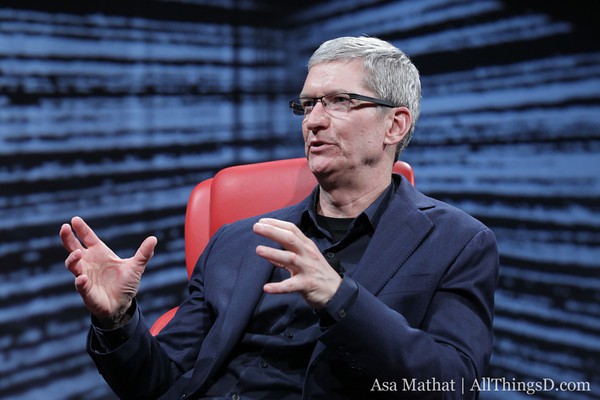
Talking with Walt Mossberg and Kara Swisher today at the D: All Things Digital conference, Tim Cook explained why the iPad wasn’t the same as the Mac.
“The tablet is different,” said Cook. “It can do things that aren’t encumbered by what the PC was. We didn’t invent the tablet market, we invented the modern tablet.”
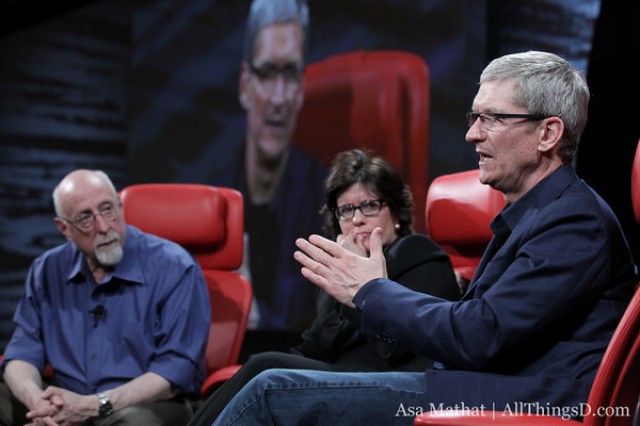
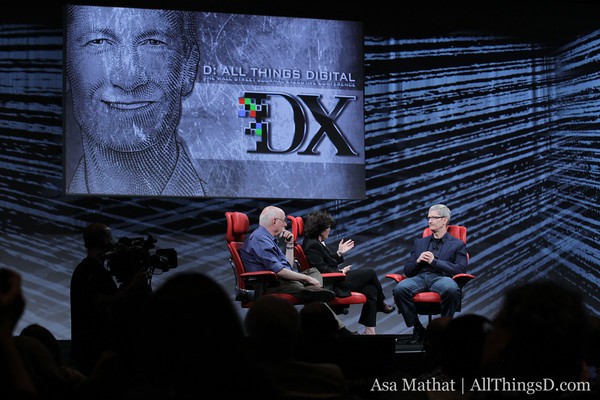
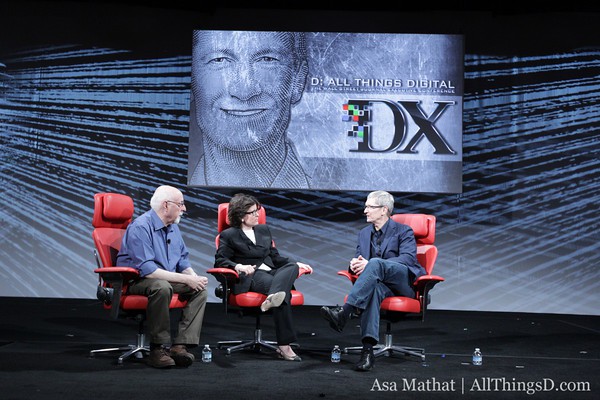
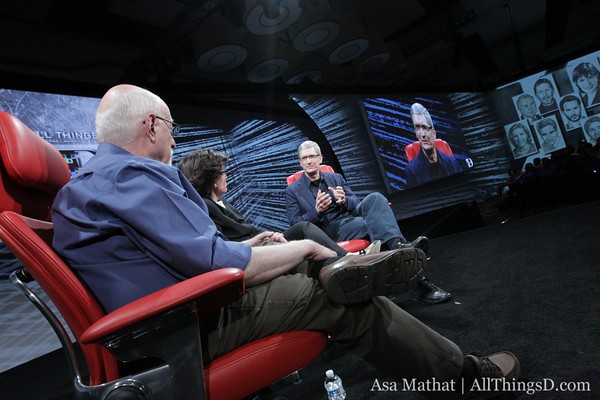
Kara Swisher and Walt Mossberg interview Tim Cook at All Things Digital in California.
Apple CEO Tim Cook took the stage tonight to sit opposite veteran journalists Kara Swisher and Walt Mossberg at the tenth D: All Things Digital (D10) conference in Rancho Palos Verdes, California. It is Cook’s first major interview since he became the official CEO of Apple last year.
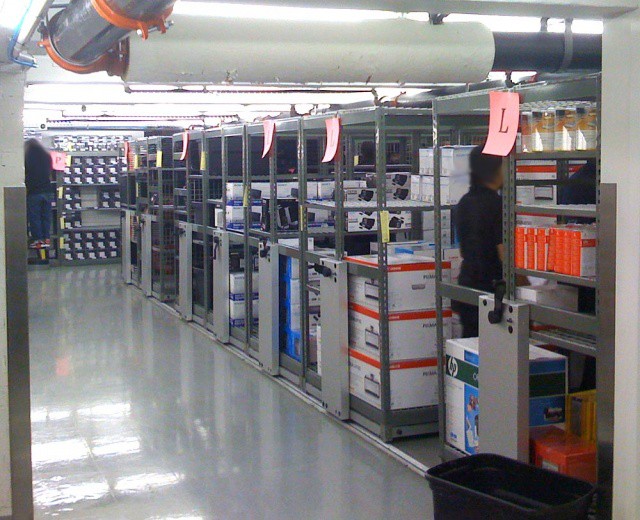
Rolling shelves fill the Apple Store's back-of-house.
Have you ever wondered what it looks like behind the scenes at your local Apple Store? Customers can walk-in and see the products on the store floor, but what happens behind the back doors?
Some photos from one of Apple’s main retail stores in New York City reveal rarely-seen areas, including where the store keeps its inventory.