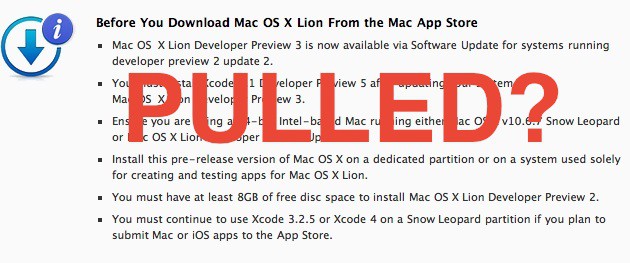
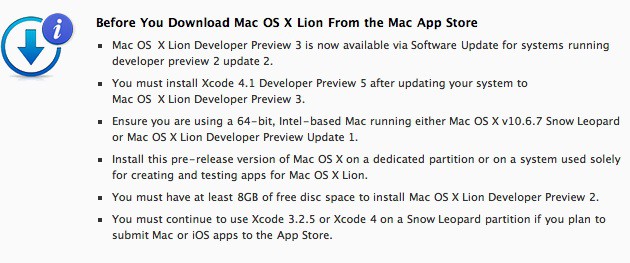
We’ve received various reports from developers testing Lion Developer Preview 2 that the Preview 3 update is no longer appearing in Software Update on machines running Lion Developer Preview 2 released on March 30th.
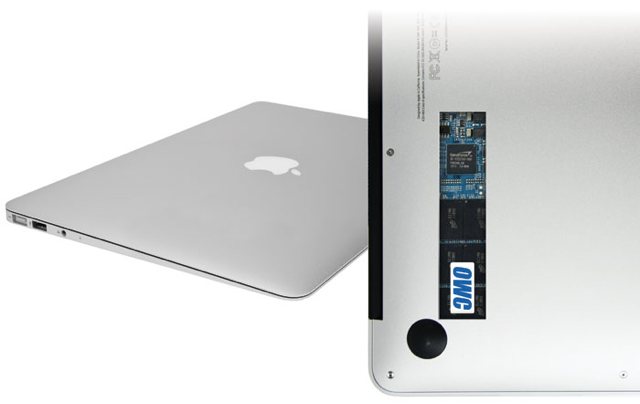
When I first got my Macbook Air, I fell in love with its diminutive profile, speedy boot times and incredible portability, but after living with it for a few months, one thing became glaringly apparent – 128GB was simply not enough room. Having convinced myself it would be at the time or purchase – I have recently found myself umbilically attached to a 500GB USB hard drive for music and photos.
Now, 6 months in, I was faced with two choices – stick the current MBA on eBay and stump up the extra cash for a larger capacity Air – or invest in a 3rd party storage solution. The first option is just stupid, so an upgrade was on the cards.
While the iPad has seemingly countless uses, one fairly uncommon one is the ability to use it as an external display for your Mac. iDisplay, a simple little app from the App Store, lets you achieve this. After all, if you already have the iPad, why not use it to your advantage? This video will show you how to set up iDisplay and tweak it to your liking.
Karelia Software announced a major upgrade to the company’s flagship Sandvox product Tuesday, making it possible even for CEOs to quickly and easily build a website.
Far simpler than Dreamweaver yet more flexible and robust than iWeb, Sandvox 2.0 is designed for Mac and brings fully competent web design within the realm of possibility for those with nothing more than a desire for presence on the Internet and a vague idea of what it should look like.
Its palette of stock site designs aren’t especially cutting-edge but what Sandvox does offer is clean and uncluttered, with a range of inoffensive color themes that should appeal to the wide audience of individuals and small business owners who may be flummoxed by an infinite variety of web-publishing platforms — and don’t want to pay an actual web designer to build an attractive, functional website.
Apple has invested a considerable amount of time and money on iOS, the mobile version of Mac OS X, that powers the iPhone, iPod touch, iPad, and Apple TV. So it just makes sense that Apple would re-invest iOS technology into the Mac version of OS X. Steve Jobs has pretty much said so himself and we’ll start to see this happen with the release of Mac OS X 10.7 bearing the code name Lion.
First of all it is no secret that Apple plans on bringing a number of features to the Mac from iOS. These features include the following:
Resuming Applications
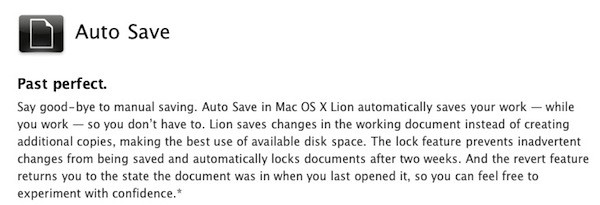
Mac OS X will allow applications to remember open windows, etc. similar to resuming apps when launched on iOS. Automatically saving application documents will also be an integrated feature similar to what happens on iOS when you suspend or quit an app.
One of the most interesting revelations of the Fortune piece “Inside Apple” that’s making headlines this weekend is how Steve Jobs thinks Apple will be OK without him.
Fortune reporter Adam Lashinsky writes:
“Jobs himself believes he has set Apple on a course to survive in his absence. He has created a culture that, while not particularly jolly, has internalized his ways.”
GeekTool is a neat little System Preferences add-on that lets you expand the usability of your desktop. Whether it be adding the time, date, weather, or even your Twitter feed, GeekTool can change your desktop from a boring backdrop to a useful information center. This video will show you how to setup GeekTool to fit your needs, as well as where to find many useful add-ons for it.
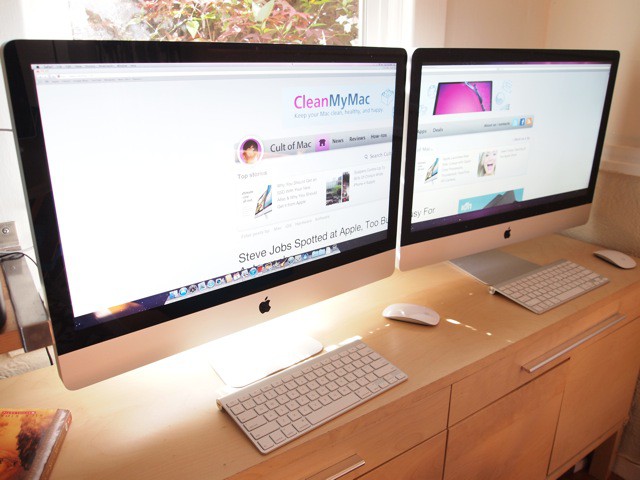
Sporting Intel’s Sandy Bridge processors, powerful new graphics cards and Thunderbolt ports that can support two external monitors, the new iMac is the undisputed champion of all-in-one machines. Plus, it’s the only one out there that’s not butt ugly.
As well as being the most attractive desktop computer available, it offers just about everything modern computer users might need in a self-contained package, from a HD webcam to a gesture-sensitive trackpad.
I’ve been testing a 27-inch model with a 3.1Ghz Core i5 chip (the biggest, fastest stock model currently available at the Apple Store), and it may sound silly, but it’s almost too much machine for my needs. The screen is so big, I have to sit back lest I get motion sickness. And the i5 chip has power to spare for someone like me, who doesn’t do high-end video or graphics work.
Still, I’ll take it. If the chip is too powerful now, it sure won’t be in a couple of years.
Apple has provided us with some of the best ads ever created. The Mac vs PC Campaign ads have been some of the most memorably entertaining advertisements to grace the television. Unfortunately Apple pulled the plug on the fun banter between Mac (Justin Long) and PC (John Hodgman) last year. However, should you feel so inclined to walk down memory lane with the plethora of Mac vs PC advertisements, Adweek has compiled all 66 ads for your viewing pleasure. They’ve even got them ordered out chronologically.
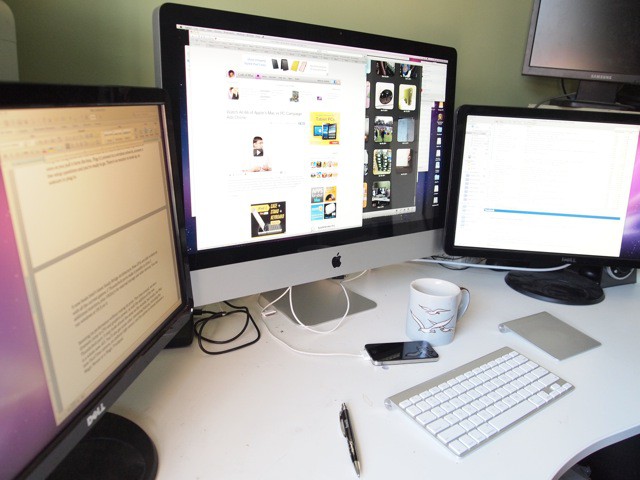
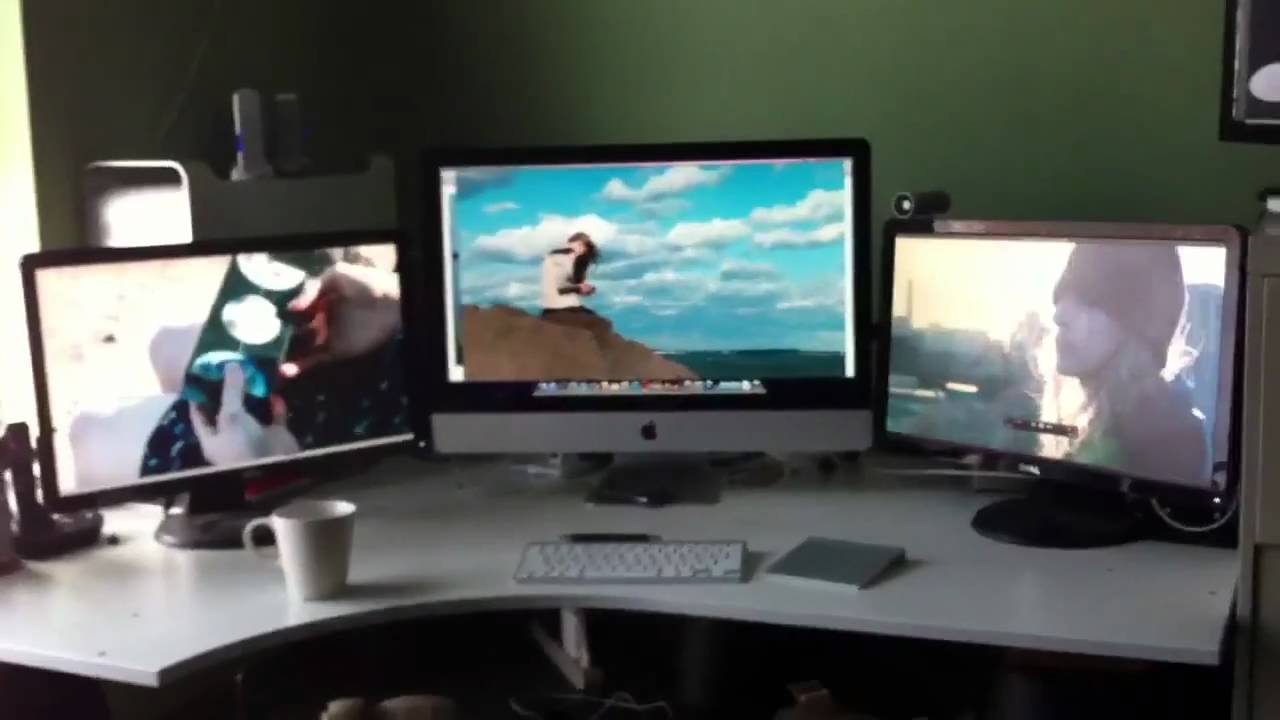
Here’s the new 2011 Thunderbolt iMac playing HD movies on three screens simultaneously — without a hiccup.
It’s a 27-inch model with an Intel Core i5 chip and AMD’s Radeon HD 6970 graphics card (1GB of GDDR5 memory).
The two 21-inch Dell monitors either side are connected via the iMac’s pair of Thunderbolt/Mini DisplayPort jacks on the back (with a pair of pricey $30 Mini-DisplayPort-to-DVI adapters).
The main 27-inch display’s resolution is 2,560-by-1,440; while the external monitors are at 1,920 by 1,080 (true 1080p HD).
While the beautiful hardware that Apple creates gets a lot of the attention, many people forget that the appeal of Apple’s devices is within the software more than anything else. Asymco.com recently published an article elaborating how the profit from Apple’s two operating systems (OSX and iOS) outpace the profits that Microsoft makes with Windows 3.5x over.
On the Mac side of operations the site says:
“While a lot of the credit for Apple’s success is rightfully assigned to the iOS franchises, the OS X business has more than quadrupled in five years. This has happened without drastic price fluctuations. Neither holds for the overall PC industry which has seen both volume and sales decline while prices have eroded along with profitability. On top of that, growth has nearly evaporated.”
Don’t trust your kids with open access to your credit card? I can’t blame you. In order to let your kids have an iTunes account though, you need to enter your credit card information, giving them free reign over your purchases, right? Wrong. While it may appear this way, there is a way to set up an iTunes account that involves absolutely no credit cards at all. This video will show you what to do.
A pair of Italian Apple fans visiting The Mothership had the good luck to spot Steve Jobs as he arrived for work recently.
They were snapping pictures out front of Apple’s Cupertino HQ when a big black luxury car pulled up. Out steps Dear Leader himself. The gobsmacked Italians asked for autographs and a commemorative picture, but Jobs shooed them away saying he was late to a meeting. He strode right by them into the building. This was a week ago: April 25th.
Good to see the miserable bastard is still hard at work.
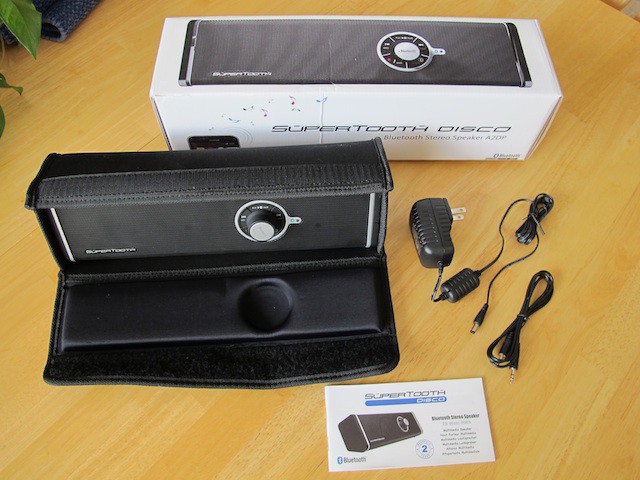
The SuperTooth Disco is a portable speaker that will wirelessly stream 28 watts of sound for your next parties dance floor. Here’s a hands-on review.
It won’t take the place of a dedicated sound system like the one you might have in your living room with only 28 watts of power, but for a portable Bluetooth device it is pretty impressive.
When you buy an external Hard Drive for use with Time Machine, Apple’s backup software, you will most likely need to format it before you can use it, since chances are that it is formatted for a Windows based computer. You could always spend the extra money to get a Mac formatted Hard Drive, but what’s the sense in that? You can format your own external Hard Drive right from Mac OS X. This video will show you how.
Earlier this week, I was interviewed by a Russian TV crew about Apple. They were a bit surly and aggressive, not like polished, ingratiating TV people here in the U.S.
They kept asking strange questions about Steve Jobs, as is if he were a crooked oligarch. “Vy does Steve Joybs vant to be dictator? Vy does he vant to dominate ze vorld?”
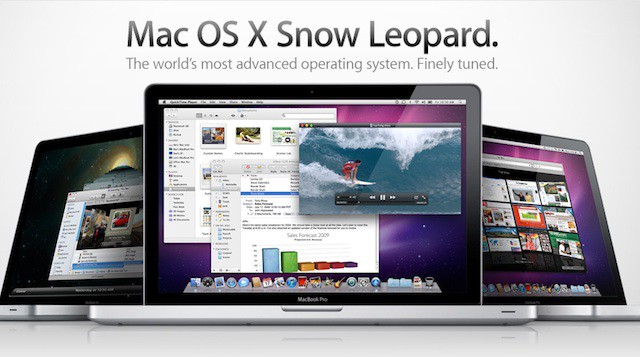
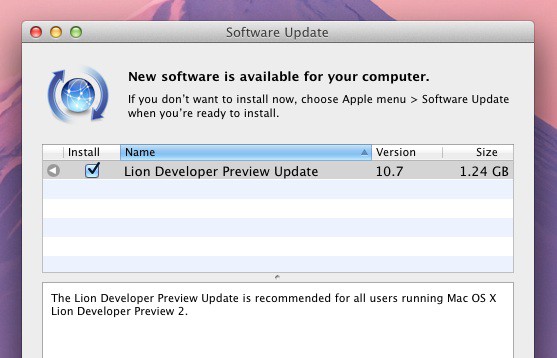
Apple has released an update to its Mac OS X 10.7 Lion beta. The 1.24 GB update is third build of the new operating system, which is expected to be shown off at WWDC in June and released to the public in the summer or fall.
The update is available to registered Mac developers running Lion Developer Preview 2. It can be downloaded through Software Update. The release contains no release notes and appears to contain only minor UI tweaks, according to tweets crossing the wire. It’s unlikely to be a big update. That will come with Developer Preview 3.
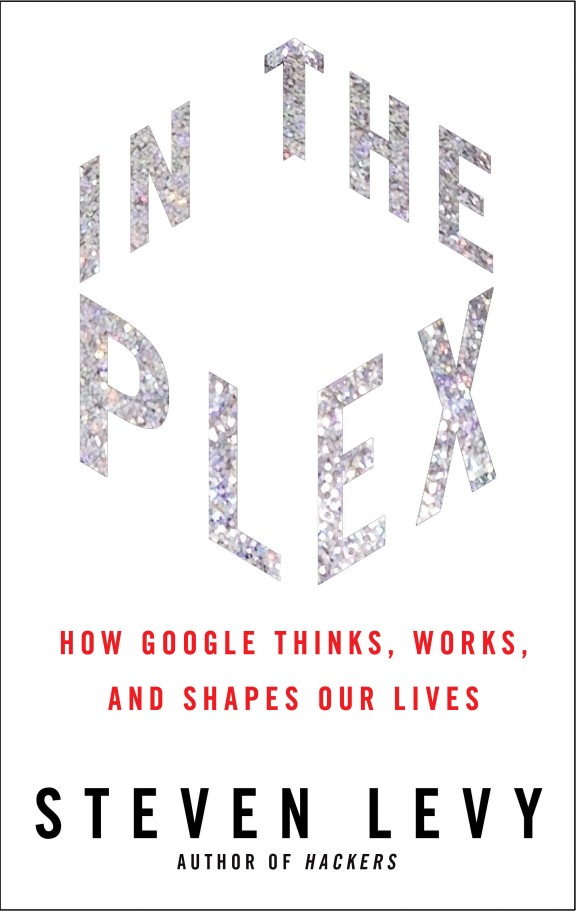
Steven Levy‘s new book about Google In The Plex revealed a few juicy nuggets about the relationship between Apple and Google.
At first, Larry and Sergey wanted Steve Jobs as their CEO. Then the two companies had a long honeymoon, sharing board members and collaborating on groundbreaking software. But then it all soured when Google released Android, and Steve Jobs hid the iPad from Eric Schmidt, even though he was sitting on Apple’s board.
We had a chance to ask Levy for more detail and insight into the relationship between Apple and Google. Here is our exclusive Q&A:
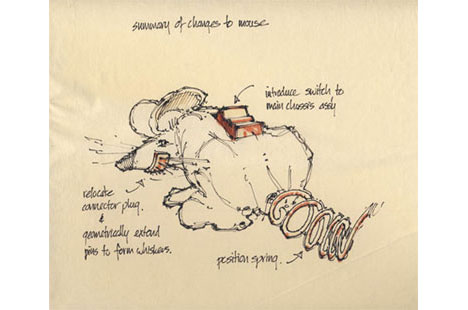
As we move into the touch computing era and our fingers again become the primary pointing device, it’s interesting to look back at the beginnings of earlier forms computer control. Dan Knight has posted a nice retrospective of the first few decades of mouse design over at Low End Mac:
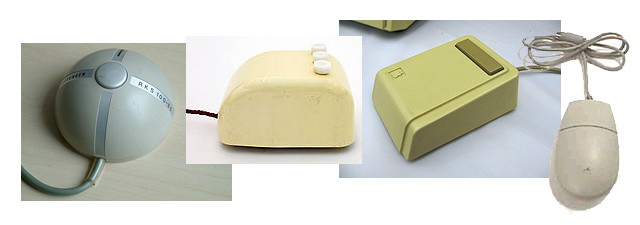
The first computer mouse was carved from a block of wood and used two wheels to track its motion. The first commercial mouse was the Telefunken Rollkugel, an accessory for Telefunken’s computers that replaced the wheels in Engelbart’s design with a ball, making it essentially an inverted trackball.
Early mice started out with more buttons than later models – first three, then two, then whittled down to a single button with the Apple Lisa and Macintosh. It’s inverted cousin, the trackball, had a similarly downward growth trend over time:
…the first trackball used a 5″ Canadian five-pin bowling ball. The trackball first came to popularity with Missile Command, an Atari arcade game introduced in 1980 that used a 4″ ball.
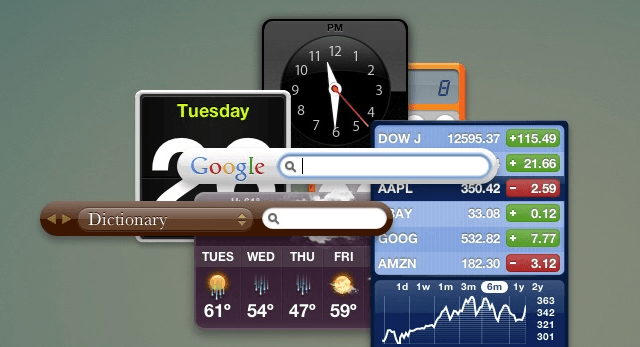
Sometimes Dashboard can seem like a hassle. While it can be very handy for quick tasks, having to open a specific application to access these widgets can become cumbersome. It is also impossible to perform other tasks while using these widgets. Well, a simple command can fix all of that, and let you enjoy widgets alongside Mac OS X applications. Find out what to do in this video.
If you’ve run up against the New York Times‘ new paywall, here is the simplest way to continue reading — guaranteed. This isn’t just a Mac tip: it works on Windows too.