It’s… it’s like looking into the Eye of Sauron. If each application were a different Eye.
More at Gizmodo.
It’s… it’s like looking into the Eye of Sauron. If each application were a different Eye.
More at Gizmodo.

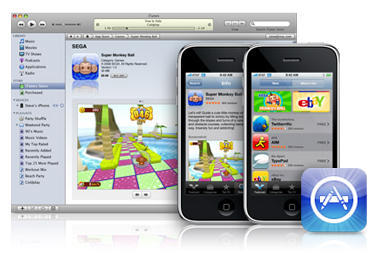
Apple reaffirmed its intent to control what programs may legitimately run on its iPhone this week when the company revoked ad hoc distribution authority from a developer whose application it previously barred from distribution through the iTunes AppStore.
Last week, when Podcaster received official notice from Apple that the AppStore would not be carrying its application because the company had determined it duplicates the functionality of the Podcast section of iTunes, the developer decided to use Apple’s ad hoc distribution method to get the program into the hands of users who were willing to make a $10 ‘donation’ for the privilege of becoming beta-testers.
Tuesday, Apple revoked Almerica’s access to creating ad hoc licenses for the podcast downloading tool, prompting howls of protest from developers and consumers, many of whom have been skeptical of Apple’s intentions and critical of its business practices involving the AppStore from the very beginning.
Follow me after the jump to learn more about what’s behind the dispute and why Apple could be standing on shaky legal ground.

The iPhone’s diddy little camera wins no photography awards, and rarely even a positive remark from fellow iPhone owners in the pub.
But that doesn’t mean it can’t come up with some interesting images when it tries hard. Or even when it doesn’t try hard at all, and just acts weird. We’ve seen iPhone cubism covered before, but how about iPhone slants?
Slanted by taiyofj.

iPhone can take a strange photo by kenic.

Llandudno beach by Fr Peter Weatherby.
All photos used with permission of their owners. Thanks to all.


A number of users are reporting iPhone 2.1 firmware appears to disable automatic email retrieval under certain circumstances, according to active Apple support forums
 A number of users are reporting iPhone 2.1 firmware appears to disable automatic email retrieval under certain circumstances, according to active Apple support forums. Specifically related to the 2.1 update loaded onto various models of the phone, users report the phone will not automatically check for mail, whether set to fetch new items on a schedule or to push mail in real time, and will only download new mail when asked to do so manually.
It is uncertain at this time how widespread the problem may be, though at least one forum participant reports having “just received a telephone call from [an iPhone] product specialist, and he confirms that 6 other iPhones in their building are exhibiting the exact same problem,” adding, “This is a global problem. This in their eyes is a ‘major’ issue and is getting escalated as we speak.”
Is your iPhone running 2.1 failing to get mail unless you ask it to? Let us know in comments below.
Apple has denied AppStore certification to a third party developer’s mail application that the company says “duplicates the functionality” of the iPhone’s built-in Mail app. Angelo DiNardi’s MailWranger app claims to let users check multiple GMail accounts without manually logging in and out and to provide functionality unavailable through the iPhone’s native mail application, including support for threaded views, access to Google contacts, and support for easy mail archiving.
The dispute here recalls last week’s brouhaha over Podcaster’s denial of service based on similar claims the app would “duplicate the functionality” of the podcasting functionality of iTunes. Whether MailWrangler will follow Podcaster creator Alex Sokirynsky and resort to ad hoc distribution is uncertain at this time.
By any analysis, however, Apple’s gatekeeping behavior with the AppStore seems increasingly capricious. If “duplicating the functionality” of native apps is a standard, for example, can someone at Apple explain why there are nearly two dozen tip calculators in the AppStore?
Steve Jobs and Steve Wozniak became fabulously wealthy using minimal resources beyond their own time and talent, working out of Job’s garage. Today, Jobs and the company he and Wozniak founded are making similar rags-to-riches stories possible with the iTunes AppStore and applications created by third party developers for Apple’s iPhone.
Steve Demeter, developer of a popular $5 iPhone game, Trism, announced he made $250,000 in profit in just two months, according to a story by Gadget Lab blogger Brian Chen. If his profits continue at their current rate, Demeter will earn $3 million by July 2009.
Demeter by no means tried to reinvent the wheel. Trism is basically a version of Bejeweled that uses the iPhone’s accelerometer to good advantage, giving the game what Demeter believes are the fundamental requirements for success at iPhone app development: unique gameplay and high replay value. He also designed support for an online leaderboard that creates community and says applications with great content sell themselves, something the developer of another popular game, Tap Tap Revenge, agrees with.
Bart Decrem was one of only four people who originally worked on Tap Tap Revenge, a free application that hit a milestone of 1,000,000 downloads just two weeks after its launch. Decrem’s company recently began inserting advertisements in the game, and it also has plans to release a premium version that will cost money in addition to the free app. He says iPhone development is “reminiscent of the early days of the web in terms of the amount of green fields and opportunity,” according to Chen. “You really don’t need a huge amount of capital. You need attention to detail and product, and that’s going to keep increasing.”

Plumb Amazing’s Record app for iPhone turns the device into a nifty little field recorder for capturing interviews, lectures, songs, bird calls, meetings, car sounds (to play for Clik and Clak on Car Talk), reminders, ideas, your child’s first words, street musicians, podcasts, science notes, observations, the list is limited only by your imagination.
Sounds in Plum Record can be tagged with photos, and text, multiple tags can be added at different locations in a sound file like bookmarks, allowing you to jump to different sections of the sound file instantly.
Plumb Amazing also offers a free server for uploading files, or you can transfer them directly to your Mac or other disk server.
Available now in the AppStore for a measly $5, many AppStore reviews of this software are glowing, though several complain about bugginess that prevents transferring files to Macs running Tiger.




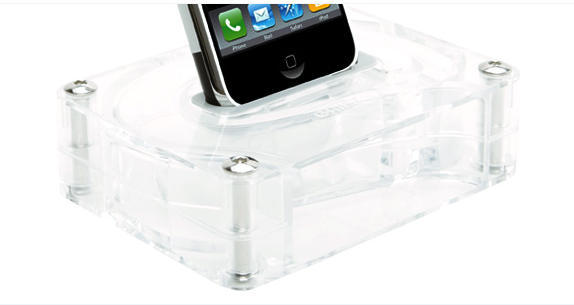
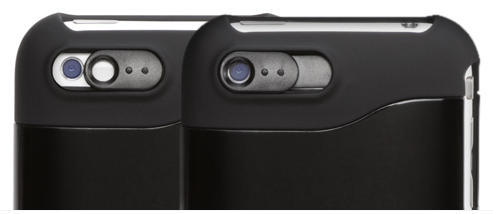
Griffin Technologies unveiled two iPhone accessories worth investigating at Apple Expo Paris on Wednesday: AirCurve is an acoustic amplifier that requires no power to amplify the iPhone’s built-in speaker, and Clarifi has a lens for taking close-up photographs built in to its protective polycarbonate iPhone case.
AirCurve borrows design elements from Bose “wave technology” to turn your iPhone into a no-power-drain alarm clock on your nightstand, or a mini sound system that never needs batteries or adapters, according to Griffin. An internal coiled waveguide collects sound from the iPhone’s built-in speaker, amplifies it, and projects it into the room. Designed with a pass-through slot that allows you to charge and sync your iPhone with a dock cable (available separately), AirCurve’s see-through translucent body lets you appreciate the acoustic curves inside that do all the work. Look for the AirCurve selling soon for $20 at major American electronics retailers.
Clarifi is similar to dozens of other protective polycarbonate iPhone cases on the market but is distinguished by the built-in lens that trurns the iPhone’s 2 megapixel camera into something more than just a snapshot device with focus set to ∞. Without Clarifi, iPhone requires about 18 inches to focus properly. Slide Clarifi’s lens into place and, according to the product specs, you can move in to 4 inches for crisp, detailed macrophotography. The case has cutaways for access to the power switch, headphone jack, volume controls, and dock connector. Clarifi will sell for $35 at major electronic retailers beginning in October and is compatible with iPhone 3G only.
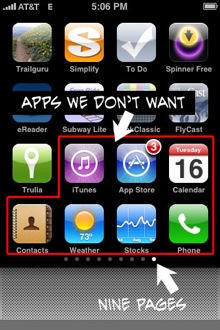
Macenstein has a beauty of a post, explaining precisely how to remove Apple’s own apps from sight on your iPhone.
If you’ve ever wondered how many screenfuls of apps the iPhone will let you store, the answer is nine – or a total of 148 apps. But it turns out that there’s a secret, hidden, 10th screen.
So if Calculator, Clock or Contacts drive you crazy and you want to be rid of them, all you have to do is get yourself nine screen loads of apps, and be sure that the 8th and 9th screens are full to the brim. Then get the icons wiggling and start shuffling from screen eight to screen nine. Boom!, as Steve would say.
The apps aren’t actually deleted, just removed from sight. And even then, they will re-appear after you restart the phone or sync it.
Full details are at Macenstein. And if you read it and think: “Why would I spend so much time doing that?”, then you and I both have great minds.
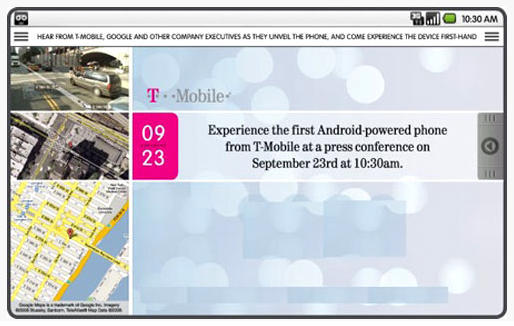
Image via Gearlog
Emulating Apple’s propensity for using media “events” to unveil new technology, T-Mobile sent an “invitation” to technology press Tuesday, encouraging attendance at a New York City event on September 23rd that will mark the debut of Google’s Android smartphone and the software it’s powered by.
The event sets up the first public challenge to Apple’s domination of the touch-screen smartphone market, with the thoroughly-leaked and publicly previewed phone, once known as the HTC Dream but now called the G1. Reportedly tricked-out with features including a slide-out display that exposes a full keyboard, as well as a BlackBerry-like trackball, the phone has been rumored to be the launch device for T-Mobile’s nationwide 3G network and may also boast GPS navigation, a tilt sensor and Wi-Fi connectivity.
We hope that Wi-Fi rumor proves true if the G1 hopes to go toe-to-toe with iPhone.
Via AppleInsider
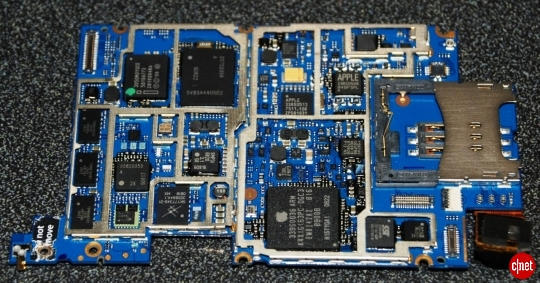
The LinkedIn profile of a senior manager on Apple’s chip architecture team appears to confirm Apple is developing its own ARM processors for the next generation of iPhone, according to a report in the New York Times.
While current iPhones feature a Samsung chipset according to many analysts, Apple was rumored to have acquired chipmaker PA Semiconductor in April for $300 million to engineer custom low-power chips to meet the specific needs of iPhone and iPod design. Wei-han Lien, a member of the PA Semi team who came to Apple in the deal, lists his current project as “Manage ARM CPU architecture team for iPhone” on his profile at the popular social networking site, an indication Apple will soon quit outsourcing iPhone processors.
By developing its own ARM configuration, Apple could create a processor with support for software accelerators or a graphics engine, according to former AMD chief technical officer Fred Weber. In addition, disposing of an outside chip supplier would allow Apple to maintain tighter controls on who knows what about its future products.
As one might expect, Apple declined to comment on matters related to PA Semi, which it operates as a subsidiary.
Via c|net

Image via Flickr by sasurau
The market for Apple’s iPhone may turn out to be less than half the size once expected in Japan, according to a report in the Wall Street Journal. With worldwide sales of the 3G model approaching 6 million units since its July 11 launch, and at least one analyst predicting total 2008 sales to reach 7 – 8 million units, Japanese consumers may snap up fewer than half a million out of a previously predicted 1 million, writes Journal reporter Yukari Iwatani Kane.
“The iPhone is a difficult phone to use for the Japanese market because there are so many features it doesn’t have,” says Eimei Yokota, an analyst with MM Research. More than 10 domestic handset manufacturers compete for a slice of Japan’s cellphone market, one of the world’s largest with annual sales of 50 million phones. Nokia Corp., the industry leader in global shipments, has less than 1% share in Japan. Instead, Sharp Corp. leads the Japanese market, with about 25% of shipments. Models currently sold by Japanese cellphone makers typically contain a high-end color display, digital TV-viewing capability, satellite navigation service, music player and digital camera. Many models also include chips that let owners use their phones as debit cards or train passes.
While Softbank, Apple’s cellular phone partner in Japan with 19.5 million wireless subscribers, says the iPhone continues to be popular, Yokota, the MM Research analyst, says one small but must-have feature often cited as a deficiency in the iPhone is the lack of “emoji,” clip art that can be inserted in sentences to jazz up emails.
Takuro Hiraoka, an analyst for GfK Marketing Services Japan Ltd., says the problem could be a lack of education. “Japanese users don’t know what to do with an iPhone,” he said. “Sales could grow if Apple provides specific examples of how it can be used.”
Over the last year and a half, a few dozen…dozen would-be “iPhone-killers” have emerged to take on Apple’s little widescreen iPod/phone/Internet browsing device that could. And illustrious these phones have been, ranging from the underwhelming Samsung Instinct to the equally underwhelming LG Dare and even the moderately adequate HTC Touch Pro.
And now, as dynamic Verizon pitchman Mike Lanman proves in this eternal launch video, RIM is throwing its Canadian hat (it’s flannel, with ear-laps) into the ring with the puzzling BlackBerry Storm. You will be shocked to learn that this amazing phone will “Take the market by <cue thunderbolt> STORM!”
Except that it probably won’t make any impact on the iPhone market. And that’s because Apple created a platform and RIM is building a product. Click through to read why.

There’s a bunch of iPhone/iTouch apps that offer some sort of sketching functionality. It was only a matter of time before people started sharing some of their sketches online, and my favorite gallery so far is the Flickr iPhone Sketches pool, which contains some real gems (like Luis Mendo’s untitled sketch, above, and Waiting by Pepita P.) There’s loads more:
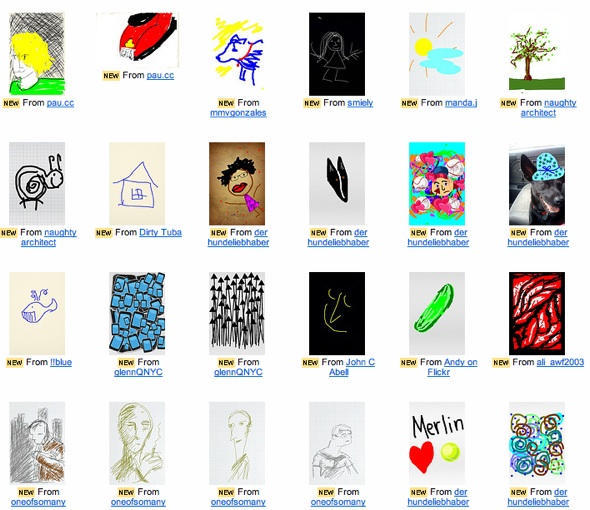
If, like me, you like the idea of drawing during dull moments but are rarely organized enough to carry around a sketchpad and a pencil, iPhone artwork is probably the next best option.
Got some iPhone artworks you’d like to share? By all means post links in the comments. A URL on a line of its own gets auto-linked. Let’s see whatcha got.
Picture used with permission from Luis Mendo
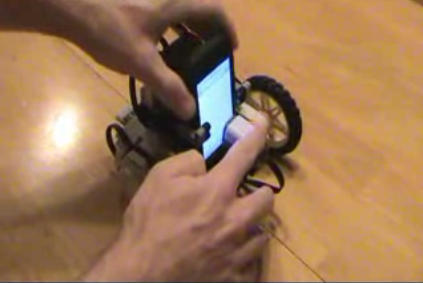
Wanna build an iPhone robot? Of course you do. And the people at BattleBricks have got everything you need.
You need two iPhones for this trick, thanks to the robot’s ingenious control system. The robot is controlled via a simple Google Web Toolkit app. The iPhone in your hand is used to issue commands; the iPhone attached to the robot displays coloured squares in different shades of grey, and an on-board light sensor watches what it’s showing; one shade says “turn right”, another “turn left” and so on.
Full instructions can be downloaded from the BattleBricks page. There’s exciting video to watch too.
And if you should happen to build your own robot, do let Cult of Mac know, so we can share your creation with the rest of the Cultists.
Apple has released iPhone 2.1 firmware as promised at Tuesday’s Keynote event in San Francisco. This highly anticipated software update is supposed to fix a host of bugs and provide performance enhancements that should dramatically improve the iPhone user experience, according to Apple.
Among noticeable upgrades, users should see improved cellular network connectivity, significantly improved battery life, dramatically shorter iTunes backups, improved fetching of e-mail and faster installation of third-party applications. The update also adds a repeat alert up to two additional times for incoming text messages, adds an option to wipe data after ten consecutive failed passcode attempts, and adds Genius playlist creation in iTunes.
Does your iPhone seem bigger, better, faster, more with 2.1 firmware? Let us know in comments below.

Photography, magic and music-making. Like the iPod before it, iPhone is becoming a cultural icon with creative innovators exploring unusual diversions for the device.
Magic master
Multimedia magician Marco Tempest (he’s on TV with his ‘Virtual Magician’ series in 52 countries) was an early mover. He created a video which appeared to be software running on an iPhone and queued for ten hours to buy one the day it launched in the US. Within ten minutes he’d installed the clip, which he used to entertain the crowd with a series of illusions.
Among other visual tricks, this made it appear the device was being used as an X-ray machine and an electric razor. Watch the amazing video:
More about Marco, after the jump.

Cult of Mac has confirmed the newest version of Apple’s iPod Touch contains the hardware necessary to enable free or low-cost phone calls over wi-fi.
With 5 wires connected to the Touch headphone jack (instead of 4 on the previous model), the device now supports the external microphone included with some headsets, according to Kyle Wiens of iFixit, who fully dismantled an iPod Touch on Wednesday.
Speculation about the possibility of VoIP (voice over internet protocol – a method for making and receiving voice communication over a connection to the internet, as opposed to the cellular telephone network) on the iPod Touch arose yesterday when the specifications of new Apple headsets with external mics appeared to include support for the iPod Touch in addition to the new iPod Nano and the 120GB iPod Classic.
“”I’m very excited about the possibility of VOIP on [the Touch],”said Wiens. “Now we just need the software.”
The software may already be here, in fact. TruPhone, a venerable innovator in the VoIP field, already has an iPhone application in the AppStore. Apple has said it would not permit applications that run VoIP using cellular networks, but a purely wi-fi-based calling method could pass muster, making the iPod Touch a little less distinguishable from its iPhone sibling.
One thing stuck out about the build-up to Let’s Rock. It wasn’t the hype, nor people expecting the absurd (such as an all-powerful unlocked 128 GB iPhone for about $5), but Apple actively encouraging the media to attend. The event, we were told, would be a ‘big deal’. As it turns out, even fairly modest expectations were barely met, and I think it’s pretty safe to say most people left distinctly underwhelmed.
iTunes was first up, with Jobs routinely talking shop (lots of songs, lost of podcasts, and lots of NBC, who came crawling back to a distinct lack of rapturous applause). The app itself is now at version 8, but with seemingly few major changes: there’s a grid view, a Genius playlist that makes me think Apple’s been getting all jealous of last.fm, and iPhoto-style scrubbing over artists, but that’s about it.
The iPod classic’s clearly loved about as much as the Mac mini. This icon of Apple’s resurgence over recent years was pretty much dismissed, and the line knifed to a single model, 120 GB. 30,000 tracks fit on it, apparently, but that’s 10,000 fewer than on the 160 GB version that’s now like the dodo.
Things were better in the realm of the nano, even if the rumor mill had revealed most of the details. The new model resembles the second-gen model, but has a raft of new features, including voice recording, an accelerometer, and the amusing ‘shake to shuffle’ feature. The rainbow colors are arresting and presumably caught rivals out, who’ve largely been following Apple into muted-color-land.
As for the iPod touch, it got the predicted price-drop, weight-loss, volume control and speaker, along with a tag-line to make English teachers wince (“The funnest iPod ever”). New games were also on show, with Real Soccer 2009 rather depressingly dumping a D-pad and buttons on the screen, cunningly making it so players obscure the screen while playing. Woo. (How I wish the Belkin rumor hadn’t turned out to be a hoax…)
So, yeah, I’m rather wishing I’d spent the past hour doing something a little more productive and exciting, like fashioning a lint ball from my office’s windowsill that really needs dusting.
I know, I know—I’m usually the first to complain about people getting all pissed with Apple events letting them down. However, this time Apple was the one telling us we were going to see something big, when all we got were skinny things we already knew about anyway.
Via our Twitter stream, we ran ongoing commentary on Apple’s Let’s Rock shenanigans. Below is a (somewhat) edited tweet-style stream-of-consciousness from the event.
The most controversial omission of the iPhone’s feature set is its bizarre lack of copy and paste. While anyone who has spent a cursory amount of time trying to figure out the interaction design for multitouch copy and paste using Apple’s guidelines will discover that it’s a little bit harder than it seems.
Even so, it shouldn’t be out of Apple’s depth — they’re kind of the best in the world for interface design. Which is why it should come as no surprise that Apple had touchscreen copy and paste figured out on the Newton 15 years ago, as shown in option8’s video above.
Via BoingBoing
Zach over at Boy Genius Report shares that he’s getting tons of e-mail from iPhone owners on the East Coast reporting that data services are completely out, but that it’s iPhone-specific. AT&T is investigating and has issued # TT000008107719 to blanket all such problems.
What are you seeing, Eastern Seaboard?
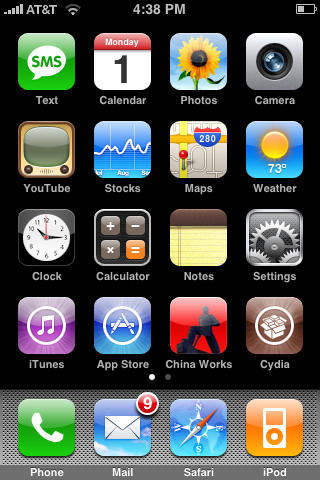
Blogger Ian Hoar details a method for creating a custom icon for your website that will show up on iPhones when someone bookmarks your site.
I made icons out of images I created for a couple of projects called China Works and Nickie’s BBQ, and bookmarked them to my iPhone. Hoar’s process is easy and it works!
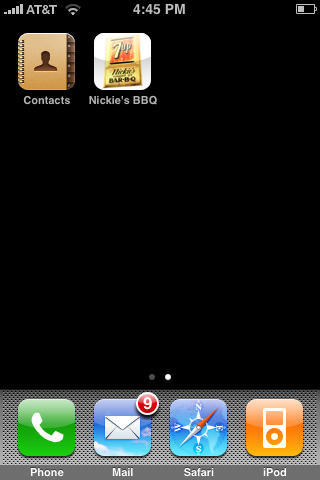
Basically, just save any graphic image you like as a 57×57 PNG file, name it apple-touch-icon.png, put it in the root directory of your webste, and iPhone will do the rest. Hoar details a method for saving multiple icons in different directories by using a “link rel=” line in the “head” of your web page, so be sure to check it out.
O2 finally announced today its pricing for pay as you go iPhones in the UK. The 8 GB model will cost £349.99 and the 16 GB model will be an extra 50 quid. Bundled in is a year’s unlimited browsing and Wi-Fi, which then costs a tenner a month, although you can unsubscribe prior to that if you feel the need.
The all-important date: September 16. The all-important caveat: no visual voicemail (bizarrely) and call-merging on Pay & Go. Still, for those iPhone-loving Brits who think mobile phone contracts are the work of the evil one, this is clearly great news.
Images: Touch Arcade
Update: Belkin has now confirmed that this story is a hoax.
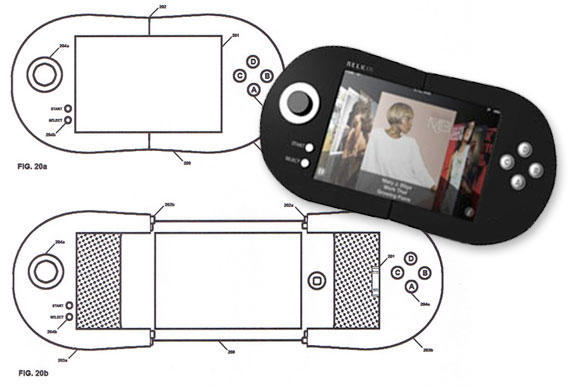
This past weekend saw the rumor mill go into overdrive regarding iPhone games controllers. While the chaps at iControlPad valiantly soldier on with their home-grown iPhone games controller that relies on jailbroken iPhones, Touch Arcade provided images of a rival (shown above)—supposedly from Belkin—that will have official App Store support.
The two-piece device would slide on to your iPhone, providing a joystick and six face buttons, akin to the configuration on the Nintendo DS. This means games developers wouldn’t have to rely on the iPhone touch-screen and tilting mechanism, instead being able to offer more standard control methods for iPhone games.
Predictably, some screamed “fake” once these images appeared, and others merely screamed, barely coherently ranting something about how AWFUL it would be to have a controller like this, because it’s the iPhone’s bizarre-o-controls that make it what it is regarding games.
Yeah, yeah, whatever. I love innovation, and I love people doing different stuff with iPhone gaming. However, I’m old, and I’d rather like to have a copy of Pac-Man on my iPhone that can actually be controlled via a non-stupid (sorry, non-innovative) method, as I hinted at a couple of months back. (Mind you, I’m probably not going to be totally happy until someone finds a way to run C64 games on iPhone and also plug in a Competition Pro…)