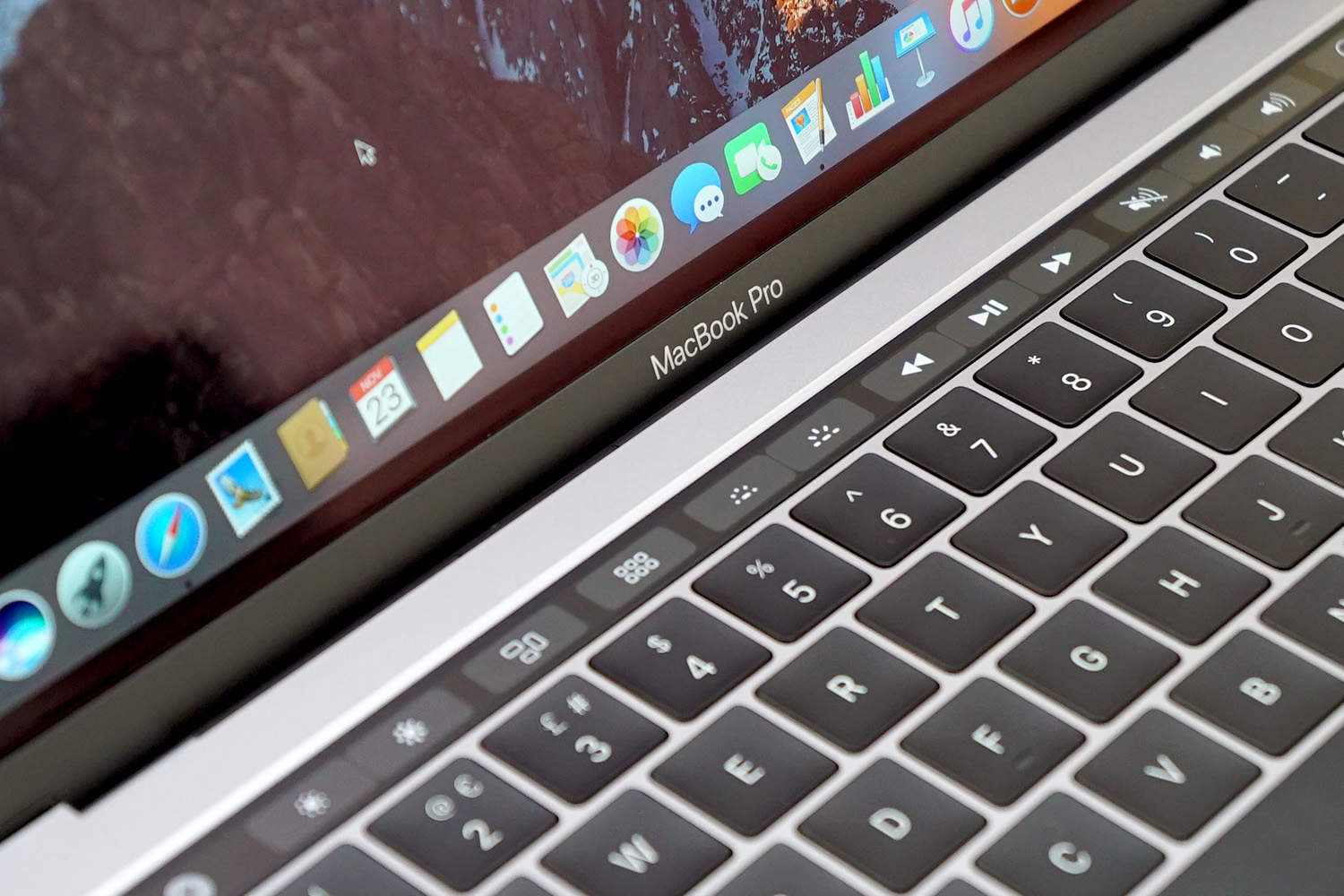
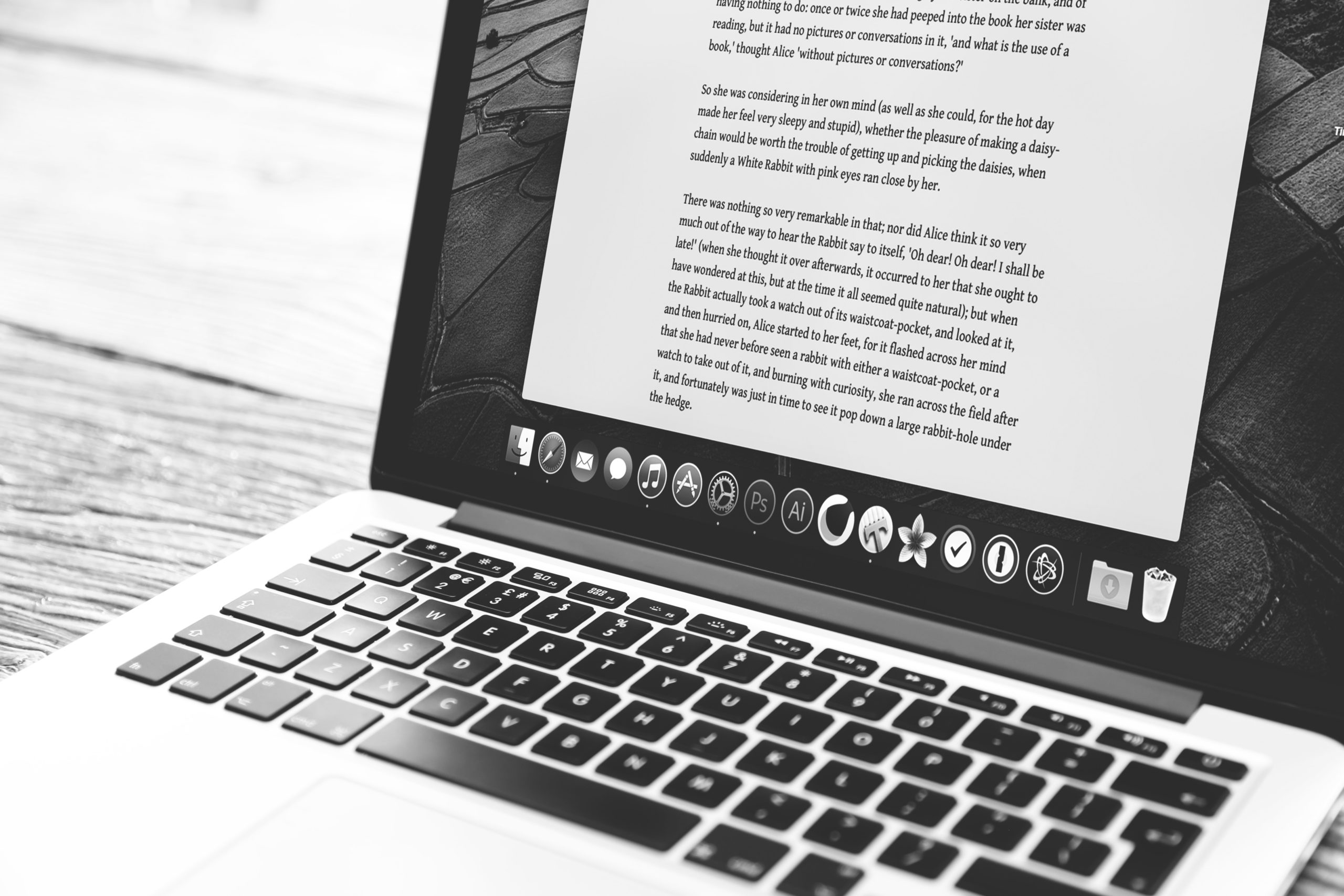
Don't settle for a Touch Bar you never use. Photo: Ste Smith/Cult of Mac
Some people love the Touch Bar. Others simply see no use for it, which can be frustrating now that every MacBook Pro ships with one. If you fall into that second camp, here’s how to bring back traditional function keys.
Snapping a screenshot of your MacBook Pro’s Touch Bar can be useful for so many things, and it couldn’t be easier to do. All you need is a simple keyboard shortcut … and at least a couple of fingers.
3 potential fixes recommended by Apple. GIF: Killian Bell/Cult of Mac
Apple has finally acknowledged that some AirPods Pro units can produce “cracking or static sounds” while in use. If you’re experiencing these issues, there are some things you can try that might help eliminate them.
A swipe right isn't just good for Tinder. GIF: Killian Bell/Cult of Mac
Using nested lists is a terrific way to organize your plans and thoughts inside the Notes app, and it’s super-simple to create them on iPhone and iPad using this quick pro tip. All you need is to get your swipe on.
Escape keys for everyone. GIF: Killian Bell/Cult of Mac
$299 won’t get you much in an Apple Store these days. It won’t even buy you an Escape key with your iPad Pro Magic Keyboard. But if you’re finding life a little difficult without one, there is a quick and easy way to add your own.
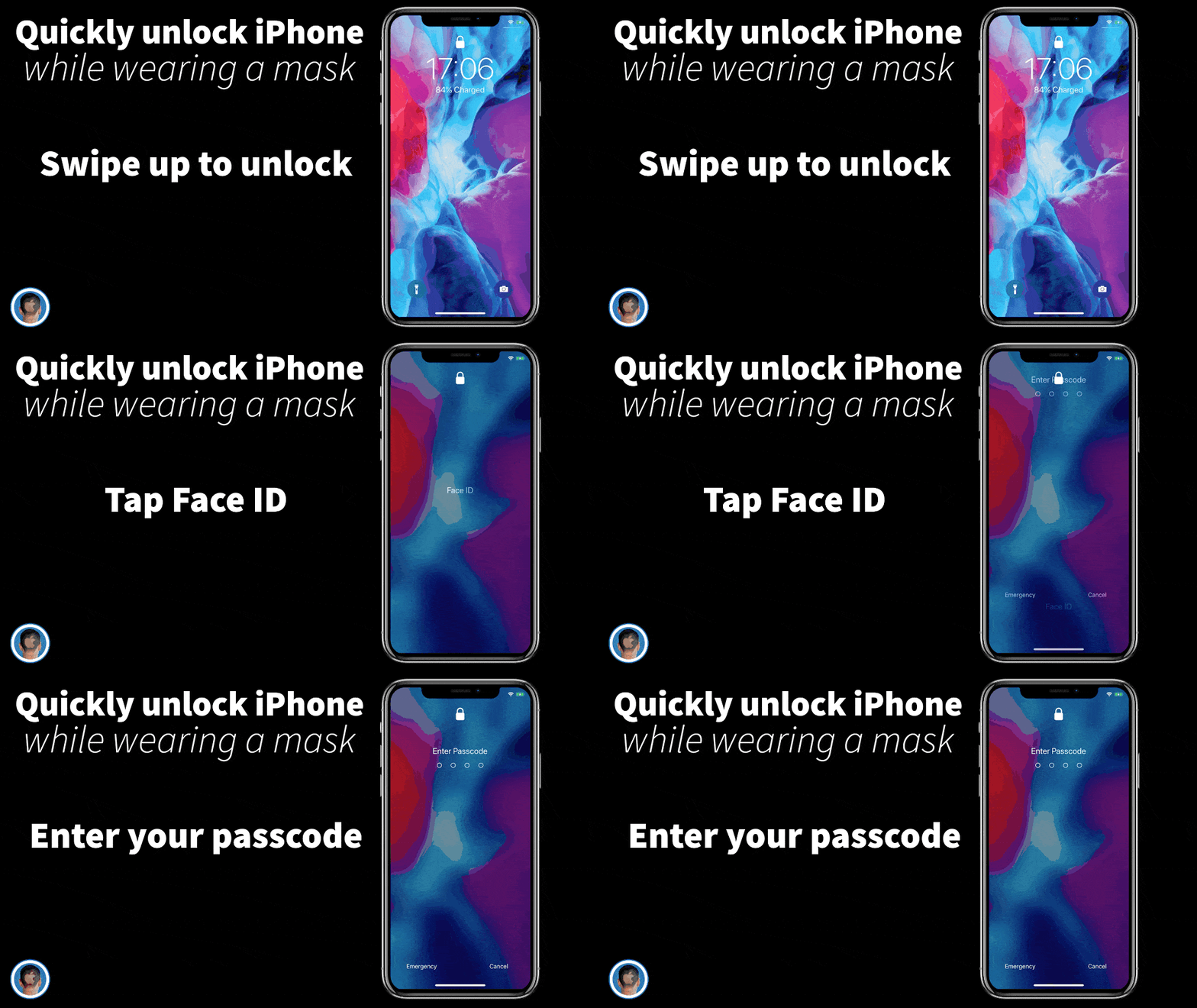
Here's how to quickly unlock your iPhone while wearing a mask. Photo: Killian Bell/Cult of Mac
You shouldn’t have to deal with the frustration of unlocking your iPhone with Face ID when you’re wearing a mask. And you don’t have to. This simple pro tip shows you how to skip Face ID and quickly unlock with a passcode instead.
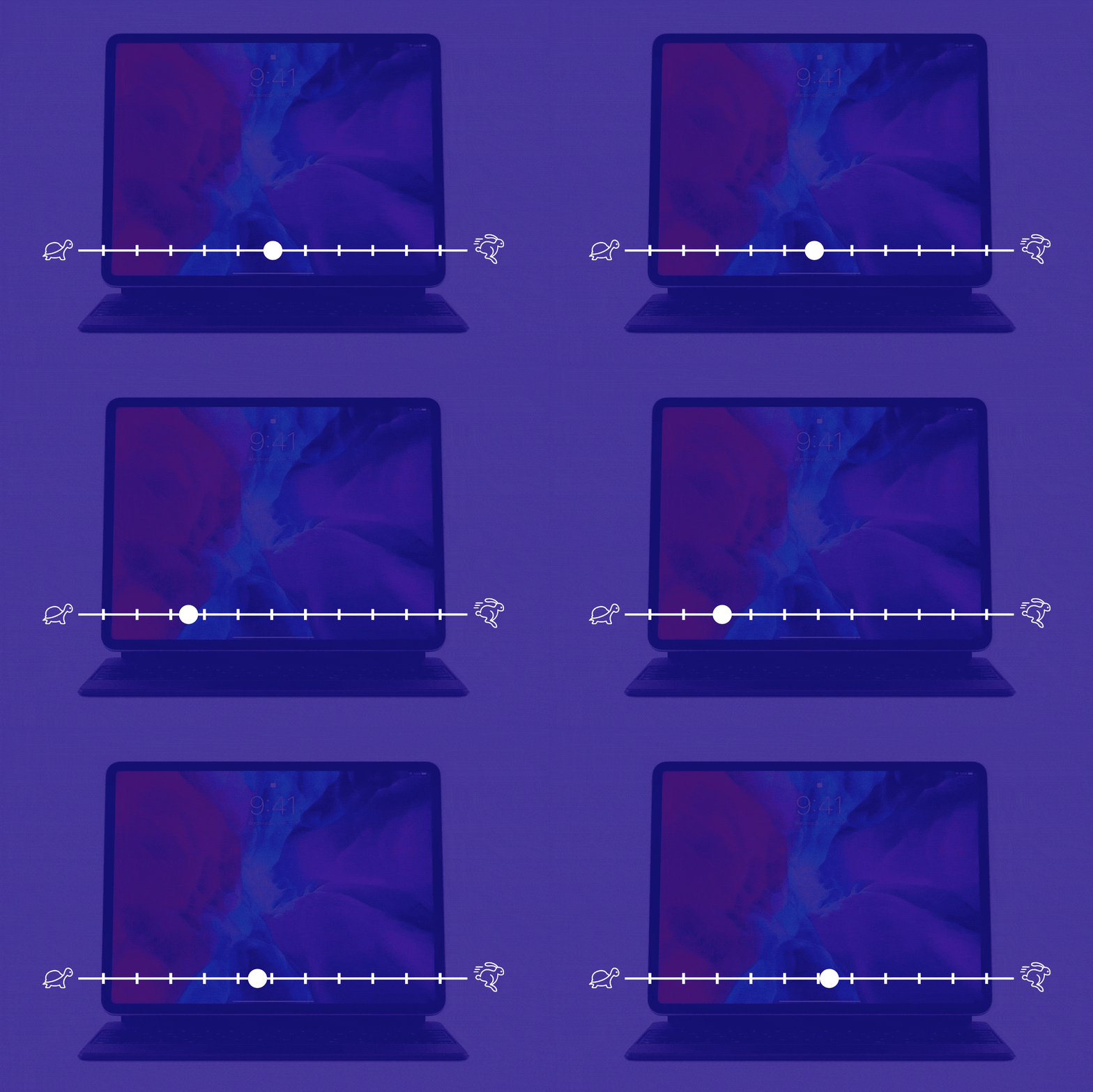
Make using a mouse with iPad even better. GIF: Killian Bell/Cult of Mac
Apple’s default mouse and trackpad settings in iPadOS might work great with the company’s own accessories, but they can be less than ideal with third-party peripherals. Scroll speed, in particular, seems very temperamental.
Unfortunately, Apple decided it would be a good idea to hide away those scroll speed settings, so a lot of users have no idea they can be adjusted. Here’s where you can find them on iPad.
As of yesterday, Apple Maps can now show you local COVID-19 testing stations, so you can find the nearest one and get yourself checked out. It’s really easy to do, but it does require a search to activate the new map layer.
Here’s how to find a COVID-19 test near you. Note: This currently only works in the United States.
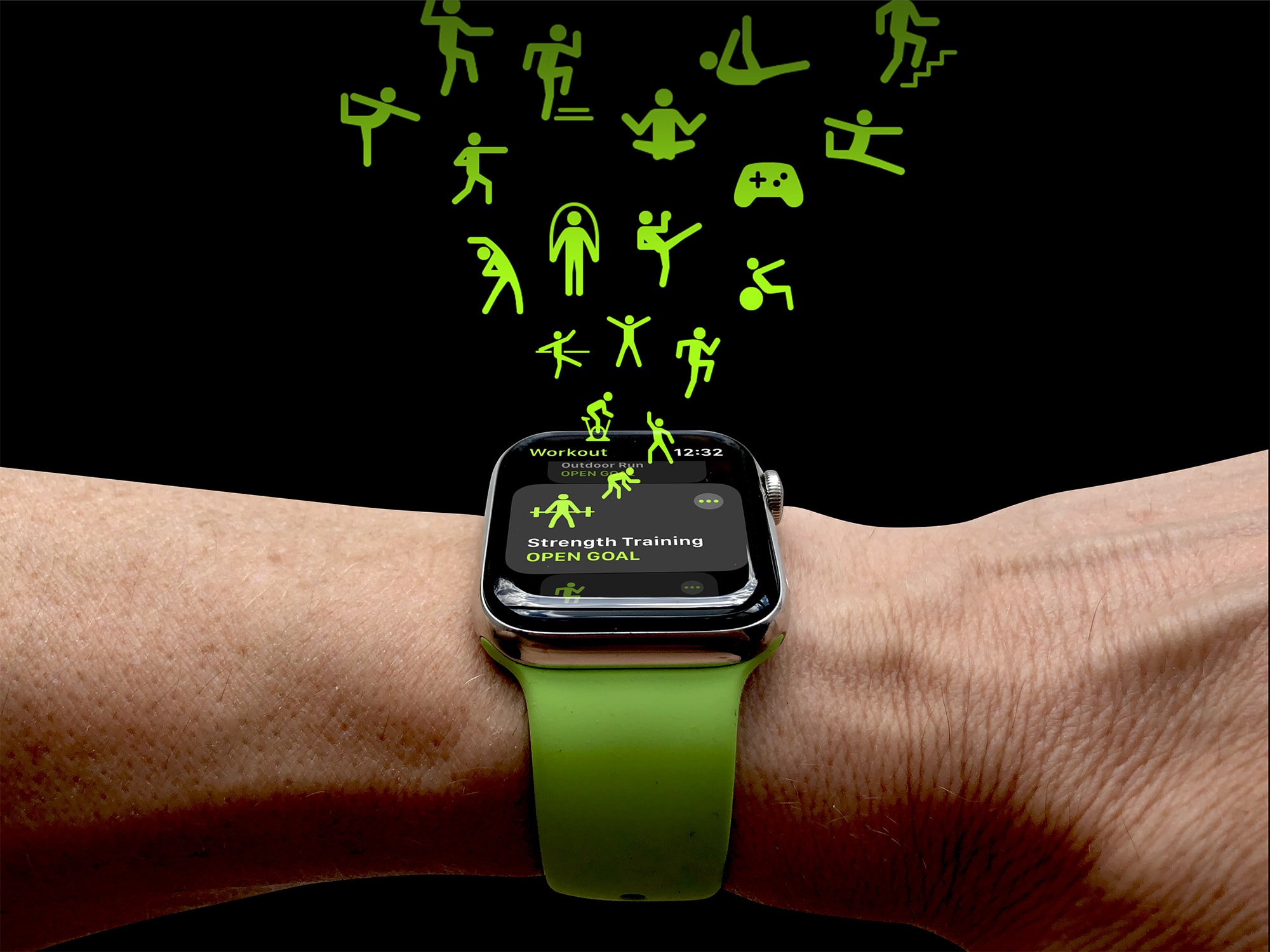
No excuses! You could be doing one of these workouts right now. Photo: Graham Bower/Cult of Mac
Apple Watch supports a huge selection of workout types, but most of the popular ones, like running and swimming, you probably can’t do right now thanks to the coronavirus lockdown. Fortunately, if you delve a little deeper, you’ll find plenty of Apple Watch home workouts you can choose from that require little or no special equipment.
So why not take the opportunity to master a whole new kind of exercise? Here are 20 Apple Watch indoor workout options you can do at home right now.
It only takes a few key tools to make working remotely much more manageable. Photo: Ian Fuchs/Cult of Mac
COVID-19 lockdown certainly brought a swift change from the norm for many people. We’re dealing with the added stress of different working situations, the struggle to get groceries, and in many cases, even acting as teachers or child care providers.
All of that can make it really challenging to feel accomplished and productive. Luckily, I finally found my groove in the last week or so, thanks to a couple of really useful apps (and some self-imposed rules).
Full-screen works great on a MacBook. Photo: Charlie Sorrel/Cult of Mac
Full-screen mode on a Mac is pretty great. Unlike Windows, where full-screen apps have been the default since forever, the Mac’s full-screen abilities are a fairly recent addition. And the default is still for apps to launch in smaller windows, which is the Mac Way. But what if you want those apps to launch in full-screen every time you open them? Well, by changing one setting — and abandoning an ingrained habit — you can have exactly that.
Bonus: Full-screen app launching will only apply to the apps you choose, leaving the rest of them to behave normally.
Even the new-ish 16-inch MacBook Pro runs hot. Photo: Charlie Sorrel/Cult of Mac
Does your brand new MacBook Pro go into meltdown when it’s plugged into power? Do the fans spin up into a blast of white noise, while the heat makes your hands sweat as you type? Is your kernel\_task pegged using 100% of the CPU when you check things out in the Activity Monitor app?
If so, don’t worry — it’s not your Mac’s fault. It’s you. You’re charging it wrong.
Yes, if you plug your USB-C power cable into the left-hand side of your MacBook Pro, you might make it overheat.
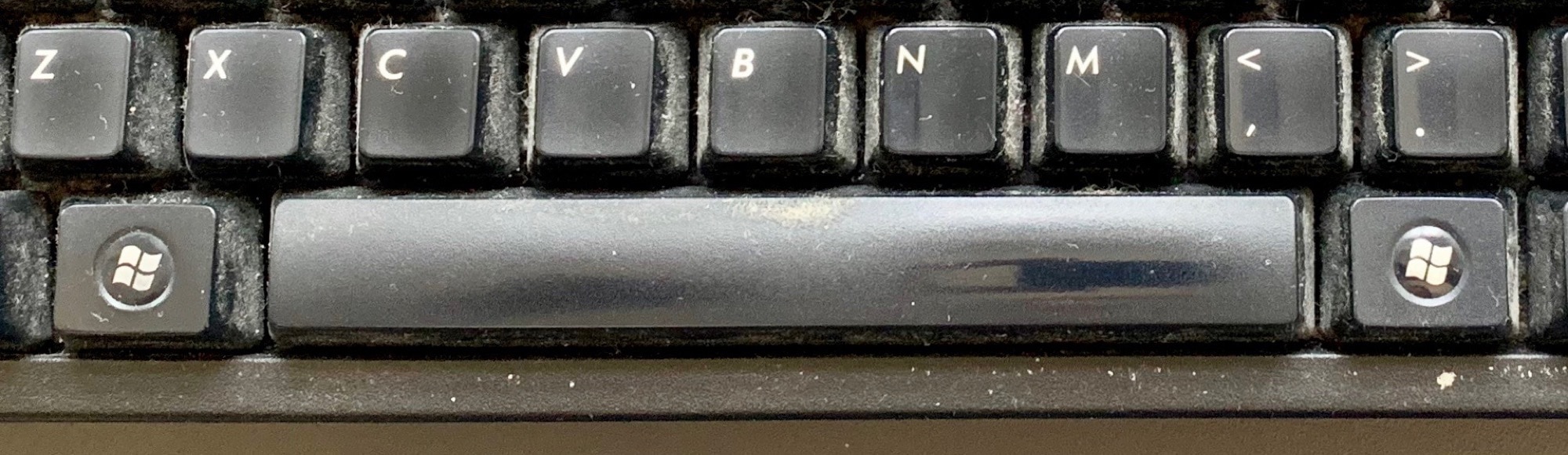
Would you touch this Space bar? Photo: Charlie Sorrel/Cult of Mac
Zoom is the world’s favorite app during the COVID-19 pandemic. Despite its flagrant privacy abuses, and a history of startlingly bad security holes, people are using the videoconferencing service for remote teaching, conference calls and virtual get-togethers.
If you — or your boss or a stubborn family member — insist on using this software rather than one of the safer Zoom alternatives, this Mac tip will save you a lot of trouble. Using the Push to Talk feature will make your Zoom life a lot easier.
I have an app I use every day, but whenever I open it, it opens to a new, blank document, instead of the project I was working on when I closed the app. To open that project, I have to mouse up to my Mac’s menu bar, click on File > Recent Items…, and find it in there.
To fix this, I set out to find a way to easily access the last few projects from this app. What if I could put this list of recent projects into my Mac’s Dock? It turns out that you can easily do this, using a quick Spotlight search, a Smart Folder and a drag to the Dock.
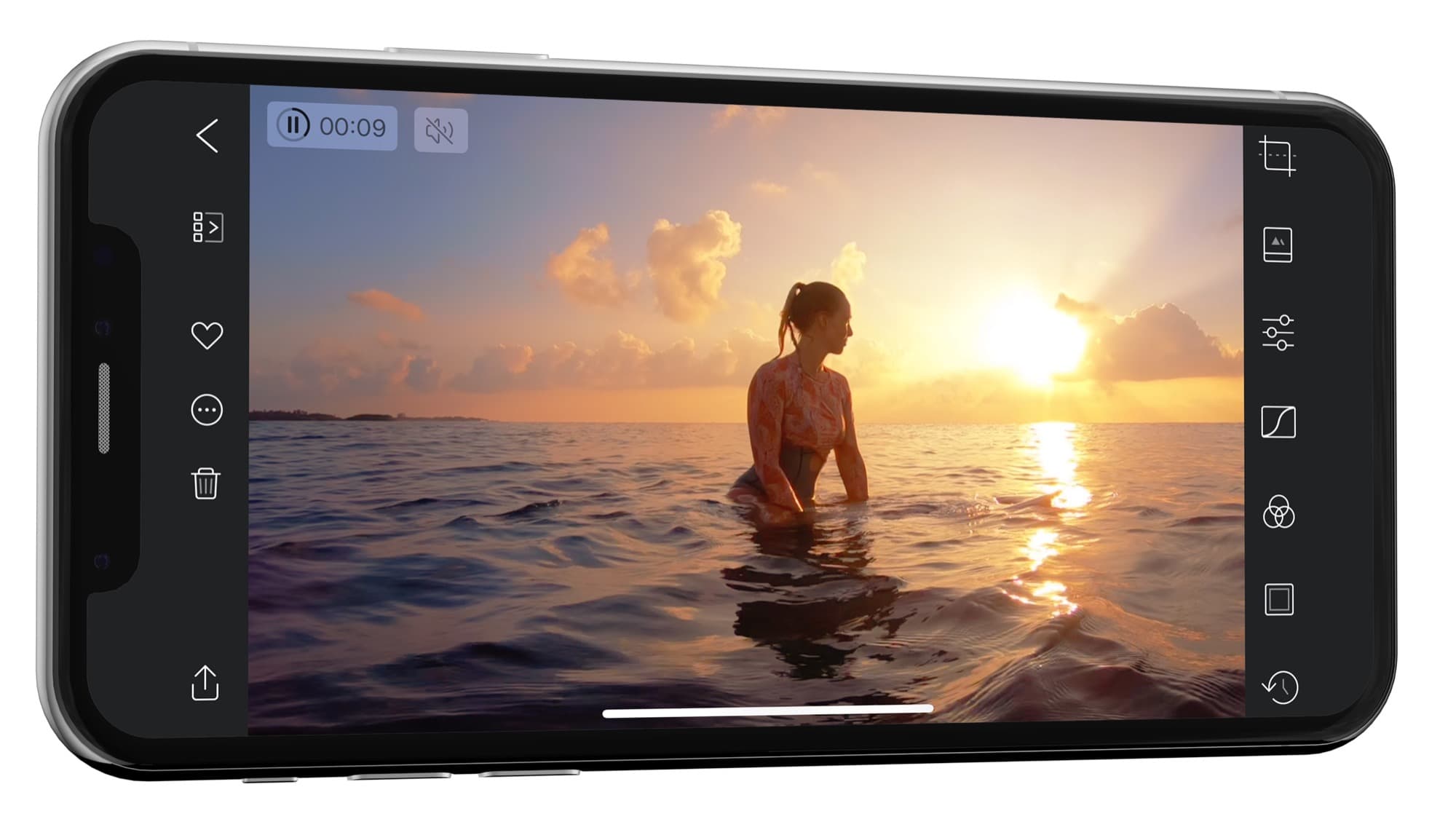
Darkroom, the amazing iOS photo-editing app, now edits video Photo: Darkroom
Darkroom, one of the best photo library and editing apps on iOS, is now also one of the best video library and editing apps on iOS. In today’s update, Darkroom adds support for editing your videos. Not cutting and chopping them up, like iMove, but changing how they look, as if you were applying filters and edits to a still photograph. And the along thing is, it’s instant, just as fast as editing a still image.
Right now, you shouldn’t be using the Mail app on your iPhone or iPad. Thanks to a serious exploit, a hacker can take control of your iOS Mail app just by sending you a malicious email.
You don’t need to open that mail for it to do its bad business. In fact, you don’t even have to have the Mail app open for the attack to work. Yesterday, we covered the news of this attack, and you can read all about the consequences. Today we’ll show you how to protect yourself by changing just one setting.
The Digitakt is good alone, better in a group. Photo: Cult of Mac
This is the second of a two-part video feature on integrating your Elektron synthesizers, samplers and drum machines with Ableton Live on your Mac.
In this video, we’ll show you how to use the brand new Overbridge 2 app and plugin to record up to eight tracks simultaneously over a single USB connection. We’ll also dive into FX routing on the Elektron’s Digitakt sampling drum machine, which is powerful but confusing at first. Finally, we’ll explain how to use the Overbridge plugin to sync Ableton and the Digitakt, and to record loops through a normal analog mixer.
What do you do? Well, that one is probably safe, as it uses YouTube’s own URL shortener. But what about all those other shortened URLS you see in emails, on Twitter and everywhere else? They could link to anything. A cautious person never clicks on links in emails. And only an insane person would click on shortened links in emails. That’s why you need today’s shortcut, which lets you expand a URL, preview the actual link, and then tap a button to either open it or dismiss it.
The Digitakt drum sampler is even more awesome paired with Ableton Live. Photo: Charlie Sorrel/Cult of Mac
Overbridge 2 is an amazing new app/plugin from Swedish drum machine and synthesizer maker Elektron. As its name suggests, it acts as a bridge between your computer and Elektron’s hardware boxes.
Using Overbridge, you can plug in, say, the Digitakt drum computer and sampler, and stream all eight of its audio tracks to your Mac or PC over a single USB cable.
Got Bluetooth problems like a glitchy mouse or an unreliable keyboard? Maybe a screwy trackpad or poor headphone connection? Any of those problems could result from a glitch in your Mac’s Bluetooth radio. Maybe you’ve already tried everything — unpairing your devices, resetting them or even creating a pristine new user account on your Mac solely for troubleshooting purposes. If you’re stuck in a situation where your mouse isn’t working, here’s a guide onhow to turn Bluetooth on Mac without mouse.
You may even know about the hidden Bluetooth menu that appears when you option-click on the Bluetooth menu bar icon. But did you know that there’s another, deeper, super-hidden menu with extra troubleshooting tools? There is. Here’s how to fix Bluetooth problems when nothing else seems to work.
Unlike the Mac, this screen is difficult to share. Photo: JD X/Unsplash
Are you the tech-support person for your family and friends? Are you the go-to nerd for fixing up iPhones, Macs and maybe even TVs 1? These days, you can’t just pay a visit to your parents to sort things out, so you’ll have to do it remotely. And if you’re all using Macs, that means screen sharing. You can do this very easily via iMessage — it’s as simple as starting a FaceTime call.
But what if your friend/parent/sibling in need doesn’t use iMessage? Don’t worry — all you need is their Apple ID.
Make safe grocery acquisition a little easier with Drafts' shopping mode. Photo: David Clarke/Unsplash
During the COVID-19 pandemic, you’ve probably become hyper-aware of how much you touch everything. Your face, your iPhone, the AirPods you never clean, the filthy handle on your apartment building’s front door, etc. If you’re using your iPhone’s Reminders app to manage your iPhone shopping list, you’re likely finding yourself constantly tapping the screen and relying on Face ID to wake it up during trips to the store.
Clearly that’s useless if you’re being responsible and wearing a mask in the supermarket. Today we’ll see how to quickly toggle a “shopping mode” in the Drafts app, which will keep your iPhone awake while you dash down the aisles.
There's no need to stare at a screen just to listen to YouTube music. Photo: Szabo Viktor/Unsplash
Unlike streaming music, which often keeps playing when you switch away from the app or webpage, YouTube playback stops as soon as you leave mobile Safari. This means that using YouTube as a music player is out of the question. Or is it? Can you make YouTube play just the audio, even when you’re not showing the video? You can, and it’s really, really simple.
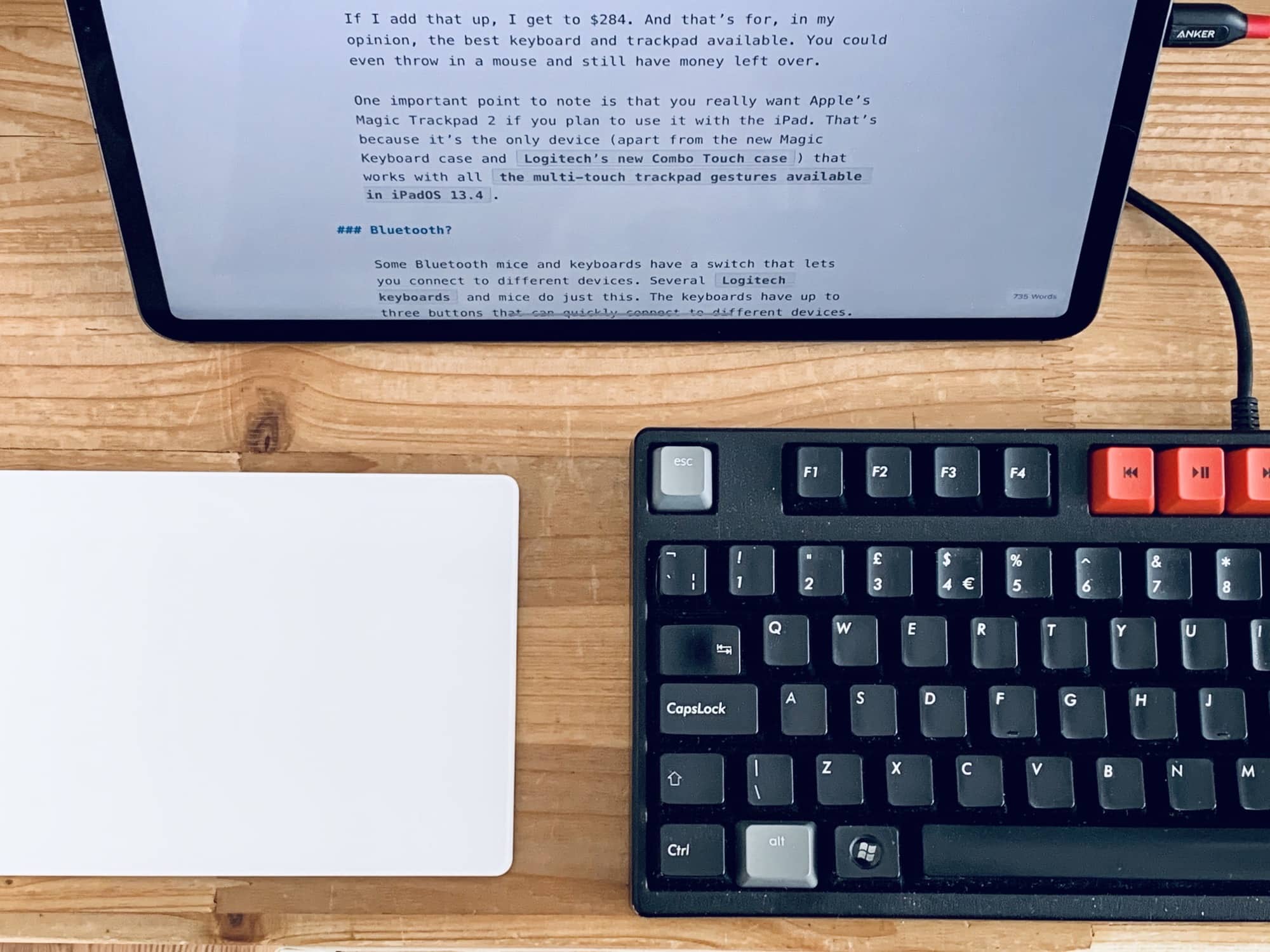
Tap a switch to use your Mac's trackpad and keyboard with your iPad. Photo: Charlie Sorrel/Cult of Mac
Apple’s new Magic Keyboard for iPad Pro — the one with the built-in trackpad — looks amazing. But it costs $350. That’s very pricey for a keyboard. Plus, it’s a keyboard that will only be useful for as long as it can attach to your iPad Pro. That means it might not fit your next tablet if Apple tweaks the iPad Pro design.
Compare that to a USB or Bluetooth keyboard, which will remain compatible with every computer that gets made in the foreseeable future. Toady we’ll see how to share your Mac’s keyboard and mouse or trackpad with your iPad. We’ll also learn how to instantly switch between the two, both with USB and Bluetooth.
No, it’s not as portable as the new Magic Keyboard case, but it’s less messy on your desk. And you will likely have a better keyboard, and a better trackpad.
One of the disadvantages of smaller iPads’ software keyboard is the lack of a numbers row. The 13-inch iPad displays a full keyboard with a numbers row and separate Caps Lock and Tab keys. But to type numbers on smaller iPads — the 10.5- and 11-inch models, and the mini — you first hit the symbol/number shift key to convert the top row of letter into numbers.
It’s a minor inconvenience, but if you do a lot of number entry on your iPad, then it becomes a major usability problem. The good news is that there’s an excellent workaround: keyboard flicks.