Have you ever wanted a quick and easy way to search iTunes and the App Store from your Mac? Tunesque allows you to do just that, by giving you access to all of iTunes from your Mac’s menubar.
One of the most annoying features in OS X Lion for me has been the little checkbox on the shutdown dialog box that states, “Reopen windows when logging back in.” Going through the trouble of managing this checkbox every time I shut down is a hassle I’d rather not go through. Fortunately, there is a neat little Terminal trick that will allow you to render this button useless, as I’ll show you in the video below.
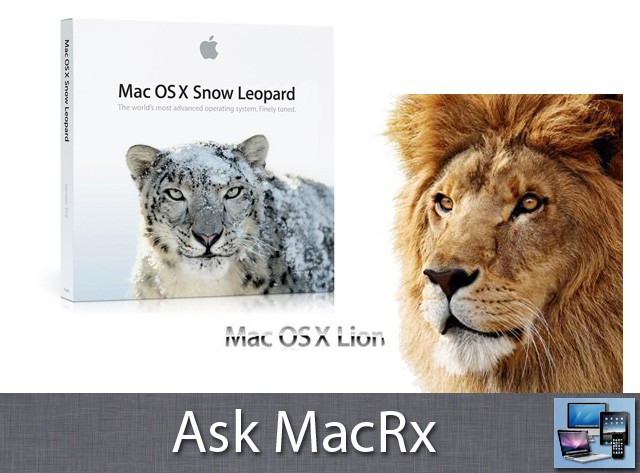
While OS X Lion is an excellent operating system, it may not be perfect for some people. Since some applications haven’t been updated to run on Lion yet, some users may need to downgrade to Snow Leopard in order to keep using the applications they need on a regular basis. In this video, I’ll show the best ways to downgrade from Lion to Snow Leopard.
After buying a new 27″ iMac last week, I was surprised to find a few missing features that I’ve been accustomed to in OS X Lion on other machines, including the removal of many desktop wallpapers. In this video, I’ll show you how to get back features in OS X Lion that you may be missing on a new Mac.
The new version of Preview in OS X Lion has a handful of interesting new features. From adding signatures to improved searching, the application is overall more useful and handy when it comes to viewing and editing documents and PDFs. In this video, I’ll show you the new features in Preview, and how to use them.
I’ve mostly been very happy with my migration to Lion, but I did get bit with one bug after the upgrade: for the life of me, I couldn’t get sound to output through HDMI when using my Kanex Mini DisplayPort to HDMI Adapter. That meant the days of hooking my 11-inch MacBook Air to my 47-inch 1080p HDTV were at an end.
I wasn’t alone. Apple’s support communities are filled with threads from frustrated Lion upgraders who suddenly lost the ability to pump sound through their HTPCs. HDMI sound also stopped working on my girlfriend’s MacBook when she upgraded to Lion. It’s obviously a widespread problem.
Luckily, today I finally figured out how to fix the issue, and it was remarkably simple. Here’s how to get HDMI sound back into Lion.
Have you fallen in love with Google+? Do you find yourself checking the social network frequently throughout your day?
There’s a free app in the Mac App Store that let’s you run Google+ from your Mac’s menubar, and it’s called Tab for Google+. With this app, you can easily check and interact with Google+ while doing just about anything on your Mac.
One of the most noticeable changes in OS X Lion is Apple’s reversal of traditional page scrolling. In Lion, Apple has adopted an iOS approach to scrolling by changing the way that the user scrolls up and down; instead of moving the window around the content, you actually move the content itself.
This method of scrolling works great when you’re on a touchscreen device like an iPhone or iPad, but a more traditional desktop experience doesn’t lend itself to what Apple calls “Natural Scrolling” in Lion.
If you’d like to go back to the old way of scrolling in Lion, here’s how to do so.
Apple has just released the Lion Recovery Disk Assistant, which allows you to turn any USB flash drive into a Lion recovery disk. This useful tool comes in handy in the event of a hard drive failure. In this video, I’ll show you how to set up a Lion recovery drive the right way and how to use it in the event of a hard drive failure.
OS X Lion includes a plethora of new gestures to enhance the user experience. While the majority of these gestures are based around the trackpad, the Magic Mouse still has more than a few new gestures. In this video, I’ll show you how you can use Lion’s new gestures to make the most of your Magic Mouse.
In Mac OS X Lion, Mission Control unifies Spaces and Exposé. Along with this unification comes changes to how Spaces and Exposé work. In this video, I’ll show you the changes with Mission Control and how to use them to your benefit.
Mission Control is one of the big new features in Lion, and like most new features it brings with it some new keyboard shortcuts. One of these is Command+Left Arrow or Command+Right Arrow to move swiftly between spaces.
It’s a sensible shortcut, but on my machine it conflicted with the shortcut I use dozens of times a day to jump to the end of a line of text. If you’re in a similar position, and you’ve found that Command+Right or Left Arrow no longer does what it used to do, here’s how to fix it.
The new full-screen support in OS X Lion is a dream come true for lifehackers looking to squeeze more productivity out of their apps, but one problem for keyboard users is that there’s just no standardized shortcut.
That seems like something of an oversight on Apple’s part, but luckily, there’s an easy to way assign your own universal full-screen shortcut for every app on your machine, even if the devs didn’t provide their own easy keyboard combination for triggering full-screen on your Mac.
One of the subtle changes in Mac OS X Lion was the removal of Front Row, Apple’s media center application. While not an incredibly important loss, it may frustrate some users who enjoyed using the application. Fortunately, it’s rather simple to get Front Row working on Lion, as I’ll show you in this video.
In OS X Lion, Apple redesigned Address Book with a new look that resembles a physical hardcover book binding. This type of design choice is called “skeuomorphic,” because it was, “deliberately employed to make the new look comfortably old and familiar.” Lion’s version of Address Book takes the old look and feel of a physical book and ports that to a virtual application.
While some may like the new look of Address Book in Lion, many have raised complaints. If you’d like to make Address Book look clean and simple again, we’ve got just the trick to unbind Address Book from its brown hardcover.
Apple Pay's ease of use may lead to increased impulse buying -- and that's exactly what Apple's hoping for.
It’s been rumored that Apple will eventually introduce Near Fields Communications technology in an upcoming iPhone model, but speculation that such a technology will be implemented this year has been all but debunked.
If you’re itching for the ability to have NFC-like “wave and pay” capabilities on your iPhone 4, then it’s your lucky day. A simple hack has been discovered that turns your iPhone 4 into a NFC-capable device.
In OS X Lion, Apple redesigned iCal with a new faux leather look that resembles a physical calendar binding. This type of design choice is called “skeuomorphic,” because it was, “deliberately employed to make the new look comfortably old and familiar.” Lion’s version of iCal takes the old look and feel of a physical calendar and ports that to a virtual application.
While some may like the new look of iCal in Lion, many have raised complaints. If you’d like to make iCal look like it did in Snow Leopard, we’ve got just the trick to return iCal back to its monochromatic glory.
Did you know that in OS X Lion you can get a quick dictionary definition of any word with a simple trackpad gesture? In the past, you would have to look up a definition in Spotlight or through a right click menu.
In Lion, a quick definition is as easy as a three-finger double tap on your trackpad. Just mouse over any word and perform the gesture; a nice little, translucent window should pop up with a definition. No more Google searches when you’re typing in a word processor!
OS X Lion is the best version of OS X yet, but some of its design choices aren’t without controversy… especially the decision to make the whole operating system more like iOS.
Hate that stuff? Over the next few days, we’ll be posting some tips on taking the iOS inspirations back out of your Mac. Today, we’re going to change the default way Lion handles scrollbars to be less like the way they work on the iPhone.
While OS X Lion offers many improvements and new features, it also takes some away. One that jumped out to me right away was the missing Library folder. By default, Apple now hides this folder to prevent users from messing up their system. While this might not seem substantial to the average user, more advanced users might not like this change. Fortunately, this change can be reversed, as I’ll show you in this video.
OS X Lion is the best version of OS X yet, but some of its design choices aren’t without controversy… especially the decision to make the whole operating system more like iOS.
Hate that stuff? Over the next few days, we’ll be posting some tips on taking the iOS inspirations back out of your Mac. Today, we’re going to focus on how to stop your Mac from handling your text input as if you were typing it out on your iPhone.
One of the hallmark user features in OS X Lion is the iOS-like Launchpad. From the Launchpad, you can view, open, organize, and manage all of your Mac apps just like the iPhone and iPad.
While some may love Launchpad, many have voiced complaints over the confusing nature of how Launchpad handles Mac apps. In this post, we’ll show you how to completely clean out your Launchpad and start over.
Editor’s note: This code in this post has been updated from the original to reflect a more targeted animation-disabling conmand line defaults write string. Thanks to reader Phillip Ridlin for the alert.
Are you running Lion on your desktop and finding the new window animation functionality in Mail.app annoying? You’re not alone, apparently.
Now that Apple has released new MacBook Airs, you might be tempted to buy one of them (we recommend this one because of the blistering performance that an SSD provides. You should be: once you start computing on an SSD, you’ll never want to go back, and the MacBook Air is a wonderful introducing to the powers of solid state storage.
That said, if you’re used to have a 500GB or 1TB hard drive to play around with on your laptop, you might be worried that it’s hard to live in a small 64GB or even 128GB footprint.
Don’t sweat it. I’ve been using a 64GB MacBook Air as my main work machine for the last nine months, and I’ve found it very easy to live within that space, after having learned a few tricks. Here’s how to make the most of your MacBook Air’s SSD.
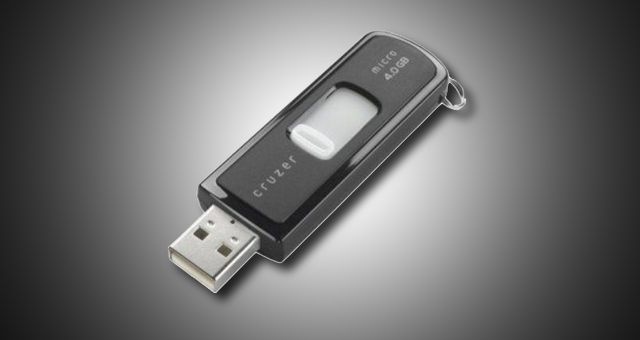
Apple has released Mac OS X Lion in the Mac App Store for $30. Separately, Apple will also begin offering Lion on a USB thumb drive in Apple stores come August. Right now, you can grab Lion from the Mac App Store as a 4GB download.
After you’ve downloaded Lion, it would be wise it back up your install app so that you don’t have to re-download it next time you want to install Lion. You can also make a bootable DVD install disk of Lion to use on your other machines. Keep reading to learn how…