Mobile menu toggle

Leander Kahney - page 56

How-To: Set Up Push GMail On Your iPhone/iPod Touch

By •

post-16966-image-e5566fe7bff0c27617b71c4d67bf9c77-jpg

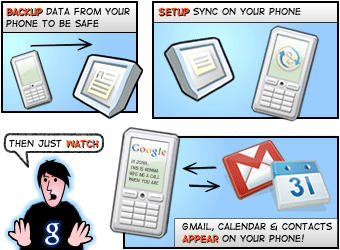
Google has added push Gmail to the iPhone/iPod Touch via its Google Sync service.

“Using Google Sync, you can now get your Gmail messages pushed directly to your phone,” says the Google Mobile Blog, which announced the change. “Having an over-the-air, always-on connection means that your inbox is up to date, no matter where you are or what you’re doing.”

Google Sync also syncs contacts and calendars, or any combination of contacts, calendars and Gmail.

Push Gmail works in the iPhone’s/iPod’s native Mail app, but you have to set up your Gmail account as an exchange account. Full instructions after the jump.

Seattle Apple Store Staff Threaten Walkout Over “Abusive” Management

By •

photo_alderwoodmall

Staff at an Apple retail store in Seattle are planning a walkout over “abusive” management, the first labor dispute to hit the company’s super-successful retail chain, IFOAppleStore is reporting.

Employees at Apple’s Alderwood Mall store claim the store’s management is “abusive” and cite unspecified violations of state and federal labor laws.

Apple’s human resources department hasn’t properly investigated their complaints, and even an appeal to the head of the chain, Ron Johnson, went unheeded, the staff told IFOApplestore.

Workers are planning a walkout at 1PM on October 3 if no action is taken before then.

The threat of industrial action is unusual for Apple’s stores, which have a reputation as a good place to work and an unusually high retention rate for retail.

Apple claims the turn-over rate for Apple store employees is just 20%, compared to an industry average of well over 50%.

Report: Microsoft’s Cloning of Apple’s Stores Continues With Hiring of Apple Staff

By •

post-16927-image-c359390e7947d1c4e68e27aab4053781-jpg

Microsoft is attempting to hire Apple retail managers to staff its new stores, Jim Dalrymple of The Loop reports.

Citing anonymous sources, The Loop says managers are being offered better money and in some cases, relocation expenses. They are then encouraged to recruit their former colleagues with similar incentives.

The strategy seems to be in line with Microsoft’s playbook. Earlier this year, Microsoft reportedly tried to lure iPhone developers to the Zune platform with cash incentives.

Which means that Microsoft’s retail strategy can be summarized thus:

  • Copy the idea of retail stores
  • Hire Apple’s former real estate head George Blankenship as a consultant
  • Locate Microsoft’s stores next to Apple’s stores
  • Put in face-to-face help desks, but call them Guru Bars instead of Genius Bars
  • Hire Apple’s staff

What’s next? Stock the stores with Apple products?

Microsoft’s first retail store is scheduled to open in October near Apple’s retail store in Mission Viejo, Calif., at The Shops.

Rumor: Microsoft Is Also Developing a Touchscreen Tablet

By •

Like Apple, Microsoft is rumored to be working on a touchscreen tablet. Hopefully it won't resemble this earlier effort.

Like Apple, Microsoft is developing on a touchscreen tablet, several sources say.

CoM has heard rumors that Microsoft has a touchscreen tablet in the works. 9to5Mac is reporting that Microsoft is working on a tablet (and two touchscreen phones to compete with the iPhone).

Mary-Jo Foley at ZDNet has some details: Microsoft’s tablet effort is being led by James Allard, the Microsoft executive in charge of the XBox and Zune, and members of Microsoft’s Surface team, Foley reports.

Who Is Lying About the Google Voice App, Apple or Google?

By •

Apple iPhone
Apple's Phil Schiller is in the spotlight over controversy surrounding the rejection of Google's Voice app for the iPhone.

Google says categorically that Apple has rejected its Voice app for the iPhone. Apple denies this, saying several times that the app is still under consideration. Apple has said this in official documents submitted to a government inquiry by the FCC, and most recently today in a statement to the press.

Someone is lying. Who is it?

Well, the test is quite simple:

How iFixit Uses Teardowns As Marketing 3.0

By •

iFixit CEO Kyle Wiens
Kyle Wiens, the CEO of iFixit, which cleverly uses product teardowns to make the company a household name among tech geeks.

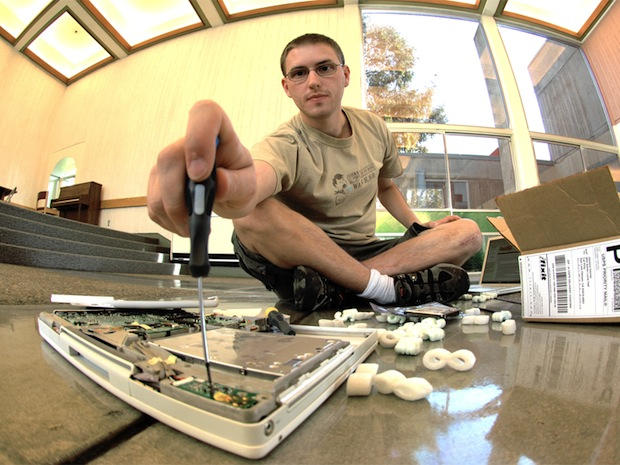
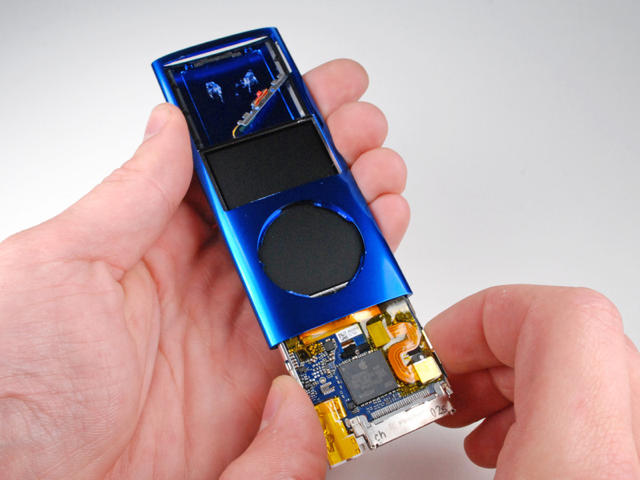
Last Thursday, iFixit’s CEO Kyle Wiens spent all day in San Francisco trying to buy the new fifth-generation iPod nano. It was the day after Steve Jobs introduced the new iPod, but none of Apple’s stores in the city had them. So that evening, Wiens sent iFixit’s summer intern on a red eye to the east coast with orders to buy one and immediately tear it apart.

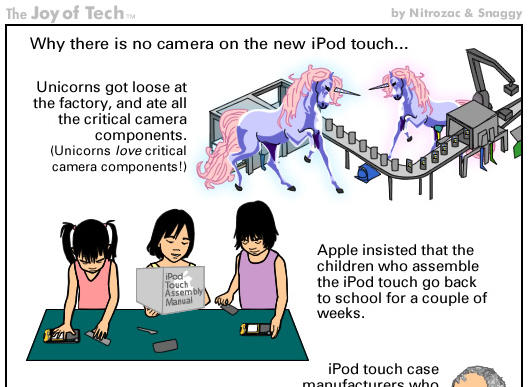
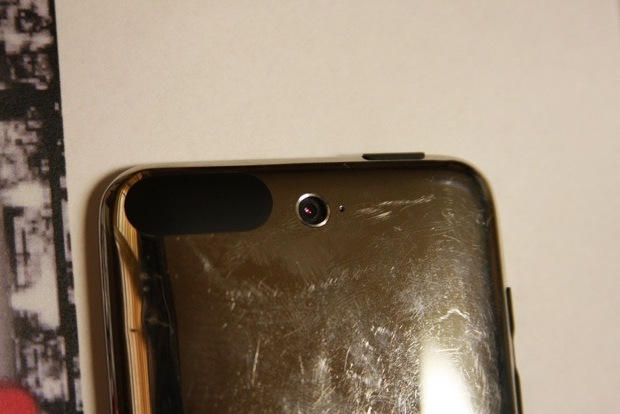
The intern’s teardown was reported all over, generating massive attention for iFixit. The next day, iFixit got a genuine scoop with a teardown of the new iPod Touch, which surprisingly doesn’t feature a camera. But iFixit’s dis-assembly revealed space for a camera. Apparently, the Touch was supposed to get one after all.

Between the two teardowns, iFixit generated literally thousands of news stories — from Gizmodo to the Los Angeles Times. Not bad for little repair shop started by a pair of college students in San Louis Obispo, Calif.

iFixit makes its money by selling spare parts for Macs, iPods and iPhones. Its mission is to help people fix their own devices. It publishes free and easy-to-follow repair guides, but it gets the most attention for it’s superb product teardowns.

This is internet marketing par excellence. Not only are the teardowns creating genuine news for the tech press, they are efficiently executed and beautifully documented. The photos are superb, and the walkthroughs are clear and informative. Best of all, Wiens is a genius at sending the media timely and informative emails about the teardowns that all but write the stories for reporters.

“Our goal at the end of the day is to keep devices working longer,” said Wiens modestly in an email to me earlier this week. “Anything that we can do to make repair sexy and gadgets feel less like a black box, the better.”

My friend Brian Chen over at Wired.com has a great story today with a lot more detail about Wiens and his teardowns. Read it here.

Apple Responds To Google: “We Disagree”

By •

cult_logo_featured_image_missing_default1920x1080

Apple has responded to Google’s charge that Phil Schiller rejected Google’s Voice app: “We do not agree,” says a spokesman.

Apple says it has NOT rejected the Google Voice app and continues to evaluate it. In a statement, Apple PR says:

“We do not agree with all of the statements made by Google in their FCC letter. Apple has not rejected the Google Voice application and we continue to discuss it with Google.”

Earlier today, Google unredacted its response to the FCC, claiming that Phil Schiller had personally killed the Google Voice app in a phone conversation in July.

Who’s lying?

As reader Steven points out below, a good test is whether Google’s app is available in the app store — which it is not. “Until the application does appear in the App Store, we can all say with 100% certainty that it has been denied,” he says.

Google Says Apple Did Reject Voice App, Fingers Phil Schiller

By •

Google_FCC_doc_21.jpg

Apple’s Phil Schiller personally rejected Google’s controversial Voice app, new documents reveal.

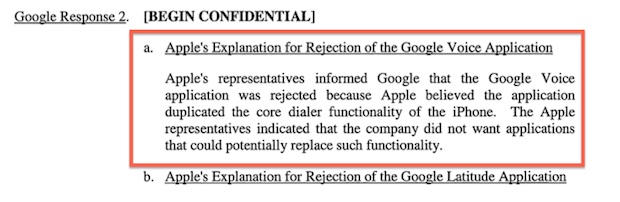
Schiller rejected Google’s VOIP app because it “duplicated the core dialer function of the iPhone,” Google said in documents released on Friday. The documents were published by the company and the Federal Communications Commission, which is investigating Apple’s rejection of the app.

Google’s version of the story directly contradicts Apple’s version of events. According to Apple, the app hasn’t been rejected; it is still under evaluation.

But according to Google, Schiller personally told Alan Eustace, Google’s senior vice president of engineering and research, that the app had been rejected during a phone call on July 7.

“It was during this call that Mr. Schiller informed Mr. Eustace that Apple was rejecting the Google Voice application…” Google says.

Curiously, the revelations didn’t come to light until today because Google kept parts of its response to the FCC secret to protect “sensitive commercial conversations” between the two companies.It decide to relax its request after Apple published its response and groups requested the info under the Freedom of Information Act, Google explains in a blog post.

Google’s full response to the FCC’s questions about the rejected app are here (PDF).

Google_FCC_doc_1

Star Trek Creator Gene Roddenberry’s Mac Plus to be Auctioned

By •

roddenberry_mac_plus

Star Trek creator Gene Roddenberry owned the first Mac Plus, and it’s about to be auctioned off next month.

Roddenberry’s Mac Plus will join one of Michael Jackson’s gloves in an auction on October 8-9 by Profiles in History, an auctioneer of Hollywood memorabilia.

The Mac Plus — serial number F4200NUM0001 — was given to Roddenberry in January 1986. The auction house expects it to fetch $800 to $1,200.

One Year Later, Disgruntled iPhone App Developer Still Disgruntled

By •

Ex-iPhone app developer Mike Ash, who has abandoned the platform because of Apple's
Ex-iPhone app developer Mike Ash, who has abandoned the platform because of Apple's "nonsense."

One year after disgruntled iPhone App developer Mike Ash wrote about his frustrations trying to get his software approved by Apple, he says nothing has changed. The App approval process is so bad, in fact, he’s giving up altogether.

“I have abandoned the platform,” he writes. “Apple’s nonsense is just too much for me. There’s no joy in iPhone development, and an enormous amount of frustration.”

Last year, Ash wrote a high-profile blog post about his experience working with Apple. Detailing all the hoops he had to jump through, and several rejections of his software, Ash’s post drew a lot of attention from blogs and a lots of comments from developers who’d had similar experiences.

Apple’s approval process has long been the subject of criticism and frustration. The process is secretive and opaque, and developers often complain apps are often rejected or held up without good reason. Google’s Voice App, for example, is still undergoing approval — a roundabout way of rejecting an app from a big and important partner without actually rejecting it.

Apple’s head of marketing, Phil Schiller, has tried to smooth ruffled feathers by reaching out to unhappy developers. The biggest problem with Apple’s process is the sheer volume of apps submitted for approval. Apple’s 40 full-time testers must scrutinize about 8,500 apps a week, according to information from Apple in response to an FCC inquiry. Each app is reviewed by two testers, so that’s about 80 apps a day, per reviewer — every day.

In his latest post, Ash says the consumer’s experience of the App Store has marginally improved, but behind the scenes, nothing has changed for developers.

“Apple VP Phil Schiller has been making noises about trying to improve things, but so far this is just talk,” Ash writes. “Apple’s improvements, virtually insignificant already, have mostly gone to improving the store, not the development process.”

It’s so bad, he’s given up completely. Ash says he’ll write software for the Mac instead, which requires no approval process.

Music Industry Wants Apple To Pay For 30-Second Song Previews

By •

iTunes_Store

The music industry is planning to introduce new laws that would require Apple to pay for music in downloaded movies and TV Shows — and iTunes’ 30-second song previews.

The move comes from the industry’s royalty-collection agencies — ASCAP, BMI and others — which collect royalties on music that’s broadcast or performed.

The agencies collect royalties on songs played on the radio or your local dive-bar jukebox, but say they are left out of the digital revolution. Artists are not being paid for music downloaded in movies and TV shows, or previews on Amazon, iTunes and other digital outlets, the agencies say. So they’re lobbying Congress to bring Apple and others in line with cable and broadcast outlets.

On the one hand, the agencies make a compelling point about the consumption of music. Music used to be public. It was broadcast on the radio of performed at concerts, and the industry had mechanisms for collecting royalties on this. But now music is private. It’s loaded onto iPods and played through computers — but there’s no mechanisms for monetizing these new consumption patterns.

“This is really a fight about the future,” one industry spokesman tells CNet. “As more and more people watch TV or movies over an Internet line as opposed to cable or broadcast signal, then we’re going to lose the income of the performance.”

This doesn’t sound unreasonable, but 30 second song previews? As CNet notes: “For many, this would also undoubtedly confirm their perception that those overseeing the music industry are greedy.”

Chart: Apple’s Incredible Stock Run

By •

apple_stock_2009

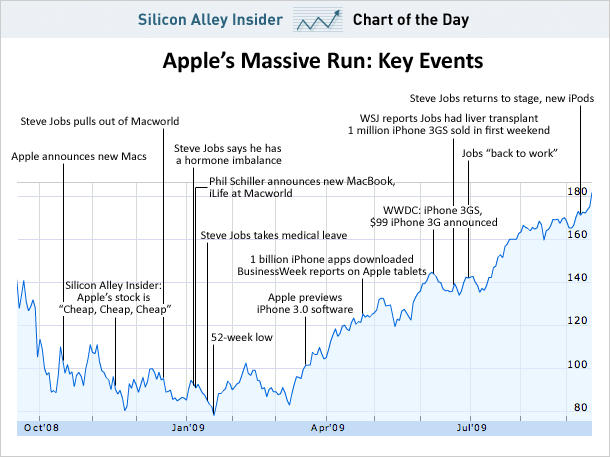
Look at this fascinating graph of Apple’s rollercoaster stock price over the last year, charted against major news events, courtesy of Silicon Valley Insider’s Chart of the Day.

The low point was last winter, with investors spooked about global economic meltdown and Steve Jobs’ unexpected medical leave. But in the last year, the stock has doubled, fueled by the run-away success of the iPhone and building ecitement about the upcoming tablet.

As SVB notes, Apple’s stock is nearing its all-time high, while Microsoft’s stock is trading at a about a third of its highest price.

Via 9to5Mac.

Apple Shares Up Sharply After Jim ‘Mad Money’ Cramer Boosts Stock

By •

jim_cramer

Jim “Mad Money” Cramer boosted Apple’s stock last night on his CNBC show, and today it’s up 3.83% to $181.87.

Earlier in the day Apple’s stock was $182.72, Apple’s best since August 2008, just before the global economic meltdown.

This is the same Jim Cramer that told The Daily Show‘s Jon Stewart how easy it is to manipulate Apple’s stock. See the video after the jump.

In this case, Cramer seems to be sincere. Cramer pumped the stock on the prospect that changes in accounting rules will realize significantly higher quarterly revenue for Apple. At present, Apple spreads revenue from Apple TV and iPhone sales over 24 months, like a subscription. If new accounting rules come into effect, Apple will be able to report this revenue immediately.

As a result, Cramer estimates that Apple’s 2011 earnings will likely jump from $9 to $12 per share.

“I’m raising my price target on Apple,” he said during the show. He raised his price target for Apple stock from $200 to $264.

Some analysts, like the Yankee Group’s Carl Howe, have said for a long time that Apple’s subscription revenues aren’t being accounted for properly by Wall Street.

The Financial Services Accounting Board is reviewing a draft rule change after strong lobbying from Apple. The new rules are likely to come into effect in weeks.

Cramer told investors to act fast before the big funds got wise. Looks like it’s too late now.

Snow Leopard Gives 50% Performance Boost When Running Optimized Software

By •

gcd_opencl

Snow Leopard can give your Mac a 50% performance improvement when running optimized software, a developer has found.

Running a Mac Pro from 2007, programmer Christophe Ducommun compared Snow Leopard to Leopard while encoding and decoding video with his MovieGate software.

Ducommun is optimizing MovieGate to take advantage of two important new technologies in Snow Leopard: Grand Central Dispatch and OpenCL. While OpenCL allows powerful graphics processors to perform work for applications, Grand Central Dispatch takes advantage of multiple cores, distributing work among all the available cores.

Together, they apps a pretty big speed bump, according to MacBidouille, which published Ducommun’s results:

Snow Leopard
150 frame/s for encoding in MPEG-2
70% CPU load for decoding
130% CPU load for MPEG-2 encoding (ffmpeg)

Leopard
104 frame/s for encoding in MPEG-2
165% CPU load for decoding
100% CPU load for MPEG-2 encoding (ffmpeg)

Overall, the optimizations give an overall performance increase of about 50%. Ducommun’s Mac Pro is a 2.66 GHz Quad Core machine with a GeForce 8800 GT video card.

Will the Refreshed iMac Get Blu-Ray?

By •

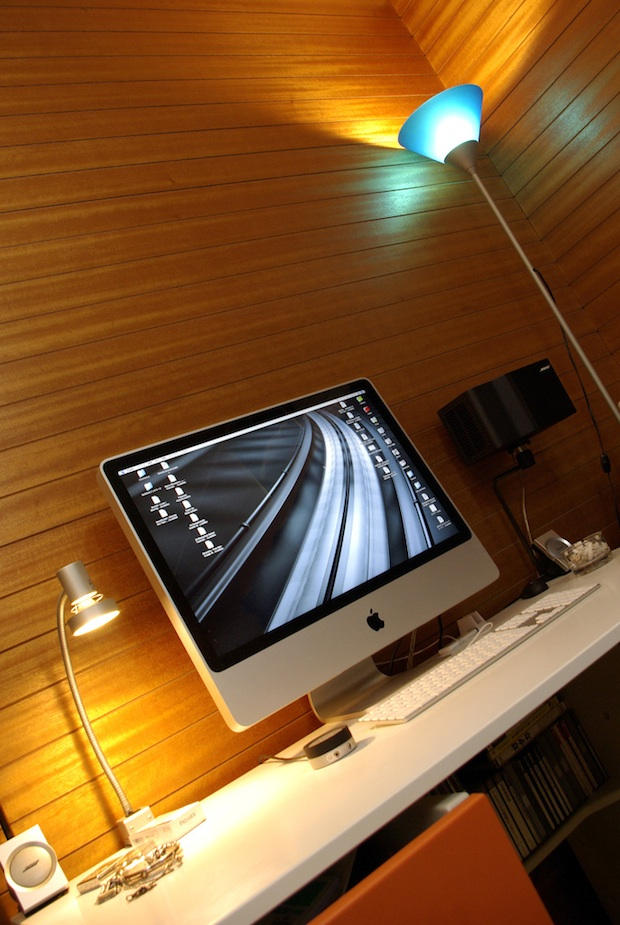
Apple's popular iMac is rumored to get a refresh soo. Many are hoping Blu-Ray will be added, but that' sunlikely. CC-licensed pic of an iMac by QuattroVageena: http://www.flickr.com/photos/quattrovageena/1709649008/
Apple's popular iMac is rumored to get a refresh soon. Many are hoping Blu-Ray will be added, but that's unlikely. CC-licensed pic of an iMac by QuattroVageena: http://www.flickr.com/photos/quattrovageena/1709649008/

The iMac will get a design refresh in coming weeks, according to a report from Wall Street analysts, and everyone’s hoping Apple will finally add Blu-Ray.

Wedge Partners predicts the introduction of an updated iMac with “thinner, organic design, likely with smoothed or rounded edges,” reports Tech Trader Daily. Sounds like the iPhone 3GS to me. The iMac is already styled after the iPhone, and the 3GS is more rounded and organic than previous models. (The MacBook will also get a refresh, Wedge says, but design and hardware changes are likely to be minimal)

There have been rumors of new iMacs for several weeks. AppleInsider reported that an iMac release was imminent, and that the machine would get two “compelling new features.” The iMac is overdue for a refresh, according to MacRumors Buying Guide, which says the current models are 197 days old and the average period between upgrades is 220 days.

Most intriguing is whether the refresh will bring new capabilities. High on everyone’s wishlist for compelling new features is Blu-Ray — see this thread on MacRumors with 850+ comments. What could be better than adding high-def movies to Apple’s premier home machine?

Unfortunately, it’s not going to happen any time soon. Here’s why.

Zune HD Teardown Reveals Better Hardware Than iPod

By •

zune_hd_teardown

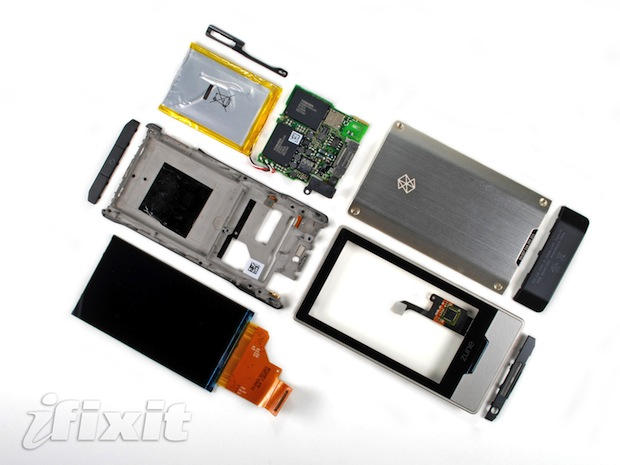
A teardown of Microsoft’s new Zune HD reveals that’s it’s smaller, lighter and better built than the iPod touch — plus it’s got better battery life.

“Microsoft has taken a long time to get to market with this device, and the hardware shows it,” says Kyle Wiens, CEO of iFixit, which has posted details of the teardown online.

  • The highlight of the Zune HD is its OLED screen. Made by Samsung, the screen is only 1mm thick but seems plenty tough, says Wiens.
  • The Zune gets better battery life from a smaller battery – likely a lot to do with the low-power OLED screen.
  • The Zune is not as tall or as wide as the iPod Touch but is 0.4mm thicker.
  • Unlike the new Touch, the Zune HD does not have 802.11n, only .802.11g.
  • The Zune is powered by an Nvidia Tegra 2600 processor, which has OpenGL ES 2.0 (sam as the new Touch) and programmable pixel shaders, according to iFixit.

The Zune HD is getting favorable reviews. Wired.com says its the first music player to match the iPod’s wow factor. “It’s a lovely industrial design, has a beautiful OLED screen, packs in HD radio and HD video out, and syncs to software that outshines iTunes in many ways,” Wired.com says. However, there’s almost no Apps in Microsoft’s App Store, no deep catalog of video, oh, and the biggie: no Mac software.

Apple TV Set For Update? Apple Cuts Prices, Discontinues 40GB Model

By •

appletv_screens

A major update of the Apple TV may be in the works.

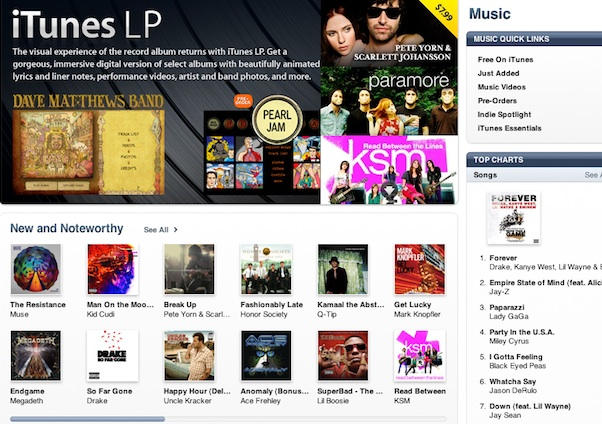
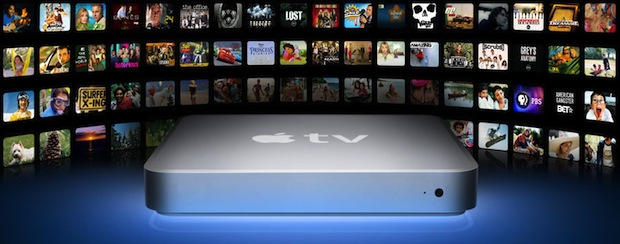
Apple has slashed the price of the 160GB Apple TV to $229 (from $329) and discontinued the 40GB model. Meanwhile, it looks like Apple’s new iTunes LP — a new format for multimedia music bundles — is designed for high-resolution output on the AppleTV.

The iTunes LP content is output at 1,280-by-720, the native resolution of an Apple TV when hooked to a high-definition TV. Apple’s new iTunes Extras (bonus movie material usually included on bonus DVDs and now available for download on iTunes) is also designed to be output at the same high resolution. While this is natural for movie content, it’s a curious choice for music content, albeit multimedia music content, which might naturally be formatted for playing on computers and laptops.

Which all points to a major update for the Apple TV in the near future. The AppleTV hardware has remained essentially unchanged since its introduction, although it has received a couple of software upgrades.

The 160GB model is the only configuration of the Apple TV now on offer. The 40GB Apple TV was previously priced at $229.

Steve Jobs usually refers to the AppleTV as a “hobby,” and not a real business. The choice of movies for the device on the iTunes store remains relatively limited.

Apple TV on Amazon.