Leander has been reporting about Apple and technology for nearly 30 years.
Before founding Cult of Mac as an independent publication, Leander was news editor at Wired.com, where he was responsible for the day-to-day running of the Wired.com website. He headed up a team of six section editors, a dozen reporters and a large pool of freelancers. Together the team produced a daily digest of stories about the impact of science and technology, and won several awards, including several Webby Awards, 2X Knight-Batten Awards for Innovation in Journalism and the 2010 MIN (Magazine Industry Newsletter) award for best blog, among others.
Before being promoted to news editor, Leander was Wired.com's senior reporter, primarily covering Apple. During that time, Leander published a ton of scoops, including the first in-depth report about the development of the iPod. Leander attended almost every keynote speech and special product launch presented by Steve Jobs, including the historic launches of the iPhone and iPad. He also reported from almost every Macworld Expo in the late '90s and early '2000s, including, sadly, the last shows in Boston, San Francisco and Tokyo. His reporting for Wired.com formed the basis of the first Cult of Mac book, and subsequently this website.
Before joining Wired, Leander was a senior reporter at the legendary MacWeek, the storied and long-running weekly that documented Apple and its community in the 1980s and '90s.
Leander has written for Wired magazine (including the Issue 16.04 cover story about Steve Jobs' leadership at Apple, entitled Evil/Genius), Scientific American, The Guardian, The Observer, The San Francisco Chronicle and many other publications.
He has a diploma in journalism from the UK's National Council for the Training of Journalists.
Leander lives in San Francisco, California, and is married with four children. He's an avid biker and has ridden in many long-distance bike events, including California's legendary Death Ride.
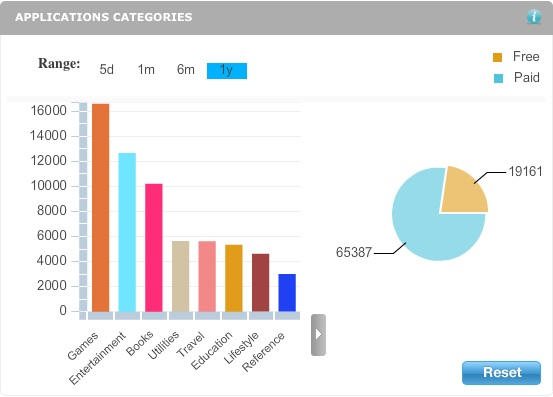
Apple's App Store has seen 2 billion downloads in just 15 months. Image brazenly stolen from 9to5Mac.com: http://www.9to5mac.com/app-store-2-billion-downloads
The number of apps downloaded from the App Store has passed a cool 2 billion, Apple said on Monday.
That’s means the App Store is growing like a weed. In late April, Apple announced the App Store hit one billion downloads, and 1.5 billion three months later in July — on the store’s first birthday.
The latest 500,000,000 mark took just two-and-a-half months to hit. That means about 6 million apps are being downloaded EVERY DAY. That’s a pretty mind-boggling number.
In addition, the number of apps is now 85,000 from 125,000 developers, Apple’s press release said.
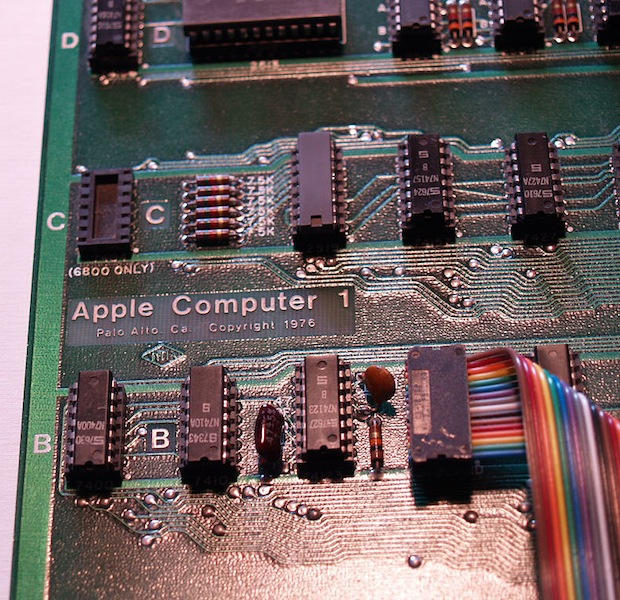
Here’s some pictures of the rare Apple I that will be up for auction on eBay early next week. Hit the jump for more.
As reported earlier, the historic machine will be up for auction shortly, likely next week. The owner, Monroe Postman, hasn’t announced the date of the auction.
Postman picked up the Apple I at an estate sale around 1980. He doesn’t remember the details, including how much he paid.
Can Microsoft ever do anything right? The company has some produced some pretty good advertising for Windows 7, but for some inexplicable reason, the ads will not be shown on TV. Microsoft’s best advertising in years is restricted to a dusty corner of YouTube, where no one will see them.
At the Tokyo Game Show, the booth babes try to keep people's minds off Apple. Pic by GodOfSpeed: http://www.flickr.com/photos/28537954@N04/3953230803/
At the giant Tokyo Game Show, everyone’s freaking out about Apple, the New York Times reports.
Sony, Nintendo and Microsoft are more worried about Apple and it’s new iPhone/iPod platform than the worst recession in decades, the Times says.
Apple’s recent foray into video games — with the iPhone, the iPod Touch and its ever-expanding online App Store — is causing as much hand-wringing among old industry players as the global economic slump, which threatens to take the steam out of year-end shopping for the second consecutive year.
The industry sees a big shift to casual gaming on cellphones and other handhelds, rather than expensive, overpowered consoles. Consumers are buying $0.99c games, rather than dropping $50 on big, blockbuster titles with multimillion dollar budgets and massive development teams. Of the 758 games debuted at the show, 168 are for cellphone platforms, the most ever.
Some game developers say Apple’s App Store is the biggest recent breakthrough in gaming, and the industry is better off trying to find new business models rather than new consoles.
“We are going to move away from a market where it’s the hardware that fights against each other,” one developer said during a presentation. “We are going to be moving to an era when different software stores fight against each other.”
New iMacs are just around the corner, according to reports, and may be released in a matter of weeks. While some recent rumors suggest the machine may get a Blu-Ray drive, a SD Card reader seems much likelier, especially as card readers are now included in the 13″ and 15″ MacBook Pros.
The iMac is also rumored to get new processors, but reports are all over the place. Mac4Ever says the iMac will get quad-core chips, and possibly Xeon processors, while MacRumors says the iMac will stay with dual-core chips.
Mac4Ever also predicts a mouse with a surface that is 100% touch-enabled, allowing for advanced configuration options. There’s alos an aluminum remote in Apple’s pipeline, which sounds nice and classy.
Meanwhile, AppleInsider is saying the entry-level MacBook may also get a revamp shortly. The MacBook may split into a couple of sub-$1,000 models, AI says, thanks to the crummy economy, and may also be available in weeks.
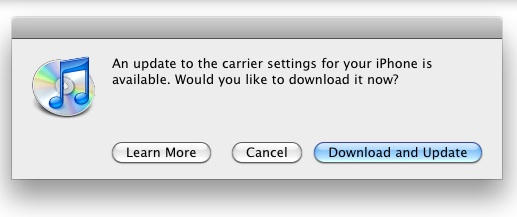
AT&T’s long-awaited MMS update for the iPhone is finally ready. Just plug your iPhone into iTunes and hit the “Check for Update” button.
You should get the dialog message above, saying: “An update to your carrier settings for your iPhone is available. Would you like to download it now?”
Hit “Download and Update” and wait a few seconds. The update is done is a jiffy. Then go to your iPhone and launch the Messages app. There should be a little camera icon to the left of the text input box at the bottom. Hit it, and you’ll be able to send pictures or video with your text messages. Try it: it’s a lot of fun.
PS: Some users are reporting they have to manually reboot their iPhone after installing the carrier update.
The critically-acclaimed Bioshock game is coming to the Mac on October 7, Feral Interactive has announced.
The game was released for Windows and the Xbox 360 in August 2007, more than two years ago. Isn’t it great that game developers are so dedicated to the Mac platform?
In addition, the Mac version requires a dedicated video card: it doesn’t support Intel’s integrated GMA video cards, used in some MacBooks and iMacs, and all Mac Minis, except the newest models.
TomTom’s Car Kit will be priced at $119.95 when it is introduced next month and will be compatible with all iPhone models, the company said in a brief statement on Friday.
Earlier this week, it looked like the Car Kit might also include the iPhone app. But TomTom’s statement now makes it clear that the Car Kit will be sold separately from TomTom’s $100 app, bringing the total price to $220 — the same as a dedicated GPS unit.
TomTom’s GPS system is getting pretty good reviews — Gizmodo gives it a B+ — although the mount kit might raise that grade if it amplifies the app’s voice instructions as promised.
TomTom announces today that the TomTom car kit for the iPhone will have a recommended retail price of EUR 99.99 or USD 119.95.
The TomTom car kit will be available this October and will be sold separately from the TomTom app. It will be compatible with the iPhone 2G, 3G and 3GS.
All further details on the car kit will be made available soon.
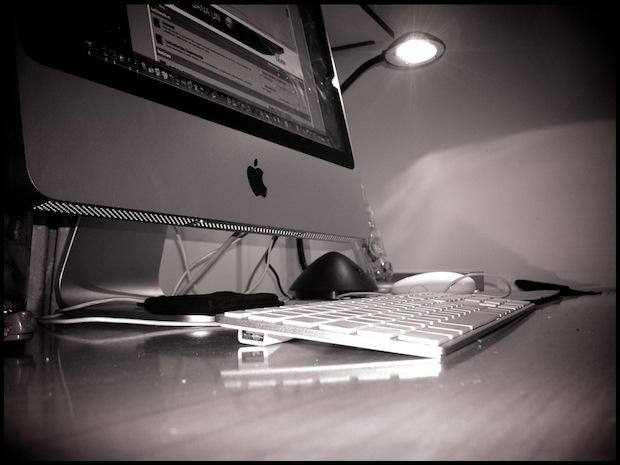
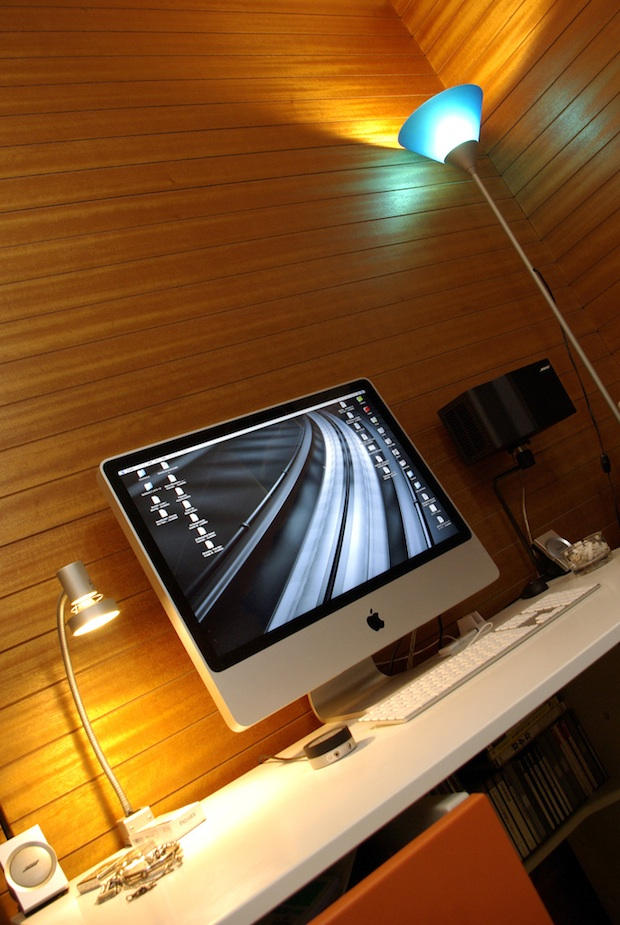
Apple's popular iMac is rumored to get a refresh soon. Many are hoping Blu-Ray will be added, but that's unlikely. CC-licensed pic of an iMac by QuattroVageena: http://www.flickr.com/photos/quattrovageena/1709649008/
A redesigned iMac with a slimmer chassis, a lower price tag and possibly Blu-Ray is coming in the next few weeks, says AppleInsider.
Citing two sources, the new iMac is already rolling off production lines in Taiwan, says the website. It could be launched as early as next week, though early- to mid-October is likelier.
The new machine will likely be cheaper and sport a thinner industrial design, along the lines of Apple’s latest LED backlit Cinema Displays. It may also have Blu-Ray, AppleInsider suggests, though not very strongly.
“People familiar with Apple’s thinking have suggested in recent months one of these moves could see the company finally embrace Blu-ray — a technology once derided by Chief Executive Steve Jobs as a “bag of hurt” from a licensing perspective.”
CoM is betting against Blu-Ray. The format isn’t yet ready for prime time on computers. Until software and other media ships on Blu-Ray, it’s a format that makes sense only for movies on home theater systems.
If Apple does add Blu-Ray, it’s likely to be at a premium, AppleInsider says, suggesting Blu-Ray may be available as an option, which sounds reasonable. Customers wanting a Blu-Ray drive can pay extra for it.
“… you’ll never own a Microsoft Courier device,” he writes in his latest column. “It’s not real now. It’s not going to be real in the future. And even Microsoft does eventually make it real, it will fail in the market and you won’t buy one.”
As Elgan points out, the “leaked” photos and video of the device are pure CGI; Hollywood-style special effects that look great as mockup photos and demo videos, but may not be possible to build.
“Everything is awesome when it doesn’t have to actually be manufactured, sourced or developed at an affordable cost,” he writes. “It’s special effects wizardry, not software or hardware design.”
In edition, Elgan notes that a pen-based tablet is doomed to failure. He calls Microsoft’s repeated attempts to force pen-based devices on the market “crazy,” citing Windows for Pens in the 1990s, pen-based Tablet PC and Ultra Mobile PC, and Windows Mobile devices with pens. “I don’t think pens have any role in mass-market devices of the future — certainly nothing that could compete with an iPhone-like Apple Tablet,” he says. We agree – pens are a throwback. The future of multitouch tablets and PCs are finger-controlled.
In a strange city and need to find the nearest Hooters? A new iPhone app, Bionic Eye, has got you covered.
Designed for the iPhone 3GS, Bionic Eye is an augment reality app that overlays information about nearby points of interest over the iPhone’s camera. Hold the camera up to the building in front of you, and thanks the iPhone’s GPS and compass, the screen is overlaid with little virtual signs that say what’s inside. It also includes virtual signposts showing the way to the nearest subway station or Starbucks coffee shop.
A demo of the app surfaced in July, when the app was called “Nearest Subway” and pointed to nearby subway stations.
It’s now available in the App Store for $0.99. Versions are available for the U.S., U.K., France and Tokyo. And as well as public transit, the app points to a range of POIs, including fast food restaurants, WiFi hotspots, chain hotels and Apple stores.
The app covers all US cities and doesn’t need an active WiFi or 3G internet connection. More than 100,000 POIs are contained in the app’s 2.9MByte database. However, information about subways in the U.S. is restricted to New York, Washington, and Chicago (and you buy the info from within the application).
Changes to accounting rules will allow Apple to record revenue from sales of the iPhone and Apple TV at the time of sale, rather than spreading it over 24 months, Dow Jones newswire is reporting.
Financial experts predict the rule change will add significant revenue to Apple’s quarterly results, and haveupped their stock targets accordingly. CNBC’s Jim Cramer, for example, predicts Apple’s stock will hit $264 a share, in part because of the rule change (it’s trading at about $188).
Apple currently spreads revenue from iPhone and Apple TV sales over two years, like a subscription. As a result, blockbuster sales quarters for the iPhone — like this summer’s release of the iPhone 3GS — aren’t reflected in the company’s quarterly revenue statements.
Apple uses subscription accounting for the iPhone and Apple TV because it allows the company to update the devices with new software without charging customers for new features. Apple does not do this for its iPods, which is why customers are charged nominal fees for software upgrades.
Apple lobbied the Financial Accounting Standards Board (FASB) for a change in the accounting rules. The changes were widely expected.
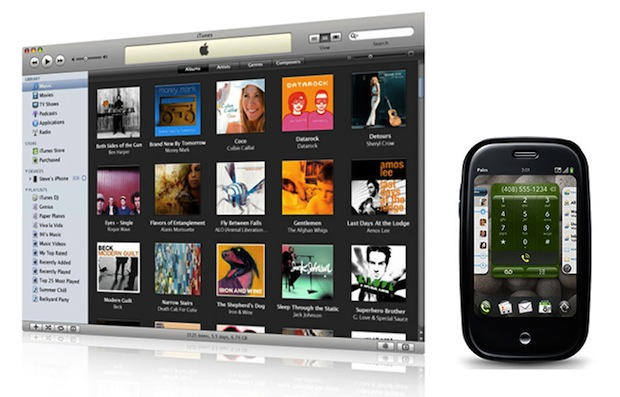
In an embarrassing turn of events, Palm has gotten the smackdown from a USB industry group over a software hack that enables Palm’s Pre smartphone to sync with iTunes.
When Palm released the Pre earlier this year, the company cleverly spoofed Apple’s unique USB identifier to fool iTunes into thinking the Pre was an Apple device, allowing it to sync songs and playlists. It was a sneaky but daring move for Palm, ensuring the Pre was compatible with the market-leading music software.
But Apple repeatedly disabled the hack with a series of iTunes updates, so Palm sent a letter to the USB Implementers Forum, an industry group that oversees the USB standard, claiming Apple is “hampering competition.”
But in a response to Apple and Palm on Tuesday, the group sided with Apple, saying Palm’s spoofing of Apple’s ID likely violates USB-IF policy.
“Under the Policy, Palm may only use the single Vendor ID issued to Palm for Palm’s usage,” “the group said in a letter obtained by Digital Daily.
“Usage of any other company’s Vendor ID is specifically precluded. Palm’s expressed intent to use Apple’s VID appears to violate the attached policy,” the letter continued.
Embarrassing. Clearly not the response Palm was hoping for.
The USB Forum asked Palm to clarify its position and respond within seven days. Palm told Digital Daily it is reviewing the Forum’s letter and will “respond as appropriate.”
Version 8 of Adobe’s popular Photoshop Elements photo-editing software is coming to the Mac in October, adding several new intelligent photo fixes, such as Photomerge Exposure, previewing a range of adjustments and one-click fixes for skin, skies and teeth.
Photoshop Elements 8 adds about a dozen new photo editing features or enhancements, including the ability to share photos via iPhone.
Known as “Photoshop Lite,” Elements brings a lot of the power of Adobe’s flagship editing suite to non-professionals, thanks to its stripped-down interface and well-implemented help options.
“We’ve simplified the editing process, without taking away any of the power, and incorporated smart tools with built-in intelligence to bring once difficult tasks, within reach of everyone,” said Adobe executive Doug Mack in a statement.
Guided Edit for example, new in version 8, walks the user through both basic editing operations like removing scratches and blemishes, and artistic effects like line drawing.
Another new smart fix, Photomerge Exposure, combines two shots — one with flash, the other with flash off — into a single, well-lit photo. See above.
Photoshop Elements was first released for the Mac in 2006 and has gained a slew of new features and enhancements in meantime. Here’s what’s new in version 8, and the list of comparison features between versions.
The $99 software (or $79 pre-order after a $20 rebate) is compatible with Snow Leopard. It requires Mac OS X 10.4.11 or better.
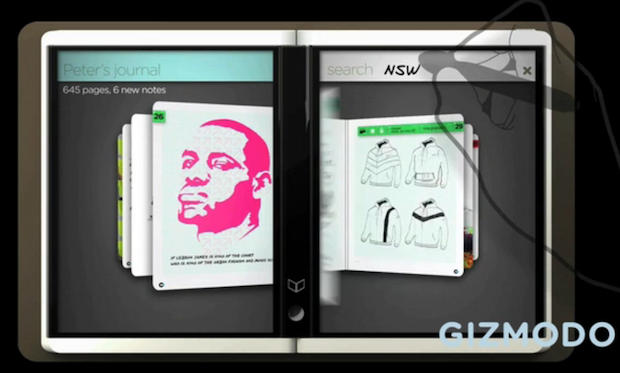
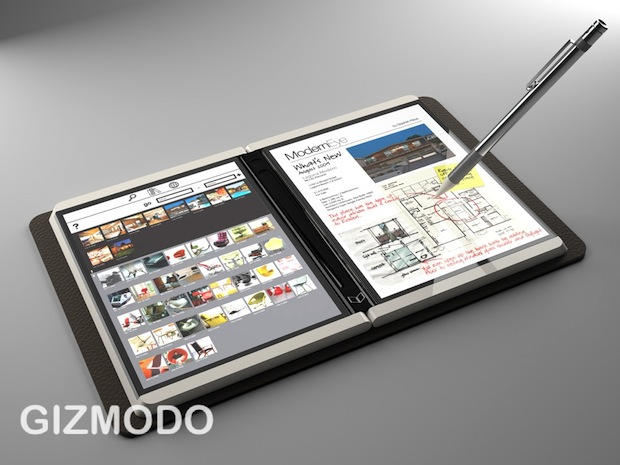
But where Apple’s device will be designed for your fingers, Microsoft’s includes a pen! WTF? Is this the nineties? Has Microsoft learned nothing from the iPhone at all?
Yeah, Apple’s tablet will also support a pen. For detailed graphics work, and maybe even text input, a pen will work better than your fingers, but the primary input device?
Says Giz:
“The Courier user experience presented here is almost the exact opposite of what everyone expects the Apple tablet to be, a kung fu eagle claw to Apple’s tiger style. It’s complex: Two screens, a mashup of a pen-dominated interface with several types of multitouch finger gestures, and multiple graphically complex themes, modes and applications.”
Codenamed Courier, it has two multitouch 7-inch screens joined by a central hinge, which has a single iPhone-like “Home” button. It’s a late prototype, Giz says, and may have nifty hardware features like inductive pad charging.
But if you have to use a pen to control it, it’s fucked.
Google has added push Gmail to the iPhone/iPod Touch via its Google Sync service.
“Using Google Sync, you can now get your Gmail messages pushed directly to your phone,” says the Google Mobile Blog, which announced the change. “Having an over-the-air, always-on connection means that your inbox is up to date, no matter where you are or what you’re doing.”
Google Sync also syncs contacts and calendars, or any combination of contacts, calendars and Gmail.
Push Gmail works in the iPhone’s/iPod’s native Mail app, but you have to set up your Gmail account as an exchange account. Full instructions after the jump.
Staff at an Apple retail store in Seattle are planning a walkout over “abusive” management, the first labor dispute to hit the company’s super-successful retail chain, IFOAppleStore is reporting.
Employees at Apple’s Alderwood Mall store claim the store’s management is “abusive” and cite unspecified violations of state and federal labor laws.
Apple’s human resources department hasn’t properly investigated their complaints, and even an appeal to the head of the chain, Ron Johnson, went unheeded, the staff told IFOApplestore.
Workers are planning a walkout at 1PM on October 3 if no action is taken before then.
The threat of industrial action is unusual for Apple’s stores, which have a reputation as a good place to work and an unusually high retention rate for retail.
Citing anonymous sources, The Loop says managers are being offered better money and in some cases, relocation expenses. They are then encouraged to recruit their former colleagues with similar incentives.
The strategy seems to be in line with Microsoft’s playbook. Earlier this year, Microsoft reportedly tried to lure iPhone developers to the Zune platform with cash incentives.
Which means that Microsoft’s retail strategy can be summarized thus:
Copy the idea of retail stores
Hire Apple’s former real estate head George Blankenship as a consultant
Locate Microsoft’s stores next to Apple’s stores
Put in face-to-face help desks, but call them Guru Bars instead of Genius Bars
Hire Apple’s staff
What’s next? Stock the stores with Apple products?
Microsoft’s first retail store is scheduled to open in October near Apple’s retail store in Mission Viejo, Calif., at The Shops.
Like Apple, Microsoft is rumored to be working on a touchscreen tablet. Hopefully it won't resemble this earlier effort.
Like Apple, Microsoft is developing on a touchscreen tablet, several sources say.
CoM has heard rumors that Microsoft has a touchscreen tablet in the works. 9to5Mac is reporting that Microsoft is working on a tablet (and two touchscreen phones to compete with the iPhone).
Mary-Jo Foley at ZDNet has some details: Microsoft’s tablet effort is being led by James Allard, the Microsoft executive in charge of the XBox and Zune, and members of Microsoft’s Surface team, Foley reports.
Apple's Phil Schiller is in the spotlight over controversy surrounding the rejection of Google's Voice app for the iPhone.
Google says categorically that Apple has rejected its Voice app for the iPhone. Apple denies this, saying several times that the app is still under consideration. Apple has said this in official documents submitted to a government inquiry by the FCC, and most recently today in a statement to the press.
Kyle Wiens, the CEO of iFixit, which cleverly uses product teardowns to make the company a household name among tech geeks.
Last Thursday, iFixit’s CEO Kyle Wiens spent all day in San Francisco trying to buy the new fifth-generation iPod nano. It was the day after Steve Jobs introduced the new iPod, but none of Apple’s stores in the city had them. So that evening, Wiens sent iFixit’s summer intern on a red eye to the east coast with orders to buy one and immediately tear it apart.
The intern’s teardown was reported all over, generating massive attention for iFixit. The next day, iFixit got a genuine scoop with a teardown of the new iPod Touch, which surprisingly doesn’t feature a camera. But iFixit’s dis-assembly revealed space for a camera. Apparently, the Touch was supposed to get one after all.
Between the two teardowns, iFixit generated literally thousands of news stories — from Gizmodo to the Los Angeles Times. Not bad for little repair shop started by a pair of college students in San Louis Obispo, Calif.
iFixit makes its money by selling spare parts for Macs, iPods and iPhones. Its mission is to help people fix their own devices. It publishes free and easy-to-follow repair guides, but it gets the most attention for it’s superb product teardowns.
This is internet marketing par excellence. Not only are the teardowns creating genuine news for the tech press, they are efficiently executed and beautifully documented. The photos are superb, and the walkthroughs are clear and informative. Best of all, Wiens is a genius at sending the media timely and informative emails about the teardowns that all but write the stories for reporters.
“Our goal at the end of the day is to keep devices working longer,” said Wiens modestly in an email to me earlier this week. “Anything that we can do to make repair sexy and gadgets feel less like a black box, the better.”
My friend Brian Chen over at Wired.com has a great story today with a lot more detail about Wiens and his teardowns. Read it here.
Apple has responded to Google’s charge that Phil Schiller rejected Google’s Voice app: “We do not agree,” says a spokesman.
Apple says it has NOT rejected the Google Voice app and continues to evaluate it. In a statement, Apple PR says:
“We do not agree with all of the statements made by Google in their FCC letter. Apple has not rejected the Google Voice application and we continue to discuss it with Google.”
As reader Steven points out below, a good test is whether Google’s app is available in the app store — which it is not. “Until the application does appear in the App Store, we can all say with 100% certainty that it has been denied,” he says.
Apple’s Phil Schiller personally rejected Google’s controversial Voice app, new documents reveal.
Schiller rejected Google’s VOIP app because it “duplicated the core dialer function of the iPhone,” Google said in documents released on Friday. The documents were published by the company and the Federal Communications Commission, which is investigating Apple’s rejection of the app.
Google’s version of the story directly contradicts Apple’s version of events. According to Apple, the app hasn’t been rejected; it is still under evaluation.
But according to Google, Schiller personally told Alan Eustace, Google’s senior vice president of engineering and research, that the app had been rejected during a phone call on July 7.
“It was during this call that Mr. Schiller informed Mr. Eustace that Apple was rejecting the Google Voice application…” Google says.
Curiously, the revelations didn’t come to light until today because Google kept parts of its response to the FCC secret to protect “sensitive commercial conversations” between the two companies.It decide to relax its request after Apple published its response and groups requested the info under the Freedom of Information Act, Google explains in a blog post.
Google’s full response to the FCC’s questions about the rejected app are here (PDF).