Leander has been reporting about Apple and technology for nearly 30 years.
Before founding Cult of Mac as an independent publication, Leander was news editor at Wired.com, where he was responsible for the day-to-day running of the Wired.com website. He headed up a team of six section editors, a dozen reporters and a large pool of freelancers. Together the team produced a daily digest of stories about the impact of science and technology, and won several awards, including several Webby Awards, 2X Knight-Batten Awards for Innovation in Journalism and the 2010 MIN (Magazine Industry Newsletter) award for best blog, among others.
Before being promoted to news editor, Leander was Wired.com's senior reporter, primarily covering Apple. During that time, Leander published a ton of scoops, including the first in-depth report about the development of the iPod. Leander attended almost every keynote speech and special product launch presented by Steve Jobs, including the historic launches of the iPhone and iPad. He also reported from almost every Macworld Expo in the late '90s and early '2000s, including, sadly, the last shows in Boston, San Francisco and Tokyo. His reporting for Wired.com formed the basis of the first Cult of Mac book, and subsequently this website.
Before joining Wired, Leander was a senior reporter at the legendary MacWeek, the storied and long-running weekly that documented Apple and its community in the 1980s and '90s.
Leander has written for Wired magazine (including the Issue 16.04 cover story about Steve Jobs' leadership at Apple, entitled Evil/Genius), Scientific American, The Guardian, The Observer, The San Francisco Chronicle and many other publications.
He has a diploma in journalism from the UK's National Council for the Training of Journalists.
Leander lives in San Francisco, California, and is married with four children. He's an avid biker and has ridden in many long-distance bike events, including California's legendary Death Ride.
You can never be rich enough or thin enough, and you can never have enough storage.
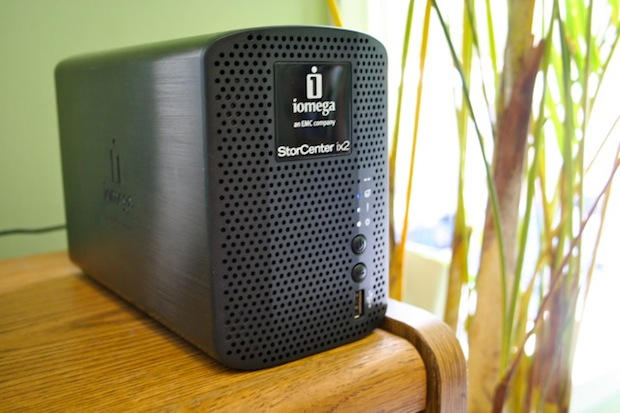
I’ve been playing with Iomega’s brand new StorCenter ix2-200, a 4TB network-attached storage/home server that totally kicks NAS!
Not only is it a nice big target for Time Machine backups, it’s also an iTunes server and a Bittorrent machine. It plays nice with the Mac, and is dead easy to set up and use.
Here’s a video of the opening of Microsoft’s first retail store in Scottsdale, Ariz. As the video proves, Microsoft’s business plan is to shamelessly copy Apple, right down to the whooping and high-five ritual when the store first opens. If you blur your eyes slightly, you’re inside an Apple store. From the wood floors and tables to the staffs’ brightly-colored tshirts. Shameless.
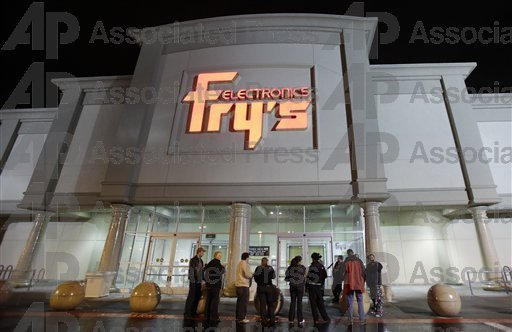
A cheap shot, I know, but this is a real picture of the crowd that turned up last night at Fry’s in Renton, Washington, to be among the first to buy Microsoft’s new operating system. Renton is a town just outside Seattle, where Microsoft is headquartered. Photo by the AP.
For comparison, hit the jump for a pic of the line for Apple’s Snow Lepoard in San Francisco earlier this year.
The demo gods shone on Microsoft CEO Steve Ballmer this morning as he showed off Windows 7 to the Today Show’s Matt Lauer.
The demo went with nary a hitch, even though he didn’t really “demo” any features — he just talked about how Windows 7 is “faster,” “cleaner” and “snappier.” The Sony touchscreen machine does look pretty cool though.
He isn’t afraid that the iPhone will soon make PCs obsolete, he told Lauer, because people want different-sized screens for different tasks. And he’s not jealous of Apple’s cool image because nine out of 10 PCs sold in the U.S. run Windows.
Windows 7 goes on sale today. Watch the video below.
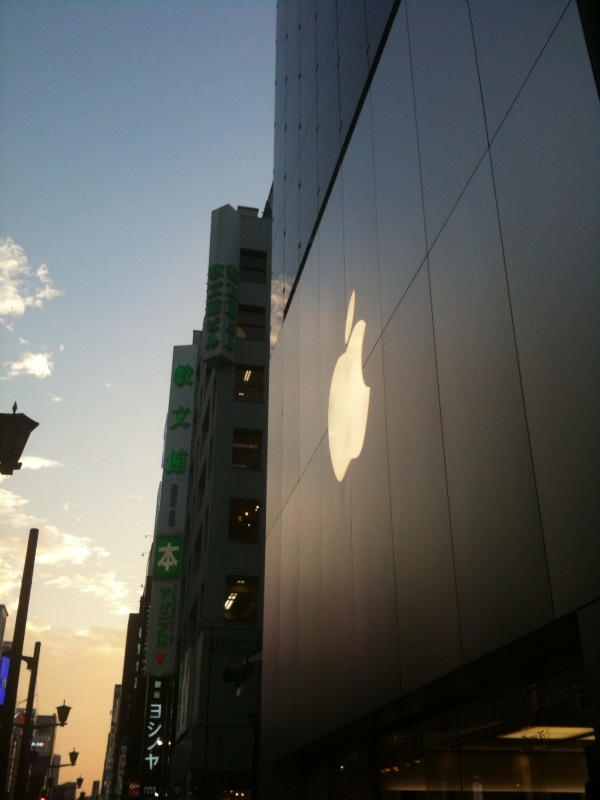
The Apple Store Ginza looks like just like Apple's new iMac. CC-licensed pic by Nobi Hayashi. http://www.flickr.com/photos/nobihaya/4032644782/?edited=1
Anyone notice that the Apple Store in Tokyo’s Ginza district looks like the new iMac?
Here’s another view, courtesy of of Google Street View.
UPDATE: Microsoft has canceled the legal threat. I just got an email directly from DtecNet, the anti-piracy company working with Microsoft, saying they have formally withdrawn the notice. There was no explanation why — or why it was issued it in the first place. “After careful review, we sent the below retraction notice below to your ISP,” DtecNet said. “We apologize for any inconvenience.” The problem is that without an explanation of why CoM was targeted, I don’t know what the best response is. It looks like DtecNet made a mistake with us, but the DMCA is a draconian law and easily abused. How many other sites and ISPs have complied to bogus notices like this?
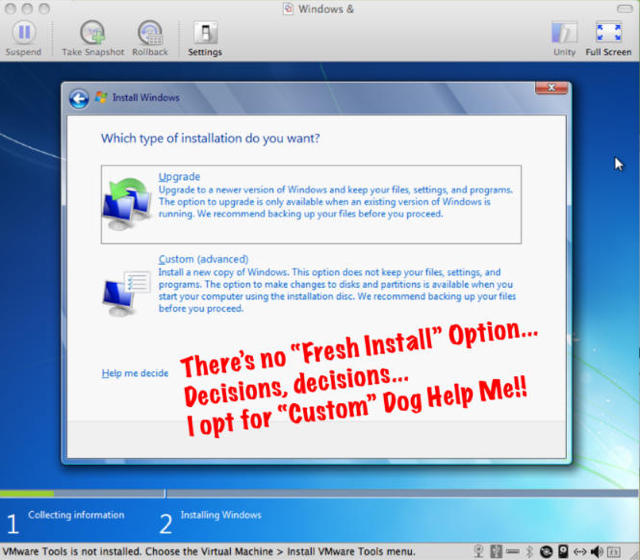
On Tuesday morning, Microsoft sent a DMCA takedown notice to our Web host concerning a post we published back in January about loading the Windows 7 beta on a MacBook.
The DMCA notice demanded we remove the post because it allegedly makes Windows 7 available for “copying through downloading.” (The full text of the notice is after the jump).
Trouble is, we have no idea what Microsoft is talking about. We presumed the post may contain a link to a pirated copy of Windows 7. But the only download link is to Microsoft’s official Windows 7 beta. Surely Microsoft isn’t trying to remove all links to its beta a few days before the final product goes on sale on October 22?
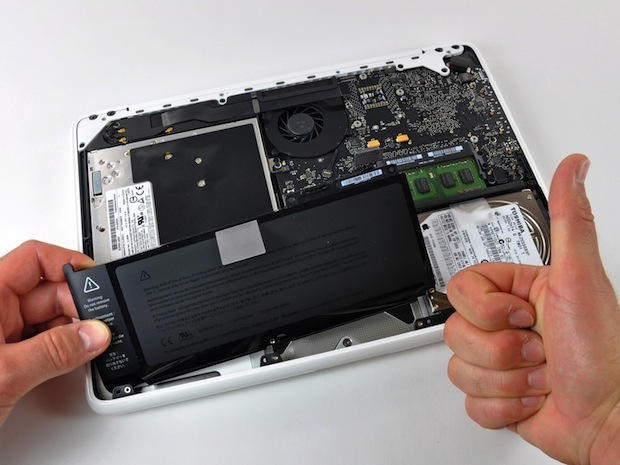
Apple has added a faster processor, a bright LED display, a big new built-in battery that adds two hours of extra life (Apple claims) and an improved Bluetooth antenna that promises to improve reception. The MacBook also has a space-age heat sink to cool the faster chip.
But Apple giveth, and Apple taketh away. Gone is the FirWire port and IR sensor, making it the only shipping Mac portable with no remote control.
Gone also are the two fake screws on the left side of the old MacBook that Steve Jobs insisted on to make the machine look symmetrical.
Announced today, the new MacBook costs $999, the same as the machine it replaces.
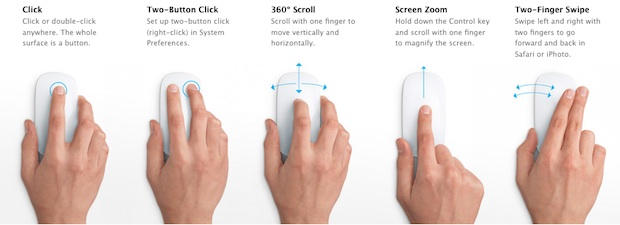
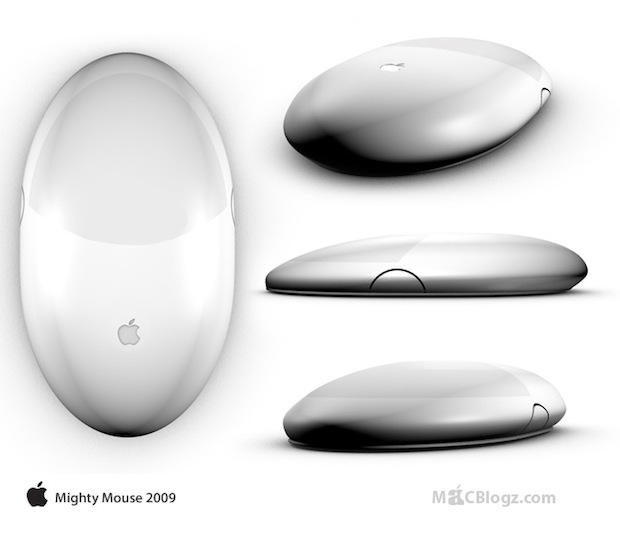
Apple has created a video showing the new multi-touch Magic Mouse in action. Check it out below.
The mouse looks incredibly easy to use. It has several gestures built-in, including clicking, right clicking, zooming and swiping to backwards and forwards in Safari and iPhoto.
MC207LL/A – K84 BEST BTR- USA
MC238LL/A – MAC MINI 2.26/2×1GB/160/SD/AP/BT-USA
MC239LL/A- MAC MINI 2.53/2×2GB/320GB/SD/AP/BT-USA
MC340LL/A – AIRPORT EXTREME (SIM DUALBAND) – USA
MC343LL/A – TIME CAPSULE 1TB (SIM DUALBAND) -USA
MC344LL/A – TIME CAPSULE 2TB (SIM DUALBAND) – USA
MC408LL/A – MAC MINI 2.53/2×2GB/1TB/NO ODD/AP-BT-USA
MC413LL/A – IMAC 21.5″/3.06/2×2GB/1TB/4670-256MB-USA
MC434LL/A – APPLE VESA MOUNT ADAPTER
MC461LL/A – MACBOOK 60W MAGSAFE POWER ADAPTER – USA
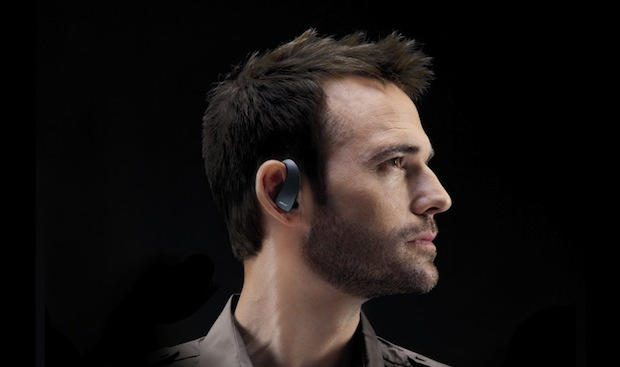
Jabra’s new Stone headset is the first non-dorky Bluetooth headset I’ve ever seen.
Actually, it’s the second. The first was a Secret Service-style single earbud from Hong Kong that clipped to your shirt. Trouble is, it sounded awful.
The Stone should have no such trouble: it supports A2DP (good for music, even though it’s a single earpiece) and has nice, clear noise-canceling microphone. Volume controls are handled by the surface of the Stone, which is touch-sensitive – how cool is that?
It’s called the Stone because when docked into its portable charging dock, the pair look like a polished stone.
But boy, does it need that charging dock. Battery life is a skimpy two hours talk time, according to Jabra (and less than an hour according to one early review). The charging dock is good for three charges of the headset before it too has to be recharged. Standby is 12 hours.
Jabra’s Stone costs $130 and will be available exclusively from AT&T in early November. Might be worth the price for the cool touchscreen volume controls — and for not making you look like Lieutenant Uhura.
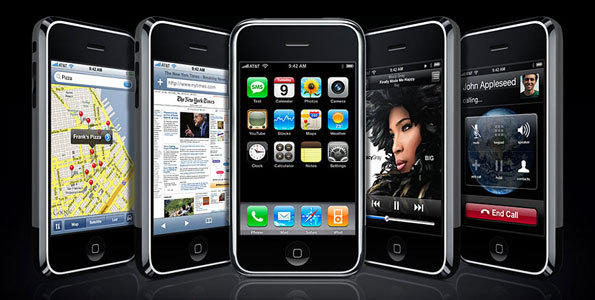
Apple’s COO Tim Cook says competitors are still trying to catch up with the original iPhone, which was launched more than two years ago.
During a conference call discussing today’s Q4 earnings, Cook was asked about competition hotting up for the upcoming holiday season. How will Apple maintain momentum and differentiation?
“We feel very confident,” Cook said. “People are still trying to catch up to the original iPhone, and we’ve long since moved past that.”
Ouch. Take that Google and Palm. And although it wasn’t mentioned by name, the question was clearly referring to the upcoming Droid phone from Verizon and Motorola, which is based on Google’s Android.
Verizon has launched a weird iDon’t advertising campaign that supposedly highlights all the things the iPhone doesn’t do — like run simultaneous apps. But while the Droid is getting early notice for being very thin (even with a slider keyboard), there’s still no sizable library of apps for it to run — and that’s what Cook is referring to.
The iPhone is a true mobile platform, not just a nice piece of standalone hardware. And a platform is something that takes years to build.
It’s going to be a big day for Apple stock tomorrow if after-hours gains stick. Apple’s stock was up to as much as $204 in after-hours trading. The company reported record profits on blockbuster sales of Macs and iPhones — all during one of the worst economic downturns this century.
Apple’s sales defy logic,
Apple has settled claims with state regulators who allege the company mishandled electronic waste. Photo: Thomas Dohmke
“Recession? What recession?” said Steve Jobs and co. on Monday as Apple reported record sales and near-record revenues for 2009’s fourth quarter.
While Wall Street and most of the technology industry limped along for the last three months, Apple’s fourth quarter revenues rose to a whopping $9.87 billion — the second best quarter ever after last Christmas.
Apple sold a record 3.05 million Macs during the quarter (17% year-on-year increase); 10.2 million iPods (down 8%); and 7.4 million iPhones (up 7%).
“We are thrilled to have sold more Macs and iPhones than in any previous quarter,” said Steve Jobs in a statement. “We’ve got a very strong lineup for the holiday season and some really great new products in the pipeline for 2010.”
The results do not reflect the new accounting rules that recently went into effect allowing Apple to realize iPhone and Apple TV sales, which are currently spread over two years. If these sales were taken into account for the quarter, revenue would have been $12.25 billion, Apple said.
The company is a runaway profit machine. Gross margins were up to an unbelievable 36.6%, which rocketed profits 46% to $1.67 billion for the quarter. Yeah, that’s a lot of cash. Companies like Dell and HP are lucky if they can squeeze 5% profits out of their products.
The combination of an iPod Touch and a personal WiFi hotspot like Versizon's MiFi is almost ready to replace the iPhone, one CoM reader has found. Image: Wired.com
As more and more U.S. iPhone users become fed up with AT&T, some are seriously starting to consider using Apple’s iPod Touch as a full-time phone.
Trouble is, the Touch doesn’t have cell phone radio. But pair it with a personal WiFi router, like Verizon’s MiFi, and a service like Skype, and the Touch might be a viable full-time VOIP phone.
CoM reader Alex Bowles’ contract with AT&T expires in January, so he seriously looked into replacing his iPhone with an iPod Touch and Verizon’s MiFi. Here’s what he found.
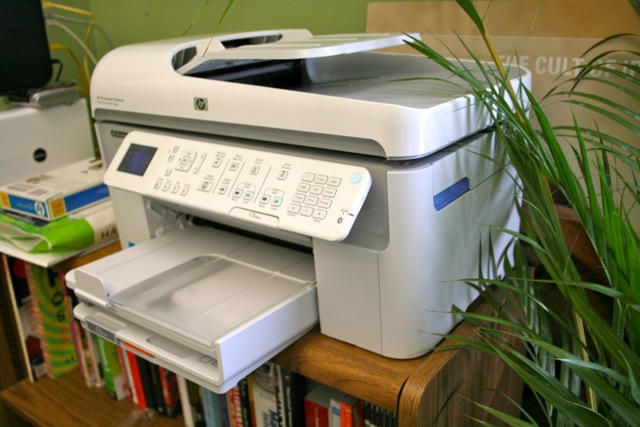
The best thing about going to the office is having access to the copier in the mail room. Sneak in at the weekend, roll off hundreds of color copies for your secret art project.
But HP has a fantastic home-office alternative: the Photosmart Premium Fax All-in-One Printer, Scanner, Fax, Copier. It does everything the industrial ones do, yet costs less than $200. A snap to set up and prints from the iPhone. It’s the best printer I’ve ever had. Weird, I know, but I really do love this baby.
Roger Åberg of MacFeber.se has posted a quick unboxing video and first look at the highly-anticipated TomTom Car Kit for iPhone. The $120 accessory looks pretty solid, well-designed and sticks easily to the windshield. See the video above.
Two music companies representing rapper Eminem have settled out of court with Apple over a download dispute.
Eminem’s publisher, Eight Mile Style, and his record company, Aftermath Records, sued Apple for allegedly making the rappers music available for download without permission.The rapper was not involved in the case.
Jobs has a net worth of $5.1 billion, Forbes says, thanks mostly to nearly $4 billion worth of stock in Disney. Jobs became the largest individual Disney stockholder after the company bought Pixar in 2006.
“Best investment: bought Pixar from George Lucas in 1986 for $10 million; created string of hits (Finding Nemo, Toy Story). Sold to Disney in 2006 for $7.4 billion in stock,” says Forbes. “Today is Disney’s largest shareholder; stake worth $3.9 billion.”
Last year, Jobs placed 61st on Forbes’ list, and despite a decline in net worth of about $600 million, he comes inside the top 50. The economic climate hasn’t been as kind to other billionaires, poor souls. His previous highest showing was 49th place in 2007.
Jobs climbed up the ladder thanks to a massive 90% rebound in Disney’s stock price, and a similar doubling of Apple’s. Just six months ago, in the middle of the slump, Jobs slipped to 178th place.
Jobs has drawn only a $1 annual salary from Apple since returning to the company, although he has received massive stock option grants and a private Gulfstream jet.
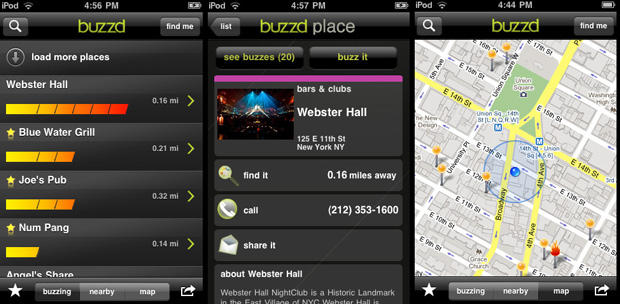
The realtime city guide Buzzd has just released a slick and easy-to-use dining-and-drinking app that tells you what’s buzzing right now.
Available for free, the Buzzd iPhone/Touch app uses the company’s “buzzmeter” algorithm, which pulls in data from services like Twitter and Buzzd, to tell you what local venues are hot. Drunksourcing, it’s been called.
To drunksource venues you need to be a Buzzd member (it’s free) but the app will return hot places to eat and drink whether you’re a member or not. A quick test of my local neighborhood highlighted what looks like a pretty good list of the hot restaurants and bars around 16th and Valencia in SF’s Mission.
It’s certainly a lot easier to use than the overrated Urbanspoon app, which I’ve never really liked. Buzzd looks like a venue-finder I might actually use. Reviews are short and snappy, and the popularity of something is usually a pretty good yardstick of quality.
Plus, it’ll probably also function as a pretty good reverse warning system, alerting you to venues packed with insufferable hipsters.
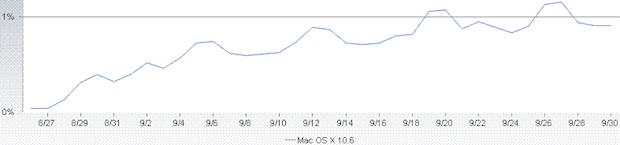
Snow Leopard was released on August 28. Thanks to its low $30 price tag, Mac users are pouncing on it. But a nearly 20% percent adoption rate is fast — by anyone’s standards.
Net Applications estimates market share by measuring the number of visits to a network of sites, recording things like browser and operating system. According to the firm, about 1% of all computer users are currently running Snow Leopard. The firm estimates that 5% of computer users worldwide are Mac users, which means about 18% of Mac users are running Snow Leopard.
On interesting thing to note is the peak in Mac users during weekends. Presumably, people are surfing on PCs at work during the week, and using a Mac at home over the weekend.
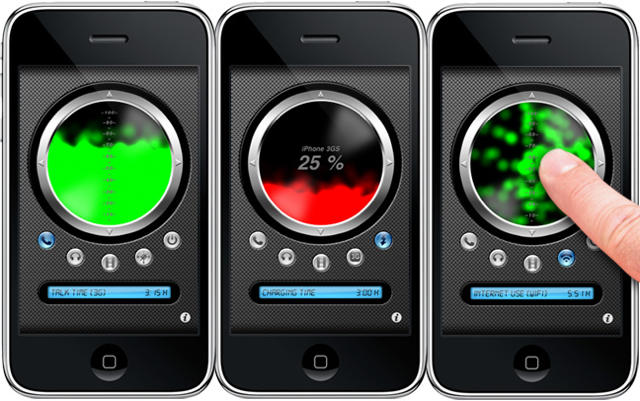
All Power Pro is a cool battery meter for the iPhone/Touch that displays your battery level as an animated plasma engine.
The amount of plasma in the window indicates the amount of juice in your battery pack. Double-tap the screen for the actual percentage of charge. The plasma flows with gravity or tap the screen to watch little plasma explosions. It also estimates how much juice you’ve got left for talking, listening to music, or surfing the web.
Very cool idea to turn something mundane into something clever by putting a new interface on it. Here it is in action.
The video above shows why tablet computers are so exciting. Using your fingers to directly manipulate objects onscreen (as opposed to hitting radio buttons with a stylus pen) is clearly a powerful and intuitive way to interact with our machines.
The video shows a demo of BumpTop, a 3D desktop overlay for Windows 7. As you’ll see, it makes the computer desktop just like a real physical desktop. It’s pretty magical. Just look at the way photos are cropped — by chopping them with your finger!
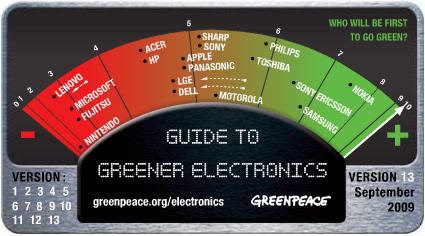
Greenpeace has given Apple a “pat on the back” for last week’s publication of a detailed breakdown of its greenhouse gas emissions.
The environmental group also credits Apple for being ahead of the industry in removing toxins from its products. While Apple eliminated poisonous chemicals from its entire product line about a year ago, other companies are lagging.
Apple sits in the middle of the pack of 18 tech companies, well behind the leader, Nokia, but Greenpeace acknowledges the guide went to press before Apple published its environmental report.
“We went to press before Apple’s updated environmental information was published last week but the welcome news of their transparency about greenhouse gas emissions and other environmental disclosures will be factored in to the next edition. Apple can justly pat itself on the back for listening to their customers who asked for greener gadgets. And all you Apple users should pat yourselves on the back for asking.”
The group also praised Hewlett-Packard for attempts to eliminate toxins and releasing a computer that is virtually free of PVC (Polyvinyl Chloride, or vinyl plastic) and brominated flame retardants (BFRs). Earlier this year, Greenpeace launched a HP=”Hazardous Products” campaign against the company, pressuring it to match Apple.
“HP has made the first step in catching up with Apple, which eliminated these materials from its entire product line almost a year ago, and now puts pressure squarely on HP’s competitors to put more products on the market that are cleaner and safer,” the group says.
Greenpeace saved its greatest praise for consumers who pressure companies to be greener. “The big points go to activist consumers for proving once again that public pressure creates positive change.”