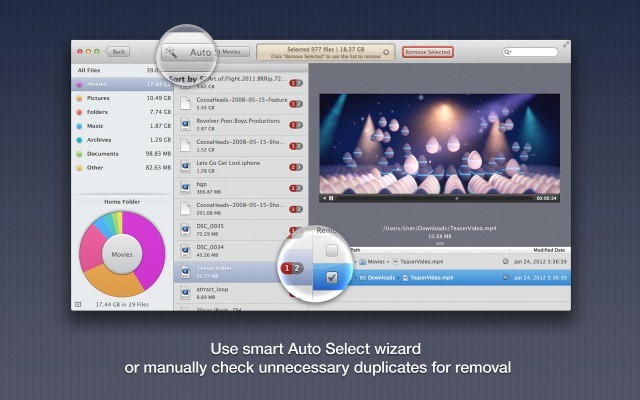
Gemini is a Mac app that does one thing: Find duplicate files on your Mac. You just point it at a directory (your home folder is a good place to start) and sic it on your files. After a few moments it gives a list of anything that is doubled-up on your machine, and then the fun begins.
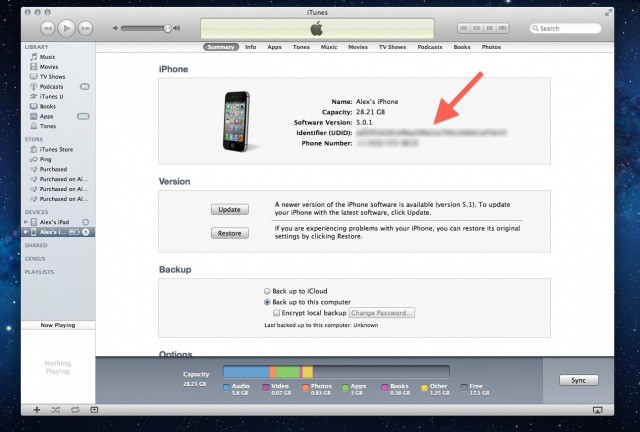
This unique string of alphanumeric text attached to every iPhone and iPad is the source of a lot of privacy concerns.
Many of us feel a deep personal connection with our iPhones, and small wonder: the average person’s smartphone knows more about them than their spouse or significant other. Our iPhones hold our contacts, photos, videos, music, banking data, texts, emails, voicemails, web logins, apps and more. We use our phones to pay our bills, send texts to our girlfriends, check-in to our favorite club, play games with friends, and much more besides.
That makes our iOS devices a juicy target for tracking, and what most people aren’t aware of is that, historically, Apple has made it very easy to anyone to tell what you do with your iPhone. It’s called a Unique Device Identifier or UDID. Every iOS device has one, and using it, third-parties have been able to put together vast databases tracking almost everything you do with your iPhone, iPod touch or iPad.
The good news for privacy advocates is that the days of UDID are numbered. Following the recent stink the U.S. Congress raised over how iOS apps handle a user’s personal information without permission, Apple has given an ultimatum to third-party App Store developers: either stop tracking UDIDs or get kicked out of the App Store. Now ad networks and developers are scrambling to agree on a way to track your device in the future.
But are these replacements any good, or do they pose even bigger privacy concerns than UDIDs did?
Want to download a trial version of Apple’s iWork apps? Tough. Apple just pulled them, replacing the page on its site with a notice sending you over to the App Store: “The trial version of iWork is no longer supported. But you can easily purchase Keynote, Pages, and Numbers from the Mac App Store to start creating beautiful presentations, documents, and spreadsheets today.”
Translation: Everything – and we mean everything, will be going through the App Store from now on.
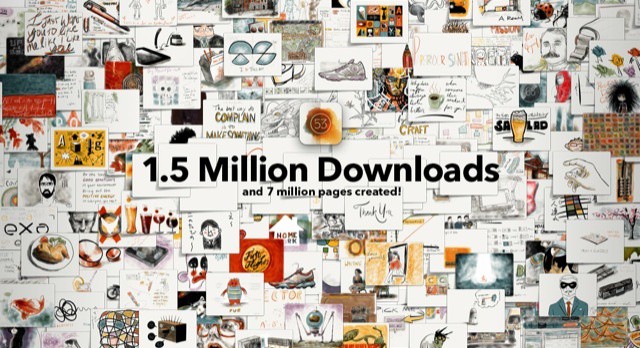
At 1.5 million downloads in just two weeks, Paper is a clear success for simplicity
Paper, the ultra-simple app that turns your iPad into a piece of paper, has been downloaded 1.5 million times in just two weeks. What’s more, users have created seven million pages in that time. Not bad for an app that is distinguihed more by a lack of features than anything else.
Find all the most crowded tourist hotspots with Lonely Planet's new country guides
Lonely Planet guides are a great way to make sure you spend your vacations sharing hotels and restaurants with cheap, filthy backpacking hippies. And now, in addition to various iPhone city guides, the company has just launched a range of country guides.
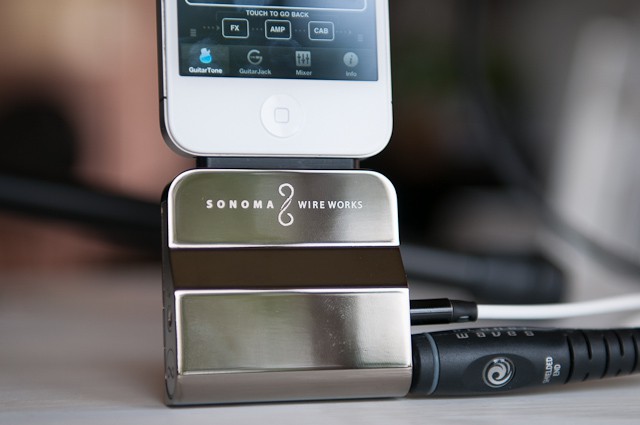
There are no shortage of gadgets out there that allow you connect your guitar to your iPhone, putting the power of The App Store at your guitar’s disposal. But if you’re looking for the best of what’s around (see what I did there?), Sonoma Wire Works’ GuitarJack ($150) has a mixture of beauty and talent you’d do well to consider.
This doesn't look quite right thanks to JPEG compression, but you get the idea
8-bit pixel art is so last year. These days, all the cool kids and hipsters are into 1-bit photos. That’s right, one-bit. Now there’s an app that will render all your photographs as if they were taken on an old Nintendo Game Boy camera.
iOS development could be as easy as selecting a template and filling in the blanks.
With its iBooks Author software, Apple has made it incredibly easy for almost anyone to write and publish their own e-book. And it hopes to make it just as easy to create iOS apps. One patent application shows the Cupertino company has been working on a tool that would allow users without any programming knowledge at all to build their own iPhone, iPad, and iPod touch software.
Via.me is a nice alternative to Instagram, and can now import your Instagram photos
Still looking for an alternative to Instagram now that the Evil Empire has bought it up and is surely planning to suck it dry? There are a few options, including sticking with Instagram itself, but one alternative — Via.Me — has just added an Instagram import tool to make the transition as painless as possible.
Splashtop, the company behind various remote desktop apps for the iPad, has really outdone itself by porting the entire Windows 8 tablet Metro UI to the iPad. Kinda. While you can swipe away and use all of Windows 8’s gestures and even run your own Apps on there, you’ll need a Windows 8 PC to actually stream the apps to the iPad. In reality, it’s just like a virtual desktop app, only with its own native iPad interface.
It’s been some time since we’ve seen an update to the popular productivity app Springpad, and for good reason. After fishing through months of feedback from over 3 million users, it appears the Springpad team has been hard at work improving their “Smart Notebooks,” and readying the release of their new and improved Smartpad 3.0. Released today, Springpad for Android and iOS features a complete redesign, with a clean UI and a plethora of new functions.
Google’s beautiful magazine-esque news reader has received its first major update today. The update takes care of a slew of issues but most importantly, it takes care of the painfully slow syncing. Users will now have instant online sync as well as sync speeds 7x faster than the previous version. Other improvements to the app include:
Procreate piles on the new features, and yet remains lag-free and easy to use
Procreate, the already excellent iPad drawing app, has been updated to play nice with the iPad 3’s Retina Display. But to dwell on that would be to ignore the massive changes that have gone into this version. Make no mistake: This might be labelled v1.6, but it is much more like a v2.0.
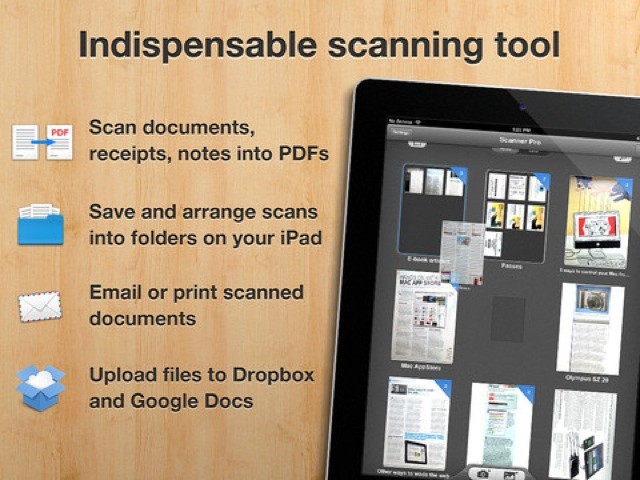
Scanner Pro is my new favorite scanning app for the iPad. It doesn’t do OCR, it doesn’t grab phone numbers from business cards. It just scans, stores, shares and searches your paper documents, and it does it with a beautifully simple interface.
The app is actually an update to the old iPhone version, but this new version (4.0) is completely redesigned and is now a universal app. And just in time, too, as the new iPad’s 5MP autofocus camera makes it a pretty great scanner.
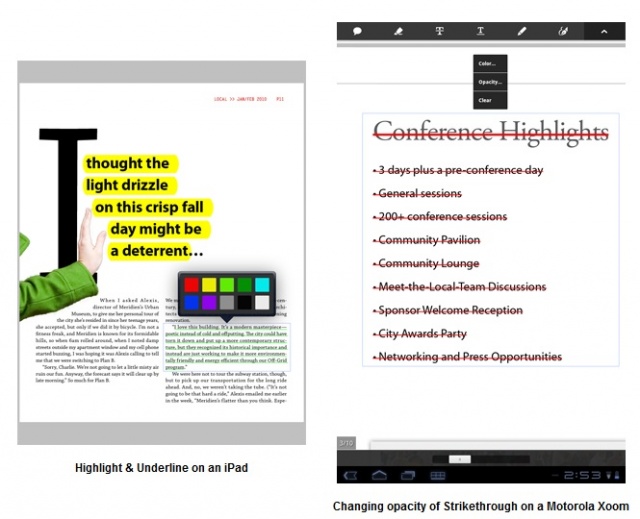
Adobe Reader for Android and iOS received a hefty update today, adding a slew of new features and enhancing performance across the board. We’ll highlight these new features for you below and then send you over to the Adobe blog where they have done an excellent job at explaining what has been added and improved in the latest Adobe Reader update.
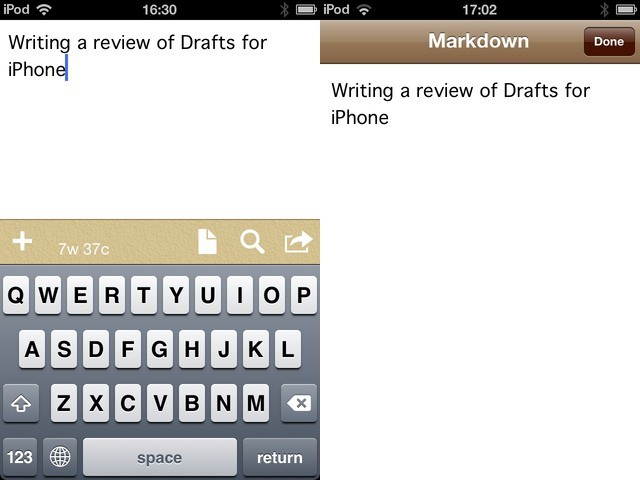
Drafts will become your default way to capture text
When I first heard about Drafts, I thought “What’s the point?” After all, who needs an app in which to draft messages before sending them off to Twitter, or mailing them, or otherwise disseminating them to the world at large? My Twitter and mail apps take care of that already.
And then I used it, and it has turned into possibly the handiest little note-taking app I have on my iPod Touch.
We’re a big fan of BareBones Software here and endorse their incredible BBEdit app whenever we have the chance, but if you don’t want to parcel out fifty bones for it, BareBones has just done everyone a solid and brought over many of the new features from BBEdit 4.0 to their free, powerful text editing software, TextWrangler.
Banjo is busy, and shows me rather a lot of strangers
Banjo is an iPhone app that aggregates pretty much all of your social networks’ data in one place. And a new update has just added Instagram, making it pretty much the most comprehensive option yet. There is a problem, however: While the app itself is dead easy to set up, and even works with iOS 5’s own Twitter integration, it is a complete mess in use.
Here, ladies and gentlemen, for your viewing pleasure, is an example of open-source “design” at its finest. From the retro desktop-style interface through to the clunky name — Documents Unlimited PDF & Office Editor Apps for iPad — not a single aspect of this experience has been left untouched by the clunky hand of open-source UI design committees.
In fact, I would like to award it the newly-minted title of Ugliest iPad App, Like, Ever (or UiALE for short).
Papermill launched on Android several weeks ago. Developed by Ryan Bateman and designed with the help of Matt Legaspi, the app is a beautiful Instapaper client for Android devices. Papermill received high praise from the community and widespreadmediacoverage when it launched, and the developer has since broken down its success based on sales. The conclusions he draws about Android users in general are particularly interesting.
Bateman says that, “Android users not being willing to pay for an apps whose focus is quality and whose price reflects this.” Is this true only for the average Android user, or should the average iPhone user be considered as well? How can one make the blanket argument that people don’t want to pay for quality apps? I think it comes down to the basic issue of supply and demand.
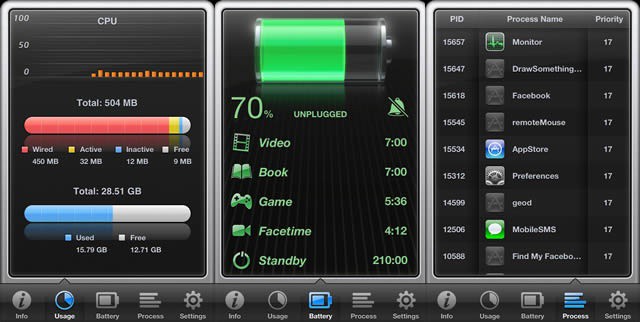
As a Mac user, I’ve always been a fan of Activity Monitor. It keeps track of RAM and hard disk memory, CPU and Disk usage, and Network activity. It’s a handy app to have, on my Mac.
But what about the iPhone? Doesn’t it deserve some sort of activity monitor of it’s own? Well, todays’ tip offers one such app, called Activity Monitor Touch.
You can add another name to the list of companies dropping Google Maps in favor of OpenStreetMap. When Wikipedia announced its new app for iOS today, they also announced that they would be using OpenStreetMap exclusively for the nearby view in both their iOS and Android mobile apps. Wikipedia feels this change will be a better fit for their goal of making knowledge available in a free and open manner to everyone.
This also means we no longer have to use proprietary Google APIs in our code, which helps it run on the millions of cheap Android handsets that are purely open source and do not have the proprietary Google applications.
Introducing the HackStore, where Cydia meets the Mac App Store (design in progress)
When the App Store first launched on iOS, the need for an alternative marketplace quickly arose. Jailbreakers and power-users wanted a way to download and install apps that gave them more control over their devices than what Apple would allow.
That was how Cydia was born. Created by Jay ‘saurik‘ Freeman, the Cydia app store allows users with jailbroken devices to not only install apps that bypass a number of iOS’s built-in restrictions, but to more easily discover them.
On the Mac, there’s obviously no jailbreaking, but given the sandboxing restrictions placed upon App Store developers, there’s still a need for a Cydia-like alternative: an easy-to-use, curated catalog for apps that give power-users too much control over their systems for Apple’s comfort.
Enter the HackStore, which hopes one day to be as synonymous with user-empowered Macs as Cydia is with jailbroken iOS devices.
I have some great news for users of the popular cloud storage service Dropbox. Earlier today, the Dropbox team announced that they would be doubling the amount of free storage awarded in their referral program. That’s right, from now on, any friend you get to install Dropbox, you’ll both get 500 MB of free space. For those with a free account, you have the ability to invite up to 32 people for a total of 16 GB of extra storage. Those with Pro accounts will now earn 1 GB per referral, for a total of 32 GB of extra space. Now isn’t that just doubletastic!
Social network Path came under great scrutiny after it was discovered that the app would upload a user’s entire address book to Path’s servers. The worst part, for iOS users at least, was Path never let them know. After a public apology, Path worked diligently to remedy the issue and came up with a few enhancements to the way they handle user privacy. Today, Path has rolled out an update to both its Android and iOS apps reflecting the changes and assuring users that they take their privacy seriously (or at least now they do).