Apple from Colin Mader on Vimeo
The making of an apple, made with an Apple



Apple should not be concerned about Google’s new phone knocking its stellar iPhone sales projections off stride, Piper Jaffray’s industry analyst said Tuesday.
Using a baseball analogy, Gene Munster wrote in a research note that the T-Mobile G1 was only an incremental change in the mobile landscape.
“When Apple comes out with a product, they try to hit homeruns, but Google’s Android strategy is swinging for base hits,” Munster wrote.
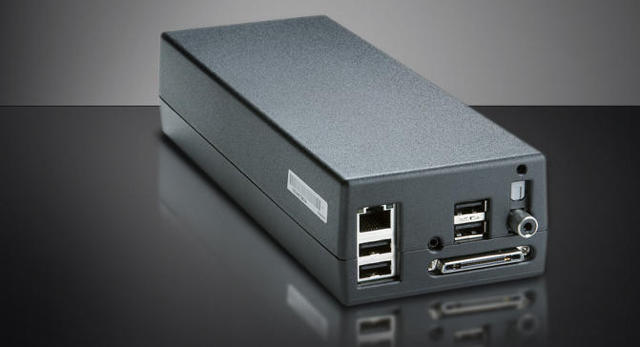
Apple fans are speculating madly about a new product code-named ‘brick’ that could be anything from a fat Mac Mini to an entirely new product category.
The word ‘brick’ has Apple fans speculating particularly fervently. It goes against the company’s traditional code-naming practices, and evokes images of a very un-Apple object, although the Apple mouse is kind of a brick and the iPhone is, too. Websites and forums are lit up with speculation– not that Apple fans need anything in particular to get the speculative juices flowing. It’s become almost de rigueur… as soon as a product is officially out, the rumor mill starts up about the next one, like clockwork, every quarter. Indeed, it’s part of Apple’s business model by now.
The ‘brick’ rumour started circulating when the Apple-oriented website 9to5 Mac spoke to an Asia-based tipster, who said next month’s ‘Big Event’ will be “all about ‘the brick.'” 9-to-5 says the tipster is “reliable” — as the source had previously made the early call on this month’s ‘rainbow colored’ Nano, though the initial interpretation among Apple fans led to expectations for a single ‘rainbow colored’ device rather than the device eventually delivered in a ‘rainbow of colors.’
On MacRumors forums, readers are speculating Apple might be taking a page from Gateway’s playbook and will bring us a standalone input hub like the one pictured above
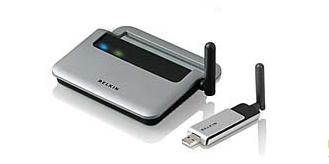
ComputerWorld writer Seth Weintraub posits the brick is a wireless USB hub similar to one already on offer by Belkin:
iPhoneSavior thinks it’s possibly a redesigned Mac Mini:
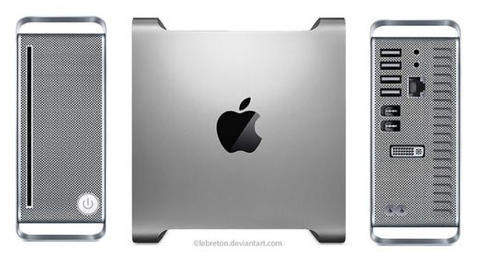
The Mac scientists at MacEnstein wonder if we can simply look for a Windows-killer. Hint: How do you break windows? With a brick.
What do you think Apple’s ‘brick’ might be?
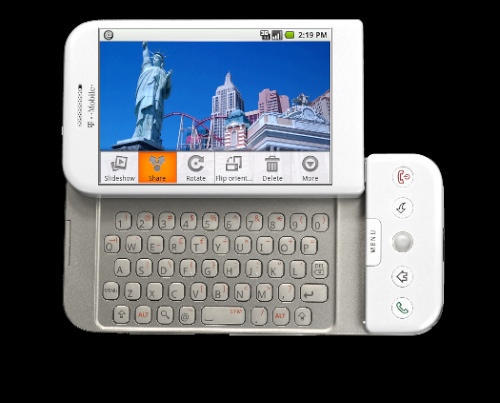
As Apple fans digest T-Mobile’s announcement of its G1, analysts say the handset starts with an immediate deficit: brand awareness.
“I think the most important point is that although Google is a familiar name for many consumers the brand power is not the same as Apple,” Gartner research director Carolina Milanesi told Cult of Mac Tuesday.
Milanesi said most people don’t know what Android is or G1. “You sure cannot say that about Apple,” the analyst said.
American Technology Research analyst Shaw Wu says Apple’s Friday recall of iPhone 3G ultra-compact power adapters is a “minor speedbump” and affects “only a small number of users.”
In an advisory to clients, Shaw writes a check with supply chain sources finds “little disruption” in sales of the iPhone 3G 8GB. In fact, some AT&T stores are running out of supply, he said.
Shaw said Apple faces a “headline risk” from negative publicity surrounding the potential danger of defective USB power adapters. However, Apple retains its positive customer support image by offering free exchanges.
The reaction from the recall will further be lessened because many iPhone users opt for a USB cable to charge their device, much as they do to sync content with iTunes.
The analyst said he maintains a “buy” rating on Apple of $205.
In a related development, Piper Jaffray analyst Gene Munster increased to 5 million his estimate for iPhone sales during the quarter ending Sept. 30. Munster had previously expected Apple would sell 4.1 million handsets.
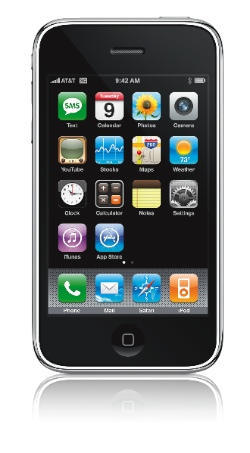
Apple will sell 5 million iPhones by the end of the fiscal fourth quarter, Sept. 30. That’s the word from Piper Jaffray analyst Gene Munster Monday. The new estimate is higher than the 4.1 million handsets Munster had previously projected.
The analyst told clients he is “incrementally more confident” in Apple sales after market researchers at NPD Group said earlier this month Apple had a 32 percent jump in growth. Wall Street had predicted growth of around 25 percent.
However, Apple CEO Steve Jobs may not get his wish of 10 million iPhone sales by the end of the calendar year. Adding the 5 million Munster expects for the fourth quarter with the 2.4 million iPhones sold earlier in the year, Apple would reach 7.4 million handset sales, according to Fortune.
Along with boosting his outlook for iPhone sales during the fourth quarter, Munster also raised his estimates for other Apple products. Some 2.8 million Macs will be sold during the period, an increase from 2.5 million projected earlier. IPod sales will also top out at 11 million, a raise from 10.8 million in sales the analyst had predicted.
In a sign of the growing importance of the iPhone to Apple’s bottom line, Munster said the phone will account for 21 percent of Apple revenue, a jump from just 4 percent during the third quarter.
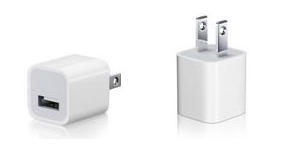
Apple has issued a recall for the ultracompact USB adapter that shipped with iPhone 3Gs sold in North America, Japan and certain countries in Latin America. The rectangular metal prongs that insert into a wall socket have shown enough of a propensity to break off, exposing users to the risk of electric shock, the company was spurred to offer redesigned adapters free of charge.
Web replacement forms went up on the Apple support site Friday; replacement adapters are expected to begin shipping on October 10. You can also exchange adapters at Apple Retail stores beginning October 10, according to the Apple communication.
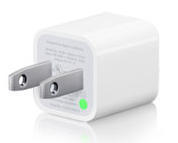
Replacement adapters will feature the distinctive green dot shown below.
UPDATE: Initial analyst reaction to the recall news indicates this is more of a tempest in a teapot than a black eye for Apple. Shaw Wu of American Technology Research commented that while the threat of electric shock is a “negative” with the potential for “headline risk,” the number of people likely to be affected by the faulty adapters is believed to be minimal. The recall can also be viewed as a customer service coup for the company, which keeps its standards high by “doing the right thing” and offering free replacements.
The humorous side to this development, if there is one, was highlighted by a commenter on the MacRumors forum, who wrote, “I thought the sparks meant it was working.”
Apple has denied AppStore certification to a third party developer’s mail application that the company says “duplicates the functionality” of the iPhone’s built-in Mail app. Angelo DiNardi’s MailWranger app claims to let users check multiple GMail accounts without manually logging in and out and to provide functionality unavailable through the iPhone’s native mail application, including support for threaded views, access to Google contacts, and support for easy mail archiving.
The dispute here recalls last week’s brouhaha over Podcaster’s denial of service based on similar claims the app would “duplicate the functionality” of the podcasting functionality of iTunes. Whether MailWrangler will follow Podcaster creator Alex Sokirynsky and resort to ad hoc distribution is uncertain at this time.
By any analysis, however, Apple’s gatekeeping behavior with the AppStore seems increasingly capricious. If “duplicating the functionality” of native apps is a standard, for example, can someone at Apple explain why there are nearly two dozen tip calculators in the AppStore?

UPDATE: The t-shirts are a protest from Murderdrome, the digital comic Apple banned from the iPhone App Store. As reader Alan notes in the comments, the t-shirts were handed out as protest by infuroiuscomics.com, the Northern Irish outfit behind the banned Murderdrome digital comic.
What is this t-shirt everyone is wearing at the grand opening of Apple’s first store in Northern Ireland?
Watch this BBC News report from the grand opening of the new store in Belfast this weekend. (“It’s absolutely mental,” says the delighted Apple fan above).
The overnight camping, high-fives and excited whooping are very much a part of grand openings in the U.S., but oddly, there’s one weird difference: Few people are wearing Apple shirts. Instead, half the crowd seems to wearing the same skull and bones shirt in either red or black.
Anyone recognize it?



Steve Jobs and Steve Wozniak became fabulously wealthy using minimal resources beyond their own time and talent, working out of Job’s garage. Today, Jobs and the company he and Wozniak founded are making similar rags-to-riches stories possible with the iTunes AppStore and applications created by third party developers for Apple’s iPhone.
Steve Demeter, developer of a popular $5 iPhone game, Trism, announced he made $250,000 in profit in just two months, according to a story by Gadget Lab blogger Brian Chen. If his profits continue at their current rate, Demeter will earn $3 million by July 2009.
Demeter by no means tried to reinvent the wheel. Trism is basically a version of Bejeweled that uses the iPhone’s accelerometer to good advantage, giving the game what Demeter believes are the fundamental requirements for success at iPhone app development: unique gameplay and high replay value. He also designed support for an online leaderboard that creates community and says applications with great content sell themselves, something the developer of another popular game, Tap Tap Revenge, agrees with.
Bart Decrem was one of only four people who originally worked on Tap Tap Revenge, a free application that hit a milestone of 1,000,000 downloads just two weeks after its launch. Decrem’s company recently began inserting advertisements in the game, and it also has plans to release a premium version that will cost money in addition to the free app. He says iPhone development is “reminiscent of the early days of the web in terms of the amount of green fields and opportunity,” according to Chen. “You really don’t need a huge amount of capital. You need attention to detail and product, and that’s going to keep increasing.”
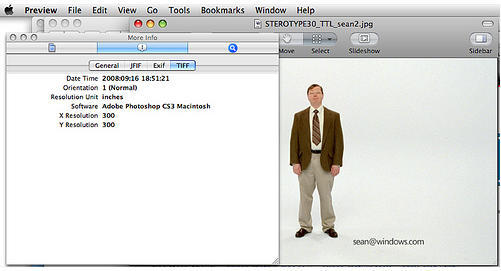
Image by LuisDS via Flickr
Flickr user LuisDS discovered metadata on the creative copy of the “stereotyped PC user” and other photos appearing on Microsoft’s “I’m a PC” website that reveal they were produced using Macs running Adobe Creative Suite 3.
Microsoft code monkeys scrubbed the identifying information from the website stills overnight.
Via RoughlyDrafted

I was intrigued when I read my colleague Johnny Evans’ post about 7digital and its 4 million DRM-free tracks available in 320k MP3 quality, so I went to the site to pick up a copy of the classic Harry Nilsson album, The Point, which I’ve been wanting to buy.
I found the site easy enough to navigate, with a pleasant balance between text and graphics that seemed a refreshing change from iTunes’s hevavily-graphics-oriented interface. I located The Point quickly, listened to a couple of preview tracks and thought, hey, why not? Signing up for an account was even relatively painless and straightforward, and when it came time to give my address, I put in that of a friend who lives in London, which is when the deal started heading south. See how after the jump.
For years, Microsoft and others have attempted without much success to shake Apple’s tight grip on the digital music scene. From subscription services to the Zune, companies have searched for the winning alternative to the iTunes, iPod bundle. Analysts now believe Finland’s Nokia may have a good shot of chipping away at Apple’s dominance.
More than 80 percent of people would pay for Nokia’s ‘Comes with Music’ service – particularly when it feels like they are getting tunes for free. Nokia says it will launch the handsets Oct. 17 in Britain.
Strategy Analytics said cost and selection trump brand – even ones so tightly woven as Apple, iPod and iTunes.
“Nokia Comes With Music effectively bundles a year’s subscription of music downloads (PC and mobile) into the price of a handset,” analyst Pitesh Patel told Cult of Mac.
Patel said Nokia – the largest handset maker – could overwhelm Apple’s iPhone.
“Nokia’s strong distribution and handset marketshare means that it currently sells more music playing devices than Apple,” the Strategy Analytics wireless analyst said.
However, we are not likely to see a head-to-head battle between the two companies in the United States. Nokia instead will challenge the iPhone in Europe and Asia – areas where Apple’s name awareness gives way to the handset maker.
The key point in this dust-up is that digital music fans care little about the name on their music player.
“It turns out that brand is irrelevant,” said Patel.
Much is made of the Apple ‘halo’ which helps sell products based just on brand. However, brand consultants Interbrand Thursday put a value on the halo: $13.7 billion.
Although Microsoft again beat Apple in most valuable brand ($59 billion), the Cupertino, Calif. company had a 24 percent jump in brand value — second only to Internet giant Google.
Apple’s position rose to 24th place compared to 33rd in 2007, according to the ranking of global brands.
“The latest iPods, iPhone and MacBook Air strike the perfect balance between coolness and mass appeal,” Interbrand said in its report.
The consultancy cites Steve Jobs coming aboard as CEO as another reason for the brand’s rise in value.
Software giant Microsoft may have reasons to look over its shoulder. Although its brand value is steady, its ratings are falling.
The Redmond, Wash. company ranked in third place this year, down from its second-place showing in 2007. Rival Google, on the other hand, turned in the largest gain in brand value, leaping from to 10th position from 20th last year.
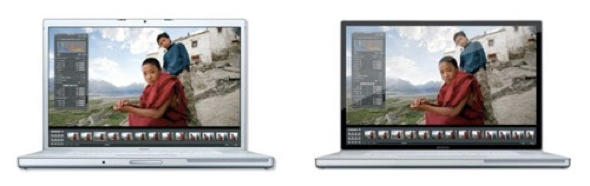
Erroneous MacBook Pro Mock-Up Courtesy Ars Technica
This has been a gangbuster summer for Apple. First came the iPhone 3G announcement in June, alongside OS X iPhone 2.0 with the AppStore, Mobile Me, and HD video in iTunes, then came a new round of incremental but strong new iPods, and amazing news about a major uptick in Mac sales during a down economy. In spite of some software issues, Apple is coming out with huge new gains in multiple markets and is healthier than just about any other tech company.
And yet, unless Apple rolls out rumored new Macs next Tuesday, all of that will start to look suspect. To find out why, click through!
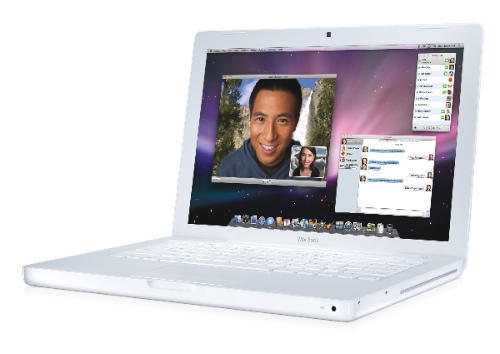
Apple increased its share of notebook computers sold in North America during the second quarter to 10.6 percent, moving it into fourth spot and posting the largest jump among top computer makers, researchers said Wednesday.
The numbers compare to the 6.6 percent market share registered during the same three-month period in 2007, according to DisplaySearch. The four-point jump is the largest of the top five PC makers. Dell led the market with 21.9 percent of North American notebook sales.
After the jump, read how the Apple ‘halo’ effect is boosting business interest in Mac notebooks.
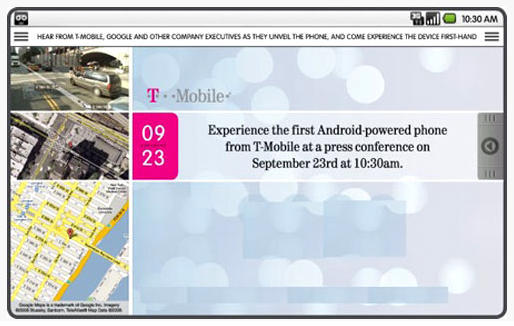
Image via Gearlog
Emulating Apple’s propensity for using media “events” to unveil new technology, T-Mobile sent an “invitation” to technology press Tuesday, encouraging attendance at a New York City event on September 23rd that will mark the debut of Google’s Android smartphone and the software it’s powered by.
The event sets up the first public challenge to Apple’s domination of the touch-screen smartphone market, with the thoroughly-leaked and publicly previewed phone, once known as the HTC Dream but now called the G1. Reportedly tricked-out with features including a slide-out display that exposes a full keyboard, as well as a BlackBerry-like trackball, the phone has been rumored to be the launch device for T-Mobile’s nationwide 3G network and may also boast GPS navigation, a tilt sensor and Wi-Fi connectivity.
We hope that Wi-Fi rumor proves true if the G1 hopes to go toe-to-toe with iPhone.
Via AppleInsider
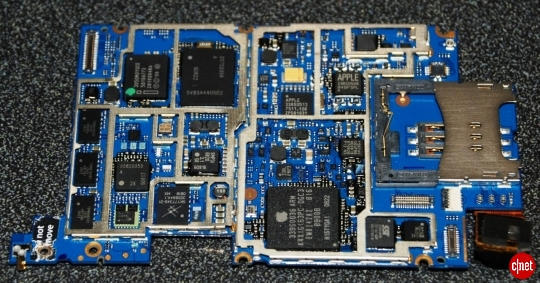
The LinkedIn profile of a senior manager on Apple’s chip architecture team appears to confirm Apple is developing its own ARM processors for the next generation of iPhone, according to a report in the New York Times.
While current iPhones feature a Samsung chipset according to many analysts, Apple was rumored to have acquired chipmaker PA Semiconductor in April for $300 million to engineer custom low-power chips to meet the specific needs of iPhone and iPod design. Wei-han Lien, a member of the PA Semi team who came to Apple in the deal, lists his current project as “Manage ARM CPU architecture team for iPhone” on his profile at the popular social networking site, an indication Apple will soon quit outsourcing iPhone processors.
By developing its own ARM configuration, Apple could create a processor with support for software accelerators or a graphics engine, according to former AMD chief technical officer Fred Weber. In addition, disposing of an outside chip supplier would allow Apple to maintain tighter controls on who knows what about its future products.
As one might expect, Apple declined to comment on matters related to PA Semi, which it operates as a subsidiary.
Via c|net
Apple computer sales in the U.S. rose 38 percent during the second quarter, more than triple that of top PC maker Hewlett-Packard, researchers said Tuesday.
Gartner said U.S. Apple PC shipments rose 38.1 percent during the second quarter, compared to the same period in 2007. The Cupertino, Calif. company shipped nearly 1.4 million PCs in the U.S., up from 1 million units during the second quarter of 2007, Gartner said.
Read more about Apple’s jump in marketshare after this jump.
Apple released the OS X 10.5.5 update in the US on Monday afternoon to immediate acclaim as an all-out assault on bugs. Despite initial skepticism, even TUAW, which was first to the tape, acknowledged the release notes are “quite detailed.”
Gizmodo provided a laundry list of items addresed in the update, with MacWorld shortly touting 30 bugs fixed in the new software. Not six hours later, ComputerWorld upped the ante to 70 bugs fixed.
Security experts are finally satisfied the “Dan Kaminski exploit,” referring to the researcher who disclosed a critical flaw in DNS that made it much easier than originally thought to “poison” the cache of DNS servers, or insert bogus information into the Internet’s routing infrastructure, has been fixed.
Apple also updated Mac OS X’s implementation of BIND (Berkeley Internet Name Domain), the open-source DNS software maintained by the Internet Software Consortium (ISC), to keep it current with an early-August version that ISC released to solve performance issues that had shipped in the original fix for Kaminsky’s vulnerability.
The update also fixes a number of non-security flaws, according to the release notes. iCal and Mail both received more than half a dozen fixes, Time Machine got slapped around a bit, and MobileMe even came in for some love.
See the complete list of adjustments after the jump.
Electronics retail giant Best Buy Monday announced it would acquire Napster for $121 million. The Minneapolis-based company told Cult of Mac the move wouldn’t harm its growing relationship with iTunes owner Apple.
“Our relationship with Apple is strong and will continue to be so,” said Susan Busch, Best Buy Corporate PR Director.
The acquisition of the digital music service would become “a platform for accelerating our growth in the emerging industry of digital entertainment, beyond music subscriptions,” Best Buy Executive Vice President Dave Morrish, said in a statement.
As part of the acquisition, Best Buy gains Napster’s 700,000 subscribers, its online platform and mobile technology. Napster CEO Chris Gorog and senior management would stay on. The retailer will keep Napster’s headquarters in Los Angeles, where it employs 140 workers.
Best Buy could use Napster to attract consumers still unsure of digital music.
“They might be able to find a business in bringing in late-adopters or stragglers into the online music market by virtue of their breadth of products and service,” Mike McGuire’s Gartner’s media analyst, told Cult of Mac.
McGuire said that while iTunes and Napster may have been rivals when they first arrived on the digital music scene, Napster has never been a threat to Apple. This may be why Best Buy emphasized it will still sell the Apple iPhone.
In May, Napster took a swipe at iTunes, announcing it would sell 6 million DRM-free songs, calling it “the largest major label MP3 catalog in the industry, but also the largest library of independent music available anywhere.” McGuire, however, saw the MP3 effort as “something a bit more than an afterthought, but not much more.”
Photo courtesy: Tronick
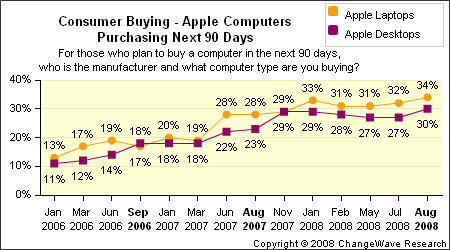
Another survey seems to confirm Apple products are immune from the general economic malaise hurting consumer spending. Consumers planned to buy more Mac laptops and desktops for the back-to-school period as well as over the next 90 days, according to a a survey by ChangeWave released Monday. This compares to the No. 1 PC maker, which consumers said they would buy fewer.
Also, the August survey found the release of Apple’s iPhone 3G is having a “halo” affect on other products. ChangeWave found 17 percent of consumers said the new iPhone made them more apt to buy a Mac.
Eight percent of the 4,416 mostly-U.S. consumers said during the critical back-to-school season they would buy an Apple product online compared to four percent who said they would buy less from Apple’s Web site, for a four percent overall gain for the Cupertino, Calif. company.
Consumers said, in general, they planned to spend less on electronics over the next three months. ChangeWave found 34 percent of consumers said they would spend less on electronics, compared to 15 percent that indicated they would spend more on electronics. The findings are 13 percent lower than a year ago.
Confidence in Apple products differs from overall PC buying plans. Desire to buy an Apple laptop rose two points (34 percent) with plans for an Apple desktop rising by three points to 30 percent. This contrasts with a decline in plans to buy a PC.
When it came to the top two PC sellers – HP and Dell – the retail reticence was pronounced. Plans to buy a Dell laptop within the next 90 days fell 4 points while future desktops rose by 3 points. U.S. consumers said they would buy fewer HP laptops and desktops, compared to July.
It should be noted that much of HP sales are coming from outside the United States. On Friday, Gartner analyst Alfonso Velso told Cult of Mac that Apple was particularly susceptible to any economic downturn that affected consumer spending. However, only recently had the research firm detected rumblings of any blowback from the economy. Gartner placed Apple as the sixth-largest PC maker. MetaFacts had earlier said Apple ranked fourth in laptop sales.

A film that looks at the evolution and culture surrounding the Macintosh has been selected to the shortlist of the 2008 Naperville Independent Film Festival which takes place next week.
This is the first time the film, a documentary called, ‘Welcome to Machintosh’, has been screened in the US since new interview footage with original Apple co-founder Ron Wayne was added to the movie. Click here to watch the trailer on YouTube.
That exclusive interview was added just before the movie’s European premiere at the Globians Documentary Film Festival in August. The documentary mixes history, criticism and Apple idolatory into an exploration of the early years of Apple as seen through the eyes of Apple employees, engineers, resellers and supporters.
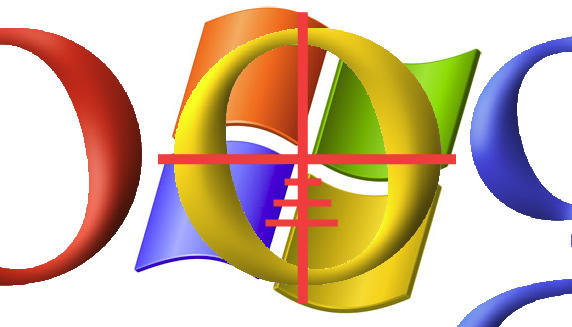
While there has been much speculation about webkit powered Chrome and the possible implications for Apple’s Safari browser, we think the shot Google fired last week was across a different bow altogether.
Follow us after the jump where we discuss how Chrome has it’s sights set on Windows and why Apple couldn’t care less if there’s ever a Safari v4.0.
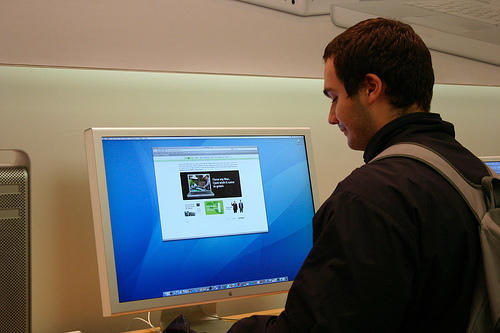
Apple was the sixth-largest desktop PC vendor worldwide in 2007, shipping just over 3 million computers, research firm Gartner said Friday. The numbers were unexpected, one analyst said.
“We were pretty surprised by the 2007 figures,” Alfonso Velso told Cult of Mac. The 2007 sales figures were 26 percent higher than 2005 when Gartner had estimated Apple shipped 2.5 million desktop computers.Velso said the sales jump is due to Apple products, as well as some missteps by rivals.
“They are riding a crest of good products and design,” the analyst said.
Velso said Gartner had also received anecdotal evidence problems with Dell customer service also sent college students to Apple.
However, Apple faces difficulty keeping up with other PC makers as companies increasingly turn to India, China and other emerging markets to balance lower sales elsewhere due to the economic slowdown. Gartner said just 1 percent of Apple sales come from emerging markets.
Both Dell and HP have experienced success selling low-cost computers to emerging markets as sales in North America, Europe and Japan either shrank or experienced slower growth. Apple doesn’t play in the $400 market, the Gartner analyst said.
The research firm also hinted that Apple could be especially hit by the global economic slowdown. Because its sales are weighted toward the consumer rather than business, sales for Apple could be volatile, according to the report.
Apple’s reliance on designing and manufacturing the hardware and software means the computer company spent $1.1 billion on designing and purchasing custom components. Other PC makers spent far less — $32 million on design and $92 million on purchasing –œ because they dole out work to Asian companies.
Earlier this week, research firm MetaFacts announced Apple was the fourth-largest seller of consumer notebook computers, with 8 percent of the U.S. market.
Flickr image courtesy: Capitan Giona