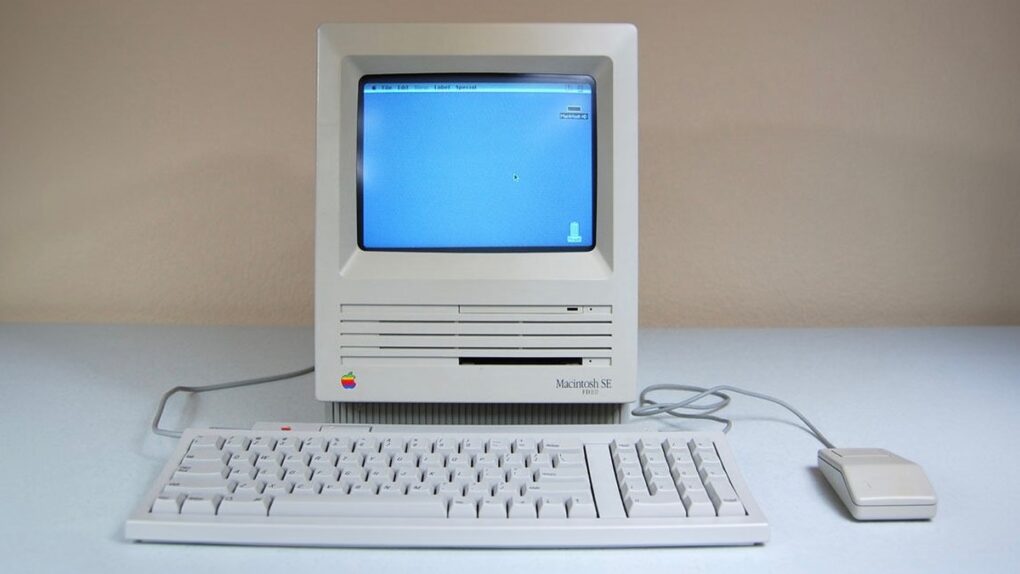
 August 1, 1989: Apple gives the Macintosh SE a storage bump, courtesy of the new SuperDrive in the new Mac SE FDHD. The high-density floppy disks the SuperDrive uses offer an astonishing (for the time) 1.4MB of storage.
In terms of portable storage, it’s a big step up for most Mac owners. The HD floppy disks compare very favorably to the 400KB single-sided double-density (SSDD) disks and 800KB double-sided double-density (DDSD) disks in use at the time.
Apple SuperDrive makes Macintosh SE FDHD super-versatile
The Mac SE FDHD arrived at a pivotal moment in tech history, when personal computers were becoming islands of incompatible software and storage formats. By embracing the high-density 1.44MB floppy disk already gaining traction across the PC world, Apple broke with its tradition of going its own way and made the Macintosh dramatically easier to use in mixed-platform offices.
While it wasn’t the flashiest Mac of its era, it marked an important shift in Apple’s philosophy: Sometimes the smartest innovation isn’t inventing a new standard — it’s adopting the right one at the right time.
Apple introduced the first Macintosh SE in 1987, four years after the launch of the original Mac. and it was somewhat overshadowed by the launch of the technically superior Mac II that same year. And, in a move that would have upset Steve Jobs had he still been at Apple in 1989, the Mac SE was the first Macintosh to include an internal fan to cool components. That made it noisy to use, but led to greater life expectancy.
Two years later, adding the Apple SuperDrive created the Mac SE FDHD, a computer with a serious boost in the storage department. In addition to the 1.4MB discs that were its bread and butter, it could read and write IBM-format floppy disks and 3.5-inch DOS disks (provided you had the right software).
Like the amount of storage space, both of these formats sound antiquated now. But at the time, they made the Mac SE FDHD one of the most versatile Macs around. It could read and write all industry-standard floppy disk formats.
(Incidentally, if you’re on the lookout to buy a vintage Mac SE, the Mac SE FDHD is by far your best option. Reading or writing 400K or 800K 3.5-inch floppy disks today is virtually impossible using modern technology.)
Mac SE gains a loyal following
The Macintosh SE FDHD attracted a loyal following. The first compact Macintosh with an internal drive bay for a hard disk or second floppy drive, it was also the first expandable Mac. It was an attempt at creating a Mac for businesses. And while it looked much the same as the original Macintosh, it included some impressive improvements under the hood.
“The Apple Macintosh SE FDHD features an 8 MHz 68000 processor, 1 MB of RAM, and either a 20 MB or 40 MB hard drive in a compact all-in-one case with a 9-inch monochrome display,” according to EveryMac.com.
An impressive computer
The Mac SE was one of the first Macs I ever saw. It definitely took me a few years to become a fan. However, it’s a computer I’ll always remember for just how far ahead of the competition it appeared.
I’m certainly not alone in my Mac SE love, either. A Mac SE sat on Jerry’s desk for the first few seasons of hit sitcom Seinfeld, before it was superseded by a PowerBook Duo, a Macintosh 6100 and finally a Twentieth Anniversary Macintosh.
Do you remember the Macintosh SE FDHD? Leave your thoughts and recollections below.

Luke Dormehl is a U.K.-based journalist and author, with a background working in documentary film for Channel 4 and the BBC. He is the author of The Apple Revolution and The Formula: How Algorithms Solve All Our Problems … and Create More, both published by Penguin/Random House. His tech writing has also appeared in Wired, Fast Company, Techmeme and other publications.

One response to “Today in Apple history: Macintosh SE gets supersized storage”
I have one. It runs on System 6.0.8, and it boots up in about 15 seconds into the internal HDD. It also has an Ethernet port via an expansion card. It’s main app is Word 5.1, for which I also still have the box with the floppies and printed manual.
I adopted the computer from my college newspaper office when we were replacing them with PowerComputing Mac clones back in the mid 90’s. It still works fine.