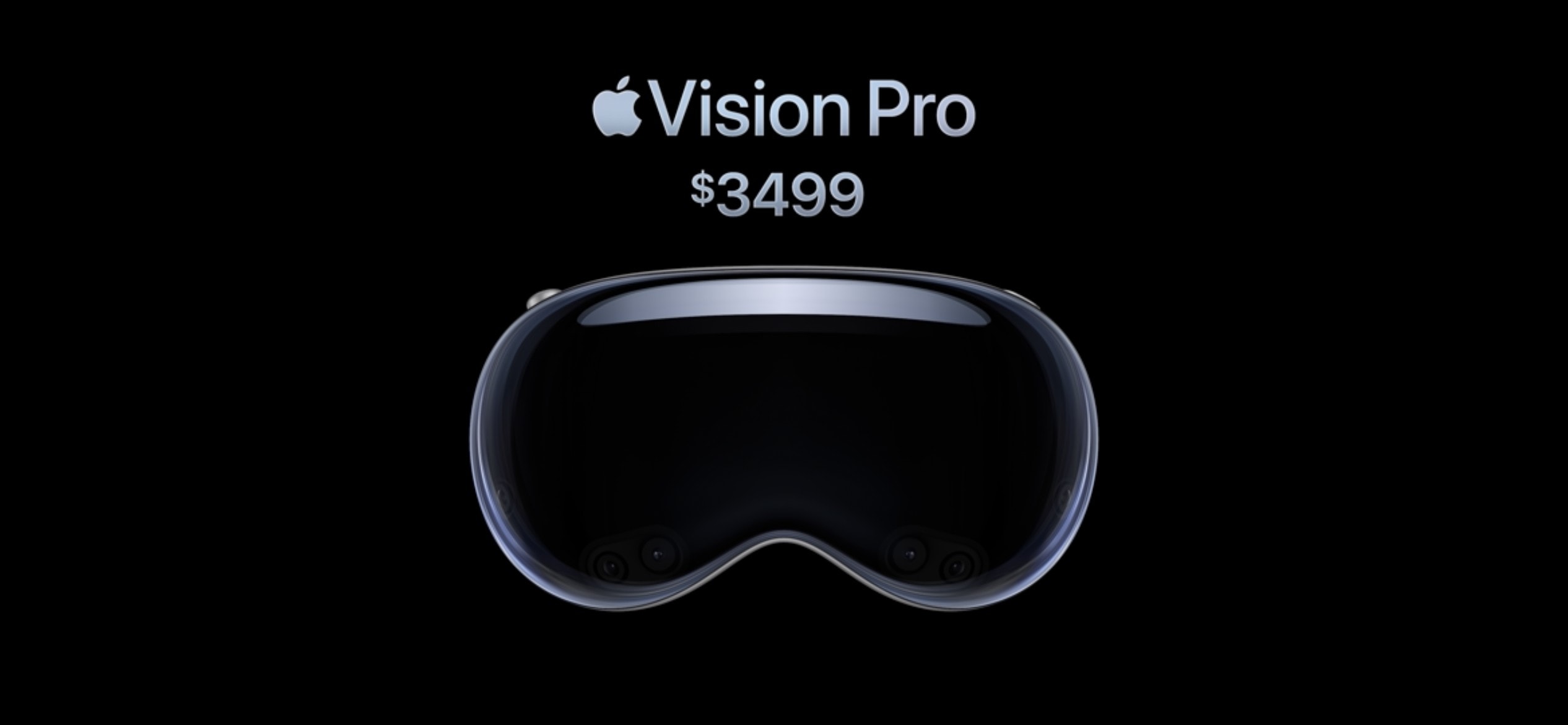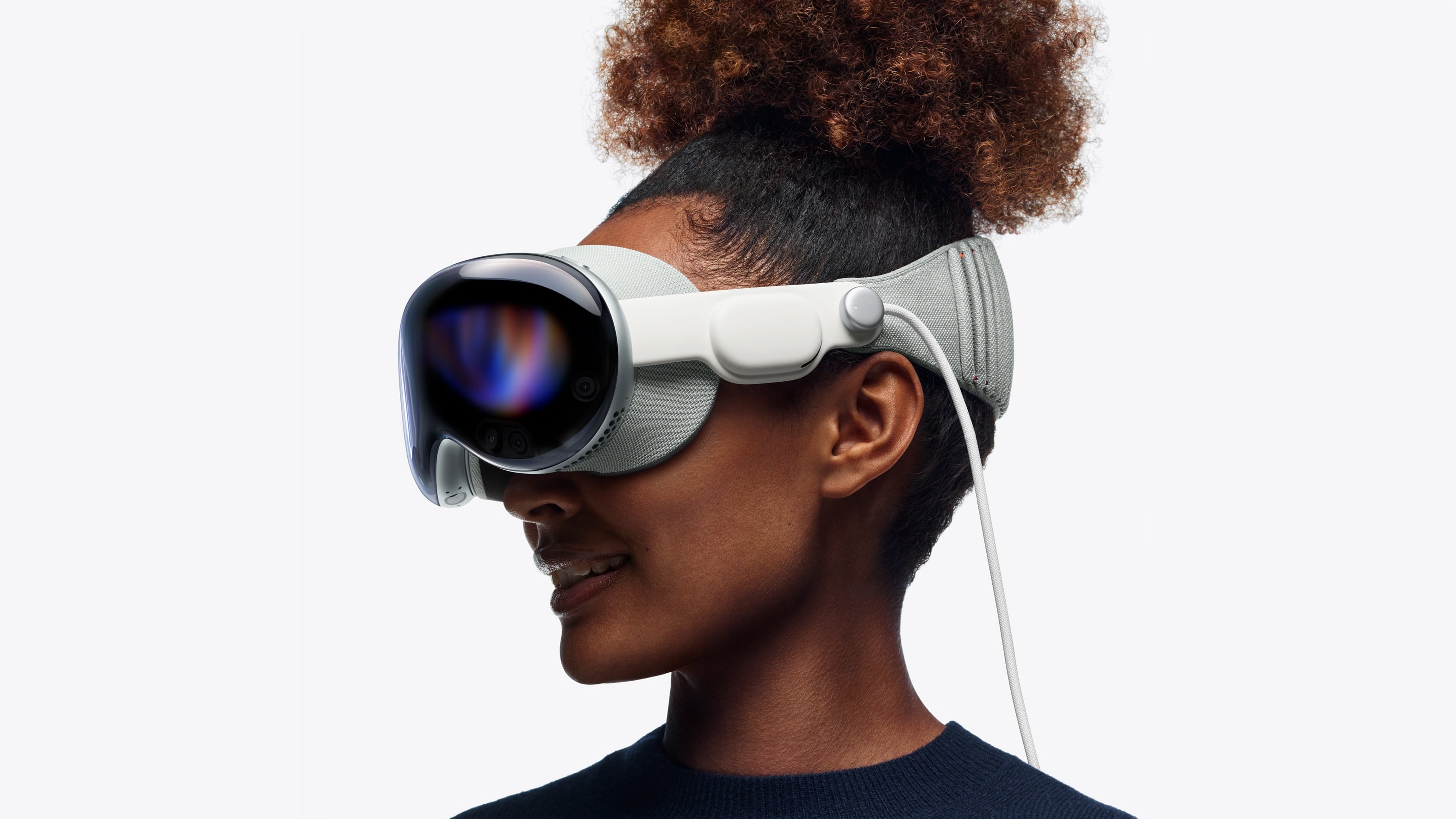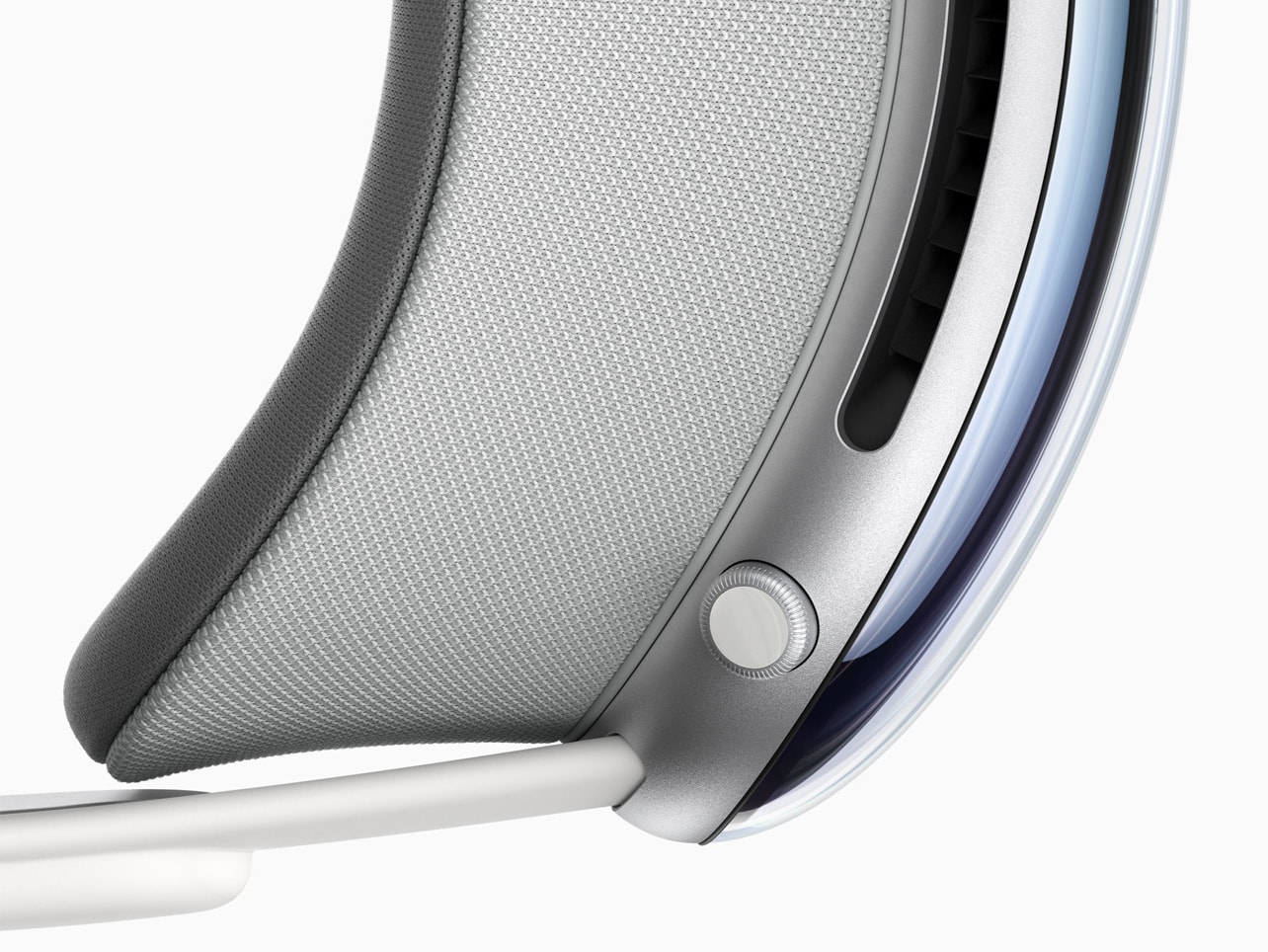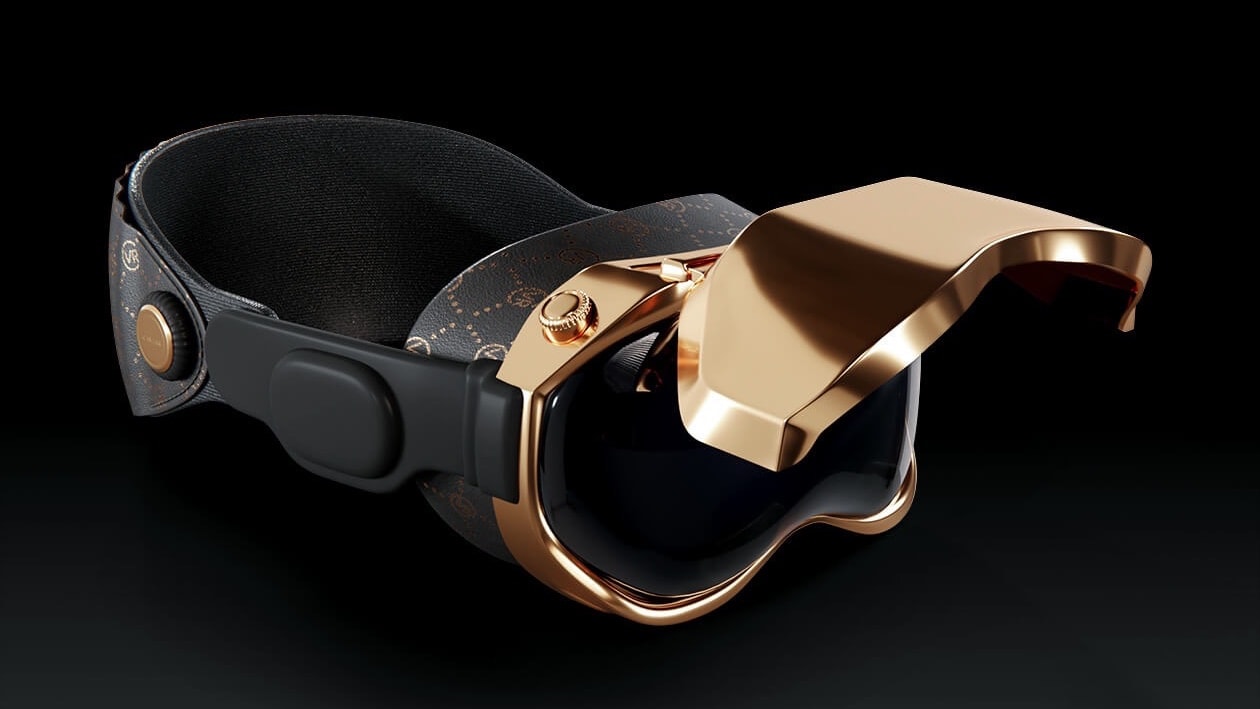
A version of Apple Vision Pro with gold and leather trim will go on sale in 2024. Photo: Caviar
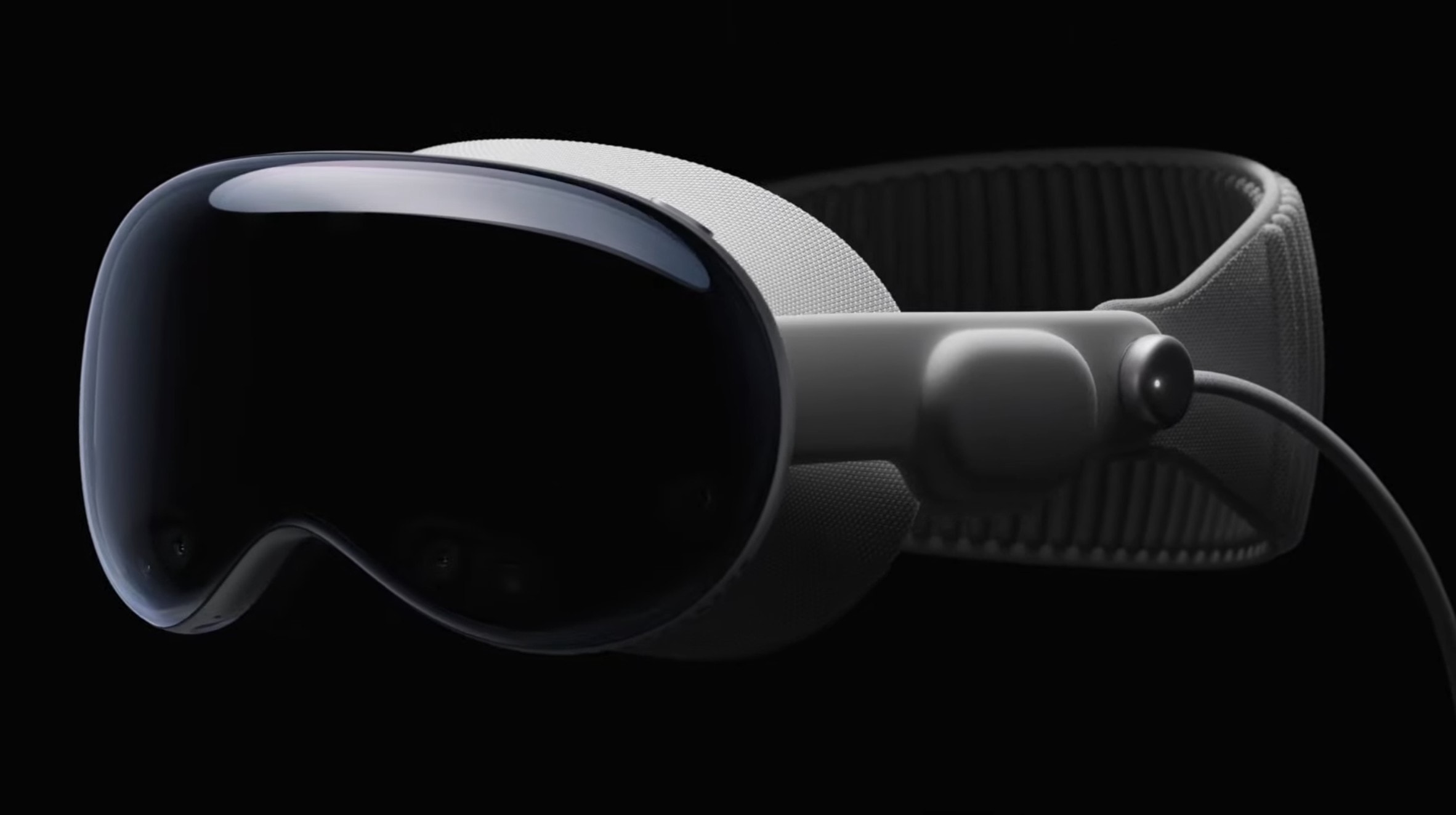
For anyone who looked at the $3,500 price on the Apple Vision Pro and thought “that is so cheap,” Caviar has a version that’s over ten times as expensive. This specially modified AR headset is plated in gold and has a leather head strap.
Caviar even modified the design to make wearing the device a bit more private.
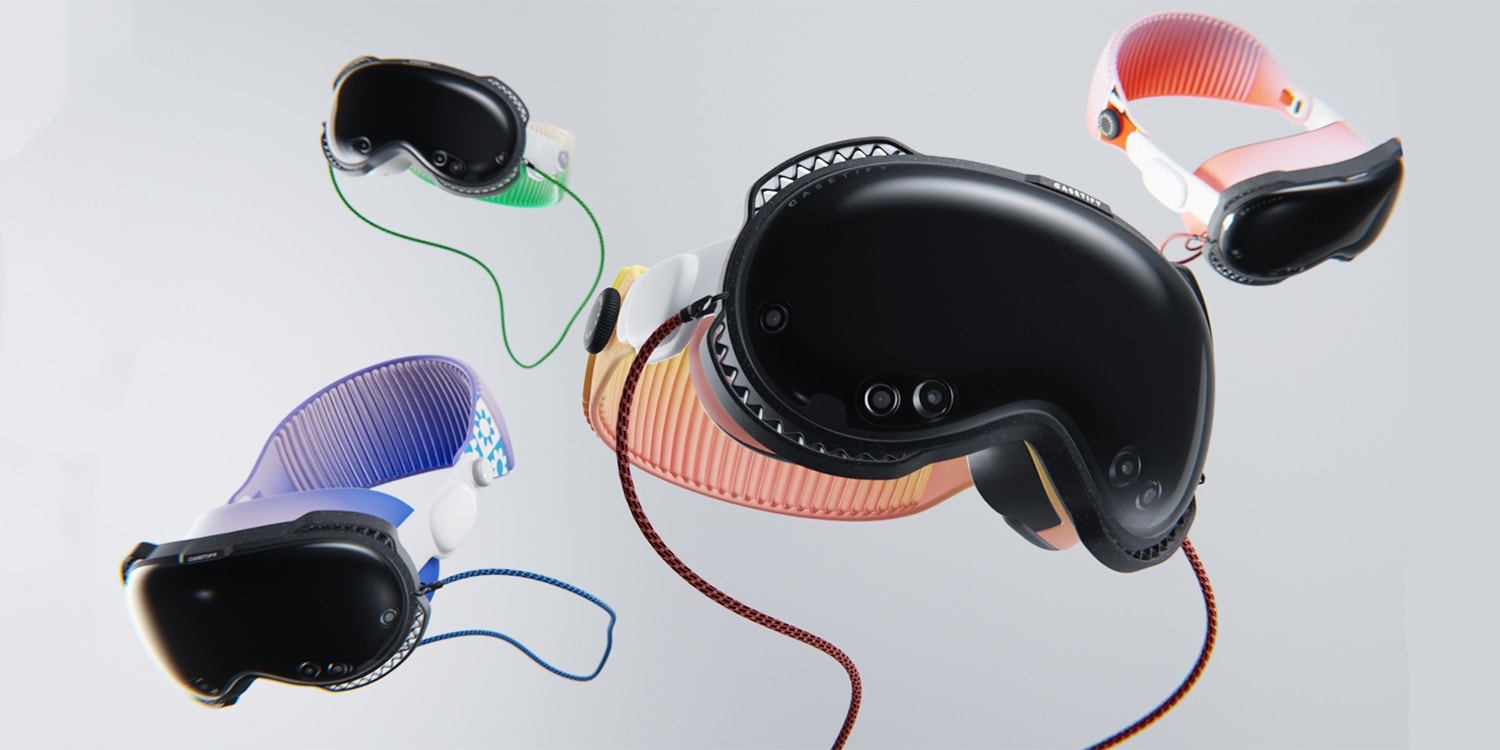
Casetify's Bounce Vision lineup of accessories for Vision Pro will feature a range of colors and textures. Photo: Casetify
We know not to expect Vision Pro to go on sale until early next year, yet accessories for the AR/VR headset unveiled at WWDC23 are starting to show up already.
Phone case maker Casetify previewed a lineup called Bounce Vision Friday.
Broadcasts, seen here in the Vision Pro Simulator’s living room environment. Image: Steve Troughton-Smith
The first screenshots and videos of apps being built for Vision Pro show just how easy it is to port iOS apps to Apple’s upcoming augmented reality headset.
Apple just released the visionOS software development kit last Wednesday, and already people are refitting their iPhone apps for Apple’s new mixed-reality platform and sharing the results online.
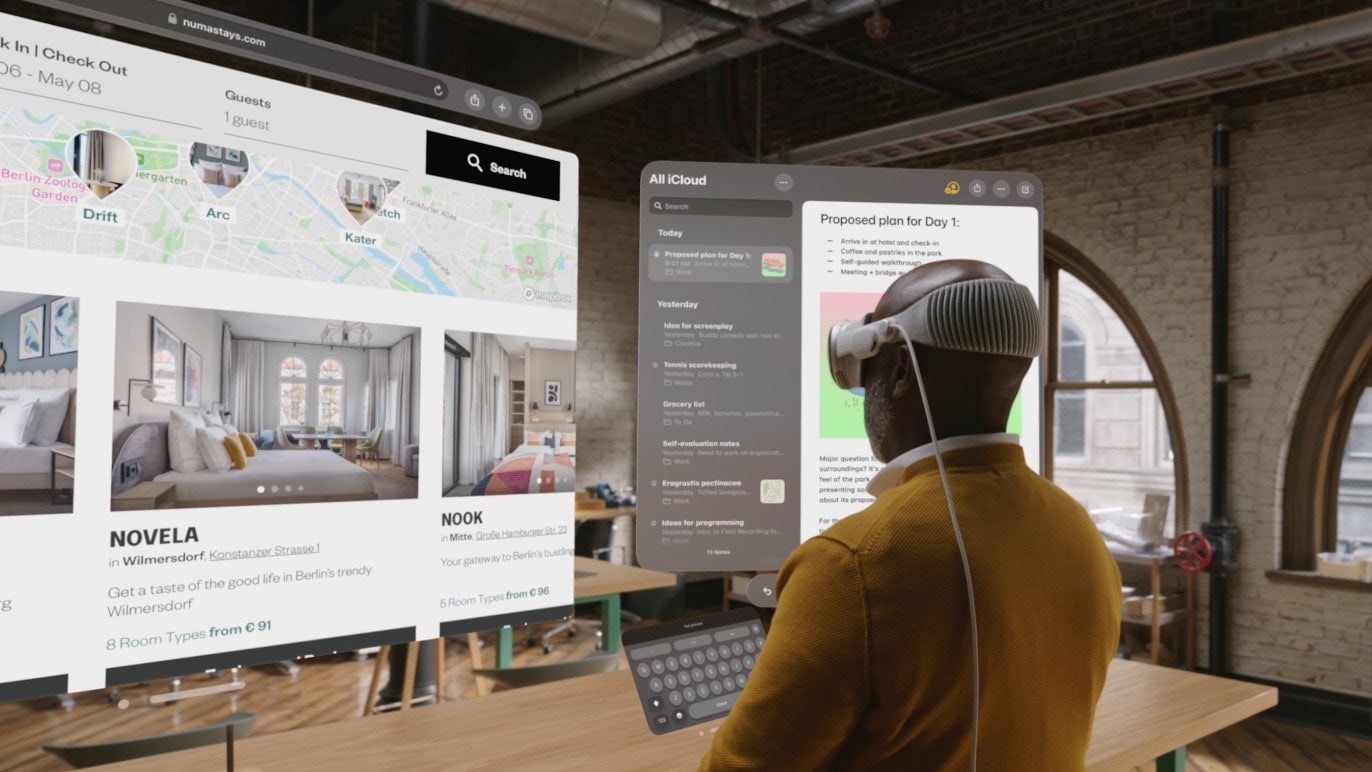
The apps include Broadcasts, which lets you tune in to internet radio and livestreams — and leave a little Now Playing window anywhere in your virtual space. With cooking app Crouton in visionOS, you can place timers all around your kitchen. And Tasks, a powerful to-do app, works exactly as it does on your Mac and iPhone.
In my opinion, this is what will ultimately make visionOS succeed where similar mixed-reality platforms failed: It builds heavily on the same technologies that underpin iOS. If you can build an iPhone app, you can build a Vision Pro app.
Here’s a gallery of what some popular indie apps look like running on Vision Pro.
The EU plans to cram more changes down Apple's throat: This time's it's replaceable iPhone batteries. Image: iFixit/Cult of Mac
This week on Cult of Mac’s podcast: Those EU technocrats plan to force Apple (and everybody else) to make batteries in their devices easier to replace. The specifics remain vague. But is forcing changes to the iPhone and iPad design a good thing or a bad thing?
Also on The CultCast:
Apple gives us a peek at how the software sausage will be made for the upcoming Vision Pro headset. Looks promising!
Some of the features coming to the Photos app in iOS 17 work wonders. Others not so much.
HomePods are about to get a long-awaited feature — sort of.
The latest Mac sales data seems impossible to believe.
Listen to this week’s episode of The CultCast in the Podcasts app or your favorite podcast app. (Be sure to subscribe and leave us a review if you like it!) Or watch the video live stream, embedded below.

Apple wants developers to make Vision Pro applications, just not these types. Photo: Apple
While Apple is encouraging developers to write software for the Vision Pro AR headset, there are some types of applications it doesn’t want. Camera-related apps and movement-based ones can’t be made.
Some of the restrictions don’t seem to be about privacy but instead result from limitations in the hardware. Others are a mystery.
Developers now have access to a variety of resources to help them design, develop, and test apps for Apple Vision Pro. Photo: Apple
Turning the Apple Vision Pro headset from an announcement into a shipping product took a big step forward Wednesday with the release of the visionOS SDK. This includes the software tools developers will use to write applications for the AR headset that Apple unveiled earlier this month.
Apple also said it will open developer labs around the world soon, giving coders a chance for some hands-on time with Vision Pro, which won’t launch until 2024.
Apple has a plan to boost the Vision Pro ecosystem. Photo: Apple
Apple could switch to a more powerful Ultra Wideband chip on the iPhone 15. And for its 2024 iPhones, the company could adopt the newer and faster Wi-Fi 7 standard.
These hardware upgrades will seemingly allow Apple to build a more competitive ecosystem for its upcoming Vision Pro headset.
The technology behind Apple Vision Pro looks amazing! Image: Cult of Mac
This week on Cult of Mac’s podcast: The first impressions of Apple’s just-unveiled Vision Pro headset leave us mind = blown. Still, no matter how vivid the VR is … or how flawless the visionOS user interface is … or how “natural” the headset looks to be … can anything justify its $3,499 price tag?
Also on The CultCast:
The load of new Macs showcased at WWDC23 left us surprised — and just a little perplexed. Who exactly is the Mac Pro for?
The iPhone’s voice recognition receives marginal improvements in the first iOS 17 beta, and that gives us hope for the future.
Marquee features aside, iOS 17 brings a ton of tiny, thoughtful improvements.
Listen to this week’s episode of The CultCast in the Podcasts app or your favorite podcast app. (Be sure to subscribe and leave us a review if you like it!)
Meta CEO Mark Zuckerberg thinks Apple’s $3,499 Vision Pro headset does not pack any significant technological breakthroughs. He claims his company explored all options used by Apple — but ultimately decided against them.
Zuckerberg expressed his thoughts on Vision Pro in a companywide meeting with Meta employees.
That $3,500 price tag certainly got people's attention. Photo: Apple
The $3,499 price of Vision Pro, the long-awaited AR/VR headset Apple rolled out at WWDC23, startles some people. You can find audience reaction videos out there with audible gasps when the price was announced (including among Apple employees, some posts claim). And mainstream headlines are joining in, too.
And of course social media hasn’t let up on the jokey memes. See below for a few choice examples.
Mira headsets have been used in different industries, the military and in the Mario Kart ride at Super Nintendo World. Photo: Mira
Just a day after Apple unveiled its Vision Pro AR/VR headset at WWDC23, news came along Tuesday that the company acquired Los Angeles-based AR headset startup Mira.
Mira makes headsets for other companies — notably Super Nintendo World theme parks — and holds contracts with the U.S. military.
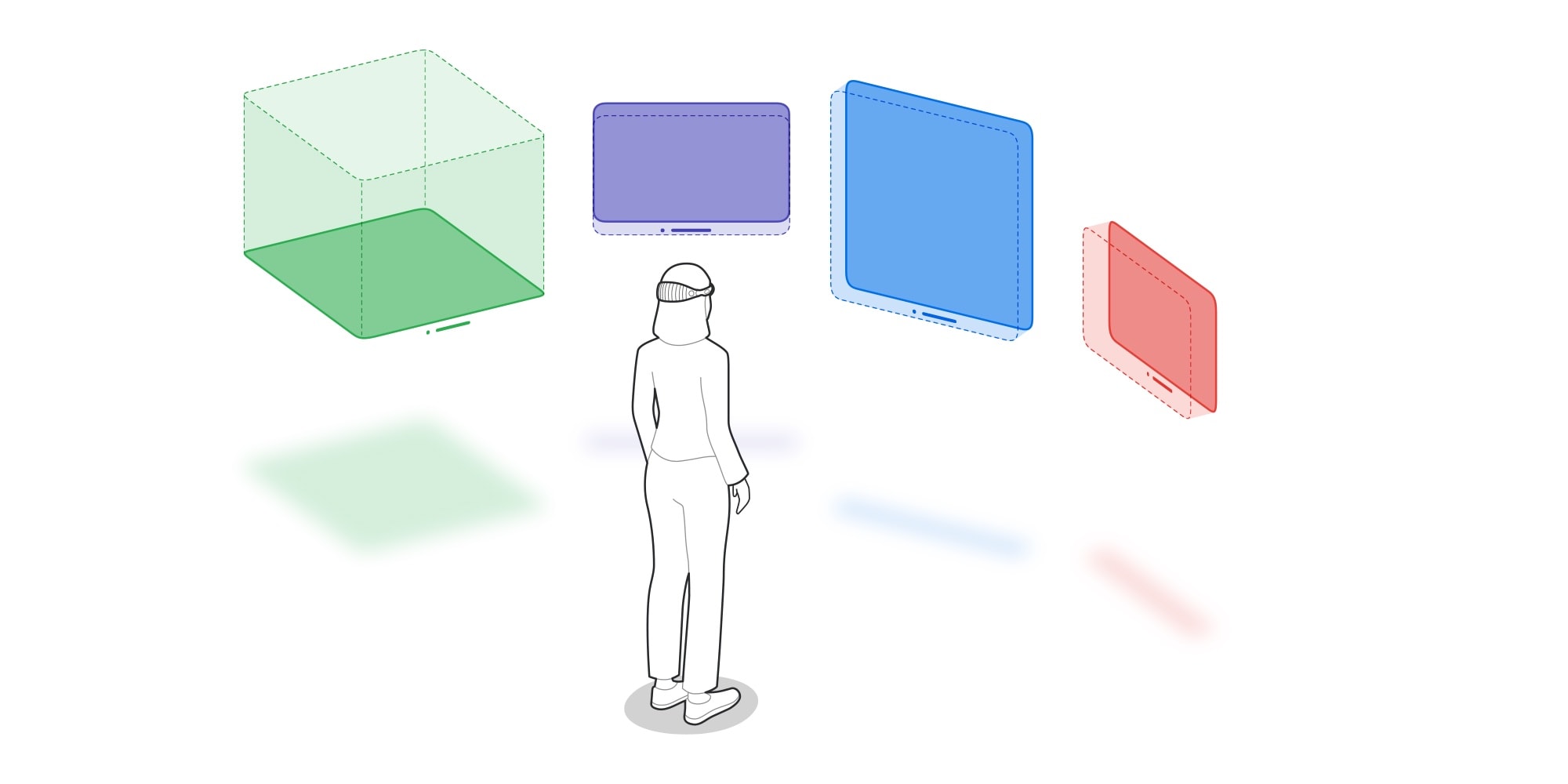
visionOS has a rich library of user interface elements. That will set it above other headsets. Photo: Apple
How does Apple’s new “spatial computing” platform visionOS work exactly?
At WWDC23 this week, Apple detailed a bunch of interesting tidbits about how the new Vision Pro headset works. Apple detailed how buttons look and behave in the spatial computer, how they are pressed without any physical controls, and how apps work in 3D.
The Vision Pro sizzle reel looks great, of course, but what is the device actually like? Photo: Apple
First impressions of the Vision Pro headset make it sound like Apple absolutely nailed both the industrial design and the overall “experience” of wearing a mixed-reality headset.
Apple didn’t let most reporters go hands-on (or rather “heads-on”) with the new device following the Vision Pro’s unveiling at Monday’s WWDC23 keynote. However, the company’s handlers let some members of the media into a private area to gawk at the Vision Pro — and a handful of people actually got to strap one on.
The very first glimpses reveal hardware that looks far better than the competition, paired with a compelling visual experience, and triggers only a few negative reactions.
Apple's Vision Pro headset ain't cheap; new technology never is. Photo: Apple
People might be squawking about the $3,499 price tag of Apple’s new Vision Pro headset, but let’s put things in perspective. When Apple introduced the Macintosh — the first computer with a graphical user interface — it cost an eye-watering $7,400 in today’s dollars.
The Apple II — the first truly “personal computer’ — proved even more expensive. In 1977, an Apple II with maxed-out memory (a whopping 48KB of RAM, yes kilobytes) cost the equivalent of $14,400.
All that makes the $3,499 price tag of Apple’s new Vision Pro VR headset seem like a relative bargain. It packs insane 4K OLED screens to mesmerize your eyes, an outside screen that shows your face while wearing it, and an array of sensors to capture your hand movements, facial expressions and more.
If Apple is right, and the headset represents the dawn of a new era of 3D spatial computing, then 3,500 bucks isn’t so much to be at the cutting edge. New technology is always pricey … and it could have been even worse. Given the amount of new tech involved, and the high price of nearly a decade of development, the Vision Pro could have been even more expensive. It’s no $10,000 Apple Watch Edition!
Here's everything you need to know from the WWDC23 keynote, the beginning of Apple's "best ever" developer event! Image: Cult of Mac
The Keynote from WWDC23 was unusually jam-packed with huge announcements. Naturally, the first official details of new iOS, macOS, iPadOS and watchOS versions came to light, as is traditional. But Apple also used its annual developer conference to take the wraps off quite a bit of hardware.
And CEO Tim Cook used Apple’s classic “One more thing” line to unveil Vision Pro, the augmented-reality headset that was the absolute star of Monday’s Keynote.
There are loads of new features that developers will be able to take advantage of that Apple didn’t highlight in the main Keynote. Thus far, they’ve covered improvements to the in-app camera, a standard tips balloon, and an easier way to make animations in SwiftUI.
That $3,500 price tag certainly got people's attention. Photo: Apple
One key feature of Apple’s upcoming Vision Pro headset certainly made a splash after Monday’s unveiling. But it wasn’t “spatial computing” or the way you dial in reality while wearing the sci-fi-looking goggles — it was the Vision Pro’s eye-popping $3,499 price tag.
Shortly after the big reveal during the company’s Worldwide Developers Conference keynote, “For $3500” trended on Twitter, with people jumping on the chance to take the piss out of Apple’s pricey new product.
This might be the future of computing, but some of these jokes are hilarious.
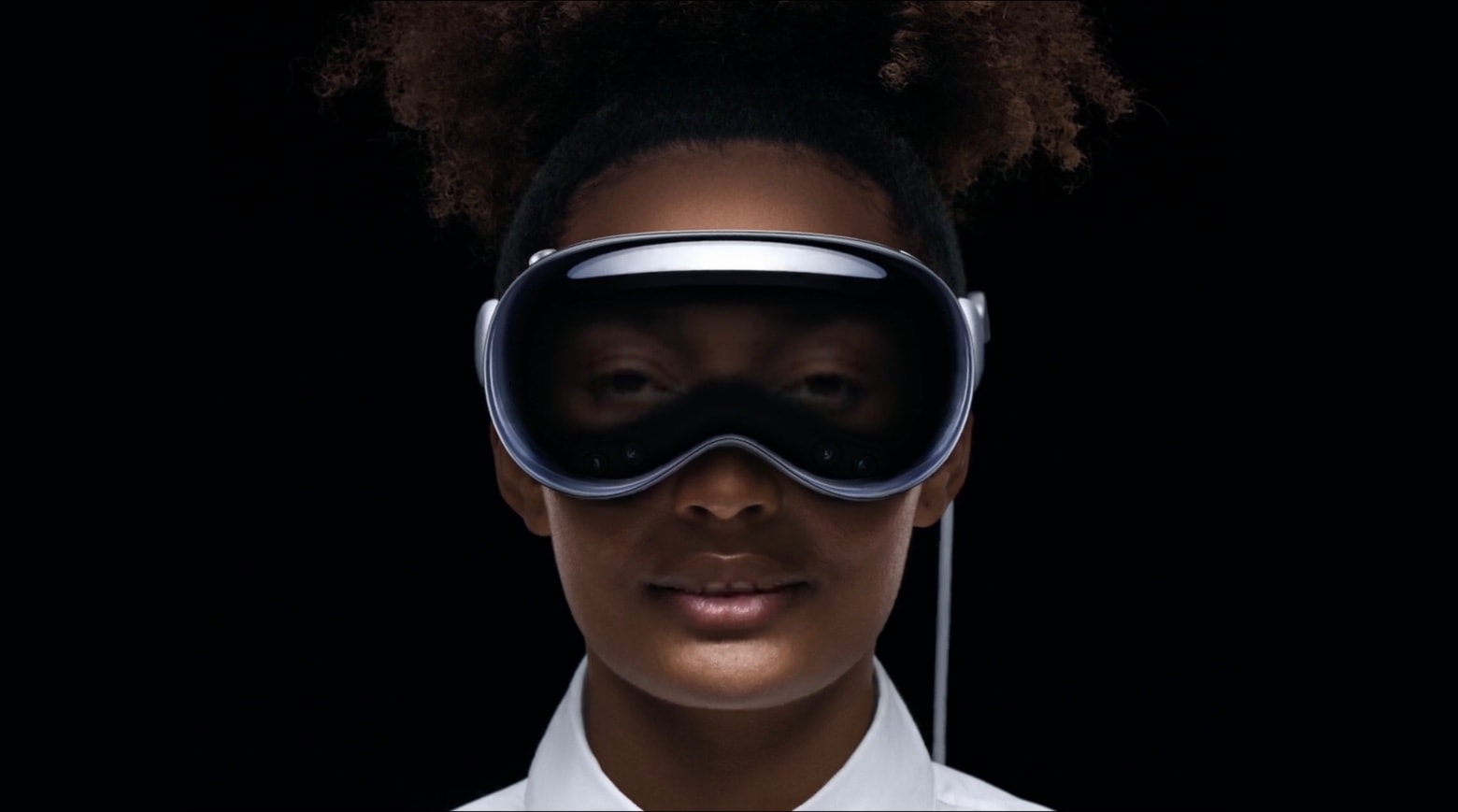
Apple’s long-awaited Vision Pro headset features all of Apple’s apps in a floating, immersive 3D space that’s designed to let wearers interact seamlessly with the real world, rather than walling them off in a virtual one.
“Vision Pro will introduce us to spatial computing,” said Apple CEO Tim Cook during the recorded WWDC23 keynote Monday as he unveiled the pricey device. “This marks the beginning of a journey that will bring a powerful new dimension to personal technology.”
The company described it as “the first Apple product you look through, not at.” Vision Pro starts at $3,499 and will be available early next year.