Mobile menu toggle

Top stories - page 991

Will The White iPhone 4 Be Canceled Entirely?

By

white-iphone-4

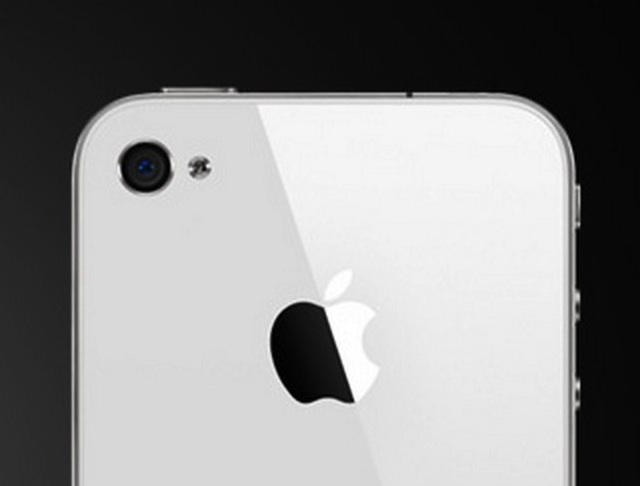
If you’ve been waiting to buy the white iPhone 4, we hope you’ve caved by now and just gone black instead. It’s hard to think of a more troubled product: not only has the white iPhone 4 undergone a troubled manufacturing history thanks to light leaking into the camera sensor, but Apple’s said that we can’t expect to see one until spring 2011… just three months before they unveil the fifth-generation handset.

To be honest, it doesn’t take a genius to see that the white iPhone 4 is probably never going to arrive: at this point, it makes more sense for Apple to aim to have the white iPhone ready for June for simultaneous launch with the iPhone 5 than try to sell the white iPhone 4 at the tail end of the current generation.

In fact, that’s just what Boy Genius Report is now claiming, saying that the white iPhone 4 has been secretly canceled. Not that Apple will admit as much: BGR says that they will instead just claim there’s another delay in March, and assume everyone will forget about the debacle of the white iPhone 4 by June.

Apple’s probably right: the longer the white iPhone 4 is delayed, the more the returns diminish on actually releasing it. Time for an informal poll: how many of our readers are still holding out for the white iPhone 4? Let us know in the comments.

Digitimes: Foxconn and Pegatron Gearing Up Production of 25 Million Verizon iPhones for 2011

By

verizon-iphone4

Yesterday was a big day for Verizon iPhone rumors. Hot on the heels of a rumor that Apple was working to create a reprogrammable SIM Module that might open the door to dual GSM/CDMA compatibility comes a perhaps contradictory report from the always dicey Digitimes that suggests that Cupertino has already awarded the build contracts for a CDMA iPhone to two of the biggest Asian electronics makers.

How Google is Just As ‘Closed’ As Apple

By

Google CEO Eric Schmidt

A war of words between the CEOs of Google and Apple makes for great headlines, but does little to illuminate reality.

Google says its Android OS is “open,” while Apple’s iOS platform is “closed.” Apple, on the other hand, claims Android is “fragmented,” while iOS is “integrated.”

They’re both right about Apple, at least with their respective spins, but wrong about Google. Google, in fact, is at least as “closed” as Apple.

Go here to read the rest of this post on Datamation.

13-Inch MacBook Air Is A Surprisingly Powerful And Portable Pro Replacement [Review]

By

post-65814-image-1dfe43d4268084da0a679514169a1a81-jpg


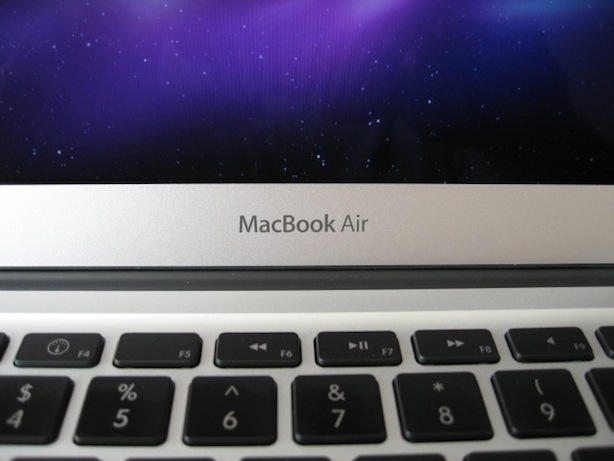
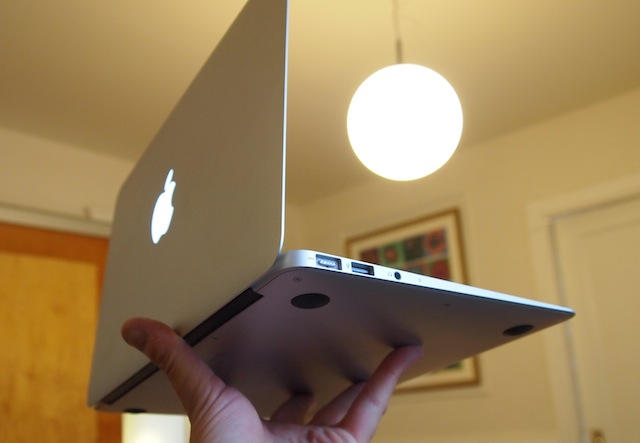
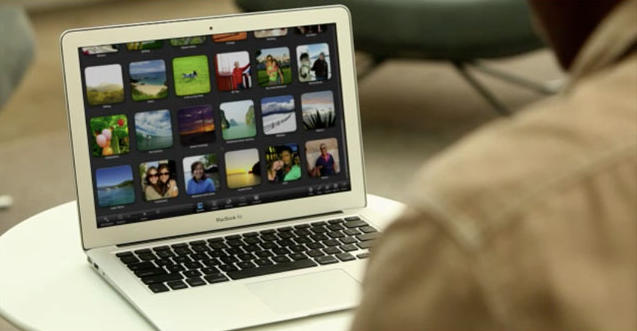
Apple’s new 13-inch MacBook Air isn’t anything like the old one. It’s incredible. It’s incredibly thin, light, and powerful. It’s blazing fast. It’s incredibly beautiful and well made.

It has an older CPU and comes up short with only 2GBytes of RAM in the base model, but it is not underpowered. It’s a perfect fit for users like me, who aren’t rendering 3D graphics, it’s more than perfect. It’s hugely better than previous models of the 13-inch MacBook Air. Incredibly thin and light, yet very capable of running a large number of applications without showing the infamous Mac OS X beach ball.

Unlike the 11-inch MacBook Air, reviewed by my editor Leander, there are a few less compromises in the 13-inch MacBook Air. While larger the 13-inch model still excels in the most important things portability, durability, and functionality.

Last year, I also bought a 13-inch MacBook Pro, which I loved, but in comparison to the 13-inch Air, it is huge, only a little bit faster, and comes with an optical drive that I seldom use any more.

I know what you’re thinking, “Didn’t this guy toss the new MacBook Air in the dump last week?” Well, last week I did and now it looks like I’m going to have to eat crow after buying a 13-inch MacBook Air last Saturday. Read on to find out why.

The Real Reason White iPhone 4 Is Delayed (Hint: The Camera)

By

white_iphone_4_camera

The white iPhone 4 has been delayed because it can’t take good pictures, a source with connections at Apple tells me.

The white case leaks light back in — especially when the flash is used to take pictures.

On Tuesday, Apple said the white iPhone has been delayed until next spring.

This is the third time the white iPhone has been pushed back: first to July, then the end of the year and now to next spring.

Once again, Apple didn’t explain the delay. In the past, the company has said the white iPhone was “more challenging to manufacture than we originally expected.”

Rumors have blamed light leaking from the case or a color-mismatched Home button.

The delay is related to light leakage, as previously rumored. But it isn’t light leaking out from the iPhone, it’s light leaking back in.

Cheat at a political debate? There’s an app for that

By

post-66091-image-bff08eb9dc041e8b0c5f5fc0818cd215-jpg
"iCheating" Sink spies a text on a Droid.

Apple’s trademarked phrase “There’s an app for that” became political cannon fodder after a Republican candidate called out a Democrat for breaking the rules of a televised debate by looking at a text message.

The best part?

Even though the device delivering that text-message bomb turned out to be a Droid, the Republican posted a doctored photo of his rival and an iPhone calling her an “iCheat.”

New MacBook Airs Are Apple’s Most Profitable Notebooks Yet, Say Analysts

By

macbookair_new1

One of the little secrets that has made Apple the most profitable company in tech is their ability to achieve high margins on their gizmos, but the new MacBook Airs might set a record even for Apple: according to analysts who have estimated its bill of materials, the entry-level, 11.6-inch MacBook Air costs only $718 to make.

That means that for every 11.6-inch MacBook Air Apple sells, they make $281, a profit margin of 28.1%. That’s for the 64GB: buy yourself a 128GB MacBook Air and the profit margin jumps to 34%. Buy a 128GB 13.3-inch MacBook Air and that margin nudges forward again, this time to 37%.

Those margins are excellent, even comparatively: Apple, on average, achieves a profit margin of just 20% on the rest of their laptops.

Why Microsoft’s Mall of America Store Will Fail

By

5053633367_2227ddcb38_z

Software giant Microsoft plans to open a new retail store Nov. 6 in Minnesota’s gigantic Mall of America — directly opposite from the Apple Store.

I predict that the Microsoft Store will fail spectacularly.

PC giant Dell tried retail locations a few years ago — the company peaked at 140 mall kiosks before the company announced that electronics superstores and the dell.com web site were better places for customers to buy.

Gateway tried it, too. The company opened more than 260 “Gateway Country” stores several years ago before shutting them down and selling out to Acer.

Microsoft’s Mall of America store will be much larger than the Apple Store across the walkway — reportedly 8,600 total square feet and 5,200 of which devoted to public showroom. And it will be a lot bigger than Microsoft’s existing retail stores in Scottsdale, Ariz., Lone Tree, Colo., and Mission Viejo and San Diego, Calif. (Apple has 310 stores.)

The new Microsoft store will mimic Apple’s shiny modern industrial wood, metal and glass architectural style. Employees will high-five customers as they stream in on Day One. There will be computers and tablets and smart phones displayed.

Microsoft’s strategy for competing technologies has always been to “embrace and extend.” The strategy for retail appears to be “copy and outspend.”

Why the Microsoft Store Will Fail

Tech giants, including Apple, open retail stores for four reasons:

1. Increase sales

2. Improve branding awareness and affinity

3. Improve public familiarity with products

4. Provide a place for tech support

I predict that Microsoft will fail in all four of these areas. Here’s why:

Apple Stores are profitable. The Microsoft store will not be. It probably wasn’t designed to be. It probably can’t be. The details of Microsoft’s money-losing retail strategy, especially for this giant store, will be contrasted unfavorably with the details of Microsoft’s incredibly lucrative retail strategy. Microsoft will probably lose a lot of money on this store, and the fact will embarrass.

The majority of PC users and the majority of cell phone owners — in other words, the majority of mall goers — do not use Apple products. Apple increases sales with its Apple stores by introducing people to its products.

People may walk by the store fogging the glass 10 times before they ever go in. Once inside, they play around with the computers, fondle the iPads, and allow themselves to be dazzled by the big screens.

For the average mall goer, the Apple Store is a journey into an exotic and beautiful alternative universe. But the Microsoft Store will be like a journey into… Best Buy.

Placing the Microsoft Store directly opposite from the Apple Store is an error. Once the novelty has worn off, the Apple Store will be consistently busier with a much broader spectrum of consumer. While the Microsoft store may be a hit with a 13-year-old boys who want to play Xbox on giant screen, proximity will expose differences in the consumer appeal of each company.

Note that Microsoft has many loyal and enthusiastic business customers. But they won’t be at the mall to represent.

Apple has its Genius Bar, which is a mixed bag of customer service experiences. Some people walk away unhappy, but some people are completely satisfied.

Offering tech support at the Microsoft store is probably a bad idea. Because the Windows platform is what Steve Jobs would call a “fragmented” environment (OS from one company, hardware from another), tech support issues are likely to require intervention by companies other than Microsoft. So Microsoft may not offer tech support, which makes the company look bad. Or it may offer tech support, which makes the company look worse. It’s a no-win for Microsoft.

The problem with Microsoft opening a store directly across from an Apple Store is that it invites comparison between a company that’s in a position to benefit from retail against one that isn’t.

Retail benefits Apple because the company’s products are more beautiful than its competition and less familiar. Retail benefits Apple because its products are all of a kind, they look as if they come from the same company with the same aesthetic value. So the Apple Store has a unified appeal that Microsoft won’t be able to fully replicate.

Microsoft may be a great company with much to offer. But it has nothing to gain from a retail store — especially one right across from an Apple Store — except embarrassment.


11-Inch MacBook Air Is Ultra Portable And Surprisingly Powerful [Review]

By

OLYMPUS DIGITAL CAMERA

Apple’s new 11-inch MacBook Air is astonishing. It’s unbelievable. It’s the most exciting consumer PC that’s come out for years. It’s a netbook, but it’s not a PoS. It’s blazing fast. It’s unbelievably light and thin. It’s beautifully made. Really beautifully made.

It has an older CPU and skimpy RAM, but it is NOT underpowered. For users like me, who aren’t editing Hollywood movies, it’s more than adequate. Heck, it’s a huge leap forward. Like Jobs said at the launch, this is the future of notebooks. Extremely thin and light, yet capable of running dozens of applications without bogging down. There are compromises, of course, but the most important things — portability, durability and functionality — are very much in place.

Last year, I bought a 13-inch MacBook Pro, which I loved. But in comparison to the 11-inch Air, it looks like a bloated old relic. It’s positively primitive: a porky throwback to a previous computing era.

I know what you’re thinking, “Cult of Mac. This guy’s a zealot. He’ll buy anything Steve Jobs tells him too.” I admit, I’m a fan. But the Air is important. It’s different. It’s right up there with the iPad and the iPhone. This is a breakthrough product.

Steve Jobs Isn’t Big Brother, and the Mac Remains Open [Mac Skeptics Part 2]

By

20101021-appstore.jpg

Previously on Cult of Mac, I decried the growing alarmism of tech punditry regarding Apple’s as-yet-unreleased Mac App Store. GDGT’s Ryan Block citing something about the cloud or something, noted that his pet applications are probably not going to be hosted by the App Store, which therefore means that meaningful innovation in desktop software is impossible. I begged to differ.

But my greater scorn has been reserved for the subject of this post, the Gizmodo commentary “Big Brother Apple and the Death of the Program,” by Matt Buchanan. If you haven’t read it, do yourself a favor and check it out. It’s a doozy of tortuous logic, FUD, and faulty analysis well-worth your time. The following is my rebuttal to several of its most absurd assertions.

Lies, Damn Lies, and Mac App Store Skeptics [Part 1 of 2]

By

post-65869-image-053af2279995d12e8c33c9aa5cf5cab5-jpg

I’ve noticed an alarming trend over the five days since Steve Jobs introduced the Mac App Store at Wednesday’s Mac-focused media event. On all sides, the internet is being overrun by otherwise savvy tech pundits who have decided that Apple’s efforts to provide an easy-to-use, accessible, and intuitive marketplace for Mac software is irrelevant at best and, though you didn’t hear it from me, evil, too.

The most alarmist such pieces I have encountered thus far are Ryan Block’s “Will the Mac App Store have enough to sell?” from GDGT, and Matt Buchanan’s “Big Brother Apple and the Death of the Program.” The former, as you might imagine, argues that desktop software is dead, while the latter, predictably, foretells a grim future in which you won’t be able to read these words, and the keyboard I’m typing this post on write now will instead devote itself to composing Jobs-praising hymns.

I don’t often give myself over to Fisking, but I think it only makes sense to deconstruct these pieces by responding to specific arguments within. I am, necessarily, only excerpting from each piece, so I encourage you read them in their entirety — the full context is as ridiculous as the smaller slices. Up first, Ryan Block tells us why your notebook doesn’t have any software on it.

iSeeU Brings a Front-Facing Camera to Your iPhone 3GS… Sort Of

By

post-65763-image-74b00d42d8892c17e2338fbb5d1ee0dc-jpg

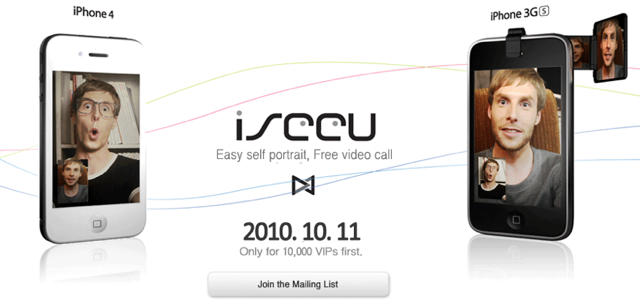
iSeeU is a new accessory from PLAYMASS for the iPhone 3GS that provides users with the functionality of a front-facing camera in a pretty novel way.

It’s a clip-on accessory with some carefully arranged mirrors that reflects what’s in front of your device in to the camera at the back, kind of creating a front-facing camera. Check out the video below to see how it works.

httpv://www.youtube.com/watch?v=Ti8XI3X-eCA

Although the iPhone 3GS is not FaceTime compatible, there are video calling applications in the App Store that work perfectly on the older model, like Fring, Tango Video Calls and Yahoo! Messenger

iSeeU is now available to pre-order for $24.95 and will be launched in “early October.” A release date which I think may have been missed. It’s available in five colors and comes with a carrying case.

Jobs Confirms There Won’t Be An Option To Customize iPad Switch, Will Be Mute From iOS 4.2

By

post-65756-image-a961438f4cdefeedfb24e0124de9cd39-jpg

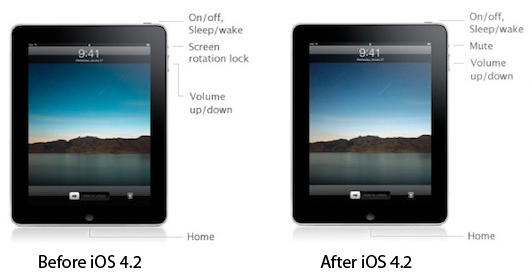
Steve Jobs is reported to have confirmed by email that the switch on the side of your iPad will forever be a mute switch from iOS 4.2 onwards, and that users won’t be given the option to change it back to an orientation lock.

When the iPad was first released, the switch on the side of the device was an orientation lock, and many users were very fond of this function. In the most recent iOS firmware, the function of the iPad’s switch has changed to enable users to quickly mute the device, just like they can on the iPhone.

One iPad user, named Robert, sent an email to Jobs himself to ask whether the iPad switch will always be a mute button from iOS 4.2:

“In IOS 4.2 for iPad is the switch on the side going to be the mute and not screen orientation lock from now on?”

Jobs replied with a simple “Yep.” and then Robert asked whether users might be given the option to customize the function of the switch:

“Are you planning to make that a changeable option?”

Jobs provided another simple reply: “Nope.”

So, your iPad switch will always be a mute button from iOS 4.2. As an iPad user myself, I have to say I’m a little disappointed that the switch has changed to a mute button – although it’s only a slight change, I felt the orientation lock was much more useful. Turning the iPad to silent was easy enough already in iOS 3.2.x by just holding down the volume button.

[via 9to5 Mac]

Mobile ArtCon Kicks Off in New York

By

post-65156-image-0c58d7f722d7702463abc35881d48b56-jpg
A fingerpainting of the New York skyline by Benjamin Rabe. Courtesy iAMDA.

Artists who have traded canvases for touch screens and brushes for the Brushes app will meet up at a Digital Art Conference in New York City this weekend.

The iAMDA (International Association of Mobile Digital  Artists) has organized its first ever MobileArtCon taking place at the New York University’s Interactive Telecommunications Program (ITP), October 23-24.

Cult of Mac talked with artist and organizer Matthew Watkins — whom we featured when his iPhone art was the first to hang at an Apple reseller — about what to expect from this weekend meeting of digital artists.

Porn Service Excited about FaceTime for Mac

By

post-65116-image-733e26f40b21be85094f8840c29c99b5-jpg
FaceTime: just smiles going farther?

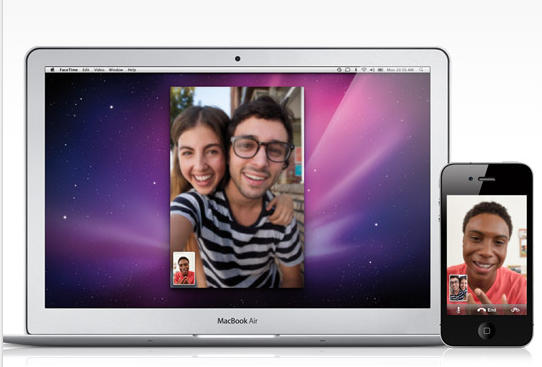
When Steve Jobs announced at the Back to the Mac event that the iPhone 42 s video chat feature FaceTime would be spreading to all Macs, our thoughts naturally turned to porn.

While interactive video sex chats are nothing new, FaceTime brings portability and convenience or, as the Apple site touts it: “Now your smile goes even further” — so we wanted an opinion from iP4Play, the first porn service to target FaceTime when it was only available for the iPhone 4.

Cult of Mac spoke with Travis Falstad, managing director of iP4Play, about these exciting new developments and “porn-free” devices.

The Eight Technologies That Steve Jobs Killed Yesterday

By

macbook_air

Steve Jobs has a penchant for ruthlessly killing off old technology. Throughout his career, Jobs has been celebrated for ditching dying technologies in favor of new: the command line (first Mac), the Floppy Disk (first iMac), SCSI drives, serial ports, dial-up modems, and FireWire on hard drives and iPods.

With Apple’s event yesterday Steve Jobs, went on a killing spree. Here’s eight technologies he gave the kiss of death to:

iLife ’11 Gets Heavy Dose of Creative Magic, Steals Today’s Show [Opinion]

By

iLife '11 react

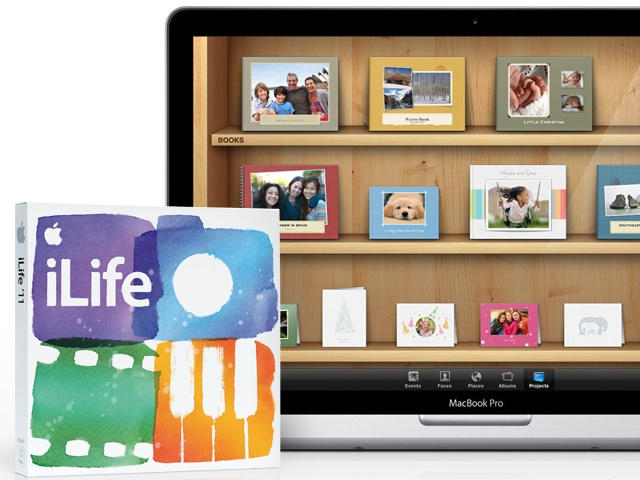
Despite a massive lion lurking in the background of the press invite for today’s event, the big news didn’t have much to do with OS X 10.7 (now officially “Lion”); instead, the big news was about the new MacBook Air pair, the Mac App Store, FaceTime for Mac — and iLife ’11

In fact, iLife almost stole the thunder from the later “one more thing” MacBook Air announcement. And for good reason: There’re some really impressive features included in this round of what is quite possibly the best software suite to ever come standard on a manufacturer’s entire product line.

Cult of Mac Writers React To The New MacBook Air

By

post-64833-image-32491c0ec5b5727027e1508f1f1bf037-jpg

Buster Heine: The new MacBook Air has a nice wafting odor of sex coming from the design (except for the metal bezel), but the specs and pricing are a bit disappointing for me. I’m not a rich businessman on the go, so I don’t think I’m in the target demographic of the new MBAs.

From a practical standpoint, the 13-inch is irrelevant. I’m really attracted to that beautiful 11.6 inch unit with a $999 price point, but there’s no point in replacing my 13′ Macbook Pro for an underpowered machine that is a few pounds lighter.

The new Macbook Airs confuse me. They seem designed to be a secondary computer, but if I already have an iPad + keyboard, an iPhone, and a MacBook Pro, there’s no point in buying it because it can’t handle everything a MacBook Pro can, and it’s too expensive to be an amateur’s computer. If Apple can bring down the price on the new units I might be tempted, but for now I’ll be resisting the urge to buy the new Apple gear, no matter how sexy it looks.

Back to Mac: Meet The New 11.6 and 13.3 Inch MacBook Airs

By

post-64808-image-f2fd222a060cd86380927a1e54af7609-jpg

Steve Jobs has just come on stage with his “one more thing”… and as predicted, it’s a new MacBook Air, in both 11.6 and 13.3-inch versions.

Steve explains that with the new MacBook Air, they wanted to leverage the advantages of the iPad to a real laptop, including instant on, great battery life, amazing standby time, solid state storage, no movie parts and thin and light.

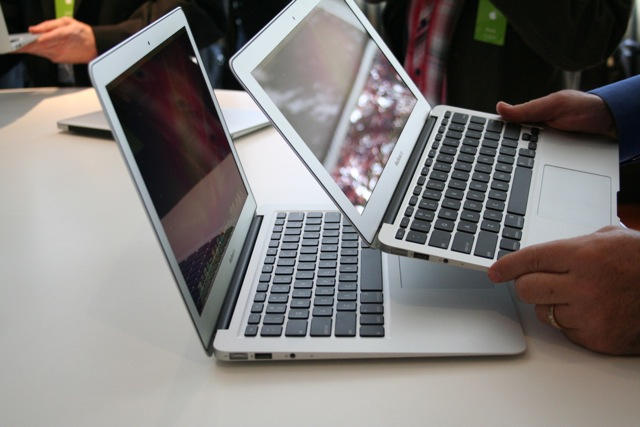
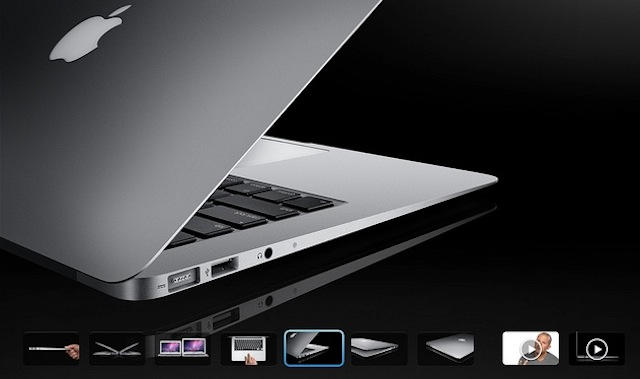
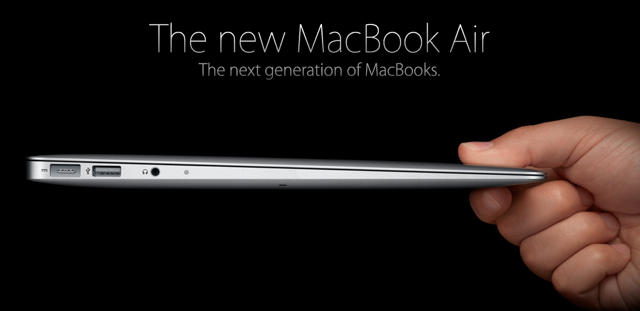
That’s the design philosophy that led to the new MacBook Air. It’s a completely unibody design, 0.11 inches thick at its thinnest, and 0.68 inches at its thickest. Overall, it’s 90% smaller and lighter, with completely silent operation.

The 13.3-incher is running 1440×900 pixels, which makes it a higher pixel density than even the 15-inch MacBook Pro. It features a 1.83GHz Core 2 Duo Processor, a max of 2GB of RAM, NVIDIA GeForce 320M graphics, a full size multitouch trackpad, one USB port, an SD card slot and a FaceTime camera.

It’s the battery life that astounds, though. It’s a holy crap moment: the new 13.3-inch MacBook Air will supposedly have a 30 day standby time and seven hours of wireless web usage. This thing is basically all battery inside.

The 11.6-inch is mostly the same specs, but has a woeful 1.4Ghz Core 2 Duo Processor, a smaller 1366×768 resolution and only 5 hours on wireless web… presumably because they had to shrink the battery packs.

So what’ll these cost? Well, the 11.6-inch starts at $999 for 64GB SSD space, while a bump to $1199 will double your storage. The 13.3-inch starts at $1299 for a 128GB hard drive, and jumps to $1599 for a 256GB hard drive.

Honestly? This is pretty underwhelming: even accounting for the major performance bumps you see when you go SSD, that’s a wimpy computer for the price. We’re not sure we’re sold. What do you think?

Back to Mac: Lion Coming Summer 2011, Mac App Store in 90 Days

By

post-64793-image-c3aab698b3a0d86d7faf7c2b0c50e935-jpg

Steve Jobs has just announced the release date for OS X 10.7. It’ll be coming in summer of 2011.

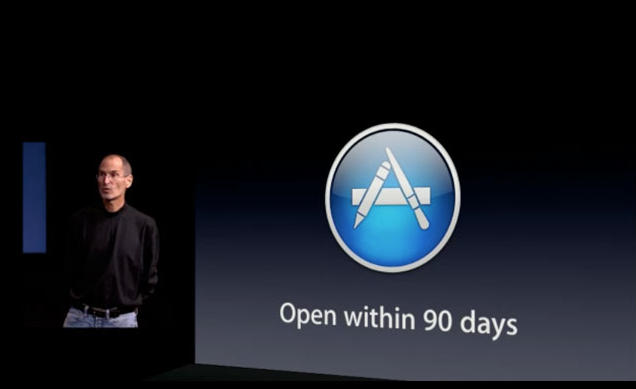
But what about that new App Store? Do developers really have to wait almost a year for it? Nope. The Mac App Store will be released within Snow Leopard within the next ninety days, with App Submissions in November from developers.

That’s amazing. I wasn’t expecting the Mac App Store this generation of OS X, but here it is, coming down the pipe. I only wonder how worth using it’ll be without OS X 10.7 specific new features to make the most of apps within OS X.

Back to Mac: Launchpad is an iOS UI for OS X

By

2010-10-20205back2mac

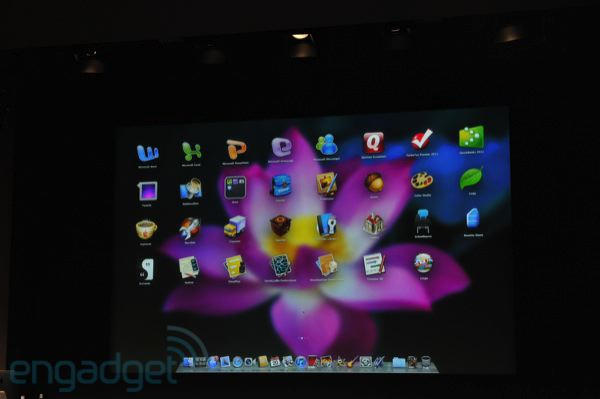
With OS X 10.7 Lion, Apple’s also bringing a new element to Macs: the Launchpad.

In launchpad, all of your apps neatly arranged in rows. Thinks stacks for app icons, but instead of flying out of your dock, they are neatly arranged — complete with pages — on your desktop. You can even create folders, just like in iOS.

Essentially, Launchpad is an iOS interface layer for OS X for apps. Just another way in which OS X is becoming more iOS-like.

Back to Mac: Meet the Mac App Store

By

post-64790-image-ffe05a91cce6a63f58a1f520734fcf67-jpg

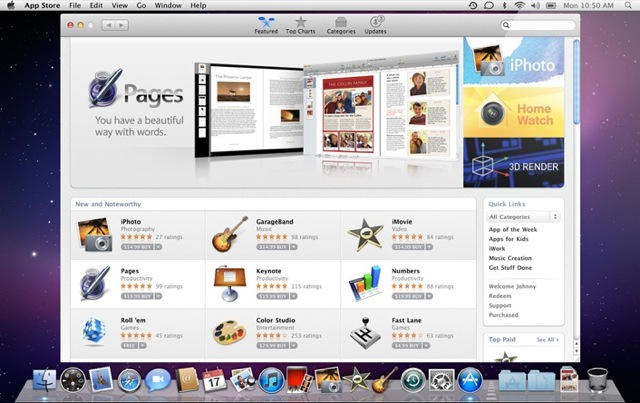
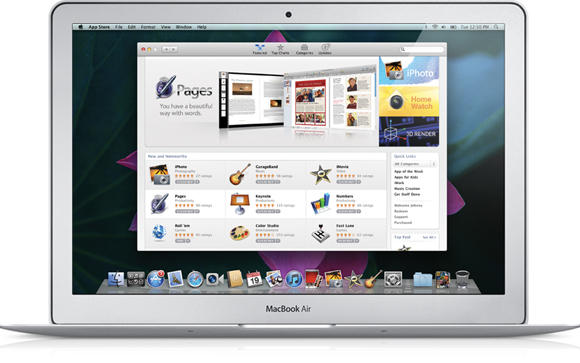
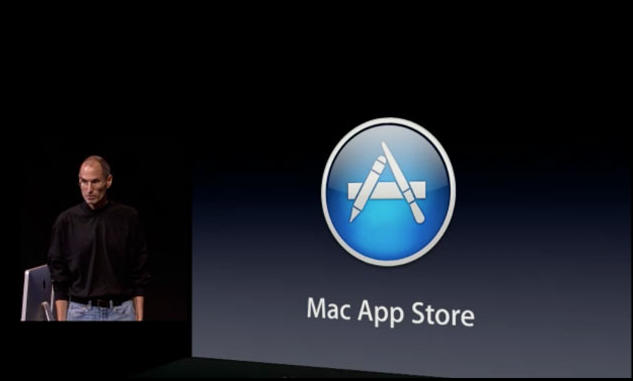
Apple is bringing the App Store to Macs, and while it won’t be the same as the iOS App Store, it’ll leverage some of their benefits.

It makes sense: there have been 7 billion downloads from the App Store, and Apple wants that money on the Mac side of things. According to Steve, it’ll be ““the best place to discover apps. It won’t be the only place, but be the best place.”

Apps will automatically install on the Mac app store, as well as updated, and will be licensed across all of your personal Macs.

Sounds like great news for app developers, and there’ll be the same 70/30 split. Let’s hope the approval process isn’t as absurd as it is on iOS.

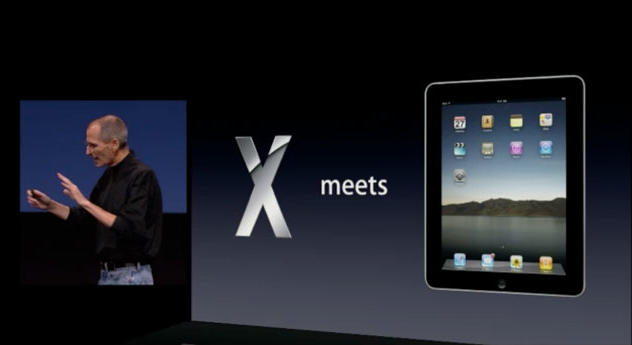
Back to Mac: OS X 10.7 Lion is OS X Meets iOS

By

post-64786-image-2b8bcdca8d00e3e2dac0fcab9271a8a0-jpg

Introducing what Steve humorously termed as the “entree for today,” Apple has just unveiled OS X 10.7, Lion, which they are, as rumored, describing as iOS meets OS X.

What are we getting? Multitouch gestures, an App Store, App Home Screens, full screen apps, auto save and apps that resume when launched… just like in iOS, although how much like in iOS remains to be seen.

First up, multitouch.