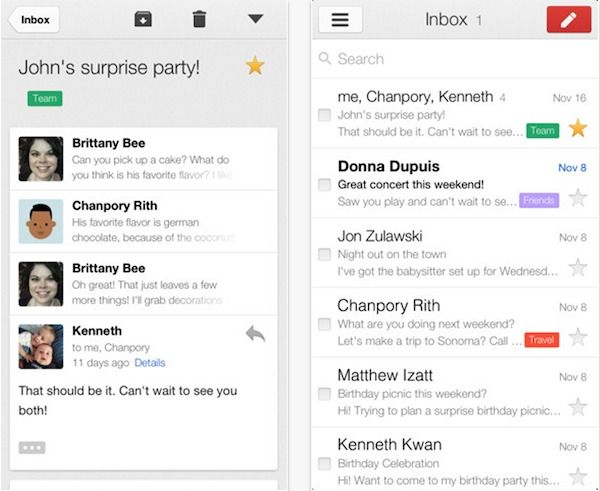
Around the time that Google bought Sparrow, the Gmail team was given a mission to completely rebuild the Gmail app for iOS. After months of slaving away, the app has just been released on the App Store today and it comes with a number of new features that may have been borrowed from Sparrow, even though insiders such as MG Siegler claim the Sparrow team had nothing to do with the update.
Gmail 2.0 for iPhone and iPad is faster, sleeker and much easier to use. The minimal UI athestetics of Google Now have bled over with some of the popular features from Sparrow. The free update gives users multiple accounts, infinite scrolling inboxes, better search, and more.
Here are the release notes: