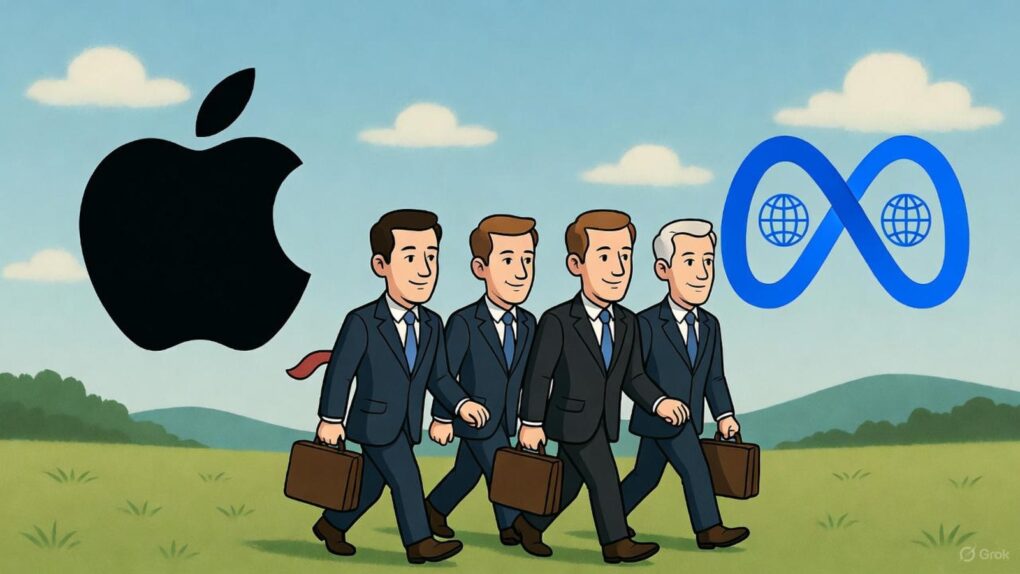
In 2025 an unprecedented talent exodus decimated Apple’s leadership ranks, with Meta Platforms emerging as the primary beneficiary of the iPhone maker’s retention struggles. The social media giant has successfully lured away four high-profile executives from Apple’s artificial intelligence and design divisions, raising serious questions about the Cupertino company’s competitive position in the rapidly evolving AI landscape. Find out more about the top executives left Apple for Meta below.
4 top executives left Apple for Meta in 2025
The departures span critical areas of Apple’s operations, from user interface design to cutting-edge robotics research. They represent a significant blow to a company that has long prided itself on its ability to retain top talent. Industry analysts point to a combination of factors driving the exodus, including aggressive compensation packages from Meta, frustration with Apple’s perceived conservative approach to AI development and concerns about the company’s strategic direction.
These four departures represent the most visible losses in what has become a troubling trend for Apple. But beyond the four, the company has lost more than a dozen senior AI researchers and engineers in 2025 alone. Many joined not just Meta but also competitors like OpenAI and Anthropic. Questions linger over how Apple can recover.
Alan Dye: Design chief behind controversial changes
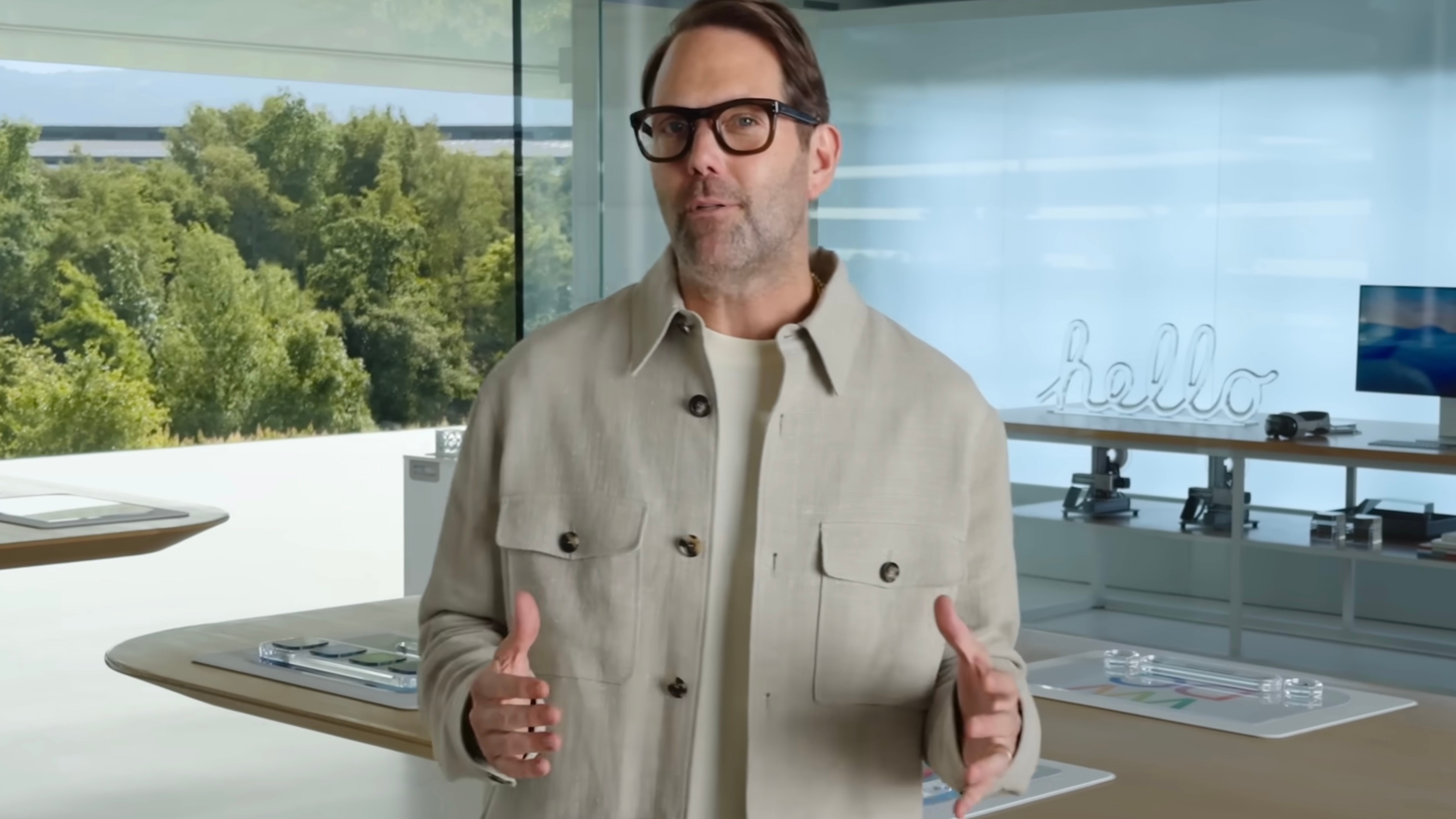
Photo: Apple
The most recent and perhaps most visible departure came in early December when Alan Dye, Apple’s head of user-interface design, announced he would be joining Meta as chief design officer. Dye, who had been with Apple since 2015, oversaw some of the company’s most significant design work in recent years. Those include the Vision Pro headset interface and comprehensive operating system redesigns.
At Meta, Dye will lead a newly created design studio focused on hardware, software and AI integration across the company’s interfaces. He officially starts his new role on December 31, reporting directly to Meta CTO Andrew Bosworth, who oversees Reality Labs.
While Dye’s portfolio included design leadership for flagship products like Apple Watch and iPhone, his tenure wasn’t without controversy. His team was responsible for the polarizing Liquid Glass design elements that prompted widespread criticism from users who found text and interface elements difficult to read. Social media reaction to his departure was notably mixed, with some commenters questioning whether his exit represented a loss or an opportunity for Apple to refresh its design direction. And supposedly many folks at Apple are happy he’s leaving.
Meta CEO Mark Zuckerberg framed the hire as part of the company’s broader vision for AI-powered devices, stating that the company is entering a new era where AI glasses and other devices will fundamentally change how people interact with technology.
Stephen “Margaret” Lemay, a longtime designer who has contributed to every major Apple interface since 1999, will succeed Dye in his Apple role. Dye’s departure extends a troubling pattern for Apple’s design organization, which has struggled with retention since the 2019 exit of legendary design chief Jony Ive.
Ruoming Pang: AI models architect

Photo: Apple
In July, Apple lost one of its most critical AI leaders — Ruoming Pang — to Meta. He managed the company’s foundation models team. Pang had joined Apple from Alphabet in 2021 and quickly rose to lead a team of approximately 100 employees responsible for developing the large language models that power Apple Intelligence, Genmoji and other AI features across iPhones and Macs.
Meta reportedly offered Pang a compensation package worth tens of millions of dollars per year to join its newly formed superintelligence team. The move represented a major coup for Meta, which has been aggressively recruiting top AI talent from across Silicon Valley in an effort to catch up with competitors like OpenAI and Google.
Pang’s departure dealt a significant blow to Apple’s AI ambitions at a critical juncture. The company has faced criticism that its AI features lag behind competitors in terms of practicality and usefulness, even forcing delays to planned Siri upgrades. Reports suggest that morale on Pang’s former team suffered after Apple began exploring partnerships with OpenAI and Anthropic, signaling potential doubts about its in-house AI development capabilities.
Following Pang’s exit, Apple restructured its foundational models team to report to Zhifeng Chen. However, the loss has contributed to a broader talent drain, with nearly a dozen members of the Foundation Models team departing in 2025 alone.
Jian Zhang: Robotics research pioneer
AI image: Grok
In September, Apple’s AI division suffered another major blow when Jian Zhang, the company’s lead AI researcher for robotics, departed to join Meta’s Robotics Studio. Zhang had spent a decade at Apple, leading a small but crucial team focused on automation technology and the integration of AI into physical products.
The timing of Zhang’s departure was particularly damaging, coming as Apple was reportedly developing its own robotics initiatives, including a tabletop robot and a robotic arm for its retail stores. His loss represents both institutional knowledge and strategic expertise that will be difficult to replace.
At Meta, Zhang joined the Reality Labs division, where the company is investing heavily in foundational AI to support augmented reality, virtual reality and humanoid robotics work. Meta reportedly offered Zhang a multi-year compensation package as part of its broader strategy to attract frustrated researchers with massive financial incentives and a more open, experimental development environment.
Industry observers note that Zhang’s departure, along with that of several other researchers from Apple’s AI teams, reflects a deeper crisis of confidence within the division. Reports suggest internal debates about whether Apple should rely more heavily on external technology partners rather than developing its own AI models, creating uncertainty about the company’s strategic direction.
Ke Yang: Search and reasoning specialist
Image: Cult of Mac
Perhaps the most jarring departure came in October when Ke Yang left for Meta. He had just weeks earlier been appointed to lead Apple’s ChatGPT-like AI search initiative. Yang had been tasked with overseeing the Answers, Knowledge and Information team, known internally as AKI. It develops technology to make Siri more competitive with conversational AI assistants.
The AKI group was considered central to Apple’s planned Siri overhaul, scheduled for March 2026. It would enable the voice assistant to retrieve live information from the web and handle more complex, multi-step requests. Yang’s sudden departure after such a brief tenure raised serious questions about Apple’s ability to execute on its AI roadmap.
Yang had taken over the AKI leadership following the departure of Robby Walker, another longtime Apple executive, making his exit particularly problematic for continuity. Within Apple’s AI and machine learning division, Yang was regarded as one of the most prominent executives working on the new Siri initiative.
At Meta, Yang joined the company’s efforts to develop more sophisticated AI-powered user experiences, potentially contributing to search capabilities that could challenge Google’s dominance. His expertise in AI-driven search and reasoning represents exactly the kind of talent Meta has been aggressively pursuing as it builds out its Superintelligence Labs.
Top executives left Apple for Meta: The broader implications
The talent exodus reflects several systemic challenges facing Apple. First, the company’s compensation packages for AI talent appear uncompetitive with rivals willing to offer packages worth tens or even hundreds of millions of dollars. Second, frustration with Apple’s more conservative, bureaucratic approach to AI development has driven some researchers toward companies offering faster innovation cycles and more experimental freedom. Third, uncertainty about Apple’s AI strategy, including potential over-reliance on external partners, has undermined confidence within the organization.
For Meta, the aggressive recruitment strategy represents a calculated bet on AI’s central role in future computing platforms. By assembling teams of experienced researchers and executives from Apple and other competitors, Meta is positioning itself to compete more effectively in areas ranging from consumer AI assistants to robotics and mixed reality devices.
The question now is can Apple can stem the tide of departures and rebuild momentum in its AI efforts. Or perhaps we’ll remember 2025 as the year the company lost its competitive edge in one of technology’s most critical battlegrounds. With several remaining executives reportedly approaching retirement age and morale concerns persisting, the challenge facing Apple’s leadership has never been more acute.

David Snow, an expert on Apple hardware and software, writes on a variety of technological and cultural topics for Cult of Mac. They include Apple news, technology buying guides, and features about computer setups and Apple TV shows and movies.
With 30 years of experience covering technology and other subjects, he has written and edited for numerous print and online publications, including CMP Media, TechTV.com, CNET, Wired News, Red Herring magazine, Law.com, The National Law Journal and Law Technology News magazine. Among other roles, he served as executive editor of the Law.com network of websites and editorial director, technology, for ALM Media.
Snow graduated with a B.A. from Syracuse University with majors in magazine journalism and psychology. While there, he worked as a reporter for The Daily Orange newspaper and associate editor of Equal Time magazine.
Founder of the blog At the Waterline, he can be reached on X (formerly Twitter) via @atthewaterline and on Mastodon via @dsnow.

