iTunes 9.2.1 is now available for download and finally fixes the numerous bugs many of us have been experiencing:
• Disables older versions of some incompatible third-party plug-ins
• Addresses minor issues with dragging and dropping items
• Addresses a performance issue when first syncing to some devices with iTunes 9.2
• Addresses an issue upgrading to iOS 4 on an iPhone or iPod touch with encrypted back-ups
• Addresses other issues that improve stability and performance
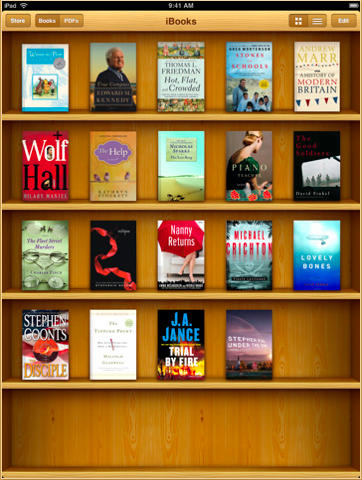
Apple has released an update to its iBooks application for the iOS and the latest version brings with it a few nice new features.
As well as the ability to now choose between 6 different fonts for your books, you can also double-tap images to see them in greater detail; and experience books that include audio and video.
In addition to new features, we also get welcome bug fixes, or, “stability and performance improvements.” I’ve lost count of the number of errors I get when opening a book in iBooks, so I’m hoping these issues are now fixed. So far, so good.
The full list of features from the app’s description is as follows:
• Double-tap an image within a book to view it in greater detail.
• Experience books that include audio and video.
• Enjoy substantial performance improvements when reading PDFs.
• Look-up definitions to English words inside books without a specified language.
• Addresses an issue that may have caused some book downloads to not complete.
• Includes many stability and performance improvements.
You can download the update through iTunes or the App Store on your device, or grab iBooks from the App Store for free if you don’t already have it.
We all gave up the ability to jailbreak and tether our iPhones when we updated them to iOS 4 or purchased an iPhone 4. Hackers have been teasing us that an iOS 4 jailbreak is imminent, but now you don’t have to wait for them or the jailbreak to have tethering again. You can have tethering on your iPhone now — using an open source project hosted on GitHub called iProxy.
PR expert Matt Seeger said Apple did issue a recall last Friday by providing iPhone 4 customers with free Bumper cases.
“From my perspective, this was a classic case of a recall,” said Seeger, who is chair of the Department of Communication at Wayne State University in Detroit. “They said, ‘Bring the product in, we’ll retrofit it.’ It’s not what most people think of as a recall, which is a safety issue. But this was a recall.”
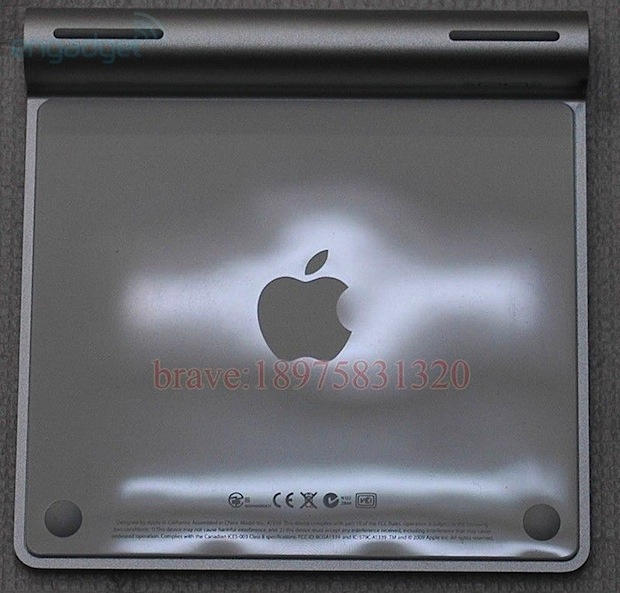
The FCC has approved Apple’s Magic Trackpad, which means the device could be announced as early as this week.
A device known by the model number A1339 and described as a “Bluetooth Device” has just shown up in the FCC’s database. Given how quickly Apple has in the past announced devices that have just approved by the FCC, the Magic Trackpad could be officially launched within days.
The device would act as a big touch-sensitive trackpad for desktop computers, such as an iMac. It looks as though the device supports handwriting recognition, as well as the swipes and gestures found on the Magic Mouse and MacBook Pro trackpads.
Why buy movies for your iPad, iPhone, or iPod Touch when you’ve already got the DVD sitting in your closet? If you’ve been looking for a great DVD ripper for Mac, then look no further. The WinX HD Video Converter provides the perfect solution to convert Blu-ray videos and videos from HDTV and HD camcorders, like JVC, Panasonic, Sony and Canon to other formats. This HD converter for Mac supports converting Multi-track HD video M2TS, MKV, AVCHD, HDTV BDAV and MPEG-TS video movies. It can also convert video files to the video formats that playable on both portable and console players, such as iPad, iPod, iPhone, (iPhone 3GS, iPhone 4), Apple TV, PS3, PSP, Xbox, Zune, PDA, Blackberry, Nokia, Android, Zen, etc. So, who wants a copy?
Suggest our page to 10 of your Facebook friends that are Mac enthusiasts.
We’ll randomly pick a winner after 11:59pm tonight, and we’ll post the winner on Facebook tomorrow.
Legal: This giveaway is void where prohibited, and you must be 18 years old to enter the giveaway. There is no purchase necessary to enter the giveaway. This giveaway is being sponsored by WinXDVD.com.
This basic black iPad case and carrier has a few tricks in its sleeve: Berlin company Bagjack designed it so that it props up your device as you wear it for hands-free access.
Hang the CircDisCover iPad Case over one shoulder and voila’: next time you’re at a trade fair or conference or standing in line at the airport, you can access your iPad — either horizontally or vertically — without having to prop it up somewhere or hunt and peck with one hand.
httpv://www.youtube.com/watch?v=p-ECt7X4bew
I know, I know: who wants to wear a man purse? You should: this simple, clean design can be worn right under the arm (think public transport, on your bike), on your wrist or horizontally with a wide carrying strap like a regular computer case.
The only trouble with these kind of wear-it-20-different-ways type garments, at least for me, is that I probably learn to do two of them and never bother with the rest. Still, once you figure out how to wear it in hands-free mode, you’re golden.
You can pre-order it in black, white or grey for €129 euros, here.
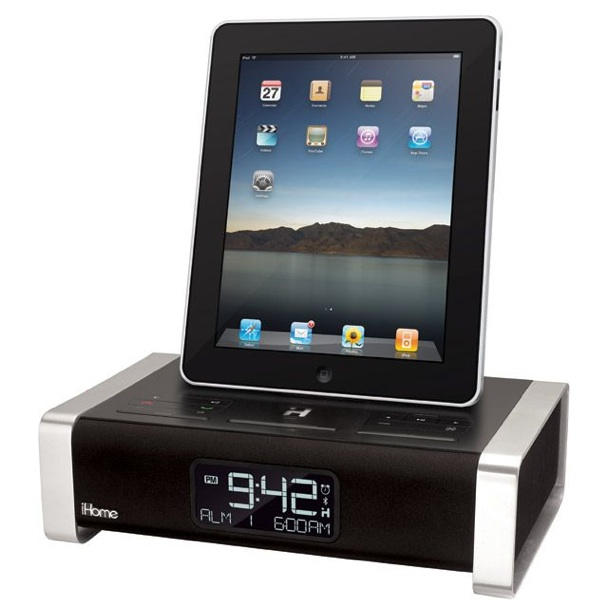
It was just a matter of time before someone devise a way to let you wake up to a custom alarm from your iPad. The iPad dock, charger and radio called the iA100 — all the variations of iSleep or i40winks were apparently already taken — is being billed as an “amazing app-enhanced, Bluetooth-enabled FM radio alarm clock.”
Though its top-heavy looks don’t immediately appeal (and could be dangerous, depending how clumsy you are in the morning), it has enough features to keep you up at night tweaking your sleep habits: it comes with a Free iHome+Sleep app download that lets you set up custom alarms, sleep stats, social media alerts, weather and overnight news. The iHome + Sleep app can also customize your wake up and nap settings, so so you don’t have to fiddle with it to get a day’s siesta.
iHome wants to put this new model beside your bed, though they are playing coy and haven’t released pricing or availability yet. It also works with your iPod or iPhone, too.
What do you think — is a wake-up call worth using your iPad for or will you stick to an old school alarm or using your iPod or iPhone?
That hilarious animated Taiwanese news segment on Steve Jobs and the iPhone 4 we posted earlier now has English subtitles, thanks to reader Michael Chang.
It shows Jobs defeating Bill Gates in a lightsaber battle and donning a Darth Vader mask; cops breaking down the door of Gizmodo editor Jason Chen’s apartment; and Jobs cutting of the fingers of customers who complain about iPhone reception issues. “Just get rid of those fingers,” Jobs tells the customer. “Then there’s no problems.”
Apple has settled claims with state regulators who allege the company mishandled electronic waste. Photo: Thomas Dohmke
Did Apple market its iPod and iPhone using expired patents? That’s the claim of an Austin Texas group asking a court to fine the Cupertino, Calif. company and several wireless carriers $500 per falsely-labeled product. The Americans for Fair Patent Use is suing under the federal False Marketing Statute.
The AFPU is also suing Sprint Nextel, Verizon Wireless and Samsung. The group alleges Apple marketed the iPhone, iPod touch, fifth- and sixth-generation iPod classic and third- and fourth-generation iPod nano using patents that had expired prior to the products reaching store shelves. The patents in question are U.S. Patent Nos. 4,577,216, 4,631,603, 4,819,098, and 4,907,093.
Photo: Cishore/FlickrWith Apple already ahead of Microsoft in terms of market capitalization, could Tuesday’s earnings report take the Cupertino, Calif. company just another step toward earning more revenues than its long-time foe? One expert believes that day is nearing. “Most analysts think it is just a matter of time before Apple is truly the bigger company,” Andy Zaky tells Fortune.
Some of what Apple will say tomorrow after the stock market’s close is already known. For instance, the handset maker has said it sold 1.7 million iPhone 4s in three days, 3 million iPads in just 80 days, and between 2.9 million to 3.5 million Macs. Both Apple and Microsoft are expected to report more than $15 billion in quarterly revenue, but will it be enough to put the consumer electronics company over the top? Probably not.
Microsoft still has one advantage. According to Zaky, Microsoft has an operating margin of more than 50 percent, an enviable asset and one likely to keep the venerable software giant out of the grasp of Steve Jobs and the Apple money-making machine.
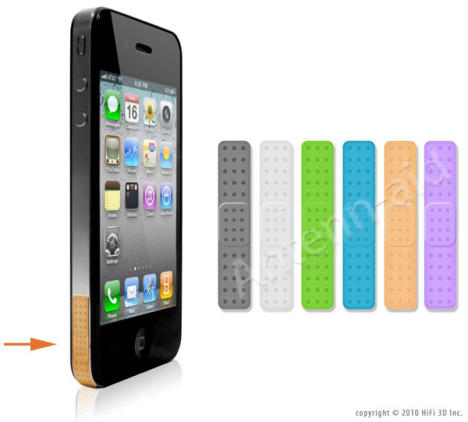
To solve the iPhone 4 Antennuation problem (or, at the very least, the PR disaster of that problem), Apple’s giving out millions of dollars in free cases to anyone who bought an iPhone 4… but maybe they should have saved their money and just shipped out some of these adorable, Band-Aid style Antennaids instead: $4.99 will patch the signal boo-boos of up to six iPhone 4s, although without a kiss from Papa Steve first to make the hurt better, who can really say how effective they will prove to be?
When you think of Tron in a gaming context, you inevitably think lightcycles, which makes the official Tron game from Disney Interactive something of a puzzler: it’s a dual-stick tank shooter game. The single player is a diverting (if not particularly engaging affair, in which you blast programs into pixels across 15 different levels, but it’s the multiplayer that shines: you join a particular team, and each faction’s score is gauged weekly according to their deathmatch dominance.
The best news of all? Tron is free to download. Go grab it on the App Store, program.
The iPad is coming! The iPad is coming! That could be the cry heard in nine more countries as Apple announced Monday it was expanding international orders this Friday. Both the 3G and the 3G+WiFi version will begin selling in Austria, Belgium, Hong Kong, Ireland, Luxembourg, Mexico, Netherlands, New Zealand and Singapore July 23.
The iPad “will roll out to many more countries later this year and Apple will announce availability and local pricing for these additional countries at a later date,” the Cupertino, Calif. company announced.
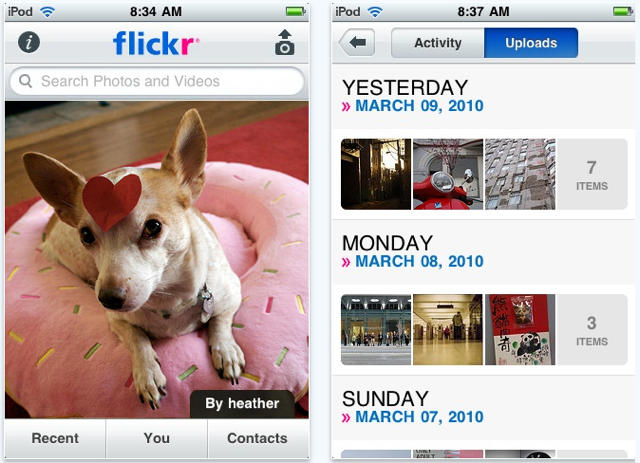
If you’re a heavy-duty Flickr user, you might want to hit “Update All” under the iPhone App Store: the official Flickr app has just received a swell new update, including support for HD video uploads from the iPhone 4.
If that’s not enough, the latest version of Flickr for iPhone brings multitasking support with background photo uploads, Twitter support, fast app switching and enhanced full-screen browsing behavior, as well as the ability to clear recent searches.
Don’t have Flickr for iPhone yet? It’s free, and you can grab it here.
9to5Mac has gotten their hands on some leaked details, showing off more about how Apple’s FaceTime videochat protocol will work with the WiFi-only iPod Touch.
As we reported before, FaceTime on the iPod Touch is all linked through an email address linked to your Apple ID… although interestingly, it appears you can set up multiple e-mail addresses where FaceTime contacts can contact you. Then there’s the FaceTime icon, seen above.
Interesting, and I can’t wait to try it out. My only question: does this mean the new iPod Touch is getting a mic as well, or will FaceTime users be expected to wear mic-enabled earbuds on their calls? That seems like a lackluster implementation of a new software feature Apple intends to use as the headliner of this generation of iOS devices. My money is on the iPod Touch getting a mic.
So apparently, that iPhone DSLR mount we posted on Friday wouldn’t actually work in real life, but that’s not to say that hooking a SLR lens up to your iPhone 4 is total madness: the guys over at vid-atlantic did just that, hooking their iPhone 4 up with a Canon EF 50mm f1.8 lens, and the resulting video is striking: for all of the mock-ups and rigs going around right now of SLRs Frankensteined together with iPhone 4s, I didn’t actually know the quality of the resulting footage would look so impressive. Impractically impressive, sure, but impressive none the less!
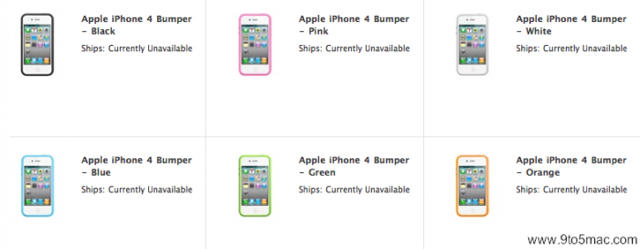
You might have heard: Apple’s giving a free case away to every iPhone 4 owner who even softly complains about their new smartphone’s reception. Needless to say, then, that their heretofore $30 bumper case is now going to be in short supply as Apple tries to handle freebie demand… so it’s ultimately no surprise that their rainbow assortment of bumper cases are now unavailable for purchase from Apple’s online store. Hope no one had their heart set on buying one!
This video is, without doubt, today’s Best Thing Ever. Possibly this week’s Best Thing Ever. Steve Jobs is the Sith of the Mobile Universe, his Reality Distortion Field is a manifestation of the Force itself.
And to really fix the iPhone 4 Death Grip, all you need do is slice off two of your fingers.
Yesterday, Nokia made it clear they wanted nothing to do with Apple’s all-smartphones-suck-at-making-calls spiel made during a press conference on Friday (a breakdown of Apple’s test can be found on the company’s website, here). Blackberry maker Research In Motion followed with much stronger words, saying that “Apple’s claims about RIM products appear to be deliberate attempts to distort the public’s understanding of an antenna design issue and to deflect attention from Apple’s difficult situation.”
Then just this morning, HTC appear to have made their position clear, telling the folks at Pocketlint HTC has only received complaints about the Droid Eris — which was one of the hapless phones demonstrated to have antenna issues by Jobs on Friday — from “approximately .016 percent of customers,” far below Apple’s claim of .55 percent of customers complaining about the iPhone 4.
While the comparison may or may not be all that significant, what’s certain is that Apple seems to have its competitors snarling at it. Expect the shouting match to get louder tomorrow.
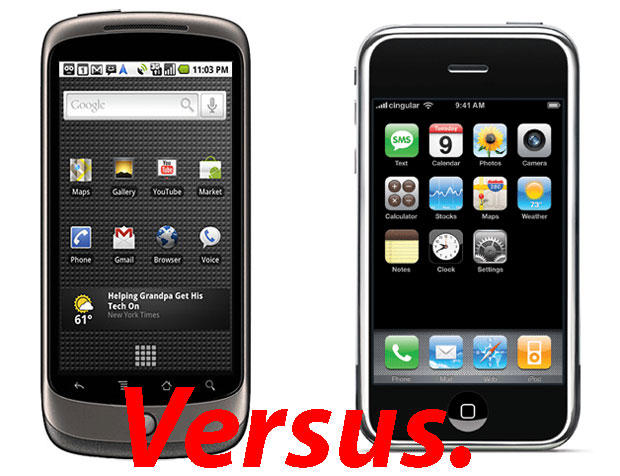
This is a guest column by Dan Burcaw, founder and CEO of Double Encore, which develops apps for iPhone (and now iPad). Dan is extremely passionate about why developers should work on iPhone apps instead of Android. Here he explains why Android developers don’t make money, and why Android apps will always be secondary to iPhone/iPad apps.
A few years ago, apps were novelties – a cute idea. Now there are over 250,000 of those cute ideas in the App Store alone – and the Android Market is catching up quickly.
Apps are like the Wild Wild West – and from a developer’s perspective, there’s definitely a shoot-out coming. Google vs. Apple. iPhone and iPad vs. Android. Who should you code for, and why? For that matter, as a consumer, which phone and apps should you choose?
On one hand, you’ve got Apple with the newly released iPad and iPhone – a well-established if tightly controlled platform. On the other, there’s the Shiny New Android platform, with its open-ended promise of apps and plenty of freedom – freedom of handset, freedom of carriers. It sounds like a developer’s paradise … which is in fact how Google markets it. But I predict that a year from now, developers and consumers alike are going to find the Android platform really disappointing.
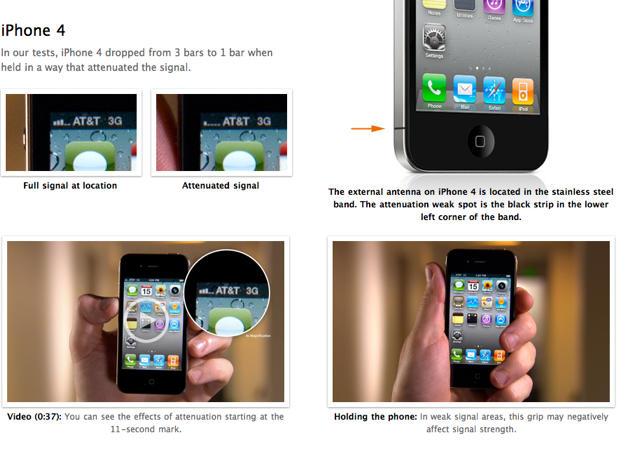
Apple’s public relations problems with the iPhone 4 antenna reached critical mass last week when Consumer Reports said they could not recommend their readers purchase an iPhone 4 because of their issue. In many ways, then, yesterday’s press conference was a specific response to the well-respected consumer advocacy site.
So did Jobs change Consumer Reports’ mind on the issue? Nope.
Consumer Reports believes Apple’s offer of free cases is a good first step. However, Apple has indicated that this is not a long-term solution, it has guaranteed the offer only through September 30th, and has not extended it unequivocally to customers who bought cases from third-party vendors. We look forward to a long-term fix from Apple. As things currently stand, the iPhone 4 is still not one of our Recommended models.
It’ll be interesting to see third-party tests on these reported smartphone death grips. For the iPhone 3GS, at least, Apple’s claims of attenuation seem more profound than reported actuality in most of the cases I’ve seen.