AT&T is waking up to the fact that it has lost its exclusive to the iPhone. Now the company is starting to try to prevent massive customer departures when the Verizon iPhone goes on sale this month. The first try directly aimed at current AT&T customers was the e-mail I received today titled: Feel free to make a call while reading this email.
Ever had a sudden hankering to crank out a few Real Racing HD laps on your iPad while river rafting? Yeah, neither have I (although that might have something to do with the fact that I’ve never been river rafting). But if the itch ever struck, it’d probably be best if the iPad was vacuum-sealed in a tablet-sized, waterproof DryCASE; luckily the company just added the tablet-sized version to their line at Macworld. The cases start at under $60 and includes a headphones/mic jack.
Oh, and think the whole whip-the-iPad-out-while-rafting thing is laughable? Yeah, so did I — until I came across this in the company’s press release:
“A new buoyant waist band has just been added by many requests by stand up paddle surfers and kayak enthusiasts.” Cool.
For the adventurous spirit wishing to go back to the 80s and live on the frontier of national cellular service, all the while carrying around a phone roughly the size of a Korean War field radio, here you go: Thumbs Up’s ’80s Phone, a case for your iPhone 4 that is sure to make you look like Gordon Gekko sent hurtling forward in time. Yours for about $20.
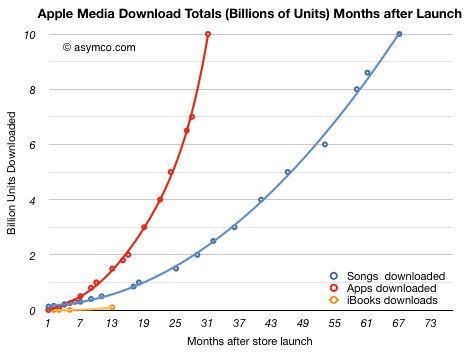
The App Store might have just racked up its 10 billionth download, but the vast majority of those apps have only been given the most cursory examination by users: in fact, according to analytics firm Localytics, 26% of all apps are only used once after they are downloaded.
Localytics’ findings aren’t specific to iOS: they studied thousands of apps across the Android, BlackBerry, iOS and Windows Phone 7 platforms. Across the board, though, one-time use was on the rise in 2010, making it more important than ever for app developers to make that first impression count.
Go down to your local Apple Store and you might just see this wonderful display for the new MacBook Air. Channeling Pixar’s Up, the display features a single helium balloon dangling aloft an 11-inch MacBook Air.
All is not as it seems, of course: nearly invisible fishing wire is being employed to create the illusion. The Air’s light, of course, but not so light that it can be lifted by a child’s balloon.
Still, this calls for an experiment: I wonder who out there is brave enough to figure out how many balloons are needed to send an Air into the stratosphere and willing to back up their math by lending their notebook and its iSight camera to the cause?
What with Apple and TV both as American as pecan pie (which, ironically, is actually way more American than apple pie), you’d think the U.S. would have a chokehold on TV-iPhone innovation. Nope — besides Al-Jazeera now streaming live news on the iPhone for free, last week Germans had a chance to watch and interact with the world’s first augmented-reality TV show.
Viewers of Galileo, a quiz show that airs on the German ProSieben channel, were able to interact with the questions on the TV screen by viewing and interacting with augmented reality versions of the questions on their iPhone screens, courtesy of augmented-reality app Junaio (For a visual demo, suffer through a short ad and watch the cute video). Not to worry though — Metaio, the German-based developer that makes Junaio, says similar stuff is on it’s way to the U.S. soon. Fantastisch!
What’s the opposite of putting a pig in lipstick? Making a leggy supermodel wear a sow mask? I’m just struggling to find the proper analogy here, because some mad man has just released a fairly exhaustive skin for iOS that makes your iPhone look like — horf — a Windows Phone 7 series device.
Hidden inside a sheathe of patents awarded to Apple today is a particularly interesting one that suggests that your future Mac just might be a slab of aluminum that glows.
If you look at the back of your MacBook, it’s pretty easy to piece together Apple’s current process in making the Apple logo glow. They carve a cut-out of the Apple logo in the MacBook lid, close it up with a sheet of opaque white plastic and when your display is on, the light leaking out causes the logo to emit light.
What Apple wants to do is make the logos and LED displays of future Macs glow without carving a hole in the aluminum. They basically want light-emitting logos and indicators to be invisible unless they are emitting light.
Search Google on your desktop browser and as long as it is HTML5 compliant, hovering your mouse over a link will give you a visual preview of that site, giving you all the more context as to whether or not it’s really the site you need.
Up until now, Google’s Instant Preview functionality wasn’t available to iPad and iPhone users, but it looks like the search giant’s on the cusp of changing that: while it hasn’t been rolled out far and wide, Google is currently in the process of testing a rollout of Instant Preview for Mobile Safari.
Once it’s live, the feature will work only if you tap the magnifying glass icon next to each search result. Tapping that icon will open a preview window that shows a snapshot of the page, which can be flicked through iOS style with your finger.
Extraneous, but neat (and, thankfully, optional). Unfortunately, it doesn’t appear that the feature is live yet, but it should be coming soon, so keep your iPads tuned.
Wondering just how you went through your 2GB allowance of data this month when all you did was do some browsing and email? A new lawsuit filed in California federal court says you’re not the only one.
The lawsuit filed by Patrick Hendricks alleges that AT&T has been systematically overcharging iPhone and iPad owners with capped data plans by falsely reporting the amount of data. According to Hendricks’ lawyers, this so-called “phantom data” can inflate the actual amount of incoming data by as much as three hundred percent.
“AT&T’s billing system for iPhone and iPad data transactions is like a rigged gas pump that charges for a full gallon when it pumps only nine-tenths of a gallon into your car’s tank,” the complaint reads.
San Franciscans like to share – heck, there are three startups here that will let you borrow your neighbor’s car for a small fee – so it seems like a great place to launch an app that lets you rent someone’s parking space.
Also, finding parking in San Francisco sucks. Enter iPhone app Park Circa, which lets you rent out your parking space to fellow drivers for a low rate or snag a spot on the fly without having to worry about having change for parking meters.
The app, in beta for iPhone and soon to come to Android and Blackberry phones, is free to download on iTunes.
For some time, makers of components required to build today’s headline-grabbing electronics, such as touch-screen phones and tablets, have been eclipsed by big-named electronics firms. The times have changed and Apple is the prime example. The latest instance is a report suggesting the Cupertino, Calif. company wants to corner the market used to build high-resolution “retina” displays for the next generation of smartphones and tablets.
Apple has inked agreements with LG Display, Sharp and Toshiba Mobile Display, the three suppliers one analyst firm says makes the technology behind the new display. Competition for display components “has reached a fever pitch” straining availability, according to iSuppli.
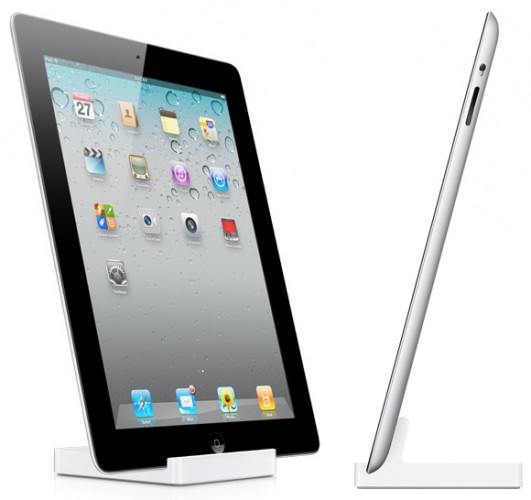
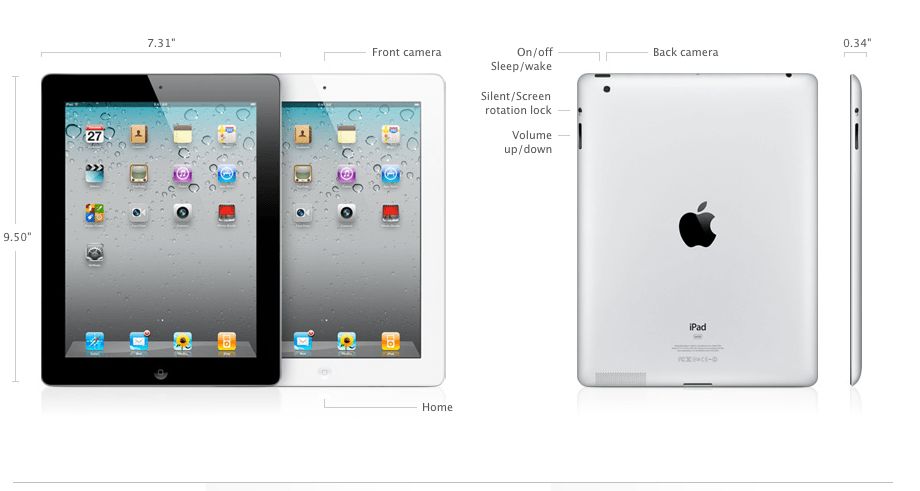
Amongst the constabulary of Mac scuttlebuttheads of which I am an earnest member, that the iPad 2 will ship with a built-in SD card slot — all the better to allow people to edit photos and video on the device, if not increase their storage capacity — is held in consensus.
The prediction is based upon the appearance of numerous iPad 2 cases coming out of Asia that not only have appropriate holes for front and rear-facing cameras and a slot for the iPad’ 2s beefier new speaker, but also a slot that seems just the right size to slide in an SD card.
AppleInsider is now throwing some cold water on those of us expecting to read SDs on the iPad 2, though, instead positing that it’s just a slot reflecting the relocation of the iPad 2’s SIM card slot.
Yesterday, Intel announced a massive hardware recall that surely stopped the hearts of a few investors: the Cougar Point chipset used for their cutting-edge Sandy Bridge CPU had a hardware bug that caused the SATA 3GB/s port to degrade over time, potentially harming hard drives and other devices connected to it.
All things considered, it’s not actually a huge issue. Intel expects that over 3 years of use it would see a failure rate of approximately 5 – 15% depending on usage model. Still, at the end of the day, Intel expects to spend a billion dollars recalling and replacing the chipset. Oof.
The good news, of course, is that a Mac owner, this won’t affect your current system a whit: there aren’t any Macs available with Sandy Bridge just yet. Here’s the bad news, though. That imminent imminent Sandy Bridge MacBook Pro refresh? That might get delayed.
In normal times, ARM would have headlined Apple’s use of its chips in some of the most iconic electronics sold. However, the Cupertino, Calif. iPad and iPhone maker has assumed the role of a black hole for component suppliers: felt, but unseen – and unspoken. As such, when ARM announced a 72 percent increase in fourth-quarter profits from chips destined for tablet computers, Apple was mentioned only as an “influential market leader.”
ARM’s fourth-quarter net income reached $46.7M, up from around $27M a year ago, the chipmaker told reporters Tuesday. “ARM continues to sign licensees with influential market leaders in an increasingly digital world, and as the industry chooses ARM technology in a broadening range of products, it further drives our long-term royalty opportunity,” the company announced.
When Apple and Verizon debuted the new CDMA iPhone 4 last month, the changes over the existing models weren’t dramatic: about the only thing new about the handset’s hardware was a slightly rejiggered antenna design and a nudged volume button or two.
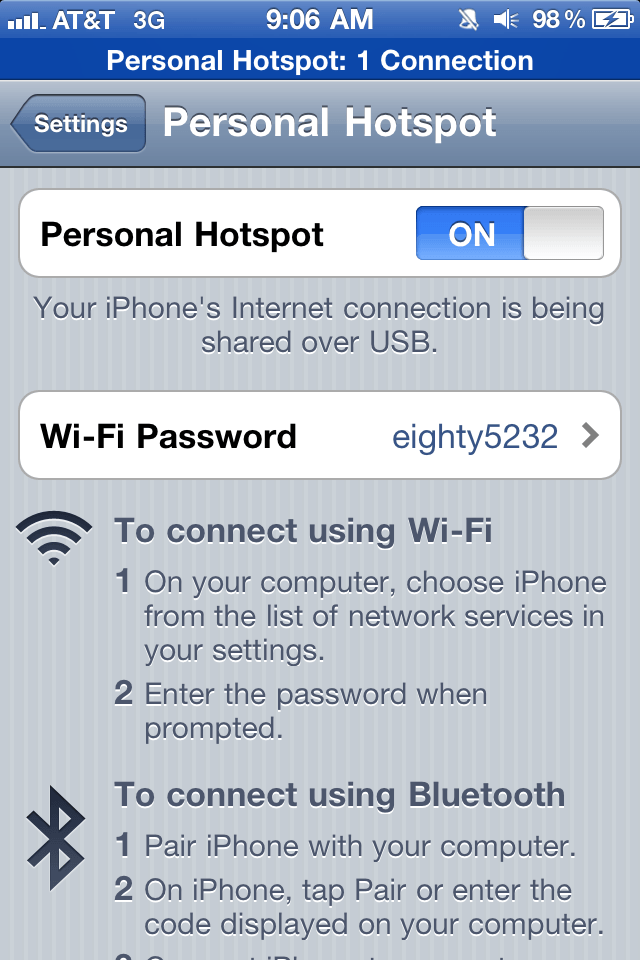
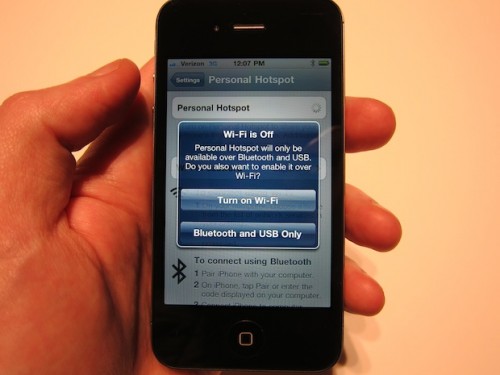
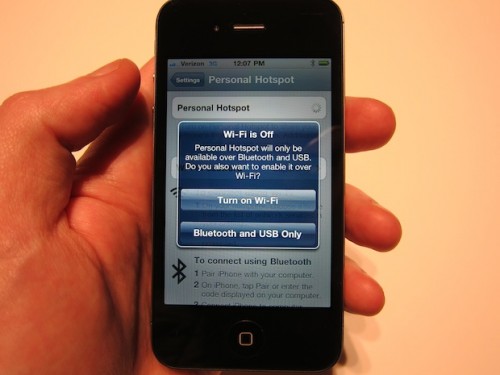
The software, though, was different enough to take note of: boasting the version number iOS 4.2.5, it included support for the new Personal Hotspot settings feature which, in Verizon’s case, will allow handset owners to set their iPhone as a WiFi hotspot for up to five connected devices.
It now looks like Apple’s made some tweaks to iOS 4.2.5, bumping the version number to iOS 4.2.6, which you can now download. It’s a 652MB file, and given the slight nudge in version numbers, it’s probably a small bug fix.
As for when the rest of us GSM hoi polloi will get the Verizon iPhone’s Personal Hotspot feature, it’s reckoned that iOS 4.3 will bridge both the CDMA and GSM iPhones and bring the same features to all devices sometime in February. Hoorah!
Although Amazon’s Kindle platform seemed to stumble a bit in the wake of the iPad’s debut, mostly from surprise, they’ve since rallied and continued to increase their lead as the biggest e-bookstore on Earth. In fact, according to Amazon’s own metrics, they now sell more Kindle e-books than they do paperbacks.
How’d Amazon compete with iBooks? Ubiquity: Kindle software is available on almost every modern OS out there, and a Kindle book purchased on one can be read on another. Amazon managed to achieve this feat by cutting middlemen out of the transaction entirely: if you purchase a book in-app, you simply are directed to an Amazon webpage. It’s all done on the Internet.
If a new report coming from The New York Times is anything to go by, though, Apple may be ready to strike Kindle on iOS down for the count unless it agrees to utilize iTunes’ own in-app purchase system, though.
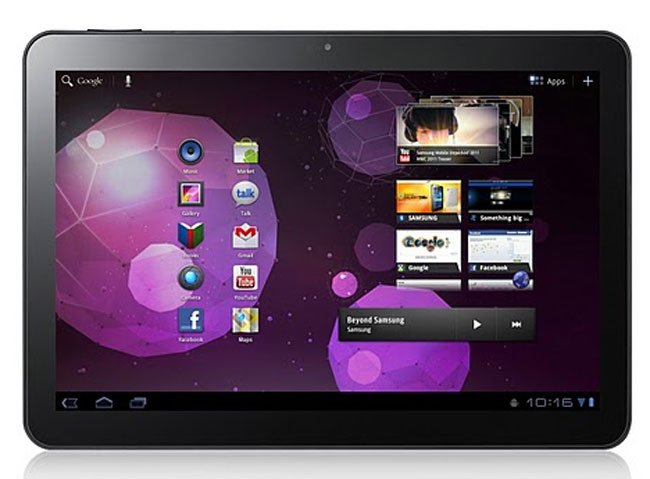
Samsung may have helped Android attain the top spot in smartphone sales, but the open-source operating system from Google hasn’t done the same for the handset maker’s attempt to rival Apple’s iPad tablet. According to one analyst firm, 16 percent of Samsung Tab devices are being returned.
“Consumers aren’t in love with the device,” ITG Investment Research analyst Tony Berkman told the New York Post recently. ITG tracked sales of the Tab between its November debut through Jan. 15. By comparison, the iPad sold through Verizon, reportedly has a 2 percent return rate.
I think performer/journalist Mike Daisey has very important things to things to say about Apple, the electronics industry, and modern industrial production.
The one news network that can be counted upon for on-the-ground reporting in the ever-volatile Middle East is Al Jazeera — the Arabic language’s answer to FOX, CNN and the BBC.
Fortunately, for those who do not speak or understand Arabic, the preeminent Middle Eastern news network funds a team of English speaking journalists who broadcast under the network’s imprimatur, and whose content is available to Apple iOS device users via the free app, Al Jazeera English Live.
More than a million people could march in Egypt Tuesday, a response to calls dating back two weeks, when young dissidents posted a protest event on Facebookin the wake of the ousting of Tunisia’s authoritarian strongman Zine el-Abidine Ben Ali.
As the situation in Egypt began to heat up seriously Monday, with the government systematically shutting down ISP and mobile communications services, as the country’s military refused to fire upon the citizenry protesting dictator Hosni Mubarak’s 30 year rule, and his Vice President indicated a willingness to “speak” with the opposition — there’s no time like the present to try and keep abreast of events as they unfold.
UPDATE: this post has been edited from it’s original text to reflect a more accurate depiction of Al Jazeera’s English-language broadcasting.
Macworld staffers Christopher Breen and Ben Long wowed attendees at iPad Supersessions during Macworld 2011 last week, illustrating their talks with pristine images projected directly from their iPad’s screen interface.
Breen revealed their dirty how-to secret, which had been the subject of some oblique chatter in the Expo’s Media Center after their talk, in a post Monday on the Macworld website: they used a jailbroken iPad and “illicit” software to accomplish the feat.
In his web posting Breen wrote “only Apple [has] the secret for projecting an [iPad’s] entire interface,” suggesting there may be a method for projecting images from an iOS device using “display out” data transmitted to a standard projector without jailbreaking. But so far as anyone interested knows, Apple treats that as proprietary information.
Where there’s a will, there’s a way, however, and into the breach, as usual, goes Cydia and redsn0w.
The 150-year-old catalog giant Hammacher Schlemmer has released a classy iPhone stand that turns your device into a desktop handset.
Hammacher’s iPhone Desktop Handset looks good for cradling under your chin, and definitely does away with iPhone 4 proximity sensor issues.
Seems like old-school handsets are making a comeback. The handset is reminiscent of the iFusion Smartstation office phone/dock that premiered at Macworld last week. But the Hammacher handset plugs into the headphone jack instead of working via Bluetooth.
The Hammacher handset is $60, which seems a bit steep, but is cheaper than the $200 rotary-style iRetrofone Base.
Marking the 27th anniversary, Hayden describes the utterly chaotic process behind the making of what’s been called “the best TV commercial ever.” Everyone hated it, and no one wanted it to run except Steve Wozniak, who offered to pay half the costs himself.
The first version of the spot was more Jetsons than Metropolis. The intention was to remove people’s fears of technology at a time when owning your own computer made about as much sense as owning your own cruise missile. We wanted to democratize technology, telling people that the power was now literally in their hands.
Back in 1984, Apple introduced the Mac with its famous 1984 Superbowl ad. Now Motorola is invoking some of the same ideas to promote its Xoom tablet, but this time, Apple is Big Brother.
Motorola’s new Superbowl Ad , “Goodbye 1984,” says that 2011 looks a lot like 1984:
One authority. One design. One way to work.
It’s time for more choices. It’s time to explore. It’s time to live a free life.
The ad is pretty bare-bones, and it’s not clear whether it will run during the Superbowl or is just a teaser or a trial balloon.
Funny how often Apple is compared to Big Brother these days. Over the weekend, The New York Times invoked Microsoft in its heyday with its market-crushing “platform” — a position Apple finds itself in now, says the Times.
Here’s Motorola’s ad below, and Apple’s original 1984, just for comparison purposes.