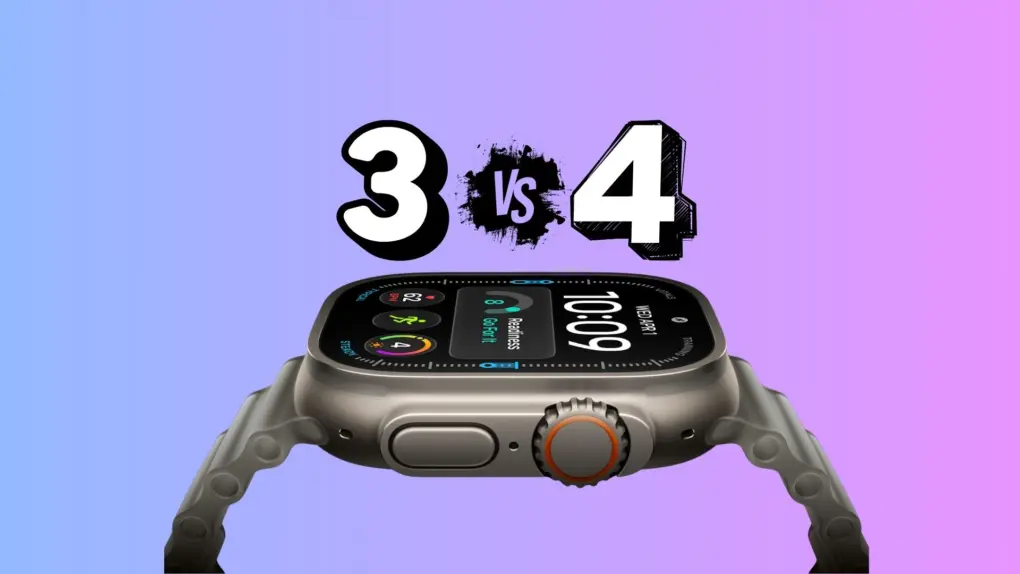
Apple Watch Ultra 4 arrives a year after the Ultra 3, building on its predecessor’s improvements. While the Ultra 4 looks the same, it features massive upgrades, including a new chip and new optical and electrical heart sensors.
There’s also Audio Intelligence, longer battery life and new recovery insights. But are these upgrades enough to justify upgrading from a year-old Ultra 3?
Apple Watch Ultra 4 vs. Ultra 3
Like the Apple Watch Series 12, Apple’s latest rugged smartwatch pairs a new S11 chip with a redesigned Health Sensing System. Together, they enable more frequent and accurate health measurements, along with a readiness score that helps put your activity and recovery data in context.
There are several other smaller improvements, too, including longer battery life and faster charging. So, time to ditch your Apple Watch Ultra 3 and get the Ultra 4 already?
Table of contents: Apple Watch Ultra 4 vs. Ultra 3 comparison
- Design: Familiar looks, slightly more weight
- Display: The same big, bright screen
- Chipset: S11 brings new capabilities
- Health and fitness: A clearer picture of recovery
- Audio Intelligence: Catch what you missed
- Connectivity: Satellite support carries over
- Battery life: More time between charges
- Price: The same $799 starting point
- Conclusion: Should you upgrade?
Design: Familiar looks, slightly more weight
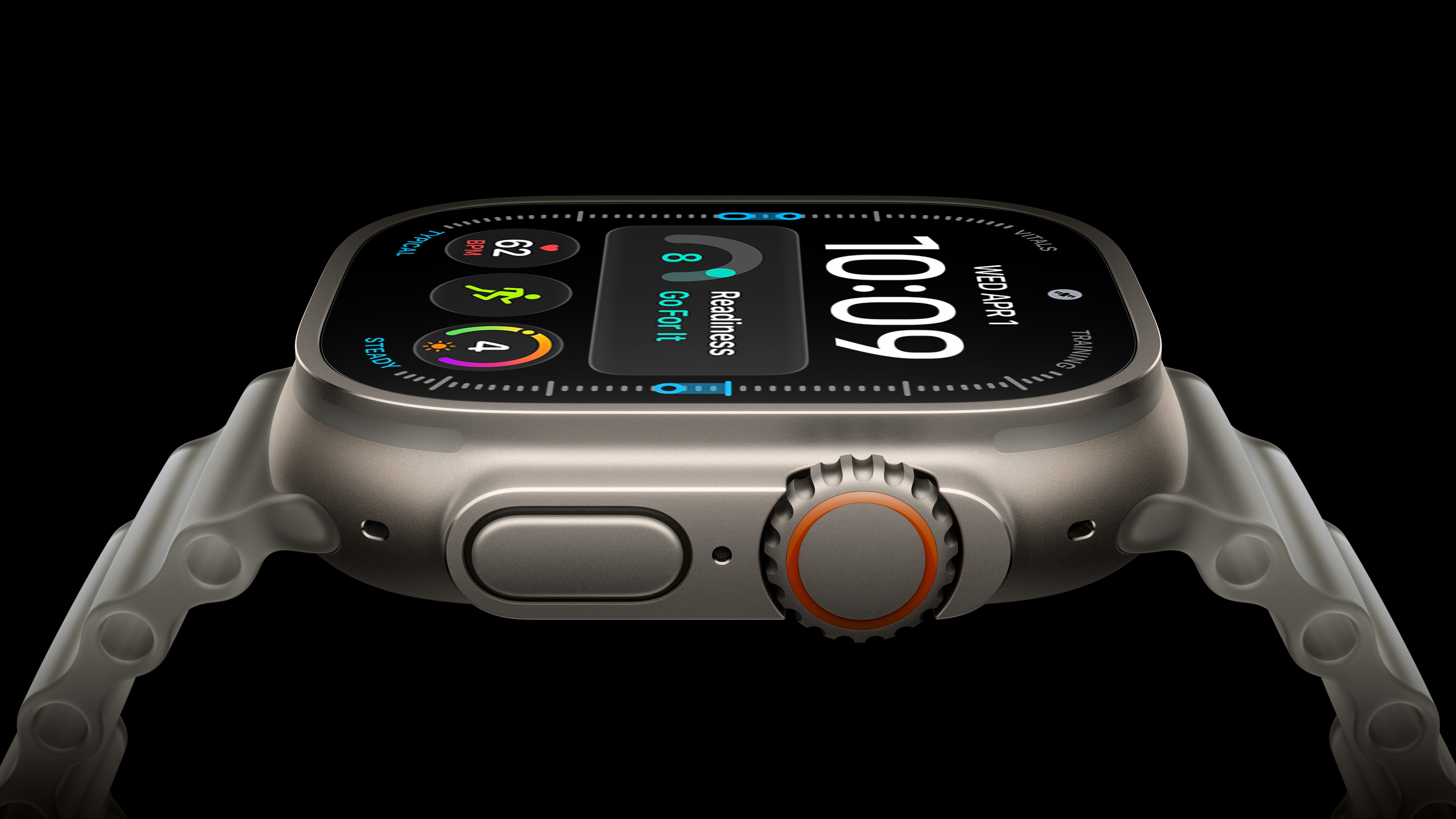
Photo: Apple
- Apple Watch Ultra 4: Grade 5 titanium; natural or black; 49 × 44 × 12mm; 63g or 63.1g
- Apple Watch Ultra 3: Grade 5 titanium; natural or black; 49 × 44 × 12mm; 61.6g or 61.8g
From a design viewpoint, Apple Watch Ultra 4 packs no changes. So, if you didn’t like the rugged and bulky appearance of the Ultra 3, its successor won’t change that.
The Apple Watch Ultra 4 comes in the same natural and black titanium options. Apple notes that it has “re-architected” its latest Ultra smartwatch to “provide continuous high-fidelity health monitoring using the Health Sensing System.” However, this is an internal change and does not make any visible difference to the watch
You still get the customizable Action button, protected Digital Crown and flat sapphire crystal covering the display. Both watches also retain 100-meter water resistance, IP6X dust resistance and support for recreational scuba diving to 40 meters. The depth gauge and water-temperature sensor carry over, too.
The Watch Ultra 4 is just a wee bit heavier than Ultra 3, but that’s not a difference you’ll notice.
Display: The same big, bright screen
- Apple Watch Ultra 4: Always-on, wide-angle LTPO3 OLED; 422 × 514 pixels; up to 3,000 nits; sapphire crystal
- Apple Watch Ultra 3: Always-on, wide-angle LTPO3 OLED; 422 × 514 pixels; up to 3,000 nits; sapphire crystal
Like the design, the Apple Watch Ultra 4 carries over its predecessor’s display, right down to the minimum brightness and refresh rate. It packs a 1,245 mm² screen area with a 1Hz always-on refresh rate and minimum brightness of 1 nit.
On the bright side, this is still an Ultra-class large display. So, even if you are coming from an older Apple Watch model, you won’t be disappointed.
Chipset: S11 brings new capabilities

Photo: Apple
- Apple Watch Ultra 4: S11 chip; 64-bit dual-core processor; four-core Neural Engine; 64GB storage, 4GB RAM
- Apple Watch Ultra 3: S10 chip; 64-bit dual-core processor; four-core Neural Engine; 64GB storage, 2GB RAM
Apple Watch Ultra 4 uses the same S11 chip as the Series 12. This is Apple’s first major SoC upgrade for its smartwatch lineup in years, and it shows.
Besides performance and efficiency improvements, the S11 chip powers the Apple Watch Ultra 4’s advanced and more accurate health tracking system.
Thanks to an updated pedometer model, which uses machine learning algorithms, Apple says the new Ultra 4 “offers the most accurate step tracking of any smartwatch.” There’s a new Steps complication to go along with it
The S11 includes a Secure Exclave, a dedicated isolated area on the chip that processes audio separately from the rest of the system. It’s the key that enables Audio Intelligence-powered features.
For Ultra 3 owners, these new capabilities offer a stronger reason to consider upgrading than the promise of a faster chip alone.
Health and fitness: A clearer picture of recovery
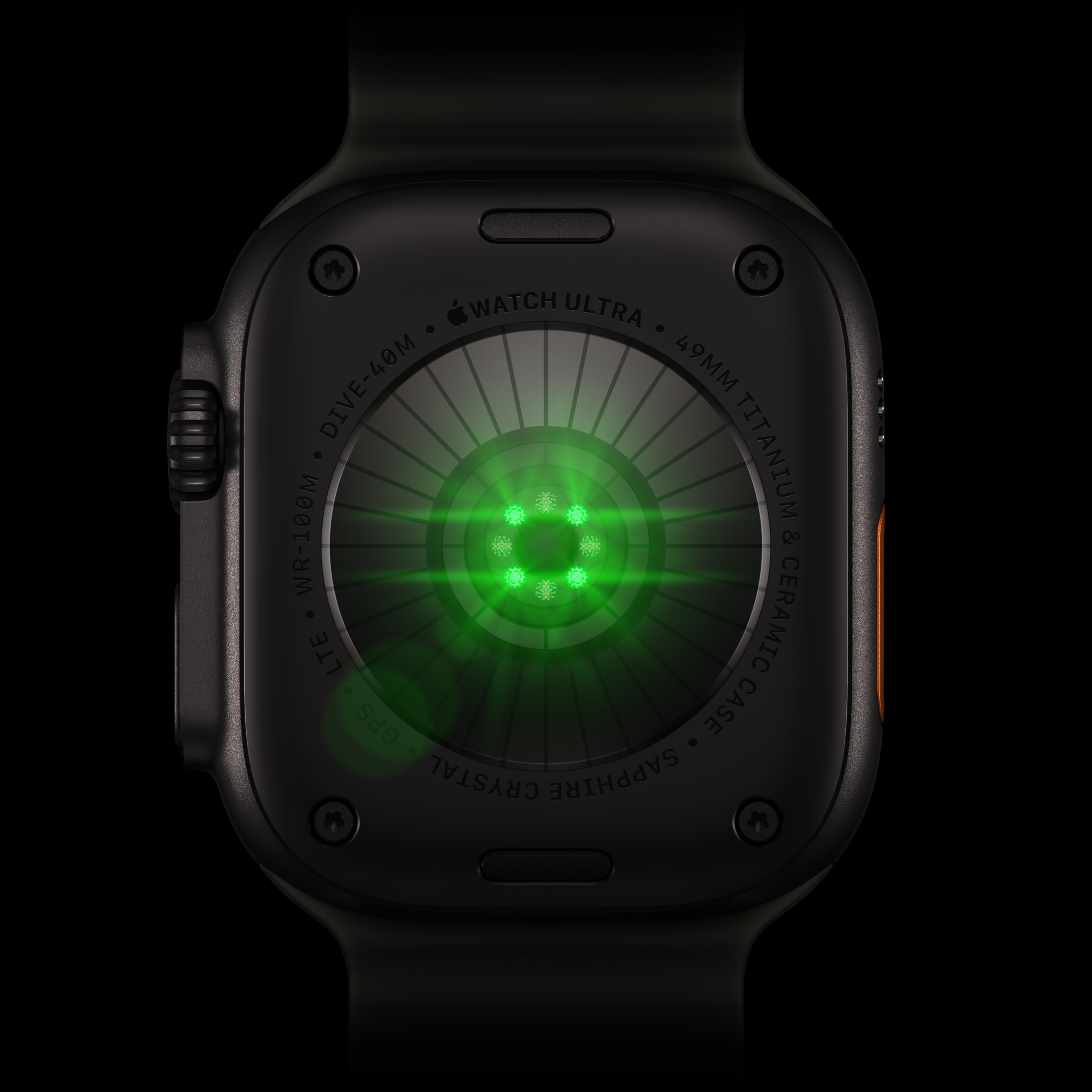
Photo: Apple
- Apple Watch Ultra 4: Second-generation electrical heart sensor and always-on optical heart sensor; readiness score, recovery HRV and daytime vitals
- Apple Watch Ultra 3: Electrical heart sensor and third-generation optical heart sensor; existing heart-rate and HRV tracking, training load and overnight vitals
From a health and fitness perspective, the Apple Watch Ultra 4 packs a significant upgrade over its predecessor. It features a new Health Sensing System, which uses the new, larger and more power-efficient green LEDs along with the S11 chip to deliver better accuracy.
The Apple Watch Ultra 4 takes background heart rate readings every five seconds and HRV measurements up to 24 times more often than the Ultra 3.
This not only helps improve data accuracy but also powers new recovery insights. Your overnight vitals include a recovery HRV score, while a new daytime view lets you check how your measurements compare with your usual range.
Readiness brings the information together. It considers recent activity, training load, vitals and sleep to produce a score from zero to 10, along with guidance such as “Recover” or “Go For It.”
The score updates as new data arrives, including after an intense workout.
If you follow a training plan, the Ultra 4’s readiness score and more detailed recovery insights could be useful. It may help you decide when pushing through a hard session may not be a good idea.
In case you don’t rely on your Ultra smartwatch for health insights, the health-focused upgrades on the Ultra 4
The Apple Watch Ultra 3 packs all the basic health and fitness features, including ECG, hypertension notifications, sleep apnea, sleep scores, blood oxygen and wrist-temperature sensors. But it does not do as much with the data as the Ultra 4.
Audio Intelligence: Catch what you missed
- Apple Watch Ultra 4: Supports Sound Recognition, faster automatic Shazam identification, Live Rewind and Siri Recap
- Apple Watch Ultra 3: Does not support the new Audio Intelligence suite
Beyond the new health features and faster S11 chip, the Apple Watch Ultra 4 packs another trick up its sleeve: Audio Intelligence.
Sound Recognition helps you notice important sounds, while Shazam automatically identifies music playing around you.
Live Rewind is the most impressive feature in the Audio Intelligence suite. It helps you catch something you missed in a conversation. Double-press the Digital Crown, and the watch displays the previous 15 seconds of speech as text.
Apple does not save audio recordings or play them back for privacy reasons.
Siri Recap builds on Live Rewind. It creates a title and a summary of the key points, which you can review in the Siri app. You choose when it operates, either switching it on manually or setting a schedule based on time and location. Unsaved summaries automatically disappear after seven days.
Both features are optional, and Apple says they do not create or store audio recordings.
Live Rewind and Siri Recap arrive in beta later in 2026. They also require an Apple Intelligence-enabled iPhone 16 or later, excluding the iPhone 16e. They will initially support English and won’t be available in the EU.
Connectivity: Satellite support carries over
- Apple Watch Ultra 4: Dual-frequency GPS, 5G RedCap/LTE, Wi-Fi 4, Bluetooth 5.3, second-generation Ultra Wideband and satellite communications
- Apple Watch Ultra 3: Dual-frequency GPS, 5G RedCap/LTE, Wi-Fi 4, Bluetooth 5.3, second-generation Ultra Wideband and satellite communications
There are no major connectivity changes between the two Ultra generations. The Apple Watch Ultra 4 retains support for dual-frequency GPS, 5G RedCap/LTE and Ultra Wideband. If anything, it drops support for GLONASS, though that should not lead to accuracy changes.
On the flip side, Apple says the Ultra 4 has the most accurate on-device GPS in a sports watch.
Battery life: More time between charges
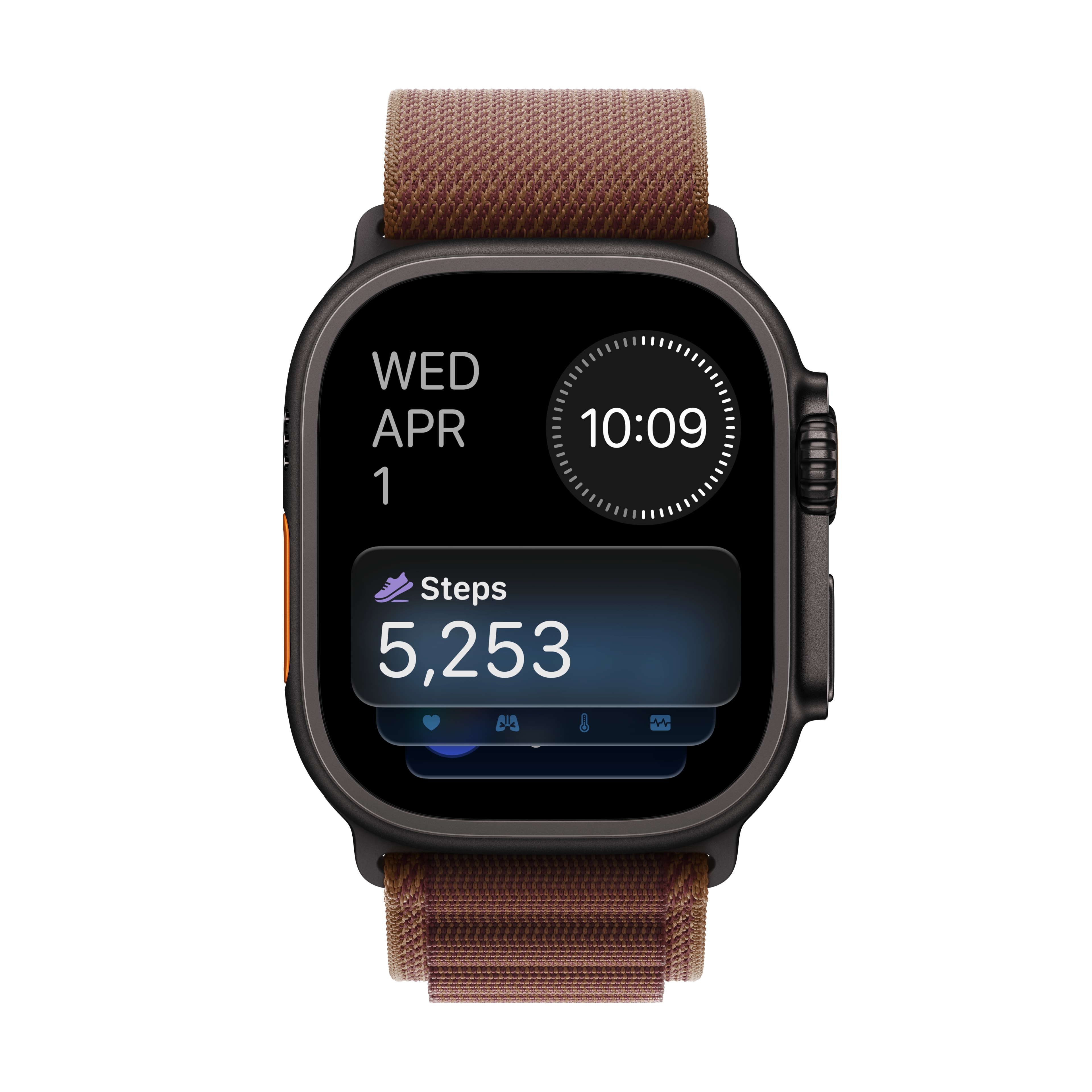
Photo: Apple
- Apple Watch Ultra 4: Up to 50 hours of normal use; 84 hours in Low Power Mode; a 15-minute charge for up to 18 hours of use
- Apple Watch Ultra 3: Up to 42 hours of normal use; 72 hours in Low Power Mode; a 15-minute charge for up to 12 hours of use
Building on the Ultra 3’s battery life improvements from last year, the Ultra 4 takes things up a notch. Apple says it should last up to 50 hours in normal use. That’s eight hours more than its predecessor, and the first Apple Watch to cross the two-day battery life mark.
Low Power Mode brings a bigger improvement, increasing the total runtime by 12 hours to 84 hours.
Battery life during extended workout gets a boost, too. Apple’s newest Ultra watch offers up to 25 hours in Extended Workout mode with full GPS and heart-rate readings. That’s five hours more than Ultra 3’s 20-hour outdoor-workout rating in Low Power Mode.
You can stretch the battery life to 45 hours during outdoor run, walk and hike tracking. This is made possible by a new Max Extended Workout mode, which takes GPS readings every second. However, it disables alerts, splits and certain other metrics.
The longer battery life comes with slightly faster charging. Apple says a 15-minute quick top-up enables the Apple Watch Ultra 4 to provide up to 18 hours of use, six hours more than Ultra 3.
The total charging time is the same, though, with both watches taking 45 minutes to go from 0% to 80%.
While not a radical improvement, the Apple Watch 4’s longer battery life could be appealing if you regularly push your current Apple Watch Ultra’s battery to its limits.
Price: The same $799 starting point
- Apple Watch Ultra 4: Starts at $799
- Apple Watch Ultra 3: Launched at $799
Apple keeps the Ultra 4’s U.S. starting price unchanged. Preorders are open, with store availability beginning September 18, 2026. Ultra 4 pricing, Ultra 3 launch pricing.
If you’re buying your first Ultra and the two models cost about the same, Ultra 4 makes more sense. Its new sensors and longer battery life give you more for your money.
A substantially discounted Ultra 3 could still be appealing if you mainly want the large display, rugged design and existing outdoor features. The savings need to be meaningful enough to justify passing up the new health hardware and extra endurance.
Conclusion: Should you upgrade?
The Apple Watch Ultra 4 makes the strongest case for people who want more recovery guidance or regularly push Ultra 3’s battery to its limits. If either describes how you use your watch, the upgrade is worth considering.
For most Ultra 3 owners, though, there’s little urgency. Your current watch already offers the same display size, familiar rugged design and core connectivity features.
If Audio Intelligence is the main attraction, wait until Live Rewind and Siri Recap arrive and reviewers can test them properly. For everyone else, the decision comes down to whether better recovery insights and longer endurance would meaningfully improve daily use.

Rajesh has been writing about consumer technology for over a decade, with a strong focus on iPhones, Macs and Apple’s ecosystem. He enjoys digging into Apple software updates, hardware changes, and discovering new Mac apps that make work faster and more enjoyable.
You can reach out to him at mail[at]rajeshpandey.me.

