D. Griffin Jones was a writer, podcaster and video producer for Cult of Mac. Griffin has been a passionate computer enthusiast since 2002, when he got his first PC — but since getting a Mac in 2008, he hasn’t turned back. His skills in graphic and web design, along with video and podcast editing, are self-taught over 20+ years. Griffin has a bachelor’s degree in computer science and has written several (unpublished) apps for Mac and iOS. His collection of old computers is made up of 40+ desktops, laptops, PDAs and devices, dating back to the early ’80s.
Griffin writes for his personal blog, Extra Ordinary, and is currently looking for work.
Watch the Keynote in just 1.6% of the time. Image: Apple/D. Griffin Jones/Cult of Mac
During the WWDC25 keynote on Monday, Apple announced the next versions of every operating system with a new naming scheme and fresh look. iOS has an all-new interface with redesigned Camera, Messages and Phone apps; macOS has a brand-new Spotlight; iPadOS has supercharged multitasking.
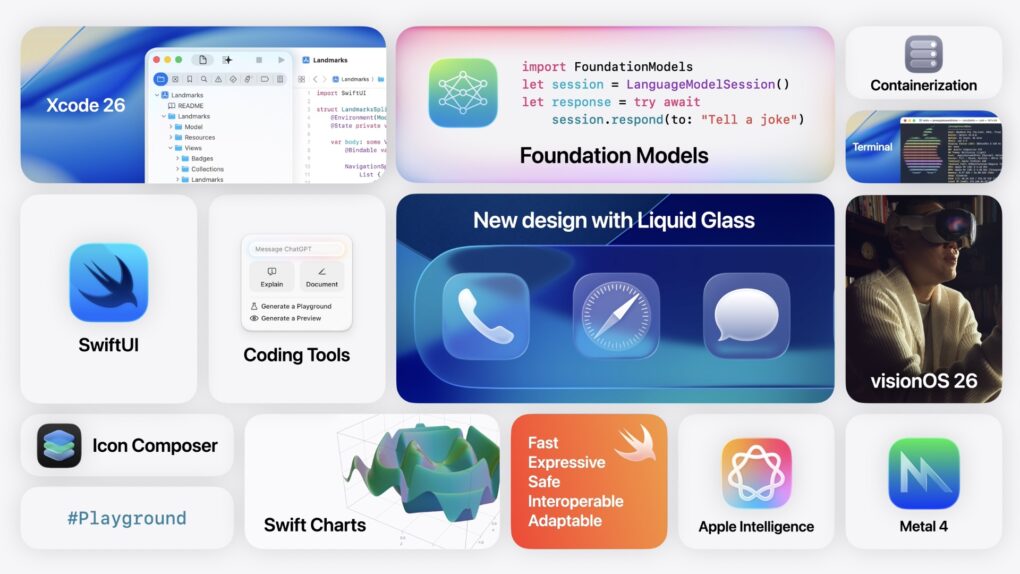
Apple went into more detail on its new software releases in the Platforms State of the Union. Image: Apple
At the Platforms State of the Union, Apple detailed how the new Liquid Glass design works, how Apple Intelligence can be added to third-party apps, how Swift Assist in Xcode will work with third-party AI models and more.
This event goes into all the technical details behind the morning’s announcements. Apple showed how developers can update their apps with the new design and use the latest developer tools.
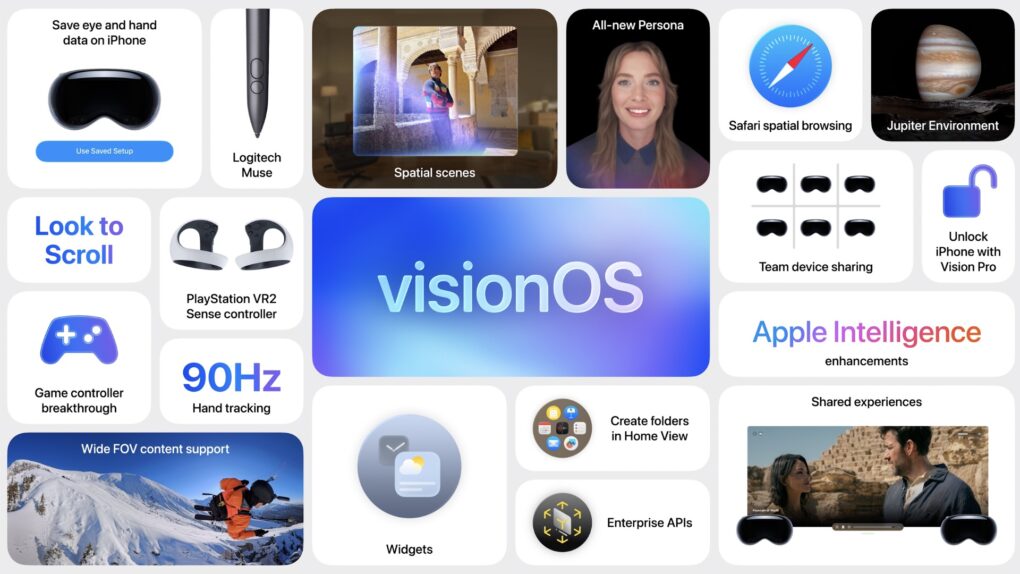
visionOS 26 adds many new spatial and sharing features. Image: Apple
visionOS 26, the next major software release for the Apple Vision Pro, will bring spatial widgets, better Personas, new accessories, more integration with iPhone, more immersive content, Look to Scroll and so much more to the powerful headset.
Apple Vision Pro is “a revolutionary spatial computer that seamlessly blends digital content with the real world,” says Mike Rockwell, Apple’s vice president of the Vision Products Group. “With brand-new ways for Vision Pro owners to connect, explore, work together, and enjoy content,” visionOS 26 is a huge update.
Announced after iOS 26, watchOS 26 and macOS Tahoe at WWDC25 on Monday, visionOS 26 will be available today as a developer beta and will release publicly for everyone this fall.
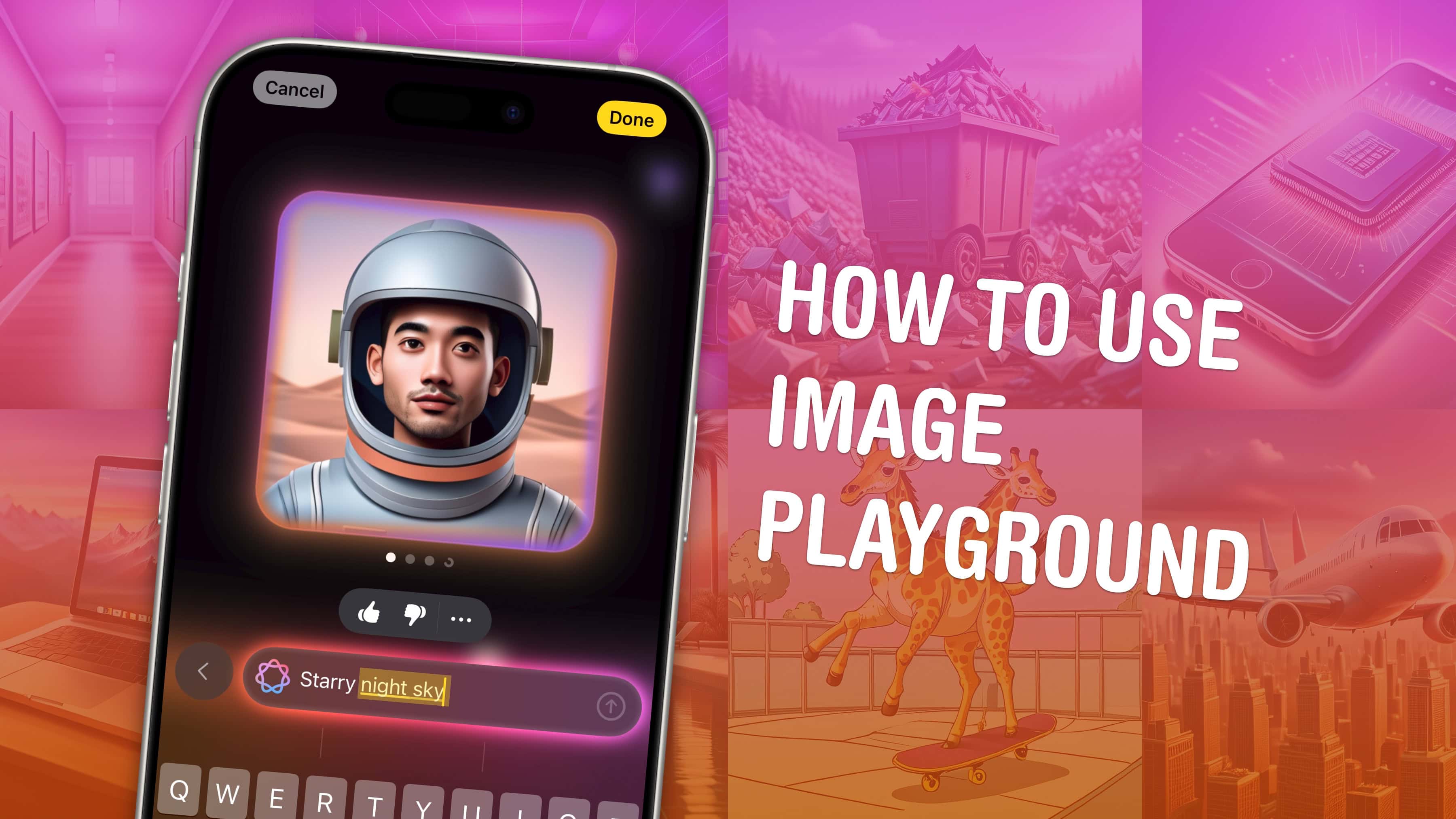
Apple’s on-device image generating app. Image: D. Griffin Jones/Cult of Mac
Apple’s Image Playground is a free app for iPhone and other Apple devices that lets you generate unlimited AI images for free. You can generate images based on your friends, from a text prompt or totally from scratch, in a wide variety of themes and styles.
It’s part of Apple Intelligence, the growing set of AI features that work on the latest iPhones, Macs and iPads. Here’s how to use Image Playground.
This could be a big year for Apple’s big new platform. Image: Apple/D. Griffin Jones/Cult of Mac
WWDC25 is a mere days away. While the hottest news is that iOS, macOS, watchOS and other platforms will get a visual redesign borrowed from visionOS, the question left unasked is … what’s coming to visionOS?
Rumors say there will be new advanced eye tracking features and support for VR hand controllers. But with a full twelve months of development, Apple probably has much more in store for its premium spatial computer.
Here’s what Apple may announce on Monday for the Vision Pro.
Straighten out images that were taken slightly askew. Image: D. Griffin Jones/Cult of Mac
If you’re traveling this summer, there’s a neat editing trick to get spectacular shots of landmarks or murals. On the iPhone, you can crop, skew and rotate a photo using the Photos app’s advanced editing tools to make adjustments you might not have thought were possible.
You can quickly fix the perspective or angle a picture was taken from, correct the fisheye distortion on an ultra-wide photo and more. You can also precisely rotate and skew the perspective, for those times when you don’t realize until it’s too late that your shot is slightly to the side or slightly off-center.
The best part is you can can fix it all directly in the Photos app. Here’s how.
The A20 chip will arrive in 2026 with the iPhone 18 generation. Image: D. Griffin Jones/Cult of Mac
Apple’s A20 chip, which likely will power the iPhone 18 Pro and folding iPhone, reportedly will use a new technology that integrates RAM inside the chip. Bringing the memory closer to the CPU, GPU and Neural Engine might provide significant boosts in performance, battery life and thermal efficiency.
Set up Game Center and you can compete with friends in the games you both play. Image: Apple/D. Griffin Jones/Cult of Mac
Apple’s Game Center service lets you compete with friends and unlock achievements in the games you play. You can see where you rank among your friends — and globally. Achievements will give you a list of missions to accomplish to prove your mastery of the game. You can even play live multiplayer games on all your separate devices using SharePlay.
WWDC25 won’t be as Apple Intelligence-packed as last year. Image: Apple/D. Griffin Jones/Cult of Mac
Apple doesn’t have as many Apple Intelligence features to announce at WWDC25 as it did during last year’s developer conference. However, a handful of new AI features should arrive, including Apple Intelligence-generated Shortcuts automations, an Apple Intelligence API for developers, and AI-powered health tips. Apple’s foundation language model itself will also be improved, with versions in four different sizes currently in testing.
Here’s what to expect on Apple Intelligence next Monday during the WWDC25 keynote.
Freeform is a weird and very underrated Apple app. Image: D. Griffin Jones/Cult of Mac
Apple’s Freeform app for iPhone, iPad, Mac and Vision Pro is a digital whiteboard you can use to brainstorm or gather ideas in one infinitely scrolling canvas.
You can use Freeform to throw together ideas with a colleague. You could build a presentation using Freeform’s scenes, kind of like using Prezi. Or, you can use Freeform as a drawing app with your iPad and Apple Pencil.
Freeform comes with all kinds of features for adding text boxes, rich links, drawings, clip art, sticky notes, files, photos, videos and more. It’s a great way to build a mood board or connect big ideas.
Is the best copy of a picture you have blurry and pixellated? Use Google’s image lens tool to find the original. Image: D. Griffin Jones/Cult of Mac
You can use Google reverse image search to find a higher-resolution (and higher-quality) original version of an image online. If you’re putting together a presentation, making a YouTube video or writing a blog post, you want the highest quality versions of every image. You might feel stuck if you only have a low-quality picture and you need to fill a bigger space.
Google reverse image search will let you upload a photo and find matches all around the web. You can find out where it’s from to cite the source and save the uncompressed original image. Let me show you how Google reverse image search works.
Run Windows XP, Mac OS 9, Windows 11, Super Mario Bros. and more on your Mac. Screenshot: D. Griffin Jones/Cult of Mac
Collecting old video game consoles and vintage computers is a fun hobby, but keeping all that hardware working can quickly become an expensive, never-ending task — not to mention all the space you need just to store the gear. You might instead (wisely) opt to play your favorite games and software using emulators for your Mac.
In this guide to Mac emulation, I’ll walk you through the best apps you can use to accomplish the two most common scenarios: playing old video games, and taking Classic Mac OS for a test drive on a modern Mac. Plus, I’ll wrap up with the easiest way to virtualize modern operating systems like Windows and Linux on your Mac. (This handy virtualization software also works for old and obscure computer operating systems.)
Best of all, each of these Mac emulation methods is free and open source.
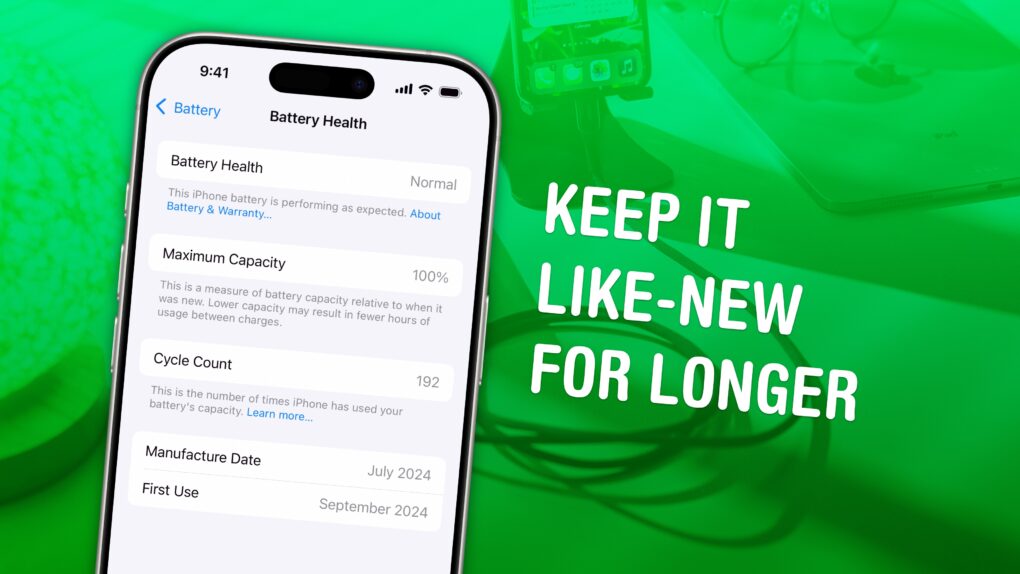
Maximize your long-term battery health. Image: D. Griffin Jones/Cult of Mac
Adopting a few smart habits can preserve your iPhone battery health, greatly extending the device’s useful lifespan.
By simply tweaking how you use and charge your device, you can keep your battery from going bad, which is often cited as a reason to upgrade to a new iPhone. Just make these easy lifestyle changes, and your iPhone should last longer in the long term.
Keep reading or watch our video to find out how to boost your iPhone battery health.
Suck away battery life, that is. Image: D. Griffin Jones/Cult of Mac
There are a bunch of not-great apps like Spotify and Slack that suck battery life, because they basically run a full copy of Google Chrome inside each window. Chrome is a notorious energy hog, and running multiple copies of its Blink engine inside four different apps can take unnecessary memory and resources.
But you can create your own, much better versions using web apps based on Safari. Web apps are easily made in Safari and live in your Mac’s Dock.
For apps that you use every day, like Spotify, Discord and Slack, it’s easier to launch them from the Dock and move them around separately from your browser tabs. Let me show you how they work.
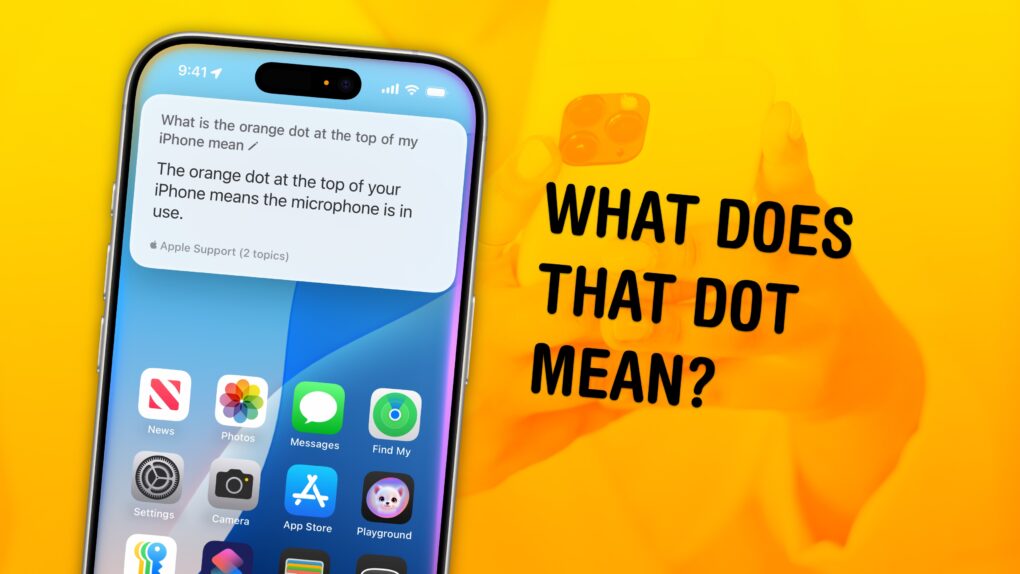
A long-standing mystery solved. Image: D. Griffin Jones/Cult of Mac
What does the orange dot on your iPhone mean — and while we’re at it, how about the green dot? These mysterious dots can appear in the Dynamic Island of newer iPhones, or in the upper right corner of older models, near the battery icon.
The dots are part of Apple’s vast system of privacy and security features built into the iPhone. Of course, these privacy features only work if you know what they mean and how to use them — so keep reading for the answer below.
The next major update to visionOS could include eye scrolling, for navigating long lists and webpages entirely hands-free. The Vision Pro already uses eye- and hand-tracking for navigating its interface; if true, this would take it to the next level.
Scrolling is one of the most fundamental interactions with a smartphone. But it hasn’t translated as well to the Vision Pro, where you need to pinch two fingers together and move your hand.
If visionOS 3 lets you scroll simply by looking at the bottom of a window, that could be a powerful new feature of the headset.
★★★★★
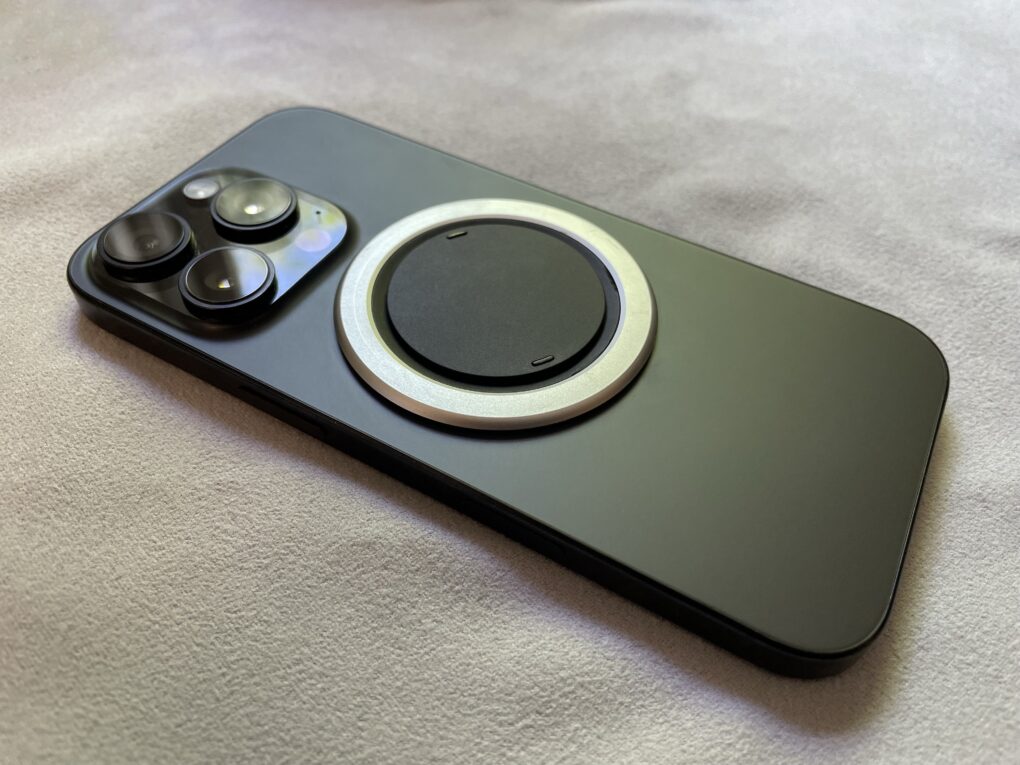
It’s thinner than the lower level of the camera plateau. Photo: D. Griffin Jones/Cult of Mac
If you want both a grip on the back of your phone for ergonomics and MagSafe charging for convenience, you might think there are no good options. Well, finally, there is — the Snap Grip Luxe combines both in an incredibly slim and clever design.
It’s truly the best of both worlds — you have a better grasp on your phone, so you won’t drop it; you have a built-in stand for watching videos anywhere you go; and you can still use your MagSafe chargers or even battery packs. You can freely detach it and put it on a different phone case if you want.
Cleverest of all, it’s only 2.5mm thin, so it doesn’t add any more bulk to the back than the camera bump your phone already has.
Your Apple Watch is right there, all the time, to help out. Image: D. Griffin Jones/Cult of Mac
The Apple Watch Translate app can help you quickly speak in a different language while you’re abroad, right from your wrist. Translate between 20 different languages by speaking out loud, play translations out of your Apple Watch speaker and build a list of favorite phrases you can play instantly.
Apple Translate doesn’t support as many languages as the more popular Google Translate — but Google doesn’t have an app for the Apple Watch. The fastest and most convenient way to speak another language from your wrist is with Apple’s app.
Let your computer handle sending emails. It’s what they’re good at. Image: D. Griffin Jones/Cult of Mac
You can save time — and make sure your messages always go out when they’re supposed to — when you schedule email from the Apple Mail app. You can set your mail to deliver at any date or time in the future, whether it’s next Monday at 9 a.m. sharp, in two weeks’ time or even years from now.
If you work with someone in a different time zone, you can schedule messages to arrive just when they start their workday, which is especially helpful if the allotted time is in the middle of the night for you. You can schedule a series of reminders for that one irritatingly forgetful client of yours. Or, if you work remotely, you can try (and risk) prewriting messages to your boss to maintain the illusion of regular work. You can even schedule emails to remind you of an important anniversary, years down the line.
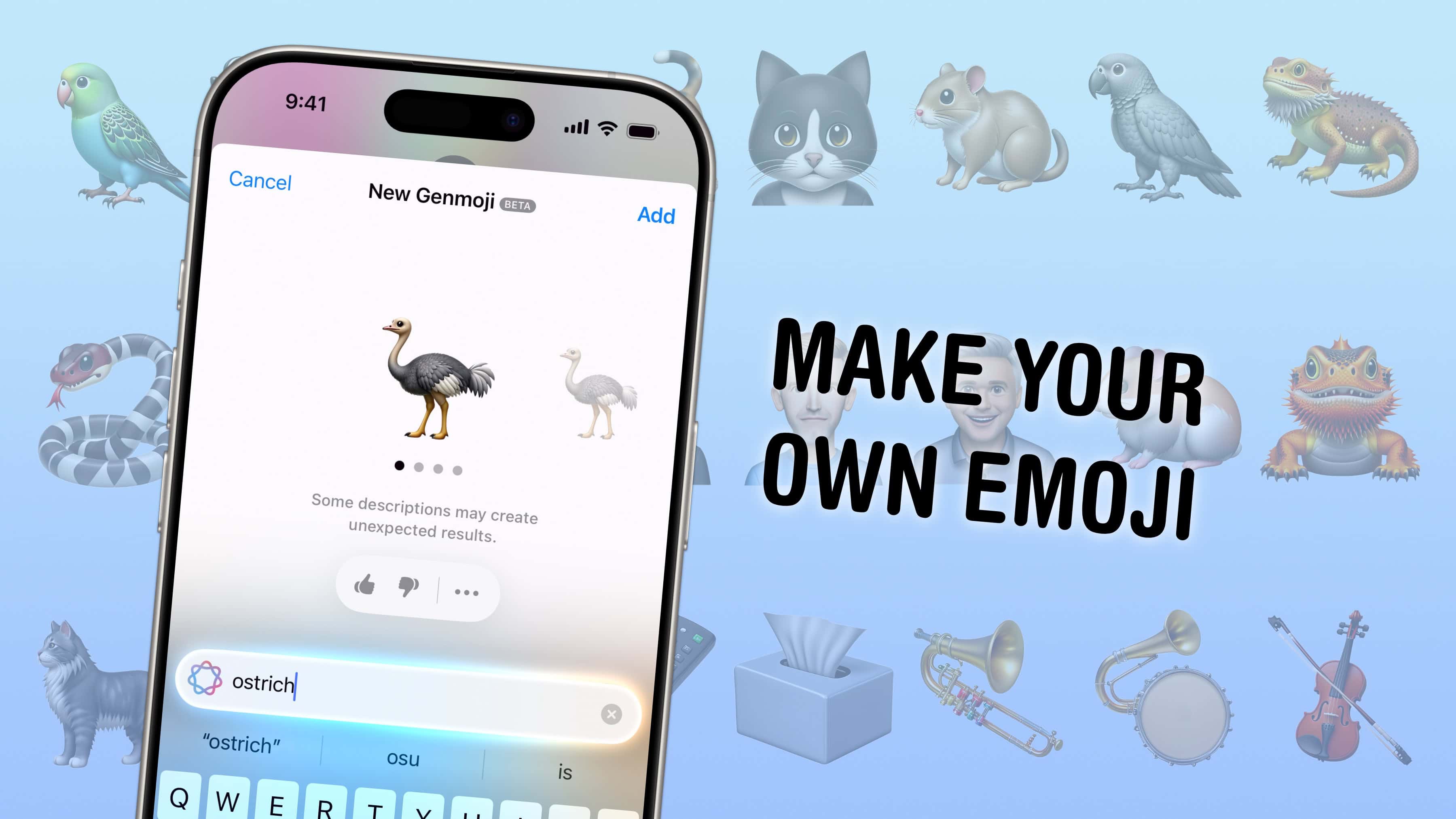
Genmoji can fit every occasion. Image: D. Griffin Jones/Cult of Mac
Using Apple’s Genmoji, you can create custom emoji when you can’t find the exact right one to express yourself nonverbally. The Apple Intelligence feature generates emoji on the fly based on your descriptions.
Finally, you can enhance your conversations about ostriches or shovels or tissue boxes with your own custom emoji. Or make an emoji that matches your pet, like a white cat or a Pomeranian dog. You can even make emoji versions of people you know.
Search for products and get information with Visual Intelligence. Image: D. Griffin Jones/Cult of Mac
Apple’s new Visual Intelligence feature provides a quick way to find information just by pointing an iPhone 16’s camera at an object in the real world. Then you can ask ChatGPT to explain what you’re looking at, do a reverse image search to find products and look things up visually, get information on a business as you walk down the street, quickly add events to your calendar and identify plants and animals.
With the release of iOS 18.4, Apple added the capability to use Visual Intelligence on iPhone 15 Pro models. Here’s how it works.
The revamped Photos app in iOS 18 is a big change. Learn how to use it now. Image: D. Griffin Jones/Cult of Mac
Apple’s redesigned Photos app in iOS 18 brings the biggest changes ever to how you browse your pictures, videos and memories on your iPhone. Gone are the separate tabs across the bottom. Now the Photos app delivers a single, scrollable view. Scroll up to see your library; scroll down to sort through albums, people and memories.
It takes some getting used to — and the big changes are driving some people absolutely insane. To get a grip on all the changes, you need to learn where to find your recently saved images, deleted photos and your album of hidden photos.
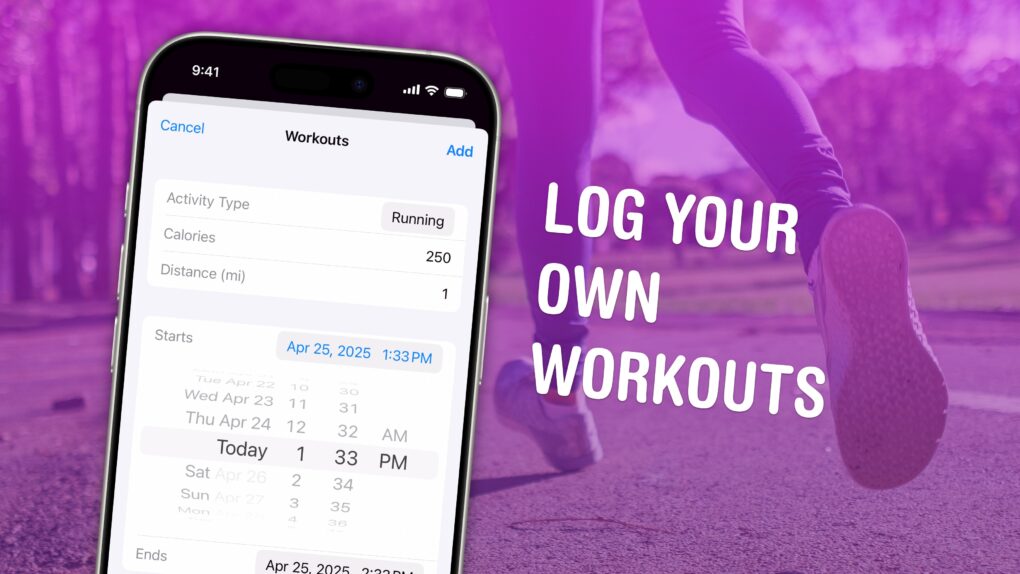
Add workouts by hand if you’re missing some. Image: D. Griffin Jones/Cult of Mac
You can manually add a workout to Apple Fitness+ if you need to log some exercise while you weren’t wearing your Apple Watch. Maybe your watch ran out of battery at the start of your run, or maybe you simply forgot to turn it on. By adding a missing workout, you can give yourself credit for the exercise you did.
This power could be used for evil as well as good. You could, hypothetically, say you ran a three-hour marathon every day last week. But you would only be fooling yourself.
To find out how to add a workout to Apple Fitness+, watch our short video or keep reading below.
Here are six useful things you should consider before you chuck it in a drawer. Image: D. Griffin Jones/Cult of Mac
There are a few useful things you can do with an old Apple Watch after you upgrade to a new one. You might think of the Apple Watch as being a disposable product — because who would wear two watches? But there are actually quite a few surprising use cases for having a daily Apple Watch and a secondary watch.
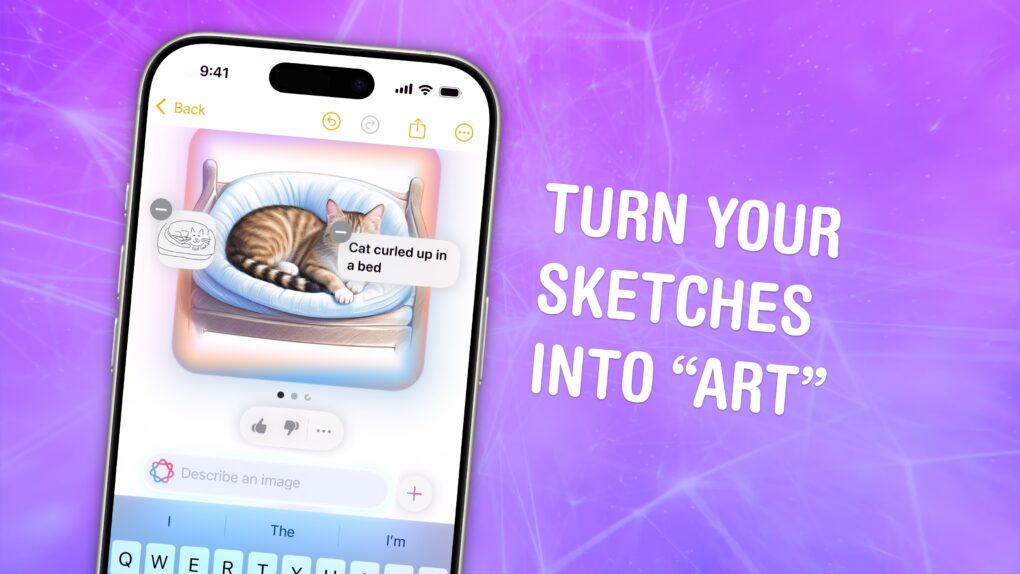
The quotation marks around “art” are doing a lot of heavy lifting there. Image: D. Griffin Jones/Cult of Mac
Image Wand is a new feature in Apple Notes that turns rough sketches into full images — and creates images from scratch based on text prompts. Granted, it’s powered by Image Playground, so the imagery it creates isn’t exactly state of the art. Apple’s image-making tools still lag other AI systems. But if you’re a struggling artist, it may improve your squiggles.
Image Wand is part of Apple Intelligence, the growing set of AI features that work on the latest iPhones, Macs and iPads. It runs entirely on-device, so you don’t have to worry about usage limits, tokens or setting up accounts.