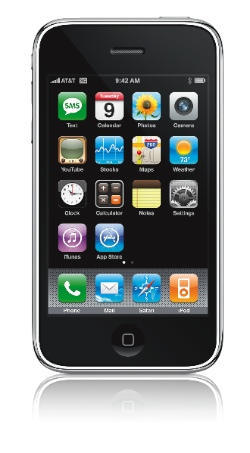
New reports suggest discount retail giant Wal-Mart will begin selling the iPhone Dec. 28, a move raising some eyebrows while also expanding Apple’s retail strategy, according to other experts.
An AT&T memo obtained by the Boy Genius Report outlined plans to offer the iPhone first in select Wal-Mart and Sam’s Club locations, followed by nationwide availability to more than 3,000 Wal-Mart and Sam’s Club stores.
“We are pleased to announce that Wal-Mart has reached agreement with Apple to offer iPhone 3G in Wal-Mart and Wal-Mart managed Sam’s Club Connection Centers nationwide beginning December 28, 2008,” according to the memo.
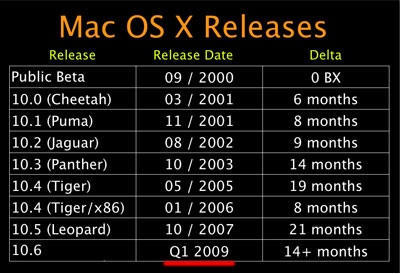
Snow Leopard, Apple’s code name for its upcoming Mac OS X 10.6, is slated for release early next year, according to Cupertino inside data accidently made public last week.
In a slide presentation before the Large Installation System Administration (LISA) conference, Jordan Hubbard, head of Apple’s Unix Technology Group, let slip Leopard will be released during the first quarter of 2009.
Although the offending slide was removed, the information spread far and wide, providing both Mac fans and rivals a clearer window into Apple’s schedule. In July Apple had said only that the new operating system would be available “in about a year.”
The information leak comes as both Apple and Microsoft ready launches of operating systems. Windows 7, the successor to Redmond’s much-criticized Vista, will be unveiled around the middle of next year.
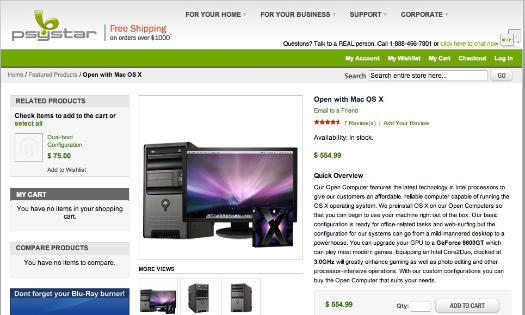
A California judge Tuesday preliminarily dismissed Psystar’s antitrust lawsuit against Apple. Judge William Alsup rejected the Mac clone-maker’s counterclaim, writing Apple’s computers and Mac OS X software “are not wholly lacking in competition.”
Alsup gave Psystar until Dec. 8 to amend its countersuit to bolster its argument that Apple was preventing third parties from selling computers based on its Mac OS X operating system.
In a 19-page opinion siding with Apple’s motion to dismiss Pystar’s August countersuit, the judge ruled that Pystar’s legal team failed to support the “counterintuitive claim that Apple’s operating system is so unique that it suffers no actual or potential competitors,” according to AppleInsider, which first reported the decision.
In August, Psystar filed the countersuit following Apple’s July lawsuit alleging the Florida company infringed its copyrights and patents by selling computers with a modified version of the Mac OS capable of running on PCs.
Late last night I made the mistake of staying up to listen to a talk radio show on BBC Radio 5 Live. The host, Richard Bacon, used the final hour of the show to generate some calls from listeners with the simple call to arms: “PC or Mac?”
Talk show radio shows love topics like this. Ones on which everyone has an opinion.
Sadly, most of last night’s opinions were painful to hear. Not because the PC crowd were dismissing Macs and Mac users wholesale, but because they were using such age-old arguments to do it.
I took quite ill on Thursday, and literally didn’t leave the house at any point between Friday and Sunday mornings. And, like a lot of bed-ridden people, I was in far too much pain to actually think about reading, writing, or, well, thinking. Instead, I got caught up on all of the junky entertainment I never find time for otherwise. Comic I hadn’t yet read. DVR’d episodes of Top Design. And virtually all of the content on Netflix Watch Instantly.
Now, for those of you who still haven’t had the chance to try out streaming Netflix, I will say that it works incredibly well. Movies start quickly, the new interface allows you to scrub through looking for your exact place, it resumes play if you accidentally quit. (I had a few films with skewed soundtracks, but it was a rare occurrence). What’s astounding, however, is just how tiny the Netflix streaming library is compared to Hulu, iTunes, or, you know, Netflix DVD service. After a few days in bed, I’d watched literally everything that I had any interest in seeing that the streaming service had. I mean, there are only two seasons of 30 Rock.
And that’s when it hit me: everyone who’s called for Apple to start a monthly subscription model for iTunes has been almost right. There’s tons of money to be made there. But the opportunity isn’t from making its full music library available for $15 a month. It’s in charging $20-30 a month for unlimited TV show access.
Think about it: Apple has the largest library of digital downloadable video on the planet right now. Sales haven’t been as good as hoped. Apple has begun to rent movies, which means it has the DRM to prevent people from keeping a permanent copy of a rented clip on their hard drive. And yet TV shows are still available only for $1.99 each. While that’s a pretty good price, it’s not one that I’ve paid since Apple first made TV available through iTunes (I briefly had 10-pack passes for The Daily Show and Colbert way back). But I would gladly ditch my Netflix subscription and pony up the same $20 a month for unlimited rentals of the TV shows on iTunes, even without movies. That’s $240 gross from me that Apple and the TV studios wouldn’t see otherwise.
Now, if it were anyone but Apple, I would say that kind of price is too high to pay. But this wouldn’t be a streaming competitor to Hulu — it would be for files that could work on any iPod or iPhone. That’s a compelling proposition right there. It would further cement Apple’s vertical integration as the premiere agent for digital entertainment on earth. It would make an AppleTV as essential as a TiVo. It could even begin to make the cable companies nervous if Apple’s selection continues to improve (live sports being an obvious exception).
I think it’s a slam dunk. Does it make sense to you?
Word comes from Le Macbidouille of Apple’s plans to set up shop in the “Carrousel of Louvre” at the famous gallery complex in Paris.
Slated to begin at the turn of the year, Apple has apparently expanded upon plans originally announced over a year and a half ago, and may become a very high profile tenant at an attraction that drew over 8 million visitors in 2007.
According to the report published at HardMac (conveniently translated into adorable French-English for the non-French-speaking reader), Apple has taken “many options in France, primarily in shopping malls in construction, such as the Odysseum in Montpellier,” and declared “2009 should be the year of Apple Stores in France.”
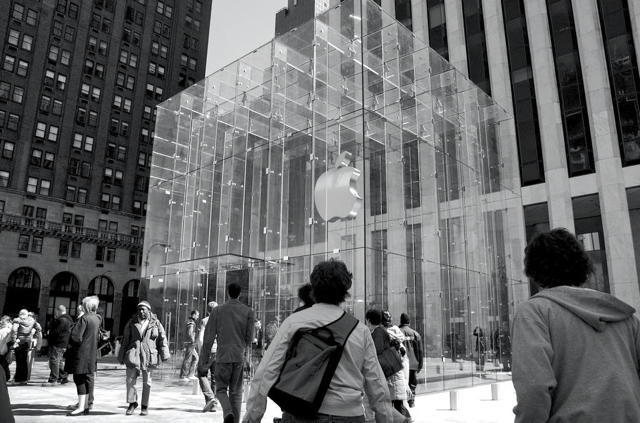
Here’s a gallery of the space Apple may be converting at the Louvre complex, and sure enough, you can almost see an Apple store in it, can’t you?
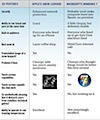
Though we’re still several months away from the launch of either Mac OS X Snow Leopard or Microsoft’s Windows 7, America’s Finest News Source The Onion has already decoded the coming OS war in a handy chart, which you can read after the jump.
I have to say, I’m really impressed that MS is getting close to getting the spontaneous combustion thing under control. Dare to dream!
Apple may report $11.29 billion in revenue for the first quarter of 2009, more than $1 billion better than Wall Street experts are projecting, blogger-analyst Andy Zaky wrote Monday.
The blogger, who beat analysts in his prediction of Apple’s fourth quarter numbers, wrote experts have been “absurdly bearish” with revenue estimates that “no longer reflect even a scintilla of financial reality.”
“The analysts have been consistently wrong in predicting Apple’s earnings results and this time they’re going to get their ‘hats handed to them,'” Zaky wrote on his blog Bullish Cross.
In October, Apple’s Chief Financial Officer, Peter Oppenheimer forecast revenue of $9 billion to $10 billion for the December quarter. The Wall Street consensus is a slightly higher $10.08 billion.
It’s no secret than I’ve been a less-prolific blogger over the last, oh, six months or so. Part of this is fairly dull personal life details (marriage, etc. Hi, honey!), but a bigger part of it has been the very quiet development of my first book, Wired to Care, which I co-wrote with my dear friend and colleague Dev Patnaik of Jump Associates. The book won’t be out until January, but our new blog is live now.
Now, far be it for me to avoid any shameless self-promotion, but I bring it up for another reason. The top post of the moment is my epic manifesto on why it is that Apple has never made significant in-roads in the enterprise space, while IBM remains the machine of choice more than 30 years after Steve Jobs declared war on Big Blue. It’s tied tightly to the theme of the book, but I think it can be regarded most as a guest appearance by Cult of Mac at the Wired to Care blog. Plus, it has the Apple Lemmings ad:
“Steve Jobs doesn’t have a clue about how to sell anything to business customers. From 1981’s defective Apple III to the $10,000 NeXT Computer to Apple’s current efforts, the offerings that Steve Jobs has created for enterprise technology customers have universally flopped. The company’s current high-profile effort in that arena is the xServe, a sleek metal computer meant to handle the file-sharing needs of a small or medium business. While beautifully designed in the way that all of Apple’s products are, the xServe screams to the world of business that it was not designed with them in mind. People working in technology at companies want to buy something that looks reliable, fast, and, most importantly, too complex-looking for ordinary people to manage. Simple hardware doesn’t connect with its intended audience, and the xServe has no traction whatsoever with business customers.”
I have a lot more to say on the subject, and I hope you do, too! Let the argument begin in the comments thread at W2C, and I’ll keep you updated whenever there’s more Apple content over there!
A federal court judge on Friday granted a preliminary injunction requested by IBM that ordered Mark Papermaster to cease working for Apple until further notice.
Apple announced on Tuesday this week that Papermaster would be joining the company immediately in his new role as the head of the engineering teams that make the iPods and iPhones, reporting directly to CEO Steve Jobs. After Friday’s ruling by the court in the southern district of New York, Apple said Papermaster would comply with the court’s order.
“We will comply with the court’s order but are confident that Mark Papermaster will be able to ultimately join Apple when the dust settles,” Apple spokesman Steve Dowling said.
Kenneth Karas, the U.S. District Court judge in White Plains, New York, where the case was filed, didn’t immediately explain his ruling, saying he would release a full opinion in the future. He scheduled a follow-up meeting for November 18 to map out a time line for the case.
The suit grew out of Papermaster’s 26 year employment at IBM, where he was responsible for many of that company’s innovations in the development of silicon chip processor technology. He signed an agreement not to compete in similar employment with another company for one year, but quit abruptly on October 24th and planned to start at Apple this week.
The business market, long desired by Apple, picked the iPhone to top a J.D. Power and Associates survey for smartphone customer satisfaction. Ease of operation and the Mac OSX operating system were named the two biggest reasons, according to the survey released Thursday.
The iPhone garnered 778 points out of a 1,000 total possible score. RIM’s BlackBerry scored 703 and Samsung received 701 points. Palm’s Treo took its place in the cellar, getting 644 votes.
Software problems accounted for a quarter of the complaints by corporate users regarding smartphones. Of that group, 44 percent said they were forced to reboot their phone at least once a week during the year.
Is the meteoric rise in demand for Apple’s iPhone cooling off? BMO Capital is the latest to issue a projection of slower production of the handset for the first fiscal quarter of 2009.
BMO’s Keith Bachman Thursday reduced his estimate for first quarter iPhone sales to 5.6 million from 6.6 million. At the heart of the prediction is 2 million of the 6.9 million units sold in September went into inventory.The analyst said due to that “channel fill” it will be difficult for the December quarter to compare to the 6.9 million handsets sold in the quarter ended September 30.
The analyst said the December quarter will bring 5.6 million iPhones sold, down from 6.6 million previously projected. Still the number is expected to be a 15 percent increase in end-user sales over the 4.9 million sold in September.
Plenty of people are tut-tutting today about the lavish “transition agreement” outgoing iPod guru Tony Fadell signed in order to spend more time with his young family and act as special adviser to Steve Jobs during the coming year. And surely $300K per year in salary, with stock options worth upwards of $8 million makes the worst economic downturn in 50 years seem like something a 39 year-old guy might survive.
But reports filed with the SEC indicate Apple reimburses Steve Jobs for expenses traveling on the company’s private Gulfstream jet to the tune of 2/3 Fadell’s annual package per quarter, and even that number is well down from the amount the company was spending on the corporate jet just one year ago.
Puts the whole financial crisis thing in perspective, doesn’t it?
Nearly 25 percent of Japan’s music fans use Apple’s iTunes software, compared to 19 percent of the U.S. online population, a media measurement firm announced Tuesday.
The iTunes application, used by iPod and iPhone owners to purchase and organize digital music, found 23.7 percent penetration of the nation’s Internet users, according to comScore. Globally, 11.2 percent of the world’s Internet users prefer iTunes, the study found.
The UK had the second largest percentage of iTunes fans with 23.4 percent penetration coming a close second to the gadget-hungry island nation.
The U.S. was ranked third with 19.6 percent reach of iTunes. France and Germany completed the top five iTunes countries, the company reported.
Is the exit of Tony Fadell, labeled the “Father of the iPod,” a signal Apple has larger plans for the device now partially eclipsed by the iPhone? Yes, say Apple experts.
“We believe this is the second major indication of the future of the iPod as a mobile computing platform,” Andrew Murphy, analyst at Piper Jaffray, told Cult of Mac Tuesday.
The introduction of the iPod Touch was the first tip Apple was moving toward greater mobile computing, Murphy added.
Fadell, who joined Cupertino in 2001, was a senior vice president in the iPod division. He’ll become an advisor to Apple CEO Steve Jobs. The decision, made with his Apple Human Resources executive wife Danielle Lambert, was to “devote more time to their young family,” Apple announced.
Former IBM vice president Mark Papermaster will take Fadell’s position, a move Murphy believes means more emphasis on hardware.
“Papermaster’s experience in chip design and his replacement of Tony Fadell shows Apple focusing on mobile devices and possibly doing their own chips for the devices (iPods and iPhones),” the Piper Jaffray analyst wrote in an e-mail to Cult of Mac.
Tony Fadell, Apple’s Senior VP of the iPod division and the man who first brought the idea of a small hard drive-based music player to the company, will step down shortly, according to the Wall Street Journal. He joined the company in 2001, setting up the first iPod engineering team and overseeing its design.
According to the Journal, Mark Papermaster, the IBM VP that is being sued by Big Blue to try to stop him from working for Apple, will take over the role. This all makes sense — Steve Jobs has publicly stated that Apple bought PA-Semi in order to develop systems on a chip to power iPods and iPhones, and Papermaster is a total guru of the POWER architecture upon which PowerPC chips and, in turn, PA-Semi’s silicon, are based.
Fadell is one of Apple’s least-known legends, even though he should be credit more than anyone else with creating the iPod. It’s a shame to see him go, but Apple tends to be a place where people burn out fast, and Tony rose incredibly quickly from contractor to SVP in five years.
With refreshed Apple iPod and notebook computer product lines having hit the shelves in the past few months we wouldn’t exactly call it a lump of coal in our stocking, but some people are bound to be disappointed there will be no new products from the company in time for holiday gift buying.
Apple spokesman Bill Evans said, “”Our holiday line-up is set,” according to a report today at Macworld.
The official word out of Cupertino would seem to quash a host of recent speculation regarding the MacMini, AppleTV and even the iMac, which was already juiced with new processors in the spring.
Seems logical Apple would feel comfortable with the lineup it has in place going into what promises to be a nervous retail season amidst what some are calling the worst economic downturn in 50 years.
Apple may have cut by 40 percent fourth quarter production of its flagship iPhone handset, a Friedman, Billings, Ramsey analyst said Monday.
The drop in production would be far deeper than the 10 percent cut previously anticipated.
“Our new checks indicate that iPhone production could fall more than 40 percent sequentially in the 4Q,” FBR’s Craig Berger wrote in a note to clients.
The drop in production shouldn’t be interpreted as a dip in iPhone demand. In October, Apple reported shipping 6.9 million iPhones during the third quarter.
However, the lowered production may signal “no market segment will be spared in this global downturn,” wrote Berger.
Over the weekend, however, Fraser Spiers, a teacher in the UK, posted an account of the field trip his class took to an Apple Store across the pond that makes Gruber’s dismissal seem mean and wrong.
According to Spiers’ account, “The teacher in charge considered that the lesson had been very well designed from an educational perspective and was very appropriate for the age and stage the children were at.” Students were provided a half dozen computers in the store and given instruction on making podcasts in GarageBand, including using Photo Booth to add chapter artwork and burning the CD in iTunes. At the end of the trip each student came away with a CD of their finished podcast and a free t-shirt.
While it’s probably a good idea to be skeptical about corporate interests getting too closely involved in education, Apple’s field trip program isn’t exactly egregious on the scale of, say, ChannelOne, the 12-minute television program seen daily by an estimated eight million public school students in the United States. Studies of ChannelOne programming found that 20 percent of its air time is spent on coverage of ”recent political, economic, social and cultural stories,” while the other 80 percent is advertising, sports, weather and natural disasters.
Given Apple’s longstanding relationship with and loyal embrace by the K-12 education market in the US, together with the fact that kids get what Speirs described as “a high quality and low cost afternoon trip that the children thoroughly enjoyed and learned from,” I’d have to come down on the side of giving the company props for offering a unique and valuable service.
Apple has traditionally been viewed as a company limited chiefly to domestic sales. However, a review of sales figures suggests the iPhone 3G could unlock international markets, providing a ‘halo effect’ for other Apple products.
A halo effect has long been described to explain how iPod sales could boost purchases of Macs. Now some experts believe the iPhone 3G could give Apple a foot in the door to countries once alien to the Cupertino brand.
At the heart of the theory are numbers indicating Apple sold as many as half of iPhone 3Gs internationally. Apple shipped between 2.4 and 4.5 million of the 6.9 million iPhone 3Gs during the fourth quarter ended Sept. 30. The exact numbers depend on who’s talking.
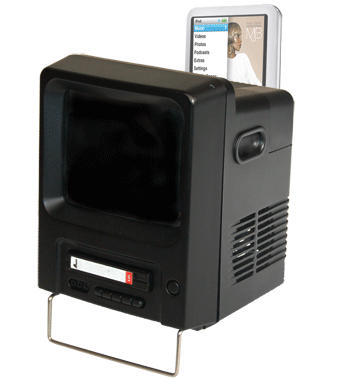
Possibly in a fit of friendly rivalry with its competitor Fortune magazine, atop whose list of the 50 Most Admired Companies in the world Apple sits for 2008 at #1, Forbes magazine featured its list of the 10 biggest Apple failures this week, a gallery of which we reproduce for you below.
There are at least a couple of items here that grabbed a few hearts, but what do you think? Are these all Apple strikeouts? Let us know in comments.
It seems unlike Apple, which has scoffed at inexpensive Macs and been viewed as catering to higher-income consumers. However a new study suggests the iPhone is fast becoming a favorite of low-income buyers.
From June through August, iPhone sales grew 48 percent in households earning between $25,000 and $50,000 compared to 21 percent growth overall, according to comScore.
The researchers found low-income consumers see the iPhone as a way to consolidate costs of a phone, broadband connection and music device.
Apple’s iPhone was among one of the few bright spots in a gloomy third quarter for cell phone manufacturers.
Apple now has 2 percent of the global cell phone market during a time when cell phone makers scrambled to adapt to slowing consumer sales. In September, the Cupertino, Calif. company reported selling 6.9 million iPhones during the third quarter, a 516 percent jump over the previous year.
“Apple has become firmly established as a top ten vendor,” Strategy Analytics announced.
Analysts Thursday said global cell phone shipments either shrank or rose a tepid 5 percent to 8.5 percent.
Apple’s gross margin for the first quarter of fiscal 2009 is expected to “well-exceed management’s guidance of 30 percent,” Financial Alchemist blogger Turley Muller commented Wednesday.
Turley, one a few financial bloggers who’s predictions closely mirrored Apple’s fourth quarter results, said the Cupertino, Calif. company is acting wisely, given the economy.
“This cushion should help Apple exceed earnings expectations even if the economy adversely affects its business,” the blogger wrote.