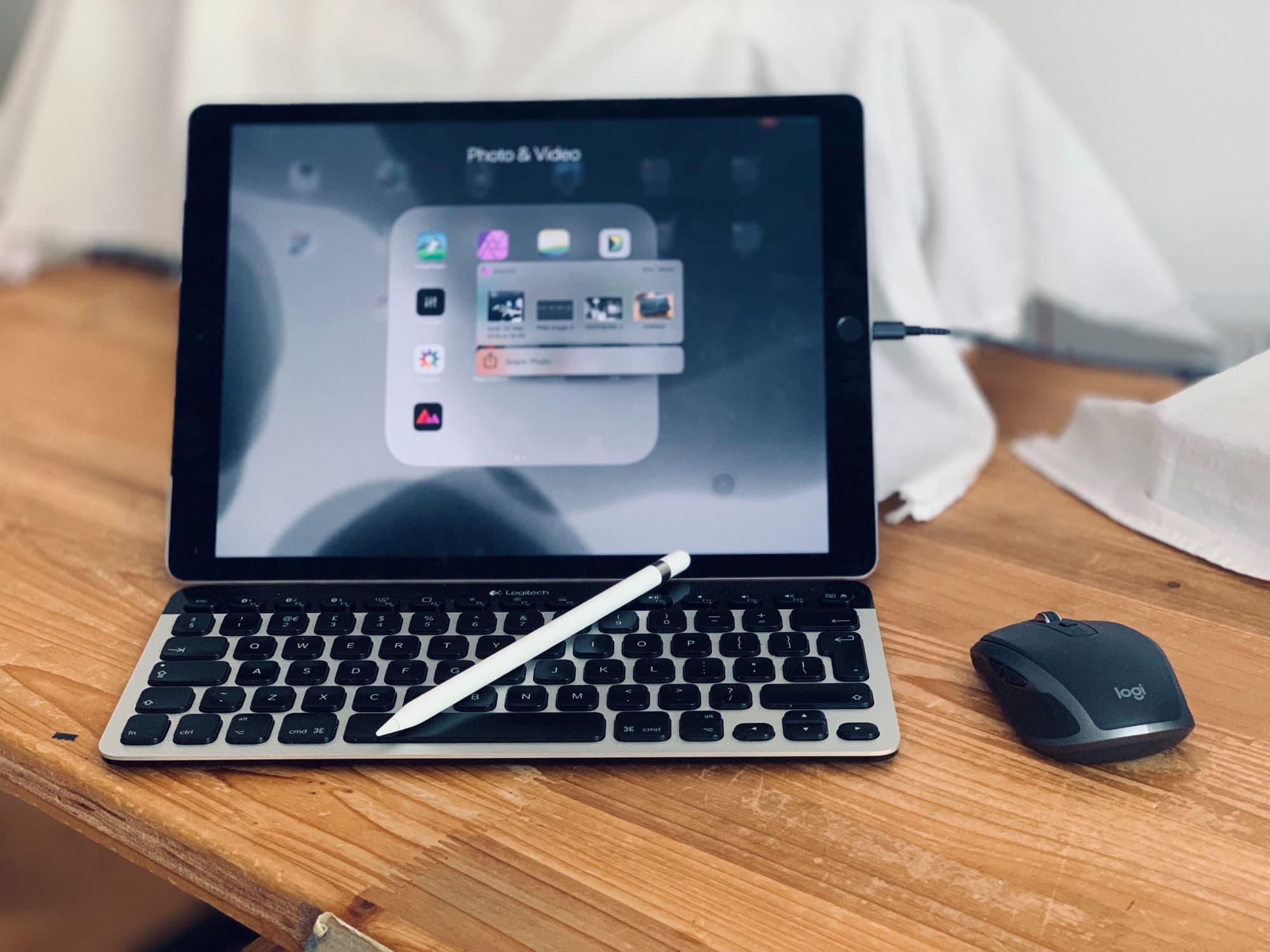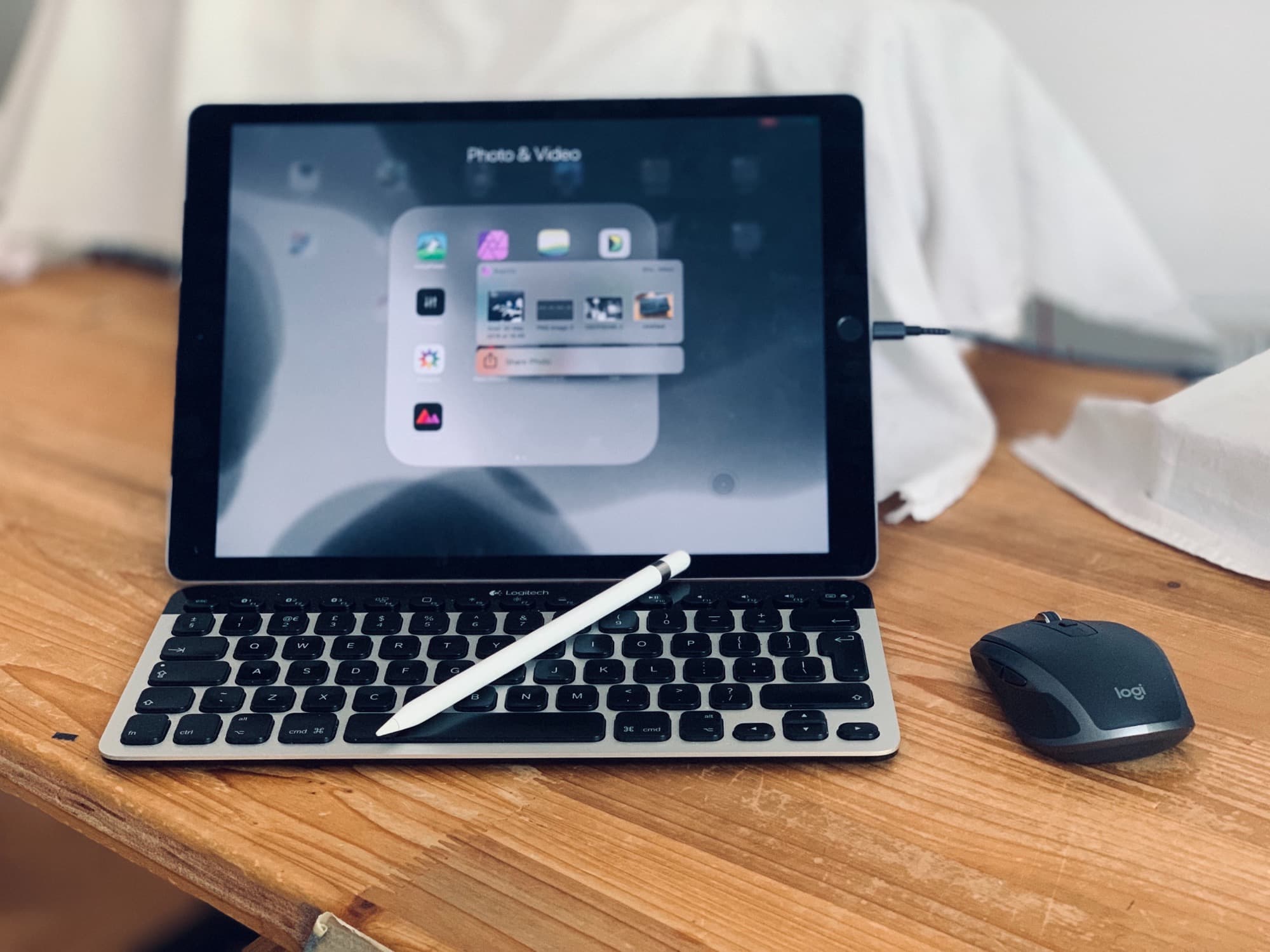
If you’re in the market for an iPad — and you know you are, because it’s killer — you’re probably wondering which model to buy.
Naturally, you’re looking at the cheapest $499 iPad, which has Wi-Fi only, but you’re thinking you might also want 3G. After all, you can pay-as-you-go for data, and who knows when you might need it? And what about storage?
I’ve though it through, and concluded that most people should buy the 32GB iPad with Wi-Fi + 3G, including the wireless keyboard. Here’s why:
Digital Americana has just popped up out of nowhere, claiming to be “the first literary & culture magazine developed especially for the interactive tablet experience.”
A dialog mind-bogglingly bad in explanation and copywriting and it's from Apple. Very sad.
Boom! Apple broke App Store accounts for many users with multiple accounts recently. On checking for updates and clicking the helpful ‘Download All Free Updates’ button, iTunes rather unhelpfully states: ‘You can not update this software since you have not owned the major version of this software’. Whether this is a bug (which we hope) or a change in App Store policy is unknown at this time. However, since writing about the subject on my own blog and Twitter, it’s clear the issue is widespread, and Apple support has yet to supply any kind of insight regarding a fix.
Previously, App Store updates for users/Macs with multiple accounts were awkward in UI terms but at least logical. You signed into an account, selected Applications, checked for updates and then downloaded what was available. If you noticed a number next to Applications after apps had been updated, that meant updates were available in another account. So you’d sign into that one as well and repeat the process.
Now, all available updates for all accounts are displayed at once, but iTunes isn’t intelligent enough to figure out which apps belong to the active account. Therefore, you try to update everything, iTunes realises some apps it’s showing are tied to a different account, and it throws up the appallingly clumsy dialog error ‘You can not update this software since you have not owned the major version of this software’.
At present, the only solution is to click on every single Get Update link individually, dismiss the dialog if it appears, and when you’ve gone through every app, sign into other accounts and repeat the process.
Perhaps Apple’s cracking down on people with multiple accounts in different countries (although most people I know who do this keep a US account for promo codes, since Apple’s still inexplicably restricting them to the US store). That said, I’ve had emails from people stating that they get the same error with multiple accounts from the same store on a single machine. Therefore, this is most likely a pretty big bug that needs squashing, but if so that’s only indicative of how one of Apple’s most important pieces of software needs some serious TLC, as Pete noted on the 4th.
I currently have a (second-line) support call logged with Apple on this, and will update if I get a response. If you’re also having this issue, please post in the comments.
The dread iPhone backup progress bar (via iPhone Lover)
Just a shade over nine years ago, Apple launched iTunes, a fairly late, fairly average MP3 player with CD burning built in. And though it lacked many of the features of Audion, then the best music player for Mac, it not only became the market leader, but it set the stage for the iPod, widespread legal music downloads, legal TV, the iPhone, and soon the iPad. It would be no exaggeration to say that iTunes saved Apple. It would be no exaggeration to say that iTunes is now Apple’s most successful piece of software ever in terms of users.
But it would also be no exaggeration to call it the worst piece of software Apple makes and the one thing that could disrupt Apple’s current march to mobile device dominance. It has bloated into a crashy kludge that the rest of the Apple universe depends upon. Despite a lot of good intentions from amazing software developers, iTunes has become Apple’s Internet Explorer 6 — an unmitigated disaster.
I had a look through the report and it’s kinda maddening. On the one hand, it does speak to genuine effort at enforcing standards. But in typical Apple style, it’s secretive and non-specific. It doesn’t mention any names, dates or details. It’s hard to judge in any independent way whether Apple’s efforts are effective. It’s just too vague.
Yeah, it crows about some numbers, but it’s not like a piece of detailed, independent reporting where you get a good, deep picture becuase of the wealth of detail. It reads like a highly-redacted CIA report about some shady mission that’s too secret to talk about except in the vaguest terms. You just have to take the Apple’s word for it. And although Apple is working with respected, independent organizations like Verite, I’m not sure I do.
UPDATE (23 February): The Simply Beach developer just emailed us to say that “Apple appear to have quietly reinstated the Simply Beach app this evening”. He notes that neither he nor his customer received any communication whatsoever from Apple.
Ourrecentarticles on Apple’s decision to ban “overtly sexual apps” have caused plenty of arguments in the comments. Some (including your correspondent) think Apple’s being ridiculous, overbearing and taking a dangerous path in initiating a blanket ban on even extremely mild content, such as images of women (or, er, men) in bikinis. Others claim Apple should be applauded, and they can’t wait to see the back of apps with sexual content, no matter how mild.
However, Apple’s stance hasn’t only affected the likes of iWobble, as Andrew Long of software development company Exploding Phone explains: “One of our customers has fallen foul of Apple’s new puritan crusade—the crazy thing is, the customer is an online beachwear retailer, Simply Beach, that happens to sell bikinis via an online store and the accompanying iPhone app that we developed for the company.”
Andrew notes that Apple removed the app without warning. On Friday, Simply Beach received an email from Apple about the decision to remove any overtly sexual content from the store and that included the Simply Beach application. “The email also made mention to numerous complaints they had received from customers regarding ‘this type of content’ and implied it was these complaints which had led to the changes,” says Andrew, adding that his customer initially thought this was a hoax.
If this is what Apple considers 'overtly sexual' content, we fear for civilisation itself - and the entire company needs to get out more.
At the time of writing, Apple has yet to respond, and Andrew resubmitted the app with a much increased age rating, although he states: “Neither we nor our customer believes that the content warrants a rating.” The app also has some heavy investment by the swimwear company, and was soon to have had a revision including multi-currency pricing and video streaming. “This upgrade is now under threat until we find out where Apple’s puritan values lie,” said Simply Group MD Gerrard Dennis in a press release. “This has put people’s jobs at risk as we rely on all income streams. We are not Apple, we don’t have billions sat in our bank account! It would have been better to have had some warning or discussion before removing the app. I assume all clothing retailers that sell anything other than overcoats will now have to be removed from iTunes?” (our emphasis)
“Personally speaking, I think the decision is ludicrous, but to be honest not much that Apple does surprises me any more,” says Andrew, stressing that his views don’t necessarily reflect those of his customer. “As an iPhone developer you have to be prepared for the goalposts to shift unendingly and be as dynamic as you can in changing to meet the new way of life.” However, in this case, Andrew thinks it’s clear the content is not ‘overtly sexual’: “Apple has clearly been overzealous and inconsistent in trying to rid the App Store of ‘bikini blight’. It makes a mockery of the rating system, too, which is surely there to ensure that questionable content doesn’t get into the wrong hands.”
To add insult to injury, Andrew notes that his customer sells some of its goods through an Amazon feed, which is still available through the Amazon iPhone app. “And I’m sure if you searched that app for more fruity items, you’d find many images available which are much worse by the average person’s moral compass.”
At the time of writing, Apple hasn’t responded to our request for a comment. We also note that there’s not a total bikini ban—you can still get the Sports Illustrated swimsuit issue, perhaps because Apple didn’t want to piss off Time magazine? (Hat tip: Nicole.)
What it is: Zinio, in partnership with major publishers of traditional books and magazines, offers subscription-based digital content over the Internet and via its iPhone/iPod Touch native app available free in the iTunes AppStore.
Why it’s cool: Zinio has spent the past 10 years helping people get digital access to the traditional magazine content they already love. Now, at the dawn of Apple’s iPad era, Zinio is poised to offer some of the most compelling content iPad users will see on the device — and just may help save the ailing traditional publishing industry in the bargain.
Many have wondered about Apple’s model for distributing e-reader content — how it will look, what it will cost, and what Apple’s percentage of the revenue take will be — when the iPad makes its market debut in March.
Jeanniey Mullen, Zinio Global Executive Vice President and Chief Marketing Officer, told us in a wide-ranging conversation at Macworld earlier this month such concerns make no difference to her, since Zinio’s own model will remain platform agnostic. “Our most important relationships are with publishers and readers,” she said. “Zinio revolutionizes the reading experience and we’re excited about iPad’s potential for making that a great mobile experience” but the company doesn’t sell its current content through the App Store and that won’t change when the iPad comes along.
According to the developer of Wobble (which Apple seemingly considers an utterly filthy, disgusting and horrible app that enables you to add wobbly bits to any iPhone picture, which therefore has the potential to bring down civilisation as we know it, and not—as you might have thought—a little bit of harmless fun), prudes the world over will be delighted by the finer details of Apple’s stance.
After speaking with Apple, Wobble’s creator reveals that he spoke to Apple and was told what is now banned:
1. No images of women in bikinis (Ice skating tights are not OK either)
2. No images of men in bikinis! (I didn’t ask about Ice Skating tights for men)
3. No skin (he seriously said this) (I asked if a Burqa was OK, and the Apple guy got angry)
4. No silhouettes that indicate that Wobble can be used for wobbling boobs (yes – I am serious, we have to remove the silhouette in [the Wobble pics shown above])
5. No sexual connotations or innuendo: boobs, babes, booty, sex – all banned
6. Nothing that can be sexually arousing!! (I doubt many people could get aroused with the pic above but those puritanical guys at Apple must get off on pretty mundane things to find Wobble “overtly sexual!)
7. No apps will be approved that in any way imply sexual content (not sure how Playboy is still in the store, but …)
This explains why Daisy Mae got the boot—even if you ignore the ‘bikini’ rules, it would have breached rules 5 and 7. In other words, even innuendo is too strong for Apple when it comes to sex. We’d best set fire to Duke Nukem, GTA, The Sims, and a whole bunch of other games, then, including Vancouver 2010.
What this doesn’t explain is how Playboy’s so far escaped the ban, nor why Apple’s doing this in the first place. The App Store has a ratings system in place. Sure, it’s somewhat broken, but it’s at least there. There’s no reason why Apple can’t just enforce a 17+ rule for apps of this type and get on with things as usual.
What seems more likely is that Apple is using the claim that many people (who, frankly, need to get a life) have complained about ’sexy’ apps (which, presumably, includes ones that aren’t actually sexy in the sense that normal people would use the word) to create a ’safe’ (read: sanitised) environment for advertisers and education. In the former space, it’s clear advertisers—particularly in the USA—are often against being aligned with sexual content, no matter how mild. In education, there have already been cases where schools have ditched plans to provide students with Apple handhelds, due to them enabling access to smut. That said, with parental controls in every device and App Store ratings, Apple’s current decision seems absurd in the extreme, not least because the app that provides the fastest access to sex, sexual content, bikinis, innuendo, anything arousing, and implications of sexual content is Apple’s own Safari.
UPDATE: The gentleman in the video above is Daniel Eran Dilger, author of the Roughly Drafted blog referenced in the post below. I regret any confusion my failure to identify him may have caused. – Lonnie Lazar
Don’t just take Steve Jobs’ word for it. Full-time Flash developer Morgan Adams articulates good reasons why Flash should never come to Apple’s iPad and anyone interested in the Apple-Adobe conflict on the matter of Flash would do well to pay attention to his commentary.
Adams, an interactive content developer, wrote to the Roughly Drafted blog to explain in terms more measured than those used by Mr. Jobs with editors of the Wall Street Journal last week why Flash won’t ever work well on any mobile touchscreen platform:
It’s not because of slow mobile performance, battery drain or crashes. It’s because of the hover or mouseover problem.
Many (if not most) current Flash games, menus, and even video players require a visible mouse pointer. They are coded to rely on the difference between hovering over something (mouseover) vs. actually clicking. This distinction is not rare. It’s pervasive, fundamental to interactive design, and vital to the basic use of Flash content. New Flash content designed just for touchscreens can be done, but people want existing Flash sites to work. All of them—not just some here and there—and in a usable manner. That’s impossible no matter what.
Adams goes on to detail several fundamental incompatibilities between touchscreen operating systems and Flash content on the web, showing why current Flash content can never work well on a touchscreen platform.
In addition, workable alternatives exist for delivering the video content many wrongly believe is unobtainable without Flash, according to Adams:
imagine my embarrassment as a Flash developer when my own animated site wouldn’t work on the newfangled iPhone! So I sat down and made new animations using WebKit’s CSS animation abilities. Now desktop users still see Flash at adamsi.com, but iPhone users see animations too. It can be done.
Nicole posted on the 19th that Apple is pulling ’sexy’ apps, due to deciding that it’s operating out of a fictional puritanical Victorian utopia, rather than the USA. While Apple’s making the case by saying it doesn’t want porn on the iPhone, it’s now decided that ironic cartoon smut within a videogame is also a step too far. Yes, Touch Arcade reports that IUGO’s Daisy Mae has been unceremoniously pulled from the App Store, because—SHOCK!—it features a sassy cartoon woman with a penchant for short shorts as the lead character. Seriously.
***SARCASM WARNING!*** You know, Apple should really deal with this by coming up with some kind of system on the App Store for rating content, so you know whether an app is suitable for someone of a certain age. That would deal with games like this that you don’t want to warp fragile little minds (even though they almost certainly wouldn’t, because any kid with an iPhone who wants to look at boobs just needs to use APPLE’S OWN SAFARI)! ***END OF SARCASM WARNING!***
So, iPhone developers, the message is clear: don’t have any women in your apps unless they’re covered in some kind of burqa-style clothing, otherwise Steve and Tim and Phil will kill it until it’s dead (with virtual knives, guns, bombs and death-rays, all of which are fine, unless they are associated with any kind of vaguely risque clothing that’s within forty feet). And don’t even think of a game startting Jessica Rabbit, unless you turn her into an actual rabbit.
SAN FRANCISCO, MACWORLD 2010 — Helped perhaps by low expectations, David Pogue’s opening keynote here was a surprising success, playing to a packed, standing-room-only audience and bringing in a steady stream of laughs at Apple’s expense.
Pogue’s keynote was a variety show, with interviews, skits, singing and dancing — and a one-act play starring LeVar Burton as Steve Jobs.
Peter-Paul Koch is a man with opinions about the mobile web. And his latest opinion is a trifle controversial: Mobile Safari, he says, is this generation’s Internet Explorer 6. All the rage now, but destined to be hated by webdevs of the future.
The announcement of the iPad has done a lot of things: it’s stoked up excitement in the Mac using community, it’s got a bunch of developers feverishly coding exciting new stuff, and it’s got retailers and cell phone companies the world over drooling over the money they can make from it.
And it’s also somewhat upset my plans for buying a new Mac.
A lot of people are nonplussed by the iPad because it doesn’t seem so new, or even very useful. It’s just a big iPod touch. So what?
But one of the most interesting things Apple said has about the iPad is how it improves the “experience” of doing everyday computing tasks — email, web browsing, making photo slideshows.
Again, people say so what? We’ve already got laptops for email and watching movies. But improving experiences is exactly what Apple is great at. The iPod wasn’t the first MP3 player, but the first anybody could enjoy using. The same thing is going to propel the iPad into the mainstream. Everyday tasks like sending email and reading newspapers are going to be so much nicer on the iPad than any other device. (see for example the New York Times screenshot after the jump.)
Software developer Fraser Spiers has been digging through Apple’s iPad videos, pulling screenshots to take a closer look at the details of the iPad’s UI. His conclusion? It’s going to provide a very good experience not just for media consumption, but also media creation.
Look at what’s in here: a full stylesheet engine, multi-column page layout, a complete library of cell formulae and a full set of builds and transitions. You can create a Magic Move transition on the iPad. That’s probably the most advanced technique you can do in Keynote, and it’s there on the iPad.
Internecine warfare among Microsoft’s divisions has created a “dysfunctional” corporate culture that thwarts creativity instead of nurturing it. “The company routinely manages to frustrate the efforts of its visionary thinkers,” he writes.
Though the announcement of Apple’s iPad has met with the typical mixture of hyperbolic praise and hyperbolic criticism (no one can talk sensibly about it), there has been one consistent complaint that most would agree is valid: a device this powerful should be capable of some form of multitasking. But I think I have the answer.
“General purpose computing is too complicated for most people anyway, and the iPad’s descendants along with similar competing products from other companies will offer an enticing alternative. So I see the death of the traditional, open personal computer as a likely occurrence.”
Pro: But Facebook iPhone developer Joe Hewitt is extremely positively about the iPad’s closed system. To his mind it’s a major asset:
“The one thing that makes an iPhone/iPad app “closed” is that it lives in a sandbox, which means it can’t just read and write willy-nilly to the file system, access hardware, or interfere with other apps. In my mind, this is one of the best features of the OS. It makes native apps more like web apps, which are similarly sandboxed, and therefore much more secure. On Macs and PCs, you have to re-install the OS every couple years or so just to undo the damage done by apps, but iPhone OS is completely immune to this.”
I’m with Hewitt. The IPad is a cloud computer par excellence, and we will likely be able to run almost any software we want on it, but it’ll be on a server somewhere and not on the iPad. Colburn notes this too, but thinks it’s a bad thing.
Much has been written about all the iPad surprises, disappointments, features, missing features, hype, expectations, future, etc. adnauseam. But not much has been written about what the iPad says about Apple. I’m excited about the iPad because of the many ways it demonstrates that Apple just gets it.
Palm almost gets it, Microsoft may be on it’s way to getting it with the Zune platform, Blackberry doesn’t have to get it, and Google just doesn’t get it.
Enough of my dumb opinions. I thought it would be interesting to find out what some Mac and iPhone developers make of the iPad. What are their first impressions? What do they intend to make for the iPad platform? Do they have any concerns?
I got in touch with a whole bunch of developer contacts and asked them if they’d like to share their thoughts with you, the Cult readers.
Here are the replies I got.
Ken Case of OmniGroup revealed that the company is working on iPad versions of apps like OmniFocus and OmniGraffle:
“We’re really excited about Apple’s iPad, and are looking forward to updating OmniFocus to take advantage of the larger screen size. We’re also looking at creating iPad adaptations of several of our other productivity apps, such as OmniGraffle.”
Manton Reece of Riverfold Software (maker of Clipstart and Wii Transfer):
“I was so annoyed with the closed nature of the App Store that I stopped developing for the iPhone. The iPad will still have those frustrations, but the large screen opens up a whole new class of applications. It’s impossible to resist.”
“The iPad announcement leaves many things unclear. Does iWork depend on private APIs, or will developers be able to write first-class applications? Will individual books be subject the the approval process — leaving 40 overworked Apple employees the additional task of approving or rejecting books an magazines?
“Since 1982, Eastgate’s been publishing original hypertext fiction and nonfiction. These works — many of which are now studied in universities throughout the world — can’t be printed and can’t be simulated in ePub. But, if we bring them to iPad, would that be vetoed as duplicating the built-in book functionality?
“In short, the app store is a source of grave concern for software developers. That said, the iPad is the most exciting personal computing development for a decade. It will transform our notion of computing and redefine the idea of the information appliance.”
Steve Jobs will never pitch a product more effectively than he did at the announcement of the iPhone. He said he was introducing three products: “A revolutionary phone, a widescreen iPod, and a break-through internet device. And they’re all one product: The iPhone.”
I thought back to that legendary pitch when I saw Steve affix one of his weakest lines ever to the iPad, a device I think actually has remarkable potential:
That’s right, the selling point is that it’s “Our most advanced technology in a magical & revolutionary device at an unbelievable price.” Really? Your selling points are advancement, magic, revolution, and cheapness? The best thing that line has going for is that device and price rhyme. First of all, almost no one buys magic. More importantly, Apple should never make price a central selling point; other companies can make cheaper knock-offs and then Apple has to re-convince people that that higher prices are justified. Once you try to become the price leader, you can’t really try to go premium again.
But the tagline was also a summation of the one problem that kept coming up for me as I watched the iPad announcement: the device simply does not have a killer app. A killer app, is the use that shows why a new technology is worth buying. For example, microwaves didn’t start selling until microwaveable popcorn was introduced and PCs didn’t sell until spreadsheet software was launched. The iPhone’s killer app, quite honestly, was Safari; the iPhone could certainly do a lot more than browse the web, but for many people, seeing the New York Times home page in multitouch made the sale.
The iPad? Well, I’ll say that the most impressive thing I saw today was the New York Times home page all over again. It’s even better than mobile web browsing than the iPhone. So what? That’s not enough to get me to spend $500. But not to worry. I believe the killer app for iPad is on the way, and possibly by launch. It’s called iLife.