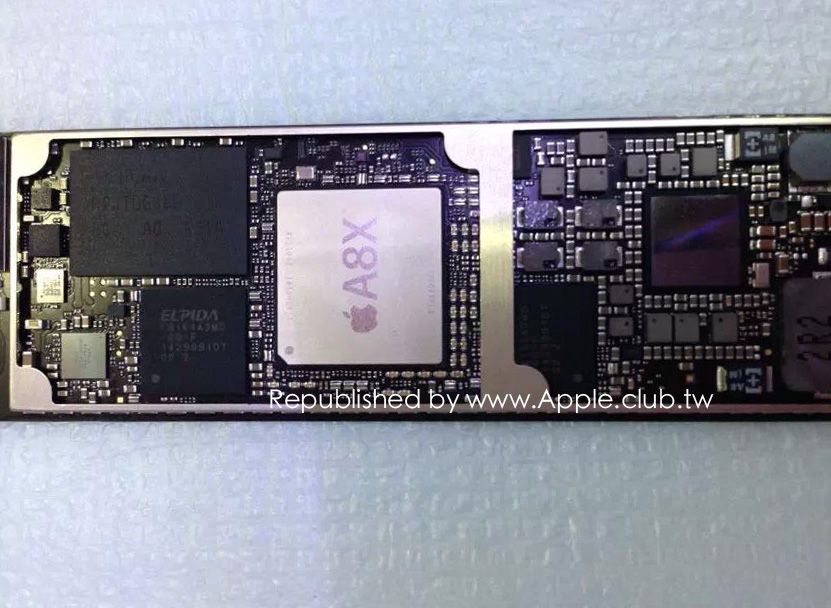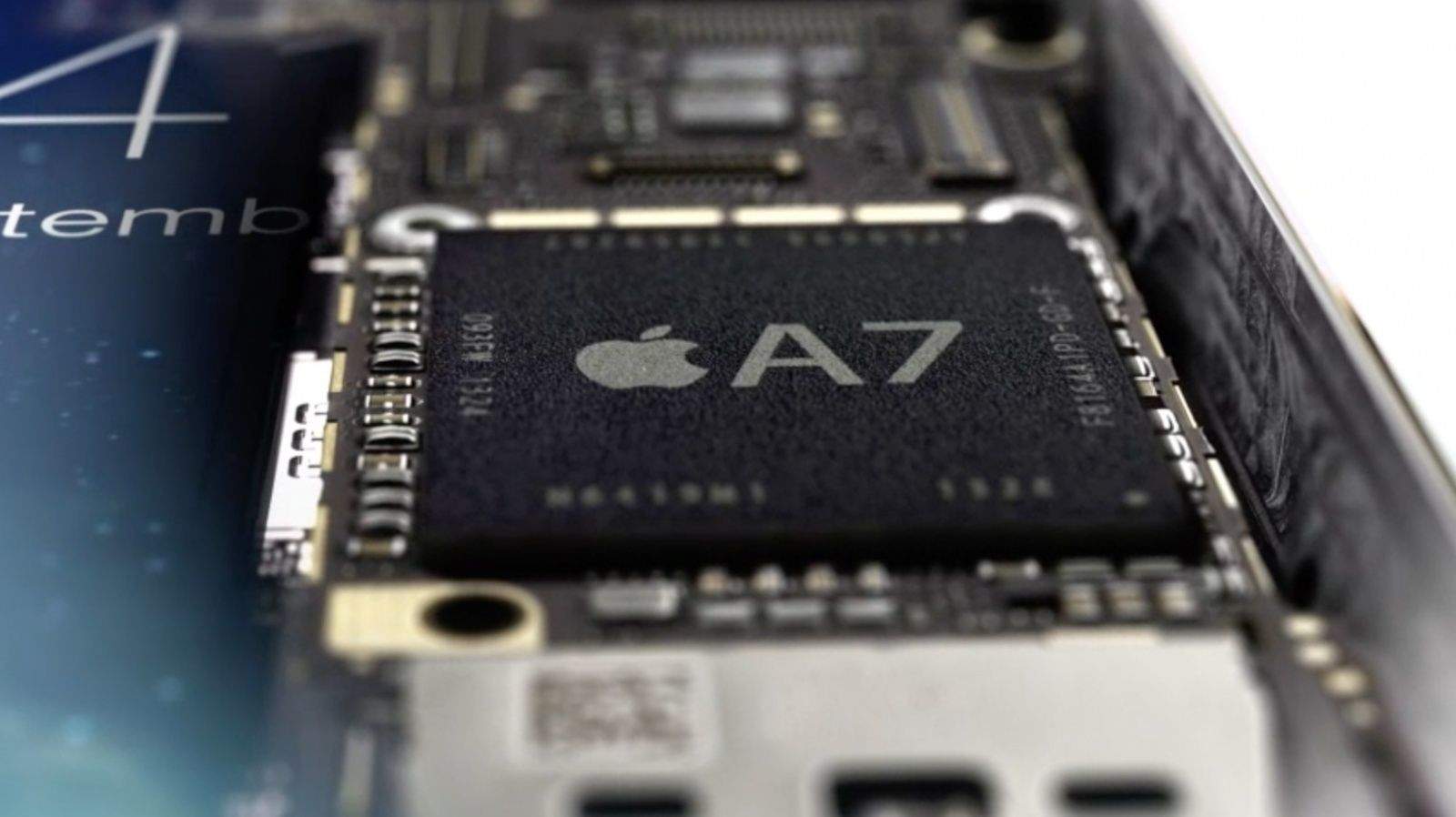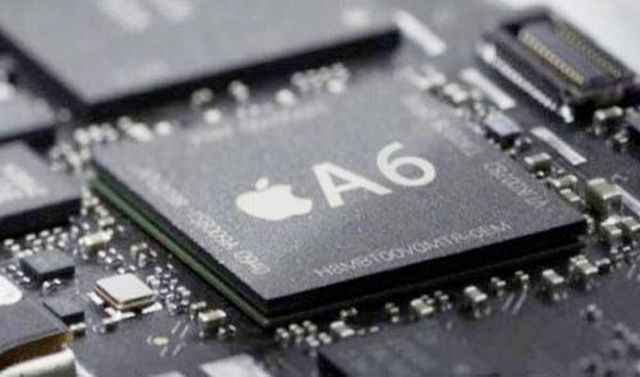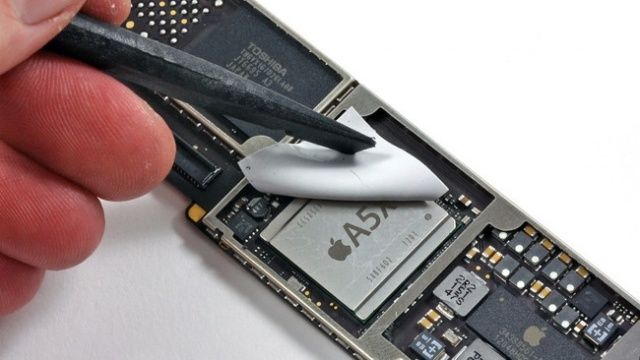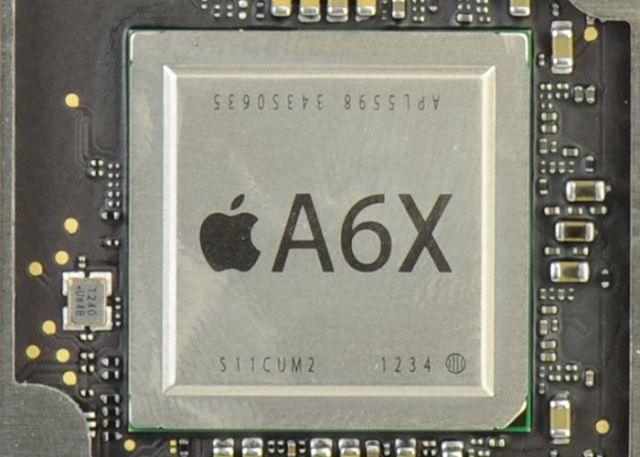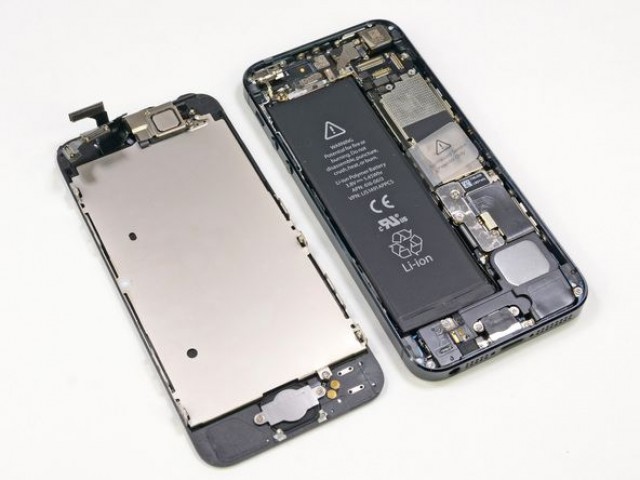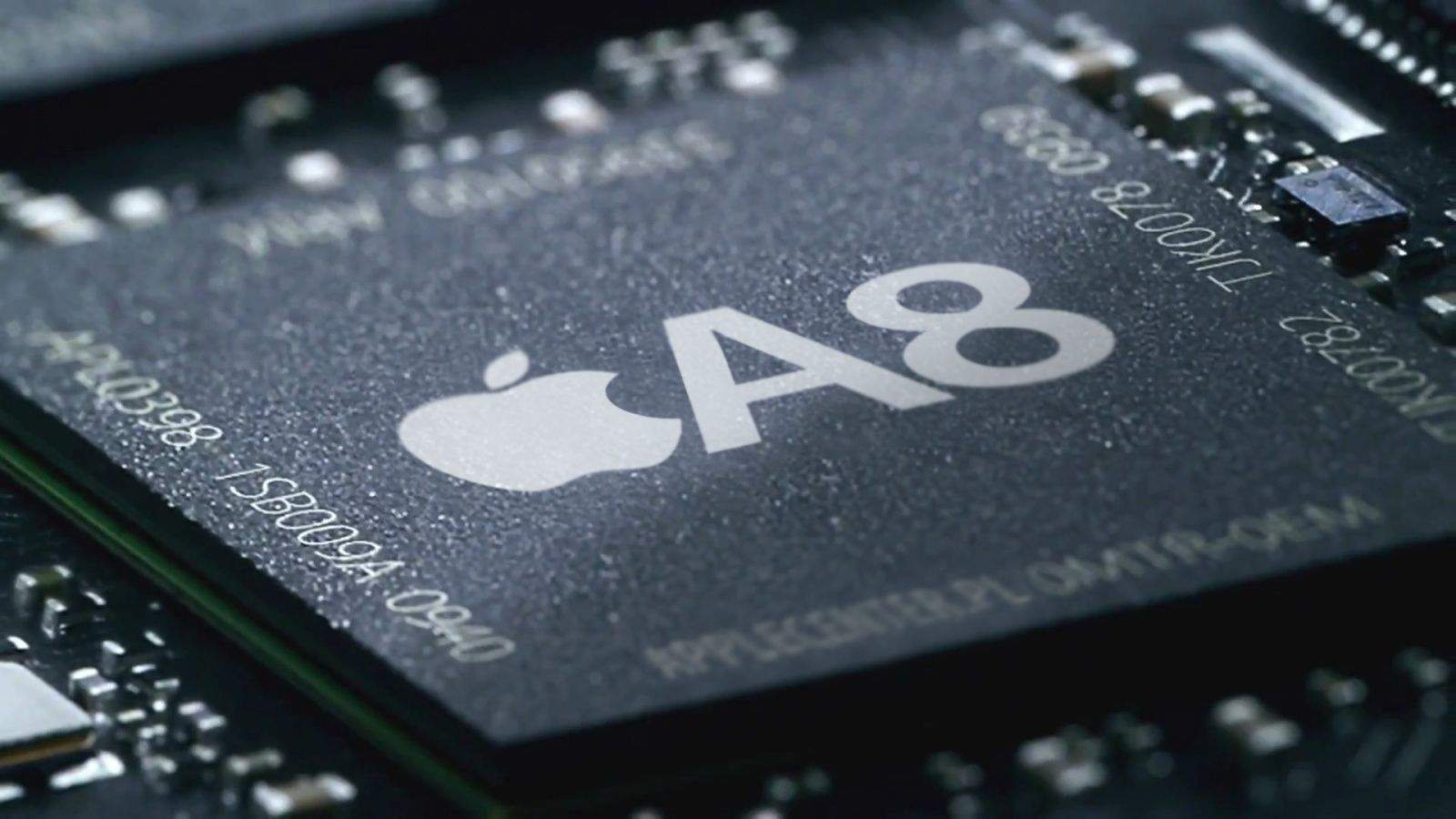
The 2nd gen iPad Air's A8X chip and logic board. Photo: Apple.Club.tw
There have been plenty of reports lately about Apple’s plans to unleash a giant-sized 12.9-inch iPad early next year, and according to a new report from Digitimes, Taiwan Semiconductor Manufacturing Company (TSMC) has landed the orders to make its soup-up processor.
TSMC is one of Apple's biggest partners. Photo: Apple/TSMC
Apple is still reliant on Samsung for many of the iPhone’s internal components, including the fabrication of its almighty A-series processors, but in an effort to secure more processor orders from Apple, Taiwan Semiconductor Manufacturing Company (TSMC) is already ahead of schedule with production of the next-generation A9 processor.
In a recent press conference, Samsung executives admitted how its role as third party chip manufacturer (something which makes up half of Samsung’s microprocessor business) is being negatively affected by Apple’s decision to work with other partners like TSMC.
There’s a line in 1990’s The Godfather: Part III when Al Pacino’s Michael describes his inability to extract his family from a life of crime, saying: “Just when I thought I was out, they pull me back in.”
Much the same could be said for Apple’s relationship with long-time chip supplier and bitter rival, Samsung. Having previously heard that Apple was handing the majority of the iPhone 6 chip orders to Taiwan Semiconductor Manufacturing Co Ltd (TSMC), a new report suggests that TMSMC is now likely to lose future orders (most likely for the next-next generation iPhone 6s) back to Samsung.
KGI Securities analyst Michael Liu claims that TSMC will be supplanted by Samsung in the production of 14-nanometre A-series smartphone chips for Apple and Qualcomm, beginning in the second half of 2015.
Taiwan Semiconductor Manufacturing Co. (TSMC) has reportedly started shipping its first batch of iPhone and iPad microprocessors to Apple, according to sources familiar with the matter.
By making microprocessors for Apple, TSMC is taking over a role previously carried out by Samsung. Some skeptics had previously suggested that TSMC — which is the world’s biggest contract chipmaker in terms of revenue — wouldn’t be able to deliver the complex chips to Apple’s satisfaction.
Although reports have surfaced that Apple may be building a top secret $10 billion chip fab, right now, the vast majority of Apple’s A-series chips are made by Samsung. This is obviously not an ideal situation, as it gives Apple’s arch smartphone rival the advantage of knowing what the iPhone-maker is planning on doing next, at least from a silicon perspective.
It looks like Apple may soon be able to rely less on its nemesis when it comes to building chips, though. A new report says that Taiwan Semiconductor Manufacturing Company (TSMC) will largely take over for Samsung in making iPhone and iPad chips in the future. And they’ll be pretty crazy advanced chips, too, at least if the rumors can be believed.
As the battle for global smartphone supremacy has matured into just a two company battle pitting Apple against Samsung, Cupertino is looking to add more between itself and its archenemy by becoming less dependent on Samsung to build chips like the A7 processor featured in the iPhone 5s.
While Apple can’t totally rid itself of Samsung components just yet, a new report claims that Apple plans to lean on Taiwan Semiconductor Manufacturing Co. (TSMC) to handle more of the manufacturing of the A8 processor next year, rather than giving all the work to Samsung.
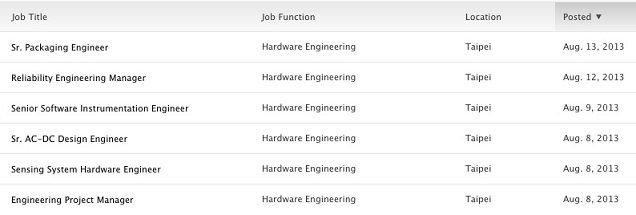
Following reports that it was looking to open a new research and development center in Taiwan, Apple is now going on a massive hiring binge in China for talented engineers, having recently put up openings for over 300 new employees in Taiwan on the professional social networking site LinkedIn.
Apple may be forced to reduce its iPhone 5S orders for the fourth quarter of 2013 due to supply constraints affecting the handset’s rumored fingerprint sensor and LCD driver chips. Both components were expected to enter production in late June or early July, but that’s now been pushed back into late July, according to industry sources.
Samsung Electronics has reached a deal with Apple to supply A9 processors for the iPhone 7 from 2015, The Korea Economic Daily reports. Samsung has been producing Apple’s mobile processors since the iPhone first launched in 2007, but recent rumors have claimed the Cupertino company has been looking to take its business elsewhere.
TSMC is one of Apple's biggest partners. Photo: Apple/TSMC
Apple and Samsung are heated rivals when it comes to selling smartphones and tablets, but the two companies are still in bed behind the scenes. Samsung makes the majority of Apple’s processors for the iPhone and iPad, and there hasn’t been another manufacturer that’s capable of replacing Samsung’s assembly line prowess.
Moves are being made to distance Samsung from the iPhone’s guts, however. A deal with TSMC (Taiwan Semiconductor Manufacturing) has been struck for Apple’s mobile processors. TSMC will start making a chunk of the ‘A’ series chips for Apple in 2014, but Samsung is still supplying the bulk of the orders.
The Wall Street Journal confirmed the deal over this past weekend after Digitimes recently said that TSMC will start making upcoming chips for Apple’s next-gen devices. “TSMC plans to start mass-producing the chips early next year using advanced “20-nanometer” technology, which makes the chips potentially smaller and more energy-efficient,” according to the Journal.
Taiwan Semiconductor Manufacturing Company (TSMC) has reached a deal with Apple to supply its next-generation A8, A9, and A9X processors for iOS devices, according to industry sources. The company will reportedly begin manufacturing the chips using a 20-nanometer process, then upgrade to 16-nanometer and later 10-nanometer processes in the future.
Taiwan Semiconductor Manufacturing Co. (TSMC) will reportedly land a deal for Apple’s future “A7” processors when the Cupertino company’s current contract with Samsung expires in 2014.
Samsung has been responsible for Apple’s mobile chips since the introduction of the A4 back in 2010, but Apple has seemingly been looking to take its business elsewhere since the pair became embroiled in a series of lengthy legal battles.
A questionable rumor from Digitimes suggests that Intel might make 10% of all of Apple’s A7 processors. If the rumor’s true, though, here’s how it would probably play out.
Being in business with Apple can’t be all that bad right now. Despite a report this morning that claimed Apple’s suppliers experienced weak sales in February, there are a few Apple suppliers that are hiring more employees to meet demand.
Both TSMC and Hon Hai are looking to hire 5,000 new employees, which might mean that Apple really is looking to ditch Samsung in favor of TSMC.
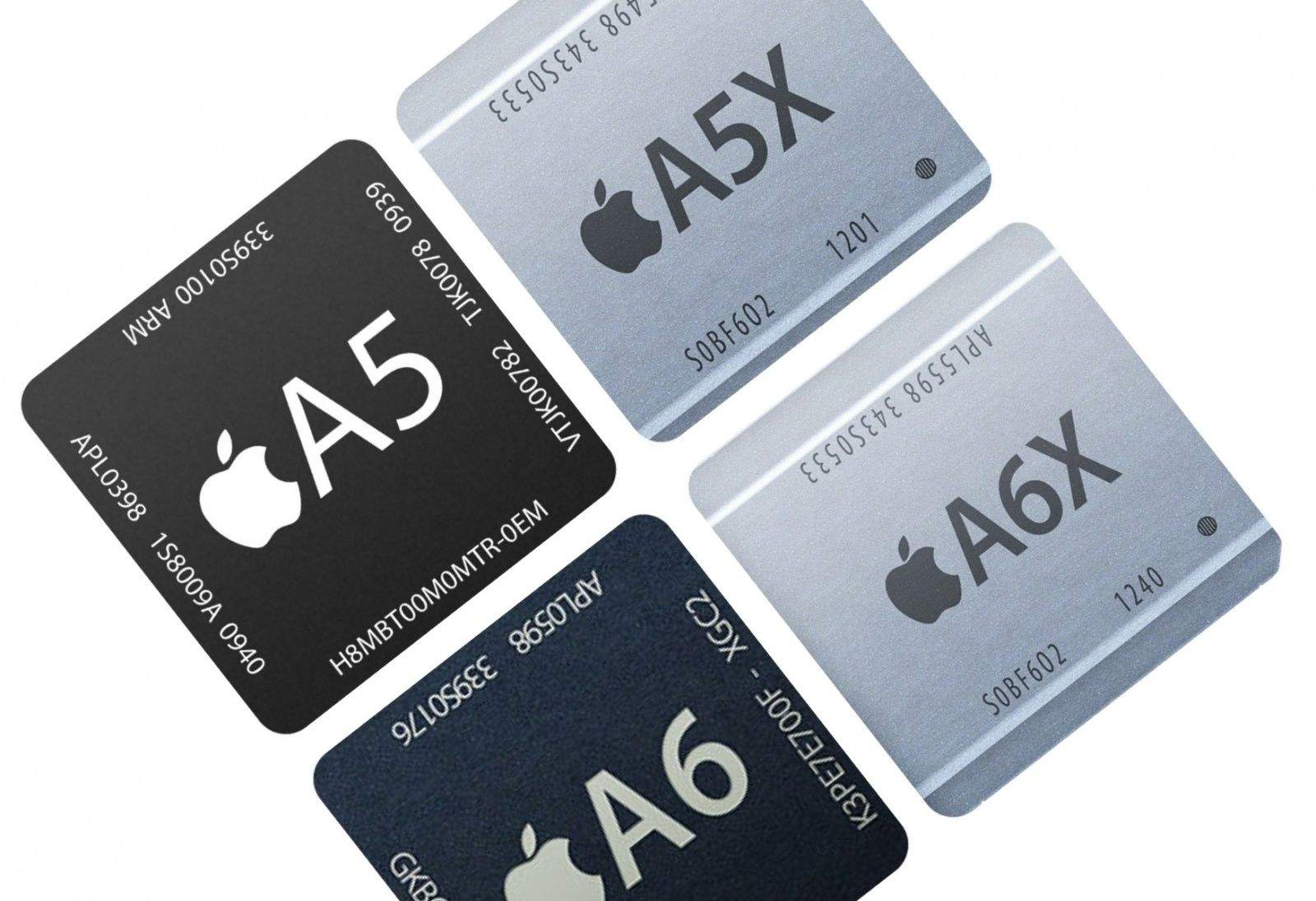
The Apple TV, Cupertino’s “hobby” of a set-top box, is often used to test out new fabrication process for the A-series chips that go into iPhones, iPod touches and iPads. The last Apple TV ran a 32nm A5 processor built by Samsung with a single-core disabled, which eventually ended up (in a dual-core capacity) in the iPad mini.
This could be the first ripple of a very big wave: the Commercial Times out of Taiwan is claiming that Taiwan Semiconductor Manufacturing (or TSMC) is about to start trial production for Apple’s A6X SoC this quarter.
Why is this a big deal? Apple’s arch-nemesis Samsung currently manufacturers the A6X chip… and it might herald Apple shifting all of its multi-billion dollar chip business away.
There’s been a lot of talk about Project Azalea, Apple’s rumored $10 billion project with TSMC to build a top-secret chip plant on domestic shores. We’ve heard it might be built in New York. We’ve heard it might be built in Portland. Wherever it’s built, though, it’s believed to be a major blow against Apple’s frenemy Samsung, who currently builds the majority of Apple’s custom ARM chips.
Unfortunately, it turns out that Project Azalea might not have anything to do with Apple after all, with TSMC’s CEO himself now denying it.
Productions rates for the iPhone 5 are improving, supply sources claim, just in time for the handset to make its debut in more than 50 additional markets throughout December. Now that Apple has caught up with demand, the handset’s shipping delay has been reduced from four weeks to just 2-4 business days. Suppliers now expect the Cupertino company to sell 45 million iPhone 5 units during the fourth quarter alone.
Exclusivity to TSMC's production would make things very difficult for Apple's competitors.
In an effort to better meet the demand of its mobile devices — and make things very difficult for its competitors — Apple has reportedly been bidding to secure exclusive access to TSMC’s (Taiwan Semiconductor Manufacturing Co.) custom smartphone chips. Qualcomm has also been bidding up against the Cupertino company, and both parties are believed to have submitted bids in excess of $1 billion.
Like its iPhone, iPad, and iPod touch which utilize the company’s A4 and A5 processors, Apple’s upcoming television set will be powered by a custom-built chip made specifically for the Cupertino company. Sources claim that a number of manufacturers are currently bidding for Apple’s order, including Taiwan Semiconductor Manufacturing Company (TSMC), Advanced Semiconductor Engineering (ASE), and Siliconware Precision Industries (SPIL).
While most of the components crammed inside your iOS devices are built by low-cost Asian manufacturers, its dual-core A5 processor is actually built a little closer to home — at Samsung’s new factory in Austin, Texas.
Though the iPhone is still yet to benefit from Apple’s latest dual-core A5 chip, the company has already begun testing its successor, according to a Reuters report. However, it may not be produced by Samsung like its predecessors.