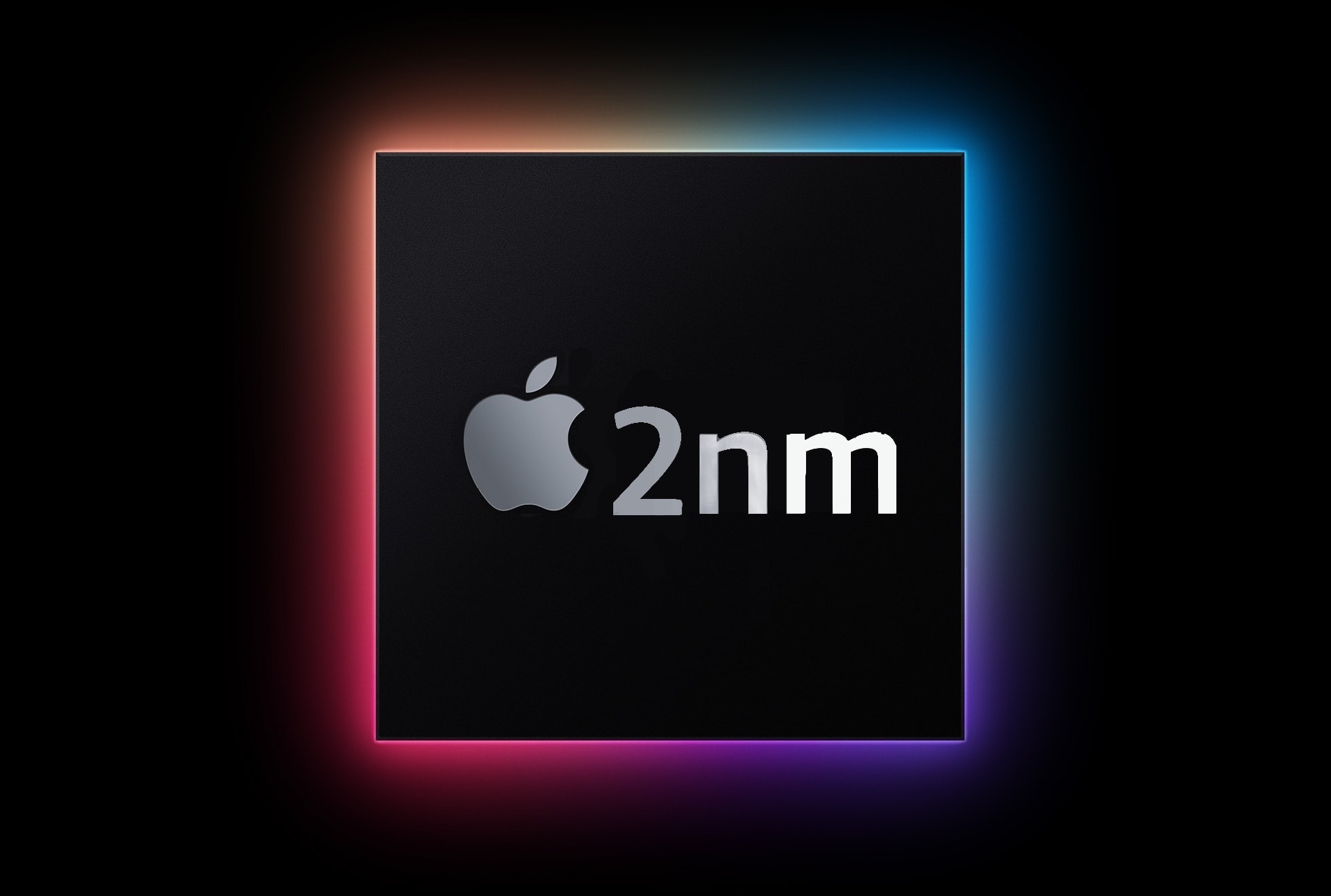
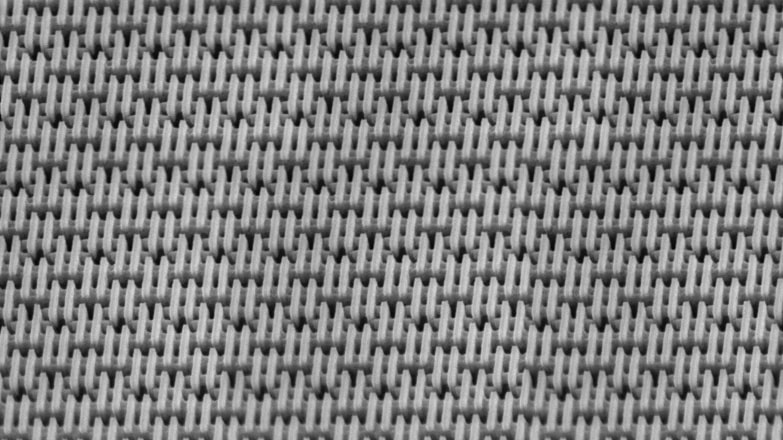
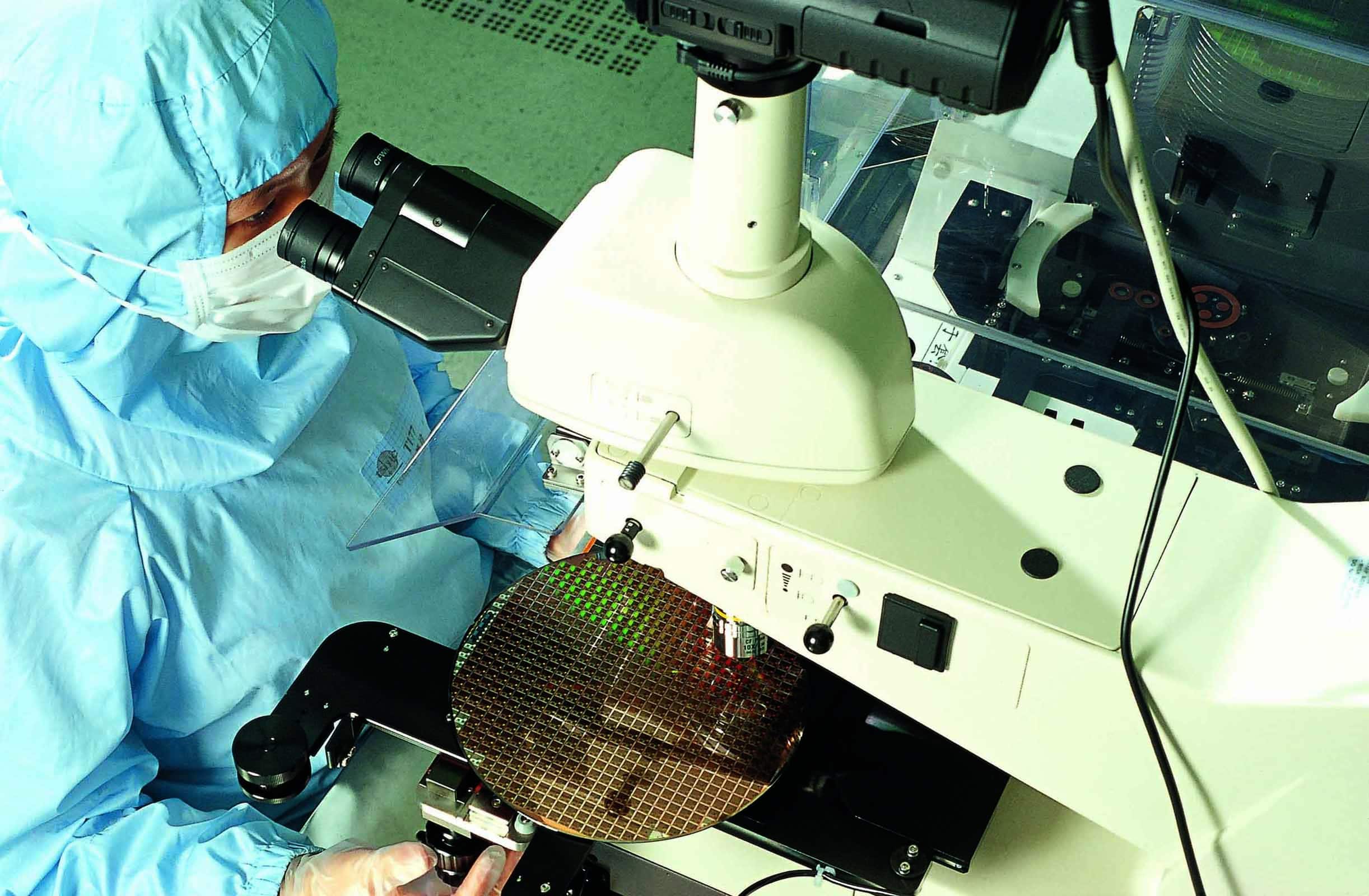
2nm processors made by TSMC will be faster while using less power than today's 5nm iPhone and Mac chips. Image: Ed Hardy/Cult of Mac
TSMC is preparing to supply Apple with 2nm processors in less than two years. These next-gen chips will give Mac, iPhone and iPad even better performance, without requiring more power to operate.
The 3nm chips in the latest Apple computers are cutting-edge, but what’s at the forefront of technology is constantly moving ahead.
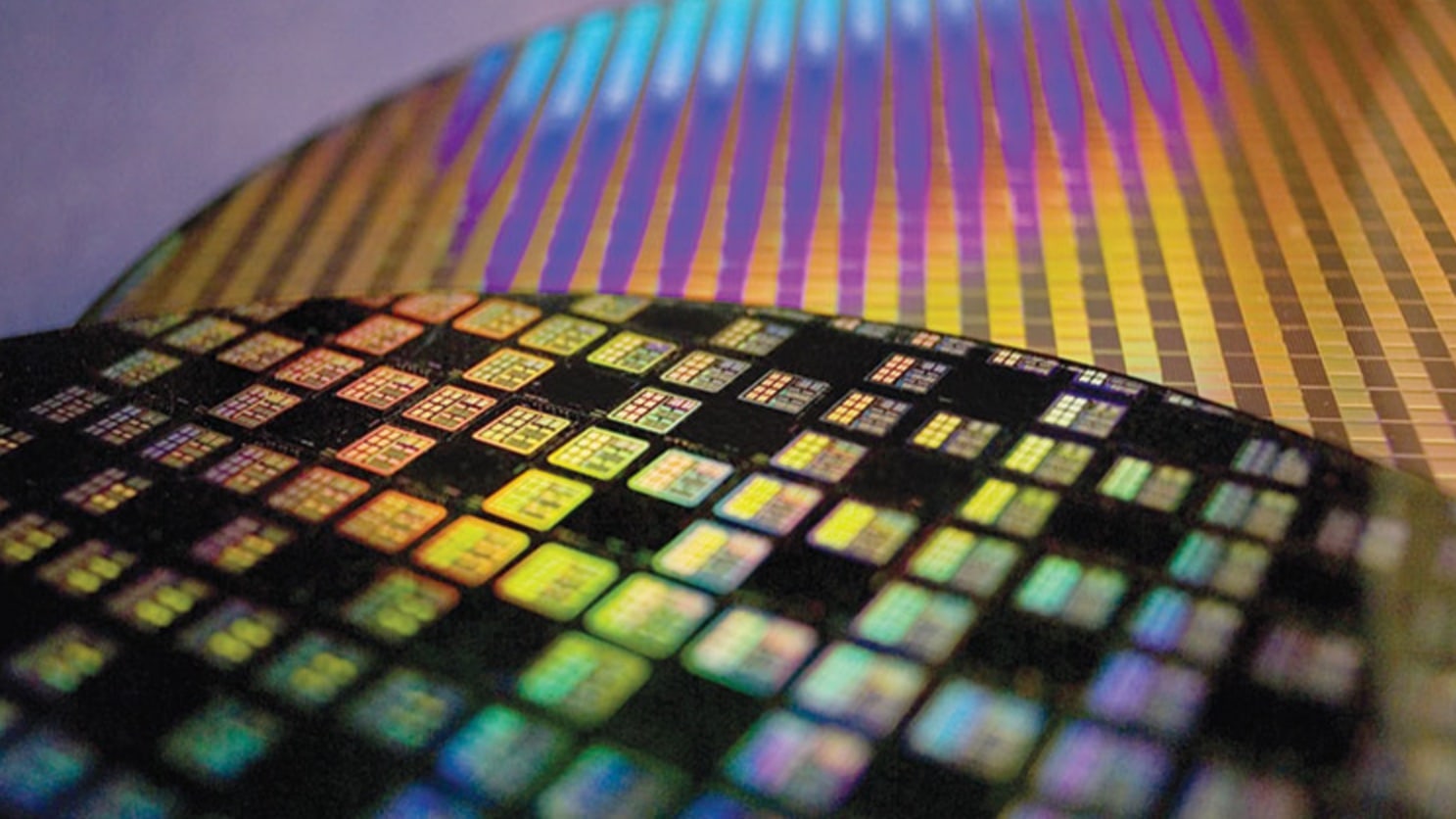
Chip wafers can't simply be plugged into a computer. They must be packaged first. Photo: TSMC
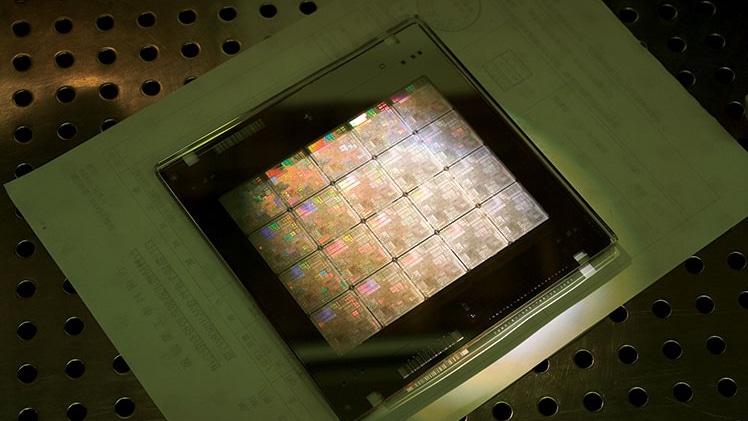
Apple silicon processors that TSMC makes at its Arizona plant will be packaged by Amkor at a nearby facility. This will save them from having to be shipped to Taiwan before going into iPhone, Mac, etc.
“Apple is deeply committed to the future of American manufacturing, and we’ll continue to expand our investment here in the United States,” said Jeff Williams, Apple’s COO. “Apple silicon has unlocked new levels of performance for our users, enabling them to do things they could never do before, and we are thrilled that Apple silicon will soon be produced and packaged in Arizona.”
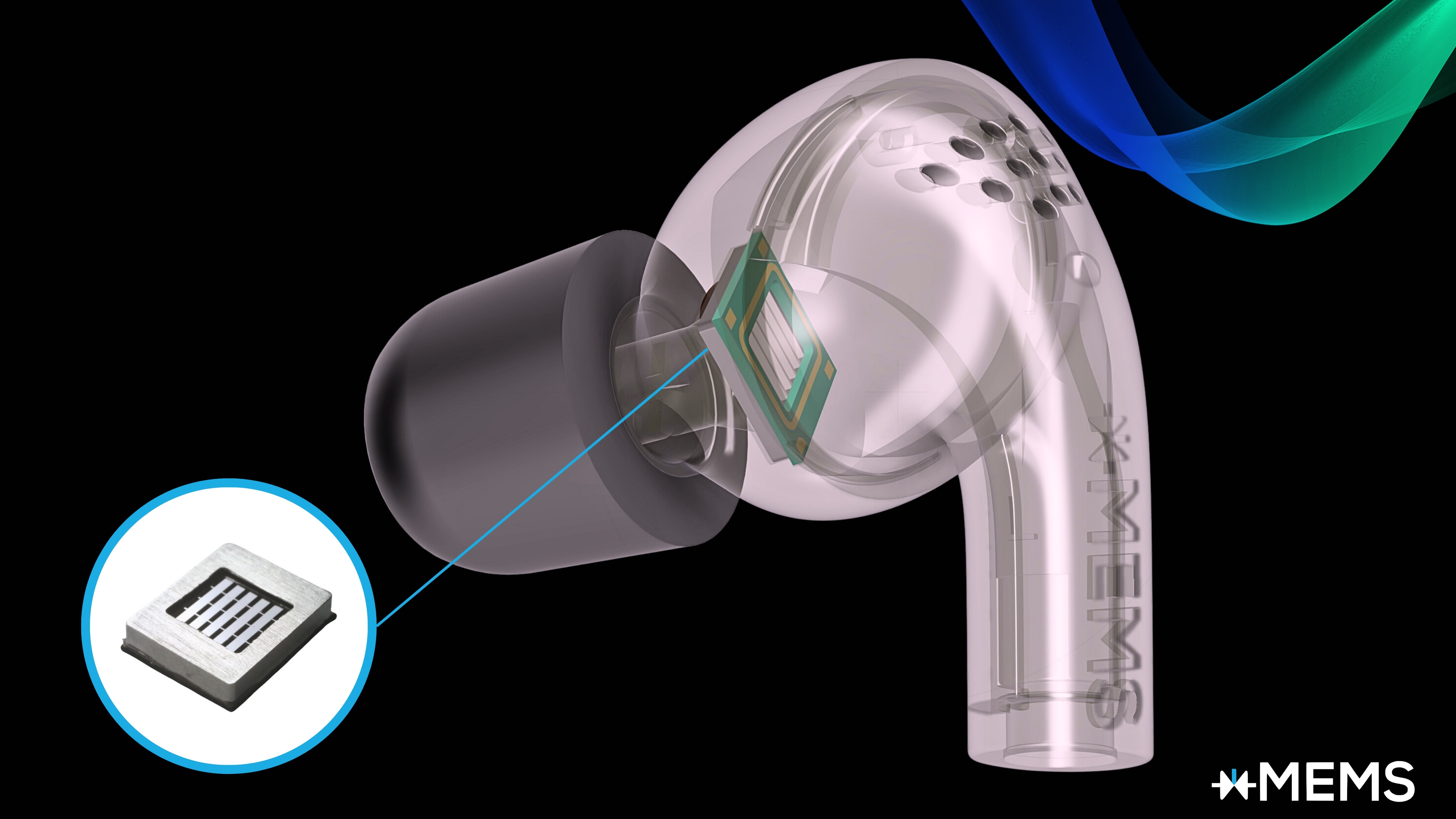
The Cypress ultrasonic speaker promises a leap in digital sound quality. Photo: xMEMS
xMEMS Labs is bringing what it calls breakthrough technology to the wireless earbuds market late next year after a CES 2024 debut — the Cypress ultrasonic speaker. It turns ultrasonic waves we normally can’t even hear into full-frequency, hi-res audio with remarkable detail, the California-based semiconductor company said Tuesday.
The solid-state microspeaker, which will find its way into various companies’ earbuds and headphones — hello, AirPods? — generates low-frequency sound pressure for a full bass response, according to xMEMS Labs.
That makes the ultrasonic speaker a true replacement for legacy speaker technology that has only been refined, not replaced, since your great-grandparents rocked the Victrola.
Why can't we have a real red iPhone 15 Pro?!? Image: Cult of Mac
This week on Cult of Mac’s podcast: The latest rumor indicates Apple just can’t kick its obsession with lackluster iPhone colors. Yes, the iPhone 15 Pro might come in “dark sienna,” aka the red that dare not speak its name.
If so, you can color us disappointed.
Also on The CultCast:
Apple’s longstanding dream of adding a blood glucose monitor to Apple Watch takes an important step forward.
New leaks and rumors give us an even better look at what iPhone 15 might bring.
Tim Cook reportedly hoovers up the entire output of TSMC’s next-gen 3nm chips. Power move!
Apple Watch faces a legal hurdle that could get it banned in the USA. (Spoiler alert: Not gonna happen.)
Listen to this week’s episode of The CultCast in the Podcasts app or your favorite podcast app. (Be sure to subscribe and leave us a review if you like it!) Or watch the video live stream, embedded below.
Our sponsor: Dashlane
Everybody needs a password manager. Why not go with one that’s never been breached? That would be Dashlane. You can try Dashlane for free on your first device. Or take 50% off with promo code cultofmac50 when you upgrade to a premium plan across unlimited devices.
The 3nm chips TSMC makes all go to Apple. Photo: TSMC
TSMC can now make 3nm processors, and Apple is all in. Literally all in — it’s reportedly buying the Taiwanese foundry’s complete output of 3nm chips.
This will be in the form of the upcoming Apple A17 and M3 processors, which are expected to both be made with the new process. It will make them faster and more energy efficient.
TSMC is investing heavily in an Arizona plant that will make chips for Apple and other companies. Photo: TSMC
TSMC is going large with its Arizona plant. The Taiwanese company that makes processors for almost every type of Apple device committed itself to putting $3.5 billion into its U.S. subsidiary. And that’s only part of the eventual cost.
Apple has already promised to use chips made at the plant.
The wait for M2 Pro/Max MacBook Pro continues. Image: Ed Hardy/Cult of Mac
Apple’s M2 Pro/Max MacBook Pros launch could have hit another roadblock. Rumors indicated the new Macs could debut in Q1 2023, but that does not seem to be the case anymore.
The reason behind the latest delay in the next-gen MacBook Pro’s launch is unclear.
Apple chips keep shrinking, which makes them more efficient. Photo: TSMC
Taiwan Semiconductor Manufacturing Company began cranking out chips using its new 3nm process Thursday at its Tainan plant. But, never one to rest on its laurels, TSMC is already laying the groundwork for 2nm processors.
Apple is expected to be among the first companies to benefit from the cutting-edge chips, which will be faster while requiring less power.
Apple will reportedly be one of the first companies in the world able to offer processors made with a 3nm process. Photo: Apple/Cult of Mac
3 nanometer chip production is about to begin at Taiwan Semiconductor Manufacturing Company. This is important news for Apple, as TSMC makes the CPUs for Mac, iPhone, iPad, etc.
Apple is expected to use 3nm processors in products launching in 2023, making the devices faster and more efficient.
TSMC will start producing advanced 3nm processors for Apple in a factory in Arizona. Photo: Apple/Cult of Mac
Apple CEO Tim Cook said Tuesday that his company will buy processors made in Arizona by TSMC, which currently produces Apple’s most sophisticated chips primarily in Taiwan.
Plus, Taiwan Semiconductor Manufacturing Company revealed that it will pour even more billions into Arizona by adding a second chip factory in the state.
Apple will reportedly be one of the first companies in the world able to offer processors made with a 3nm process. Photo: Apple/Cult of Mac
Apple’s upcoming M2 Pro chip will be made with an improved manufacturing process that will make it even faster and more energy-efficient, according to an unconfirmed report. Taiwan Semiconductor Manufacturing Company’s 3nm process supposedly will be used on the M2 Pro, as well as the M3.
Quite a few Macs using these chips are already in the pipeline.
2nm processors made by TSMC will be faster while using less power than today's 5nm iPhone and Mac chips. Image: Ed Hardy/Cult of Mac
iPhones will continue getting smaller, faster and more efficient processors for years to come. TSMC, the company that manufactures all Apple’s chips, says it should be able produce processors in 2025 that are an amazing 2nm. These should make today’s fastest Macs and iPhones look like slugs in comparison.
Rival Intel is working hard to keep up. It says it’ll pass TSMC in a few years – but it’s missed plenty of similar self-imposed deadlines over the years.
TSMC, the company that makes CPUs for iPhone and Mac, will have a 3 nanometer production process up and running in the second half of 2022. But that’s almost certainly too late for Apple’s upcoming A16 and M2 processors.
Still, these chips will benefit from TSMC’s 4nm process.
TSMC beats out Samsung for Apple's orders. Image: Killian Bell/Cult of Mac
Apple’s most recent iPhone models offer better battery life than any of their rivals — and it could be about to get even better. Cupertino is reportedly preparing a new 5G chip that is even more efficient for iPhone 14.
Supply chain sources say the chip will be manufactured exclusively by TSMC using its latest 6-nanometer process, with Samsung losing out on orders.
TSMC is working hard (and spending big) to boost its output. Photo: TSMC
Future Apple devices could be powered by chipsets manufactured in Germany, with the company’s primary silicon supplier in talks over a new production facility in western Europe, according to a new report.
Negotiations are said to be in the early stages for now, so it’s far from a done deal. TSMC SVP Lora Ho said a number of factors will play a part in its decisions, including government subsidies and the availability of local talent.
Qualcomm is slowly but surely getting the boot. Image: Killian Bell/Cult of Mac
Taiwan Semiconductor Manufacturing Company, Apple’s primary chip production partner, will start manufacturing custom 5G modem chips for iPhone in 2023, according to a new report, which cites four different sources familiar with the plan.
TSMC reportedly will build the chips using a 4-nanometer manufacturing process. The proprietary modems would allow Apple to reduce its reliability on rival chipmaker Qualcomm.
The A16 is expected to be the heart of the iPhone 14. Graphic: Apple/Ed Hardy/Cult of Mac
Apple reportedly won‘t be able get chips made with a cutting-edge 3nm process for the iPhone 14, so it supposedly might switch to 4nm. The change would result in an iPhone that’s not as much an improvement over the current one as had been thought.
This isn’t a result of the global shortage in processors. Chip-maker TSMC is allegedly having problems with its 3nm process.
TSMC is planning its biggest price hike in over a decade. Photo: TSMC
Apple’s most popular devices could get even more expensive next year, with chip-maker TSMC said to be planning its biggest price increase in more than a decade. The move could also affect companies like Nvidia and Qualcomm.
Sources are blaming the price hike on a number of factors, including higher material costs and the ongoing chip shortage, which has encouraged some device vendors to buy up more components than they actually need.
Apple chip-maker TSMC is increasing prices by as much as 20%. Photo: Ed Hardy/Cult of Mac
iPhone 13 may not be as affordable as iPhone 12, after all. A new report claims Apple is planning to hike prices for its next-generation smartphone lineup to cover the rising costs of its powerful chipsets.
Apple’s primary chip supplier, TSMC, has reportedly notified all customers that it will be increasing prices by as much as 20%, starting in January 2022.
TSMC is one of Apple's biggest partners. Photo: Apple/TSMC
TSMC is the world’s largest pure-play semiconductor maker and 20% of its entire revenue comes from making processors for Apple. The Taiwanese chip-maker produces all the CPUs for Mac, iPhone, iPad and Apple Watch.
Apple will reportedly be one of the first companies in the world able to offer processors made with a 3nm process. Photo: Apple/Cult of Mac
Apple’s computers could take another step ahead of the competition in 2022 with processors made with a 3nm process. This would bring better performance to iPhone and/or Mac while using less power than its current chips.
The Mac-maker’s current processors are made with a 5nm process, which already puts them ahead of the curve.
TSMC makes Apple Silicon chips for Apple. Photo: Apple
Apple chipmaker TSMC, which makes both Apple’s A-series and Apple Silicon chips, says that its production lines have been hit by a gas leak. This has affected some of its chip production — including the advanced chip fab used for upcoming iPhones and Macs.
“To ensure that there will be no issues with production quality, TSMC is currently carrying out stringent follow-up operations,” TSMC said. It told Reuters that it doesn’t expect this to he a “significant impact” on operations.
The 2022 iPad Pro could ship with a next-generation chipset manufactured using a cutting-edge 3-nanometer process, according to a new report out of Asia, citing several sources familiar with the matter.
The upgrade would lead to even greater performance for what is already one of Apple’s fastest mobile devices. But we may have to wait longer for the same technology to make its way to iPhone.
That should make it more likely that iPhone 13 ships on time. Concept: Ed Hardy/Cult of Mac
There’s a global semiconductor shortage, but Apple’s got a leg up on some of its rivals. According to a Tuesday report from Digitimes, Taiwan Semiconductor Manufacturing Company, the world’s largest chip fab, says it will prioritize Apple orders.
TSMC builds the A-series chips for iPhones, as well as the M1 chip for Macs and the latest iPad Pro. The company is currently working on the new A15 chips for this year’s iPhone refresh. Beyond that, it’s gearing up to produce next year’s A-series chips, which will be made with either a 4-nanometer or 3-nanometer process.
Apple chip manufacturer is looking to the future. Concept: Ed Hardy/Cult of Mac
Taiwan Semiconductor Manufacturing Company is already looking beyond the A15 chip that will come with this year’s iPhone 13. According to a Friday report, the world’s biggest chip fab is “fast advancing” its 4-nanometer and 3-nanometer processes ready for mass manufacturing.
Digitimes reports that TSMC’s 4-nanometer process will move into risk production in the third quarter of 2021. Risk production is a smaller production run of new hardware to sort out any problems. If there are none, TSMC can then progress to volume production. The same report also claims that TSMC’s 3nm production process will commence volume production in the second half of 2022.