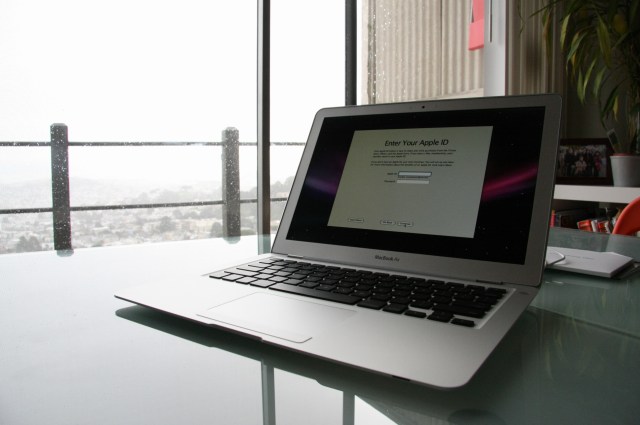
Will Apple, as rumored, shift the MacBook line over to an ARM processor this year, starting with the MacBook Air? If you answered yes to that question, one analyst has some compelling reasons why you might just be huffing fumes.
Sporting Intel’s Sandy Bridge processors, powerful new graphics cards and Thunderbolt ports that can support two external monitors, the new iMac is the undisputed champion of all-in-one machines. Plus, it’s the only one out there that’s not butt ugly.
As well as being the most attractive desktop computer available, it offers just about everything modern computer users might need in a self-contained package, from a HD webcam to a gesture-sensitive trackpad.
I’ve been testing a 27-inch model with a 3.1Ghz Core i5 chip (the biggest, fastest stock model currently available at the Apple Store), and it may sound silly, but it’s almost too much machine for my needs. The screen is so big, I have to sit back lest I get motion sickness. And the i5 chip has power to spare for someone like me, who doesn’t do high-end video or graphics work.
Still, I’ll take it. If the chip is too powerful now, it sure won’t be in a couple of years.
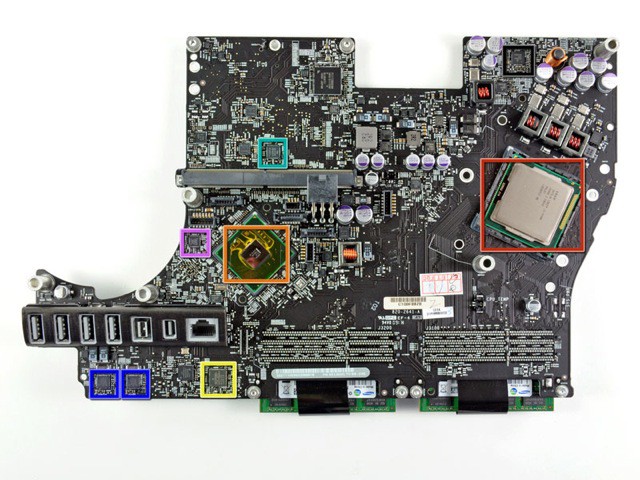
Apple’s new family of iMac all-in-ones released earlier this week boast an Intel BD82Z68 platform controller hub that isn’t scheduled for release until May 11th. The Z68 chip, designed for Sandy Bridge 1155, was first discovered by TonyMacx86 and later confirmed in an iFixit teardown.
The Z68 allows for solid-state drive data caching when a system is equipped with a combination of storage drives. So users could install a small, relatively cheap SSD along with their traditional hard disk drive and have the SSD serve as a cache – dramatically increasing access speeds to their files and applications. The new iMacs can be ordered with both an SSD and a traditional hard disk drive installed, and the Z68 can allow users to see this combination as just one drive on their Mac.
Here’s the new 2011 Thunderbolt iMac playing HD movies on three screens simultaneously — without a hiccup.
It’s a 27-inch model with an Intel Core i5 chip and AMD’s Radeon HD 6970 graphics card (1GB of GDDR5 memory).
The two 21-inch Dell monitors either side are connected via the iMac’s pair of Thunderbolt/Mini DisplayPort jacks on the back (with a pair of pricey $30 Mini-DisplayPort-to-DVI adapters).
The main 27-inch display’s resolution is 2,560-by-1,440; while the external monitors are at 1,920 by 1,080 (true 1080p HD).
Apple’s online store is back up following some downtime this morning and just as we all expected, it now features a nice new family of iMacs.
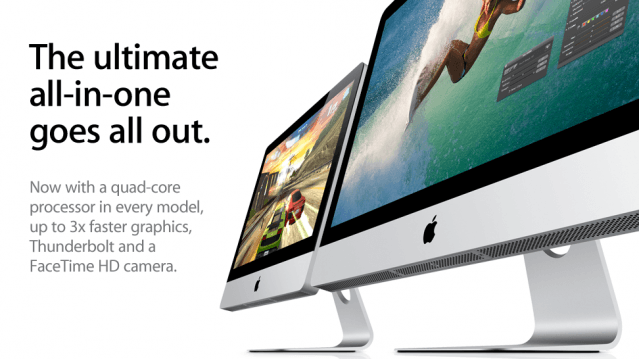
These new all-in-ones boast Intel’s next-generation quad-core i5 and i7 processors, the company’s high-speed Thunderbolt technology, 3x faster graphics, and a FaceTime HD camera.
There are four new iMacs to choose from starting at $1,199 – two 21.5-inch models and two 27-inch models – all four come with 4GB of RAM and a FaceTime HD camera capable of shooting video in 720p.
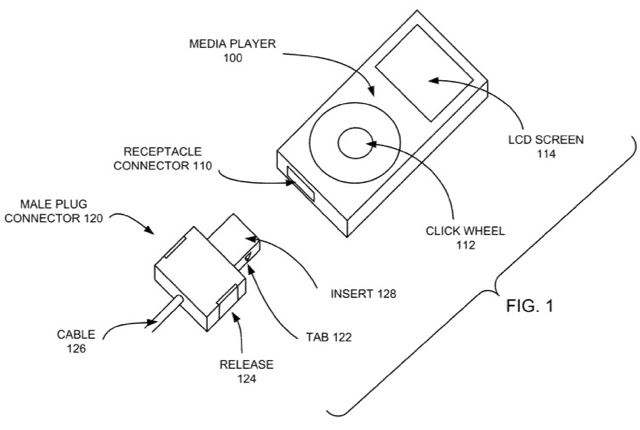
Apple is working on a new dock connector for its devices that will boast high-speed connections including USB 3.0 and Thunderbolt, according to a new patent published by the U.S. Patent and Trademark Office on Tuesday. Entitled “Reduced Size Multi-Pin Male Plug Connector,” the patent reveals a smaller 30-pin dock connector that will also feature a dual-lane DisplayPort.
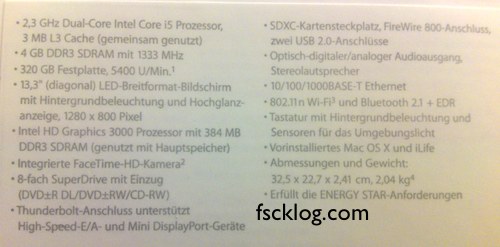
Fscklog has just posted a photo of what they believe are the specs to the new 13-inch MacBook Pro, which should be due out any day now.
Here are the specs, translated from German
• 2.3Ghz Sandy Bridge Dual-Core Intel Core i5 Processor with a 3MB L3 Cache
• 4GB of DDR3 RAM clocked at 1333MHz
• A 320GB hard drive
• a 13.3-inch diagonal LED backlit display with a 1280×800 pixel resolution.
• Intel HD Graphics 3000 with 384MB of DDR3 RAM.
• An integrated FaceTime-HD camera
• An 8x Superdrive
• Two USB 2 ports, an SD card reader, FireWire 800, a MiniDisplay Port, Ethernet and, most interestingly, Thunderbolt port (this is very possibly the Apple-branded implementation of Light Peak we’ve been hearing about).
Overall? It seems the 13-inch model is not the radical re-imagining we’ve been hearing about for the last few days. It’s not made of Liquid Metal, there’s no SSD and the new MBP has an identical chassis design to the old model. Short of the new Thunderbolt port and the leap to Sandy Bridge, these aren’t markedly different than the last generation of 13-inch MBPs. That said, the 13-incher is the entry-level MBP model. Perhaps Apple has something more radical afoot for the 15- and 17-inch models.
After the jump, a look at the new MacBook Pro’s marketing materials and a close-up view of the Thunderbolt port.