2010 was a huge year for Apple news. As we close out the year, we look back at some of the year’s biggest stories and what they might mean for 2011.
Ten Big Apple Stories of 2010… And What They Mean For 2011 [Year in Review]


2010 was a huge year for Apple news. As we close out the year, we look back at some of the year’s biggest stories and what they might mean for 2011.
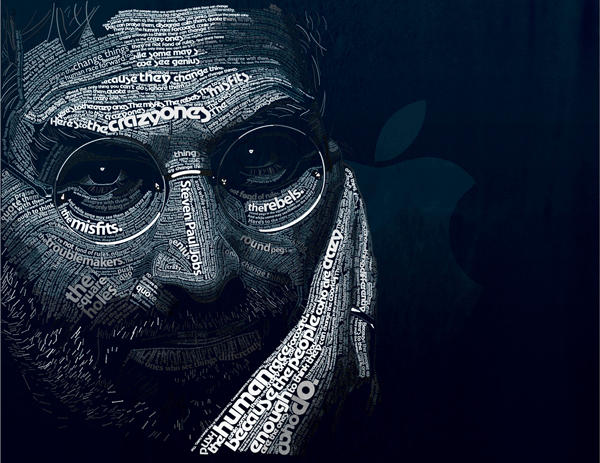
Even though he’s a pretty reserved and deeply private individual, Steve Jobs sure does churn out great lines every year. Here are the 10 Ten Steve Jobs Quotes of 2010

Skype’s official iOS client can now make video calls using an iPhone 3GS, iPhone 4, or fourth-generation iPod touch. People using any of these devices can share real-time video between themselves and people using Skype clients on Windows, Mac OS X, or Linux. If you are using an iPad or third-generation iPod touch you can receive video from the other clients, but since you don’t have a camera you won’t be able to send video.
The new client supports video over Wi-Fi and 3G connections and with an installed base of clients greater than those currently using FaceTime it may give FaceTime a run for its money.
Skype version 3.0 for iOS offers the following improvements:

A burglar was caught red-handed in Denver this week, thanks to an iPhone app that shows the camera feed from a home computer.
A woman named Claire, who gave only her first name to the press, uses the app to keep tabs on her dog while she travels. But when she logged in Tuesday, she saw a crook going through her stuff.
Police arrested a suspect. But when they told Claire that he didn’t steal anything, she informed them that in fact she has iPhone video of the suspect stealing her iPad.

When WIRED rolled out its first iPad edition, the publisher sold more than 100,000 copies. Everyone proclaimed the arrival of the electronic magazine at last.
Vanity Fair, GQ and Glamour also enjoyed healthy rollouts, though nothing near the WIRED debut.
But after initial success, iPad magazines are suddenly taking a dive. WIRED sales of subsequent editions have tanked to 22,000 and 23,000 for October and November, respectively. Other magazines have seen approximate 20% drops. Specifically, Vanity Fair dropped from 10,500 to 8,700 downloads; GQ from 13,000 to 11,000; Glamour from 4,301 to 2,775.
If iPad and electronic magazines are to gradually replace print, they’ve got to grow circulations, not shrink them. And they’ve got to at least do better than my Twitter feed.
Electronic magazine sales in general, and iPad sales in particular, will fail under the existing model.

While most of the Western world was wolfing down grammies Christmas pudding and singing Christmas carols, our gadget squad was quietly steeling itself (in between eggnog and unwrapping gifts, of course) for the onslaught of new tech at the monster of all gadget events, the annual Consumer Electronic Show in Las Vegas.
The madness kicks off early next week, and we’ll be smack in the middle supplying wall-to-wall coverage from the get-go. From advance information we’ve received, the really big news this year will be a dizzying acceleration toward hardware that interfaces with iDevices, including what seems like a massive dose of app-enhanced gadgets — gadgets that are built to interface with an iDevice and come with their own app, basically making the iPad or iPhone an intrinsic part of the gadget.
In fact, we were pretty surprised and disappointed during last year’s CES when it seemed all we could dredge up of the promising new concept was a clock and an insipid speaker dock. But the concept had only just been made available (with uncharacteristically little fanfare from Apple) earlier that year, and it seems gadget makers have caught up — we’re seeing teasers for everything from an iPhone-connected thermometer, to a car stereo that integrates the iPhone as a display to, a little bizarrely, an iPhone-controlled ball.
Not quite as cool but wider in appeal is the vast assortment of new wifi and Bluetooth connected sound hardware that’ll be on display; there’s also an increase in gadgets that stream and/or communicate with the cloud. And of course, we’ll be covering all the usual suspects: portable audio, speakers, docks, storage, cameras, gaming hardware, peripherals — you name it. Stay tuned.


That little iPhone camera became a something of a big shot in 2010.
iPhone photography broke into art galleries, including an itinerant exhibit in Apple stores, and if Flickr statistics are anything to go by, the humble iPhone camera may sound the death knell for point-and-shoot cameras.
Cult of Mac talked to Knox Bronson, who helped get those iPhone pics in galleries, about how to take better iPhone pics and what’s ahead for iPhone shutterbugs in 2011.
He also shared with us a gallery of favorites from his website, Pixels at an Exhibition, which encourages the use of apps but doesn’t allow for any post-production clean-up with programs like Photoshop.
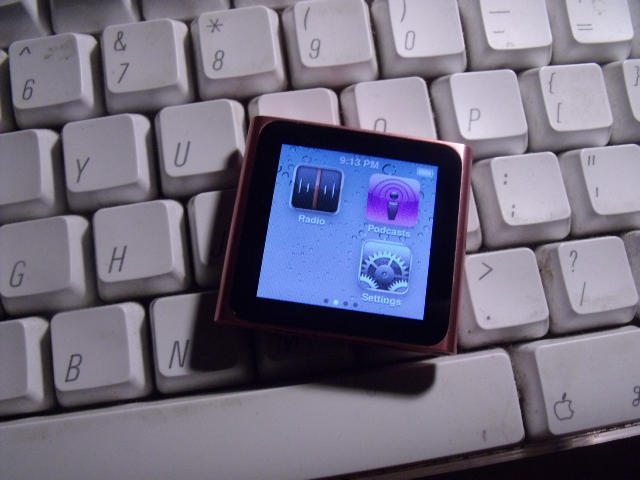
It may not really run iOS, but the latest touchscreen Nano has been hacked… and that hack may very well imply jailbreaks to come.
The hack was achieved by dev James Wheaton, who managed to install an alternate Springboard file that allowed him to remove an app from the device.
This might sound like a simple task, but it’s not: to achive the feat, Wheaton has to figure out how to bypass the Nano’s cache comparison, which scans the Springboard file for changes and reverts the device to factory settings if any mods are discovered.
In other words, it’s not that Wheaton was able to load a modified Springboard plist file deleting an app that is the big deal… it’s the circumvention of the Nano’s own anti-modding tech. That means the next step might be bonafide jailbreaking.
Wheaton’s discoveries don’t end there: he also found hidden support for apps, vCards, calendar events and more lingering in the firmware of the device. Even if the Nano will never run custom apps, some of that functionality may very well be able to be unlocked.

Apple gave us plenty to play with in 2010: most notably the iPad, the iPhone 4 and the new MacBook Air. But get ready, because in 2011, Apple will switch from giving to taking.
In his ongoing pursuit of Zen-like simplicity, Steve Jobs looks set to take away two key features of the Mac platform in 2011: optical drives and scroll bars. The impact is likely to be eye-watering for diehard Mac users, but we’ll probably come to see the wisdom of Jobs, eventually.

Japan’s Green Gables bakery has been selling life-size iPhone cookies for two years. But recently, photos have appeared on Twitter and elsewhere, sparking huge demand.
Originally, the small, local bakery made the cookie as a special birthday present for a customer’s husband. But thanks to social media, the $33 cookie is being ordered by hundreds of people around Japan (it’s unavailable outside the country, so you’ve got to know someone). The current waiting time for an iPhone cookie: Two months!

Retrospectively casting an eye over an incredible year for both Apple and its customers, one of the most surprising developments of 2010 was the Mac’s long-overdue maturity into a serious gaming platform after years of false hopes and promises.
More surprising than even that, though, is the fact Apple almost had nothing to do with it: even while Cupertino oiled and massaged iOS into a platform capable of rattling the nerves of gaming’s most unassailable colossus, they continued to ignore Mac gamers and its developers.
So who was responsible for the Mac Gaming Renaissance of 2010? There’s no one company in particular, but let’s start with Valve.
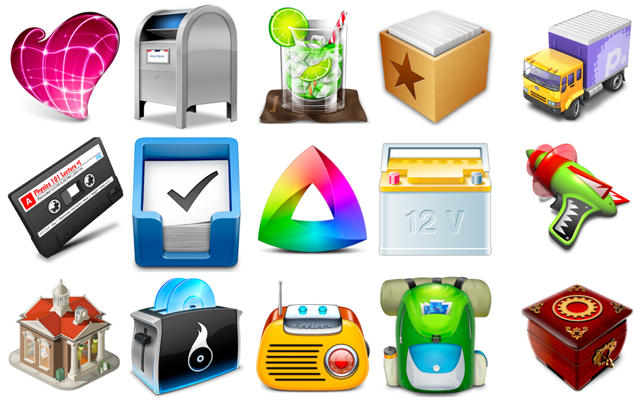
When Apple updated the iTunes 10 icon earlier this year, it sparked huge controversy among Mac users everywhere — many branded the new icon ugly, lifeless, and unconventional. The debate showed that lots of Mac users like to see beautiful apps with beautiful icons.
Here are 15 of our favorite Mac OS X icons from 2010 that stand out for being beautifully designed, brilliantly colorful, and wonderfully unique. We’ve selected icons that make you want to find out more about an application, and that you’d proudly place in your dock for all to see.
We hope you like them. Check them out after the break. If you know better icons, please tell us about them in the comments. Free apps for the best ideas.

You got another Apple gadget for Christmas, didn’t you? And you love it, don’t you?
So at what point do you officially declare yourself to be one of those Cupertino Kool-Aid-guzzling, Steve Jobs-worshiping, pathetically devoted Apple fans you used to loathe?
Ten years ago, there were two kinds of people: PC users (a.k.a. “regular people”) and Apple fanboys. At least that’s how it looked from the PC side.
Macs were pretty, but considered by us PC users to be overpriced, underpowered, insufficiently supported by either software or hardware, too hard to customize, optimize or repair and completely devoid of key application areas, such as games.
The world was black and white. You were either a PC or a Mac. Then things got complicated.
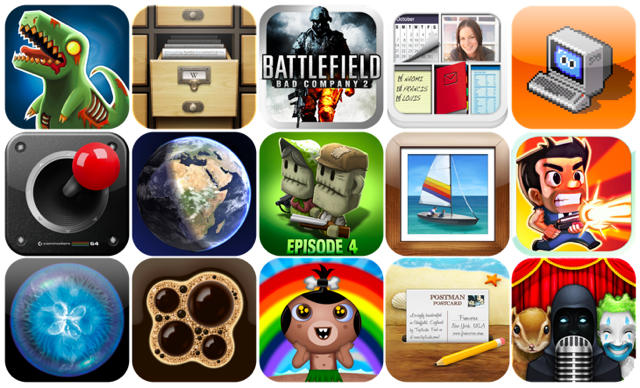
As part of our review of all the great things we’ve come across in 2010, we’ve picked 15 of our favorite iOS icons that stand out from the rest for being beautifully designed, brilliantly colorful, and wonderfully unique.
We’ve selected icons that make you want to find out more about an application, icons that you’d proudly place on your home screen for all to see, and icons that represent the awesome apps behind them.
There are, of course, hundred of thousands of iOS apps in the App Store, and we’ve selected just 15 of our favorites – we hope you like them. Check them out after the break.
Of course, we probably missed a bunch. Please nominate your favorite icons in the comments. We’ll give out free app codes for the best ideas.
Happy holidays everyone! This video summary of Apple’s past year is pretty cool. The launch of the iPad and iPhone 4; iOS 4 and The Beatles on iTunes? It was a pretty big year.
Made on a Mac with Final Cut Studio by Kelvin Choi.

You might not agree with her position, but you’ve got to admit that this is one precocious kid: a thirteen year old iPhone owner is set to go into court next month to contest what she and her family claim was an unjust charge levied by Apple Korea to fix an iPhone 3G which they claimed had been water damaged.

The upcoming Jack Black comedy, Gulliver’s Travels, which opens Christmas Day, will be one giant Apple ad.
When Gulliver travels to Lilliput, he brings his iPhone, which when used by the Lilliputians appears gigantic.
The movie has multiple MacBooks and other Apple products, and Apple logos galore.
Apple is easily the most successful company ever in getting its products into movies and TV shows. Some 41% of the movies that hit number-one at the box office featured Apple products.
Part of the reason for this success is that Hollywood is Apple-obsessed. Another is that Apple works at it. The company proudly boasts that it never pays for product placement. But it’s likely that there is some string pulling, proactive offers of devices to use and other actions that are kept secret by the company.
Whatever Apple is doing, it’s working.

Need a last-minute stocking stuffer, or wondering how to keep that New Year’s resolution? Digifit is giving away its $80 ANT+ Digifit Connect — just download their free Digifit app, then pop for the $15 in-app upgrade (which allows the app to connect with the dongle).
The idea is pretty much the same as with the Wahoo Fisica dongle (also $80): Attach the Digifit Connect to an iPhone (or iPad or iPod) and it’ll communicate with any ANT+ heart-rate monitor, footpod, bicycle cadence or speed sensor; then workout data can be tracked and analyzed through the Digifit app, or download the data to one of several websites, like New Leaf Fitness.
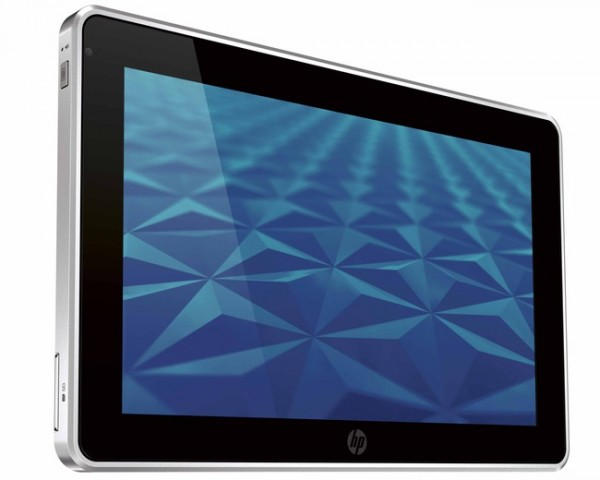
Apple and Android have consumed much of the ink used to describe the tablet wars. Now HP is attempting to grab some of the spotlight; it’s first move, an interview dissing Google’s mobile operating system as “backward looking” and preparing to take on Apple’s iPad with a Franken-tablet: part Palm and part revamped Slate.
HP’s Jon Rubinstein, who helped create the iMac and iPod when at Apple, has gone onto an executive position at Palm, which was then acquired by HP. Rubinstein, in a Wall Street Journal interview, talks about competition and the remade Slate tablet, now named the PalmPad, ahead of the upcoming CES.

What’s better than that horrific, buck-toothed, Tiny-Tim-loving Porifera Spongebob SquarePants perched atop a birthday cake lovingly baked and frosted in the shape of an iPhone? That horrific, buck-toothed, Tiny-Tim-loving Porifera Spongebob SquarePants perched atop a birthday cake containing a real-life iPhone.
Meanwhile, for my last birthday, I got a pie that contained nothing but rhubarb, and I was damn lucky to get it.

When we talk about the iPad 2, we already know at least some of what to expect when Apple officially unveils their newest tablet in April: FaceTime support, an iPhone 4 like gyroscope and maybe a higher-resolution (but not Retina) display. Those are all pretty much lock-ins.
When it comes to iOS devices, though, Apple has a tendency to rejigger the device’s physical design in the second gen — consider the aesthetic difference between the iPhone and the iPhone 3G, for example — so what does Ive and Co. plan to tweak in the iPad 2’s casing? A Japanese blog citing anonymous Chinese sources claims to have the answer, if we’re willing to believe them.

Remember that supposed iPad Mini flaunted by famous Taiwanese racecar driver Jimmy Lin earlier today? We thought he was holding a fake, but we may have been more right than we knew: according to reader Greg Mills, it’s a Photoshop fake.

When Steve Jobs himself was queried on the possibilities inherent in the seven inch tablet form factor, he replied that they were “dead on arrival” and declared them to be “tweeners: too big to compete with a smartphone and too small to compete with the iPad.”
Despite this, rumors have persisted that 2011 will see the introduction of a 7-inch iPad Mini… and now a famous Taiwanese celebrity and race car driver is claiming to own a prototype.

A library in Australia has converted conference rooms into rumpus rooms — popular with teens who come to sing along with iPods, play games on iPads and watch pay TV.
The Campbelltown Library in Newton, a suburb of Adelaide, is hoping to attract more teens and make the library “less boring” by lifting the usual shsssh! and keeping conference rooms open to gadgets until 11 pm.
“I usually go to do research for school projects,” says Sam, 15. ” But I think it’s cool you can use technology and not be scared to make a little bit of noise.”
There’s a lot more happening in the Cupertino-centric world than the usual porn-unboxing videos and edible iPhones: here are the most bizarre moments involving Apple in 2010 — from severed appendages to exploded iDevices as art and spy evangelists.