In 1996, Apple's worst quarter yet saw the company lose $700 million. Image: Ste Smith/Cult of Mac
March 28, 1996: In a dire message to Wall Street, Apple warns that it will report a $700 million after-tax loss for its most recent quarter.
Apple’s biggest quarterly loss in history, the shocking news reveals a company in far more financial trouble than previously thought. More than half the loss comes from $1 billion of unsold products.
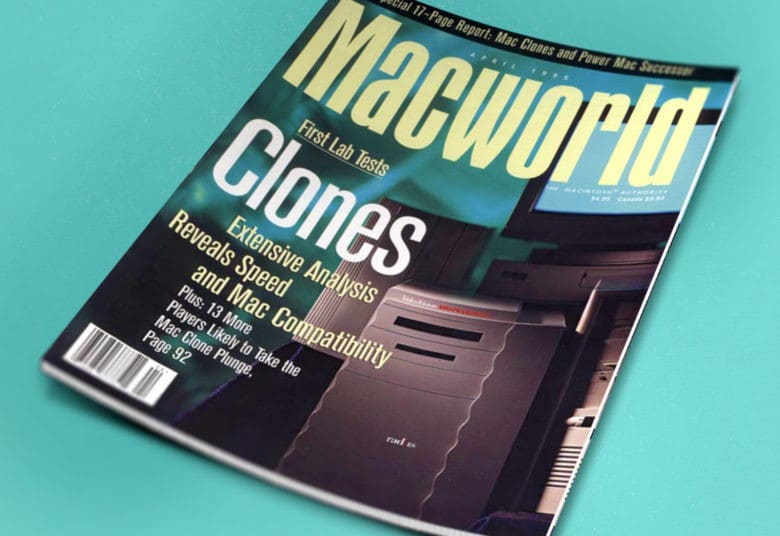
Radius was the first company to launch an official Macintosh clone. Photo: Ste Smith/Cult of Mac
March 27, 1995: The Radius System 100, the first official Macintosh clone, launches.
A high-end computer made by a company founded by several notable Macintosh alumni, this marvelous machine kicks off the era of clone Macs in grand fashion. However, it won’t be long until things take a turn for the worse.
A daring wine cellar bet means a very public deadline for the Newton MessagePad. Photo: Blake Patterson/Wikipedia CC
March 25, 1993: Apple executive Gaston Bastiaens bets a journalist that the eagerly anticipated Newton MessagePad will ship before summer ends. The prize? Bastiaens’ well-stocked personal wine cellar, worth thousands of dollars.
The bet takes place at the CeBit trade show in Hanover, Germany. Bastiaens’ outburst comes in response to a reporter’s needling. The gamble not only gives the Newton a release timetable, but also a price target: less than $1,000.
The Newton MessagePad 2000 brought many upgrades to Apple's doomed PDA line. Photo: iFixit
March 24, 1997: The Newton MessagePad 2000 brings major upgrades to Apple’s PDA line, including a far better display and a much faster processor.
The best MessagePad yet by a wide margin, it quickly becomes a critical and commercial success. But it won’t be enough to save the doomed product line.
The Macintosh LC II was more powerful and cheaper than its predecessor. Photo: Jonathan Zufi
March 23, 1992: The “headless” Macintosh LC II arrives, wooing value-oriented customers with a beguiling mix of updated internals and budget pricing.
Designed to take up minimal space underneath a monitor (sold separately), the Mac LC II is destined to become a hit. In retrospect, the entry-level machine is roughly analogous to today’s Mac mini.
This CD player offered a glimpse of Apple's post-desktop game plan. Photo: Jonathan Zufi
March 22, 1993: Apple launches the PowerCD, the first device from the company that doesn’t require a computer to work.
A portable CD player that also works as an external CD drive for Macs, it offers a glimpse of the extremely lucrative path Apple will follow a decade later. However, the PowerCD itself will ultimately fail to take off.
The IIfx was the fastest Mac of its day. Photo: Old Computr
March 19, 1990: The ultra-fast Macintosh IIfx makes its debut, sporting a hefty price tag appropriate for such a speedy machine.
The fastest Macintosh of its day, it boasts a CPU running at a “wicked fast” 40 MHz. It gains an additional speed bump from a pair of Apple-designed, application-specific integrated circuits. Prices start at $9,870 and run up to $12,000 — the equivalent of $24,561 to $29,862 in 2026 money!
The Macintosh 7100 was not Carl Sagan's favorite computer. Photo: Matt Gibson/Flickr CC
March 14, 1994: Apple introduces the Power Macintosh 7100, a midrange Mac that will become memorable for two reasons.
The first is that it is among the first Macs to use new PowerPC processors. The second is that it results in Apple getting taken to court by astronomer Carl Sagan — not once but twice.
Short of a Nirvana MIDI file playing in the background, you can't get more 1990s than this! Image: Andrea Grell/Ste Smith
March 9, 1996: Apple confirms that it will shut down its eWorld online service at the end of the month.
Part messaging service, part news aggregator — and all with Apple’s customary premium prices — the short-lived eWorld proved ahead of its time. Apple tells disappointed eWorld subscribers they can switch to America Online instead.
More than just a system update, Mac OS 8 included a nasty surprise for clone-makers. Photo illustration: Ste Smith/Cult of Mac
March 8, 1997: Apple renames the forthcoming Mac OS 7.7 update, calling it “Mac OS 8.” It’s more than just a name change, though: It’s a sneaky sucker punch that ultimately knocks out Mac clones.
Unfortunately for Mac users, the updated operating system does not deliver the total top-to-bottom rewrite promised by Apple’s Project Copland. However, the renaming strategy turns out to be a brilliant (if underhanded) way of getting Apple out of terrible licensing deals.
The Macintosh Portrait Display was an early Apple experiment. Photo: Computer.popcorn
March 7, 1989: Apple introduces the Macintosh Portrait Display, a 15-inch vertical grayscale monitor designed to show full pages on a single screen. Intended for word processing and desktop publishing, the $1,099 monitor (plus $599 for an additional video card to run it) works with any Macintosh.
Something of a rarity today, the Macintosh Portrait Display is an early example of the supersized displays Apple would release years later.
Running Apple II programs on your Mac was pretty darn awesome. Photo: Microwavemont/YouTube
March 1, 1991: Apple introduces the Apple IIe Card, a $199 peripheral that lets users turn Macs into fully functioning Apple IIe computers.
The ability to emulate the popular Apple IIe on a Mac brings Apple’s two operating systems side by side for the first time. While not quite the equivalent of Apple letting you run iOS on a Mac today, it’s not a world away.
The MessagePad was a product ahead of its time. Photo: Moparx
February 27, 1998: Apple discontinues work on the Newton MessagePad product line, the series of personal digital assistants the company launched five years earlier. It also stops development work on Newton OS, the operating system that the devices run upon.
“This decision is consistent with our strategy to focus all our software development resources on extending the Macintosh operating system,” Apple’s interim CEO Steve Jobs says in a press release. “To realize our ambitious plans we must focus all of our efforts in one direction.”
These were two of the wackier Macs ever. Photo: Apple
February 22, 2001: The iMac Special Edition, sporting wild designs that would make a hippie happy, puts a wacky face on the colorful computer that saved Apple’s bacon at the turn of the century. The Flower Power iMac and Blue Dalmatian iMac evoke tie-dye shirts and other unconventional ’60s-era imagery.
A far cry from the super-serious, aluminum-heavy industrial design that will come to define Apple in subsequent years, these colorfully patterned iMacs stand out as some of the most irreverent computers Cupertino ever dreamed up. (C’mon, when was a real Dalmatian blue?)
Under the crazy-looking exteriors, a pretty darn great iMac G3 hums along.
Photoshop changed the game for image editing. Photo: Adobe Systems
February 19, 1990: Adobe Systems ships the first commercial version of its soon-to-be-iconic Photoshop photo editing software. The Photoshop launch, exclusively on the Macintosh, gives users powerful new tools for tweaking digital images.
The groundbreaking software debuts for Mac System 6.0.3. Priced at $895, Photoshop will quickly become the standard editing tool for graphics professionals. Whether they work for advertising agencies, news organizations — or, frankly, anywhere else — Photoshop users take advantage of the program’s digital darkroom tools to seamlessly manipulate images.
The PowerBook 3400 certainly lived up to its name. Photo: Apple
February 17, 1997: Apple launches the PowerBook 3400, a laptop the company calls the fastest portable computer in the world.
After a rough few years for the PowerBook, this model throws down the gauntlet to rivals. It packs a PowerPC 603e processor capable of running at speeds up to 240MHz. While speedier Apple laptops will quickly overtake the PowerBook 3400, at the time, it can keep up with some impressive desktop Macs.
February 14, 1995: Apple Computer extends a lawsuit against developer San Francisco Canyon Company to include Microsoft and Intel. The lawsuit concerns allegedly stolen Apple code that’s used to improve Microsoft’s Video for Windows technology.
The lawsuit comes to a head with Apple threatening a multibillion-dollar lawsuit against Microsoft. Meanwhile, Microsoft CEO Bill Gates threatens to cancel Office for Mac.
The Macintosh Color Classic was the Mac the world had been waiting for. Photo: Chung Chu/Flickr CC
February 10, 1993: Apple launches the Macintosh Color Classic, the company’s first compact Mac with a color screen.
As the first all-in-one Mac with an integrated color display, and the last U.S. Mac to offer the original model’s compact form factor, this model represents a landmark in the evolution of the Macintosh. A Color Classic unit also happens to become the 10 millionth Macintosh that Apple ships.
February 9, 1993: NeXT Inc., the company Steve Jobs founded after being pushed out of Apple, quits making computers. The company changes its name to NeXT Software and focuses its efforts entirely on producing code for other platforms.
In a mass layoff, 330 of NeXT’s 500 employees lose their jobs in an event known internally as “Black Tuesday.” Cruelly, many people hear of their fate on the radio.
Many viewed new CEO Gil Amelio as the man to save Apple. Photo: Apple
February 2, 1996: Apple reveals that turnaround artist Gil Amelio will take over from Michael “The Diesel” Spindler as CEO of the struggling company.
With disappointing Mac sales, the disastrous “clone Mac” strategy and a failed Sun Microsystems merger to his name, Spindler is asked to resign by the Apple board. Then, Cupertino enlists supposed corporate miracle worker Amelio for the job.
Unfortunately, he turns out to be no more successful than Spindler in the role.
Mac clones did not pan out for Power Computing. Photo: Antnik
January 31, 1998: Mac clone-maker Power Computing goes out of business, having auctioned off its office supplies and computers.
Apple bought out Power Computing, once the fastest-growing PC company of the decade, the previous year. As a result, Power Computing shareholders receive Apple stock as a replacement. As it turns out, that may not have been a terrible deal.
The Newton MessagePad 120 finally fulfilled the promise of Apple's PDA. Photo: Fzurell/Flickr CC
January 30, 1995: Apple Computer launches the Newton MessagePad 120, the first truly great device in an unfairly maligned product line.
Coming 18 months after the original Newton MessagePad, the upgraded PDA packs more power — and truly shines once Newton OS 2.0 rolls out.
Michael Spindler's promotion to Apple COO put him on the path to being named chief executive. Image: Ste Smith/Cult of Mac
January 29, 1990: Apple CEO John Sculley appoints Michael Spindler as the company’s new chief operating officer.
Nicknamed “The Diesel” on account of his work ethic, Spindler’s new job continues his upward trajectory at Apple. Three years later, he will become CEO.
 March 28, 1996: In a dire message to Wall Street, Apple warns that it will report a $700 million after-tax loss for its most recent quarter.
 March 27, 1995: The Radius System 100, the first official Macintosh clone, launches.
 March 25, 1993: Apple executive Gaston Bastiaens bets a journalist that the eagerly anticipated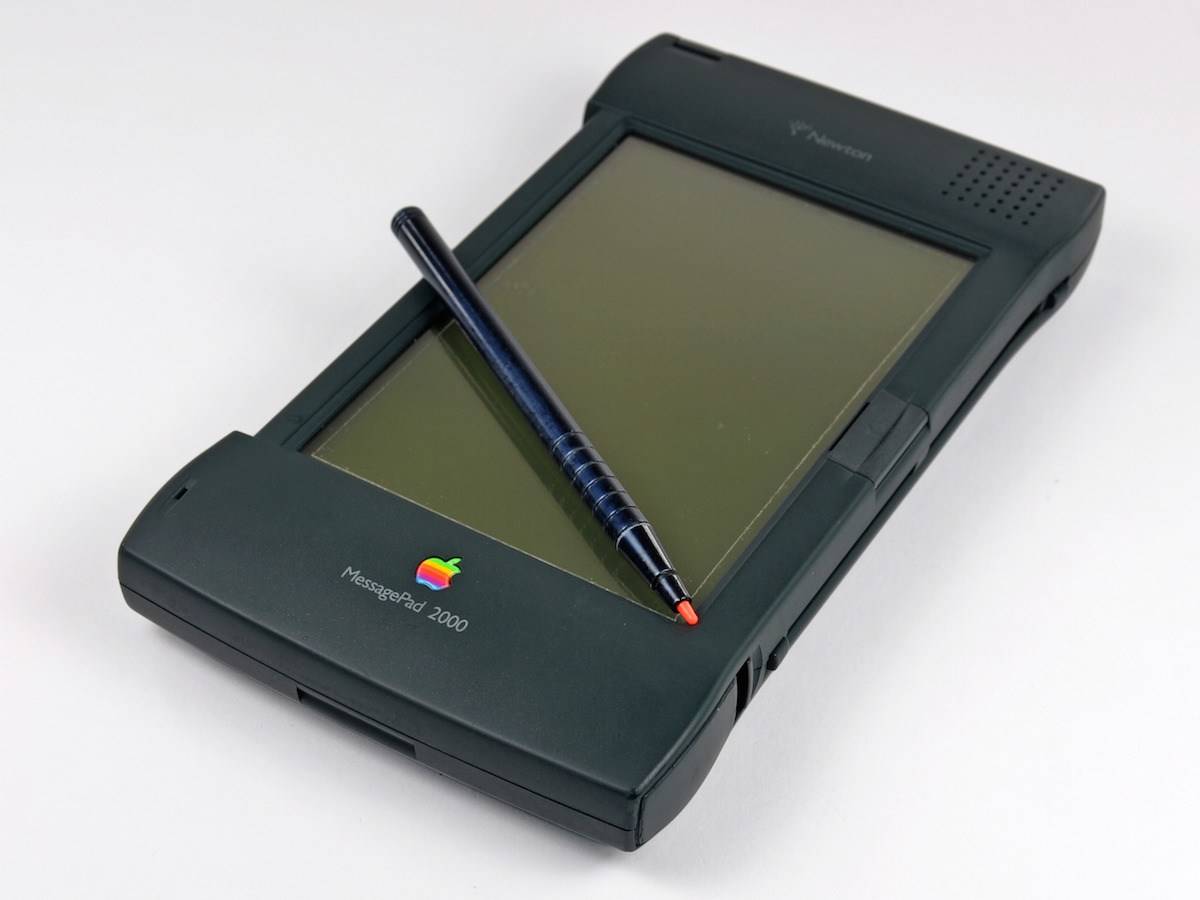
 March 24, 1997: The Newton MessagePad 2000 brings major upgrades to Apple’s PDA line, including a far better display and a much faster processor.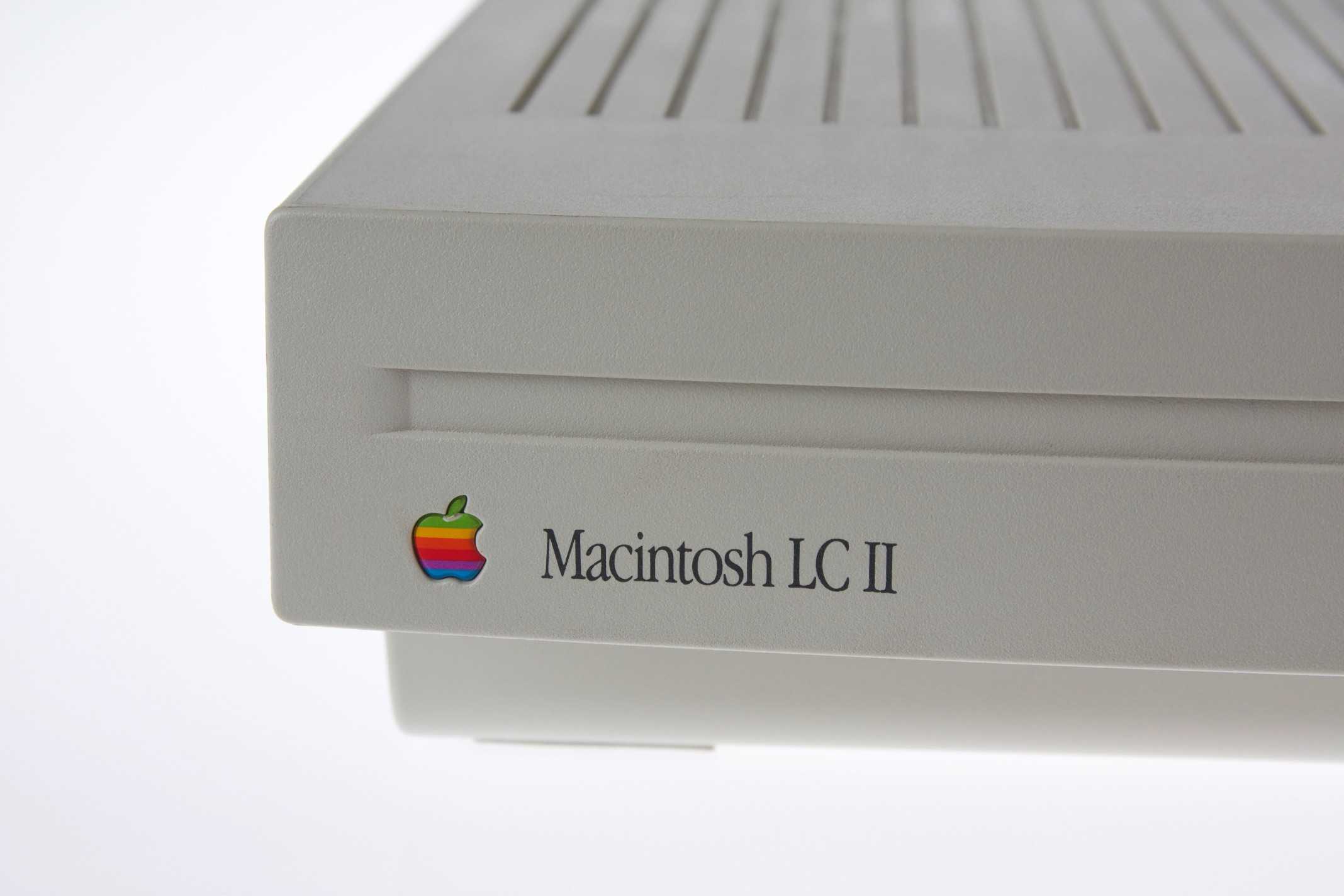
 March 23, 1992: The “headless” Macintosh LC II arrives, wooing value-oriented customers with a beguiling mix of updated internals and budget pricing.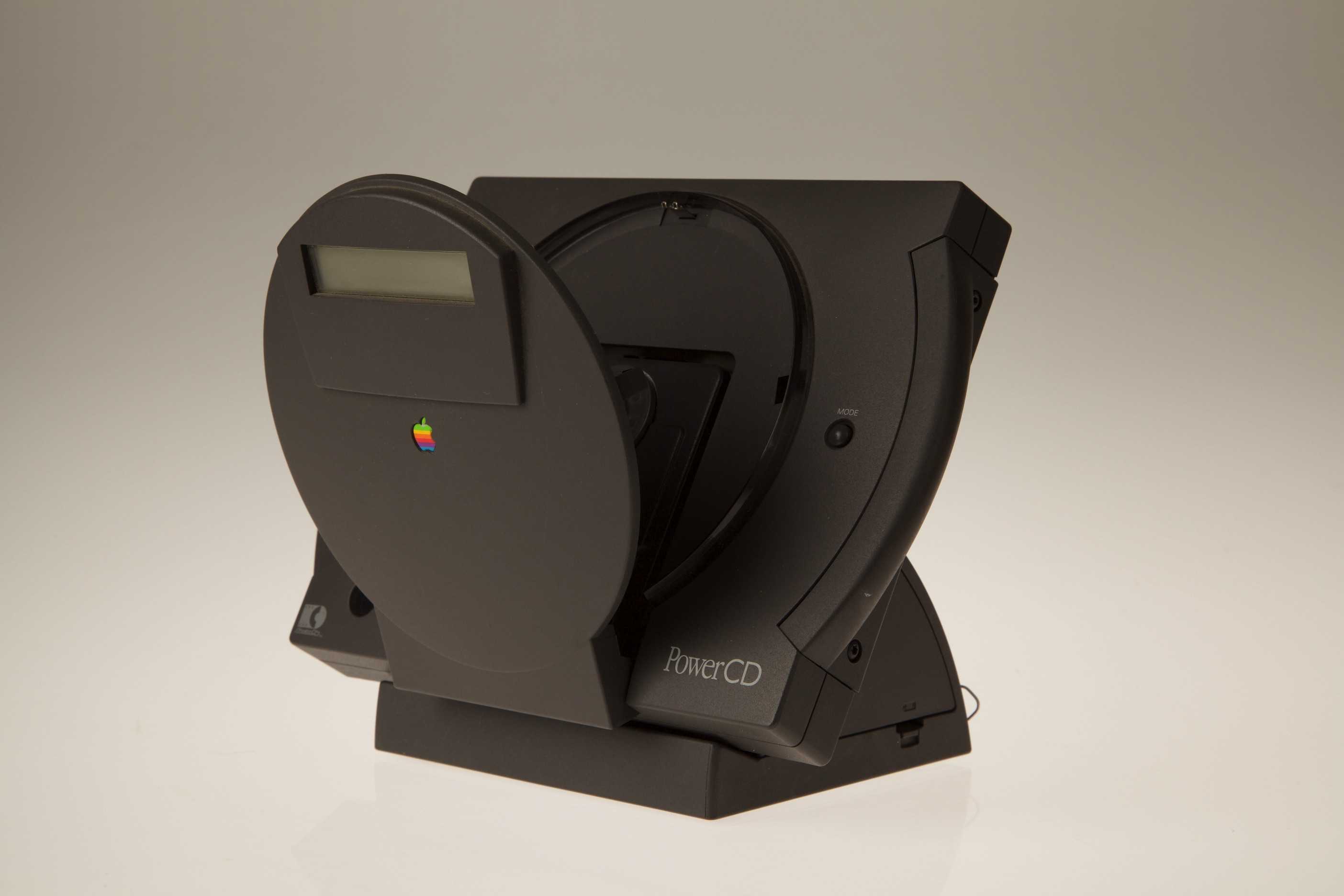
 March 22, 1993: Apple launches the PowerCD, the first device from the company that doesn’t require a computer to work.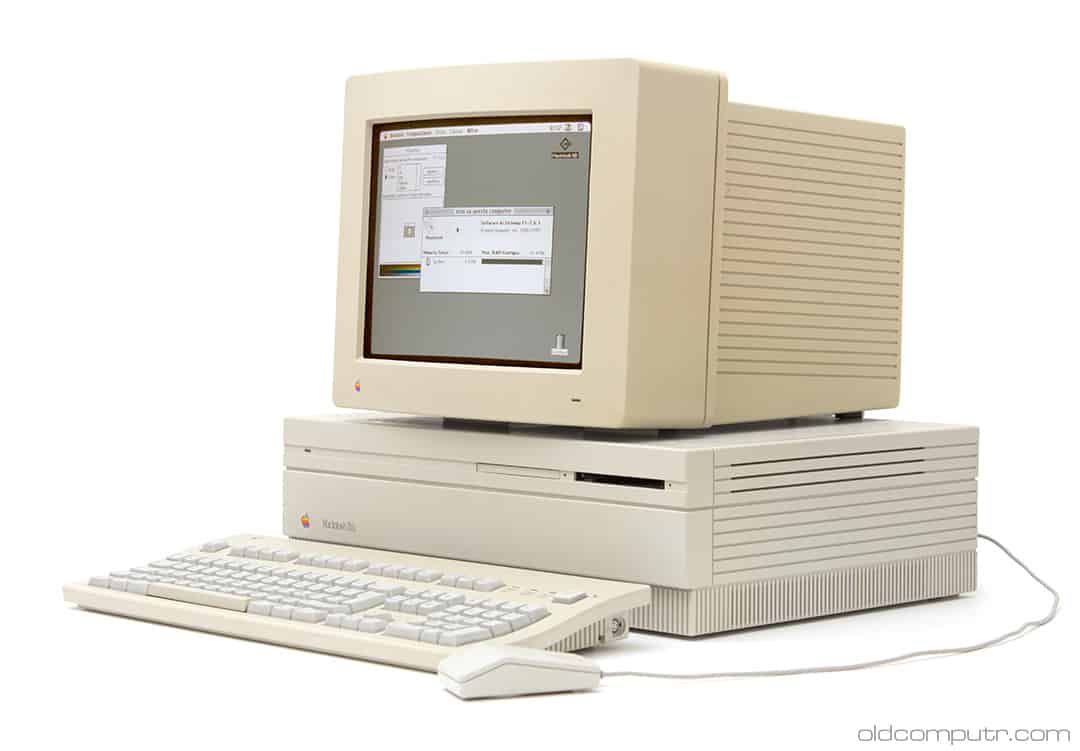
 March 19, 1990: The ultra-fast Macintosh IIfx makes its debut, sporting a hefty price tag appropriate for such a speedy machine.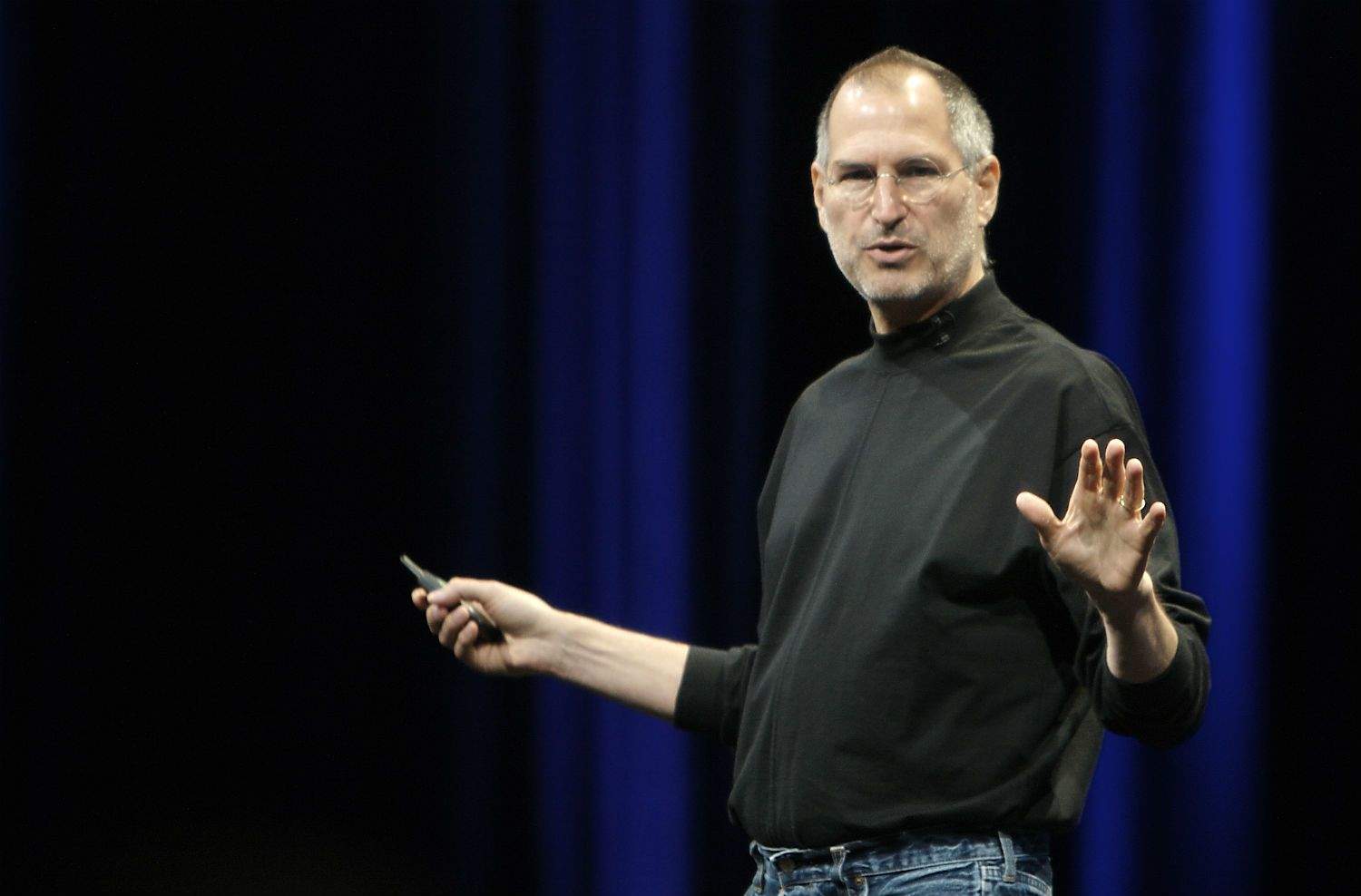
 March 18, 1991: Steve Jobs marries 27-year-old Laurene Powell less than two years after a chance meeting.
 March 14, 1994: Apple introduces the Power Macintosh 7100, a midrange Mac that will become memorable for two reasons.
 March 13, 1997: With Apple preparing to cut thousands of jobs, CNN reports that “the coffin door is closing” on Cupertino. Apple is doomed! Doomed!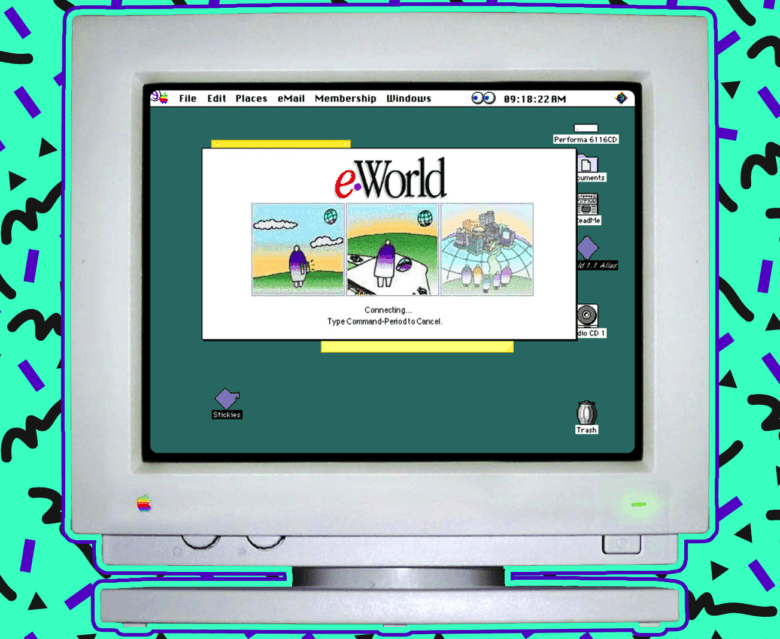
 March 9, 1996: Apple confirms that it will shut down its eWorld online service at the end of the month.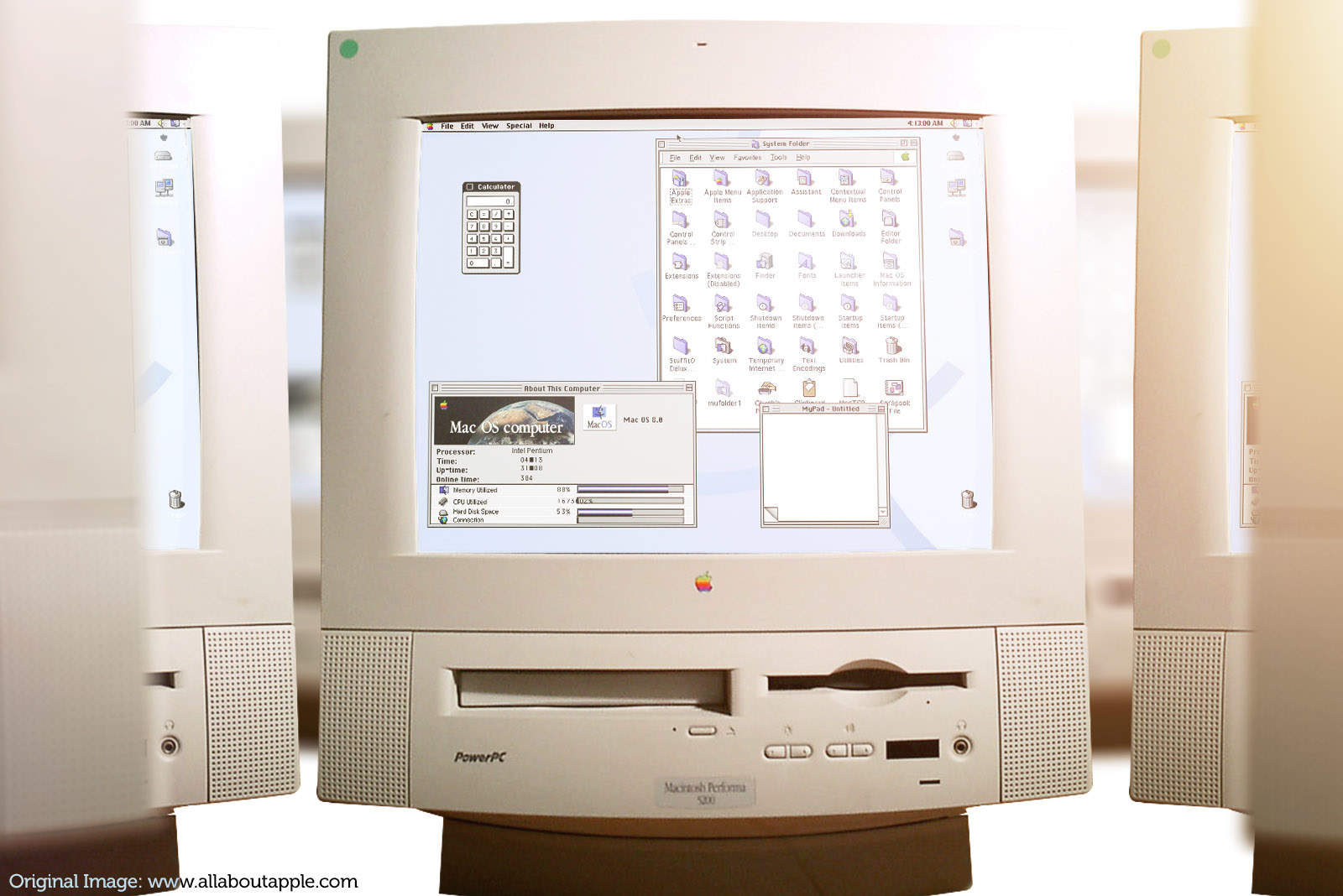
 March 8, 1997: Apple renames the forthcoming Mac OS 7.7 update, calling it “Mac OS 8.” It’s more than just a name change, though: It’s a sneaky sucker punch that ultimately knocks out Mac clones.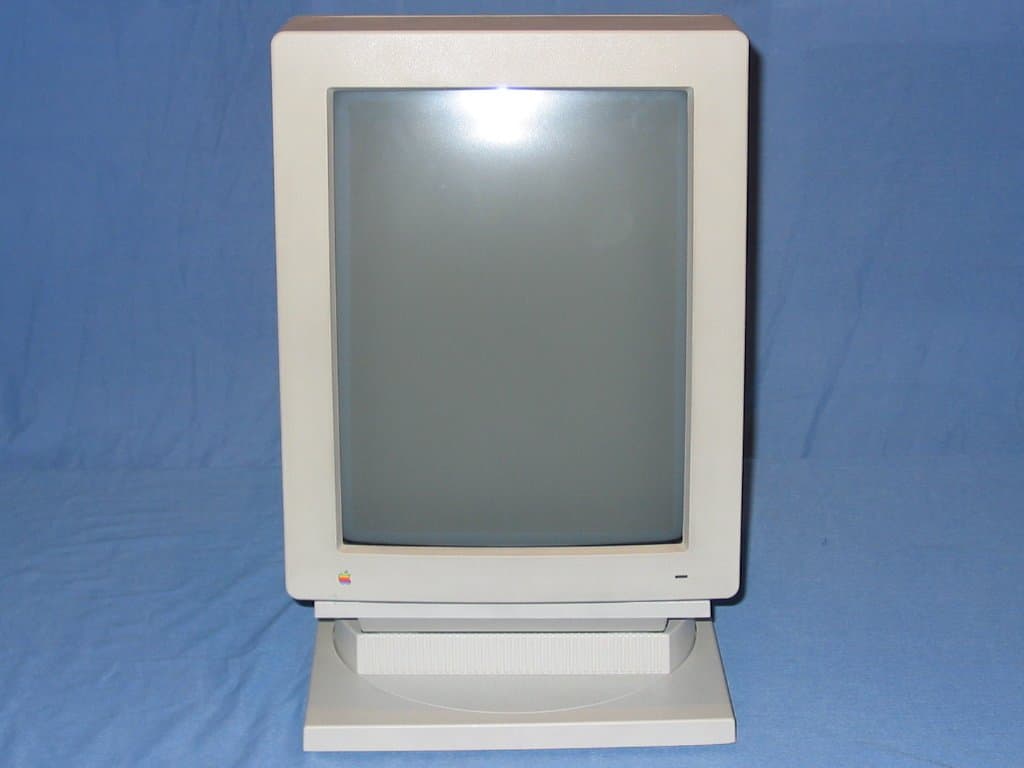
 March 7, 1989: Apple introduces the Macintosh Portrait Display, a 15-inch vertical grayscale monitor designed to show full pages on a single screen. Intended for word processing and desktop publishing, the $1,099 monitor (plus $599 for an additional video card to run it) works with any Macintosh.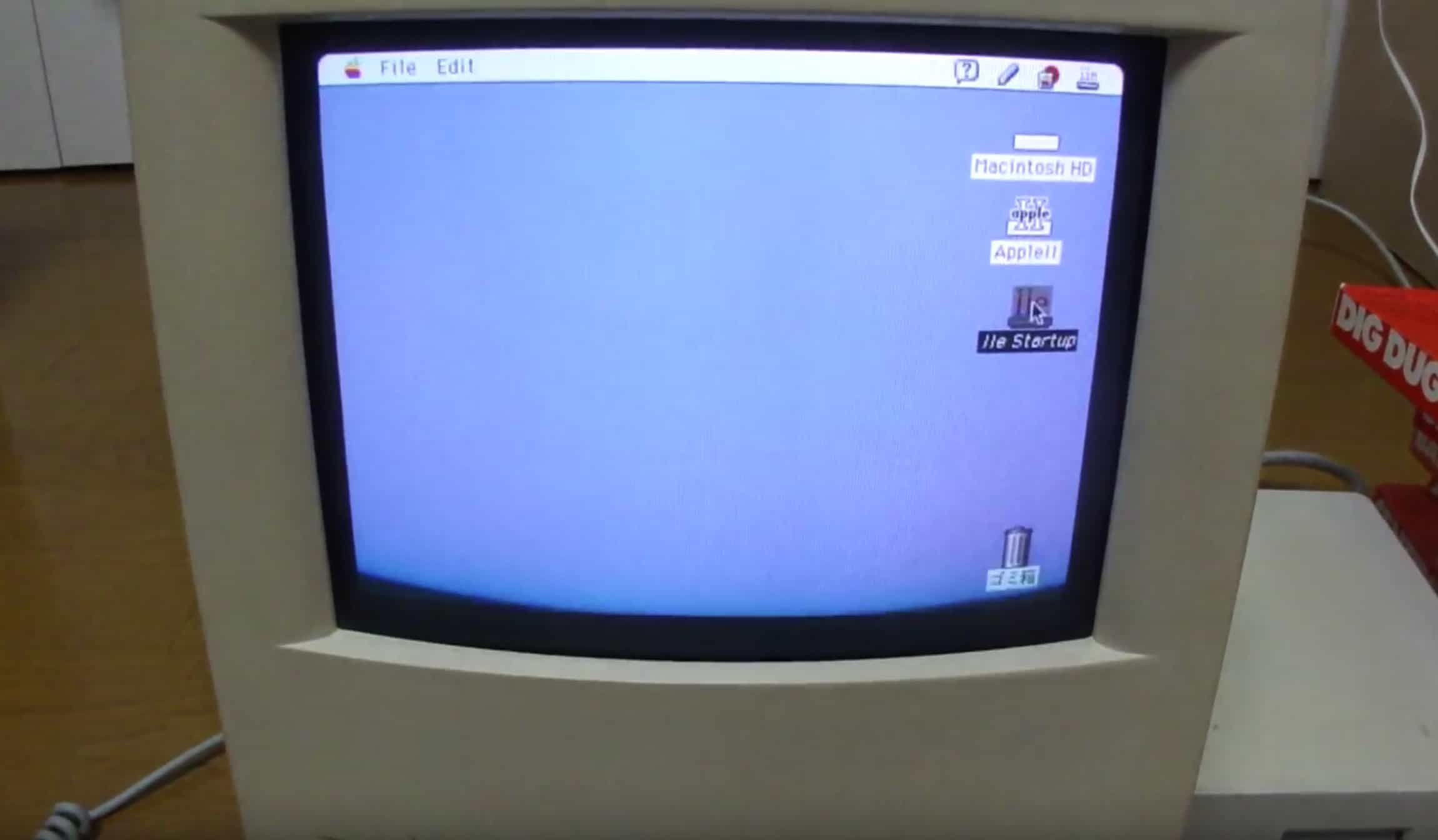
 March 1, 1991: Apple introduces the Apple IIe Card, a $199 peripheral that lets users turn Macs into fully functioning Apple IIe computers.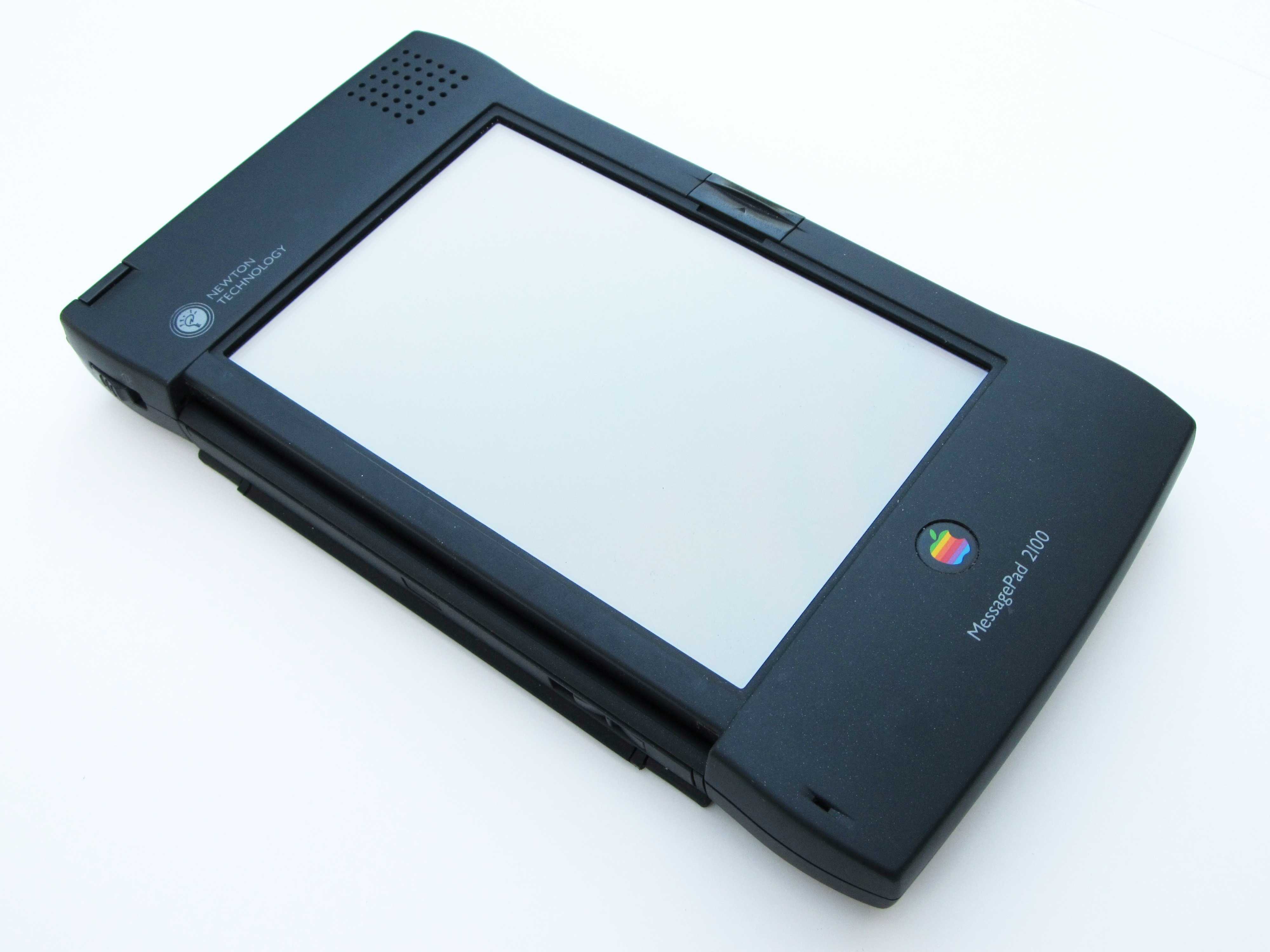
 February 27, 1998: Apple discontinues work on the Newton MessagePad product line, the series of personal digital assistants the company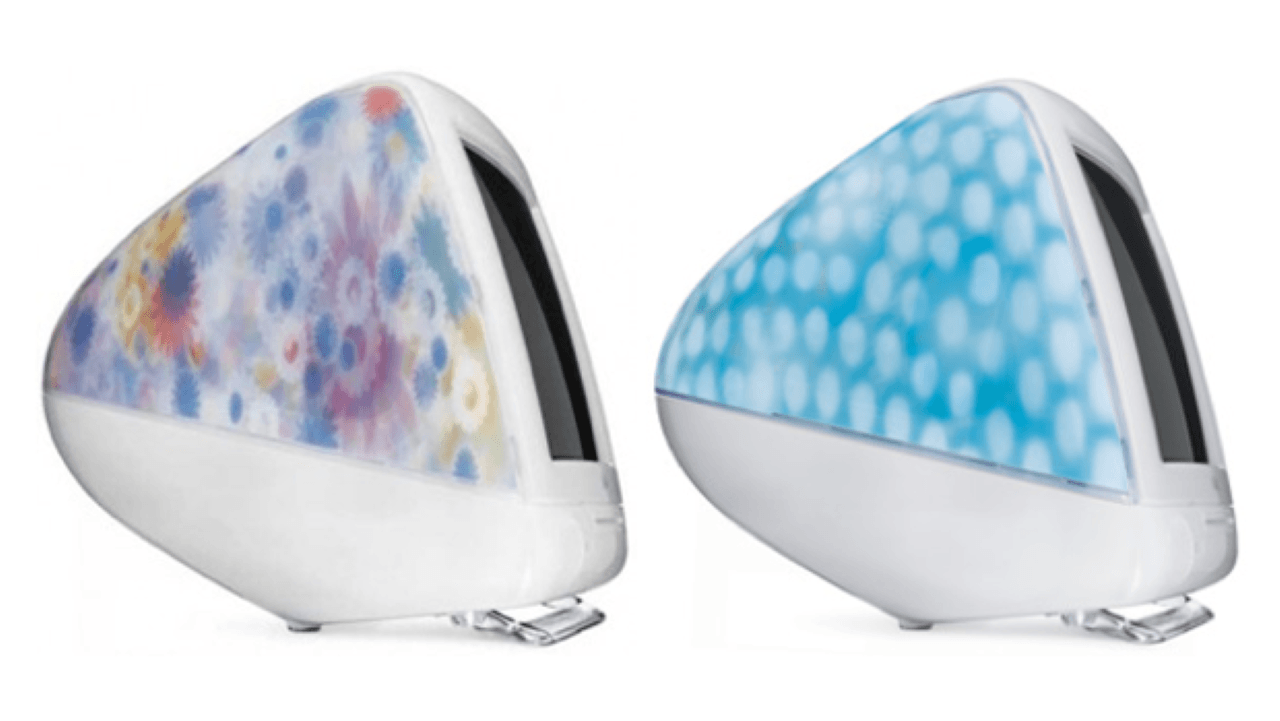
 February 22, 2001: The iMac Special Edition, sporting wild designs that would make a hippie happy, puts a wacky face on the colorful computer that saved Apple’s bacon at the turn of the century. The Flower Power iMac and Blue Dalmatian iMac evoke tie-dye shirts and other unconventional ’60s-era imagery.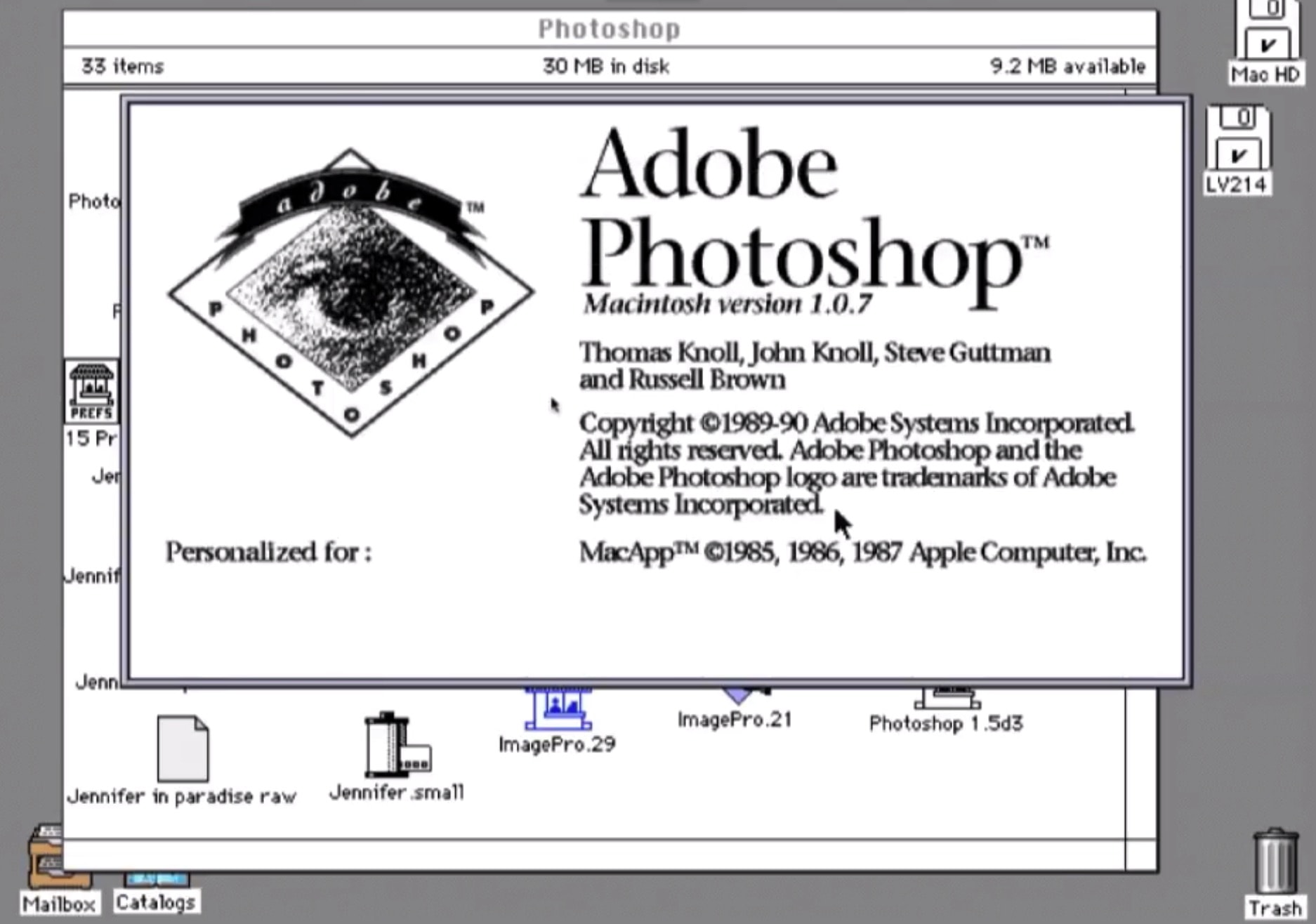
 February 19, 1990: Adobe Systems ships the first commercial version of its soon-to-be-iconic Photoshop photo editing software. The Photoshop launch, exclusively on the Macintosh, gives users powerful new tools for tweaking digital images.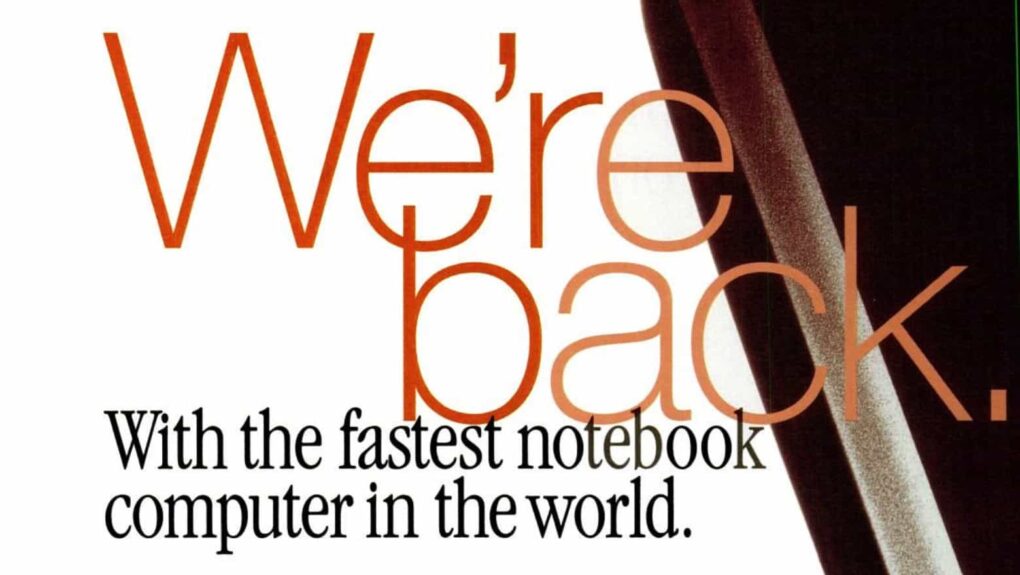
 February 17, 1997: Apple launches the PowerBook 3400, a laptop the company calls the fastest portable computer in the world.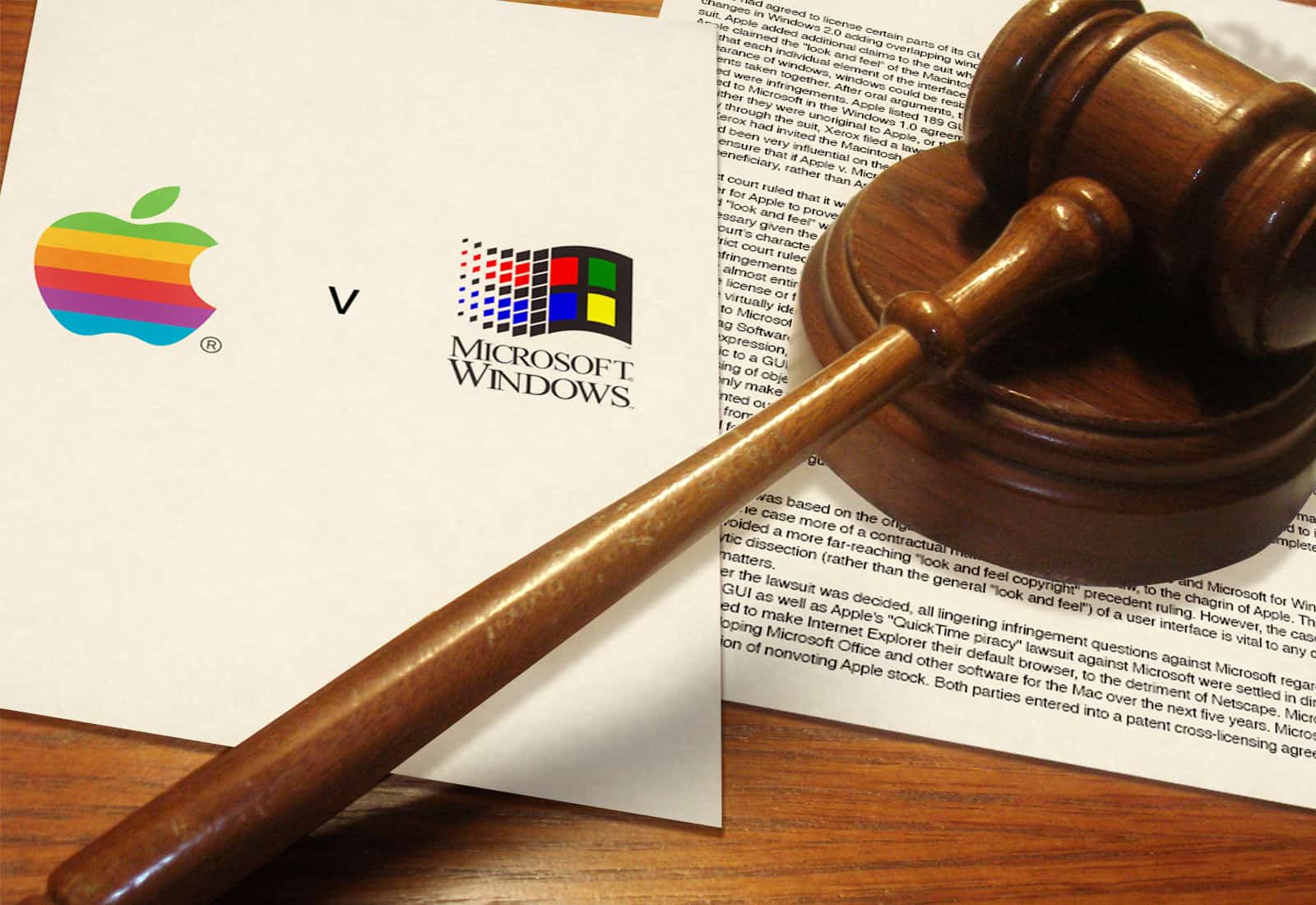
 February 14, 1995: Apple Computer extends a lawsuit against developer San Francisco Canyon Company to include Microsoft and Intel. The lawsuit concerns allegedly stolen Apple code that’s used to improve Microsoft’s Video for Windows technology.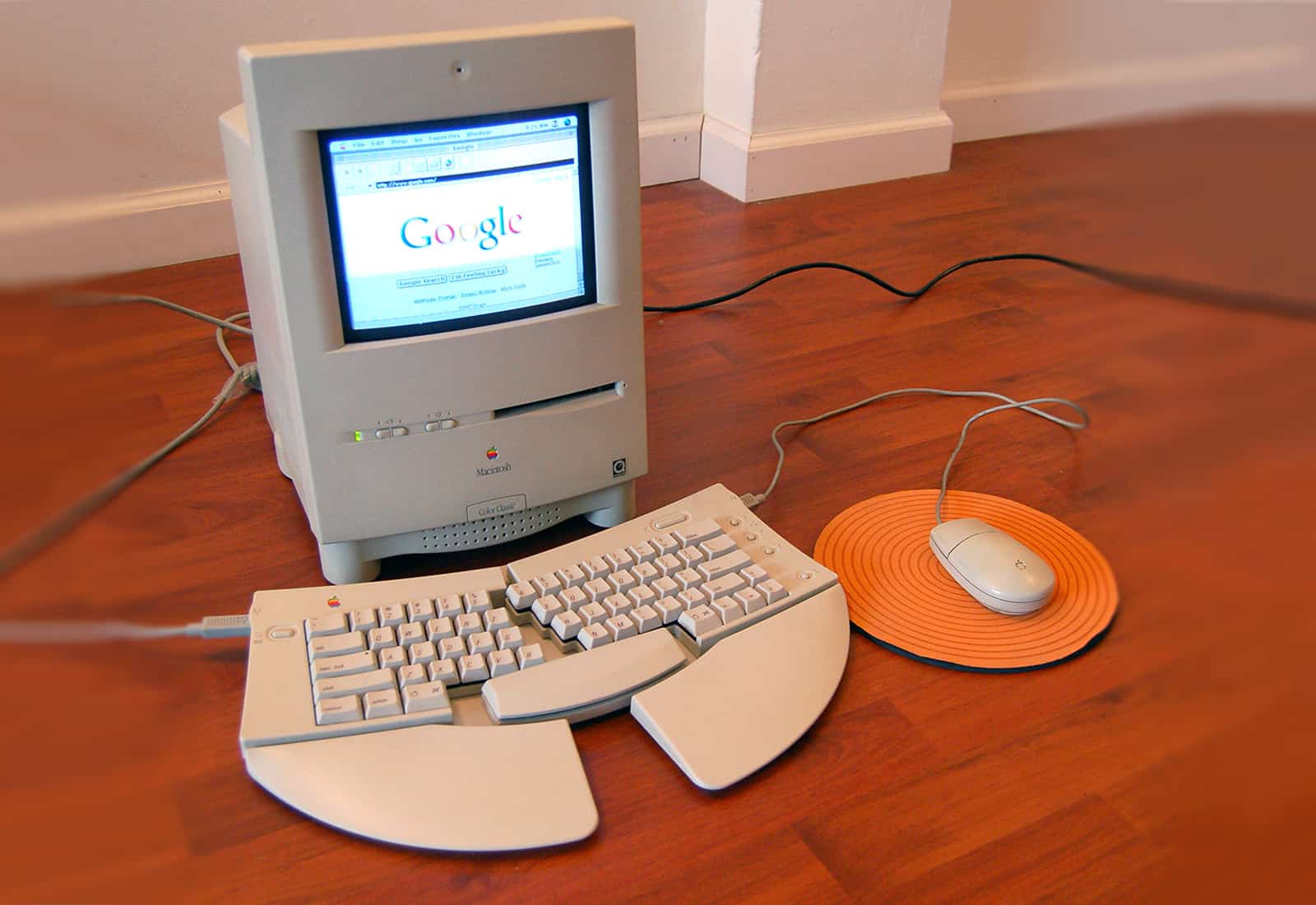
 February 10, 1993: Apple launches the Macintosh Color Classic, the company’s first compact Mac with a color screen.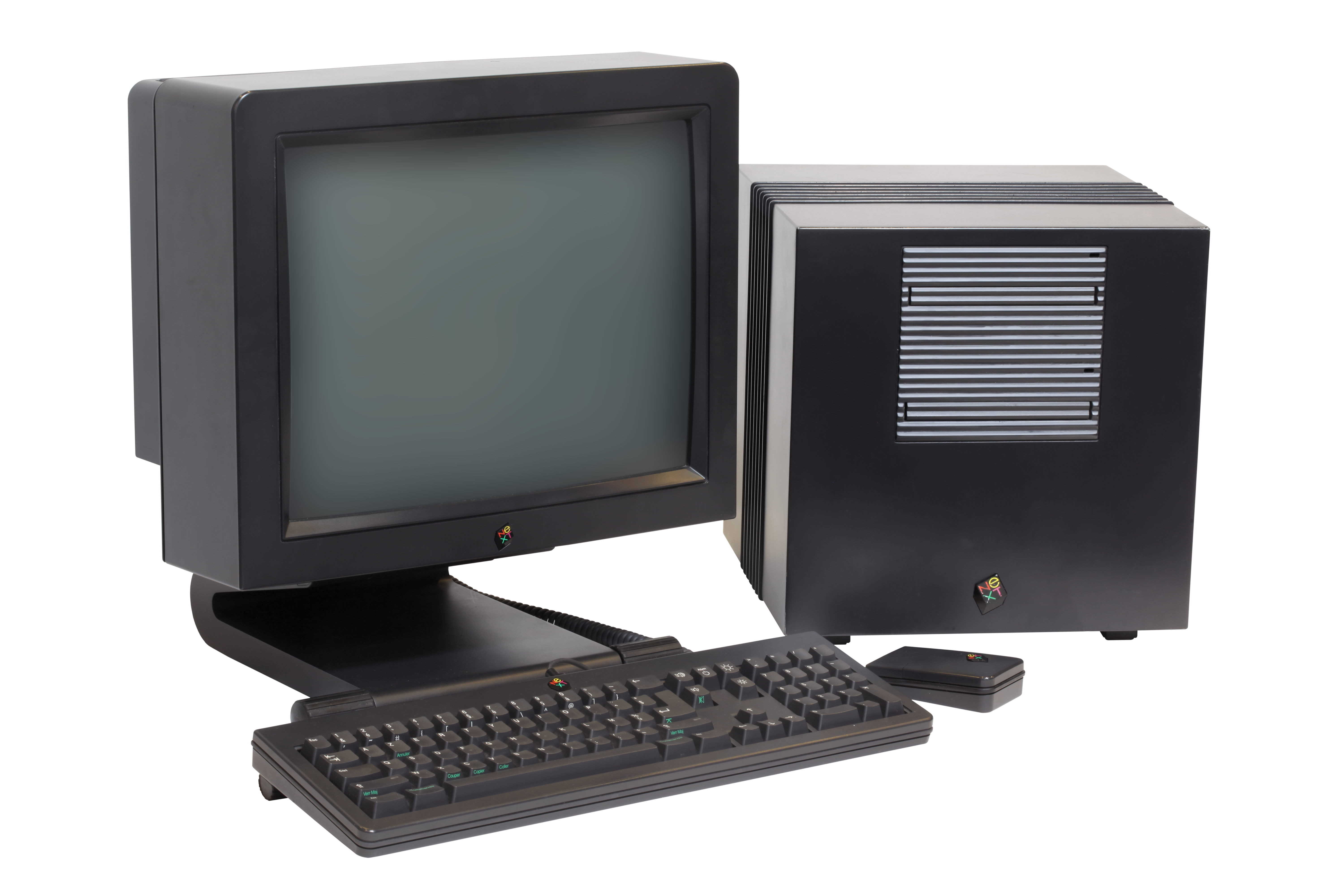
 February 9, 1993: NeXT Inc., the company Steve Jobs founded after being pushed out of Apple, quits making computers. The company changes its name to NeXT Software and focuses its efforts entirely on producing code for other platforms.
 February 2, 1996: Apple reveals that turnaround artist Gil Amelio will take over from Michael “The Diesel” Spindler as CEO of the struggling company.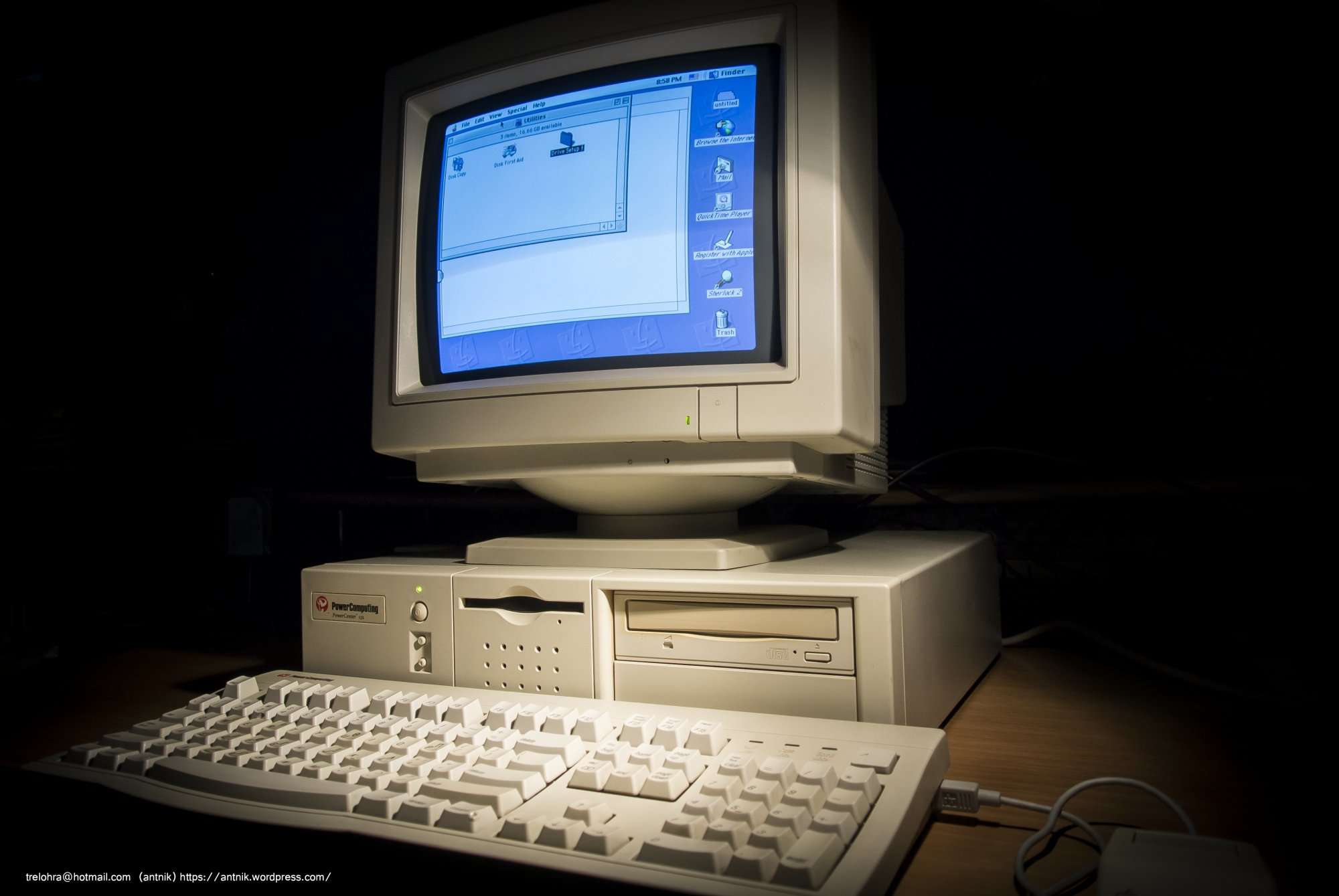
 January 31, 1998: Mac clone-maker Power Computing goes out of business, having auctioned off its office supplies and computers.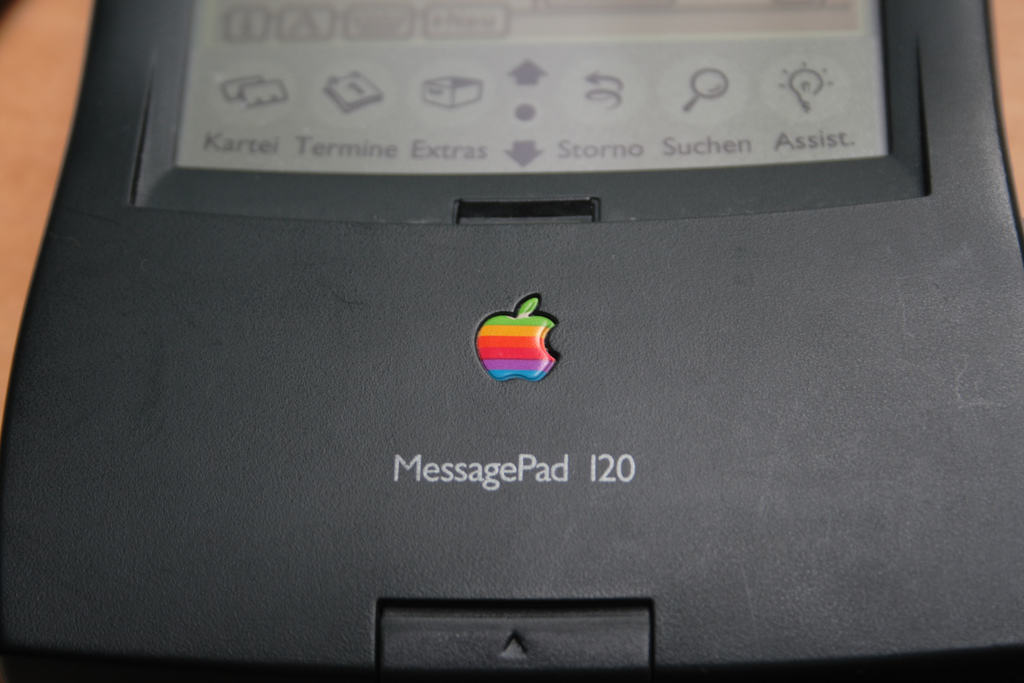
 January 30, 1995: Apple Computer launches the Newton MessagePad 120, the first truly great device in an unfairly maligned product line.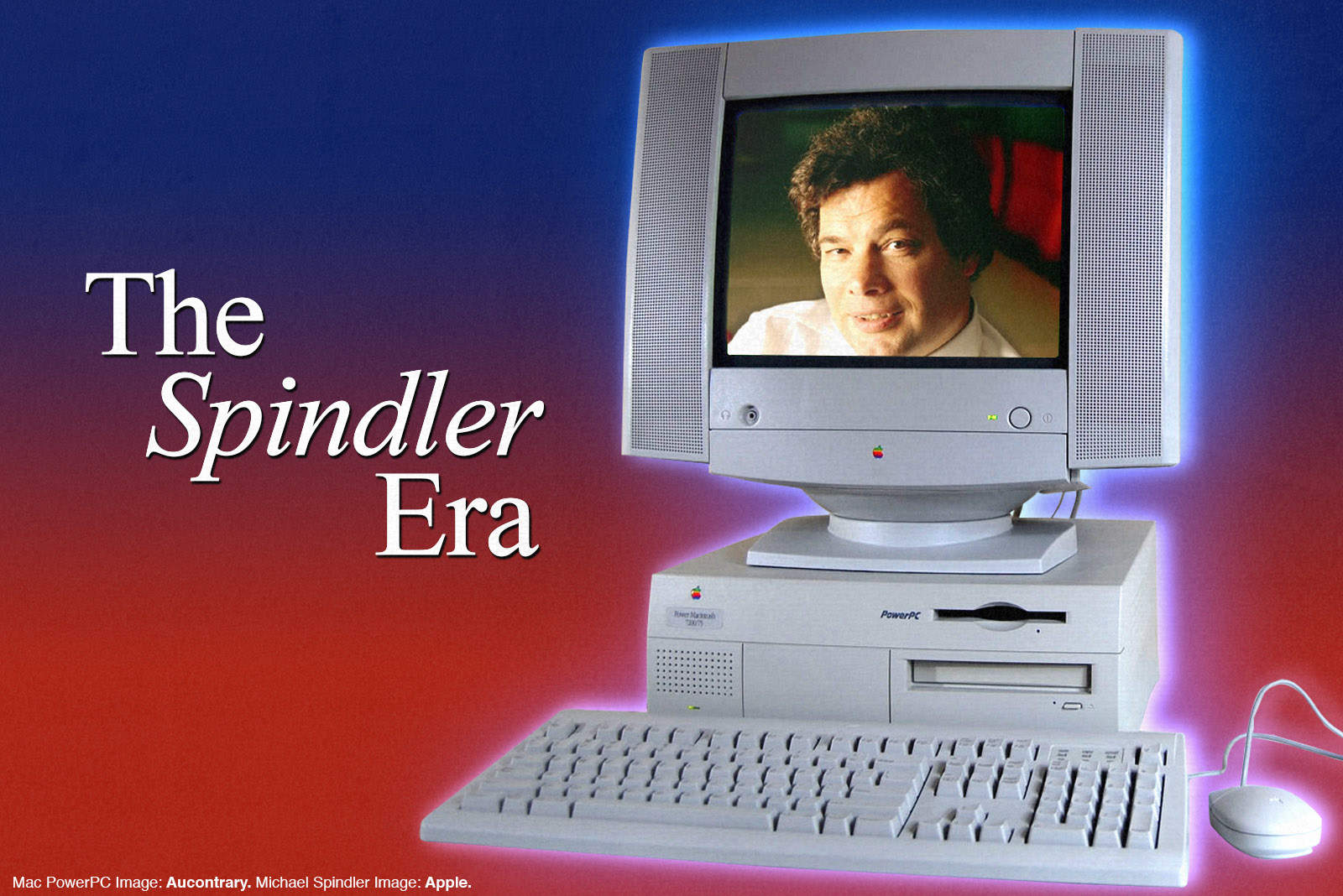
 January 29, 1990: Apple CEO