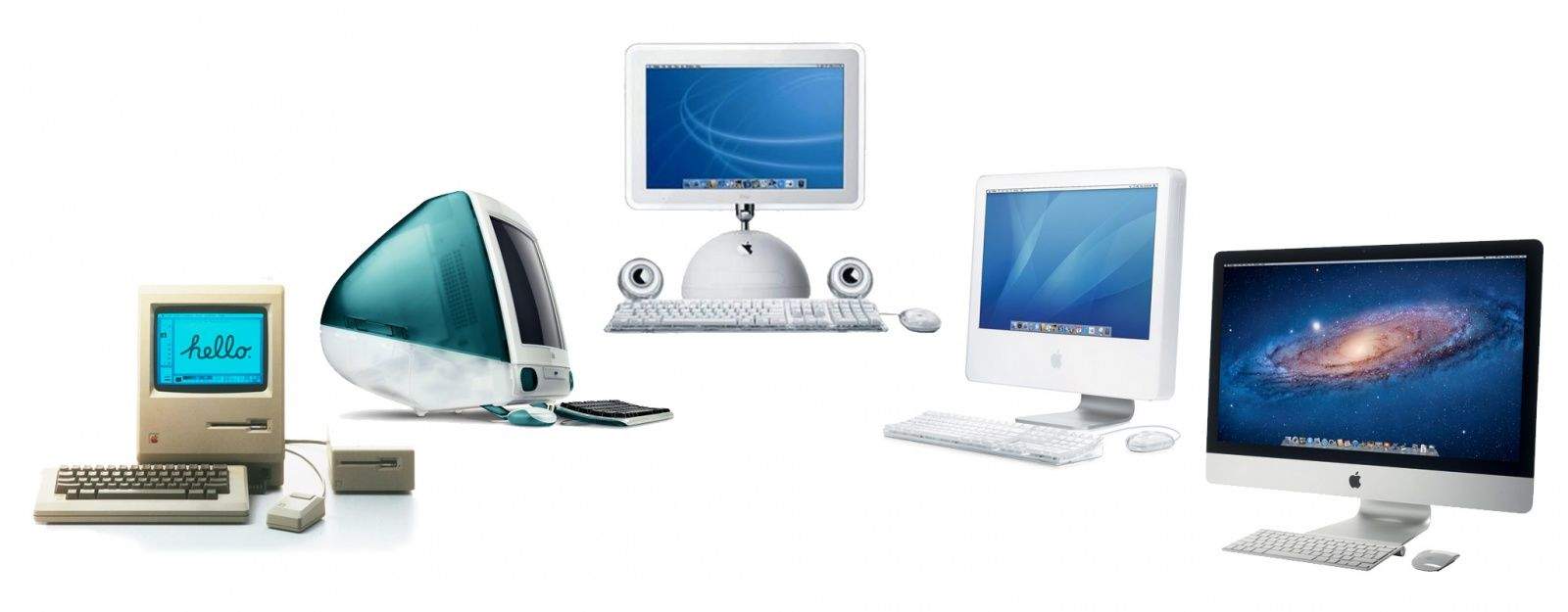
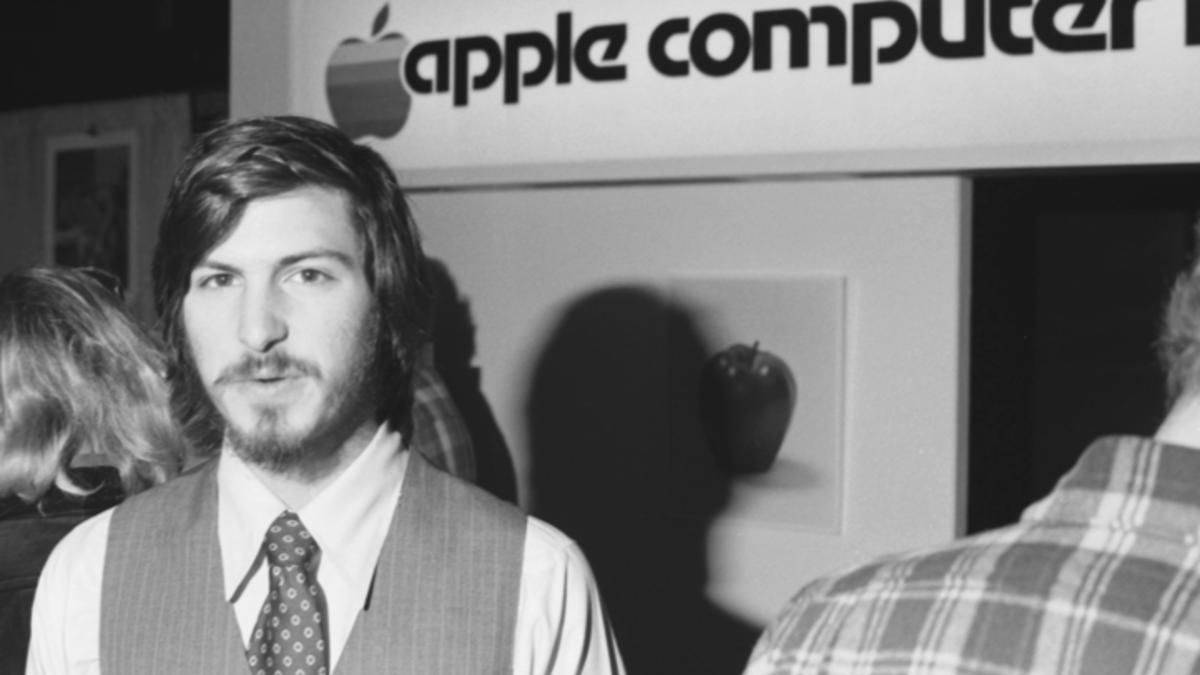
Can you believe how '90s Apple used to be? Photo: Apple Europe
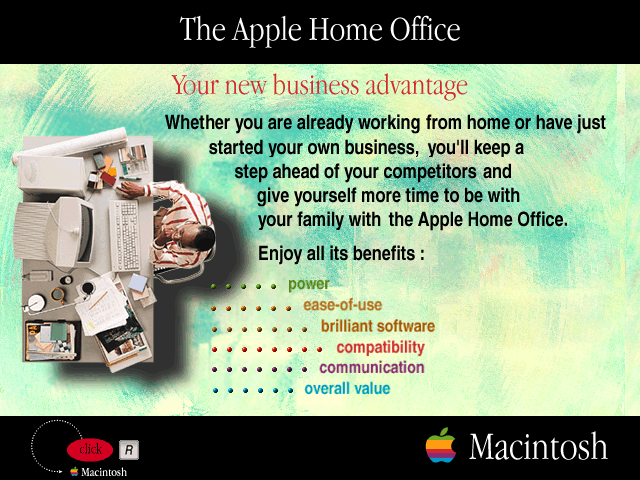
These days, Apple is known for its impeccable design sensibilities. Less than 20 years ago, though, that wasn’t the case. Case in point? These awesomely retro, fluorescently hideous in-store demos made to help sell the Macintosh in 1997.
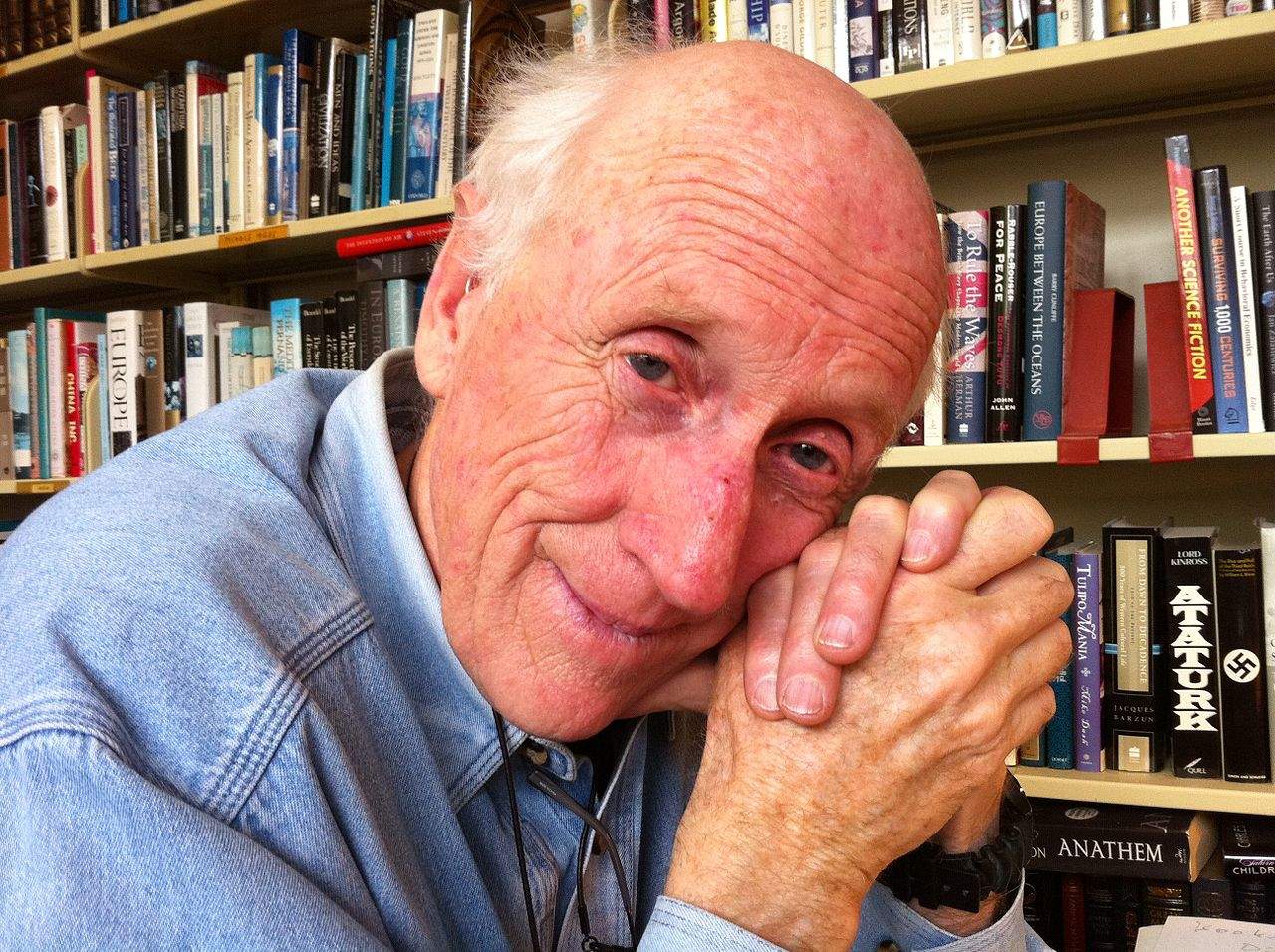
Steve Jobs reminisced about acid trips and, despite his status as a “master of the universe,” was also a total hippie, according to legendary Whole Earth Catalog founder Stewart Brand.
Brand is making a rare appearance today at San Francisco’s Obscura Digital for an event entitled “The 1960s Revisited: A 50th Anniversary Celebration.” In an interview to promote it, he talked about Jobs’ “hippie-to-tech pipeline” and much more.
Are these things signs of a larger design problem? Photo: Ste Smith/Cult of Mac
Unlike any other consumer electronics company, Apple has been nailing product design for decades. Jony Ive and his incredibly talented team have produced countless iconic gadgets that rivals can only dream of, and it’s the biggest reason why the company is so successful today.
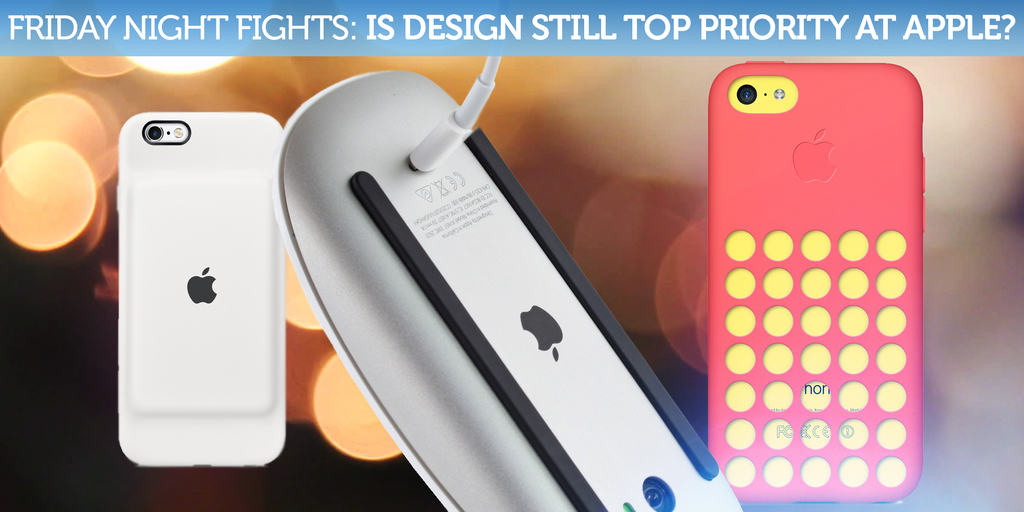
But there are suggestions that Apple’s design prowess is beginning to slip away. Under new leadership, Apple has rolled out a number of products — most recently the butt-ugly Smart Battery Case — that have led some fans to question various design decisions.
Are those fans right to be concerned? Is it downhill from here for Apple’s design team, or is this a whole lot of fuss over nothing?
Join us in this week’s Friday Night Fight between Cult of Android and Cult of Mac as we battle it out over those questions and more — and weigh in with your thoughts down in the comments section!
Steven Jobs and the introduction of the iMac. Photo: QuartSoft
So maybe fans and friends of Steve Jobs think the Aaron Sorkin film was a bit of a hatchet job on the late mercurial genius who started Apple.
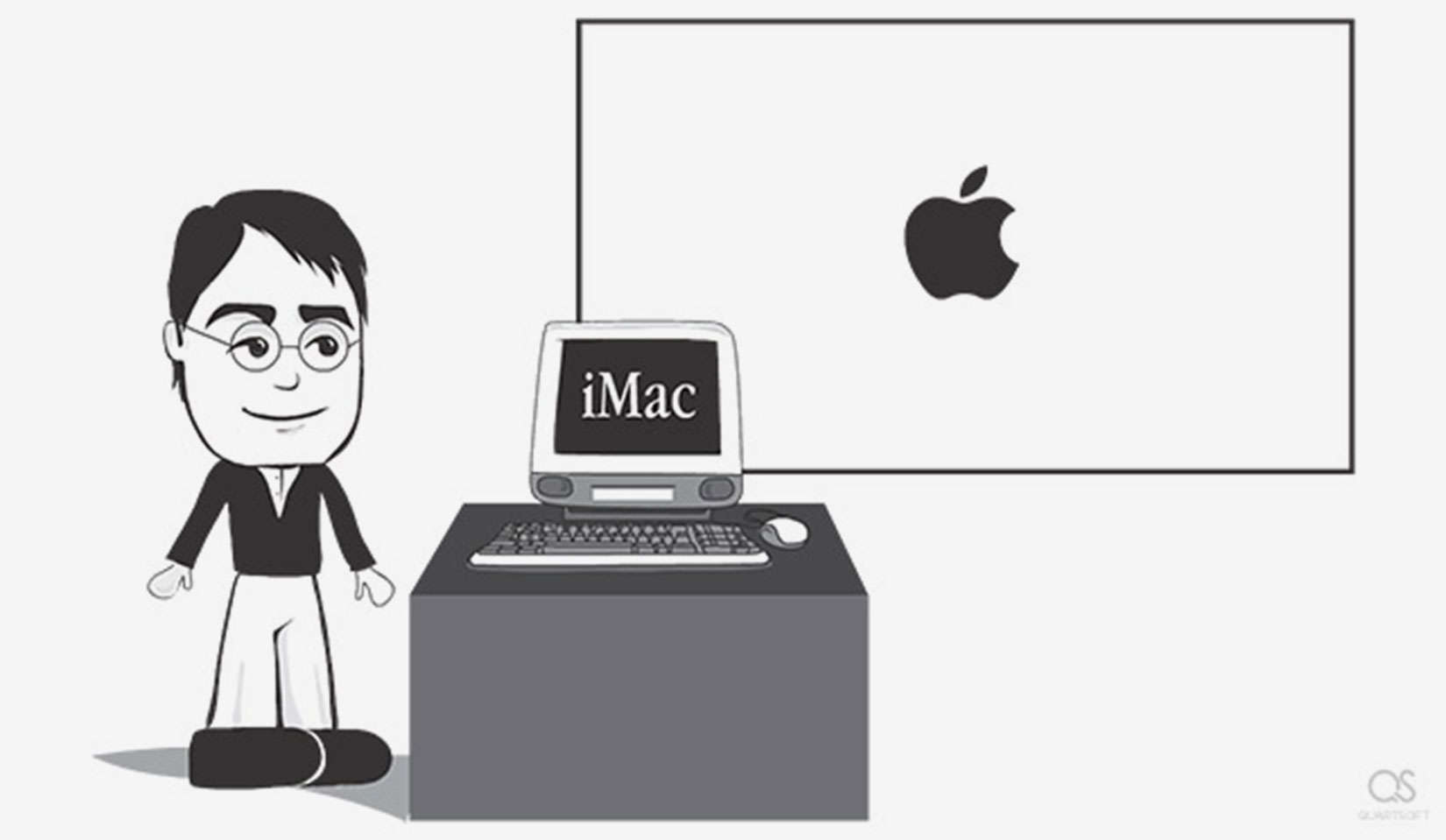
An IT company in the Ukraine called QuartSoft released an animated biography of Jobs this week as a way to thank him “for letting us enjoy the perfection of the products you created.”
Apple's doing great under Tim Cook... or is it? Photo: Ste Smith/Cult of Mac
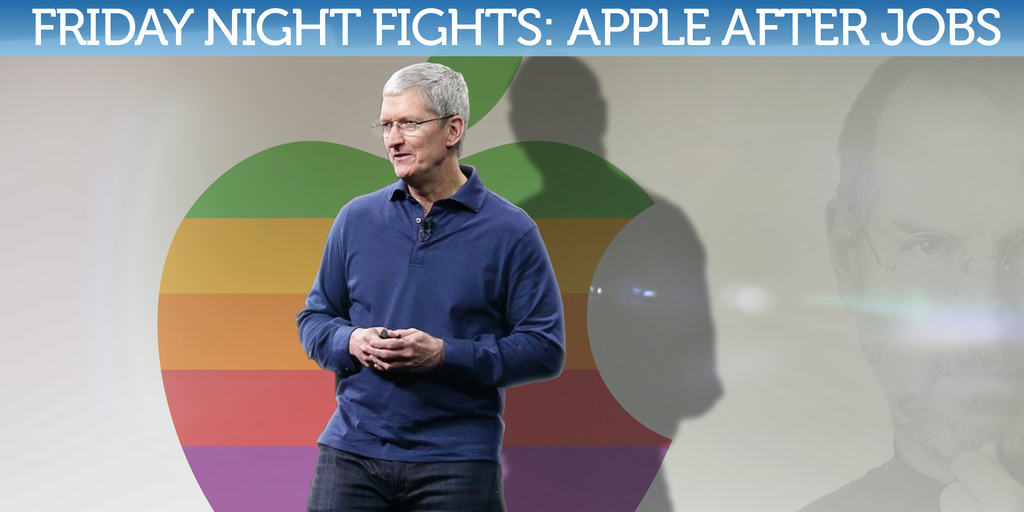
If you ignore its share price, Apple is doing incredibly well under Tim Cook, thanks in large part to the success of the iPhone 6 and 6 Plus. But its newest offerings, Apple Watch and Apple Music, may be off to rocky starts.
This leads us to ask, once again, whether Apple has lost its spark without Steve Jobs. Is the company as exciting or as innovative under Cook? If Apple Watch can’t get us all to wear smartwatches and Apple Music doesn’t put Spotify out of business, does Apple have what it takes to revolutionize another industry?
Join us as we battle it out over those questions in this week’s Friday Night Fight between Cult of Android and Cult of Mac.
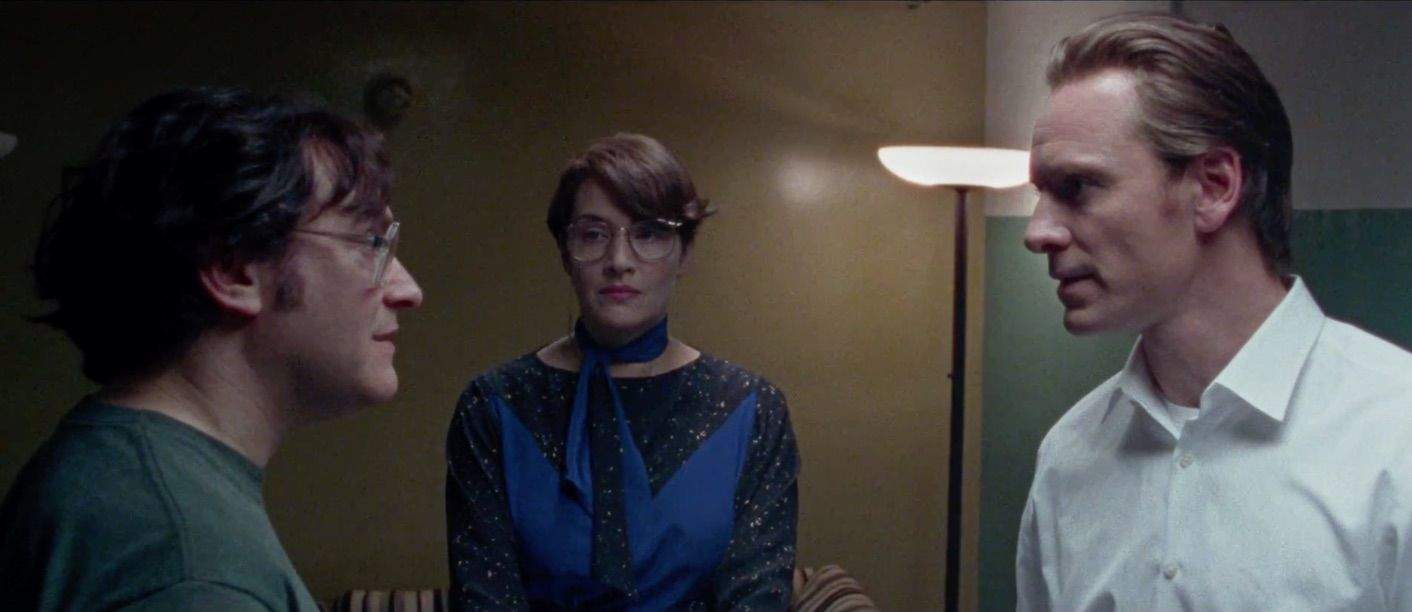
Kate Winslet, middle, praised the portrayal of Steve Jobs by Michael Fassbender (right). Photo: Universal Pictures
Actress and one of the stars in the upcoming biopic aptly named Steve Jobs Kate Winslet, dished about some details of the movie. It seems she’s pretty enthusiastic about it, proudly boasting about how the film was made. She also had kind things to say about co-star Michael Fassbender, who plays Steve Jobs in the movie.
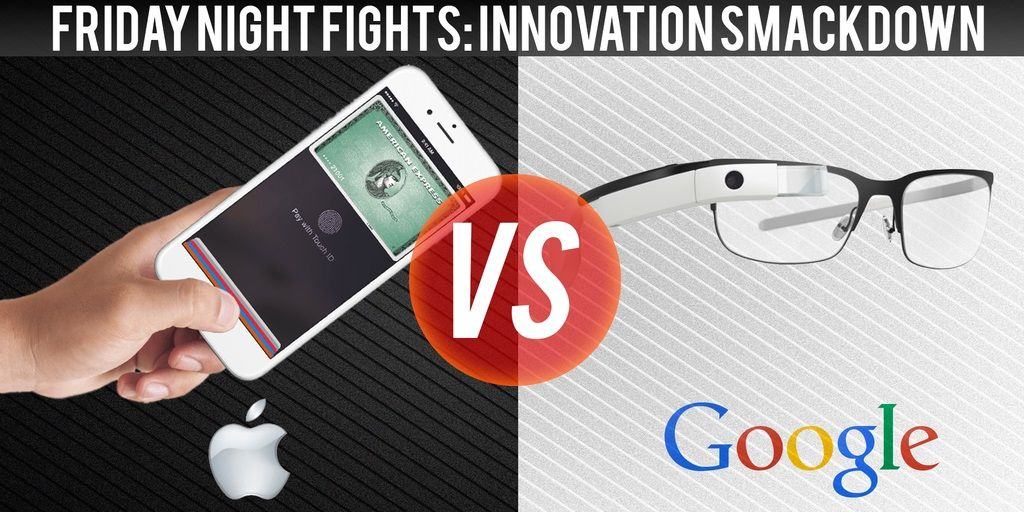
To succeed in tech, you must be a master of innovation. No two companies understand this better than Apple and Google, which have become kings of the industry thanks to a string of incredible ideas that have shaped the technology we rely on today.
But which company is continuing to innovate in 2015? Is it Apple, with its fitness-focused Apple Watch, Apple Pay, and a new streaming service that hopes to save the music industry? Or is it Google, with Google Glass, self-driving cars, and secret robots?
A vintage promotional shot emphasizes the stylish open-plan living found in an Eichler home. Photo: Eichler
With an innovative architectural style that brought elegant living to the masses, real estate developer Joseph Eichler left an indelible mark on California in the 1960s.
His beautifully simple blueprints also had an undeniable impact on Apple’s co-founders — although Steve Wozniak and Steve Jobs took very different lessons from his work. Remarkably, Eichler’s design philosophy continues to shape Apple’s products, inside and out, to this day.
“I was very lucky to grow up in an Eichler,” Wozniak told Cult of Mac, referring to his family’s four-bedroom home in Sunnyvale, California. “It greatly influenced my liking of simplicity and open style. I like it whenever I see those attributes in any architecture.”
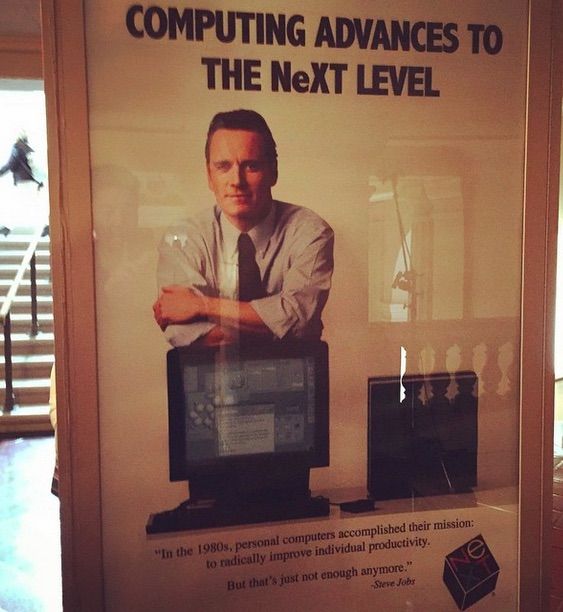
Filming for the upcoming Steve Jobs moving got underway yesterday at the San Francisco’s War Memorial Opera House for a major scene in the movie where Steve Jobs unveils the NeXT computer in October 1988.
The set was crowded as hundreds of people arrived to be extras in the picture, and Danny Boyle’s production crew tried to make the scene as authentic-looking as possible. They even put up fake NeXT posters around the opera house, showing Michael Fassbender as Steve Jobs posing with the NeXT cube.
This is how the head of Apple ought to relax! Photo: Woods Hole Inn
From minor controversies like Antennagate to being kicked out of his own company and then returning triumphantly, Steve Jobs got out of plenty of tight squeezes in his life.
Now that he’s gone, it seems that that same spirit of near-misses and daring triumphs is left to Venus, Jobs’ 256-foot, $120 million super-yacht.
Having visited Montenegro, Palma, Gibraltar, Horta Azores and many other exotic locations since Jobs’ death in 2011, the yacht recently had a close call while passing through a bridge in Saint Martin, an island in the northeast Caribbean, approximately 185 miles east of Puerto Rico.
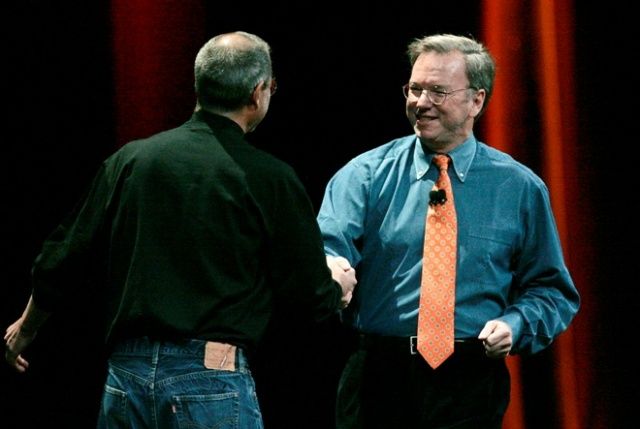
Steve Jobs and Eric Schmidt shaking hands at the original iPhone launch event. Photo: Apple
Google Chairman Eric Schmidt is the anti-Apple. He’s square where Apple is cool, he’s a sputtering doofus where Apple is collected, and he’s prone to hyperbole whereas Apple tends to undersell its products. For example, Schmidt said in 2013 that Android was more secure than the iPhone (LOL).
Given all that, who do you think Schmidt’s personal hero is? Boutros Boutros-Ghali? Shocker! Wrong. It’s Apple co-founder Steve Jobs, naturally. Not that many of those lessons have rubbed off on him, mind you.
Apple co-founder Ron Wayne's archive will go up for auction this month. Photo: Christie's
In a universe where things worked out a bit differently, Ronald Wayne would be a billionaire.
When Apple was incorporated on April 2, 1976, Wayne was named alongside Steve Jobs and Steve Wozniak as one of three founders. Wayne owned a 10 percent stake in the company, a fact that raises questions aboutwho owned apple.
However, just 12 days after Apple started up — feeling out of his depth because he “was standing in the shadow of intellectual giants” — Wayne threw in the towel and sold his shares for just $800.
“I was 40 and these kids were in their 20s,” Wayne told Cult of Mac. “They were whirlwinds — it was like having a tiger by the tail. If I had stayed with Apple I probably would have wound up the richest man in the cemetery.”
Apple fans will never revel in the glory of another Stevenote. But an essay that imagines how Steve Jobs would have introduced the Apple Watch just might be the next best thing.
Lesson No. 1: He wouldn’t have called it the “Apple Watch.”
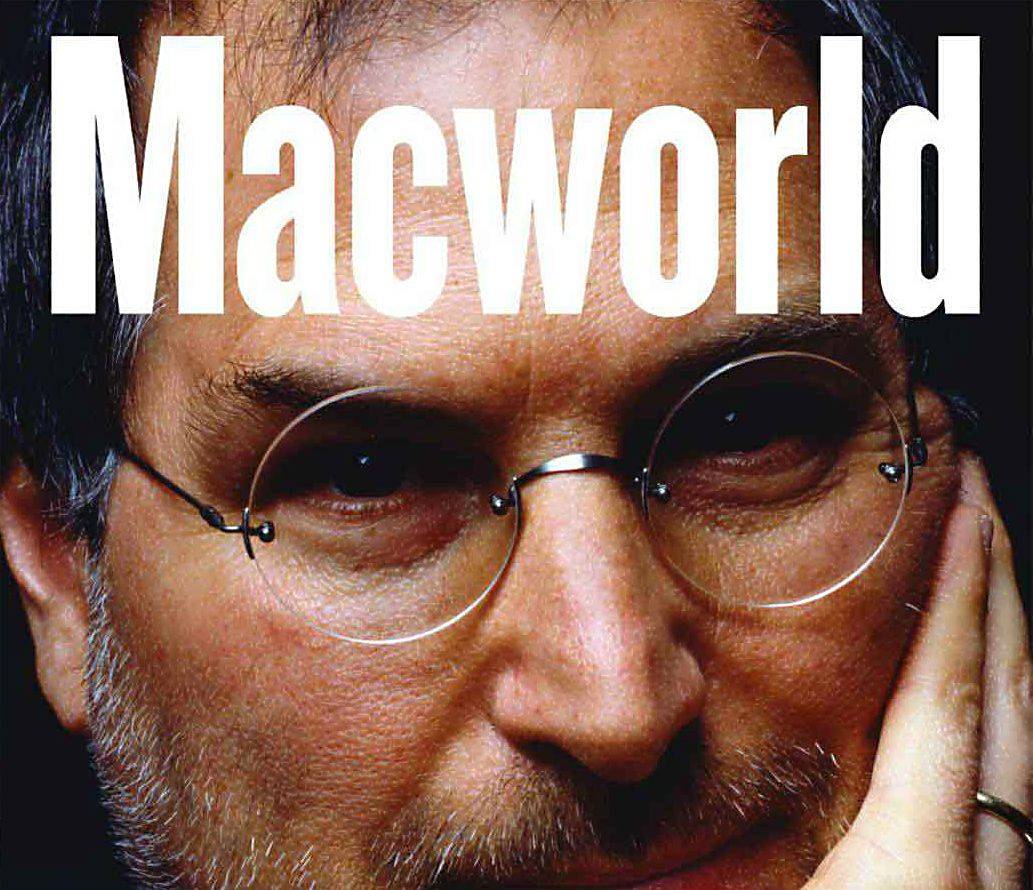
For 30 years, Macworld has chronicled all things Apple-related. Photo: Macworld cover, December 2011
The closing of Macworld is the end of an era. Thirty years ago, the publication was the midwife to the launch of the Macintosh.
Cult of Mac has a series of exclusive recollections by the magazine’s founder Dave Bunnell, which chronicle the journalist’s close encounters with a young and volatile Steve Jobs, the Mac’s difficult gestation and the birth of modern desktop computing. It’s a great trip down memory lane — with plenty of outbursts, last-minute changes and even a cameo by Ella Fitzgerald.
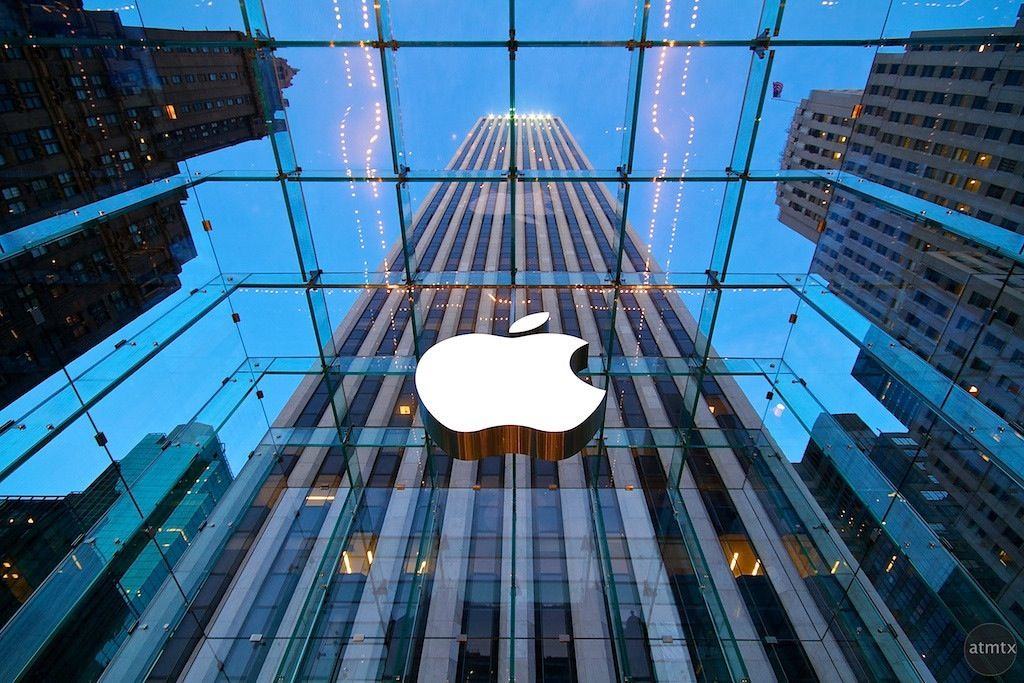
It takes a lot to be both New York City’s most photographed landmark and Apple’s most beautiful retail store. It’s rare that a shop can genuinely be said to take your breath away, but in the case of the Fifth Avenue Apple Store, it lives up to its reputation — and then some.
A big glass box with a glass elevator in the middle, as well as a see-through staircase, complete with wrap-around glass banister, it’s a little bit like Apple’s long-forgotten (but spectacular) Power Mac G4 Cube — only so big that you can shop in it.
It grosses more than any other store in New York City. And it makes more money per square foot than any other store in the world. exactly eight years after it opened its doors, Apple’s flagship retail store has become an iconic part of the New York landscape.
And like a lot of the best Apple products, it owes its success to Apple co-founder Steve Jobs.
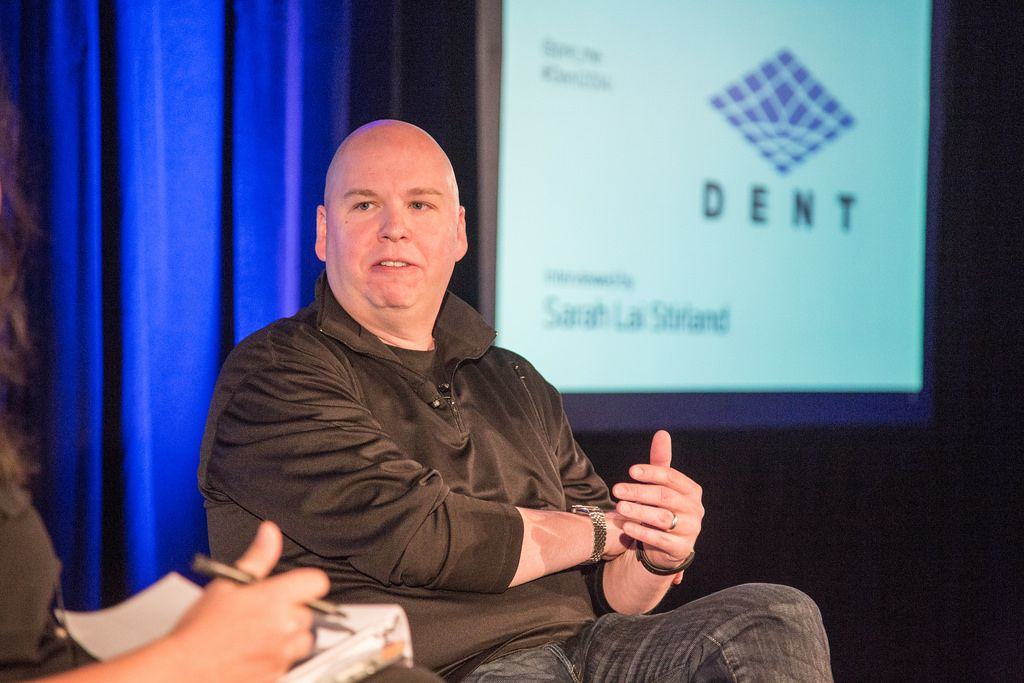
"I actually don’t think that anybody except for Apple was capable of building the iPhone," says Andy Grignon at DENT 2014 in Sun Valley, Idaho. Photo: Kris Krug
When he set out to create the iPhone, Steve Jobs deliberately picked engineers with no mobile phone industry experience because he didn’t want Apple’s smartphone to be “tainted” by old ideas about what could and could not be achieved, says a former software engineer who worked on the project.
“We had the opportunity to hire people from Palm, from Nokia, to help us build this thing. [But] Steve said, ‘No, no, we don’t need to do that,'” Andy Grignon told me during a recent onstage interview at the DENT conference on innovation in Sun Valley, Idaho.
Apple has today announced thatPeter Oppenheimer Apple, its senior vice president and chief financial officer, will retire at the end of September after 18 years with the Cupertino company. Oppenheimer will transition the role of CFO to Luca Maestri, Apple’s current vice president of finance and corporate controller. If you’re wondering aboutPeter Oppenheimer now, you can learn more about his career and contributions to Apple.
On January 24, 1984, Apple Computer introduced Macintosh.
Thirty years ago, Apple Computer introduced Macintosh.
The computing universe was far different back then, and this groundbreaking little computer represented a major change from the status quo. Appealing to creativity and emotion, the Mac introduced the world at large to the Graphical User Interface, the mouse, and a computer that was friendly and non-intimidating. Many of those ideas became new industry paradigms and survive with us to this day.
Computers come and go, it’s a fast changing industry and the pace accelerates every year. But the Mac as a brand has survived 3 decades. This is notable for any product and unheard of for computers! Why, what’s so special? What’s the meaning of the Macintosh turning 30?
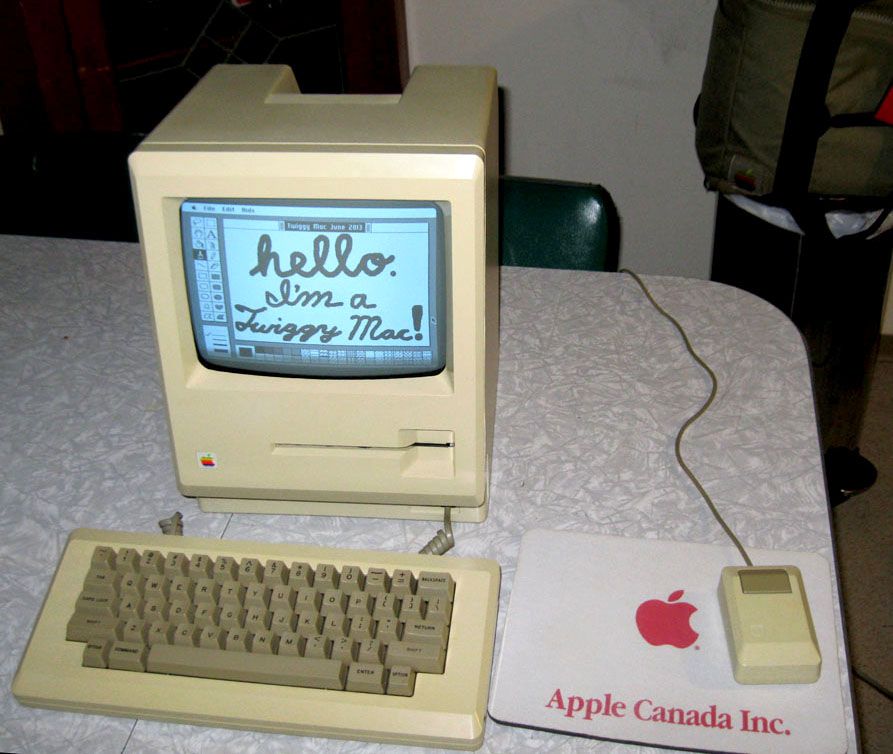
Macintosh 128K prototype with Twiggy floppy disk drive (photo: Adam Goolevitch)
Old computers tend to lead sedentary lives. Parked in shelves and closets, maybe touched by the occasional dusting; the lucky ones still run old games from time to time. But sometimes one becomes a sensation.
The Twiggy Macintosh is a prototype Macintosh 128k that used a 5.25-inch disk drive. Long thought lost to history, two of these primordial Macinti were recently resurrected and returned to life in full working glory. Their rebirth brought about a rare reunion of the original Macintosh design team. And one of them recently repaid the effort by fetching about $40,000 at an auction.
They are — without a doubt — the oldest working Macs in the world.
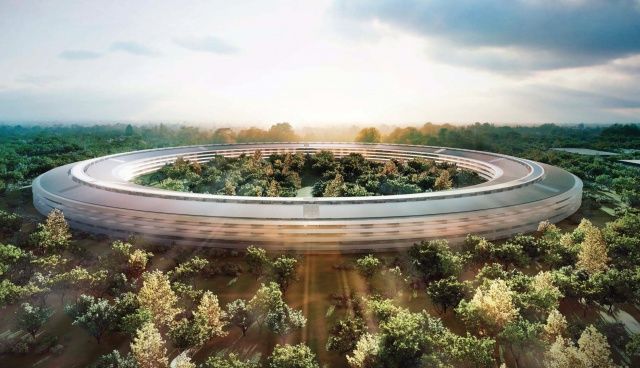
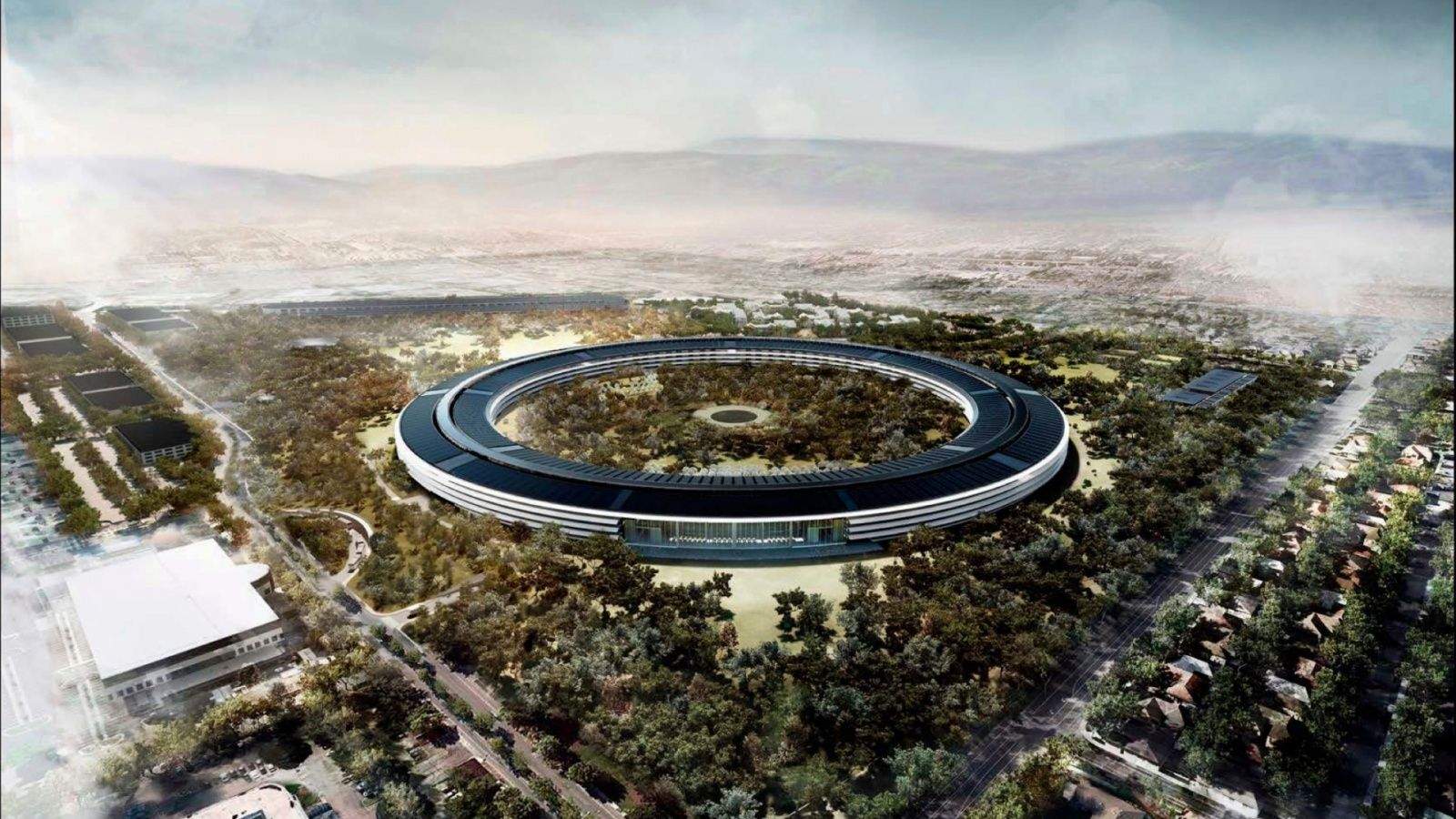
Concept drawing of Apple's breathtaking new circular headquarters in Cupertino, California.
Apple is still moving forward to build its $5 billion, 176-acre “spaceship” Campus 2 headquarters, expected to open in three years in Cupertino, California..
Critics have been attacking it since Apple CEO Steve Jobs first proposed it to the Cupertino City Council. And since that poignant moment, which was Jobs’s last public appearance, the campus project has evolved and changed. As I write this, the old HP buildings on the property are being demolished.
Here’s what we know about the spaceship campus so far, and also what the critics have been saying.
Steve Jobs’ ex-girlfriend, Chrisann Brennan, who dated the Apple co-founder for five years in the early days of Apple, is coming out with her own book, called The Bite In The Apple, where she describes all the glorious details that went into her and Jobs’ ill-fated relationship that ended after Brennan became pregnant with Steve’s first child, Lisa.
While the book focuses on more than just sex, the NY Post has published an excerpt that dives into Steve and Chris’ nights of lovemaking that were so epic Steve had to give her a call 15 years later to say thank you.
Apple was found guilty in July of conspiring with publishers to fix the price of eBooks. As punishment, Apple must delete existing contracts with publishers and negotiate new ones, one at a time to avoid new conspiracy. The government is also pushing for Apple to let Amazon and others sell their books from Apple’s iPhones and iPads.
The whole story is framed like this: Apple and publishers are the bad guys, conspiring against victim Amazon to screw readers out of reasonably priced eBooks. So government, the hero, steps in and sets it right. Everyone lives happily every after.
It sounds like a bad fairy tale. Unfortunately, the true story that nobody is telling is actually something of a Shakespearean tragedy.
Here’s the true and tragic story of how Apple ended up helping Amazon become the Mother of All Monopolies.
Apple was found guilty in July of conspiring with publishers to fix the price of eBooks. As punishment, Apple must delete existing contracts with publishers and negotiate new ones, one at a time to avoid new conspiracy. The government is also pushing for Apple to let Amazon and others sell their books from Apple’s iPhones and iPads.
The whole story is framed like this: Apple and publishers are the bad guys, conspiring against victim Amazon to screw readers out of reasonably priced eBooks. So government, the hero, steps in and sets it right. Everyone lives happily every after.
It sounds like a bad fairy tale. Unfortunately, the true story that nobody is telling is actually something of a Shakespearean tragedy.
Here’s the true and tragic story of how Apple ended up helping Amazon become the Mother of All Monopolies.
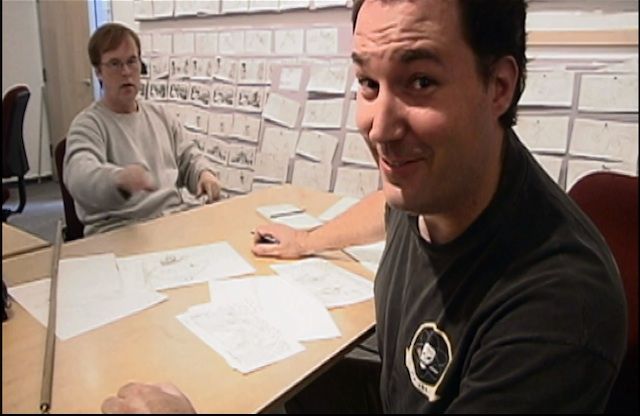
Pixar's Brad Bird and Mark Andrews working on The Incredibles. Picture courtesy of Pixar.
San Francisco, CA — Steve Jobs revered Pixar for its blend of artistry and technology, as Walter Isaacson detailed in his 2011 biography, so perhaps it shouldn’t be a surprise that he actually apologized to one of the artists working on the 2004 film “The Incredibles” after he criticized some of the design in the film after a screening.
Apple's building a new office in San Jose. Photo: Apple
Apple is still moving forward to build its $5 billion, 176-acre campus Cupertino “spaceship” Campus 2 headquarters, expected to open in three years.
Critics have been attacking it since Steve Jobs first proposed it to the Cupertino City Council.
And since that poignant moment, which was Jobs’s last public appearance, the campus project has evolved and changed and, as I write this, the old HP buildings on the property are being demolished.
Here’s what we know about the spaceship campus so far, and also what the critics have been saying.