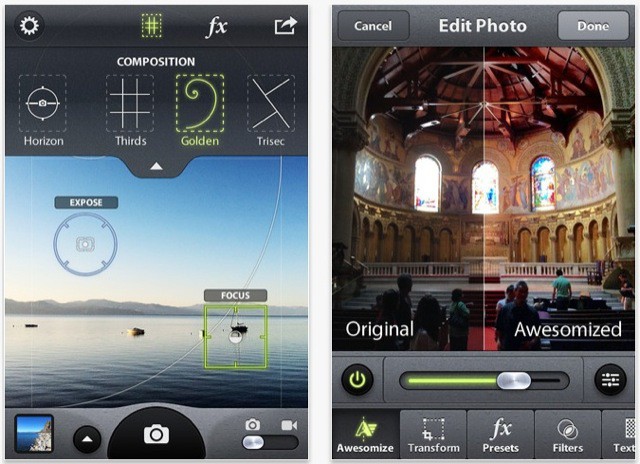
Camera Awesome is a new all-singing, all-dancing photo app on the iOS Store this week. But just how awesome is it?
Brought to you by photo sharing site SmugMug, the first noticeable thing about this app is the price: it’s free. There are no adverts inside it, you’ll be pleased to hear. But there are quite a lot of extras that can only be unlocked with in-app purchases.
The Grix is a cool new $5 pixel editor for iOS, with wide appeal for serious pixel artists and anyone looking for a creative way of killing a dull moment.
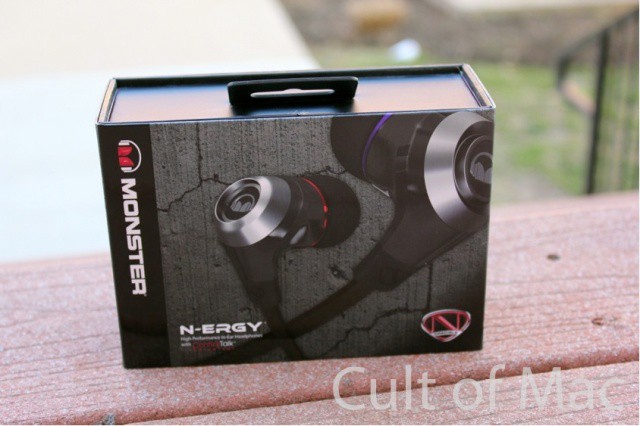
Monster collaborated with rapper/actor Nick Cannon to make the N-ERGY “high performance in-ear headphones.” I put the last part in quotes because the N-ERGY headphones ($70) are neither “high performance” nor “in-ear.”
I’m not an audiophile, but I appreciate and know good sound when I hear it. It took a total of 15 minutes for me to realize that the “NCredible” (yes, that phrase is used to market the product) N-ERGY headphones are awful. They look great, but they’re about as painful to listen to as Nick Cannon’s comedy.
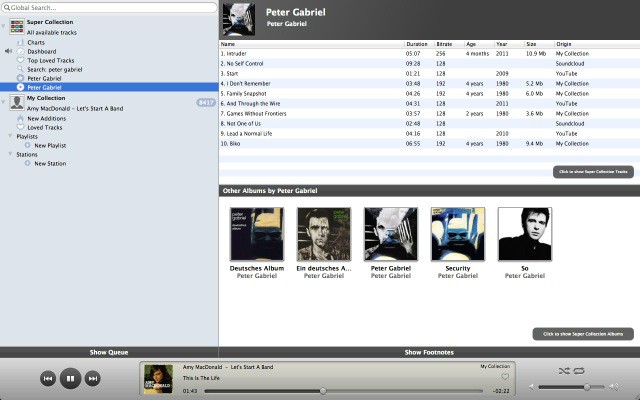
Here’s Tomahawk, a music player with a difference: it plays music from anywhere and almost everywhere. Not necessarily music from your collection, either.
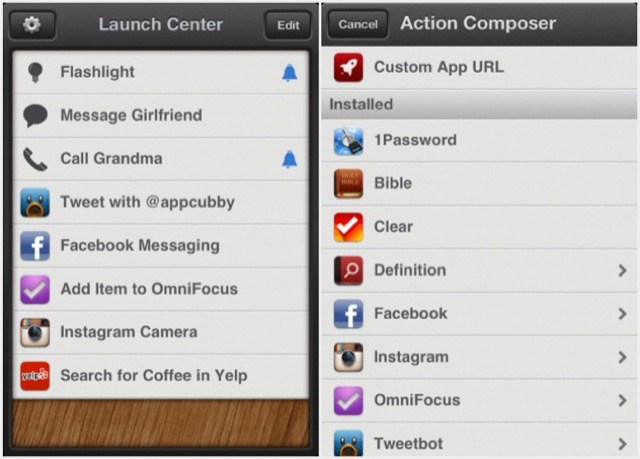
Read what Dave writes, and take careful note of his wise words: Launch Center is an ingenious little marvel that’s well worth having on your iPhone. Allow me to explain why.
Photo snapped with an iPhone 4S from inside the DryCASE.
Determined to acquire sea legs before the America’s Cup breezes into San Francisco in 2013, I’m learning to sail. Well, learning is a big word. Mostly trying not to get smacked by the boom and checking out the porpoises.
The Bay Area is known for its challenging waters, so I figured it’d be a good place to test out DryCASE, which vacuum seals your iPhone into a waterproof pouch that you can wear as an armband or around your neck.
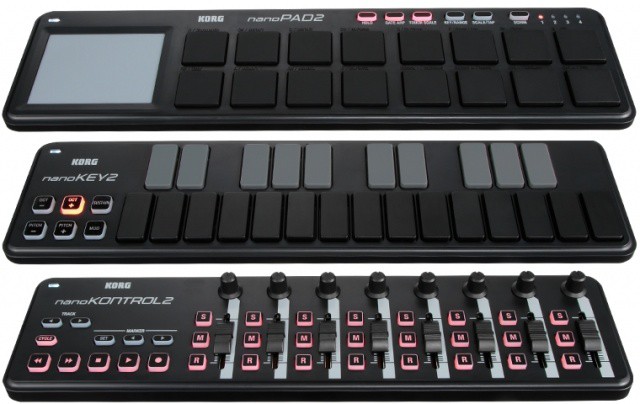
Korg has consistently produced quality MIDI controllers and the nanoSERIES2 product line is no exception. Be ready to be impressed with the newest addition to the Korg family.
Korg debuted the nanoSERIES2 line following the success of its predecessor, the nanoSERIES line. The lineup consists of the nanoKONTROL2, the nanoKEY2 and the nanoPAD2. As a trio, they offer a truly flexible experience for musicians in the studio and on the go. The only thing you sacrifice with this slim-line MIDI controller series is the bulk and weight of traditional MIDI controllers. Korg and its educational arm, Soundtree, were generous enough to provide test units of the nanoSERIES2 line.
SpamSieve is a top-quality spam-killer for your email account, protecting you from phishing, from lures tempting you to download God-knows-what from dodgy file sharing servers, and from non-existent Nigerian princes offering untold wealth in exchange for, well, a few cash payments up front. To cover expenses, you understand.
There’s a certain kind of computing nostalgia that holds that the art of typing has been steadily wussified since the late 1980s, when the venerable IBM Model M and Apple Extended Keyboard went out of favor.
These keyboards, it is held, were the last of a breed of keyboards for men. Like a vintage Underwood typewriter, these mechanical marvels were made for those who meant for their words not just to be heard, but to be felt: the hefty chunk of each key smashing into the mechanical switch underneath shouldn’t just make a letter light up on a screen; it should land with such authority it shakes your teeth loose.
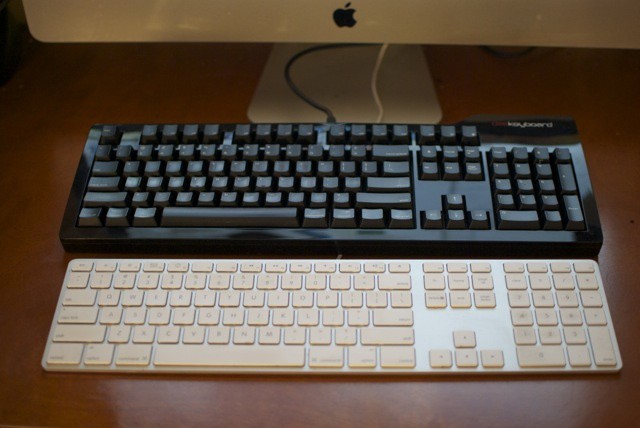
For the last month, I’ve been trying to become one of these burly typist he-men. I put my Apple Wireless Keyboard — as pale, thin and pretty as the world’s most anemic twink — and have instead replaced it with the Das Keyboard Model S Professional for Mac. Now when I type, it sounds like ten tiny John Henrys working away under my fingers, pounding spikes through the invisible gold-plated key switches beneath each key.
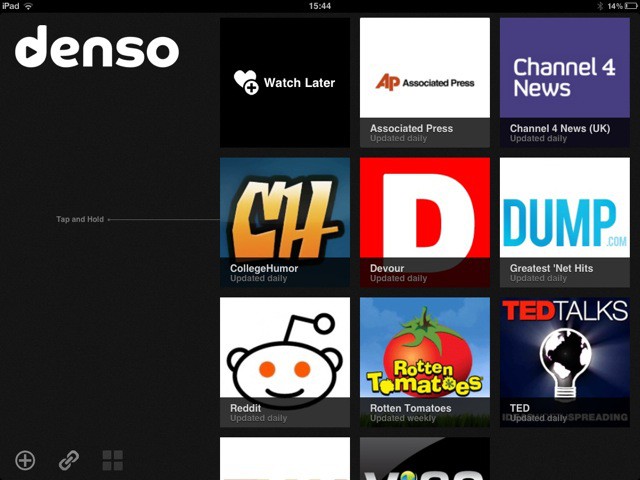
Denso is a little bit like Flipboard, but just for video content. Open it up, and you’ll see a selection of curated and branded channels that you can subscribe to on your iPhone or iPad.
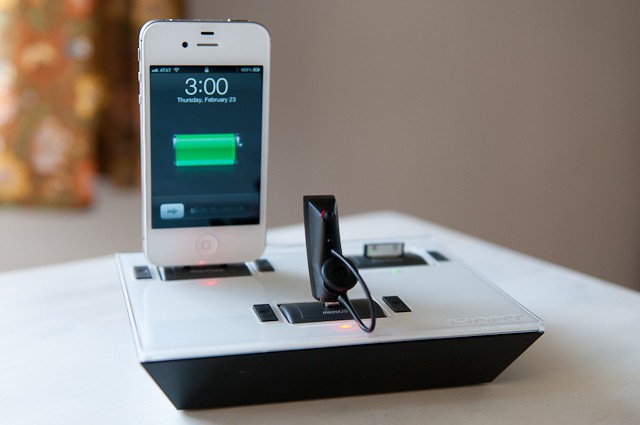
Here’s how you know you’re a nerd: a charging station gets you excited. Yeah, I’ll say it: the IDAPT i4+ Universal Charger ($60) excites me. And yes, I’ve known the touch of a woman.
Before you judge me any further, let me explain how the i4+ works; you might start getting a tingly sensation too.
Make your Mac your own with BetterTouchTool. Image: Andreas Hegenberg
Once you download BetterTouchTool and start to explore what this powerful Mac utility offers, you’ll wonder how you ever lived without it.
The app lives up to its name. It greatly enhances your experience of using a Mac by letting you add your own custom trackpad gestures. But despite the name, it works beyond your Mac’s trackpad or Magic Mouse. You can use it for keyboard shortcuts too, or with a standard USB mouse. Even an Apple Remote.
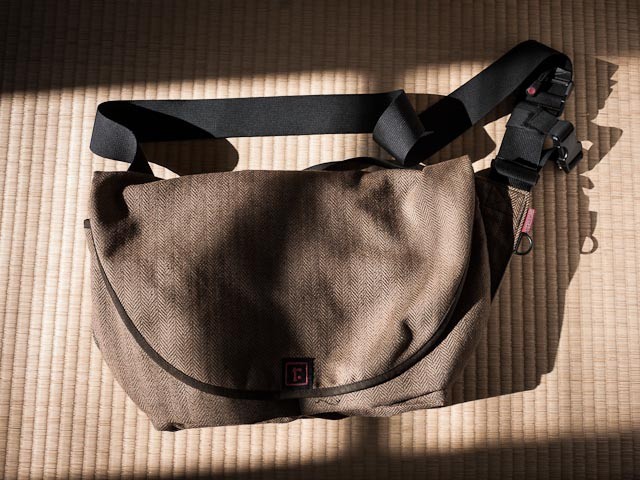
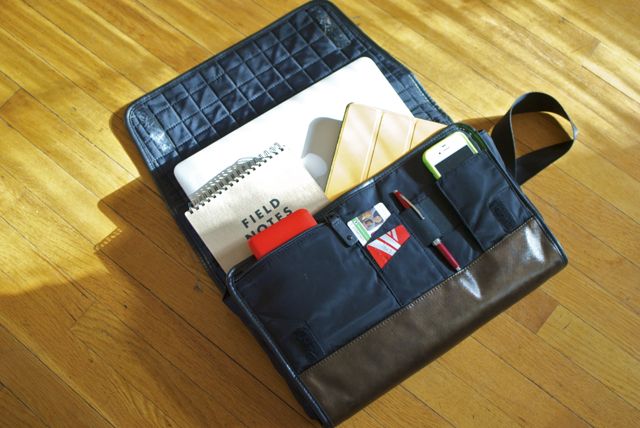
It doesn't look like much, but this could be the bag you spend the rest of your life with. Photo Charlie Sorrel CC BY-NC-SA 3.0
This is my favorite bag. I have many (too many) bags, but this is the best. I doesn’t have any fancy features. It has no padding, and there’s no way to lock it securely shut. But unless I have a special task requiring a special bag, it’s the one I always grab. I’m so used to it that every piece of junk I carry with me has its place inside.
And even after more than a year of solid use, it’s as good as new. The bag is the Zero Messenger from Rickshaw, and here’s why it’s so good:
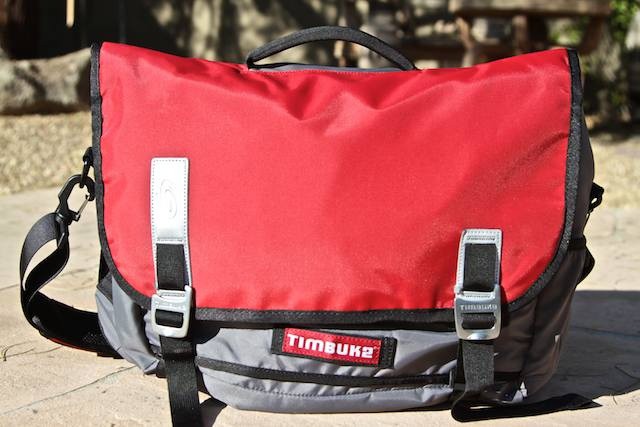
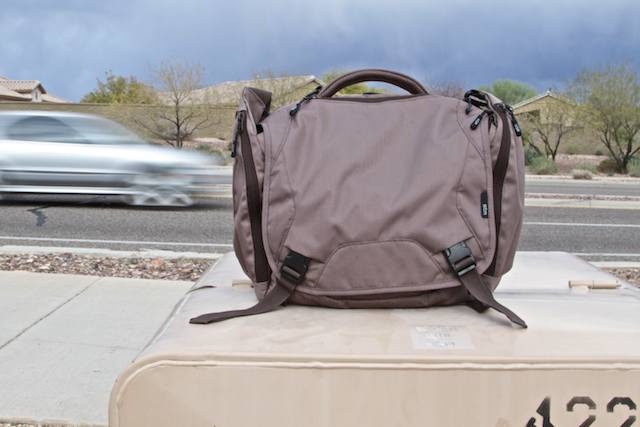
The new Timbuk2 Command Messenger 2012 ($140) is nothing like the first Timbuk2 bag I ever owned, some 11 years and 20 pounds ago, back when I was heavily commited to the world of cycling. Timbuk2 called it the Bolo, and it was a real messenger bag — though messengers almost always opted for it’s larger sibling, the Tag Junkie — crafted from a single piece of vinyl and Cordura; just a massive main compartment with not much more than a small pocket sewn on the outer face for coins and maybe a patch kit.
Although it’s just about as tough, the Command Messenger is light years away from my Bolo (and is really as much a messenger bag as a Chevy pickup is an ox cart): It’s sophisticated, uses several advanced materials, has loads of pockets and a trick feature that makes air travel easier for laptop-toting jestsetters. My how you’ve grown, Timbuk2.
Acorn describes itself as “an image editor for humans”, and that sums it up in a nutshell.
What you get inside Acorn are pretty much all the image editing features you’re ever going to need, for a fraction of the price of some of the competing apps.
One of the things I have always found interesting about bags is the way they are defined by their intent. There is more to them than their fabric and stitch. To judge a bag, you need to look beyond what it is to what it aspires to fill itself with. In other words, bags have souls, and like people, you can’t judge them just by what they are. You must also consider what they want to be.
The Acme Made Clutch is a bag that aspires to be as sleek as the 13-inch MacBook Air and MacBook Pro that it is designed to fit. At that, it succeeds. Those looking for an all-purpose laptop bag to throw anything and everything into should look elsewhere, though. The Clutch is as minimalist, meticulously organized and with as much eye to fashion and form, it’s as if Jonny Ive had designed it for Steve Jobs himself. But Steve never was a guy who needed to keep a lot of things in his bag.
Bag-maker STM hails from dehn undah (if you think my Aussie impression sounds bad here, well, it’s even worse in person), where they’re apparently pretty huge. They’re less well-known here in the States — but that’ll likely change thanks to a big marketing push and bags like the fantastic STM Velo ($100), a designed laptop bag stuffed with unusually clever features.
I’m always looking for ways to enhance my music listening experience on the Mac. For the last several months I’ve been using Bowtie to control iTunes with keyboard shortcuts, and Ecoute is another great alternative for managing iTunes in a minimal, simplified way.
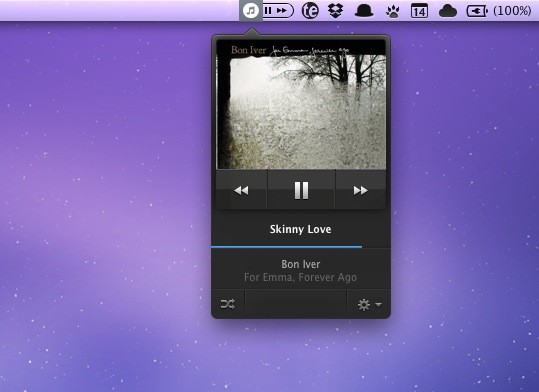
When the developers of Skip Tunes contacted me, I was intrigued by the app’s menu bar interface. For quick access to simple music playback controls, it doesn’t get much better than this.
The SmartShell relaxes in its fur and vinyl den. Photo Charlie Sorrel CC BY-NC-SA 3.0
Never have I felt worse about buying a gadget accessory than I did buying the Speck SmartShell, a flimsy plastic cover for the back of the iPad 2 which Speck somehow summons the stones to sell for $35. Worse, I bought it in Europe, where it goes for €30, or $40. After a few months of use, though, it turns out to be the best iPad “case” I own (and I have rather a lot).
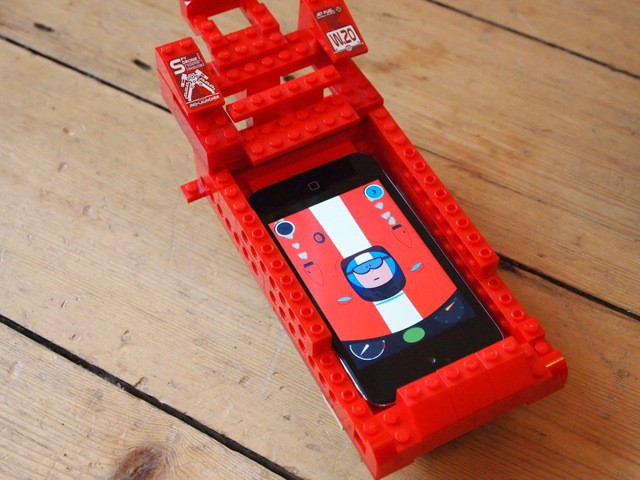
Makego is a cool new app that makes your kids’ real world creations come to life.
The two-dollar app comes with three virtual vehicles – a racing car, an ice cream truck, and a river boat. All you have to do is make one (out of Lego, paper, or anything else you can think of), plop your device inside, and run the app.
It has taken me a couple of weeks to refresh and recharge from my first Macworld experience (now known as Macworld | iWorld, of course). But during that time of getting clear I had the opportunity to give the latest offering by RealMac Software (Rapidweaver, LittleSnapper) in collaboration with Milen and Impending, Inc. a thorough “beta” test drive. Coincidentally, the iOS app is called Clear, and it is one of the more compelling list-makers/task managers I’ve seen for the iPhone.
The innovative thing about Clear is that it is entirely gesture-based in execution. There are no visible buttons or sliders; you use a series of gestures to interact with it, and that is what makes it stand apart from other iPhone list apps and task managers.
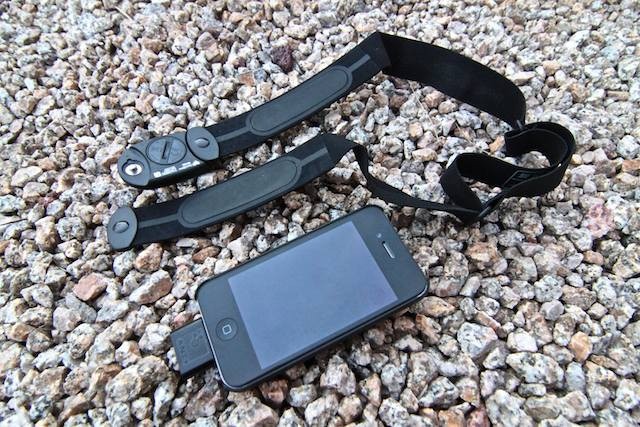
Till January of this year, the Wahoo Key for iPhone ($80) dongle pwned fitness on the iPhone. Why? Because the tiny, ubiquitous dongle gives the iPhone access to dozens of ANT+ sensors, and more fitness apps than any other system — turning your iPhone into a fitness-tracking powerhouse.
Then in January, Wahoo one-upped itself and introduced the Wahoo Blue Bluetooth heart-rate strap, which completely bypasses ANT+ and instead communicates via low-energy Bluetooth v4.0. Does this mean the Key is obsolete? Not by a long shot.