With the big news that Apple lifted restrictions on 3G VoIP calls in February and rumors that Skype might allow such calls in the near future, it’s no wonder that splashes from the opening salvos in the VoIP app wars can be seen around the App Store.
The latest combatant to enter the arena is Goober, who launched their iPhone app about two weeks ago (though the service has been around for computers since 2006). And while we’re still waiting for Skype to release a 3G-capable app, Goober’s is already here.
We kick off the first week of the iPad with a number of free iPad apps, including “Dictionary! for iPad.” We also check out a new batch of freebies from the App Store, including “Arcade Hoops Basketball.” We wrap up the top trio of deals with a number of iPod touch devices, starting at $169 for an 8GB model.
Along the way, we check out other Apple software and gear for the Mac fan. As always, details on these and many other bargains are available at CoM’s “Daily Deals” page which starts right after the jump.
OmniGraffle brings professional diagramming to iPad.
OK, class, weekend playtime is over. Time to get to work. More than 300,000 of you have had fun since Saturday playing games, watching movies and lazing around in bed with the Sunday New York Times on your new iPad. Now it’s Monday morning and the question is: can you justify bringing Apple’s new gadget into the office and putting it to work as a productivity tool?
Well, should your work involve producing graphs, flow charts, schematic designs or anything similar the answer is a resounding yes if you’re hip to the productivity apps from Omni Group.
Although analyst predictions of how many iPads would sell on the first day varied widely from Apple’s own 300,000 figure, we are getting some intriguing insights into why consumers are buying the new tablet device. For Apple, maybe the most comforting bit of data is that the iPad is not a cannibal.
“We believe that Apple has successfully carved out a new category of mobile devices between the smartphone and the laptop,” Piper Jaffray analyst Gene Munster told investors Monday. That feat was accomplished “apparently without cannibalizing its own iPhone and Mac sales,” he added.
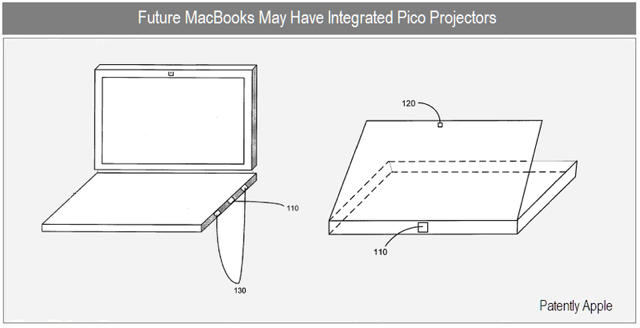
I think you can safely chalk this latest Apple patent won’t come to fruition, but it’s an interesting one the nonce: a MacBook Pro with a built in pico projector in the hinge, perfect for giving presentations on-the-go, or just throwing a movie up on the wall for your friends to watch.
It’s neat, but it’s also way to marginalized a feature to expect any time soon, especially given the relative lameness of pico projectors: Apple might well pull this trick out of their hat one day, but not until they can do it right. What do you think?
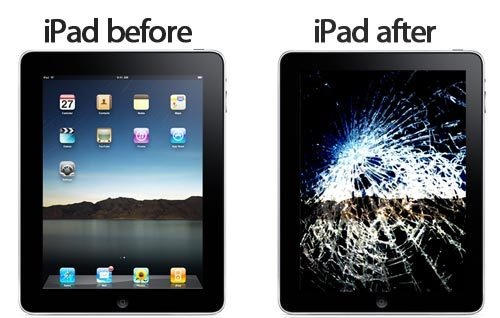
As they are wont to do, the fine folks of PC World have dropped, thrown, scratched, smashed, hurled, trounced, boiled, frozen and defenestrated their iPad so you don’t have to. If you want to know just how much punishment your iPad can take, go read their iPad Stress Test.
The takeaway here is never to drop your iPad: according to PC World Senior Editor Tim Moynihan, three or four drops onto a carpeted office floor was enough spiderglass the screen. But at least it’s really scratch resistant… and, apparently, donut-controllable. Hit the full article for all the don’ts.
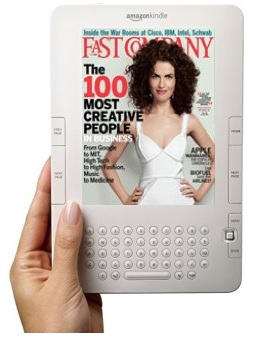
Okay, maybe Piper Jaffray analyst Gene Munster should have stuck with his original estimate of 200,000 to 300,000 iPads sold over the weekend. Still, his interviews of iPad buyers revealed some interesting points – such as the number of Kindle owners in line to buy Apple’s new gadget.
Indeed, 58 percent of iPad owners who also have a Kindle, said they’d drop the Amazon e-reader in favor of the new tablet device. Another interesting tidbit from Munster’s survey: 10 percent of those in line Saturday to buy an iPad had considered purchasing a Kindle.
This is what happens when you have one of the most widely anticipated device launches of the year coupled with not enough to go around: someone walks out of the store and. before they can even reach their car, gets their iPad stolen.
In this case, the unlucky victim was Mohamed Aboutaleb of Dover, New Hampshire, who walked out of his local Best Buy with a new iPad only to be accosted by a teenage thief who pushed him to the ground, grabbed his bag and jumped into a getaway car driven by another punk kid… all before he could set up “Find my iPaD” in MobileMe.
Poor guy. We’re tempted to suggest the only safe way to walk around in public with an iPad is by handcuffing it to your wrist, but the consumer frenzy’s high enough with the iPad that that suggestion can only lead to a bloody hacksaw and a spurting stump or two. Better to just hand it over.
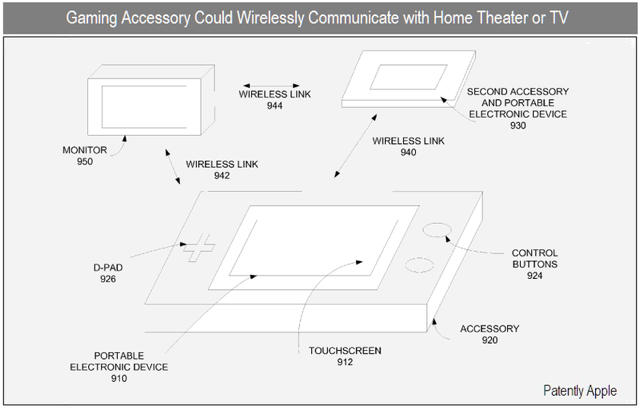
Ever since the iPhone’s release, one of the most pervasive criticisms of Apple’s handhelds as dedicated gaming devices have been the device’s lack of analog controls. It’s a criticism that has seemed considerably limper as time goes on and developers have figured out to utilize the iPhone’s touchscreen and accelerometer effectively, but for certain genres like fighting games and twitch shooters, there’s still something be said for the good old d-pad.
Apple announced official iPad sales numbers for Saturday, the first day the much-ballyhooed tablet device was available in stores. More than 300,000 iPads were sold by midnight, April 3, the Cupertino, Calif. company said Monday morning.
“It feels great to have the iPad launched into the world — it’s going to be a game changer,” CEO Steve Jobs declared via a press statement. The number reflect pre-orders, shipments to partners and retail sales. More than 1 million apps were downloaded and 250,000 e-books from the iBookstore were downloaded Saturday, according to the company.
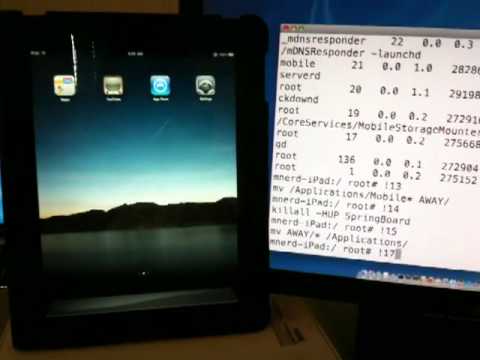
Always plucky, ingenious and defiant, it already looked pretty good that the iPhone OS hacking community would manage a zero day jailbreak… and it looks they they’ve done just that in under 24 hours, courtesy of hacker Musclenerd.
It appears that this jailbreak is using the same “Spirit” technique that Geohot demonstrated working on 3.1.3 last week, strongly implying that iPhone OS 3.2 doesn’t close any of the previous firmware’s exploitable holes.
When can the command-line-disinclined expect an idiot-proof iPad jailbreak? No word yet, although Geohot has said that he’s waiting to release his software until Apple rolls the 3.2 firmware across all devices.
Bummed you missed the iPad launch day festivities? Didn’t want to get up at such an indecent hour to witness the pandemonium? Well take heart Apple brothers and sisters! I woke up much too bright and way too early so I could bring you all fun the launch day had to offer. Why, you’ll feel like you didn’t miss a thing as you weave with me through the HUGE iPad line, talking iPad and giving out some sweet shwag!
I do believe Seattle had one of the largest and most ruckus iPad lines in the world. But hey, you be the judge.
We’re doing a little spring cleaning, and we have a bunch of iPhone Apps to unload. I don’t have enough of each one to make a big giveaway, so I am just going to randomly unload iPhone Apps on our Facebook page throughout the day. Some of them will be iPhone apps that we’ve given away in the past couple of weeks, and others will be apps that didn’t make the cut the first couple of giveaways, but we don’t want them to go to waste! We can’t guarantee that every app code will work, and if it doesn’t just let me know on the Facebook comments, and I’ll help you out.
Here’s what you gotta do to score some of these apps today:
Suggest all of your other Mac friends to our page!
Monitor our Facebook page throughout the day. There will be no rhyme or reason to when I post them, and they will be up for grabs to anyone who can redeem them first. It’s a free-for-all!
We’re currently working on getting some fresh iPhone apps to giveaway and hopefully some iPad apps as well! We may even have a BIG giveaway up our sleeve in the near future, and we’ll give you details on it soon. Hope everyone had a great Easter weekend, now get back to work!
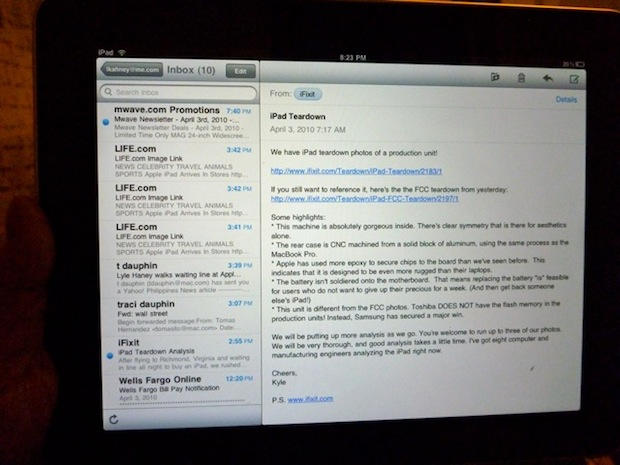
With the release of the iPad, we have yet one more way to access our email. While the look and feel of the Mail app for iPad is good, let’s dig a little deeper into what’s good, what’s bad and what’s ugly (Hint: Gmail and saving messages).
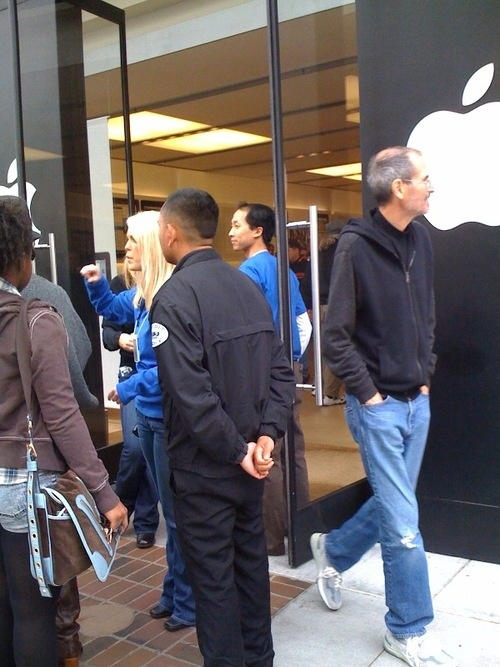
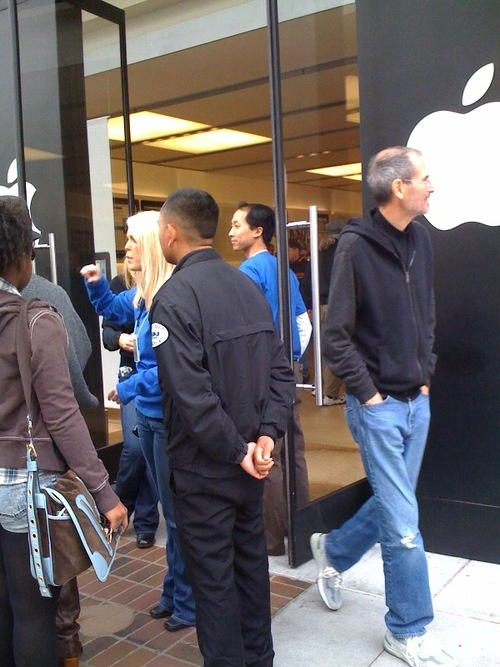
UPDATED: Steve Jobs personally demoed the iPad for his daughter at his local Palo Alto store on Saturday, and not, as this post originally reported, “for one lucky customer.” Confusion in the initial post stemmed from typos in a Tweet communicated to Cult of Mac by Twitter user Cédric Lignier, who wrote today to clarify his communication, which should have read:
“Met Steve Job @ Palo Alto today! I gave up my iPad spot 4 let him demoed the iPad 2 his daughter. Unbelievable!”
Jobs was at his local Apple Store on University Avenue in Palo Alto, which did brisk business in iPads Saturday, attracting big crowds. It looks like Jobs walked to the store (he lives nearby and is often spotted walking around Palo Alto). No one seems to have paid him much attention. The staff in the picture above, taken by Lignier, seem more concerned with crowd control.
Meanwhile, the iPad’s top designer, Jonathan Ive, quietly watched the mobs at his local Apple store in San Francisco.
Ive, who is famously shy and self-effacing, attended the iPad launch event at the flagship Stockton Street store, which was a mob and media frenzy. It seems few noticed him either, despite being the most famous designer in the world. The one person who did, Matt Galligan, scored this nice picture with him.
The first thing I notice about the iPad is that it’s wicked fast. Everything happens in a snap. Apps fly open. They close even faster. Web surfing is lickety-split, especially on a fast Wi-Fi connection. Netflix movies load almost immediately, and scrubbing through them is quick and painless.
I marvel at how seamless it is. Turning the pages of Winnie The Pooh is so gorgeous, I spend five minutes just turning and returning the pages.
Some new email comes in. Everything’s synced: email, address book, calendars, music and movies — all thanks to a two-minute setup in iTunes. I dash off a quick reply, and am pleased how easy it is to type on this thing. Woah — this is one slick gadget!
I know what you’re thinking. Should I get one for the kids instead of a nasty netbook? Can we replace our old PowerBook with it? Should I take it to a confernece next month instead of my heavy MacBook?
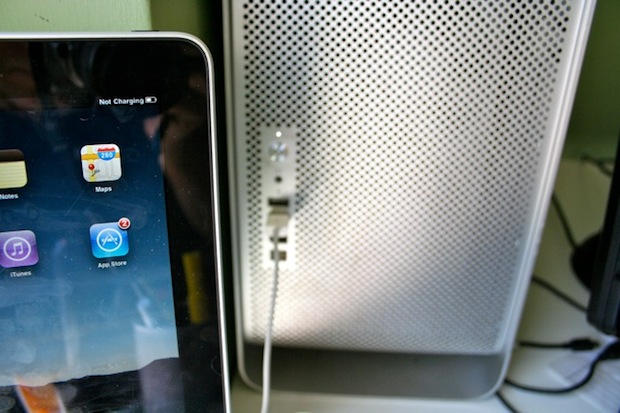
The iPad won't charge using the USB 2.0 ports of some older machines, like my $2,500 Mac Pro from 2006.
Lots of people are complaining that their iPads aren’t charging when plugged into their computer’s USB port. The battery indicator in the upper right corner says “Not Charging.” The iPad still syncs, however.
Don’t worry, it’s not a glitch. The iPad needs a high-power USB 2.0 port to charge, which are less common on older computers. Many USB hubs and keyboards with USB ports won’t work either.
The complaints seem to be coming from users of older Macs and some Windows laptop users. The front-facing USB ports on a 2006 Mac Pro, for example, don’t put out enough power to charge the iPad, but the ports on a 2009 MacBook Pro (13-inch) do.
Apple has published a support document that advises charging the iPad using the included power brick.
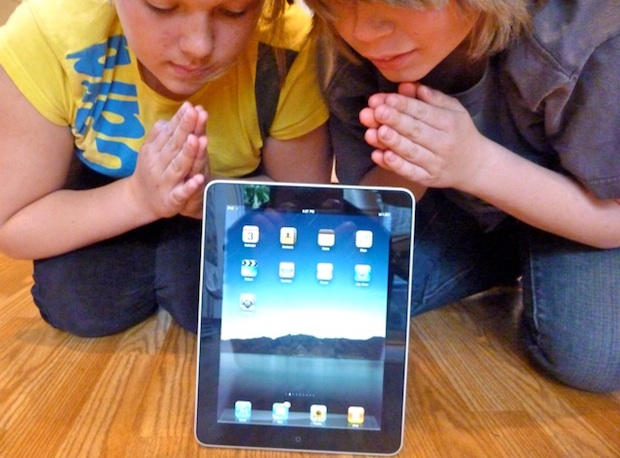
Although the kids have already monopolized CoM’s brand new iPad, here are some initial impressions. My colleague Jose Gutierrez also chipped in.
* It’s seriously WOW. A huge grin broke on my face the first time I swiped the lock screen. It’s so much better than just a big iPod touch. The size of the screen makes it a very different experience. I can already tell, using a mouse and keyboard is going to get old fast.
* It’s got great heft and feel. It feels tough and substantial, but the 1.5 lbs weight is going to take some getting used to. In fact, it’s heavy. Definitely need an armrest. Next model will likely be plastic backed. The glass screen makes it top heavy, especially when typing it portrait mode.
* At first I thought the screen was scratched — but there are shooting time lapse images of stars on the Home screen wallpaper. Hard to believe Steve Jobs didn’t spot this.
* The screen is bright and very sharp. HD video looks astonishing.
* It picks up greasy fingerprints super fast — in spite of the oleophobic coating.
* Out of the box it won’t turn on until you set it up through iTunes.
* Set up is super simple. Connect to iTunes (you need version 9.1) and there’s two choices: start from scratch or back up from iPhone.
* The UI is very fast. Apps launch instantly.
* Being able to put six apps in the dock is awesome. Many features like this and the custom wallpaper need to make it to the iPhone. Bookmarks bar in Safari is very nice.
* Keyboard needs work. Very difficult to type in portrait mode. In landscape, the keyboard dominates the screen. Might be a deal breaker for some.
* iPhone apps look horrible, especially Facebook.
* Some apps have bugs, due to lack of hardware availability to developers. Simulators can only do so much. Expect firmware upgrade soon as well as many app updates.
* The iPad’s speaker is pretty loud and perfectly adequate for watching TV or movies, even with background noise.
Overall a good product but will become an awesome product when people’s favorite apps are optimized for the iPad. A firmware update is needed to work out some bugs. Perfect for relaxing at home or on a plane. Not ready for the working world. iWork just not quite good enough due to file management constraints.
Please chip in your impressions in the comments. What do you guys think?
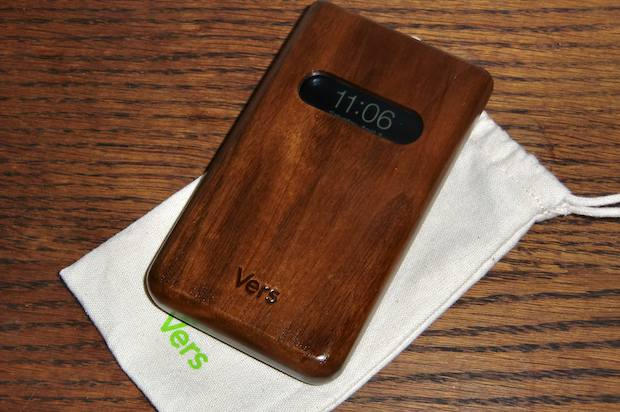
There’s a reason high-end car interiors are often accentuated with wood — it wears far better than many other materials, lends a rich, warm look, and each piece is unique due to striations and markings inherent in the wood.
Add the fact that wood is a renewable resource that — if care is taken to plant more trees — won’t harm the environment, and the result is a beautiful, warm, hard-wearing case from Vers that’ll also appeal to the green-conscious.
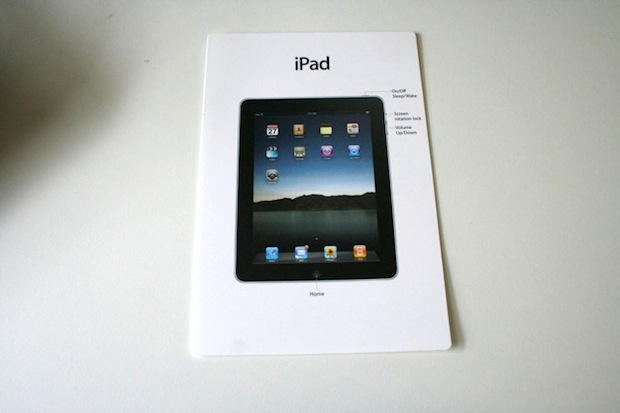
Here’s the user manual for the iPad. It’s a single sheet that shows the layout of the three buttons. That’s it.
There’s some info about syncing on the back, and I know there’s a bunch of guided tour videos on Apple’s website, but this is a stark illustration of the radical simplicity of the device. And it is radical. You need no introduction. You pick it up and use it: no RTFM necessary.
(The backside picture is after the jump. It says download the latest version of iTunes and plug in your iPad to sync.)
The hottest debate going at the moment is whether or not the iPad is a laptop or netbook replacement. The conversation has focused on the quality of the virtual keyboard, the power of the processor, the storage capacity, and the simplified UI. But we now have a definitive opinion on the topic — Apple’s. Hinted at in the technical specifications now confirmed in Leander’s unboxing, the iPad won’t even turn on unless it has been synced through iTunes.
I sincerely hope this changes. You’re not going to attract an army of non-computer savvy users to a revolutionarily simplified platform if they have to own a regular computer, too. It’s time to cut the umbilical cord, Apple. Let the iPad exist unto itself. If you never connect it to a computer, it should still work brilliantly. If you want to connect it to a computer to transfer files, so be it. But the Mac didn’t need to sync to an Apple II. The first PowerBook didn’t have to dock into a Quadra to turn on. You’ve made a serious new computing platform for the rest of us. Don’t treat it like it’s just an iPhone, dependent on a big brother computer to be truly useful.
Here are CoM’s obligatory iPad unboxing pix. The biggest surprise is the lack of a cleaning cloth (the iPad is already sticky with greasy little prints). There’s also the austere minimalism of the box’s contents. There’s hardly anything in it.
The system hooks into the internal stocking systems at Best Buy and thousands of other retail stores (not sure how it has data from Apple).
Milo.com, tracks the real-time in-store availability of Best Buy products, and almost 50,000 other retail stores nationwide. No more driving to or calling all of the Best Buy stores in a hundred mile radius to locate what you are looking for. Early adopters in hot iPad pursuit can simply enter their location and type “iPad” on the Milo.com Web site or from their mobile phones and Milo.com will find the nearest Best Buy location with it in stock.
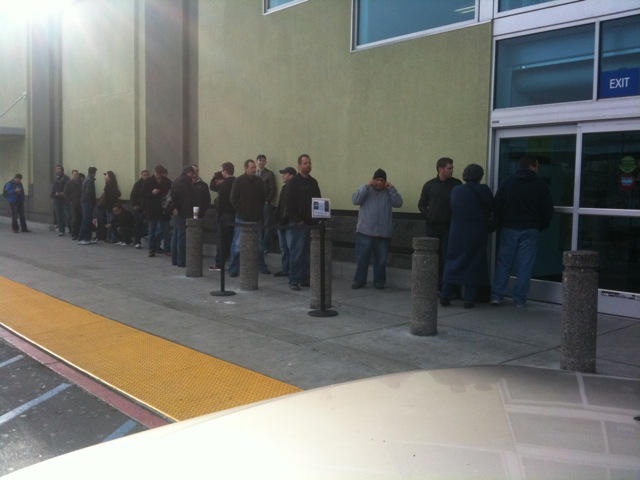
Here’s the 15th guy in line at San Fancisco’s Best Buy on Harrison Street (the one sitting down). Everyone behind him — and there’s about half-a-dozen — better have both fingers crossed. There’s reportedly only 15 iPads at each Best Buy (but the limit is one-per-customer). Doors open any minute now. Good luck guys!
UPDATE: @Brent Jones in the comments says Best Buy seems to have plenty of iPads. “A Best Buy in St. Louis had at least 30 or 40 on hand. People walking up after the 10 a.m. opening had no problem getting one.”