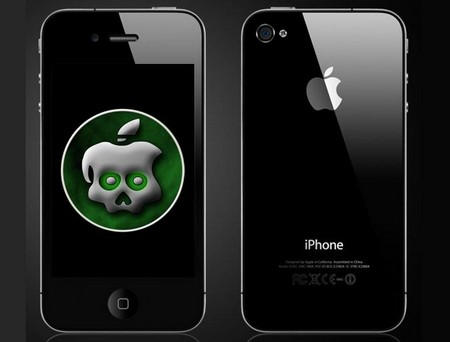
Are you on iOS 4.1? Eager to jailbreak? Better set an alarm now to remind yourself to check the Internet on October 10th at 10:10:10AM. That’s the cheeky time when hackers will release the first working jailbreak hack.
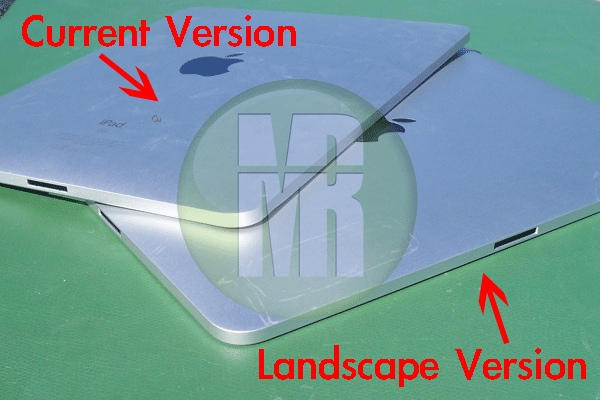
An Apple repair company called Mission Repair is arching eyebrows this morning with the claim that they have gotten their hands on the next iPad’s aluminum case, which they say has a port on the side for landscape docking.
Although we’ve seen a patent for an iPad with the ability to dock in both landscape and portrait modes before, this is the first time we’ve seen physical indication that Cupertino might be considering two dock connectors on the next iPad.
Here we go again: Apple’s plans for an Tunes subscription service is making headlines once more.
According to sources, Apple’s Vice President of iTunes Eddy Cue has been having talks with major record labels for a monthly all-you-can-stream subscription plan, similar to those offered by services like Napster or Spotify.
When you think of Apple’s string of successful product launches, the word “underperform” doesn’t immediately enter your vocabulary. However, one Wall Street analyst believes the Cupertino, Calif. company has plenty of room for growth. The iPhone maker’s stock has risen 37 percent in 2010, but is a far cry from the 75 percent earnings consensus from consumers. In fact, the Oppenheimer analyst expects Apple will report Oct. 18 a “blowout” quarter and sales of at least 12 million iPhones.
“The prime factor behind the underperformance of the stock relative to the fundamentals seem to be investor concern about Apple’s size,” Yair Reiner told investors Friday. “Bottom line, as big as Apple is today, it seems destined to get much bigger,” he adds. On that note, Oppenheimer raised its 12-to-18-month price target for Apple stock to $345 on expectations of $19.9 billion in revenue – up from previously forecast $18.5 billion.
Mention Nokia and the discussion turns to courtroom battles and two-way animosity between the Finnish cell phone giant and Apple. However, in a bit of refreshing candor, a French Nokia executive recently told an audience: “Apple is a must-have in US and EU.”
Nokia’s Cedric Thomas told the gathering of media content developers at MIPCOM that while Nokia is still a key player in Asia and Europe, Apple dominates the app landscape in the United States and the EU. Indeed, a recent survey found the share of iOS-based devices in the UK, France, Germany, Italy and Spain grew 5.3 percent compared to a year ago, while Nokia’s Symbian platform dropped 14.4 percent over the same period. While Thomas, who heads Nokia’s Ovi marketplace in France, touted news that the company’s store now has 2.5 million downloads per day, the number pales in comparison to the 16.6 million apps downloaded each day from Apple’s App Store.
Macs are solid machines, but (like many of us) they have a tendency to slow down and get more lethargic over time. Launching and switching programs takes longer, the dreaded Spinning Beach Ball appears more often, and soon even simple tasks become arduous. What’s going on?
Many things can decrease performance, but several culprits are common: not enough disk space, not enough RAM, and running too many apps at once. I see these in my consulting business regularly.
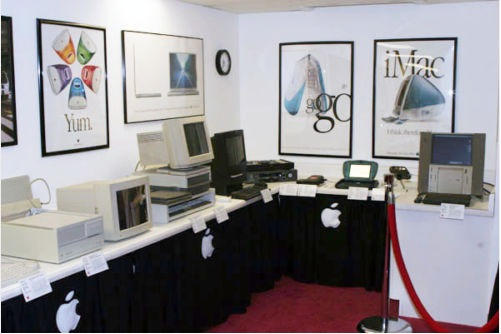
Who says old computers are worthless? The (former) Mac Museum of Franklin Park NJ, which we reported up for sale on eBay last week, has found a buyer. Closing price after 20 bids: $10,000!
The Museum’s models include the Lisa, Mac 128k, Plus, SE/30, Color Classic, Mac Portable, TAM, Newtons, etc., along with lots of posters, peripherals and paraphernalia. It’s a very respectable price for a longtime labor of love, hopefully the buyer will be able to fulfill curator Gil Poulsen’s goal of making the collection more publicly available.
In related news, Vintage Mac collectors worldwide are now updating their own inventory valuations…
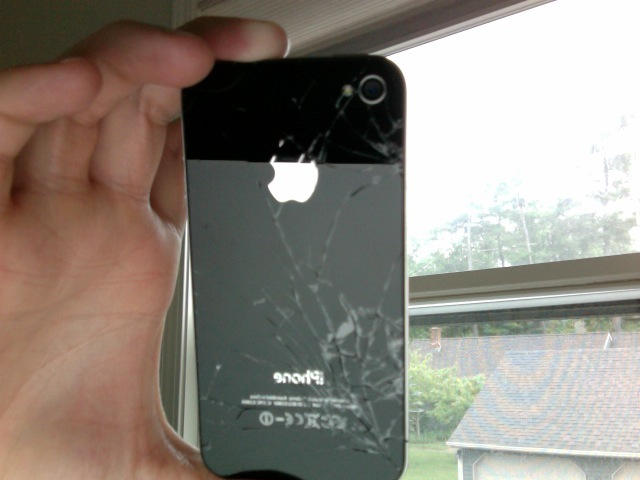
Slide-on cases may be causing big problems for the iPhone 4, GDGT reports. It seems grit and other particles can become trapped between the case and the iPhone 4’s glass back, causing scratches, cracks and even shattering the glass. According to sources inside and outside the company, Apple has locked-down a team of engineers to investigate the problem before it turns into another PR disaster like Antennagate.
It’s unclear, however, how widespread this problem is. Or even if it is a problem. I have an iPhone 4 and have used several slide-on cases. I haven’t had issues with scratching or trapped dirt.
So, please help us, is this problem? Don’t forget, this is specifically about scratches caused by slide-on cases — not scratches in general.
Seems the iPhone’s become a superb diagnostic tool through sound analysis — not only can it evaluate watermelon ripeness, but now it can also be used to measure the tension of tennis or squash racquet strings with the racquetTune app.
The $1 app sports a slick, clean interface that displays a string’s tension after a few taps; there’s also a swingweight calculator thrown in for good measure.
The Swedish developers say racquetTune has been tested at the Royal Institute of Technology in Stockholm to good result — who knows, perhaps even by Bjorn Borg himself.
Today’s your day if you are looking for a jacket or case for your mobile Mac. We have deals on real (and fake) leather jackets for your iPad and iPhone, as well as a transparent stand for your iPhone 4. Along the way, we also have chargers, cables and screen protectors.
As always, details on these and many more items can be found at CoM’s “Daily Deals” page after the jump.
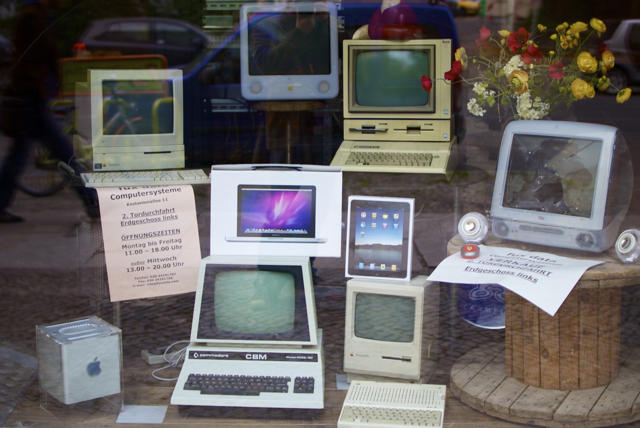
On my way to my local beer garden with my camera, I finally stopped to take a good snapshot of one of my favorite Berlin windows displays, which belongs to the local computer repair and resale company Fux Data. Click to embiggen.
How wonderfully retro is this? The display used to be a sort of Prenzlauer Berg oasis for retired Macs, featuring an old Macintosh IId, Power Mac G4 Cube, Apple IIe, iMac G3, eMac and Macintosh Plus, as well as the odd man out, an ancient Commodore CBM still looking fiercely ready for a nice game of Global Thermonuclear War.
Recently, though, the display has changed with the addition of presumably empty boxes for the unibody MacBook Pro and iPad. It’s like a couple of metrosexual twenty-somethings busting up a senior dance at the local retirement castle.
There’s not much news to this post, I’ve just always wanted to share. I’ve probably spent more hours than I can count puzzling over the G3’s clearly kicked-in CRT: my current working theory is it’s the aftermath of the ill-advised installation of OS X 10.5.
Speck's iPad folio case will soon go on sale at Target: a sure sign that the iPad and its accessories are 100% mainstream.
SAN FRANCISCO, MobileFocus, CTIA — The CTIA conference is one of North America’s biggest mobile phone shows and it was dominated by Apple — even though Apple wasn’t there.
Attendees were either talking about Apple, showing off Apple-challenging products, or selling Apple-compatible accessories and add-ons.
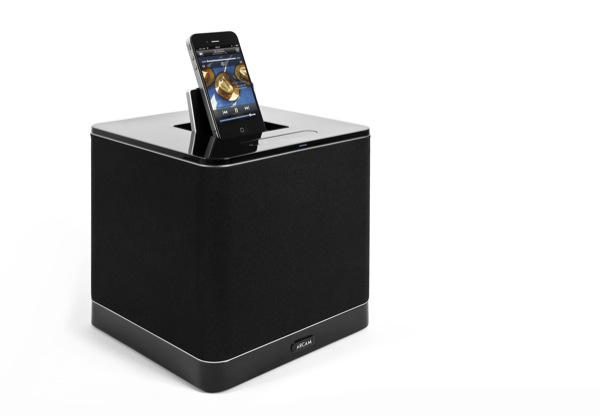
Just check out some of new iPhone and iPad accessories below that were shown off at the MobileFocus press-and-analyst-only sneak peek on Wednesday night.
In the iPhone world, the phrase “cat and mouse” brings to mind just one thing: the perpetual struggle between the iPhone Dev Team and Apple when it comes to hacking iOS devices to run unsigned code, commonly referred to as a jailbreak.
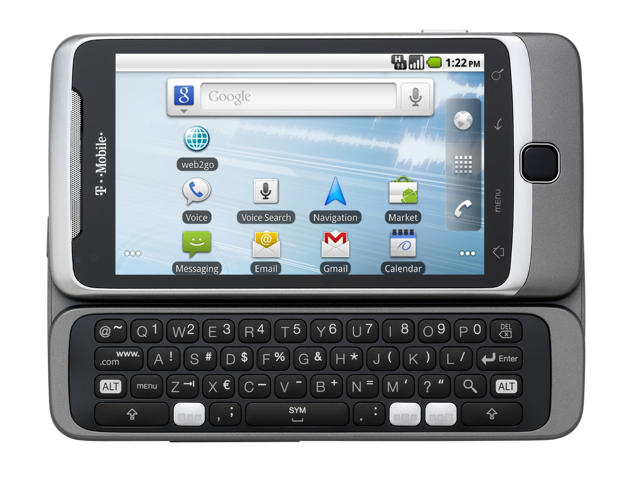
Most recently, it seemed like the mouse had managed to drop a ten ton anvil on the cat’s head with the SHAtter exploit, a jailbreaking technique which will work on all iOS devices that is only patchable by Apple through hardware. If what’s going on in the Android landscape is anything to go by, Cupertino might soon regain the upper hand.
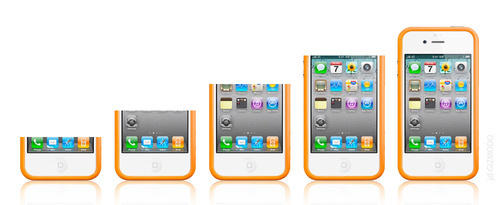
What’s that you say? You missed your chance to get a free case from Apple for your iPhone 4 as part of their Antennagate free case giveaway? Well, good news: you can once again buy an official iPhone 4 bumper in a panoply of colors directly from Apple. It’ll cost you just $29.99.
Don’t have the scratch? Not to worry: you can still try your luck complaining to an Apple Store Genius about your iPhone 4’s attenuation issues. Really, though, isn’t it worth thirty bucks not to have to listen to some insufferable turtleneck lecture you on the physics of radio antennas for half an hour before he wearily sighs and condescends to hand over your free Apple-branded rubber band?
Yesterday, the Wall Street Journal threw some more sparks at the kindling of the rumored Verizon iPhone, claiming that it was conclusively on track for debut in the first quarter of 2011.
Personally, I wasn’t inclined to believe the rumor. It was only two weeks ago that Verizon’s own CEO said that the iPhone wouldn’t be coming to their network until they had their 4G network in place, claiming that the wireless carrier needed to “earn” the iPhone.
Today, though, I’m ready to change my tune due to two new revelations. The first is that Verizon has announced that they would be rolling out 4G to 38 cities this year, and start showing off 4G-capable smartphones at CES in January 2011. That makes a 4G Verizon iPhone next year possible, even within the Wall Street Journal’s optimistic first quarter timeframe.
If you thought the original iPad had legs, wait until a much-discussed mini iPad appears. A 7-inch version of the popular tablet device could sell 45 million copies, according to Asian component sources talking to one analyst. That is far higher than other forecasts of around 4.5 million to 4.7 million of the original 9.7-inch units.
That message from Ticonderoga Securities analyst Brian White was largely lost in the whirlwind of commentary surrounding Wednesday’s Wall Street Journal report that Apple was indeed preparing a CDMA iPhone for Verizon. White, touring China, talked with his component sources there about the iPad’s future. One Asian source tells the analyst it plans to ship 13 million iPad components during the second half of 2010.
Over in the world of Android smartphones, one form factor that has been seeing an increasing push from handset makers is the 4.3 inch touchscreen phone, best exemplified by the likes of the Motorola Droid X and HTC EVO 4G. That’s significantly larger than the iPhone’s 3.5-inch touchscreen.
While many companies are embracing this larger display, which makes internet browsing a lot easier at the expense of pocketability, it’s unclear if consumers really prefer it… which makes the claims of one Wall Street analyst that Apple will expand the iPhone line with a series of handsets with larger displays pretty suspect.
According to Shaw Wu, a Wall Street analyst from Kaufman Brothers, sources familiar with Apple’s overseas suppliers say that Apple is considering larger as well as smaller displays for its iPhone line.
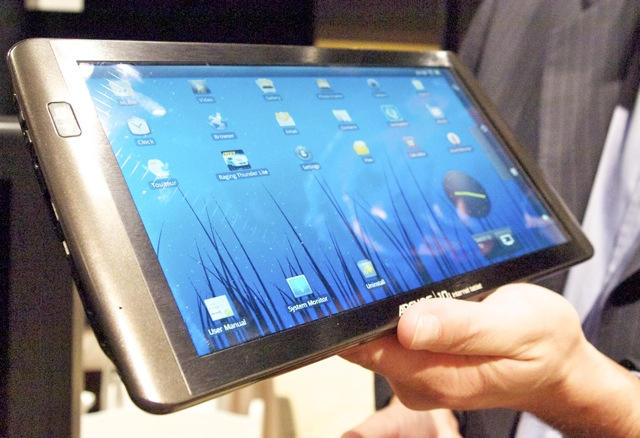
SAN FRANCISCO, MobileFocus, CTIA — Here at the CTIA mobile phone show, Archos is showing off a pair of brand new big-screen, low-cost tablets to challenge the iPad that have a secret weapon in the war against Apple – Adobe’s Flash.
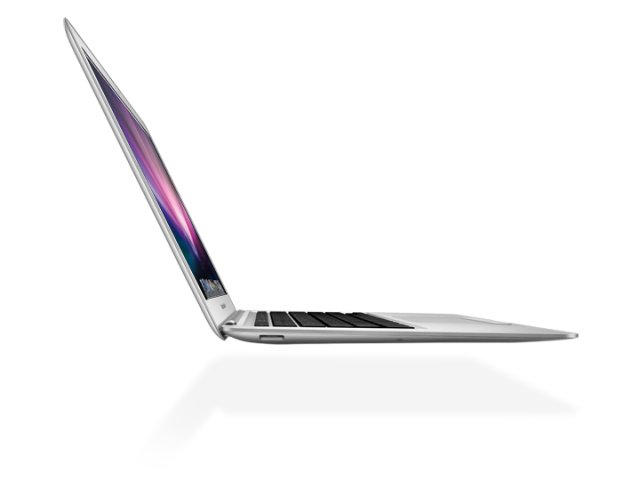
Apple’s guillotine-thin ultraportable laptop, the MacBook Air, is disappearing from shelves all around the country, as reports indicate that the low-end 1.83 GHz and the high-end 2.13 GHz are out of stock pretty much everywhere… and it may very way herald the imminent arrival of a smaller and svelter 11.6-inch MacBook Air.
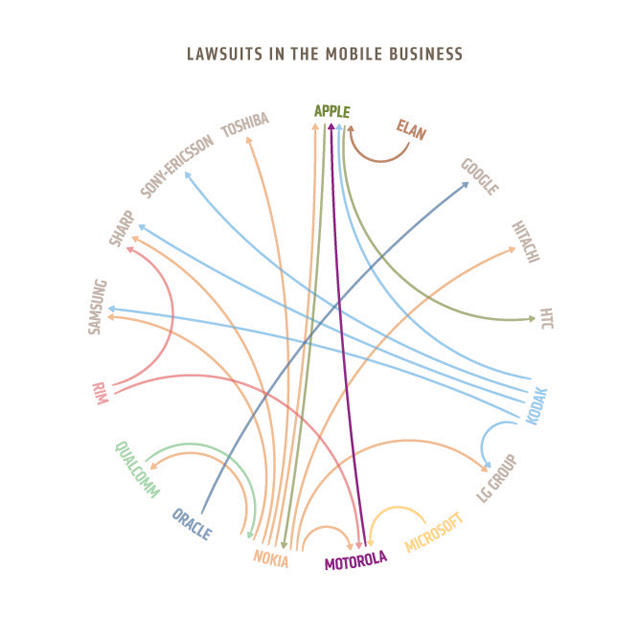
The file cabinets of mobile companies are always filled with patents, but it’s only recently they have started going to war over them. Before 2007, in fact, most patent disputes were handled behind closed doors with smiles and handshakes. Then the iPhone came along, and all of a sudden, it was sue or die.
Motorola’s the latest company to launch into the smartphone patent lawsuit fray, lodging
a series of patent infringement complaints against Apple in both Northern Illinois and Southern Florida federal district courts, as well as asking the International Trade Commission to ban Apple from importing, marketing or selling all iOS devices, as well as some Mac products. They’re out for blood.
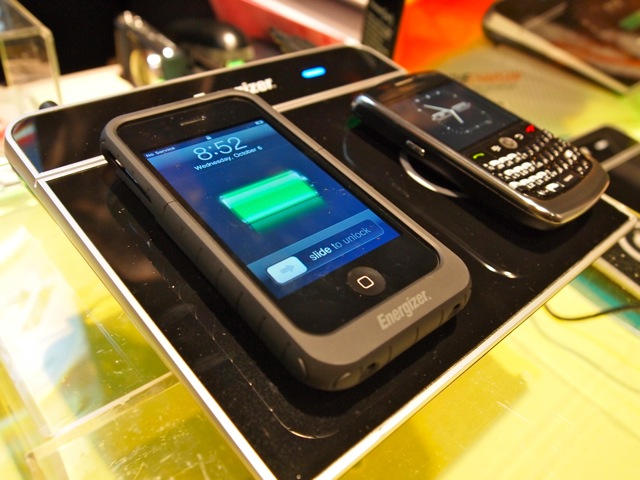
SAN FRANCISCO, MobileFocus, CTIA — Best known for its indefatigable bunny, Energizer launched a couple of cool charging products for the iPhone here at the CTIA mobile phone show.
Apple received more good news from Wall Street, ahead of its expected Oct. 18 quarterly financial report. J.P. Morgan Thursday raised its revenue estimate for the fourth quarter to $18.71 billion, up from $18.13 billion. Despite Apple’s overwhelming success with the iPhone and iPad, the Cupertino, Calif. company has”plenty of growth” left, analyst Mark Moskowitz assured investors.
Indeed, Apple could earn $81.53 billion for fiscal 2011, up from Moskowitz’ previously estimated $78.84 billion. The increasing talk of a CDMA iPhone could add up to $2 per share next year, he estimated. The analyst expects Apple will introduce a CDMA iPhone for Verizon in early 2011 with a version aimed at China by mid-2011.
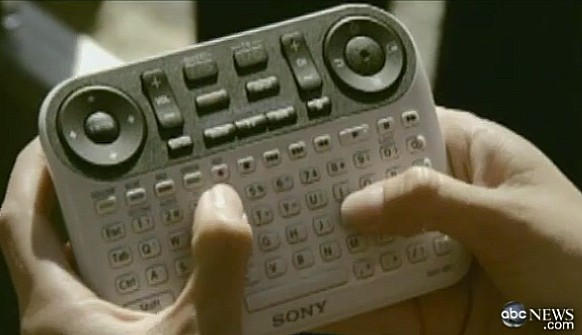
Hello readers. Look at this remote. Now at your hands. Now back to the remote. Now back to your hands.
Maybe it’s a joke. Maybe it’s a clever ruse. Maybe it’s a prototype. Maybe it’s clever CGI like they used for Gollum. I have no idea. But the picture here (sourced from Engadget) is supposedly the remote control shipping with Sony’s TVs that have Google TV integrated inside. It is, in a word, a monstrosity (my friend MG said it best, “My God, it’s full of buttons!”).
Here are all the things wrong with it, in a nutshell: