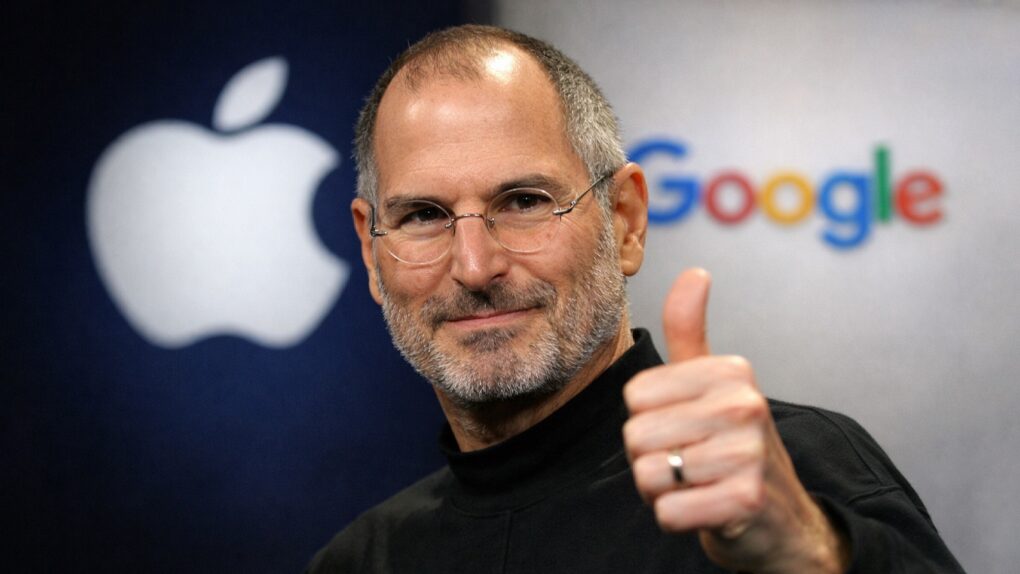
The fact that Google Gemini will power the revamped Siri is drawing criticism from people convinced that Apple should have developed its own AI in-house to bring the voice assistant up to speed.
Some of the critics seem to think Apple always made its own software before now. Therefore they regard the deal with Google as a major policy shift — and a sign of weakness that would horrify Apple co-founder Steve Jobs.
No. Just … no. These critics will be shocked to learn that many Apple products are built on top of tech developed outside the company … and often, it was Steve Jobs who did it!
New Siri proves Apple needed help in the AI race
The current AI craze is being driven by rapid advances in large language models and generative tools that can write, code, create images and more. While OpenAI, Google, Microsoft, etc., pushed ahead with AI products, Apple moved more slowly.
In 2024, the company announced an ambitious plan for an AI-powered Siri. A year and a half later, the upgraded voice assistant remains AWOL. This week, Apple had to admit that the new Siri would be powered by Google’s Gemini AI.
TechRadar calls it “the most disappointing thing to come out of Apple since the Newton.” Dagogo Altraide said on ColdFusion that “Apple just gave up.”
Steve Jobs would have approved the Apple-Google Gemini partnership
The “Steve Jobs would never have done this” sentiment has been a recurring theme in the social media backlash to the Apple-Google Gemini deal. But that’s based on pure ignorance — in a very similar situation, Jobs did pretty much the same thing.
Back in the 1990s, Apple struggled to upgrade Mac OS. It spent years trying to complete a version code-named Copland, but in the end, it was a failure. Then Steve Jobs returned to the company and turned things around with Mac OS X.
How did he create the product Apple desperately needed? He took UNIX and layered Apple software on top of it. To be clear, there was an intervening step. OS X was built on NeXTSTEP, the operating system Jobs created at NeXT. Apple bought NeXT, bringing Jobs back to Cupertino (with NextSTEP in tow).
But NeXTSTEP was layered on top of UNIX, which is why OS X is also based on UNIX. That continues to this very day: macOS 26 Tahoe is officially UNIX 03 certified by The Open Group.
And macOS is not alone. Every Apple operating system is based on UNIX, from iOS to watchOS.
So Apple was floundering, trying to develop something absolutely critical for the company’s survival, and then Steve Jobs admitted that help was needed and outsourced the problem. Sound familiar?
Steve Jobs outsourced tech all the time
Any attempt to argue that Steve Jobs would only approve of AI that Apple developed in-house further fails when one considers how much of the company’s tech came from outside.
At the top of that list is the original version of Siri! It was developed by SRI International and acquired by Apple in 2010. The voice assistant was then integrated into iOS, with Steve Jobs himself presenting it to the world on the iPhone 4s.
The new deal with Google is different, in that Apple is licensing Gemini rather than buying it outright, but Jobs showed again and again that he was quite willing to use technology developed by others.
It’s a practice that continued in the post-Jobs era. Touch ID, Shazam, Beats and much more all came from other companies. None of them served as a sign of an imminent Apple collapse.
Steve Jobs hated Google, but…
Some social media posts argue that Steve Jobs wouldn’t have approved a deal to put Gemini in Siri because he personally hated Google.
Apple and Google were once close partners, with Google services tightly integrated into early versions of the iPhone. Google CEO Eric Schmidt even served on Apple’s board of directors.
Then Android launched, and Jobs believed that Apple’s partner had become a direct copycat and rival. Android used a touchscreen-first design, gestures and other features that Jobs thought were lifted straight from iOS. He saw the shift not as normal competition but as a betrayal of trust — famously threatening a “thermonuclear war” over what he viewed as stolen ideas.
But that was almost 20 years ago. One can hope that Jobs would be able to move past his own personal feelings to do what’s best for Apple. Especially as Schmidt doesn’t even work at Google anymore, and Apple makes $20 billion a year in sheer profit off its rival, thanks to a sweet search deal.
Apple tried its hardest to develop in-house the AI models needed to upgrade Siri and came up short. The company tested alternatives, including Anthropic and OpenAI, and Google came out the winner. If Jobs really did snub the best alternative because of a personal bias, then he wouldn’t be doing his duty as CEO. Some of us believe he was better than that.
A good deal financially for Apple
Another positive aspect of the deal is that it’s likely saving Apple significant money. AI development is wildly expensive — Google poured about $56 billion into research and development in 2025. While we don’t know how much of that went to Gemini, AI was certainly a major focus.
Compared to that, the $1 billion a year Apple is reportedly paying to license Gemini is a bargain.
Yes, Cupertino is also spending on its own R&D projects — about $35 billion last year — but even after adding $1 billion to license Google’s AI, Apple comes out ahead.
Steve Jobs approved of not wasting cash.
Siri stays an Apple product
Apple gave itself extra AI challenges by promising on-device processing, privacy and deep integration with the company’s applications. Bringing in Google Gemini won’t change any of that.
Google’s AI will run either directly on the user’s device or on Apple’s privacy-focused cloud servers. Google certainly cannot use Gemini to siphon user data off iPhones and Macs.
Plus, Apple didn’t license a simple chatbot. Google’s AI tech will power features added by Apple. Siri will be able to pull information from the Calendar, Mail and Messages apps, for example. That will finally fulfill the promise for “the start of a new era for Siri” that Apple made at WWDC24.
The man who saved Apple by transforming UNIX into Mac OS X would certainly approve.

Ed Hardy has been writing full-time about tech for 26 years, and using it for much longer than that. His intro to Apple was a Macintosh SE/30 (which he still has), but now he uses a 13-inch iPad Pro as his primary computer.
That’s because he’s a “tablet first” type of guy. Rather than use a Macbook, he connects a keyboard case to the iPad. And instead of a desktop Mac, he connects his tablet to a 27-inch display and full-size keyboard. (So don’t try to tell him that everyone has to use a Mac to be productive.)
Before coming to Cult of Mac, Ed wrote for NotebookReview, TabletPCReview and Brighthand, as well as other sites.

